 The House of Blues, Cleveland: What It Suits and What It Does Not
The FirstEnergy Powerhouse, Cleveland: Field Notes on a Converted Power Station
High ceilings, exposed brick and massive windows always come together. Each one asks for something different.
The Powerhouse has high ceilings, exposed brick walls and massive windows that pour in natural light, as its own description has it, creating an open airy feel.
That is an accurate description and each of those three features is a separate photographic condition with its own response. High ceilings remove bounce and add distance. Exposed brick is forgiving, textured and warm, and it needs raking light to be any of those things. And massive windows are the best light in the building and, in daylight, four to six stops brighter than the room they light.
A converted power station adds a fourth condition that an ordinary warehouse does not: the volumes are exceptionally tall, because the machinery they housed was tall, and the windows are correspondingly enormous. That makes both the advantages and the difficulties larger than in a normal conversion rather than different in kind.
These are field notes: the conditions you will meet and what each one needs. We have not photographed a wedding at the Powerhouse; converted industrial buildings behave the same wherever they stand. What may be attached to original fabric, which elevation the large windows face, and whether the house lighting is adjustable are the questions for their team — restored industrial fabric usually takes no fixings at all.
The FirstEnergy Powerhouse at a glance
| Where | The Flats, Cleveland, Ohio |
| Character | A converted power station with very tall volumes, brick and huge windows |
| Four conditions | No bounce, real distance, warm textured brick, and very bright glass |
| Best light | Two metres inside a large window on the shaded elevation |
| Ask first | Fixings, window orientation, lighting control |
What you meet, and what each one needs
Height is the first condition and in a former power station it is extreme. The roof is far enough away that a flash aimed at it returns nothing usable at all, so bounce — the reflex indoor move — is simply unavailable. The substitutes are a pale wall at a sensible distance, a reflector, or direct modified light, and one test frame on arrival settles which.
Distance is the accompanying problem and it is easy to underestimate. In a volume of this scale, a source adequate in a hotel ballroom is lost, so power and modifier choices have to assume real working distance. Working here with one small flash is the equipment mismatch this building type punishes most.
The compensation is steep fall-off, which is genuinely useful: a couple three metres in front of anything else sits against natural darkness with no equipment at all. That is free separation and it is the opposite of the problem a pale modern venue presents.
Brick is the second condition and it is the most forgiving surface any venue offers — a mid-tone that meters predictably, with real texture that holds detail at almost any sensible exposure and never leaves a frame feeling empty. The one thing it demands is raking light: light running along a brick wall lifts every mortar line into relief, while light pointed at it flattens the wall into a plain brown field. The position worth finding is always the one where the key grazes the surface rather than facing it.
Brick also bounces strongly warm, which is the colour half. Anyone within a metre or two of a brick wall picks up an orange cast on the shadow side of the face, and because it is bounced and localised, global white balance cannot separate it. Make one gelled source the authority on faces and let the brick be as warm as it is.
Industrial structure is the third condition and it is the compositional asset. Steel columns, beams, gantries and whatever remains of the machinery repeat, and repetition reads immediately — and in a spare tall volume a crooked horizontal is conspicuous with nothing else to distract from it, so these frames reward a moment with the electronic level. Pointing the camera straight up once is worth a minute, because converging structure overhead with a couple small at the bottom of the frame is a composition almost nobody takes.
Steel is also cool and partly specular, which is the opposite of brick: it returns a bright reflection of a source rather than a soft scatter, so angle lights away from steel planes or run the highlight along a beam deliberately.
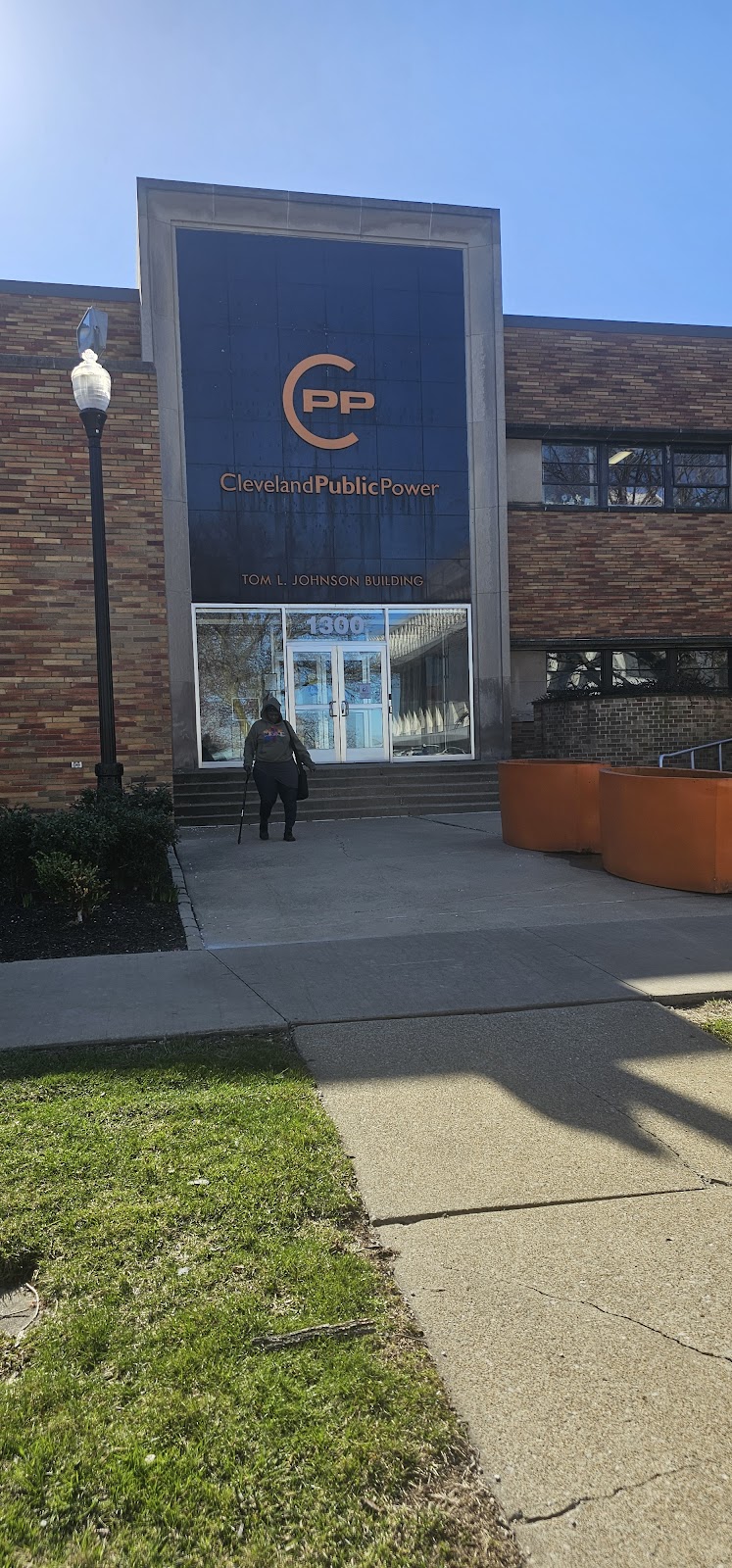
The massive windows, and the shape of the day
Very large windows are the fourth condition and the best asset the building has. A person standing two metres inside a big window gets a broad wraparound key with natural fall-off into the volume behind, which is better light than anything that can be carried and at a scale no modifier approaches.
The position is two metres inside rather than in the opening. Standing in it puts a subject in open light from a very wide angle, which is bright but flat; two metres in the light becomes clearly directional and the volume behind darkens into a natural background. Turning the subject then gives three setups without moving anything: facing the window, side-on, and back to it.
Which elevation the windows are on decides the day. A shaded window gives soft directional light for the whole day with no hotspots anywhere in it; a sunlit one gives a hard patch several stops above the room and, through steel glazing bars, a grid of hard shadow across anything in it — which is attractive on brick and unusable on a face.
Cleveland makes this easier than most cities, and it is worth knowing rather than discovering. This is one of the cloudiest major cities in the country, and under overcast every window behaves like a shaded one: the light is soft, even and directional with no hotspot and no grid, regardless of which way the building faces. For a conversion with huge windows that is a real advantage on the majority of days in the year.
Because the interior lighting does not change through the day and the windows do, the running order should be built around the windows rather than around the rooms: preparation and portrait work while the shaded window is giving good light, and everything else afterwards when it no longer matters.
In daylight the windows are four to six stops brighter than the room, which needs a decision rather than a discovery: let them blow to white shapes, which in a spare industrial volume often reads as deliberate and gives the cleanest background available; or light the couple to match the view; or wait for the crossing.
The crossing is the one timed frame. For roughly twenty minutes after sunset the outside falls to about the brightness of the interior lighting, and one exposure holds the lit volume, the couple and whatever is beyond the glass. After it, the windows invert and become large dark reflective planes — so lights go off the camera axis, frames go oblique, and the reflection becomes material rather than damage.
- Assume no bounce and real distance; bring power, not one small flash
- Rake the brick; facing it flattens it to a brown field
- Angle lights away from steel, or run the highlight along a beam
- Two metres inside a large window, not standing in it
- Build the running order around the shaded window, not around the rooms
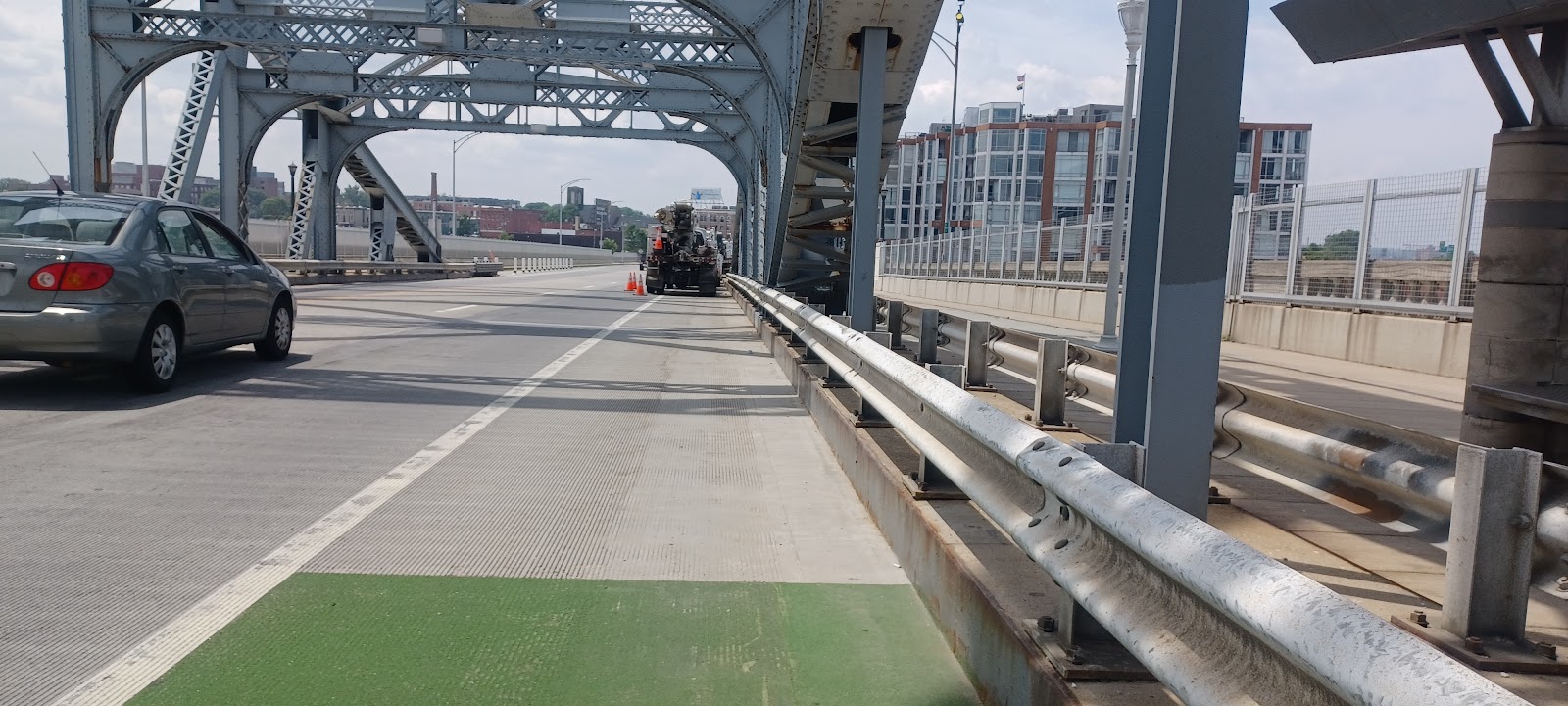
The Flats, the river, and Cleveland's year
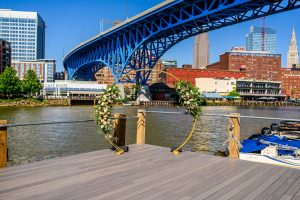
A converted power station in a river valley has a coherent outdoor extension and it is worth using. Industrial banks, lift bridges, steelwork and brick frontages all photograph well in raking light, and they give something planting cannot: hard geometry in the background, which means a couple placed against them separates cleanly rather than merging into tone.
The river gives depth to compress, so a long lens stacks near bank, water, far bank and bridge into layers where a wide lens reduces them to a strip. It also gives a broad reflector, which raises ambient and fills faces from below near any opening facing it.
A low camera is the riverside technique: dropping close to the paving stretches the water’s edge towards the horizon, pushes the horizon down and lets the bridges and sky occupy the upper frame.
Alleys and service sides are the most dependable positions at an industrial building: walls on both sides give directional light and a contained background with nothing distracting in it, and service elevations hold the most texture because nobody ever tidied them.
Wind along a river valley is stronger and gustier than a street back from it, which matters for a veil, for hair and for any light stand. And still water mirrors early in the day and breaks into texture as the breeze builds, so a reflection frame is a morning proposition.
Cleveland’s seasons are sharp. Summer is humid with afternoon thunderstorms common rather than rare — and for a building with very large windows a storm is an asset rather than a problem: rain against huge glazing with a warm lit volume behind it is an atmosphere no ballroom can produce, and it is worth recording rather than waiting out.
Autumn gives the clearest air and the best raking light of the year, which on brick is the condition the material is made for. Winter brings lake-effect snow — localised, sudden and heavy — which is a logistics question for guests as much as a photographic one, and which is also the best natural fill there is, lifting exactly the shadows a low sun carves while fooling a meter by about two stops. Snow on an industrial riverside seen through huge windows from a warm lit volume is a frame very few venues can offer.
Winter days are short, with sunset in the middle of the afternoon in December, which compresses the outdoor window into a couple of hours and moves the crossing early. And a heated interior with cold river air fogs a lens comprehensively in both directions, so let equipment come towards the temperature of where it is going before it gets there.
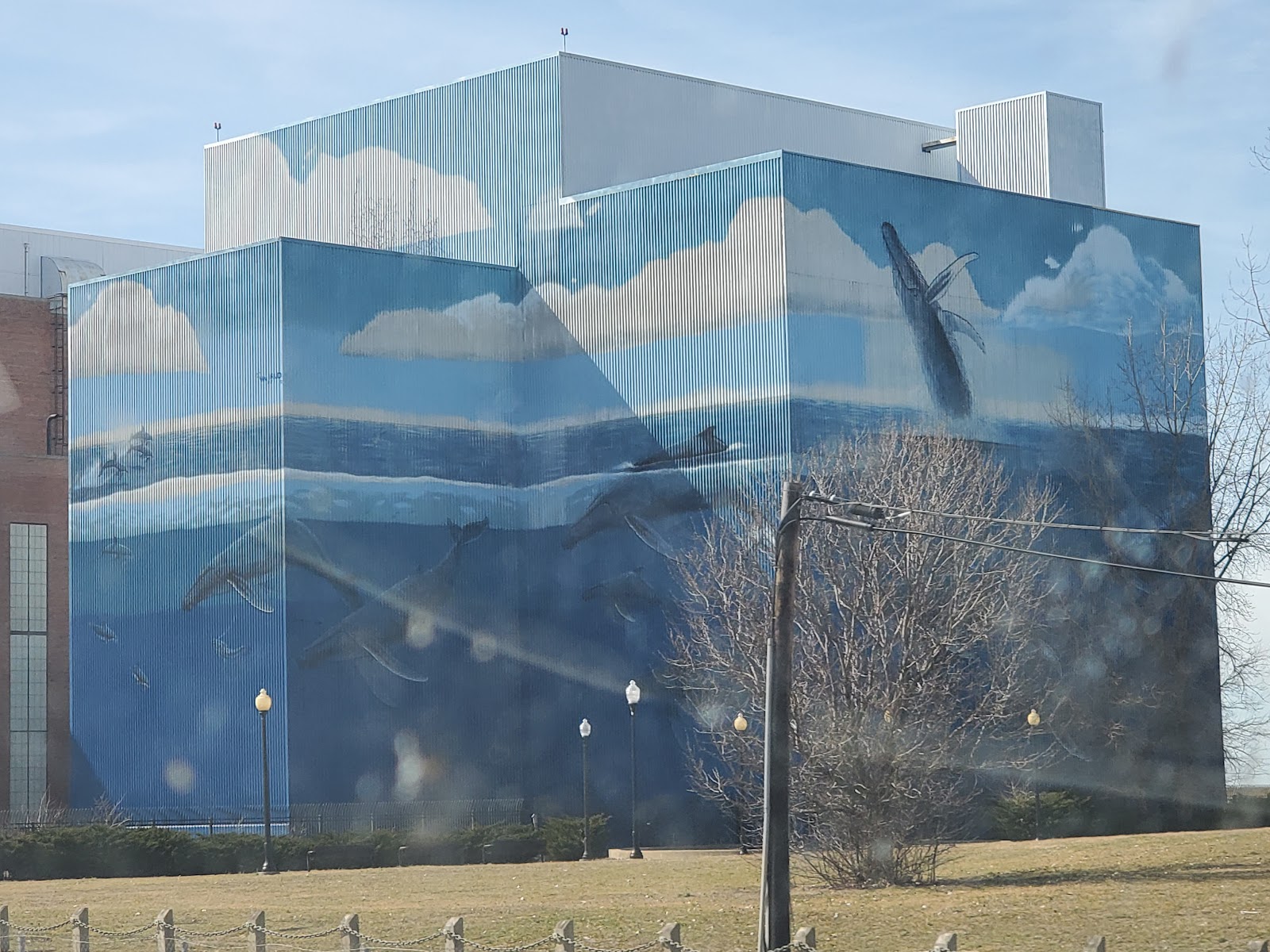
More frames from The FirstEnergy Powerhouse
The FirstEnergy Powerhouse wedding photography: common questions
Why does bounce fail completely here?
Because a power station roof is far enough away that a flash aimed at it returns nothing at all. Use a pale wall at a sensible distance, a reflector, or direct modified light with real power.
What does brick need?
Raking light. Light running along a brick wall lifts every mortar line; light pointed at it flattens the wall into a plain brown field.
How is steel different from brick?
It is cool rather than warm and partly specular, returning a bright reflection of a source instead of a soft scatter. Angle lights away, or run the highlight along a beam deliberately.
Where exactly should a subject stand at a window?
Two metres inside. Standing in the opening gives bright flat light from a very wide angle; two metres in the light becomes directional and the volume behind darkens.
How should the day be ordered?
Around the large windows, because they are the only light that changes. Preparation and portraits while the shaded window is good, everything else after.
Does Cleveland's cloud help?
Considerably. Under overcast every window behaves like a shaded one — soft, even, directional, with no hotspot or shadow grid — and that is most days of the year here.
More Cleveland, OH venue guides
We are writing a photographer’s guide to every venue we would happily shoot in Cleveland, OH. Here are three more, plus the full index:
- The Forest City Brewery, Cleveland: Field Notes on a Brewery Venue
- The Great Lakes Science Center, Cleveland: The One Decision That Governs Everything
- The Greater Cleveland Aquarium: Four Ways Out of the Blue Light Problem
All Cleveland, OH Wedding Venues →
Planning a wedding at The FirstEnergy Powerhouse?
A conversion rewards a plan built around its windows. Tell us your date.