 The Rio, Las Vegas: A Walk Through an Off-Strip Resort
Caesars Palace, Las Vegas: The Problem, and Four Ways Out
The building was built to be looked at. So was the couple. Only one of them can win a frame.
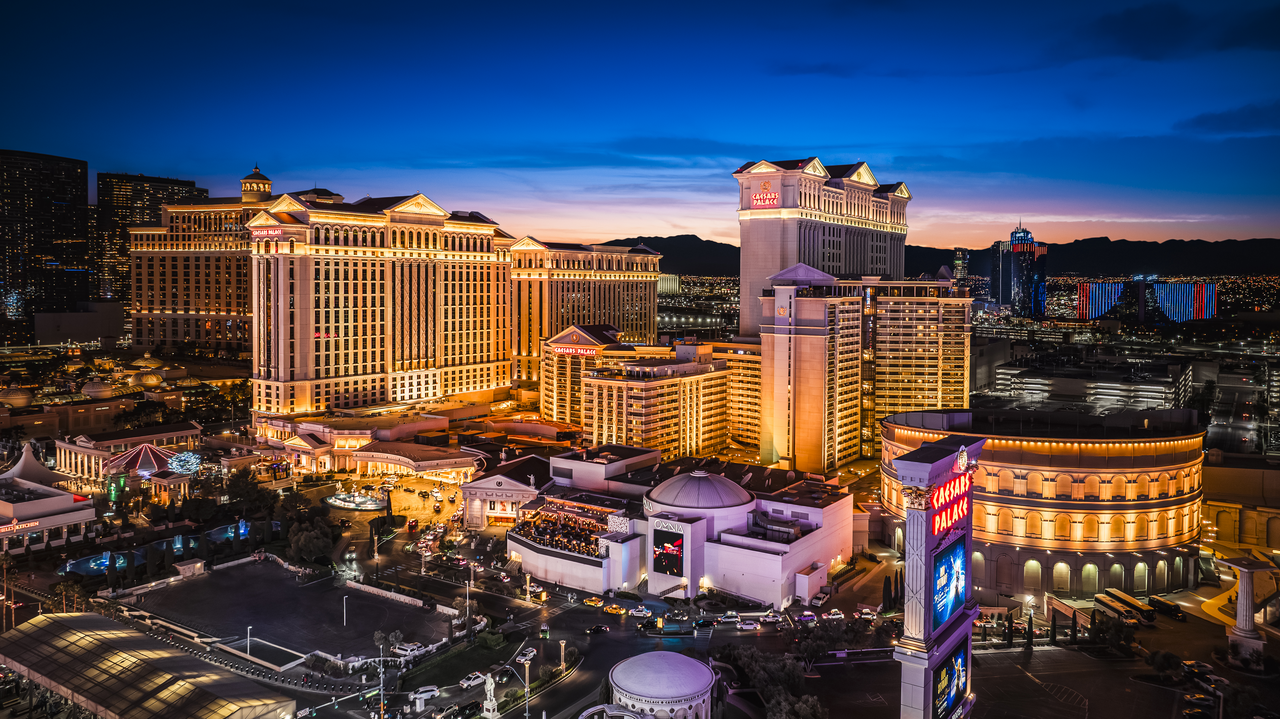
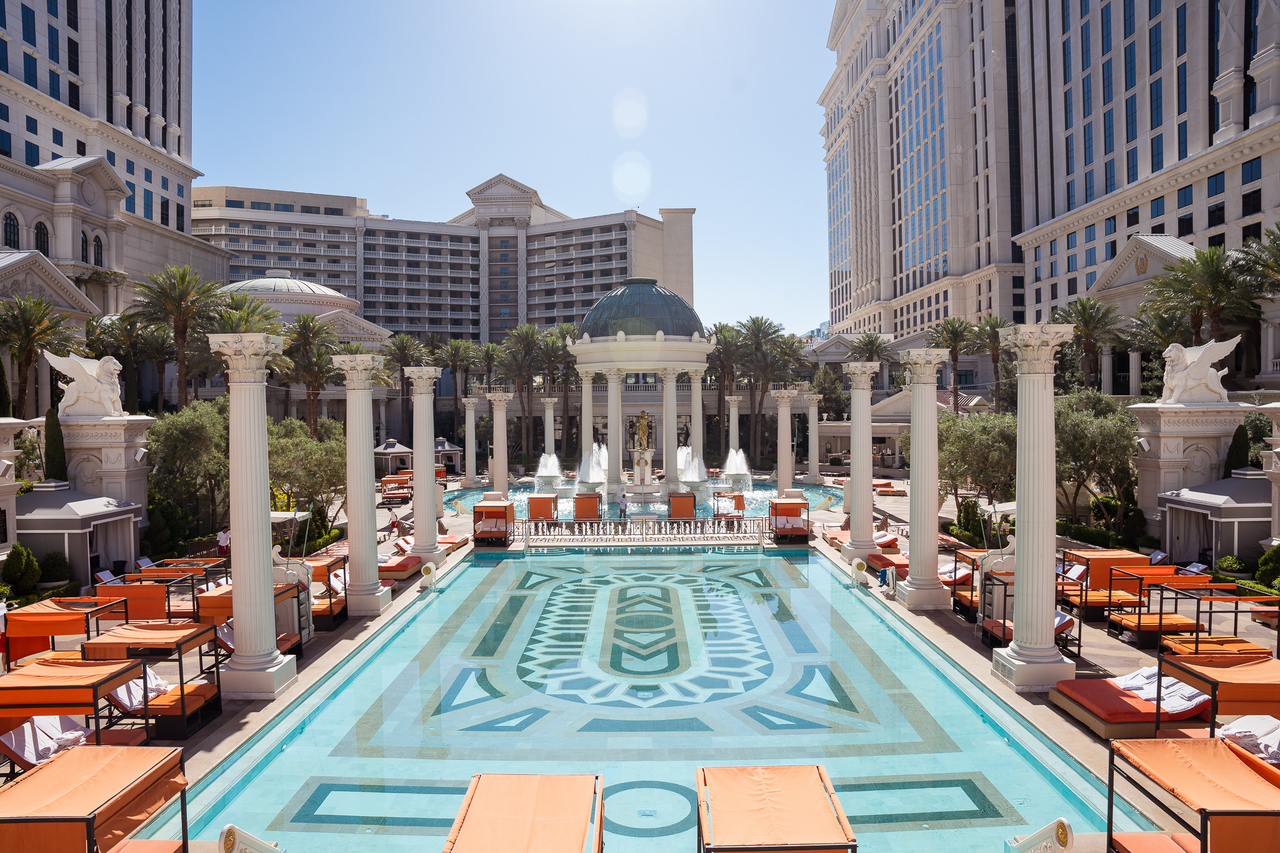
The defining photographic problem at a large themed Strip resort is competition. Everything in the building is designed to attract attention — statuary, columns, gilding, pattern, colour, illuminated signage — and a photograph can only have one subject.
That is not a complaint about the architecture. It is a structural fact about frames: the eye goes to the brightest, most contrasted, most detailed thing in a picture, and in a themed resort that is rarely the face. Left unaddressed, the gallery comes back full of pictures of a building with two people somewhere in it.
There are four ways out and all of them work. They are not interchangeable — each has a cost, and choosing between them is the actual craft. What does not work is hoping the problem resolves itself, because it does not.
We have not photographed a wedding at Caesars Palace; heavily decorated resort interiors behave consistently. Which spaces are included, whether the lighting is adjustable and what may be attached are questions for their team.
Caesars Palace at a glance
| Where | Las Vegas Strip, Nevada |
| The problem | Decoration designed to attract attention, competing with faces |
| Way one | Dissolve it: long lens, wide aperture, real distance |
| Way two | Out-light it: a face a stop above everything behind |
| Way three | Find plain ground. Way four: commit and make the building the subject |
Ways one and two: dissolve it, or out-light it
The first way out is optical and it is the most reliable. A long lens at a wide aperture with real distance between subject and background reduces decoration to tone: a column becomes a pale vertical, a gilded frieze becomes a warm band, statuary becomes a shape. The face stays sharp and everything behind it stops competing.
The requirements are specific. Focal length long enough to compress — the difference between a moderate lens and a genuinely long one is large here. Aperture as wide as the situation allows, which in a dim interior it usually does. And distance: at least several metres between subject and whatever is behind, because depth of field falls off with distance from the subject, not from the camera.
The cost is space, and in a resort that is usually available — these buildings are enormous, and there is room to stand a long way back, which is the opposite of the situation in a dense city. The second cost is that a long lens gives no context at all, so a gallery made entirely this way could have been shot anywhere.
The second way out is photometric: make the face brighter than everything behind it. The eye goes to the brightest thing, so a face half a stop to a stop above its background holds attention regardless of how busy that background is. It is the most controllable of the four and the one that works when the first cannot, because it does not require distance.
In practice that is one source off the camera axis at face height, in a modifier large enough to be soft at working distance, gelled to match the dominant fitting colour in the space and with white balance set to the gel. The exposure is set so the room reads roughly as the eye sees it, then the source lifts the faces out of it.
The specific error worth naming is over-lighting, which produces a face floating in a dark room and destroys the reason for choosing a decorated venue. A stop is a lot; two stops is a lighting-company advertisement.
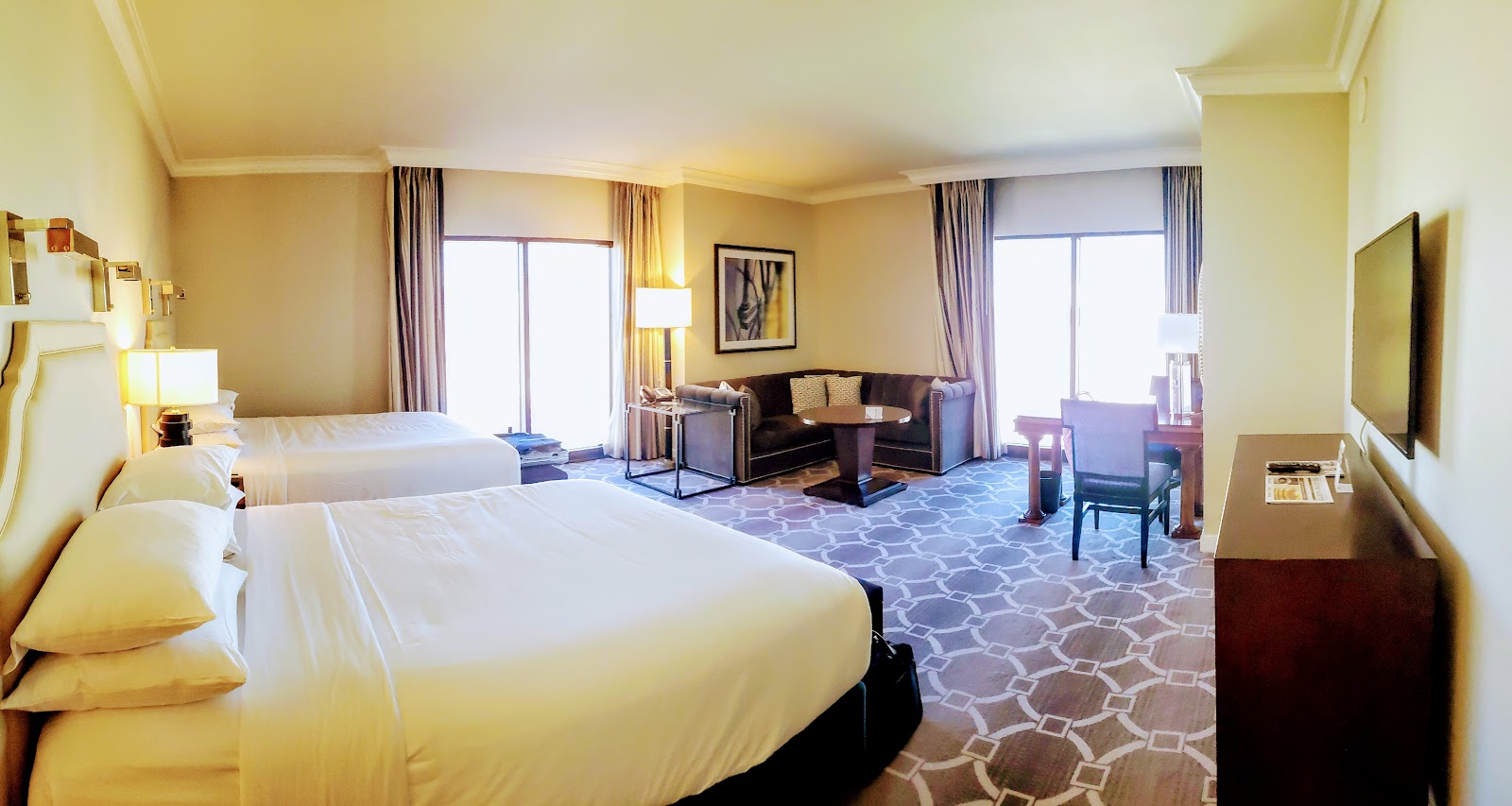
This is also the way out of the resort’s other structural problem, which is that the installed lighting is dense and overhead. Overhead light shadows eye sockets and cuts a hard line under every chin, and no exposure correction fixes it — direction does. One source from the side fixes the faces and the background competition in the same gesture, which is why it is the most economical answer available.
A useful note on bounce: ceilings over the largest floors in these buildings are unusually low for their span, three or four metres over spaces a hundred metres across, so a flash aimed upward returns something usable. Worth one test frame on arrival, because a gilded or dark ceiling absorbs or tints — but where it works, it is a very large soft source for free.
Ways three and four: find plain ground, or commit
The third way out is the cheapest and the most overlooked: find the plain surface. Every heavily decorated building has undecorated parts — a service corridor, a plain wall between features, a curtain, a dark doorway, a stair flank, a lift lobby. Ten minutes of looking on arrival produces two or three of them, and a portrait against plain ground has no competition problem at all.
The cost is that it looks like nowhere, which is a genuine loss at a venue chosen for its character — so this is a way to make three or four frames rather than a strategy for the day. But it is the fastest solution available when time is short and the group is large, and a plain background is the only condition under which a twenty-person formal reliably reads.
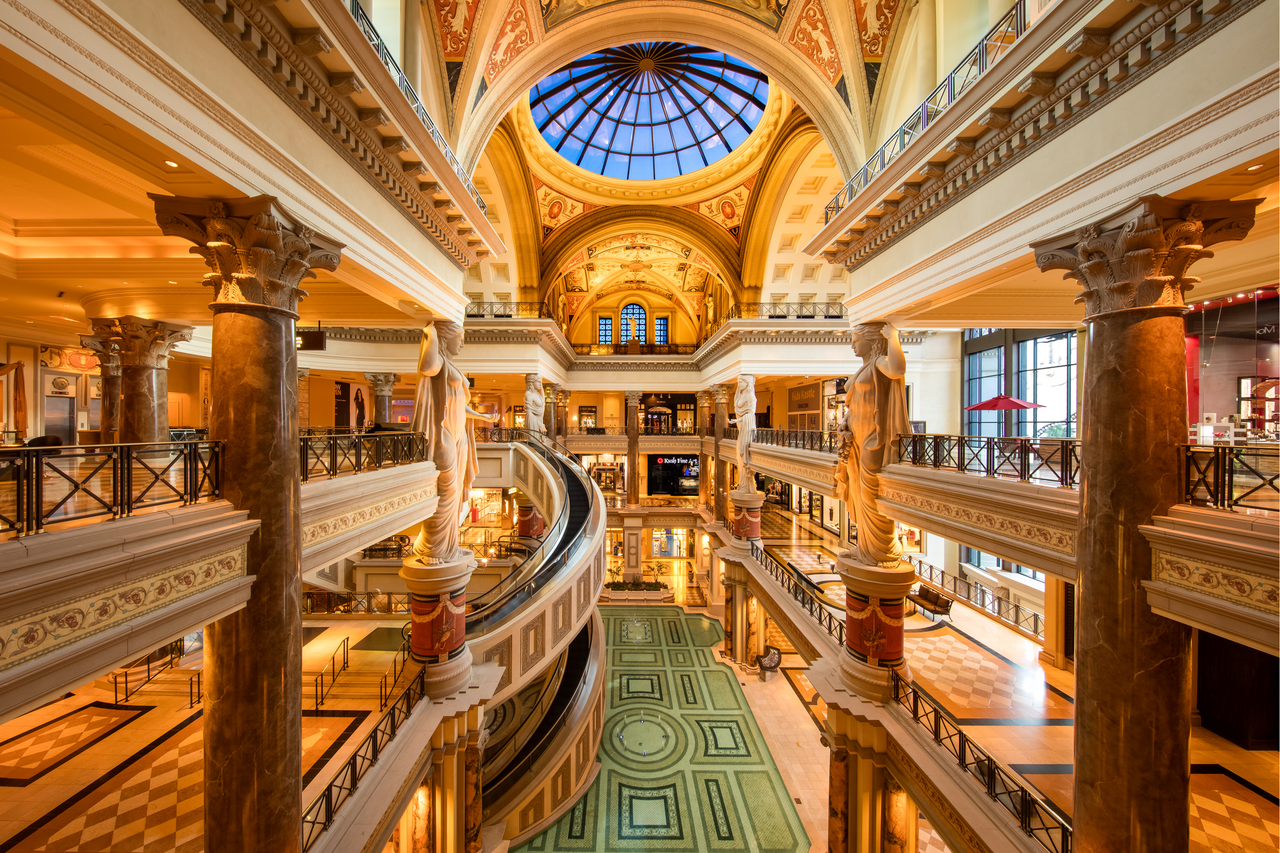
The fourth way out is to stop fighting: make the building the subject, and put the couple in it as figures rather than as portraits. A wide frame with a vast decorated space and two small figures in it is a real picture and frequently the best one of the day, because it says something about scale that a portrait cannot.
The requirements are that the figures must be readable — separated from what is behind them by tone, placed where the eye lands, and ideally lit — and that the composition must be deliberate rather than merely wide. A wide frame with two people lost in the middle of it is the failure mode this way out is trying to avoid, and the difference is placement.
Its cost is that it produces few pictures. This is one frame or two, not a sequence, because the effect depends on rarity.
Between them the four cover everything the building can do, and the practical answer is to use all of them deliberately across the day: a handful of committed wide frames, a group of dissolved long-lens portraits, one or two against plain ground, and everything else out-lit. That produces a varied gallery, which is the actual objective.
Two conditions run underneath all four. Reflective surfaces — polished stone, mirror, glass, gilded metal — will show a badly placed light at full brightness, so the fifteen-second check from the camera position is not optional. And colour is mixed everywhere: warm decorative fittings, cooler recessed downlights, coloured accent lighting, illuminated signage, and any uplighting for the event. Pick the temperature that should be correct, set white balance to it, and switch off or overpower whatever else lands on skin — the coloured accents are usually the worst and frequently the easiest to have turned off for ten minutes.
Patterned carpet is the last of it, and it competes at the same spatial frequency as a face. Camera height that excludes it is the fastest fix; distance and aperture dissolve it; brightness on the subject overrides it.
- Long lens, wide aperture, several metres of separation: tone, not detail
- One source, a stop above the background — never two
- Ten minutes on arrival finds the plain walls; use them for the formals
- One committed wide frame where the couple are figures, not portraits
- Coloured accent lighting off for ten minutes is a reasonable request
Outside, and the desert year
Outside is the Mojave and it gives the most extreme light of any major American city, because two things compound. The sun gets very high — at about thirty-six degrees north the June midday sun sits roughly seventy-seven degrees above the horizon — and the air is very dry, so almost nothing scatters the light and the shadows are harder than the same sun angle gives in a humid place.
With something close to three hundred sunny days a year, cloud is a bonus rather than a plan. So the open desert sun in the middle of the day is unusable, full stop: eye sockets go black, every chin gets a hard shadow, and the range between lit and unlit exceeds what a sensor holds.
There are two windows and no middle. The first hour after sunrise and the last hour before sunset, when light comes across faces rather than down onto them. And roughly twenty-five minutes after sunset, when the sky still holds light while the Strip’s illumination comes up and the two sit at about the same brightness — one exposure holding couple, sky and lit city. That window is short here, because dry air gives little afterglow, so it is a scheduled ten minutes rather than a leisurely wander.
Open shade works better in the desert than elsewhere, because pale ground bounces light up into exactly the shadows a high sun carves. The cost is uplight under chins, so shade with a wall to one side beats shade in the open.
The compensation is that the Strip after dark is one of the brightest exterior environments anywhere, so outdoor night portraits need nothing added — with one caveat. Saturated signage and neon are narrow-spectrum sources: a great deal of energy in one part of the spectrum, very little elsewhere, so they do not render skin the way broad-spectrum light does and one channel clips long before the others. Background, not key.
The year is two and a half seasons. Summer, June into September, has daytime highs regularly above forty degrees Celsius, which makes an outdoor block a matter of minutes at the edges of the day. The monsoon from July into September brings occasional afternoon thunderstorms and blowing dust, and is the one time cloud is likely enough to plan around.
Winter is the good season — mild, the clearest air of the year, and sunset in mid-afternoon, which puts both windows at civilised hours. Spring is windy, and wind here means dust: haze that flattens distance, grit that gets into everything, bodies bagged between positions.
And fogging runs one way only in this climate: a cold body from air conditioning taken into forty-degree air fogs immediately and does not clear quickly. Twenty minutes of warming before stepping out is the difference between having the dusk frame and missing it.
More frames from Caesars Palace
Caesars Palace wedding photography: common questions
What is the central problem here?
Competition. Everything in a themed resort is designed to attract attention, and a photograph can only have one subject — so without a decision the building wins.
Which way out is most reliable?
A long lens at a wide aperture with several metres of separation, which reduces decoration to tone. The cost is that it gives no context.
How much brighter should the face be?
Half a stop to a stop above the background. Two stops produces a face floating in a dark room and destroys the reason for choosing the venue.
What is the cheapest solution?
Finding the plain walls. Every decorated building has undecorated parts, and ten minutes on arrival produces two or three of them.
When should the building be the subject?
Once or twice. A wide frame with the couple as small readable figures says something about scale that no portrait can — but the effect depends on rarity.
Can you bounce flash in a casino?
Usually yes, which is unusual for spaces that size — the ceilings are only three or four metres up. Test with one frame, since gilded or dark ceilings tint or absorb.
More Las Vegas, NV venue guides
We are writing a photographer’s guide to every venue we would happily shoot in Las Vegas, NV. Here are three more, plus the full index:
- The Cosmopolitan, Las Vegas: The Light Through a Day
- The Downtown Grand, Las Vegas: The One Decision That Governs Everything
- The Excalibur, Las Vegas: What It Suits, and What It Does Not
Planning a wedding at Caesars Palace?
Four ways out, used deliberately. Tell us your date and we will use all of them.