 The Iowa Events Center: Four Ways Out of the Blank-Hall Problem
The Byrnes Park, Raymond: The Light Through the Day
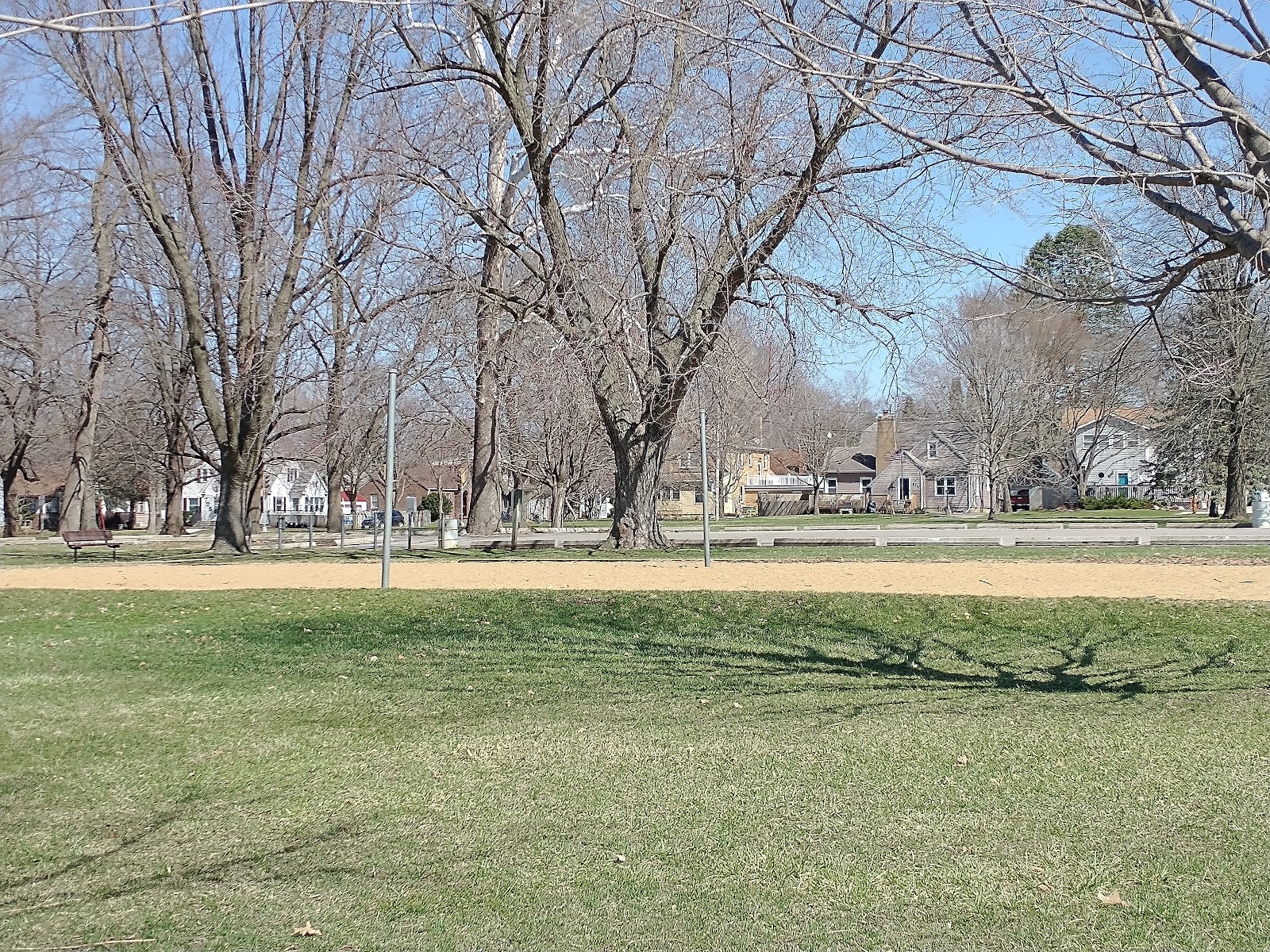
Mature hardwoods and open lawn. The day has two halves.
A mature Midwestern park is two landscapes in one place: closed canopy and open lawn, side by side, and they behave in opposite ways through the day.
Under the canopy the light is soft, dim and stable — it changes slowly, because the leaves are doing most of the modifying rather than the sun’s angle. On the open lawn the light is bright and changes continuously, because there is nothing between the sun and the grass.
That means the two halves of the park have different best hours, and knowing which is which is more useful than any technique. Broadly: the lawn works at the ends of the day and the canopy works through the middle — which is a clean division and the reverse of what most people assume.
The trees are the reason and they are worth understanding. Iowa hardwoods — sugar maple, bur oak, hackberry, black walnut, basswood — carry dense rounded crowns of broad leaves, and they cast genuine solid shade with no dapple to manage.
That is worth stating plainly because it is the opposite of the arid regions elsewhere in this library, where canopies are filigree and midday shade does not really exist. Under an Iowa hardwood at noon, a face is evenly lit and a portrait is straightforward. The shade is real.
The second fact about a municipal park is that it is public. There will be people using it — dog walkers, families, runners — and unless the booking includes exclusive use, that is a background condition rather than an occasional interruption.
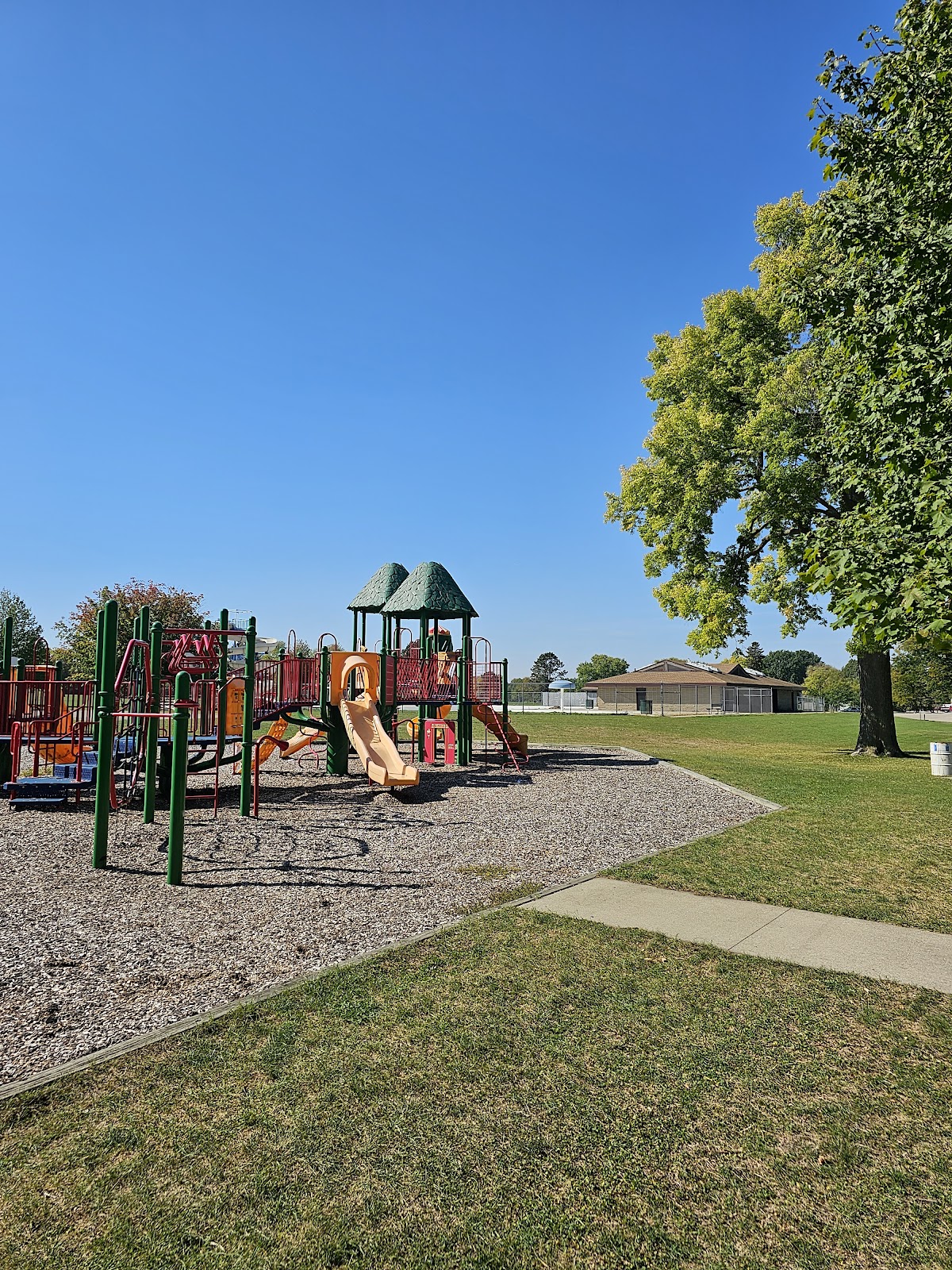
And the third is that the built provision is usually modest: a shelter or pavilion, perhaps a bandstand, paths and a car park. That is the rain plan and the midday shade, and establishing what exists matters.
Raymond sits at about forty-two and a half degrees north at roughly nine hundred feet, near Waterloo in the Cedar Valley. The June noon sun reaches around seventy-one degrees, the December noon sun about twenty-four, days run from about nine hours to fifteen hours twenty-five, and civil twilight is roughly thirty-three minutes — generous.
What follows is the day in order. We have not photographed a wedding here; what is bookable, whether exclusive use is available and the permitted hours are questions for the park authority.
The Byrnes Park at a glance
| Where | A municipal park near Waterloo, in the Cedar Valley, Iowa |
| Two landscapes | Closed canopy and open lawn, with opposite best hours |
| The division | Lawn at the ends of the day, canopy through the middle |
| The key fact | Iowa hardwoods cast solid shade — no dapple, so midday works |
| Ask first | What is bookable, whether exclusive use exists, permitted hours |
Dawn to midday
The first hour belongs to the open lawn and it is the best light the park has.
With the sun below about fifteen degrees the beam travels almost horizontally, raking across the grass so that every contour, mown edge and tree shadow throws a long line. A lawn that reads as a flat green field at noon acquires shape at dawn.
It is also the calmest hour. Overnight the ground cools and the air above stabilises, so wind is at its daily minimum at sunrise and builds through the morning — which matters for anything needing stillness, and in a park that means a veil, a table setting or a slow shutter.
Dew is the morning bonus and it is brief. On a clear calm morning after a cool night, dew sits on grass and foliage and is gone within an hour of the sun reaching it — and a lawn in low raking light with dew on it reads as a field of tiny highlights, which is a texture available at no other time.
Ground mist is the other dawn possibility and it is worth setting an alarm for. In a river valley — and the Cedar Valley is one — cool air settles into the low ground overnight, and on a clear calm morning after a warm damp day shallow mist forms in the hollows and burns off within an hour. A couple in waist-deep mist with a low sun behind them is an exceptional frame and entirely unplannable.
Through mid-morning the sun climbs fast at this latitude and the lawn hardens. By nine or ten the raking has gone, the shadows have shortened, and the grass flattens into an even field again.
This is when the day moves under the trees, and the canopy edge is the first place to go. A metre or two inside a tree line, a subject has soft directional light arriving from the open lawn in front of them and three or four stops of darkness behind — separation without equipment, and the most reliable free portrait light in any wooded place.
The edge that works is the one facing the right way for the hour, which means walking the perimeter rather than using the nearest one. An edge facing the open lawn with the sun behind the camera gives front light; an edge with the sun behind the trees gives a rim and a dark background. Both are good and they are different.
By the middle of the day the park is at its most usable and this is the thing that distinguishes an Iowa park from a Southwestern one. At seventy-one degrees of sun elevation the open lawn is difficult — shadowed eye sockets, a bright forehead, a hard nose line — but under the hardwood canopy it is genuinely fine.
Dense broad-leaved crowns block the direct beam almost entirely, and the light that reaches beneath has been diffused twice: once by the leaves and once by bouncing off the leaf litter and grass. That gives soft even illumination with a gentle downward direction and no hard patches.
The one thing to watch is the gaps. A canopy is not solid, and there will be openings that throw hard bright spots — a patch across a face is unusable, and the fix is a step of half a metre rather than anything technical. The gaps move as the sun does, so this is a check rather than a plan.
Midday also lights the shafts, where the canopy is high enough. A gap in a tall hardwood canopy at a steep sun angle throws a defined beam onto the floor, visible if there is any haze or dust in the air. A subject standing in one with the surrounding wood two or three stops down is theatrical, and it needs only the position.
Afternoon to dusk
The afternoon reverses the morning and adds wind, and then it gives the best light of the day.
By early afternoon the ground has heated and a thermal breeze is established, building through the afternoon. Under a canopy that shows as movement in the leaves, which matters only for frames using foliage as texture; on the open lawn it shows in hair and fabric, which needs a faster shutter — a five-hundredth rather than a two-hundred-and-fiftieth.
Summer humidity is worth naming here because it changes the numbers. Iowa summers are humid, and water vapour scatters light and fills shadows — so a sunlit lawn in July carries perhaps a stop and a half less contrast than the same sun angle in a dry climate. Shadow edges are softer, eye sockets hold detail, and a lawn portrait at three in the afternoon is workable rather than impossible.
It also hazes distance and pales the sky, so a wide frame across the park will read lower in contrast in August than in October, and an empty summer sky contributes nothing.
Through mid-afternoon the light improves steadily. Once the sun is below about thirty degrees the lawn regains its raking, the canopy edges begin to rim, and the beam warms as it travels a longer air path.
The last ninety minutes are what the park is for and there are three frames to know.
Backlit at the canopy edge, with the sun low behind the trees: the leaf edges rim, the trunks silhouette, and a subject standing just inside the shade is haloed with a dark wood behind them. That is the strongest frame a park makes and it needs the sun blocked behind a trunk to avoid flare.
Front-lit on the open lawn, with the sun low behind the camera: warm modelled faces with the park as a background, and the long grass shadows giving the ground structure.
And the silhouette, against a sky that at this latitude in autumn can be substantial.
Then the dusk, which here is generous. Civil twilight at forty-two and a half degrees north runs about thirty-three minutes — among the longer figures in this library and half again what the Texas venues get — which turns the blue hour into a working session rather than a scramble. Three or four setups fit comfortably.
Under the canopy that dusk is shorter, because the trees take the last light before the sky does. So the final frames belong on the open lawn, and the canopy frames belong earlier.
The park’s own contribution after dark depends entirely on whether there is any lighting, and municipal parks usually have very little. That is worth establishing, because a park with no lighting is genuinely dark after dusk and every frame is lit — whereas one with path lighting or a lit shelter has a background to work with.
If there is none, the compensation is the sky. Rural Iowa away from the towns has relatively little light pollution, which means a thirty-second exposure on a tripod will show stars — and a lit shelter or a couple with a small warm source under a visible sky is a frame that no urban park can make.
- Lawn at the ends of the day, canopy through the middle — the reverse of instinct
- A metre inside the canopy edge is the most reliable free light anywhere
- Iowa hardwoods give solid shade; a midday portrait under one is straightforward
- Half a metre fixes a dapple patch on a face; the gaps move as the sun does
- Thirty-three minutes of twilight — three or four setups, on the open lawn
The trees, the shelter and the year
The species are worth knowing individually, because in a mature park they are the whole resource.
Bur oak is the signature of the Iowa uplands. The original vegetation here was oak savanna — scattered large-crowned oaks over prairie grass, maintained by fire — and a surviving bur oak is enormous, broad and gnarled, with thick corky bark that photographs as strong texture at close range. A bur oak’s crown is wide enough to shade a group of thirty.
Sugar maple is the autumn tree and the shade tree. Dense, rounded, broad-leaved, it casts the cleanest solid shade in the park, and in October it turns scarlet and orange more reliably than anything else here.
Basswood is worth noticing in June, when it flowers — small, pale, and intensely fragrant, enough to define the area beneath it for a fortnight. It is not a photographic fact so much as one everybody present will remember.
Black walnut is the one with the open canopy: compound leaves and a relatively sparse crown mean it casts dappled rather than solid shade, which makes it the exception to the Iowa rule and a tree to avoid standing anyone under at midday.
Hackberry has distinctive warty, corky bark — genuinely unusual texture at close range — and silver maple, along any watercourse, has pale undersides to its leaves that flicker between green and near-white in wind, which reads as shimmer in a photograph.
The shelter is the built provision and it is the rain plan. A park pavilion is optically a large soft source with a hard mask: light enters from the open sides, bounces off the floor and the underside of the roof, and falls off with depth. At the edge the light is flat; two metres in it has direction and a good ratio.
The roof material decides how much it gives. A solid roof gives clean even shade; an open-sided shelter with a pale soffit gives a useful overhead bounce; a dark timber underside returns very little and the space is two stops darker.
Establishing what the shelter actually is matters, because in an Iowa summer a thunderstorm is a real possibility and a pavilion is the difference between a plan and a scramble.
The year ranks clearly for a park.
Mid to late October is the best fortnight, and it is not close. Iowa hardwoods turn properly — sugar maple to scarlet and orange, oak to russet, hackberry and basswood to yellow — and in a mature park those turn as individual events rather than as a mass, which means a single tree can fill an entire background.
The timing moves with the year: a warm dry autumn delays and dulls it, a cool wet one brings it forward and intensifies it. Plan a fortnight either side of the third week rather than a specific weekend.
Spring’s two-week window is the other one worth knowing. Before the canopy closes in early May, light reaches the woodland floor and the spring ephemerals appear — Virginia bluebells, trillium, spring beauty, Dutchman’s breeches — in real quantity. A woodland floor in flower under bare branches is genuinely spectacular and it lasts a fortnight.
Summer is green, humid and long-lit, with fifteen hours twenty-five of daylight at the solstice — the most schedule room of any season, and the canopy makes the middle of the day workable.
Winter is cold, snowy and short: about nine hours in December, with long stretches of flat grey. For a park that is a real limitation, because the interest is foliage and there is none — but bare hardwoods against a grey sky read as fine black branch structure, which is a graphic frame no leafed tree can make and which lasts four months.
Snow on a bur oak’s gnarled limbs is the best winter frame the park has, and an Iowa December offers it reasonably often. The honest caveat is that a park with no building and no lighting is a difficult winter venue, and the shelter question matters most then.
More frames from The Byrnes Park
The Byrnes Park wedding photography: common questions
How does the day divide?
Open lawn at the ends, canopy through the middle. That is the reverse of what most people assume, and it follows from the shade being genuinely solid.
Why is Iowa shade different?
Hardwoods carry dense rounded crowns of broad leaves, so they block the beam almost entirely. A midday portrait under one is straightforward, unlike under a filigree canopy.
What is the most reliable free light?
A metre or two inside the canopy edge — soft directional light from the open lawn in front, three or four stops of darkness behind.
Which tree should I avoid at midday?
Black walnut. Compound leaves and a sparse crown mean it dapples rather than shades, which makes it the exception to the Iowa rule.
How long is the dusk?
About thirty-three minutes — among the longer figures in this library. But the canopy takes the last light first, so the final frames belong on the lawn.
What should I check about the shelter?
What its roof and soffit are. A pale soffit gives a useful overhead bounce; a dark timber underside is two stops darker and gives almost nothing.
More Iowa venue guides
We are writing a photographer’s guide to every venue we would happily shoot in Iowa. Here are three more, plus the full index:
- The Englert Theatre, Iowa City: A Walk Through the Building
- The Fox Ridge Winery, Raymond: The Problem, and Four Ways Out of It
- The University of Iowa Memorial Union: The One Decision That Governs Everything
Planning a wedding at The Byrnes Park?
Solid shade and an open lawn. Tell us your date.