 The Hotel St. Francis: A Walk-Through of Santa Fe’s Oldest Hotel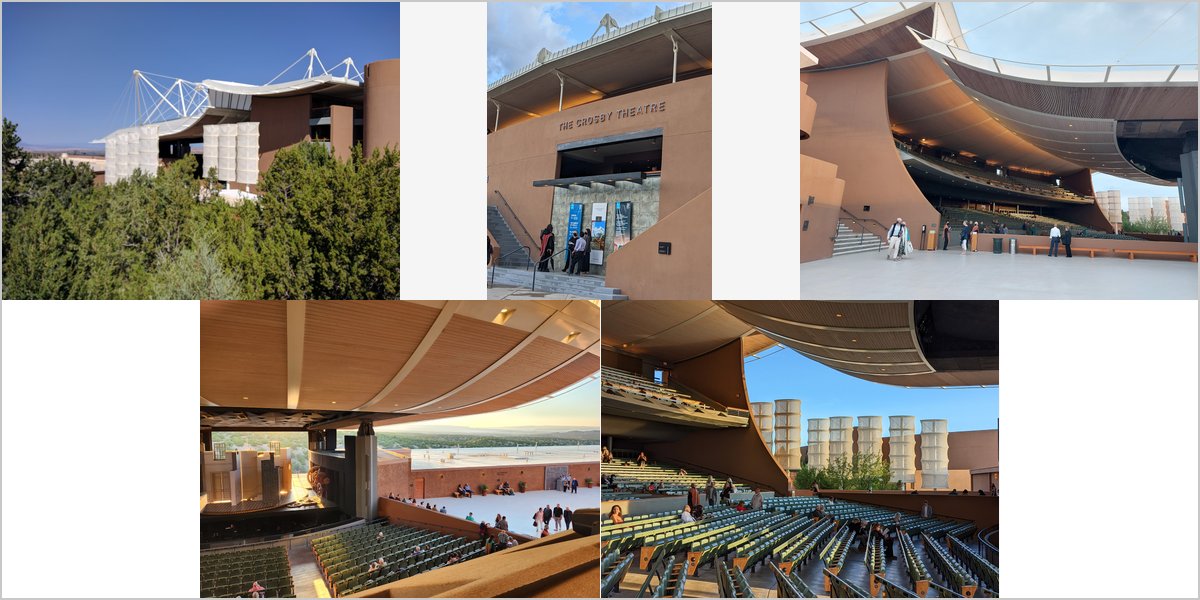
April 29, 2026
The Santa Fe Opera: Building the Shot List at an Open-Air Theatre
A theatre with a roof and no walls, on a mesa at 7,000 feet. It is neither an indoor nor an outdoor venue, and that is exactly what makes it interesting.
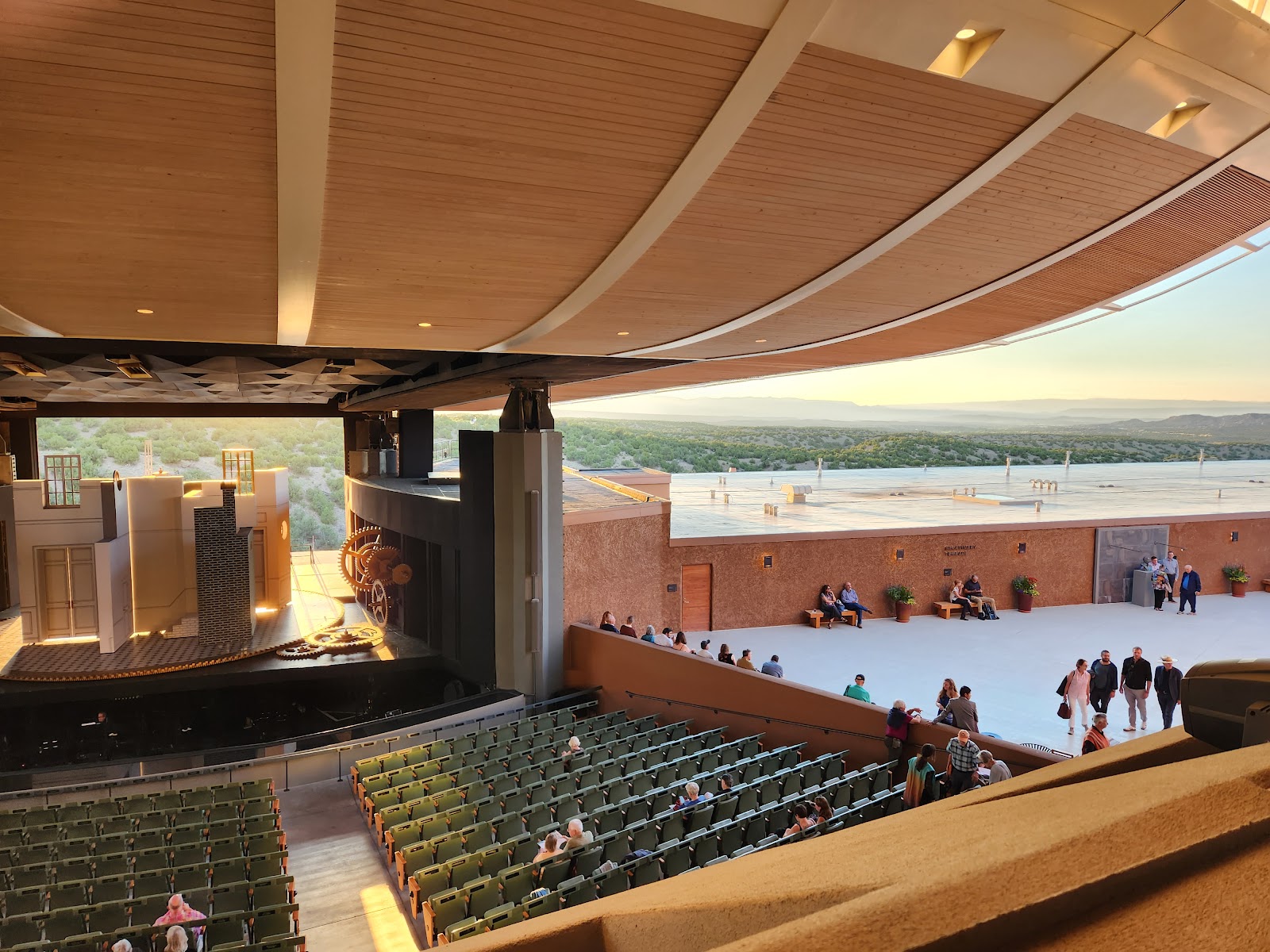
The Santa Fe Opera occupies a hillside site north of the city, in a theatre rebuilt in 1998 to a design by James Polshek that keeps the company’s founding principle: a roof over the audience and stage, with the sides open to the landscape. From many seats you can see the Jemez mountains to the west through the open structure, and the Sangre de Cristos rise behind.
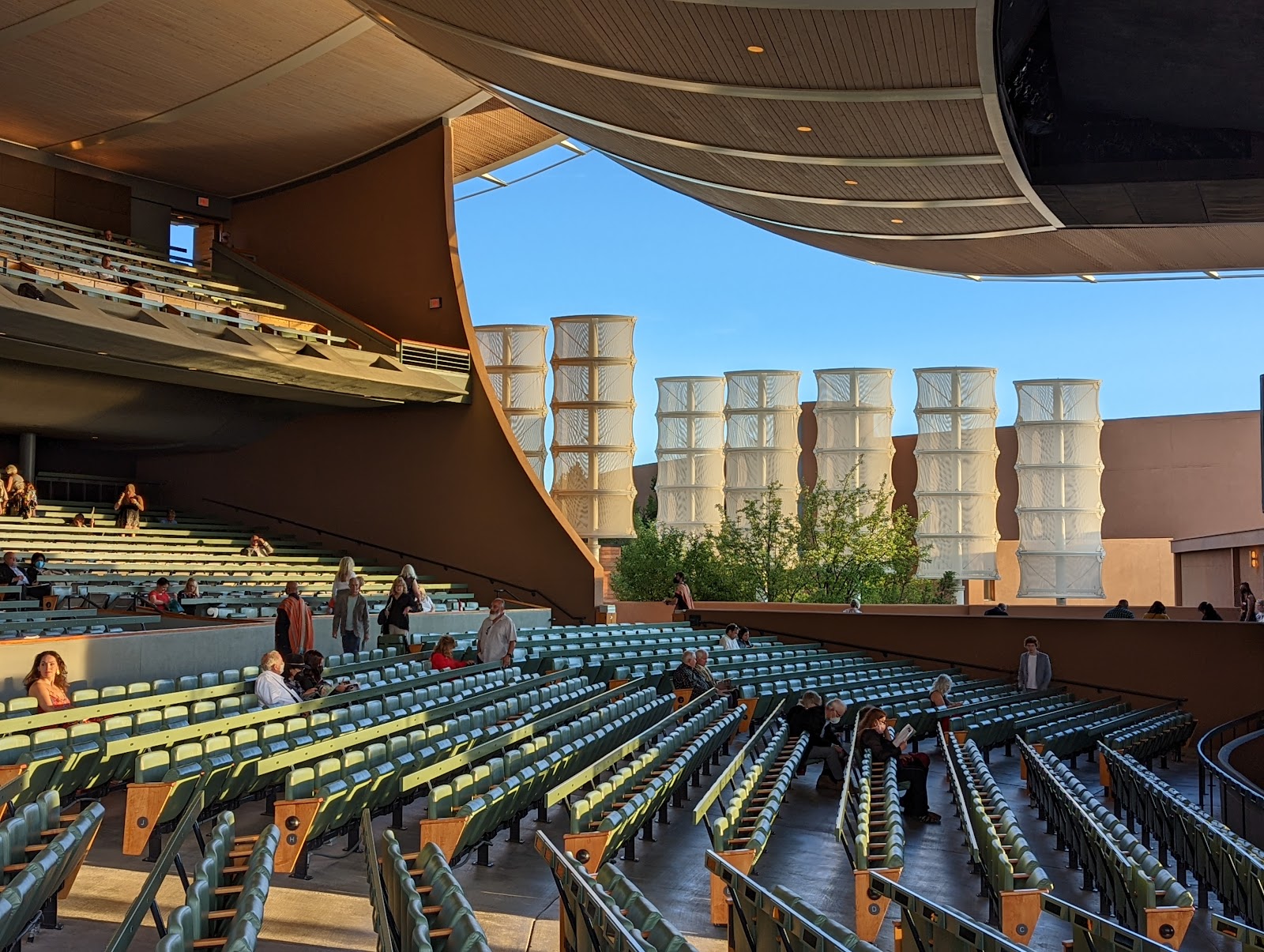
Photographically this is a genuinely unusual proposition, because the building is a hybrid. It has a roof, which means architectural shade and shelter from sun and rain. It has no walls, which means daylight from the sides, wind, and a landscape visible from inside the structure. That combination produces light you will not find at a conventional theatre or a conventional outdoor venue.
This guide is a shot list, because a hybrid building rewards knowing exactly which frames you want. We have not photographed a wedding at the Santa Fe Opera; the behaviour of covered-but-open structures and high-desert light is predictable. Which spaces are available, stage access and what the company permits are for their events team, and stage access is worth asking about explicitly.
Santa Fe Opera at a glance
| Where | On a mesa north of Santa Fe, New Mexico — roughly 7,000 feet |
| Built | Present theatre 1998, by James Polshek; open-sided with a roof |
| Views | Jemez mountains to the west; Sangre de Cristos behind |
| Light | Architectural shade under the roof, lateral daylight from the open sides |
| Ask first | Stage access, which areas are included, and wind and weather policy |
Why a roof with no walls is such good light
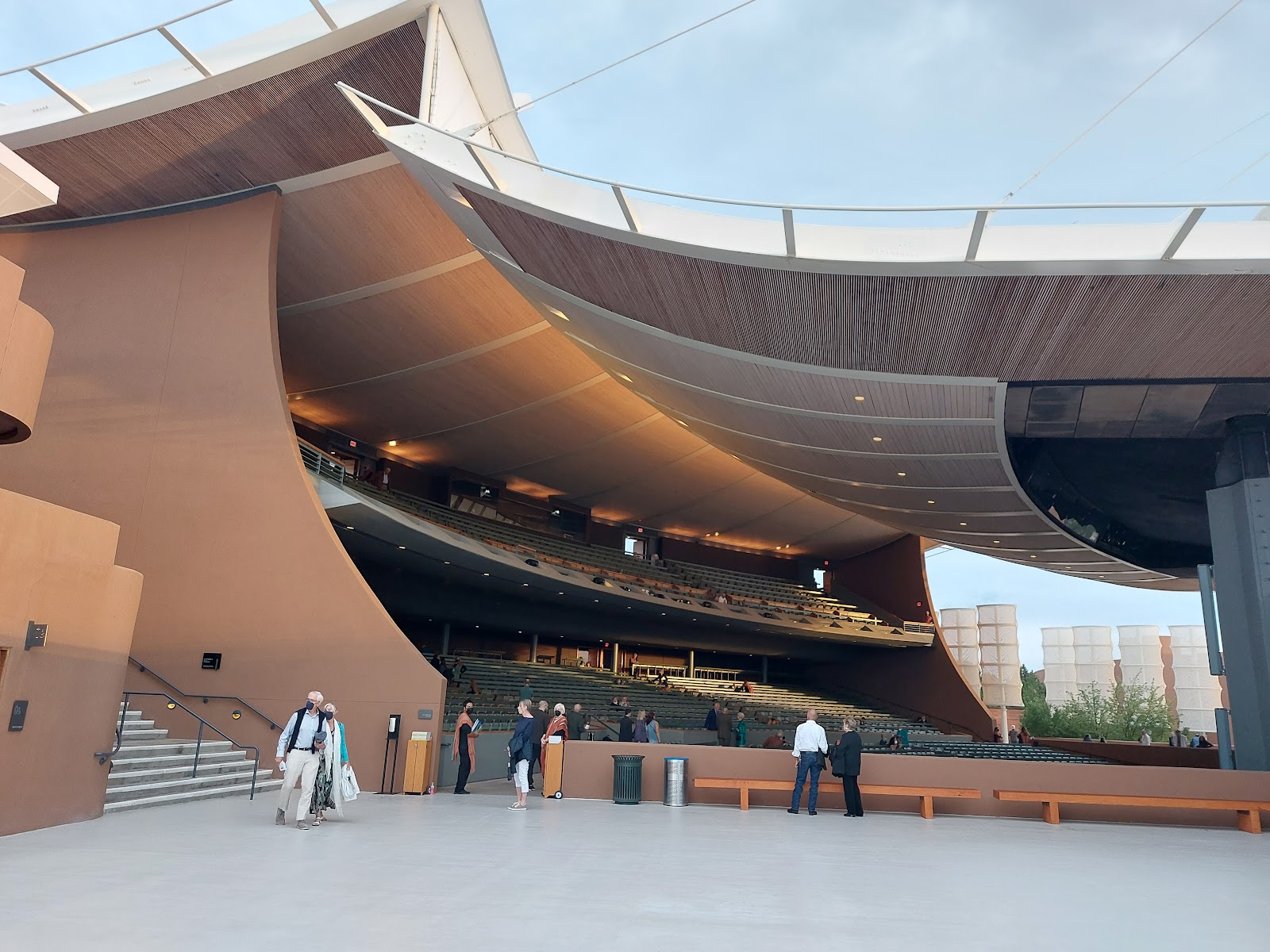
The roof blocks the top light that would otherwise shadow eye sockets, and the open sides admit broad daylight at head height. That is, in effect, an enormous natural softbox with a built-in top gobo — the exact arrangement a studio photographer would construct deliberately.
At 7,000 feet, where open sun produces a contrast range no sensor holds, having a structure that removes the overhead component while keeping the lateral one is unusually valuable. Under that roof you get soft, directional, flattering light in the middle of the day, which is when nowhere else in the high desert is workable.
It also means the light changes character through the day as the sun moves relative to the open sides. Morning and evening, low sun comes in sideways and rakes across the structure; midday, the roof shades everything and the light is soft and cool. Both are useful and they are completely different, so knowing the orientation matters.
The shot list, in priority order
Six frames. The first two are what the venue exists to give you.
- Couple under the roof with the landscape behind. Shot toward an open side so the mountains read beyond the structure. This is the frame that exists nowhere else.
- On the stage, if access allows. An open-sided stage with desert visible through it is a genuinely extraordinary setting — theatre architecture with a landscape backdrop rather than a painted one.
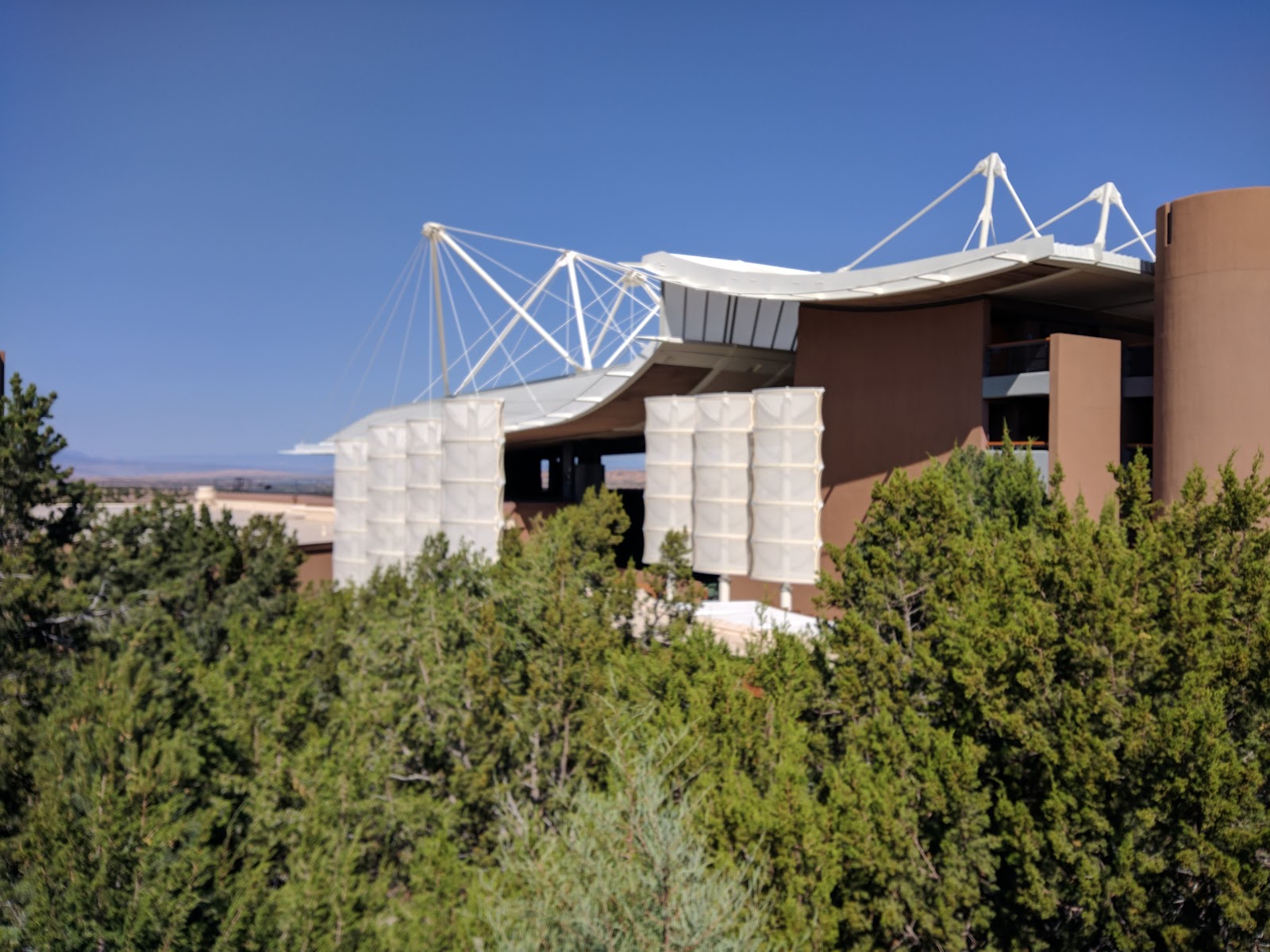
- The architecture from outside. Polshek’s structure is sculptural and sits on a mesa. Shot from below or along the approach in raking light, it reads as architecture rather than as a building.
- Seating and structure, wide. The sweep of the auditorium with the roof above and the open sides beyond states the hybrid nature of the place in one frame.
- The landscape alone. Jemez to the west at sunset, Sangre de Cristos catching alpenglow to the east. Worth a frame in its own right and it costs nothing.
- Dusk from the site. At altitude the post-sunset sky is intense and long-lasting, and a hillside site with an open structure is an ideal vantage.
Wind, weather and the practical realities
An open-sided structure on a mesa is windy. That is not incidental — it is a defining condition, and it rules out light modifiers entirely. A softbox on a stand in that setting is a hazard rather than a tool, so plan for bare or minimally modified flash, and expect hair and veils to move continuously. Shoot bursts; the movement is an asset if you catch the right frame.
The roof does provide genuine rain shelter, which in monsoon season is worth a great deal. July and August bring near-daily afternoon thunderstorms in northern New Mexico, and a venue where you can stand dry while a storm crosses the valley is unusually good — the storm itself, seen through the open sides, is one of the most dramatic backdrops available anywhere.
Temperature is the other practical matter. At 7,000 feet on an exposed mesa, the drop after sunset is substantial and faster than visitors expect. Warn the party, and plan any extended outdoor block before the sun goes rather than after.
One further note: the site is some distance north of the city, so travel time is real and there is no walking to somewhere else if the plan fails. Whatever you need has to be on site.
Timing, orientation and the timeline
The key piece of homework is which way the open sides face, because that determines when lateral light enters and from which direction. With the Jemez to the west, a westward outlook means sunset is in your view — which gives spectacular backdrops and means you are shooting into the light for those frames.
That is manageable and worth planning: expose for the sky, light the couple with a bare flash, and you get a lit couple against a high-desert sunset seen through a theatre structure. Without fill you get a silhouette, which is also a strong image but should be a choice.
Midday, use the roof. That is the period when the structure’s shade is the best light for miles and when open ground anywhere in the region is unusable. Counterintuitively, a midday wedding here is more viable than at almost any other outdoor venue in New Mexico.
And protect the twenty minutes after sunset. At altitude the sky colour is intense and lasts, the mountains to the east often catch alpenglow, and a hillside site gives you an uninterrupted view of both. It is the best frame of the day and it takes ten minutes.
What works in your favour
- A roof with open sides is a natural softbox with a top gobo — outstanding light at midday
- Mountain views visible from inside the structure, which no conventional theatre offers
- Genuine rain shelter in monsoon season, with storms visible as dramatic backdrops
- Sculptural architecture on a mesa, strong in raking light
- Intense long-lasting post-sunset sky colour with eastward alpenglow
What to plan around
- Persistently windy — light modifiers are effectively unusable
- A westward outlook means shooting into the sun for the best backdrops
- Sharp temperature drop after sunset at 7,000 feet on an exposed site
- Some distance from the city, with no alternative location within walking reach
- Stage access is where much of the value sits and must be confirmed
More frames from Santa Fe Opera
Santa Fe Opera wedding photography: common questions
Why is the light good under an open-sided roof?
Because the roof blocks the overhead component that shadows eye sockets while the open sides admit broad daylight at head height — effectively a huge natural softbox with a built-in top gobo. At 7,000 feet, where open sun is unmanageable, that makes the structure the best light for miles in the middle of the day.
Is a midday wedding viable here?
More so than at almost any other outdoor venue in New Mexico, which is counterintuitive. The roof’s shade is genuinely good light precisely when open ground in the high desert is unusable. Save the open-sided frames facing the landscape for the low-sun hours.
How bad is the wind?
Defining rather than incidental. An open structure on a mesa is windy enough that light modifiers are unusable — plan for bare or minimally modified flash. The upside is continuous hair and veil movement, which is an asset if you shoot bursts rather than single frames.
Does the roof help in monsoon season?
Considerably. July and August bring near-daily afternoon thunderstorms, and a venue where everyone stays dry while a storm crosses the valley is unusually good — the storm seen through the open sides is one of the most dramatic backdrops available anywhere.
What should we confirm before booking?
Stage access, because an open-sided stage with desert visible through it is the most extraordinary setting the venue has and much of its photographic value sits there. Also confirm which areas are included and the wind and weather policy, and remember there is nowhere else within walking distance.
More Santa Fe venue guides
We are writing a photographer’s guide to every venue we would happily shoot in Santa Fe. Here are three more, plus the full index:
- The Santa Fe Railyard: Field Notes on an Industrial District
- Bishop’s Lodge: A Season-by-Season Photography Guide
- The Eldorado Hotel: Working a Large Pueblo Revival Hotel
Planning a wedding at Santa Fe Opera?
A theatre with no walls is one of the more interesting light problems in the country. Tell us your date and whether stage access is included, and we will build the shot list around the structure and the storm season.