 The Portland Regency: A Season-by-Season Guide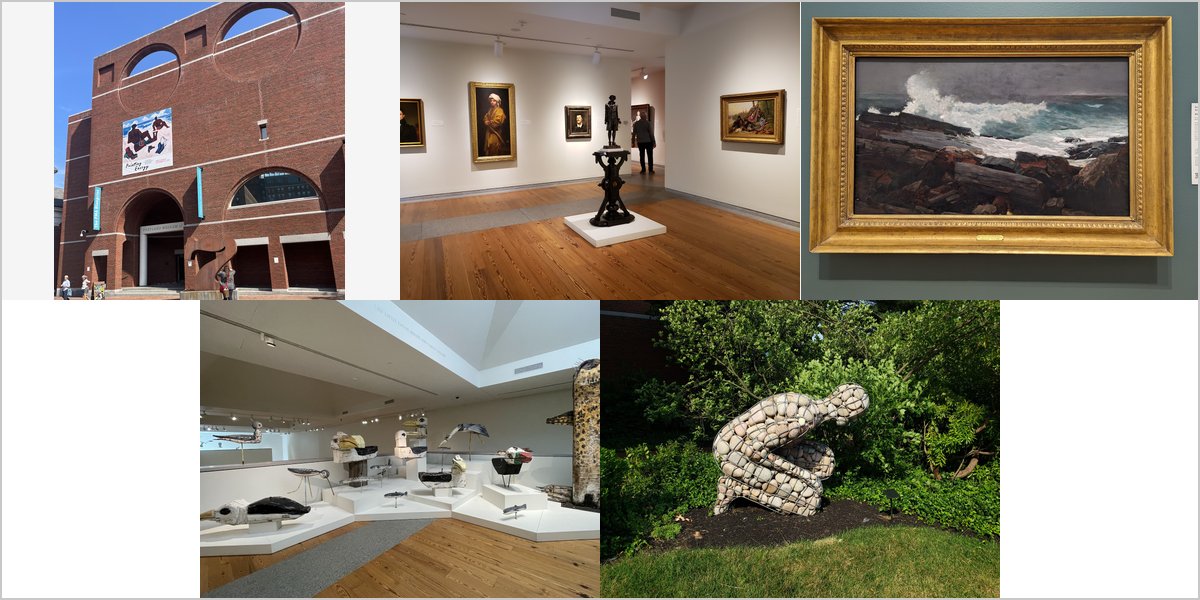
May 2, 2026
The Portland Museum of Art: Building the Shot List
Three connected buildings across a century of architecture. The 1983 atrium is the best light; the galleries are the most restricted.
The Portland Museum of Art was founded in 1882, making it Maine’s oldest public art institution, and occupies connected buildings in downtown Portland — including the 1911 McLellan House, the Beaux-Arts L.D.M. Sweat Memorial Galleries, and the 1983 Charles Shipman Payson Building designed by Henry Cobb of I. M. Pei & Partners.
Photographically that span is the opportunity. Three buildings from 1801, 1911 and 1983 respectively give you a federal house interior, Beaux-Arts galleries and a late-modern atrium — three genuinely different visual registers within one venue, which is more range than most museums offer.
This guide is a shot list, because at a museum with restricted galleries and strong architecture the useful plan is knowing which frames you want. We have not photographed a wedding here. Which spaces are included, gallery access and flash policy are for their events team, and at an art museum assume flash is restricted near works.
Portland Museum of Art at a glance
| Where | Congress Square, downtown Portland, Maine |
| Founded | 1882 — Maine’s oldest public art institution |
| Buildings | A federal-era house, Beaux-Arts galleries, and Cobb’s 1983 Payson Building |
| Light | Atrium daylight in the 1983 wing; pooled gallery lighting elsewhere |
| Assume | Flash restricted near works; access windows set by public hours |
Establish which buildings you have
The single most useful question is which of the connected buildings your event includes, because they are not interchangeable. The 1983 Payson Building’s atrium is the best light in the museum — a tall daylit circulation space with clean modern lines. The Beaux-Arts galleries are handsome and conventionally lit. The federal-era house is domestic in scale, dark and characterful.
Ask specifically, and ask whether the atrium is included, because without it you have a museum with conventional gallery lighting and no daylight interior. With it, you have somewhere genuinely excellent to photograph people.
Then accept that access windows are set by public hours and security rather than by your preferred timeline. Confirm times before the ceremony hour is fixed, not afterwards — this catches couples out repeatedly at institutional venues.
The shot list, in priority order
Six frames, spread across the buildings.
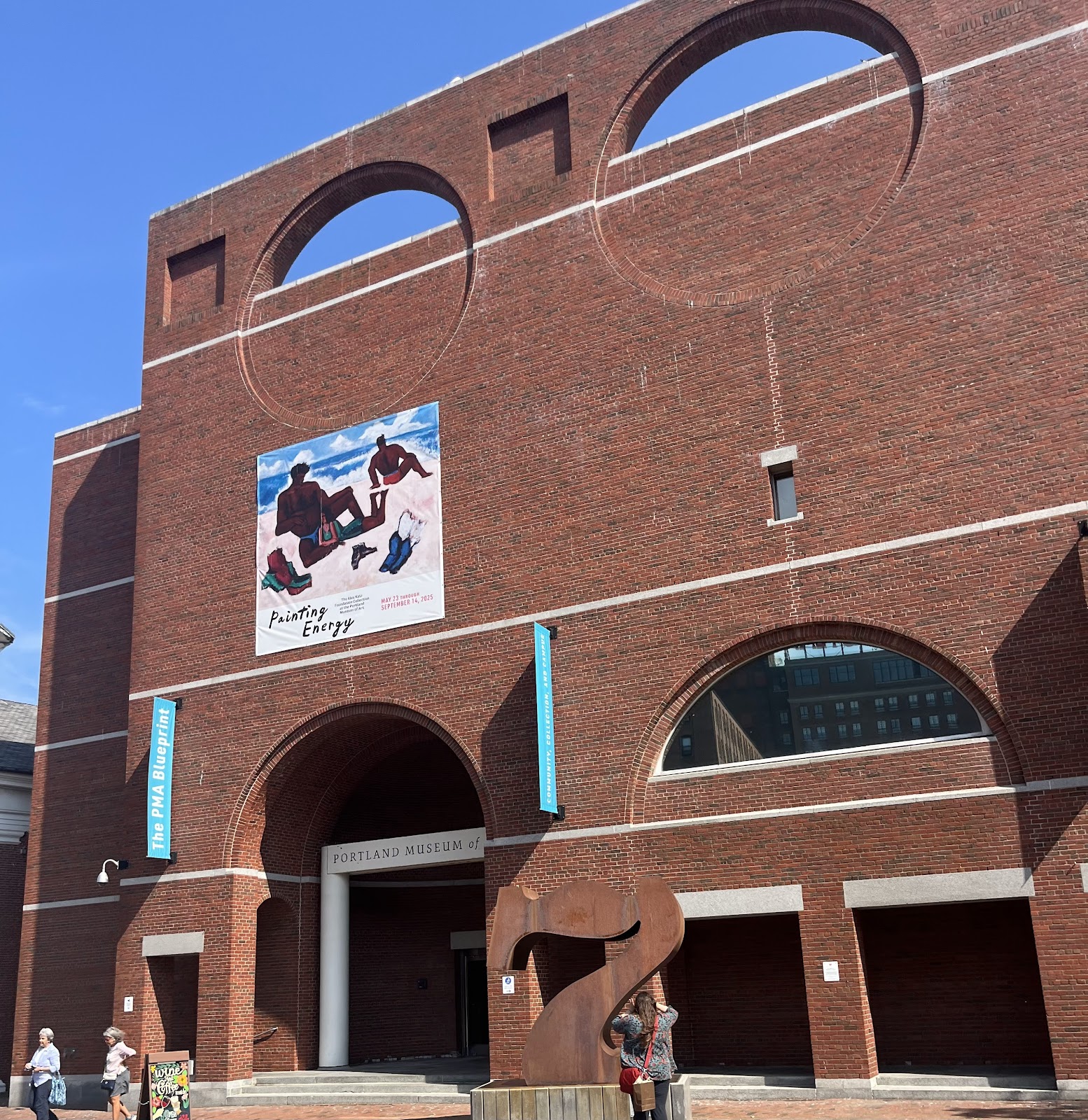
- The atrium, wide. Height, clean modern geometry and daylight. Include the ceiling — a late-modern atrium is a subject, not just a lobby.
- Atrium portrait near the glazing. Lateral daylight in a tall space, with the couple parallel to the glass rather than against it. The best portrait light in the building.
- A staircase. Whichever building’s stair you can use, it gives verticality, leading lines and elevation — a frame no gallery provides.
- Beaux-Arts gallery architecture. Not the artworks: the room. Cornices, proportions, doorways framing an enfilade. Architecture as subject.
- The federal house interior. Small, dark, warm and domestic — a complete contrast, and worth one close intimate frame.
- Congress Square and downtown. Portland’s brick and granite downtown is immediately outside and superb in raking light.
Three buildings, three lighting problems
The 1983 atrium is the easy one. Daylight, height, pale surfaces that return light rather than absorbing it — during the day it needs no equipment, and the modern palette is neutral, so skin renders cleanly with no amber or green cast to correct.
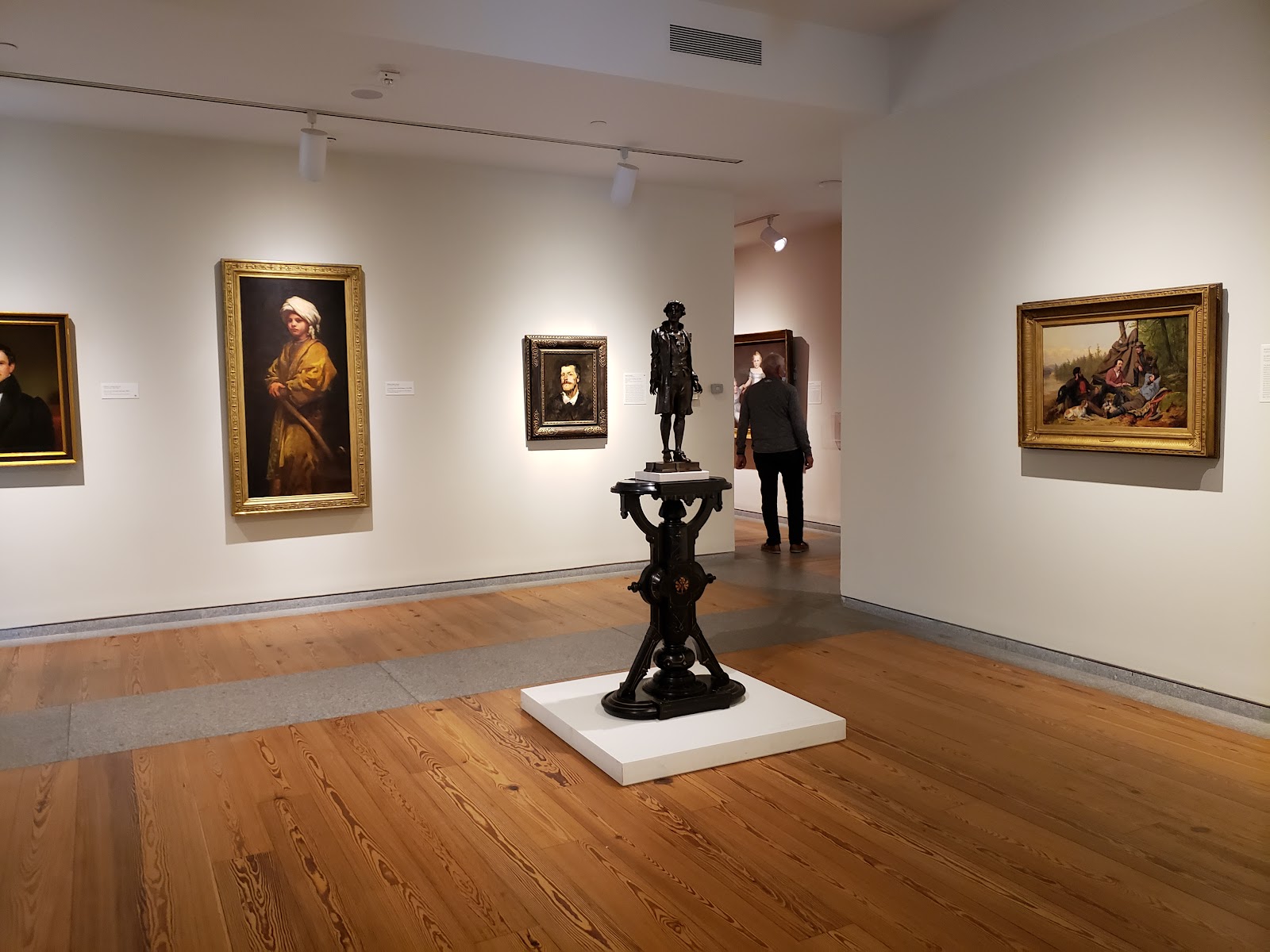
The Beaux-Arts galleries are the standard museum problem: tightly pooled warm track lighting aimed at objects, with flash almost certainly restricted near works. Work at the edge of light pools so light rakes across faces rather than dropping onto foreheads, and never position anyone directly beneath a fixture.
The federal house is the darkest — small rooms, period finishes, limited windows. The compensation is that low ceilings make bounce flash effective if any lighting is permitted, which it may not be near collection items. Set white balance separately in each building, because a daylit modern atrium and a warm period interior share nothing.
There is a broader point here about museums with mixed architecture that is worth stating. A gallery drawn from three buildings of different periods will only hold together if the colour treatment is deliberate. The obvious mistake is to correct each space to neutral, which flattens the differences and makes the set look like it was shot in one beige building. The better approach is to let each building keep its own character — the atrium cool and clean, the Beaux-Arts rooms warm, the federal house warmer still — while keeping skin tones consistent across all three. The rooms should differ; the faces should not.
Maine light, the timeline, and the Old Port
Portland’s latitude matters more than couples expect. It is far enough north that the seasonal swing is extreme: long summer evenings with usable light well past eight, and a December sunset in the middle of the afternoon. That changes the timeline fundamentally depending on the month, and it is worth calculating rather than assuming.
Coastal air is also notably clear, which is a genuine advantage — Portland’s brick and granite downtown reads with more contrast and colour than inland city stock of the same period, especially in raking light. The last hour of daylight on Congress Street is very good.
The Old Port is a short walk and is the strongest exterior option: cobbled streets, brick and granite warehouses, working waterfront, and water that reflects light upward into faces. Budget twenty minutes for it, more in summer when the evening is long.
For the order of the day: atrium portraits while daylight is strong; the Beaux-Arts and federal interiors during whatever access window applies; groups in the atrium, which has the room; and the Old Port and Congress Square in the last hour and at dusk.
What works in your favour
- Three buildings spanning nearly two centuries give unusual visual range in one venue
- The 1983 atrium offers tall daylit space with a neutral palette — clean skin tones, no equipment
- Beaux-Arts gallery architecture photographs well as architecture, independent of the works
- Clear coastal air makes Portland’s brick and granite read with real contrast in raking light
- The Old Port a short walk away, with cobbles, warehouses and water bouncing light upward
What to plan around
- Galleries are pooled, warm and almost certainly flash-restricted
- Access windows are set by public hours and security, not by your timeline
- The federal house is very dark with limited windows
- Three buildings need three different white balance settings
- Maine’s seasonal swing is extreme — a December sunset arrives mid-afternoon
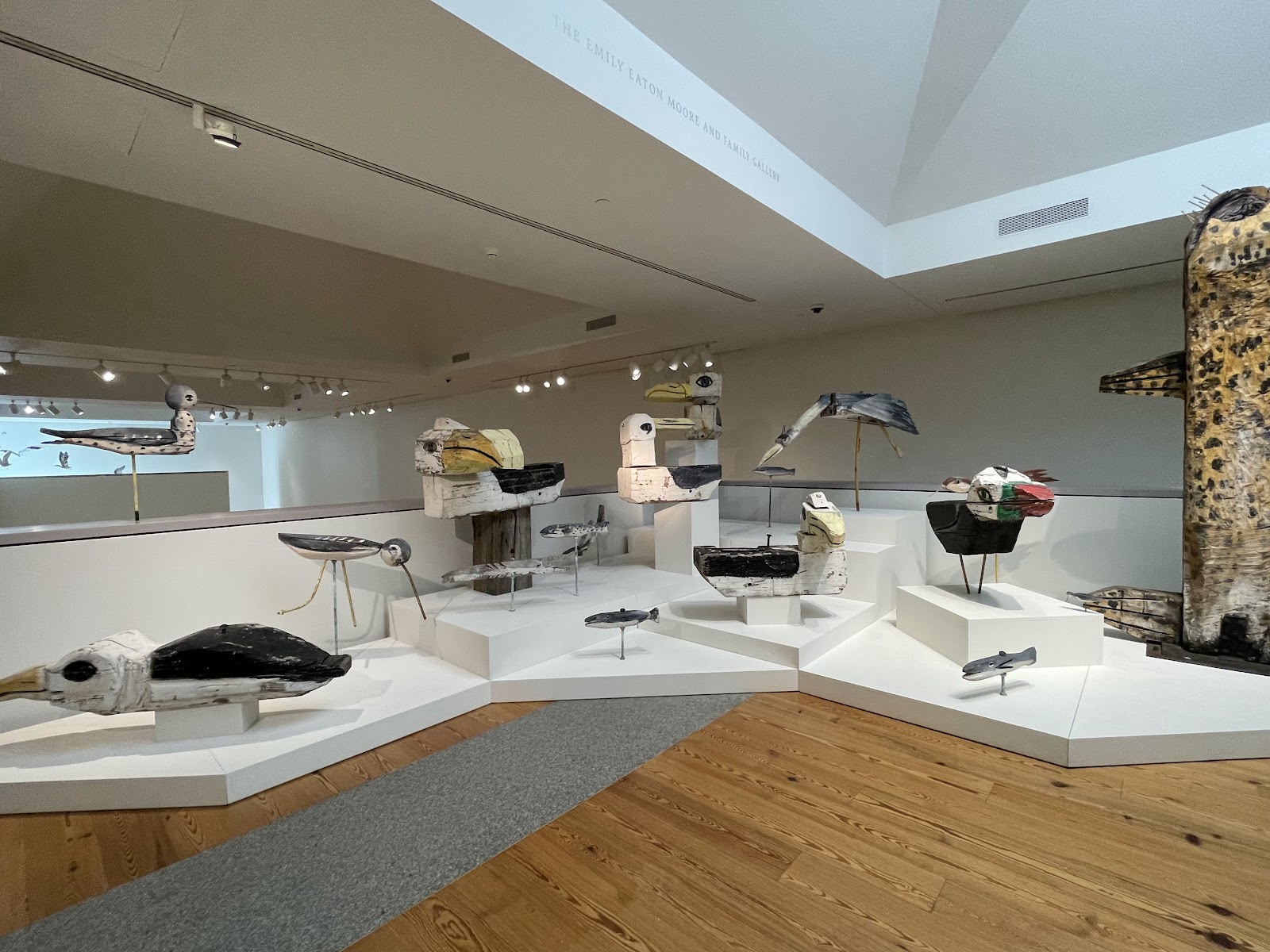
More frames from Portland Museum of Art
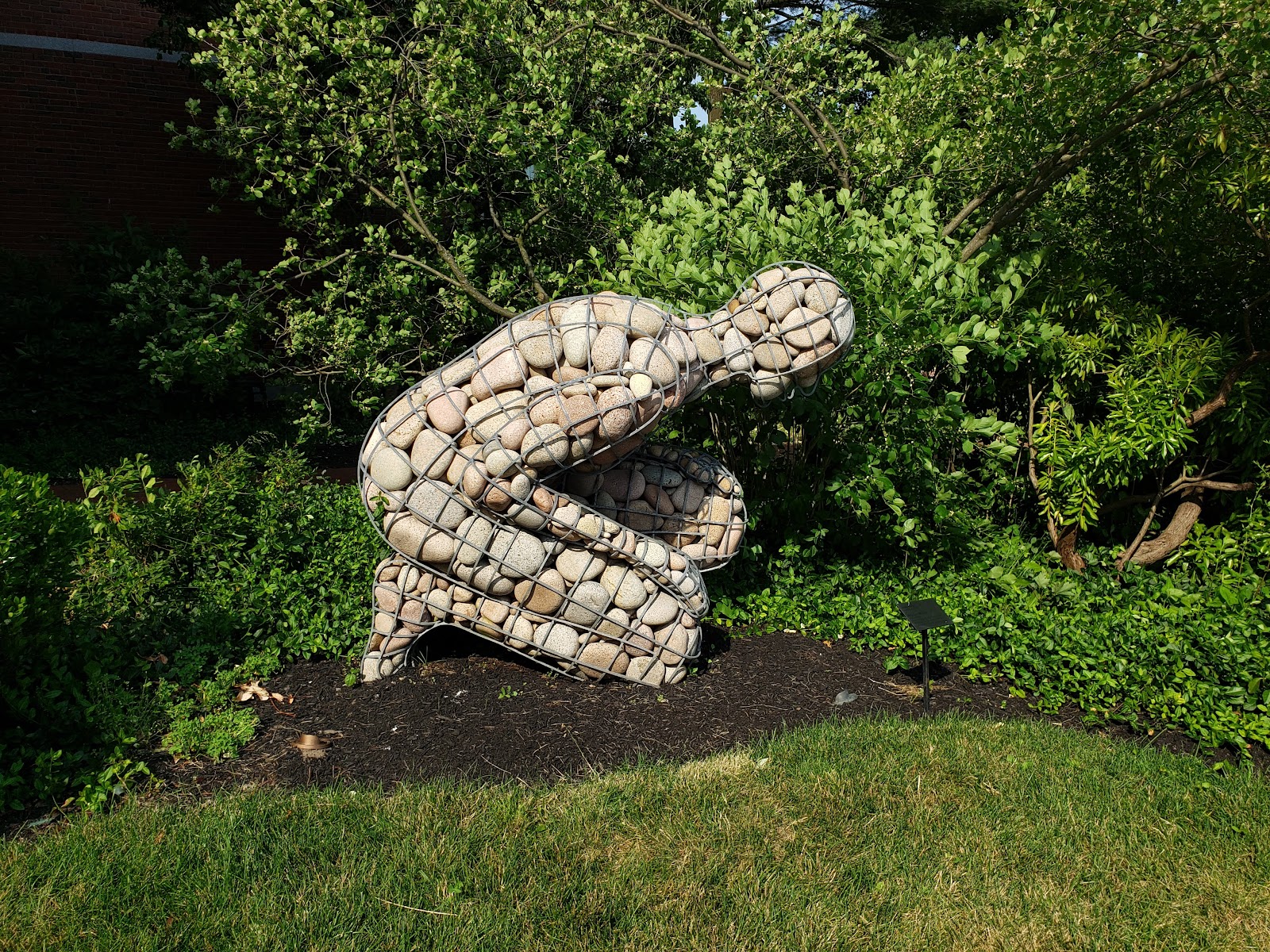
Portland Museum of Art wedding photography: common questions
Which building should we be most concerned to have?
The 1983 Payson Building, for its atrium. It is a tall daylit space with clean modern lines and a neutral palette, which makes it the best portrait light in the museum and the only genuinely daylit interior. Without it you have conventional gallery lighting and no daylight at all.
How do you photograph in the galleries?
By placement rather than illumination, since flash is almost certainly restricted near works. Position people at the edge of a light pool so it rakes across their faces, and never directly beneath a fixture — that gives a bright forehead and dark eye sockets. And shoot the gallery architecture as a subject rather than the artworks.
Why does Maine's latitude matter?
Because the seasonal swing is extreme. Summer evenings give usable light well past eight, while a December sunset arrives in the middle of the afternoon. That changes the timeline fundamentally depending on the month, so calculate it for your date rather than assuming a standard golden hour.
Is the coastal light different?
Yes, and usefully. Coastal air is notably clear, so Portland’s brick and granite reads with more contrast and colour than inland stock of the same period, especially in raking light. The last hour of daylight on Congress Street is genuinely good.
What is outside the museum?
Congress Square immediately, and the Old Port a short walk away — cobbled streets, brick and granite warehouses, a working waterfront, and water that reflects light upward into faces. Budget twenty minutes, and more in summer when the Maine evening runs long.
More Portland, ME venue guides
We are writing a photographer’s guide to every venue we would happily shoot in Portland, ME. Here are three more, plus the full index:
- The Portland Observatory: Field Notes on an 1807 Signal Tower
- The Portland Regency: A Season-by-Season Guide
- The Press Hotel: A Walk-Through of a Converted Newspaper Building
All Portland, ME Wedding Venues →
Planning a wedding at Portland Museum of Art?
Three buildings, three lighting problems, and one atrium that solves most of them. Tell us your date and what your booking includes, and we will build the shot list around the daylight you actually have.