 The Bierstube: What Changes When the Reception Is in a Bar
The Lodge at Big Mountain, Whitefish: A Walk Through the Property
Walk it upward. The strangest thing is at the top.
This property is best described by walking it upward, and the thing worth walking for is at the top and only exists in winter.
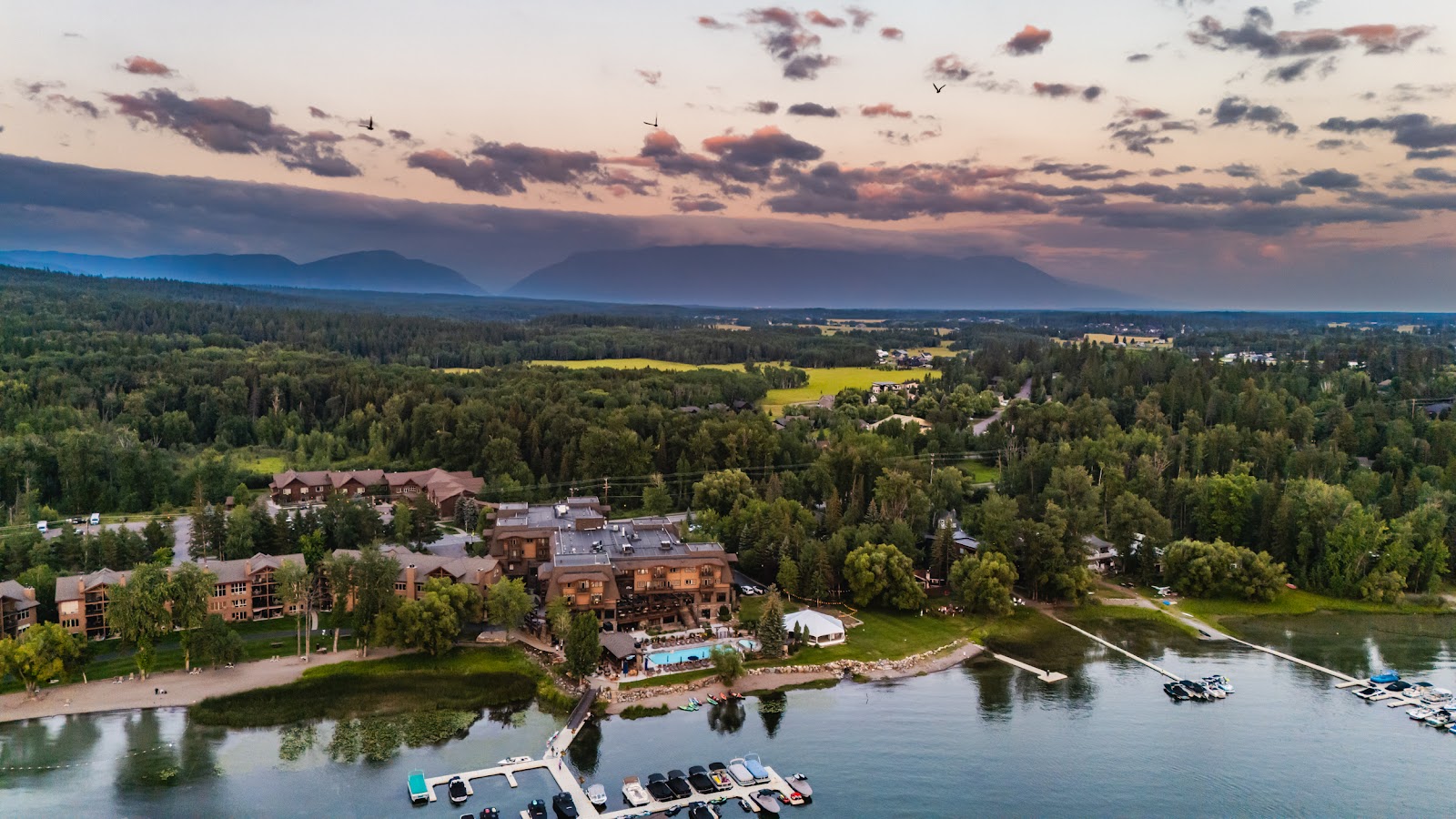
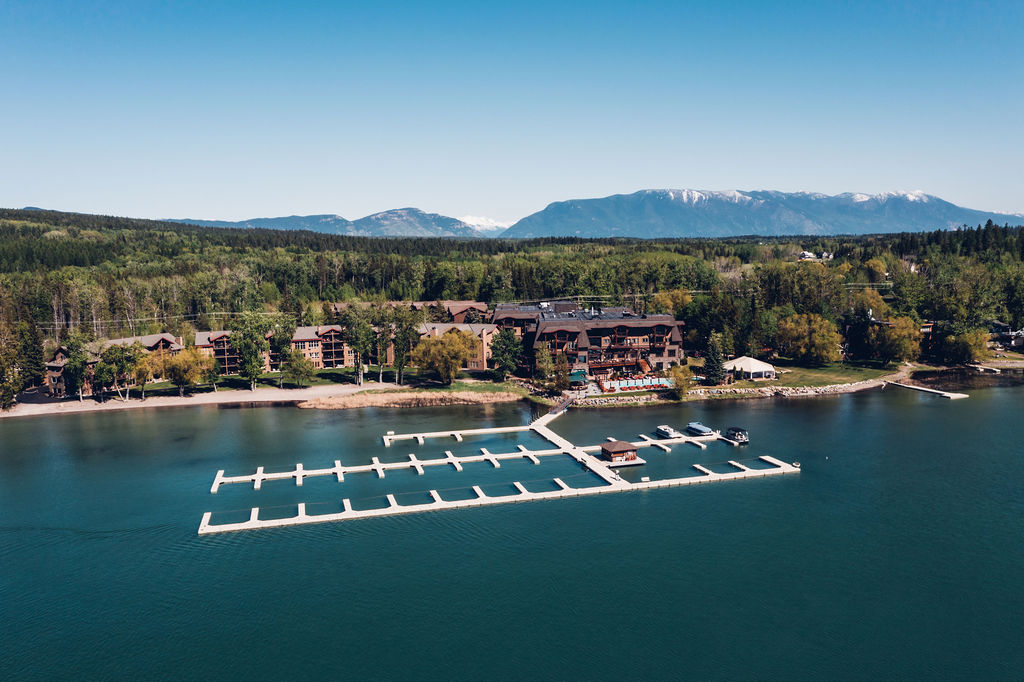
The Lodge at Big Mountain sits on the mountain above Whitefish in north-west Montana, in the Flathead valley, within reach of the northern Rockies and not far from the eastern boundary of a very large national park. The lodge is at mid-mountain elevation, with the summit above it and the town and a lake below.
So the walk goes: the lodge and its interiors, the terrace and the immediate slope, the lift, the summit, and then the view — which on a clear day includes a great deal of northern Montana.
Two facts about this place are worth establishing before any of it, because they are unusual even within this collection.
The first is the latitude. Whitefish sits at about forty-eight and a half degrees north, which is the highest latitude of any venue in this library outside Alaska, and it produces a genuinely large seasonal swing. In late June the sun sets after a quarter to ten, there are something close to sixteen hours of daylight, and civil twilight runs about forty minutes — the longest dusk in this entire collection, with a usable balance point of twenty minutes or more. In late December the sun sets before half past four, there are barely eight and a half hours of daylight, and the noon sun never rises above about eighteen degrees.
Forty minutes of civil twilight is worth pausing on. At most venues in this library the end of the day is a twelve-minute problem to be solved by planning; here it is a genuine half hour of workable, changing light, which means two or three positions rather than one and a considerably more relaxed evening.
The second fact is the rime ice, and it is the reason this mountain is known. In winter, freezing fog moving over the summit deposits ice directly onto the trees, layer after layer, until the conifers are completely encased in white and lose their shape entirely — becoming lumpen, sculptural white forms locally known as snow ghosts.
That is a photographic environment that exists in very few places, it is genuinely strange to stand in, and it is available only in the cold half of the year and only when the conditions have produced it. It is the single most distinctive thing at this venue and the second section is largely about it.
What follows is the walk, then the ghosts and the summit, then the Flathead year — which includes the best autumn window and one growing hazard.
The Lodge at Big Mountain at a glance
| Where | A mountain lodge above Whitefish, north-west Montana, at about 48.5°N |
| The latitude | A forty-minute civil twilight in midsummer — the longest in this collection |
| The distinctive thing | Rime-ice-encased conifers at the summit in winter: the snow ghosts |
| The walk | Lodge, terrace, lift, summit, and the long view over the valley |
| Ask first | Which lifts run on the date, summit access, and the indoor capacity as a number |
The lodge, the terrace and the slope
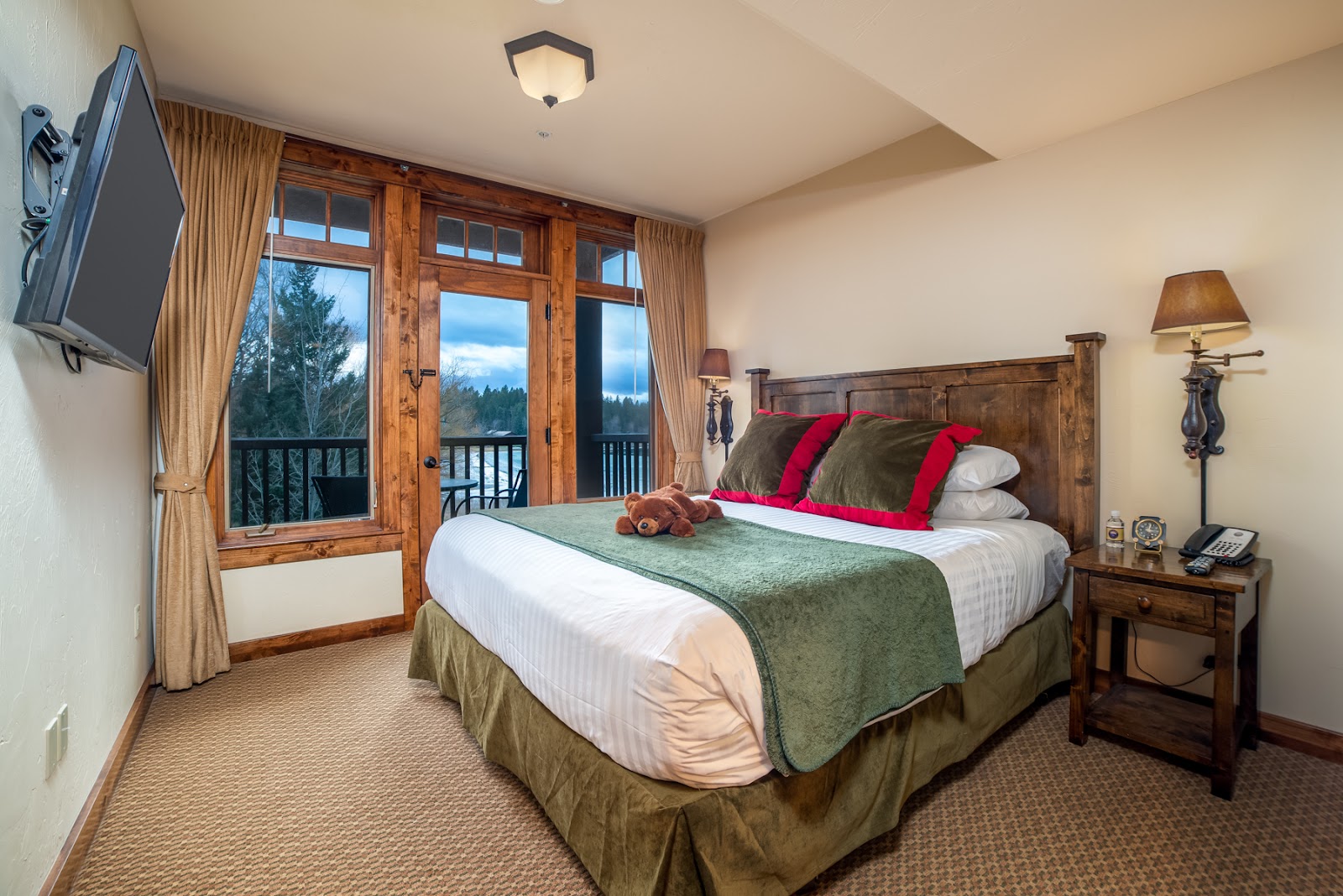
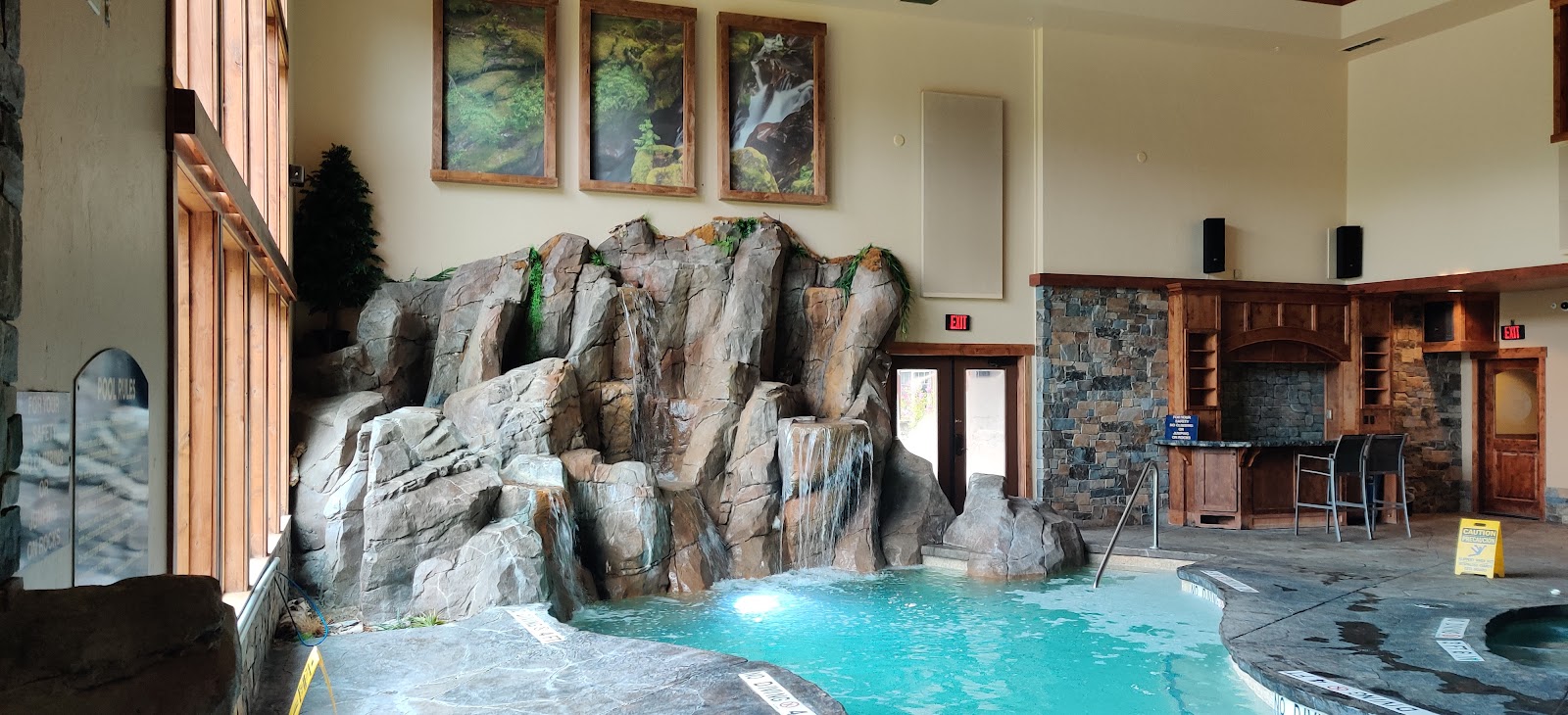
Start inside, and set the expectation honestly: a mountain lodge is timber, warm and comparatively dark, and that is a material condition rather than a design fault.
Timber reflects perhaps ten or fifteen per cent of the light falling on it against eighty for a plastered wall, so a room lined in it absorbs light rather than returning it. The practical consequence is that bouncing does not work — a light aimed at timber comes back weak and strongly orange, and most of it does not come back at all.
So light directly. One modifier close to the subject and feathered, with a good depth of dim room behind them, and they separate completely because the background sits four or five stops down and records as almost nothing. That is separation for free without a long lens or a wide aperture, it takes about ninety seconds per position, and it repeats anywhere in the building.
Warm the light you bring, because the ambient in a timber lodge is very warm and a neutral flash reads distinctly cold and looks inserted.
The windows are the building’s other half and they are worth establishing room by room. A lodge is built for its outlook, which means the principal rooms have large glazing facing the view — and at this elevation those windows see a great deal of open sky and, in winter, a great deal of snow, both of which are bright. So the range from a dark timber interior to a snowy exterior is five stops or more, which no single exposure holds.
Choose. Expose for the room and let the window blow to white, which reads perfectly well as a room with light coming in; or light the subject hard enough to balance the view, which needs real output from a modifier close to them. The middle gives a dim face and a grey window.
The snow is also, unexpectedly, the best fill light available. Snow outside a window reflects a very high proportion of the light falling on it, which means a room facing a snow slope gets a large, soft, bright source coming in — considerably brighter and more even than the same window in summer facing green ground. A lodge interior in winter is better lit than the same interior in July, which is the reverse of what people expect.
Ask which way the rooms face, because at a venue where the windows are the light and the view is the argument, aspect is the most consequential fact about the booking.
Then the terrace, which is the hinge between inside and out and probably the most useful position on the property.
A terrace at a mountain lodge gives three things at once. A covered or partly covered outdoor space, which is the best portrait light at any hour, because a roof or an overhang removes the overhead sky and leaves light arriving horizontally from a very large bright area. A raised position, which on a slope is the difference between looking across a landscape and looking up or down at it. And a foreground — railing, decking, steps, posts — that open ground does not provide.
Work about a metre inside any covered edge with the subject facing out, and step the positions, because falloff is roughly a stop per step.
The immediate slope is the third element and it is the one to use when the lift is not running. Even a short walk up or down from the lodge changes the relationship between subject and background completely: uphill of the camera, a subject separates from the ground behind them by geometry alone with no aperture required; downhill, the slope rises behind them and stacks rather than recedes. On a mountain, gradient is free composition.
The trees at lodge elevation are conifer — spruce, fir, larch and pine in the northern Rockies mixture — and they are tall, narrow, dark and widely spaced. That makes them excellent verticals and poor shade, because the crowns are high and the canopy thin. Do not plan a midday session expecting a canopy; plan it expecting a colonnade.
One of those conifers is worth knowing about specifically. Western larch grows through these forests and it is a deciduous conifer: it turns brilliant gold in the second half of October and then drops its needles. So the slopes here change colour in autumn in a way conifer country generally does not — bands and patches of gold through dark evergreen — and it lasts about a fortnight. It is one of the most distinctive seasonal effects in this collection and almost nobody plans for it.
Up the lift, and the ghosts
The lift is what makes the upper mountain a ten-minute proposition rather than a two-hour climb, and the first question is whether it is running.
A resort of this kind operates in winter and, usually, in summer, with genuine gaps between the two seasons when lifts do not turn and much is closed. So establish which lifts run on the date, whether a wedding party may ride, when, and how many at a time — because a lift has a capacity and an operating schedule and a wedding is a guest of the operation rather than a customer of a venue.
Ask also what the weather does at the top, because it is not what it is doing at the lodge: colder by several degrees, considerably windier, and frequently inside cloud when the lower mountain is clear. That is a welfare matter as much as a photographic one, and it means a summit session is a five-minute operation with positions chosen in advance and coats carried up.
Now the ghosts, which are the reason to go in winter.
When freezing fog moves over a summit, water droplets in the air freeze on contact with anything solid, building up in layers on the windward side of every surface. On trees that process continues through a whole winter, and the result is a conifer completely encased in white ice — its branches thickened, its outline lost, its shape reduced to a lumpen vertical mass. A slope covered in them looks like a field of white figures.
They are extraordinary and they are also a specific photographic problem, because everything in frame is white.
Three technical notes. Exposure: a scene of white trees on white snow under a white sky reads as mid-grey to a meter and comes back one to two stops underexposed, which turns the ice a dull grey and loses the entire subject. Add compensation, check a histogram, and push it further than feels comfortable — the ice should be near the top of the range with texture just held.
Tone: with no dark elements in frame, the picture has almost no contrast, and that is the point rather than a fault. A rime-ice landscape is a high-key subject and it should be rendered as one — pale, soft and nearly monochrome. Adding heavy contrast to it produces something that looks like a mistake.
And colour: rime ice in shade is genuinely blue, strongly, because it is reflecting a blue sky, and at this altitude that sky is a deep one. That is correct rather than an error. Neutralising it makes the ice grey and dead, so leave the shadows blue and warm only the faces.
Which brings the people. Against a field of white, a couple in dark clothing reads immediately and a couple in white does not — a bride in a white dress on a white slope among white trees will merge, and that is worth knowing at the planning stage rather than discovering it. The solutions are a dark coat, a strong colour, or deliberate placement against the one dark element available, which is usually the trunk of a tree whose windward face has not iced.
And light them. In flat overcast among rime ice there is no direction at all, which flattens a face completely. One small light at a shallow angle, warmed, restores modelling and separates skin from a background that is otherwise the same tone as it. That single light is the difference between a frame that works and a white blur.
Two practical matters. Rime ice forms in freezing fog, which means the condition that creates it often coexists with it — so the summit may be in cloud, with visibility of a few metres and no view at all. That is not a failure: trees emerging from fog at close range is the better frame anyway, and it is genuinely eerie. Work close and use the fog as the background.
And it is cold. A summit in freezing fog with wind on it is a hostile place for a party in wedding clothes, and the honest figure is minutes rather than an hour. Plan two frames, make them, and go down.
In summer the same summit is an entirely different proposition: open ground, low vegetation, wildflowers, and a long view in several directions. On a clear day that view extends over the valley and the lake below and out toward the mountains east, which is the only genuine panorama on the property. A long lens compressing ranges stacked behind each other is available up there and nowhere lower.
The Flathead, and the year
Three regional facts shape a wedding here and the first is the latitude, restated because it is genuinely useful.
At about forty-eight and a half degrees north, midsummer gives close to sixteen hours of daylight, a sunset after a quarter to ten, and civil twilight of about forty minutes — the longest in this collection, with a usable balance point of twenty minutes or more. That is a luxury: most venues in this library have a twelve-minute window to be planned to the second, and here you have a genuine half hour with room to move between positions.
The midsummer noon sun reaches only about sixty-five degrees, which means even the middle of a clear summer day has direction in it — no overhead wash, open shade that works properly, and a midday ceremony that is a reasonable proposition. Midwinter is the reverse: eight and a half hours of daylight and a noon sun near eighteen degrees, which rakes everything through the whole short day and is beautiful light in very short supply.
The second fact is the inversion, and in this valley it is common. Cold air pools on the valley floor under high pressure and forms a layer of fog or low cloud over the town and the lake, while the mountain above sits in clear sun. That produces one of the best photographic conditions available anywhere: from the lodge or the summit you are looking down onto a sea of cloud with peaks emerging from it and a blue sky above.
It also means the mountain and the valley can be in completely different weather on the same morning, which is worth knowing when a forecast for the town says one thing. Ask the resort rather than a general forecast.
And if you are in the valley on an inversion day, work with the fog rather than waiting for sun that is not coming down to you — it is soft, flattering and atmospheric, and it simplifies a busy forested background into layers.
The third fact is the larch, covered above, and it sets the best window of the year.
Season by season, then. The second half of October is the best-looking fortnight: western larch turning gold through dark evergreen on the slopes, the air at its clearest, mornings cold and still with valley fog, thin crowds, and sunset around six thirty putting the long dusk at a civil hour. Early snow at that point is a gift rather than a problem — fresh white on the peaks above gold larch is as good as this range looks.
That fortnight is the recommendation if a couple is flexible, with the caveat that it may fall in the operating gap, so confirm the lifts.
July into early September is the summer season and it is genuinely comfortable at this elevation: warm days, cold nights, wildflowers on the open slopes, lift access, and the longest evenings in this collection. It is also when two hazards apply.
Afternoon thunderstorms build over the mountains through July and August — localised, quick and carrying real lightning risk above the treeline, which is a safety matter rather than an inconvenience, and note that a lift may stop for lightning, so know how long the ride down takes and go early rather than late.
And wildfire smoke, which needs stating plainly. Since the late twenty-tens, August and September have brought smoke to north-west Montana with some regularity — from fires in Montana, Idaho, Washington and British Columbia — capable of filling this valley for days, turning the light orange, flattening all contrast and removing the long views entirely. At a venue whose summit asset is a panorama, the specific cost of smoke is that the panorama is not there. It cannot be forecast far ahead and a late-summer plan needs an air-quality contingency as well as a weather one.
The smoke does produce one thing worth knowing: a warm, heavily diffused, low-contrast light with a red sun and layered ridges, which is unmistakable and which some photographers prefer to a clear evening. If the air is safe enough to be outside, use it. If it is not, the answer is indoors and no photograph is worth otherwise.
Winter is long and snowy, and this is a genuinely snowy mountain — deep, reliable cover for months, with the rime ice at the summit as the distinctive local product. The light is excellent, snow is the best natural fill there is, and the interiors are unaffected by the season. Against that: sunset before half past four, temperatures well below freezing, altitude on top, and a party in wedding clothes limited to minutes outdoors. And mountain roads in a storm are a genuine travel problem for guests and suppliers rather than a photographic one, so a winter date deserves a contingency that assumes some people cannot drive.
The two shoulders are the periods to check rather than assume. October into November and April into June are when a ski resort is between operations — lifts closed, restaurants shut, the mountain a mixture of mud and old snow, and the summit unreachable. Spring at this latitude and elevation is also later than people expect: snow lingers into June on north-facing ground while the valley below has greened up.
Two closing notes. The lake below is worth asking about as a location, because Whitefish sits on one and a lake at the foot of a mountain gives you a mirror on a calm morning — forested slopes doubled in still water, which is the best frame the valley offers and which is a morning phenomenon, since a breeze usually sets in by afternoon.
And establish the indoor capacity as a number. At this latitude in winter the heated interior is not a bad-weather contingency; it is the venue, and everything outside is a short excursion from it.
More frames from The Lodge at Big Mountain
The Lodge at Big Mountain wedding photography: common questions
What is the snow ghost phenomenon?
In winter, freezing fog moving over the summit deposits ice directly onto anything solid, layer after layer, until the conifers are completely encased in white and lose their shape entirely — becoming lumpen sculptural forms, locally called snow ghosts. A slope covered in them looks like a field of white figures. It exists in very few places, it is genuinely strange to stand in, and it is available only in the cold half of the year and only when conditions have produced it.
How do you photograph them?
As a high-key subject, because everything in frame is white. Exposure first: white trees on white snow under a white sky reads as mid-grey to a meter and comes back one to two stops under, which turns the ice a dull grey and loses the subject — add compensation and push further than feels comfortable, with the ice near the top of the range and texture just held. Then accept the low contrast, because it is the point rather than a fault. And leave the shadows blue: rime ice in shade genuinely is blue, because it reflects a deep sky.
What about the couple against all that white?
A bride in a white dress on a white slope among white trees will merge, and that is worth knowing at the planning stage rather than discovering. The solutions are a dark coat, a strong colour, or deliberate placement against the one dark element available — usually the trunk of a tree whose windward face has not iced. And light them, because in flat overcast among rime ice there is no direction at all: one small warmed light at a shallow angle restores modelling and separates skin from a background of the same tone.
How long is the dusk here?
About forty minutes of civil twilight in midsummer, with a usable balance point of twenty minutes or more — the longest in this entire collection. That is a genuine luxury: most venues here have a twelve-minute window to be planned to the second, and this one gives you a half hour with room to move between two or three positions. The midsummer noon sun also reaches only about sixty-five degrees, so even a clear midday has direction in it and a midday ceremony is reasonable.
Does bouncing light work indoors?
No. A mountain lodge is timber, which reflects perhaps ten or fifteen per cent of the light falling on it against eighty for plaster, so a light aimed at it comes back weak and strongly orange and most does not come back at all. Light directly: one modifier close and feathered with a good depth of dim room behind, which separates the subject completely. One thing works in your favour in winter, though — snow outside a window is a very efficient reflector, so a lodge interior facing a snow slope is better lit than the same room in July.
When is the best time of year?
The second half of October, for a tree most people have not heard of: western larch is a deciduous conifer that turns brilliant gold before dropping its needles, so the slopes carry bands of gold through dark evergreen for about a fortnight. Add the clearest air of the year, cold still mornings with valley fog, thin crowds, and sunset around six thirty. Confirm the lifts are running, because October can fall in the operating gap. Late summer needs a wildfire-smoke contingency, since the specific cost of smoke here is the summit view.
More Montana venue guides
We are writing a photographer’s guide to every venue we would happily shoot in Montana. Here are three more, plus the full index:
- The Farmhouse Inn: Four Ways Out of the Open-Ground Problem
- The Firebrand Hotel: Photographing a Mountain Town from Inside It
- Grouse Mountain Lodge: Broad Lawns and the Group Photograph
Planning a wedding at The Lodge at Big Mountain?
Ask which lifts run, then walk it upward. Tell us your date.