 The Portland Regency: A Season-by-Season Guide
The Children’s Museum of Maine, Portland: One Frame, and How It Is Made
A dark room with the city projected onto a table. Photograph that.
This guide is about a single photograph and it is one that exists at almost no other wedding venue in the world.
The Children’s Museum of Maine in Portland has long housed a walk-in camera obscura: a darkened room at the top of the building with a lens and mirror arrangement that projects a live image of the city outside onto a large white horizontal disc in the middle of it. Visitors stand around the disc in the dark and watch Portland move on it — traffic, gulls, boats, weather.
Confirm that it is currently installed and accessible before promising anything, because a museum’s installations move and change and this one has moved buildings within recent memory. But where it exists, it is the frame.
A camera obscura is the oldest photographic device there is and it is, in effect, the inside of a camera scaled up so that people can stand in it. Photographing a wedding couple inside one is therefore a slightly absurd and rather lovely idea: two people in a dark room, looking down at a glowing image of the city they are standing in, which is being formed by exactly the physics your own camera is using.
The frame is the disc and the couple above it. The projected image fills the disc as a soft circular glow with a live, moving, inverted city on it; the couple lean in over it, faces lit by nothing but that projection; and the room around them is entirely black.
It is a beautiful photograph and it is technically difficult, because the projected image is very dim. A camera obscura works precisely because the room is dark — any light leak destroys the image — and the amount of light reaching the disc is a tiny fraction of the daylight outside.
So this is a long-exposure frame in near-darkness with living subjects in it, which is the whole technical problem and the subject of the first section.
Three things also need establishing before the day. Whether the camera obscura is accessible to a wedding party at all, and how many people fit in the room, because it is a small space and it has to be dark. Whether tripods are permitted. And what the weather will be doing, because a camera obscura projects whatever is outside — which means on a bright day the image is strong and on a grey one it is faint, and in fog there may be almost nothing.
That last point makes this the only frame in this library where a clear day is a technical requirement rather than a preference.
What follows is how to build it, what else the museum gives, and what Portland offers outside — which is a good deal, because this is a working waterfront city with one of the larger tidal ranges on the coast.
The Children's Museum of Maine at a glance
| Where | A Portland, Maine museum that has long housed a walk-in camera obscura |
| The frame | The projected city on the disc, with the couple leaning over it, lit by nothing else |
| The difficulty | The projection is very dim — a long exposure in near-darkness with living subjects |
| The requirement | A bright day outside, because the device projects whatever light there is |
| Ask first | Whether it is installed and accessible, how many fit, and whether tripods are allowed |
Building the frame
First, understand what you are photographing, because it changes every decision.
A camera obscura forms a real optical image by admitting light through a small aperture into a dark space. The image is inverted, it is live, and its brightness depends entirely on how much light there is outside and how large the aperture is. In a room-sized device the disc might be lit to a level somewhere between a dim domestic interior and moonlight, and the eye adapts to it over a minute or two while a camera does not.
So the first instruction is to let your eyes adjust and then trust the meter rather than your impression of the brightness. A room that looks workable after two minutes in the dark is several stops below anything you would normally photograph in.
Second, the exposure. This is a tripod frame: base sensitivity or moderately high, a wide aperture, and a shutter measured in seconds. Expect somewhere between one and ten seconds depending on the day outside and the device.
Ask about the tripod in advance. If it is not permitted, brace the camera on the edge of the disc housing or on the floor, because hand-holding at these levels is not an option.
Third, the subjects, and this is the crux. At a multi-second exposure, people move. Two solutions and they produce different pictures.
The first is stillness: brief the couple properly, have them lean on the disc surround so they are supported, and tell them plainly that they must not move for four seconds. Two people who understand that can do it. Shoot several, because one will be sharp.
The second is to let them blur deliberately and make the disc the subject. A sharp glowing image of a city with two soft dark shapes leaning over it is arguably the better photograph — it says that the city is fixed and the people are alive — and it takes no briefing at all. Make both and choose afterwards.
Fourth, what not to do: do not add light. Any light you introduce into a camera obscura destroys the image you came to photograph, because the whole device depends on darkness. That includes an autofocus assist beam, a rear screen at full brightness, and any phone in the room. Turn everything off, focus manually using magnified live view on the disc’s edge before the couple come in, and lock it.
That last point is the practical one: set the frame up completely, with focus locked and exposure tested, before the wedding party enters. In a dark room with a group in it there is no time to be adjusting anything.
Fifth, the composition. The disc is a circle and a circle photographed from directly above is a circle, while from an angle it is an ellipse — and the ellipse is usually the better frame, because it lets the couple’s faces be above and beyond it rather than cropped by it. Shoot from slightly to one side and slightly above the disc’s level.
Include the edge of the disc. A glowing circular image floating in black with no context reads as an abstraction; the same image with the rim of the disc and a hint of the housing visible reads as a thing in a room, which is what makes the photograph legible.
And get the inversion in. The projected image is upside down, which is the most charming detail of the whole device — a city with its sky at the bottom — and it is worth composing so that a recognisable feature is clearly the wrong way up.
Sixth, the timing, and it is an unusual requirement. The projection is brightest when the outside is brightest, which means the middle of a clear day is the best time to make this frame. That is the exact opposite of every other photograph in this library, where midday is the hour to avoid. So this frame goes in the middle of the schedule rather than at the end of it, and on a bright day rather than a soft one.
Total time in the room once it is set up: five minutes. Set-up time, in the dark, alone: fifteen minutes. Do not attempt to compress that.
One variant worth having, and it takes thirty seconds. Photograph the disc alone, exposed properly, with nobody in the room — a glowing inverted city on a white circle in complete darkness. It is a strange and beautiful image, it needs no cooperation from anybody, and it will sit in a wedding set as a change of register that nothing else provides.
What else the museum gives
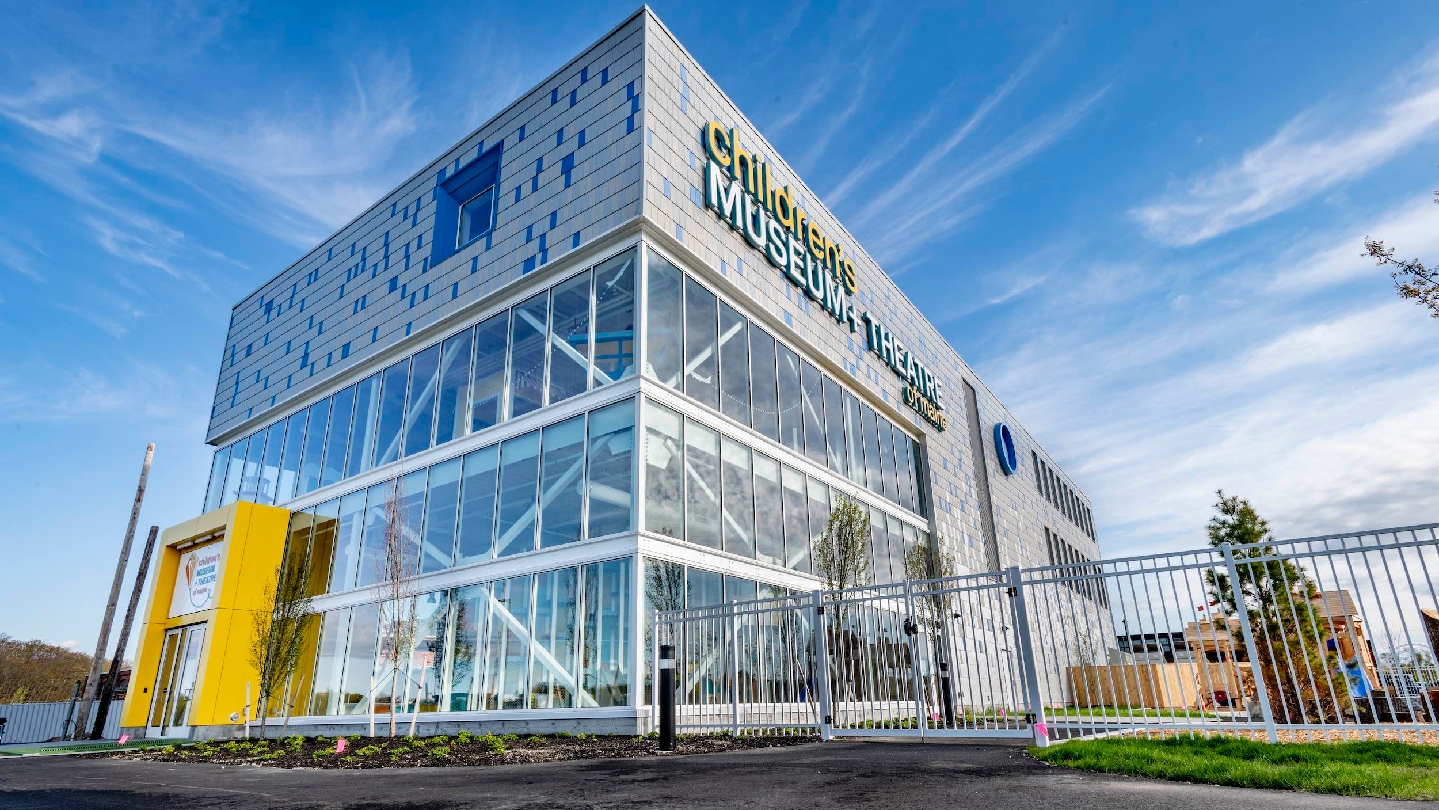
Away from the camera obscura, a children’s museum is a specific kind of building with a specific set of conditions, and they are worth knowing because they are unlike a conventional venue.
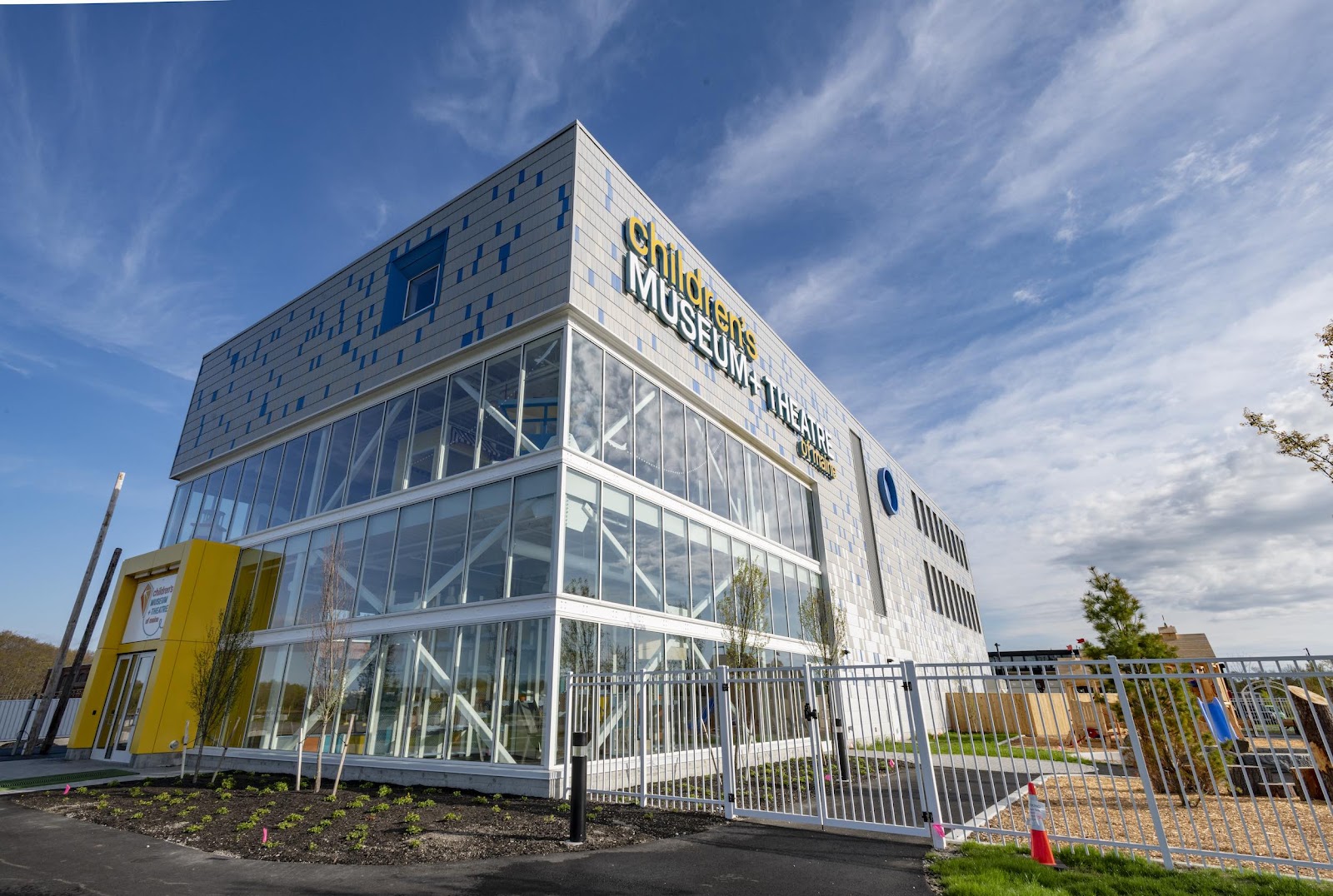
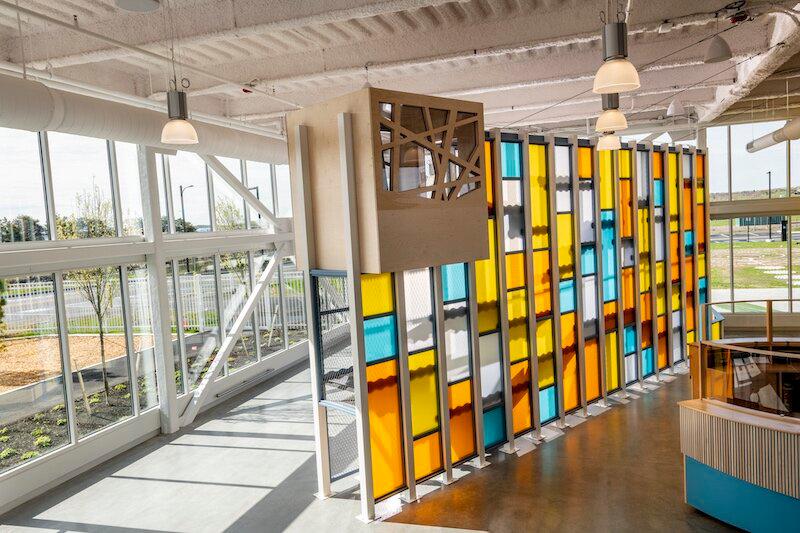
The first is colour, and there is a great deal of it. Exhibits designed for children are brightly coloured by intention — large areas of saturated paint, coloured acrylic, printed graphics — which means there are very few neutral backgrounds and a great deal of colour bouncing around.
The technique is the same as at any strongly coloured venue and it has two halves. Distance, because a saturated surface in any decent light throws its colour onto anybody within a metre or two, and that cast is genuinely on the skin rather than in the file — two metres removes most of it and three or four removes it entirely. And commitment, because a coloured background either dissolves at a long focal length and wide aperture into an abstract field, or is used deliberately square-on and stopped down with the subject small and off centre. The middle distance with a half-cropped exhibit behind somebody’s head is the failure.
The second is scale. A children’s museum is built at children’s height, which means handrails, counters, doorways, seating and exhibit furniture are all lower than an adult expects. Photographically that is occasionally charming and mostly awkward: a low handrail crosses an adult’s frame at hip height, and a low exhibit surface puts a bright plane across the bottom of a portrait.
The solution is to work either above or below that height band. Get low, so the exhibit furniture is behind and above the subject rather than cutting across them, or get high and shoot down so it is beneath them. Eye level is the one height where all the apparatus lives.
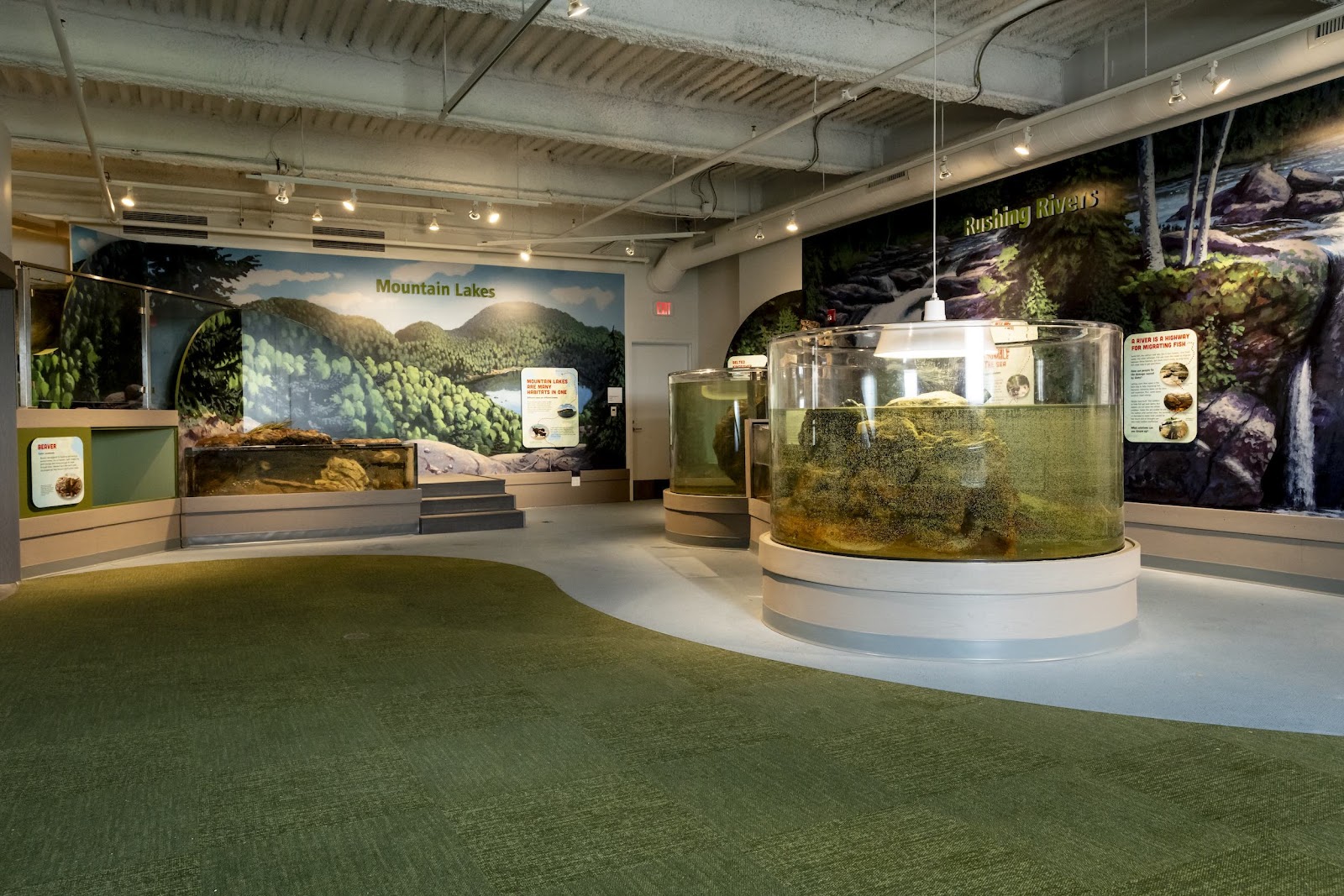
The third is light, and it is the usual museum condition. Exhibit spaces are lit for viewing and for durability rather than for faces — a mixture of ceiling fixtures, exhibit lighting and whatever daylight the building admits — which means light from above, mixed colour, and modest levels.
So bring light, and choose a dominant source per space, balance for it, gel your own to match, and let the rest fall. Do not average, because averaging is what makes these interiors read grey and dead. And warm whatever you bring if the ambient is warm.
The fourth is the windows, if the building has good ones. A museum in a modern or converted building may have substantial glazing, and where it does that is the best natural light available — soft, even, directional from one side, with efficient bounce off pale surfaces. A subject side-on to a large window at a metre and a half needs nothing else.
Ask which spaces have exterior glazing, because it is the single most useful thing to know about the building, and modern glazing is coated to reject heat which shifts transmitted daylight cooler and often slightly green, so warm the whole block consistently.
The fifth is the plain surfaces, which every heavily-decorated building has more of than it appears to. Service corridors, stairwells, back-of-house areas, lift lobbies, the backs of doors — these are almost always plain, painted one colour, and lit by something honest. Two of those, found in the first twenty minutes, will carry every formal portrait the day needs and will look nothing like the rest of the set, which is exactly why they are valuable.
Two institutional practicalities to settle in writing months ahead. Which spaces are available and at what hours, because a museum’s public opening hours mean a wedding is likely to be after closing, and that answer determines whether daylight is available at all. And whether there are restrictions on photographing exhibits, which at a museum with licensed or donated material may be more than a couple expects.
And one that is specific to this building type and easy to overlook: ask what state the spaces will be in. A children’s museum in daily use is hands-on by design, which means exhibit areas are worn, marked and busy in a way a gallery is not, and that is honest rather than a fault — but it means close-range frames of exhibit surfaces will show it. Work at a distance or work tight on the parts that are clean.
Portland, and the year
Portland outside is one of the better small cities in this library to photograph in, and a venue here should use it.
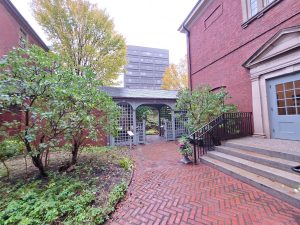
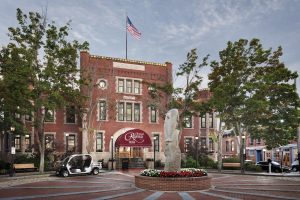
The city’s architectural character comes from a single event: much of the centre burned in eighteen sixty-six and was rebuilt immediately afterwards, largely in brick with cast-iron detail. The result is a downtown of unusual consistency — street after street of eighteen-sixties and seventies brick, on a scale and in a material that photographs extremely well.
Brick is the friendliest surface a photographer can be given. Warm, matte, finely textured, holding its colour in shade rather than going blue the way stone does, and taking low raking light so that every joint and irregularity registers. Light it from the side, because frontal light flattens the bond pattern entirely. And on the grey days that are common here, brick still reads warm when everything else has gone flat.
The streets themselves are the second asset. Parts of the old centre retain cobbled or granite-set paving, and those surfaces are superb wet in raking light and grey lumps dry at midday. There is also gradient — the city sits on a peninsula with hills on it — which means a subject standing uphill of the camera separates from their background by geometry alone, with no depth of field required.
The waterfront is the third and it is a working one, which is the point. This is a commercial fishing and shipping port rather than a promenade: piers, gear, boats, warehouses and the machinery of a port that is in use. A frame that includes that reads as Portland; one composed to exclude it could be anywhere.
And the water brings one fact that matters practically: the tidal range on this coast is large, around three metres, which is among the bigger ranges on the eastern seaboard. That changes a waterfront frame completely between high and low water — the height of a moored hull relative to a pier, how much weed-covered piling is exposed, and whether a shoreline is beach or is water. Tide tables are published and free, and checking them is worth ten minutes.
Low water also exposes flats and wet surfaces that reflect, which is the useful half of it.
Fog is the fourth element and in this city it is frequent. The Gulf of Maine is cold, and warm air moving over it produces sea fog that rolls in over the peninsula — most often in late spring and summer, and often with no warning. A brick city in fog is a superb subject: the streets recede into white, the brick goes dark and saturated, and lights become soft glows rather than points. If you arrive and it is there, work immediately, because it lifts.
Now the year. Portland sits at about forty-three and a half degrees north, which gives a genuinely useful number: civil twilight runs roughly thirty-two minutes in midsummer, with a usable balance point of fourteen to seventeen minutes. That is among the longer dusks in this library and generous enough for two exterior positions.
The midsummer noon sun reaches about seventy degrees, meaningfully lower than the South’s, so even a clear midday has direction in it and open shade works properly — which matters here for the unusual reason that this is the one venue where you want the middle of a bright day, for the camera obscura.
The midwinter noon sun sits near twenty-three degrees and rakes brick from late morning to mid-afternoon, which is the best exterior light of the year and lasts hours rather than minutes.
Late September into mid-October is the strongest window: the summer humidity and fog drop out, the air clears, temperatures are comfortable for walking, sunset lands around six so the balance point falls at a civil hour, and New England’s colour comes through the first half of October here — earlier than further south, because this is a northern coast.
June into early September is the summer season: mild rather than hot, the waterfront at its busiest, long evenings with sunset after eight in late June, and the highest chance of sea fog. That fog is a lottery that mostly pays out in your favour.
Summer is also the brightest period and therefore the best for the camera obscura, which is worth weighing.
Winter is long, cold and short-dayed, with sunset before half past four in late December, real snow and temperatures well below freezing. The balance point falls before five, during cocktails, and any outdoor session is minutes rather than an hour. In exchange: the clearest air of the year, a low sun raking brick all afternoon, snow on granite paving, and a museum interior entirely unaffected by the season.
The winter caveat for this particular frame is real, though. A camera obscura in December, with eight and a half hours of weak low daylight outside, projects a considerably fainter image than the same device in June — so a winter wedding here may not get the photograph that is the reason to choose the venue. That is worth saying at the enquiry stage.
The hazard to plan for in the colder months is the nor’easter, which brings wind and heavy wet snow to this coast and is a travel problem for guests and suppliers rather than a photographic one. A winter date deserves a contingency that assumes some people cannot drive.
And the closing instruction: confirm the camera obscura is installed and accessible, book the middle of a bright day for it, and set the frame up in the dark before anybody comes in.
More frames from The Children's Museum of Maine
The Children's Museum of Maine wedding photography: common questions
What is a camera obscura and what is the frame?
It is the oldest photographic device there is — a darkened room with a lens and mirror arrangement projecting a live, inverted image of the outside world onto a large white horizontal disc. The frame is the disc and the couple above it: the projected city glowing on the circle, the couple leaning in over it with their faces lit by nothing but that projection, and the room around them entirely black. Confirm it is currently installed and accessible before promising anything, because museum installations move.
Why is it technically difficult?
Because the projection is very dim. The device works precisely by being dark, so the light reaching the disc is a tiny fraction of the daylight outside — somewhere between a dim interior and moonlight. That means a tripod, a wide aperture, and a shutter measured in seconds, with living subjects in the frame. Let your eyes adjust and then trust the meter rather than your impression, because a room that feels workable after two minutes in the dark is several stops below anything you would normally shoot in.
How do you handle the couple at a multi-second exposure?
Two ways, and they give different pictures. Brief them properly, have them lean on the disc surround for support, and tell them plainly not to move for four seconds — two people who understand that can do it, and you shoot several so one is sharp. Or let them blur deliberately and make the disc the subject, which says that the city is fixed and the people are alive and needs no briefing at all. Make both.
What must you not do?
Add light. Any light introduced into a camera obscura destroys the image you came to photograph, because the device depends entirely on darkness — that includes an autofocus assist beam, a bright rear screen and any phone in the room. Turn everything off, focus manually on the disc’s edge using magnified live view before the couple come in, lock it, and test the exposure. Set the whole frame up alone in the dark first; in a dark room with a group in it there is no time to adjust anything.
When should this frame be made?
In the middle of a bright day, which is the exact opposite of every other photograph in this library. The projection is brightest when the outside is brightest, so a clear midday gives the strongest image and a grey one gives a faint one. That makes a clear day a technical requirement rather than a preference here — and it also means a December wedding, with eight and a half hours of weak low daylight, may not get the photograph that is the reason to choose the venue. Worth saying at the enquiry stage.
What does Portland outside give you?
A city rebuilt almost entirely in brick after an 1866 fire, which means street after street of consistent 1860s and 70s brick and cast iron — the friendliest surface a photographer can be given, warm and matte and textured, holding its colour in shade and still reading warm on a grey day. Plus granite paving that is superb wet, real gradient on the peninsula, a genuinely working port, frequent sea fog in the warmer months, and a tidal range of around three metres that changes every waterfront frame between high and low water. Check the tide table.
More Maine venue guides
We are writing a photographer’s guide to every venue we would happily shoot in Maine. Here are three more, plus the full index:
- The Portland Company, Portland: The Problem, and Four Ways Out of It
- The Cathedral of the Immaculate Conception: A Photographer Answers Your Questions
- The Maine Historical Society: Building the Shot List
Planning a wedding at The Children's Museum of Maine?
Confirm it is installed, then book a bright midday. Tell us your date.