 The Thunderbird Inn: Field Notes on a 1964 Motor Inn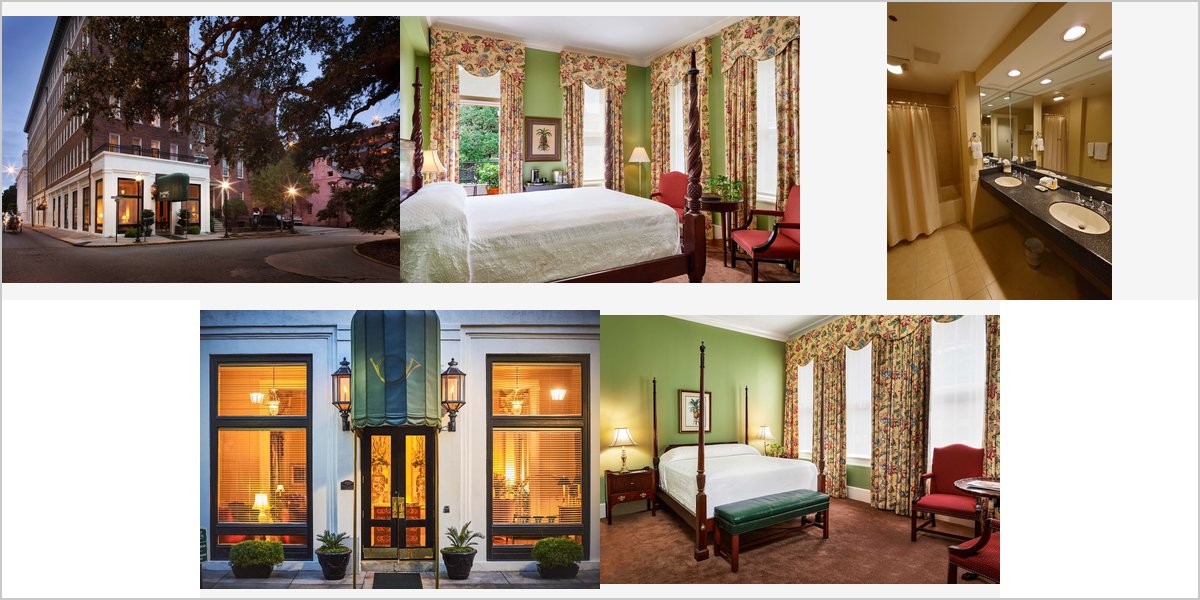
June 20, 2026
Planters Inn: A Photographer Answers Your Questions
A small inn whose greatest asset is thirty feet away. Reynolds Square does the outdoor work; the building handles the evening.
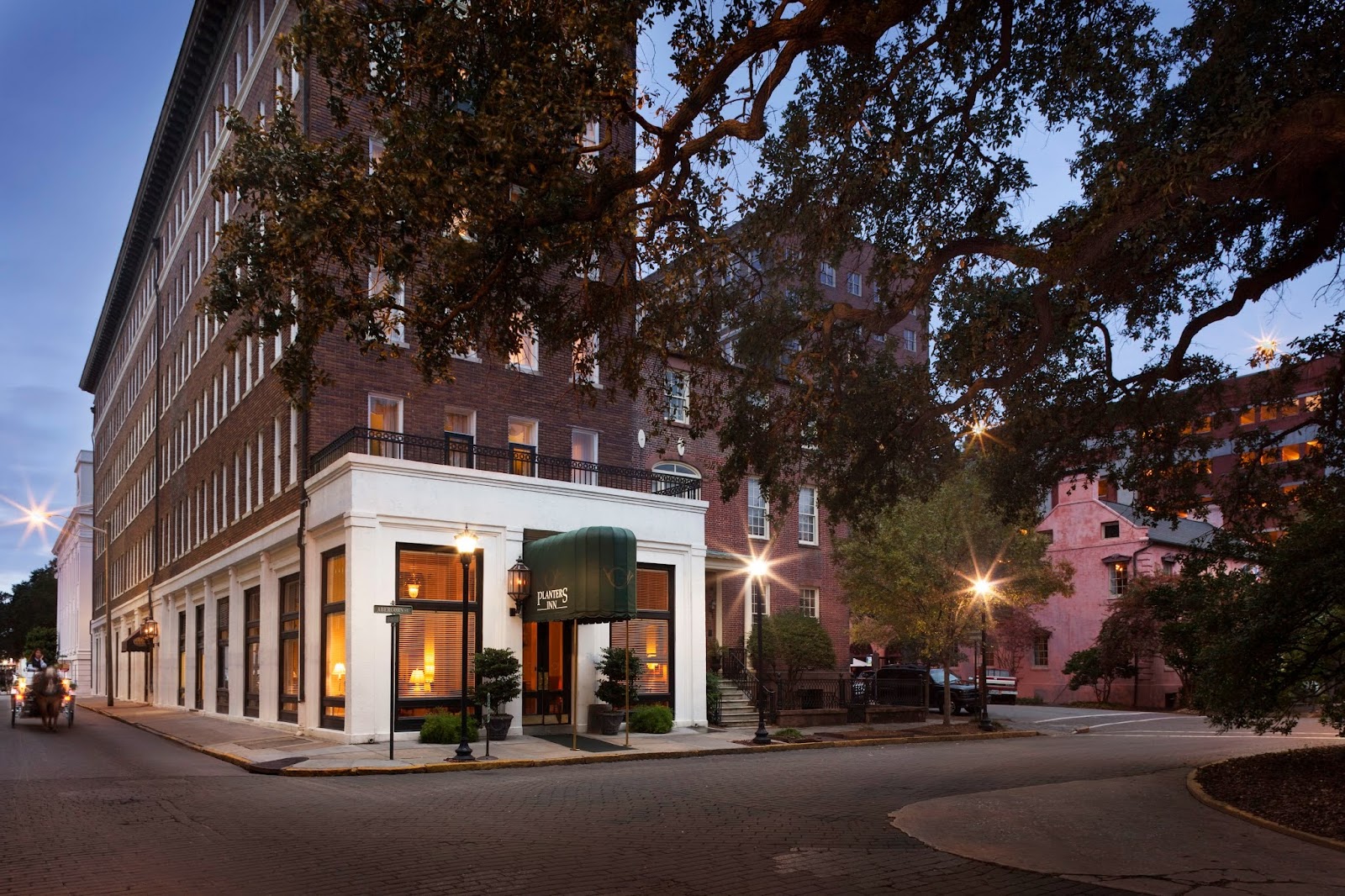
Planters Inn occupies a historic building on Reynolds Square in Savannah’s historic district, operating as a small inn with event use. Reynolds Square is one of the city’s original squares, laid out in the eighteenth century, planted with live oaks and centred on a monument.
The venue belongs to the same category as several others in Savannah — the compact square-side inn — and it should be assessed on the same terms. The interiors are period, warm and relatively shallow-lit. The square outside supplies high open shade, backlit Spanish moss and room for groups. The formula works, and its strengths and limits are consistent.
These are the questions couples ask. We have not photographed a wedding at Planters Inn; the light on a Savannah square and in a period inn behaves predictably. Exclusivity, capacity and which rooms are included are for their team, and exclusivity is the question to settle first at any small inn.
Planters Inn at a glance
| Where | Reynolds Square, historic district, Savannah, Georgia |
| Character | Small historic inn with period interiors; square directly outside |
| The square | One of Savannah’s original eighteenth-century squares, planted with live oaks |
| Light | Warm shallow interiors; high open shade and backlit moss outside |
| Ask first | Exclusivity, capacity, and whether guest rooms are available for preparation |
Is a small venue a disadvantage?
Less than couples assume, and in some respects the opposite. Small venues produce better candid coverage, and the reason is behavioural rather than technical: in a compact space there is nowhere for guests to retreat and stand apart, so people are close to each other and close to the couple, and they behave more naturally because there is no audience watching from a distance.
A photographer also moves faster. In a large venue a meaningful share of the day is spent walking between the ceremony space, the drinks area, the dining room and the portrait location. In a compact inn all of those are within a few steps, which means more of the time is spent photographing rather than in transit.
The genuine limits are group photographs and full-length portraits indoors. Both need distance that a period inn does not have. Both are solved by the square outside, which is the whole reason this category of venue works in Savannah specifically — the outdoor room is public, adjacent and free.
What does Reynolds Square actually give you?
Four things, and they are the four things a compact interior cannot provide. High open shade under live oaks, which is the most flattering outdoor light there is and is available for most of the day. Backlit Spanish moss at the low-sun hours, which glows because the moss is translucent. Room to arrange a large group properly. And a monument and formal planting to compose against, so a frame has structure rather than being a green wall.
Because it is public and thirty feet away, you can also return whenever the light changes. That flexibility is worth more than it sounds: at a venue with a fixed access window you commit to one pass and live with the conditions, whereas here you can step out at six, look at it, and come back at seven if the light has improved.
The trade-offs are the usual public-space ones. Other people will be in the square, including at times other wedding parties, and there is no shelter if a thunderstorm arrives. A longer lens at a wide aperture handles the first; only an indoor fallback handles the second.
How do you light the interiors?
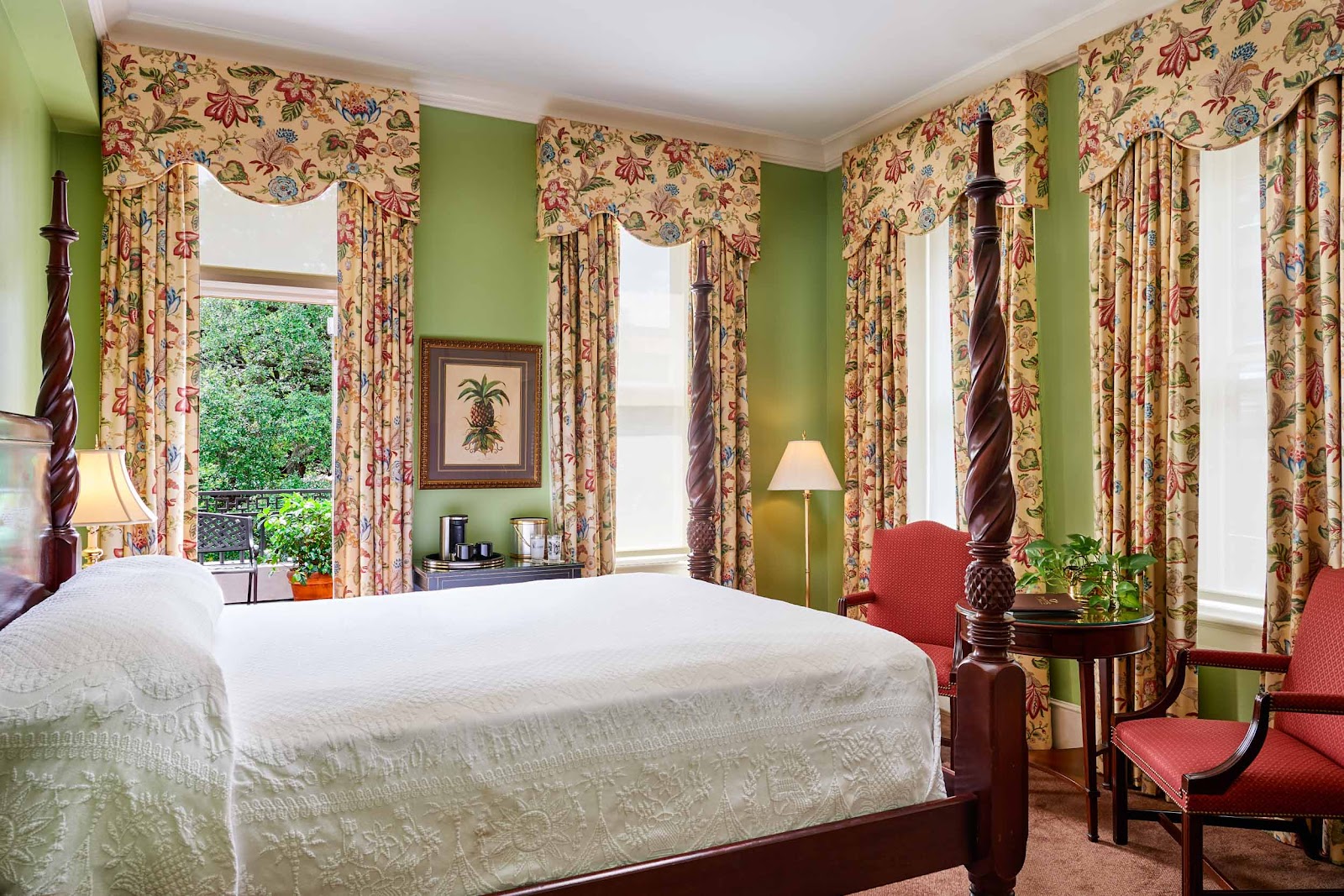
Gently, which is the advantage of domestic scale. Period inn rooms are small enough and their ceilings low enough that a bounced on-camera flash returns strong soft light — the technique that fails completely in a ballroom works well here. One small warm-gelled light on a stand does even better for a considered portrait.
Keep the room warm in your white balance and light faces slightly cooler, so skin retains some neutrality inside an amber interior. Everything in a period inn adds warmth — timber, lamps, textiles — and skin with no cool component looks artificial.
Expose so the lamps read as glowing points rather than blown highlights, and let the corners fall away. A small warm room photographed evenly bright loses the pooling that made it feel intimate in the first place.
One more thing specific to inns rather than hotels: the fixtures are usually domestic rather than commercial, which means table lamps and wall sconces rather than recessed downlights. That is a genuine advantage. Domestic fixtures sit at head height and cast light sideways, so they model a face instead of dropping onto the top of it, and they give you visible warm points in the frame that make a photograph feel like an evening rather than a lit room. Work with them — place people near a lamp rather than in the middle of the floor — and much of the evening lighting solves itself.
What is the right timeline?
Front-loaded, because everything that needs light happens outdoors and daylight is the constraint.
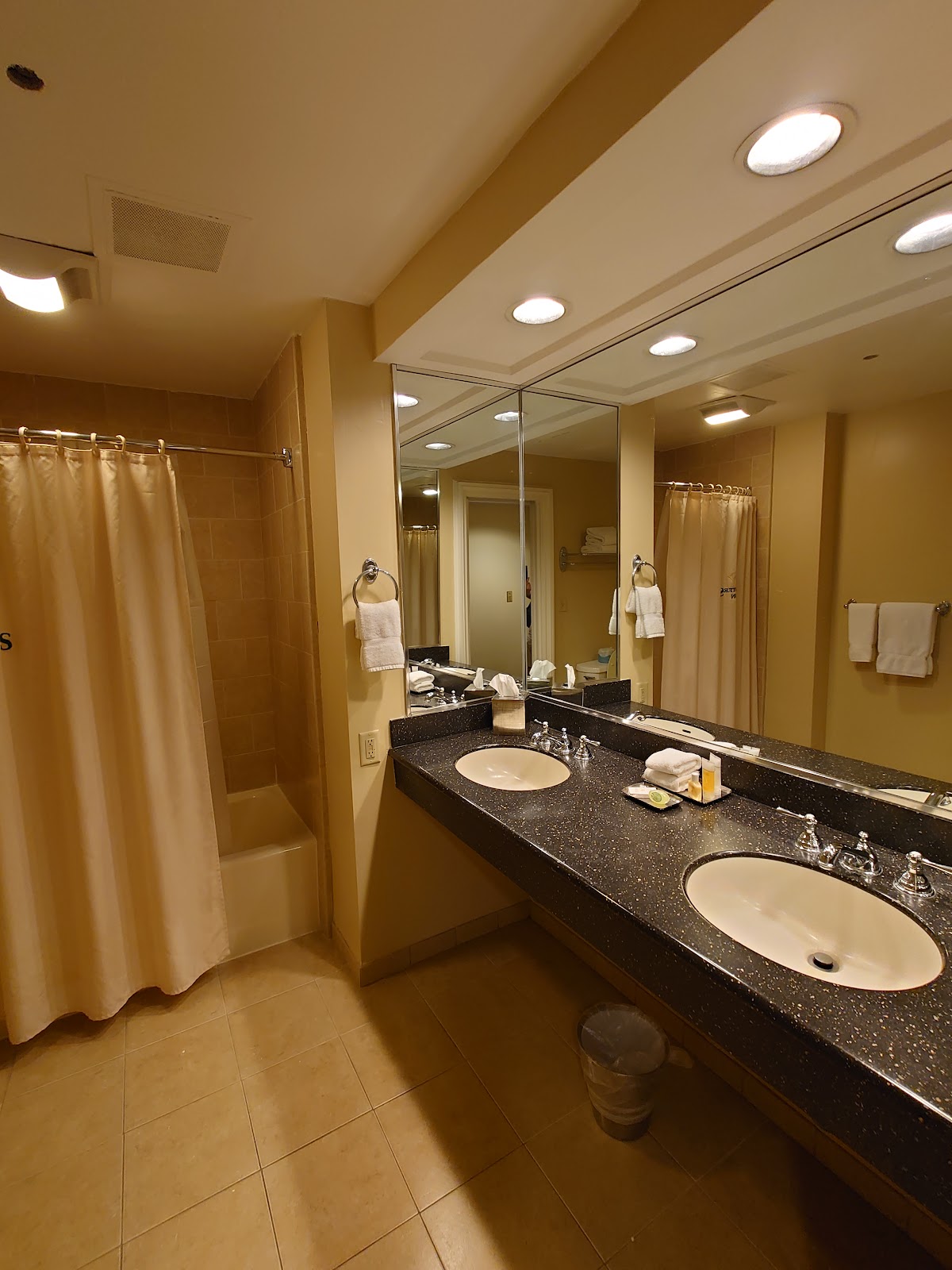
- Preparation in a guest room with a window. The best natural light of the day, and available on site if rooms are included.
- Interior portraits in the best-lit room, close to a window, while daylight lasts.
- Groups on the square, while there is still light and before anyone has had too long at the bar.
- Couple’s portraits on the square in the last hour, when the moss backlights and the low sun rakes along the surrounding frontages.
- Evening coverage inside, lit lightly with bounced or gelled flash, letting the rooms stay warm and pooled.
- Ten minutes back out at dusk if energy allows — a lamplit Savannah square after sunset is a genuinely lovely frame and it takes very little time.
What works in your favour
- Reynolds Square thirty feet away: open shade, backlit moss, groups and structure
- Public and adjacent, so you can return whenever the light changes
- Compact scale produces unusually natural candid coverage and almost no transit time
- Small rooms and low ceilings make bounce flash genuinely effective
- Guest rooms on site give real window light for preparation
What to plan around
- No indoor group photographs or full-length portraits — both depend on the square
- Interiors are warm and go dark beyond a few metres from the windows
- The square is public: other people, and sometimes other wedding parties, in frame
- No shelter outside, in a climate with routine summer thunderstorms
- Exclusivity must be confirmed — a working inn may have other guests present
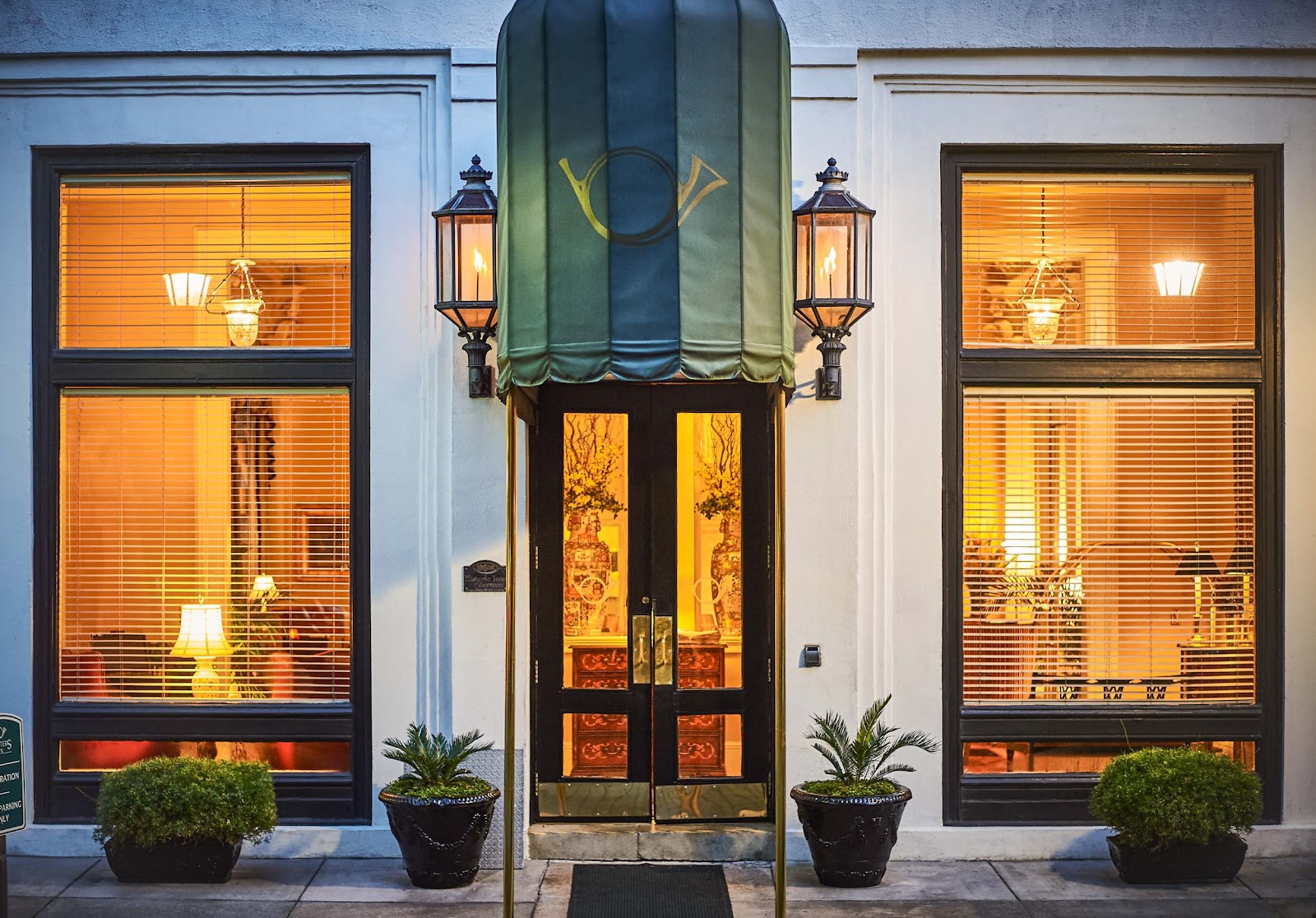
More frames from Planters Inn
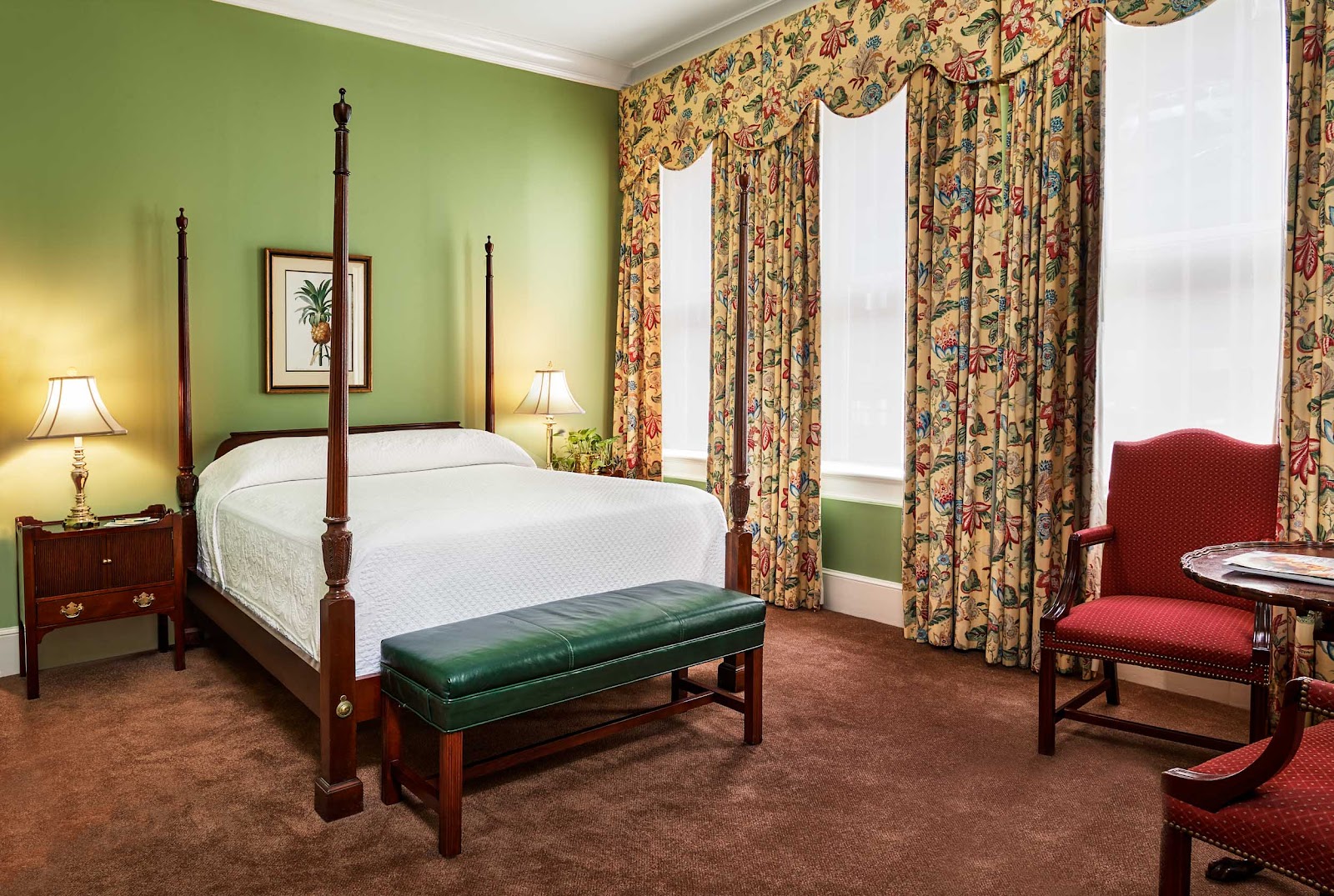
Planters Inn wedding photography: common questions
Is a small inn worse for photographs than a large venue?
Not really, and in some respects better. Compact spaces produce more natural candid coverage because there is nowhere for guests to stand apart and watch, and a photographer spends far less of the day walking between locations. The real limits are indoor group photographs and full-length portraits, and the square outside solves both.
What does Reynolds Square give you?
High open shade under live oaks for most of the day, backlit translucent Spanish moss at the low-sun hours, room to arrange a large group properly, and a monument and formal planting to compose against. Being public and thirty feet away, you can also go back out whenever the light changes.
Does bounce flash work in the interiors?
Yes, unusually well. The rooms are small and the ceilings relatively low, so a bounced on-camera flash returns strong soft light — the same technique that fails completely in a high ballroom. One small warm-gelled light on a stand does even better for a considered portrait.
How should the day be scheduled?
Front-loaded. Preparation in a guest room, interior portraits while daylight lasts, groups on the square before anyone has had too long at the bar, couple’s portraits in the last hour when the moss backlights, then evening coverage inside. Add ten minutes back out at dusk if energy allows — a lamplit square after sunset is lovely.
What happens if it rains?
The interiors carry the day, which they can — but not for a group photograph, because there is no room. Since Savannah gets routine summer afternoon thunderstorms, settle with the inn in advance where a group happens in wet weather rather than discovering the problem when it matters.
More Savannah venue guides
We are writing a photographer’s guide to every venue we would happily shoot in Savannah. Here are three more, plus the full index:
- A Savannah Riverboat Wedding: Building the Shot List
- The Gastonian: A Walk-Through of Two Joined Townhouses
- The Thunderbird Inn: Field Notes on a 1964 Motor Inn
Planning a wedding at Planters Inn?
Compact venues reward a photographer who uses the square properly. Tell us your date and guest number and we will plan which parts of the day happen inside and which happen thirty feet away.