 The Thunderbird Inn: Field Notes on a 1964 Motor Inn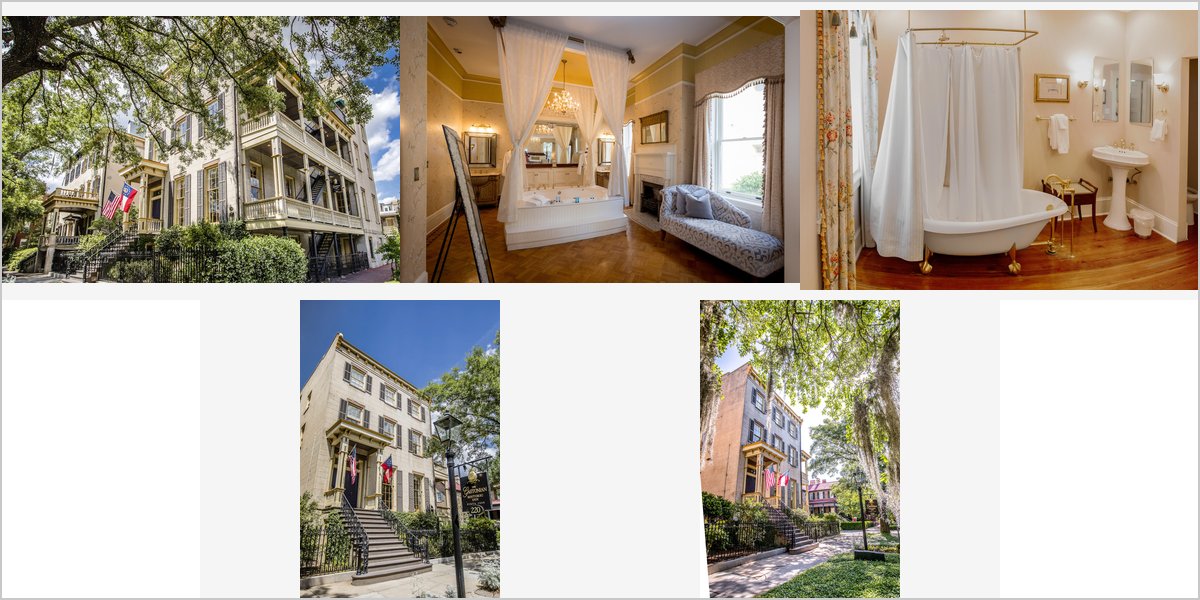
May 23, 2026
The Gastonian: A Walk-Through of Two Joined Townhouses
The walled courtyard between the two houses is the reason to book this venue. It is private, sheltered, evenly lit, and it works when Savannah’s weather does not.
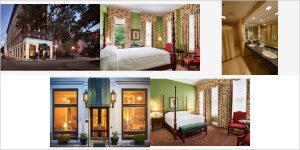
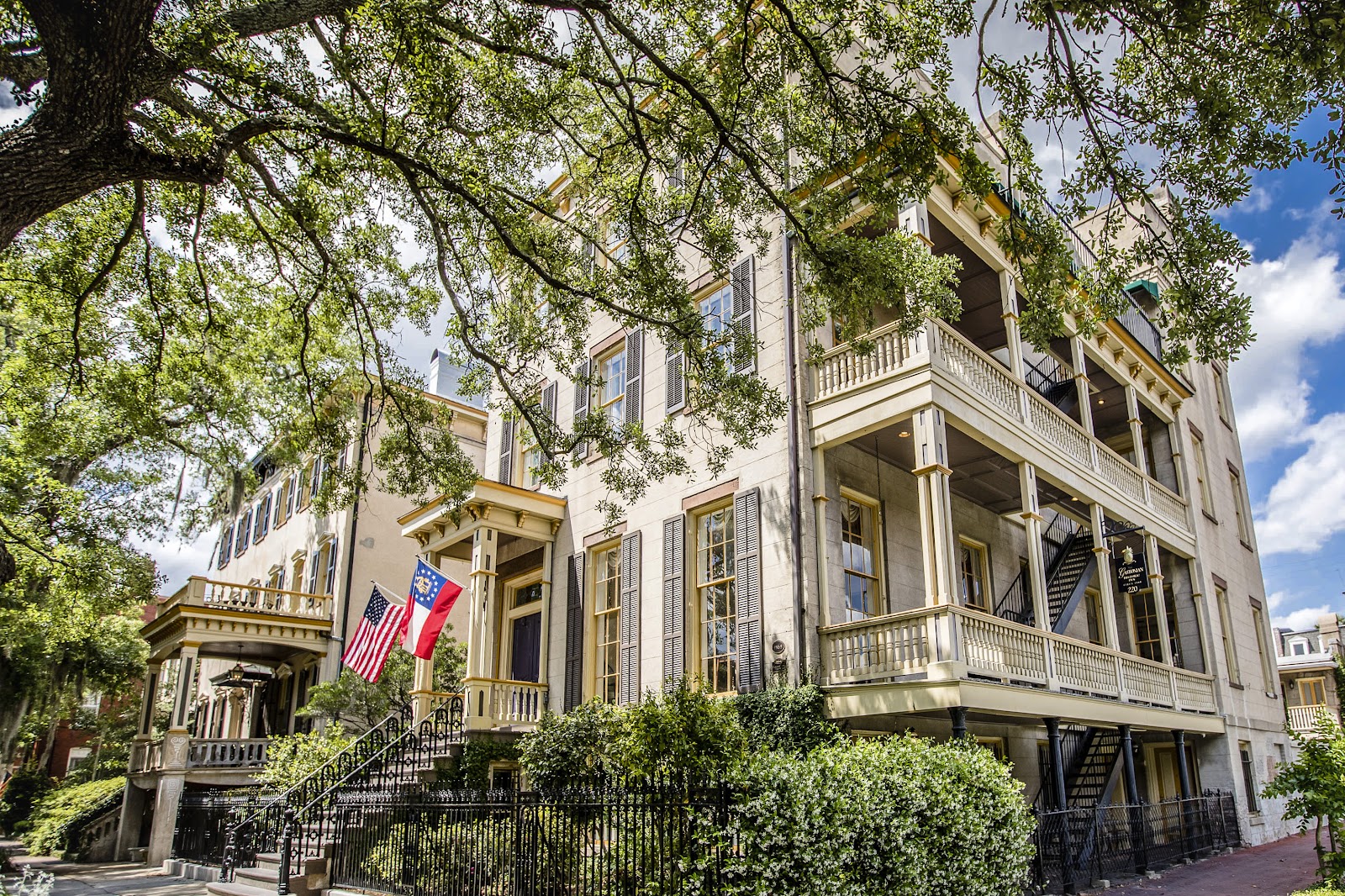
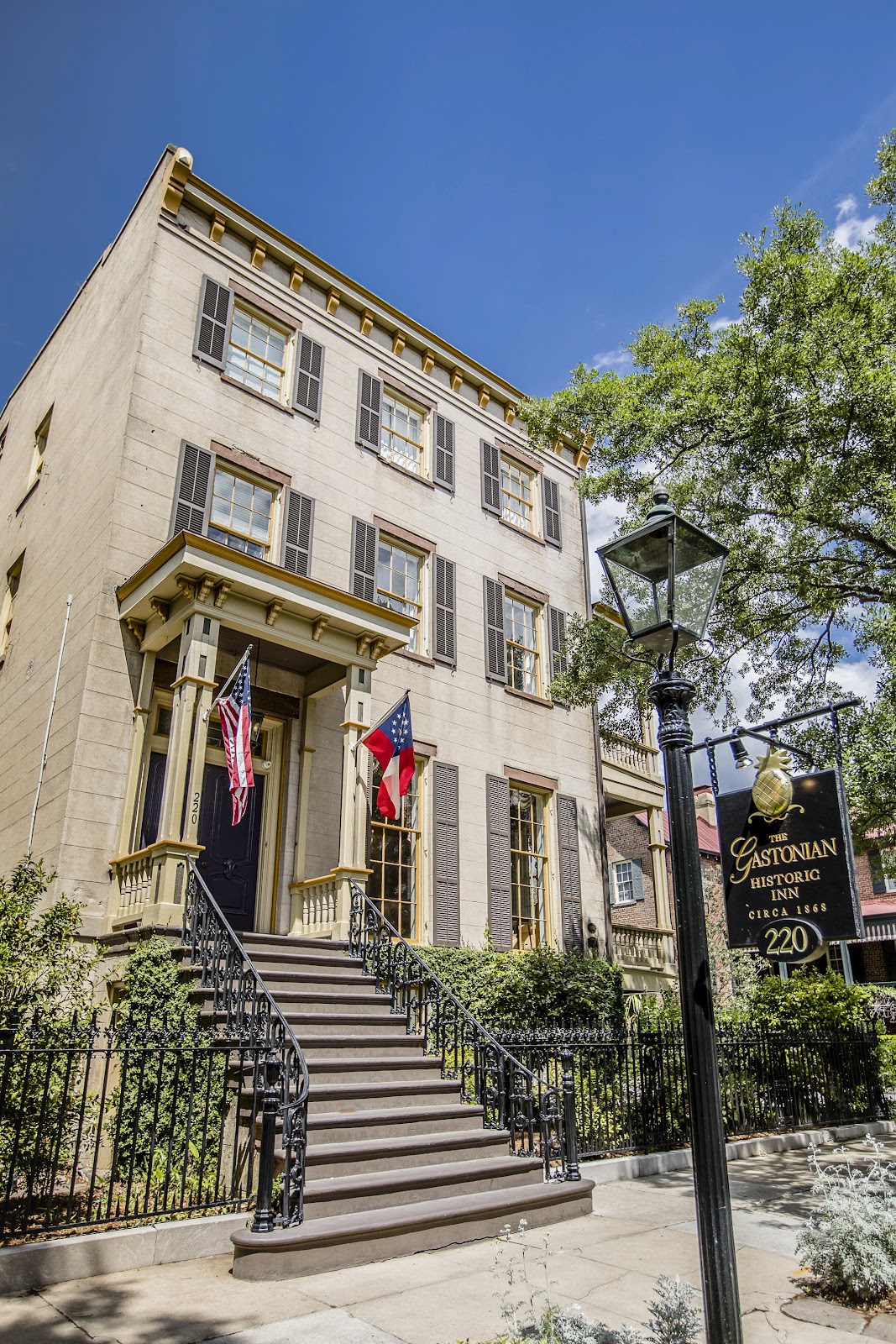
The Gastonian occupies two Italianate townhouses built in 1868 on Gaston Street in Savannah’s historic district, joined by a garden courtyard and operating as an inn. The interiors are period — high ceilings, tall windows, fireplaces, joinery — and the courtyard sits between and behind the two buildings, walled on its sides.
Photographically the courtyard is the important feature, and it is worth understanding why. An enclosed garden behaves quite differently from an open one: the walls shelter it from wind, keep it private, and bounce light inward so shadows fill from the sides. It is usually in open shade, which is beautiful, even light. And critically, in a climate with regular afternoon thunderstorms, a sheltered courtyard remains usable when an open lawn does not.
This is a walk-through in shooting order. We have not photographed a wedding at the Gastonian; the optics of walled courtyards and Italianate interiors are consistent. Exclusivity, capacity and which rooms are included are for their team, and at any small inn the exclusivity question comes first.
The Gastonian at a glance
| Where | Gaston Street, historic district, Savannah, Georgia |
| Built | 1868 — two Italianate townhouses, joined |
| Character | Period inn interiors with a walled garden courtyard between the houses |
| Light | Courtyard open shade is the best on the property; interiors warm and shallow |
| Ask first | Exclusivity, capacity, and whether guest rooms are available for preparation |
Start in the courtyard: why enclosure is an asset
A walled garden is an outdoor room, and it solves several problems at once. Wind is blocked, which matters for veils, fabric and anything on a light stand. It is private, so no strangers appear and nobody is hurrying you. And the walls act as reflectors, bouncing light inward from the sides, which fills shadows under brows in a way an open lawn cannot.
The light is usually open shade — soft, even, directionless — because the walls and any planting block direct sun for much of the day. That is the most forgiving light there is for skin and for guests who dislike being photographed. It also means you should not expect low golden-hour sun to reach the courtyard floor; if you want raking light, it happens on the street outside.
The most useful consequence is weather tolerance. Savannah gets genuine summer afternoon thunderstorms and a courtyard with planting and walls looks good wet — foliage saturates, brick and paving darken, and the light goes even. A venue with a sheltered outdoor room is a materially safer booking than one relying on an open lawn.
The interiors: tall windows, shallow reach
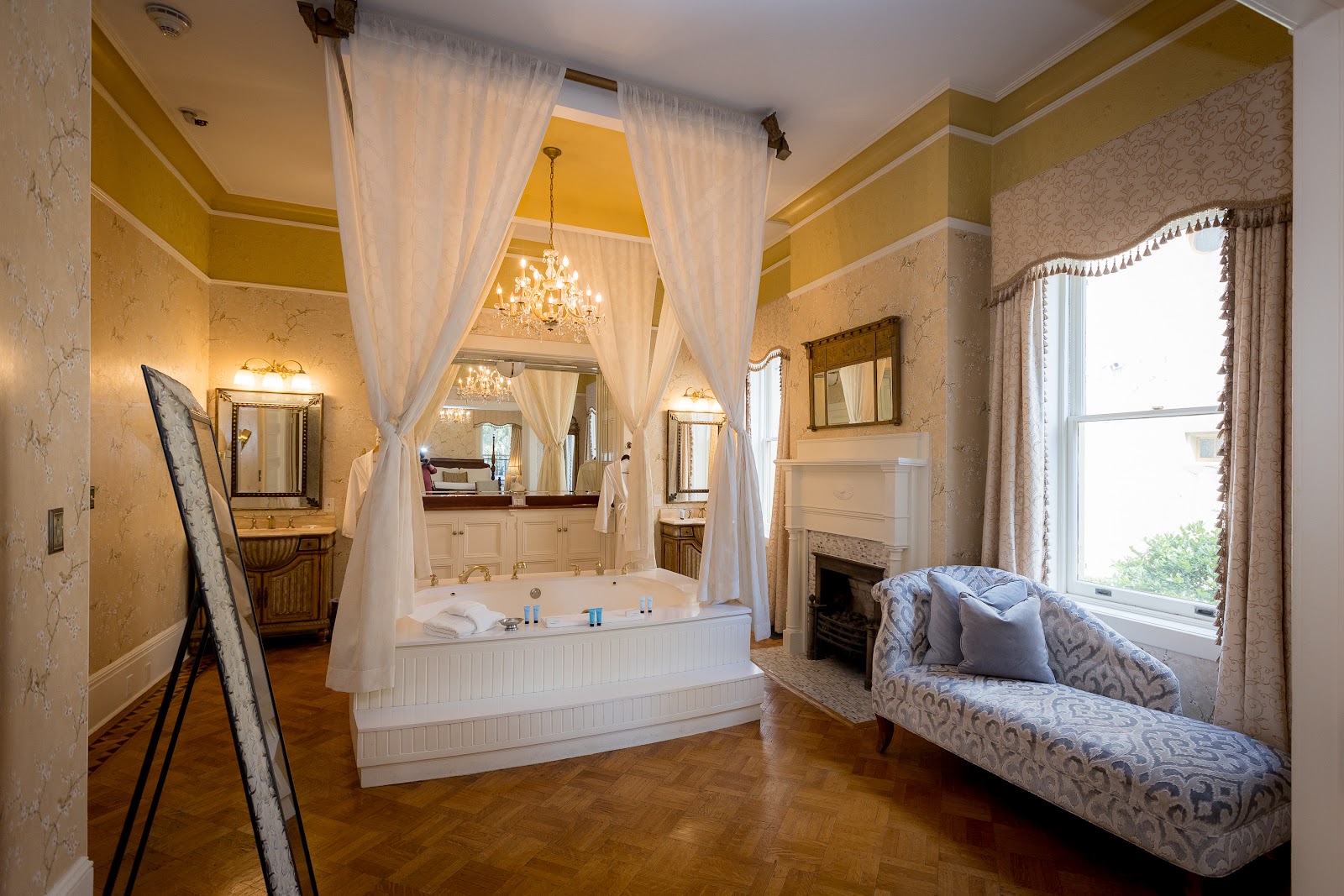
Italianate townhouses were built with generous windows, and in the principal rooms that gives usable daylight for roughly two to three metres from the glass. Beyond that the rooms go dark quickly, and the warm timber and furnishings mean whatever light bounces comes back amber.
So the method is the standard one for period houses: find the best-lit room on arrival, put the couple close to the window and turned into it, and let the depth of the room fall away. That falloff is character in a house like this rather than a fault.
Two further points. High ceilings mean bounce flash is less effective than in a low-ceilinged cottage but more effective than in a ballroom — a modest bounce off a pale ceiling does work here, which makes evening lighting a gentle problem rather than an equipment-heavy one. And the rooms are domestic, so large group photographs are not possible indoors; they belong in the courtyard.
Guest rooms and the preparation coverage
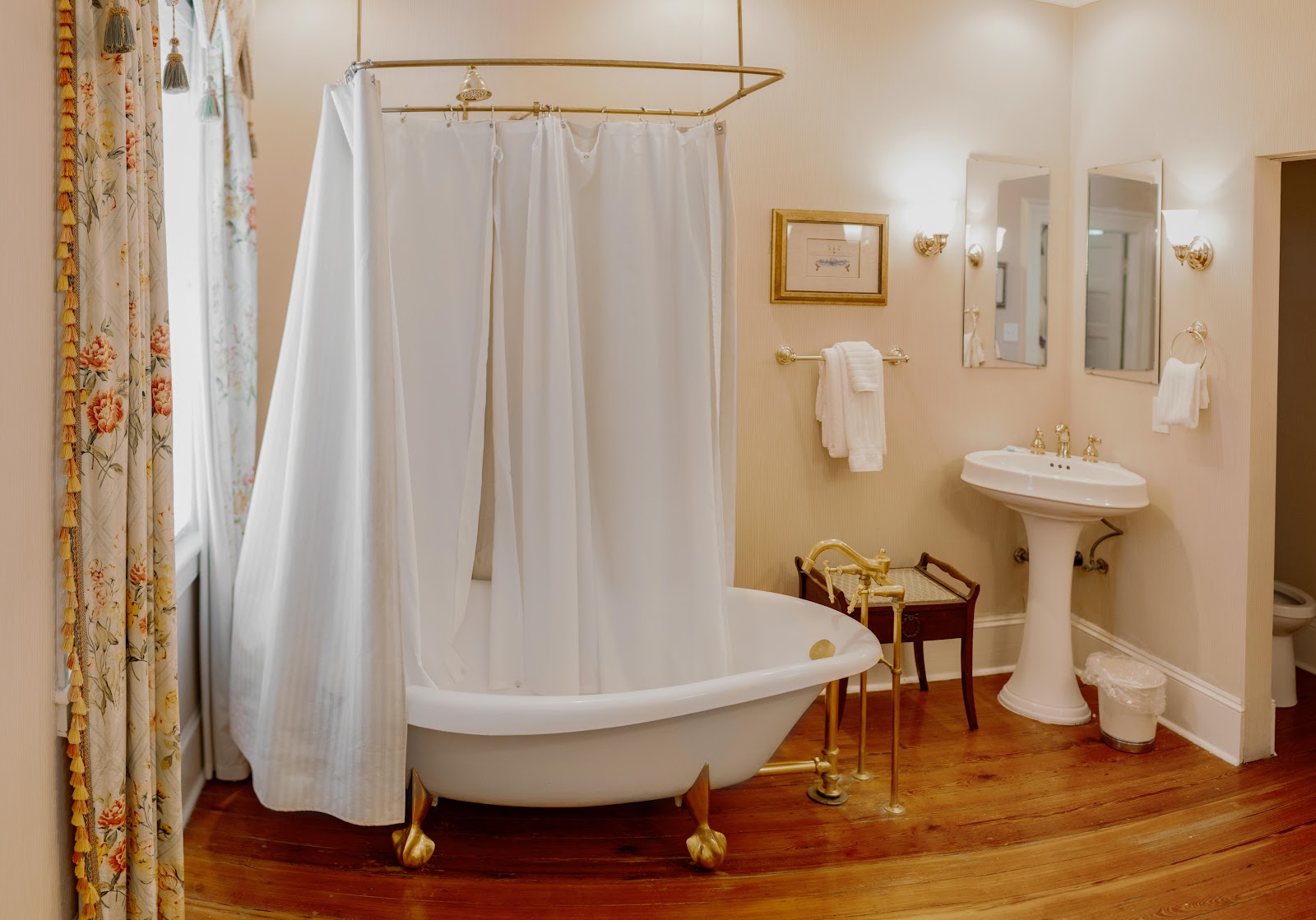
An inn’s real advantage over a house museum is that there are bedrooms, which means preparation photographs happen in a room with a real window rather than in a borrowed corner. That is worth more to a gallery than most couples expect, because getting-ready coverage is a meaningful share of the day’s images and it is usually the best natural light available.
Ask for a room with a tall window, ideally on an upper floor facing the street so the light is unobstructed. Then the usual discipline: every artificial light off so daylight and tungsten are not mixing, clutter moved out of frame, everything brought to within a metre or two of the glass.
Period inn rooms also tend to have good furniture and detail, which gives you a background with texture rather than a hotel headboard. Detail frames — dress on a period door, rings on a marble surface, shoes by a window — cost nothing and they belong to the building rather than being generic.
Outside, and the timeline
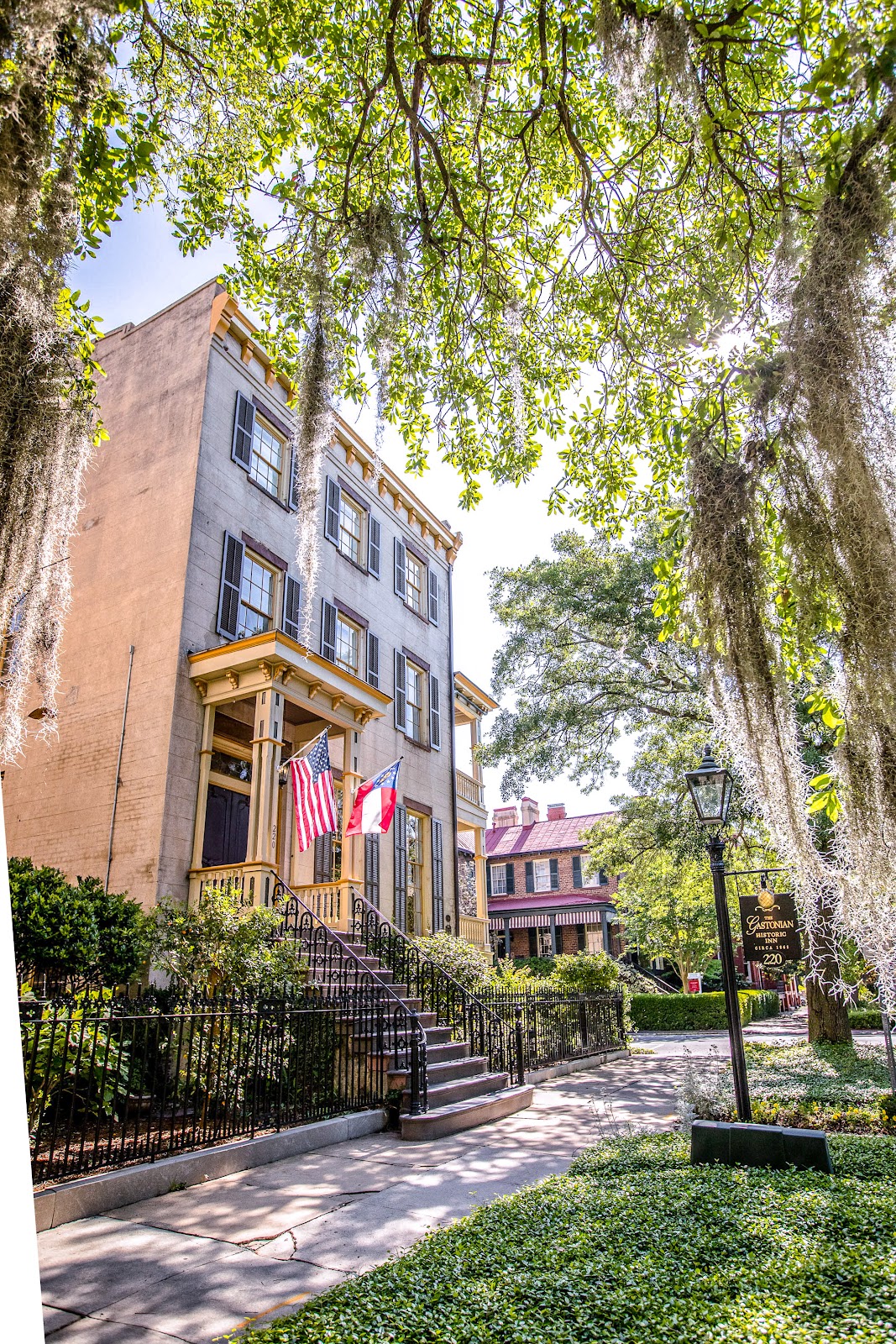
Savannah’s historic district is the strongest exterior asset any venue in the city has. Within a short walk of Gaston Street you have the planted squares with live oaks and Spanish moss, Forsyth Park’s northern end, and blocks of nineteenth-century frontages. That gives you high open shade, backlit translucent moss at the low-sun hours, and room for groups if the courtyard is too small.
The timeline that works: preparation in a guest room with a tall window; interior portraits in the best-lit room; courtyard portraits and groups, which work at almost any hour because open shade is stable; then out to a square or the park in the last hour of daylight when the moss backlights and the low sun rakes along the streets.
One climate note worth repeating for every Savannah venue: the humidity fogs a lens moving from an air-conditioned interior to the courtyard, and it takes ten to twenty minutes to clear. Let equipment acclimatise before you need it, and if you are moving in and out repeatedly, keep one body dedicated to each environment rather than swapping.
What works in your favour
- A walled courtyard: private, sheltered from wind, evenly lit, and usable in wet weather
- Courtyard walls bounce light inward, filling shadows a lawn cannot
- Guest rooms on site give real window light and period detail for preparation coverage
- High ceilings mean modest bounce flash works indoors — a gentle lighting problem
- The historic district’s squares and Forsyth Park are a short walk for groups and golden hour
What to plan around
- Interiors go dark beyond two to three metres from the windows and are warm in colour
- Domestic room scale rules out large indoor group photographs
- Low golden-hour sun will not reach the courtyard floor; raking light happens on the street
- Humidity fogs lenses moving between air conditioning and the courtyard
- Exclusivity must be confirmed — a working inn may have other guests present
More frames from The Gastonian
The Gastonian wedding photography: common questions
Why is the walled courtyard the best location?
Because enclosure solves several problems at once. The walls block wind, keep it private, and bounce light inward to fill shadows under brows — which an open lawn cannot do. It sits in open shade, the most forgiving light there is, and it stays usable in wet weather when an open lawn would not.
Will we get golden-hour light in the courtyard?
Not on the courtyard floor. Walls and planting block low direct sun, which is precisely what makes the space evenly lit and sheltered. If you want raking golden light, it happens out on the street or in one of the nearby squares — so plan a short block outside for it.
How far does the window light reach indoors?
About two to three metres from the glass in the principal rooms, then it falls away quickly, and the warm timber means whatever bounces comes back amber. Put the couple close to a window turned into it and let the depth of the room go dark; that falloff is character rather than a fault.
Where do the getting-ready photographs happen?
In a guest room, which is the main advantage of an inn over a house museum. Ask for an upper-floor room with a tall street-facing window, turn off every artificial light, and work close to the glass. Period inn rooms also give you furniture and detail rather than a generic hotel background.
Is it a safe booking in Savannah's rainy season?
Safer than most. A sheltered walled courtyard with planting looks genuinely good wet — foliage saturates, paving darkens and the light goes even — so a thunderstorm reshapes the day rather than cancelling the outdoor portion. Just confirm where a group photograph happens if the courtyard is too wet to stand in.
More Savannah venue guides
We are writing a photographer’s guide to every venue we would happily shoot in Savannah. Here are three more, plus the full index:
- The Thunderbird Inn: Field Notes on a 1964 Motor Inn
- Wormsloe Historic Site: The Oak Avenue and How to Time It
- The Cotton Sail Hotel: Building the Shot List on River Street
Planning a wedding at The Gastonian?
A sheltered courtyard is the most useful thing a Savannah venue can have. Tell us your date and guest number and we will plan the courtyard, the interiors and a short block on the squares around whatever the forecast does.