 The Four Seasons Seattle, Seattle: Suits and Does Not Suit
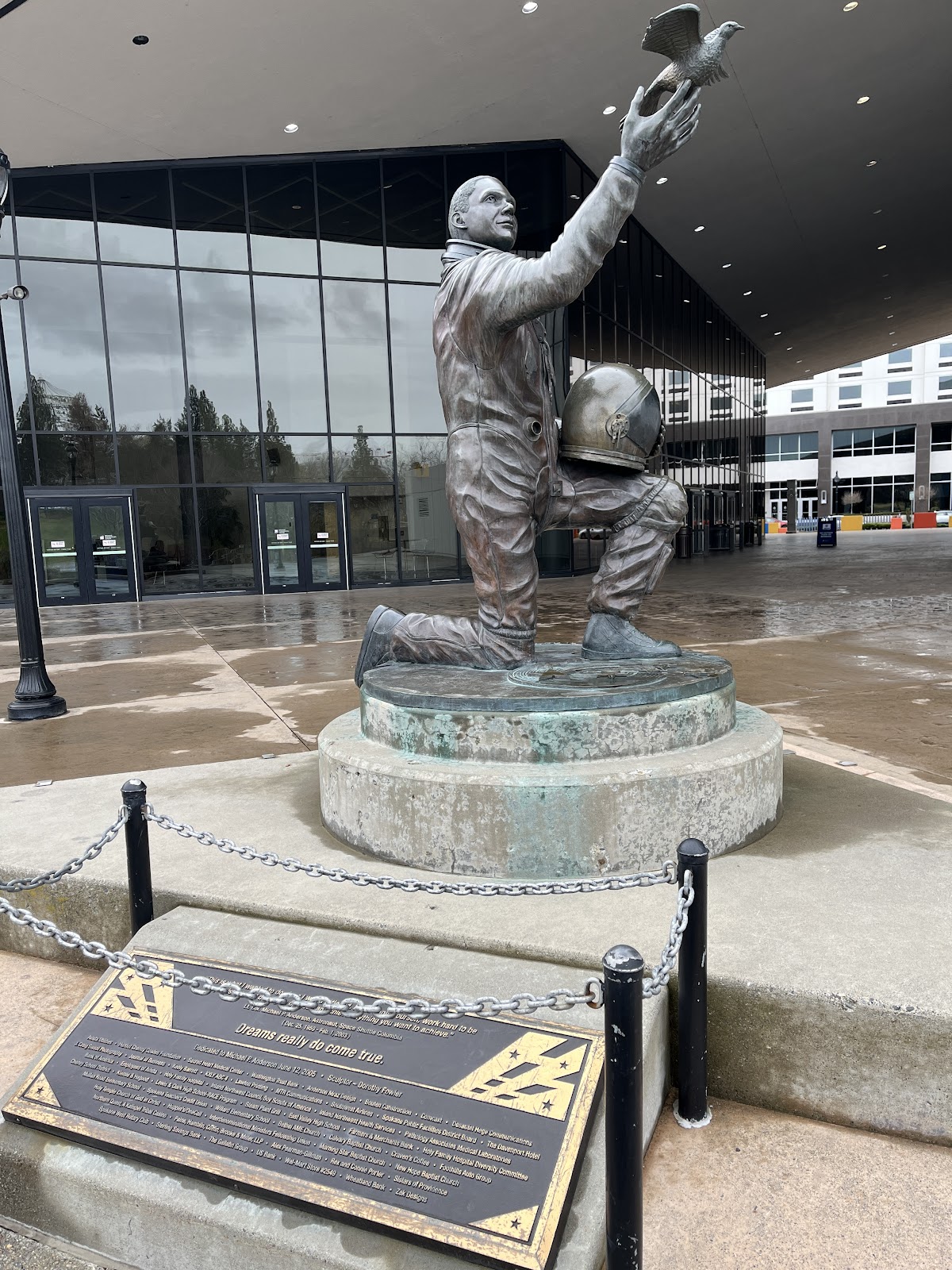
The Spokane Convention Center, Spokane: Field Notes, Problem and Solution
Field notes, room by room. And a river with a waterfall in it, outside.
These are field notes, because a convention centre is a set of very specific technical problems and it is more useful listed than argued about.
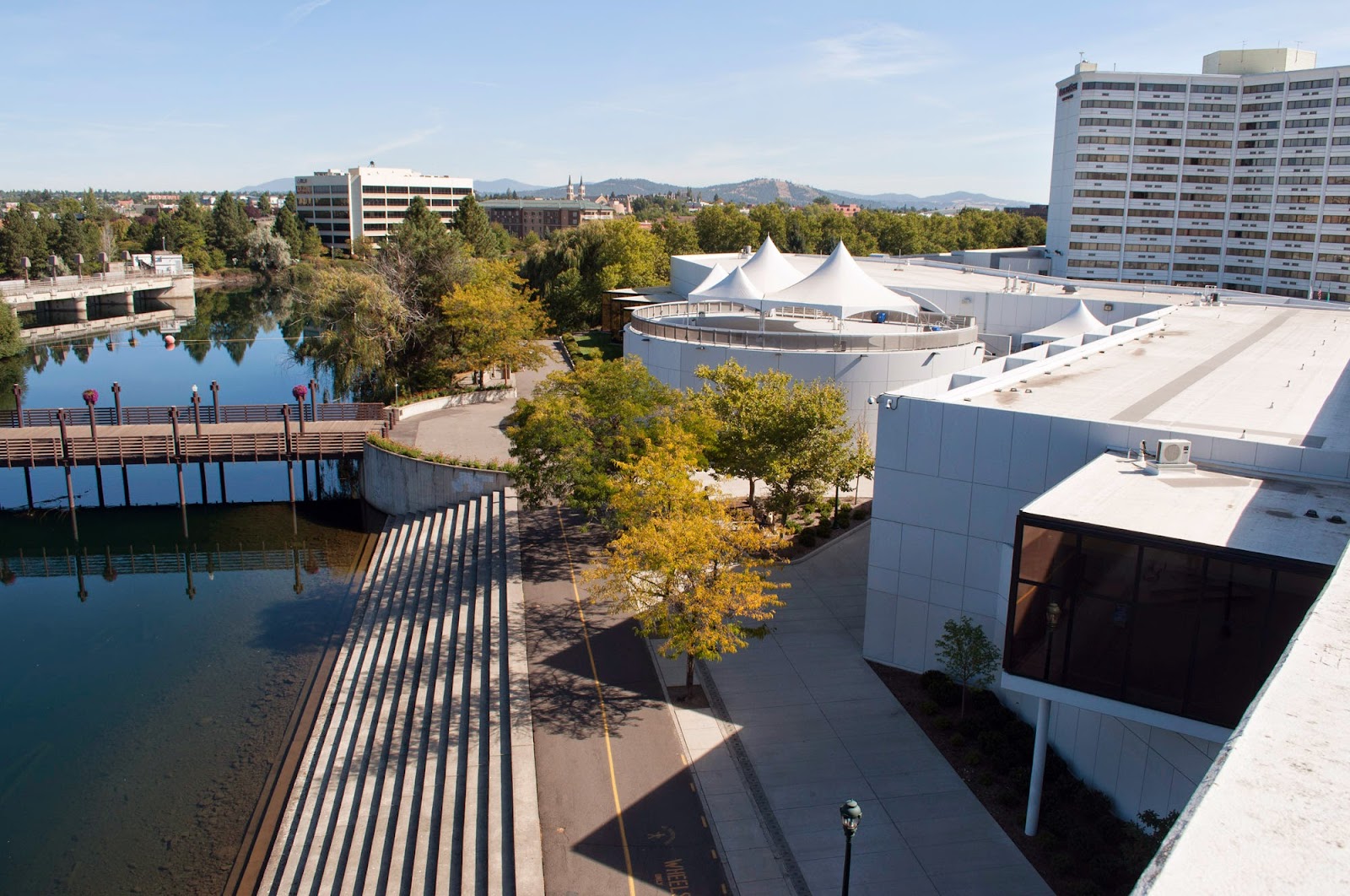
The Spokane Convention Center sits on the north bank of the Spokane River in downtown Spokane, adjoining a large riverside park, and the river through the middle of the city goes over a substantial series of falls. That is the most important sentence in this guide: the best photographic material at this venue is outside it, and it is a few minutes’ walk away.
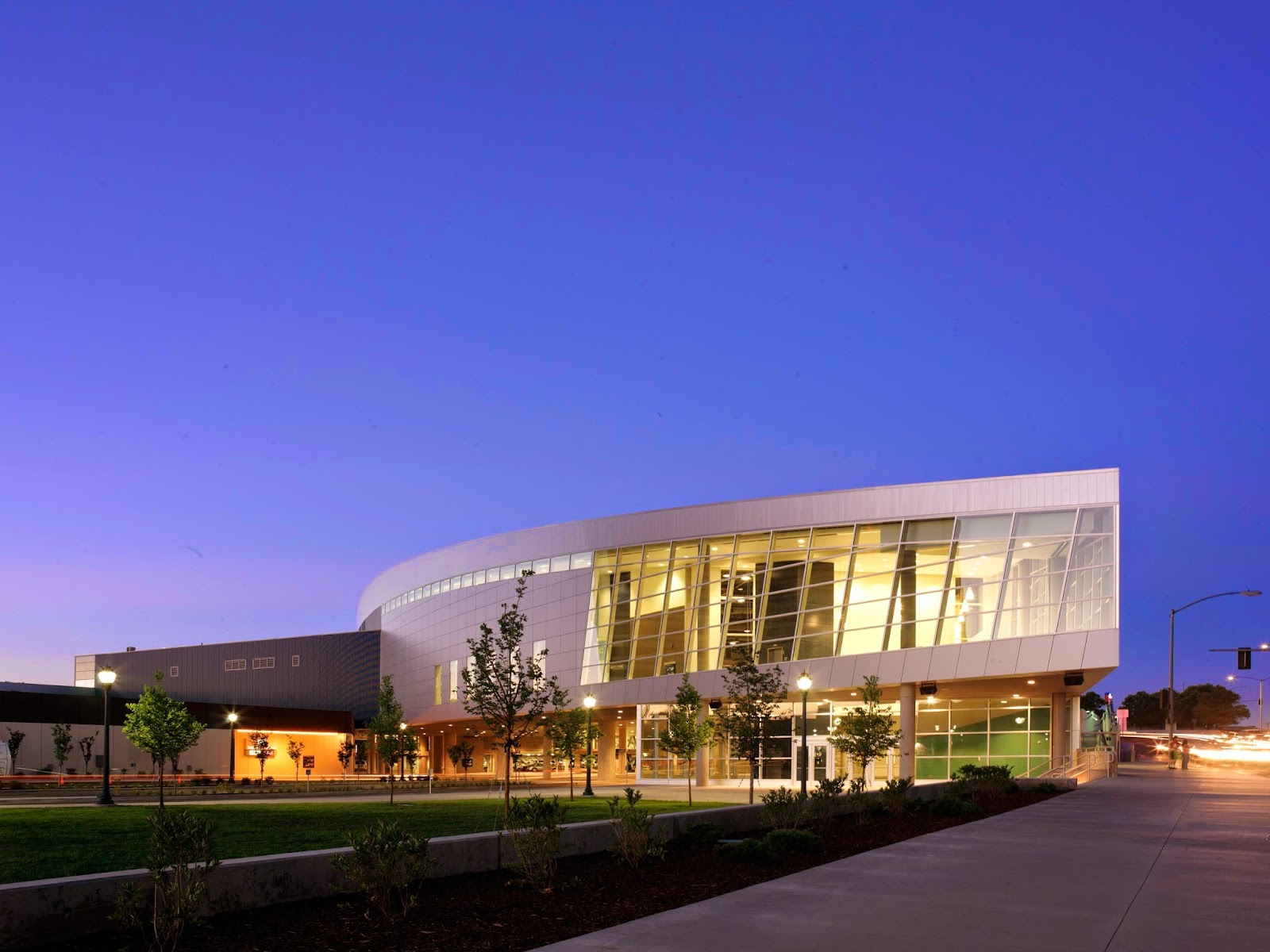
Inside, the building is what a convention centre is: large flexible halls, ballrooms, meeting rooms, and generously glazed concourses connecting them. That produces a specific hierarchy for a photographer, and it is worth stating up front because it inverts what most people assume.
The concourses are the best interior spaces, by a wide margin. Modern convention centres put their money into the pre-function circulation — tall glass walls, open volumes, views out — because that is where delegates queue and mingle. So the room that exists to be walked through is the one with the light in it.
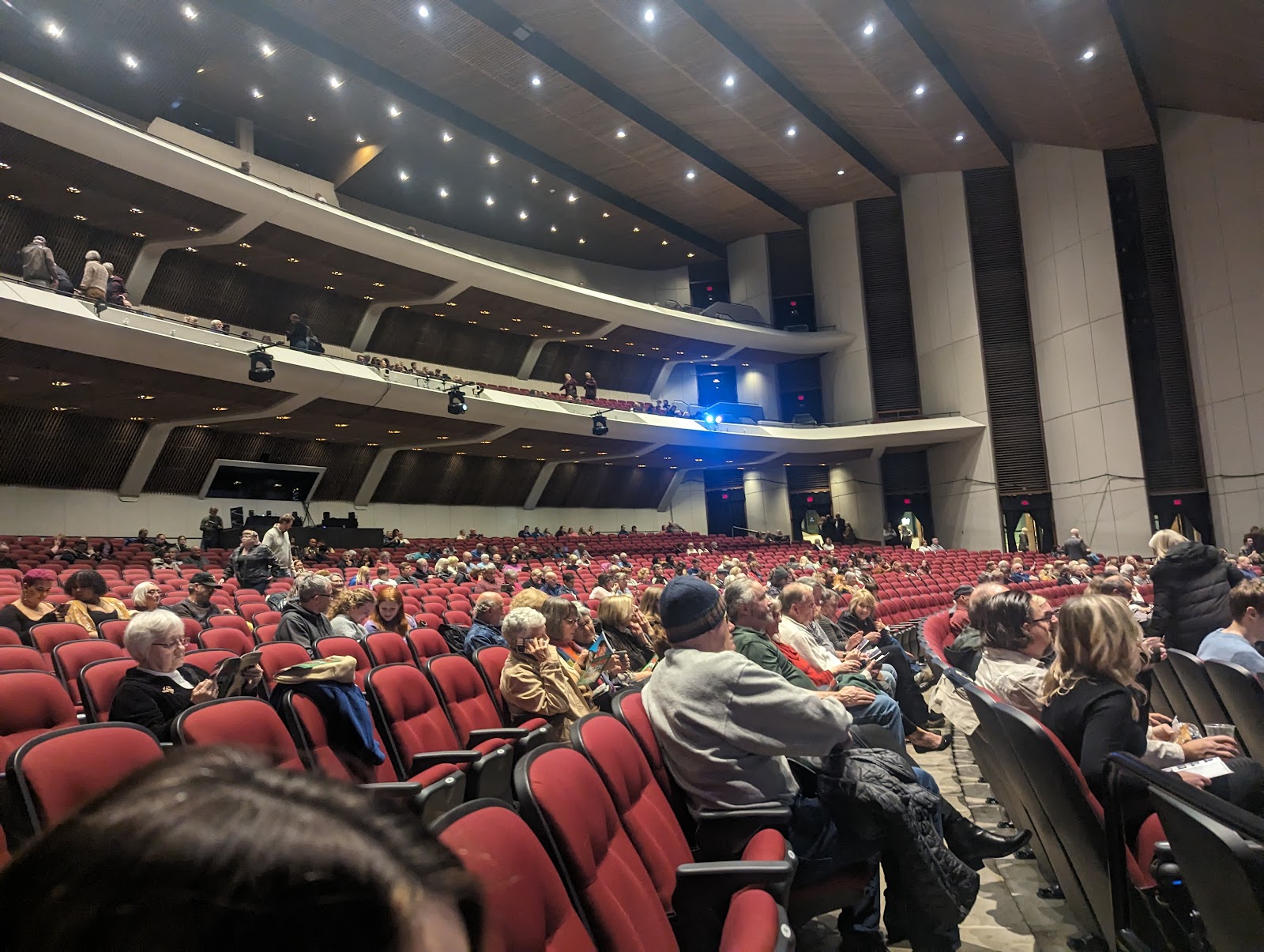
The ballrooms are serviceable and anonymous. They are rectangular, flexible, carpeted, with dimmable ceiling schemes, movable partitions, and ceiling heights that are generous for a meeting and modest relative to their floor area. They will photograph perfectly well once lit and they will contribute nothing themselves.
The exhibit halls are the hardest photographic space in any venue type in this library: very large, usually windowless, with exposed structural and mechanical services overhead, industrial floor finishes, and lighting designed to put a consistent level on a trade stand rather than on a face.
And the mixed lighting throughout is the technical problem that will cost the most time if it is not anticipated. Convention centres accumulate light sources across renovations, so a single hall may carry metal halide high bays, older fluorescent, newer LED panels and architectural accent lighting simultaneously — different colour temperatures with different and sometimes spiky spectra, which no single white balance reconciles.
So the plan writes itself: establish which rooms you have, use the concourse for anything that needs to look considered, light the ballroom properly, spend as little time in an exhibit hall as the event allows, and get outside to the river.
Notes follow, grouped by where you are standing, then the park, then the year — which in Spokane is nothing like the year on the other side of the state.
The Spokane Convention Center at a glance
| Where | A riverside convention centre in downtown Spokane, beside a park and falls |
| The hierarchy | Concourse glass best, ballrooms anonymous, exhibit halls hardest |
| The technical problem | Accumulated mixed light sources that no single white balance reconciles |
| The real asset | A waterfall and a large park, a few minutes’ walk outside |
| Ask first | Which rooms you have, whether they have glazing, and park permit rules |
What you meet, and what each one needs
The glazed concourse. Problem: none worth mentioning, which is why it comes first. Solution: use it for everything that needs to look good. A tall glass wall is a very large soft source, and in a space with a pale floor and ceiling the bounce fills the shadow side for free. Put the subject side-on to the glass two or three metres back and work. This is the best natural light in the building and it is available all day.
The glazed concourse, second note. Problem: the glass is coated to reject heat, which shifts transmitted daylight cooler and often slightly green, and on a bright Spokane day the exterior is very bright indeed. Solution: warm the whole block consistently rather than frame by frame, and expect a blown exterior in any frame that keeps a face correct. Either accept the bright window as negative space or light the subject enough to balance it, which needs real output against a high-altitude dry-air sky.
The glazed concourse, third note. Problem: reflections. A big glass wall with a bright outside and dimmer inside reflects the interior back at you, including the stanchions, the signage and you. Solution: move off the glass axis, get close to the pane, or compose the reflection deliberately.
The ballroom. Problem: anonymous, with a dense patterned carpet and a ceiling height that is modest relative to the floor area, so a wide frame reads as a large flat room. Solution: bounce for the ambient and go long for the faces. Two lights into opposite corners aimed at the ceiling — if it is pale, and check, because exposed dark ceilings are common — lift the whole room by a stop and a half invisibly. Then work at eighty-five or a hundred and thirty-five millimetres for anything with a person in it, so the carpet compresses into a wash and stops competing.
The ballroom, second note. Problem: the movable partitions. Convention ballrooms subdivide with air walls, and those leave visible floor tracks, ceiling channels and vertical seams that read as institutional in a photograph. Solution: know where they are and compose them out, or shoot along them so they become a line rather than a join. The tracks in the floor are the ones that catch people out, because they run straight through the middle of a wide frame.
The exhibit hall. Problem: everything. It is very large, very likely windowless, with services exposed overhead, a floor finish chosen for forklifts, and high-bay lighting that is bright at floor level and comes from a long way up. That combination gives flat top light, dark eye sockets, no modelling and a background of ductwork. Solution: minimise time, light hard, and go tight. If the reception is in there, treat it as a black box: two lights for ambient if the ceiling will take it, otherwise a modifier for the key and a small fill, one white balance for the whole block, and long lenses so the ceiling stays out.
The exhibit hall, second note. Problem: the ceiling will often not take a bounce, because it is dark, open and full of services. Solution: accept direct light and make it good. A single modifier close to the subject, feathered, produces a clean portrait in a hall like this, and the darkness behind becomes an asset rather than a liability — a subject lit at one end of a large dark space separates completely with no background work at all.
Mixed light sources, anywhere. Problem: metal halide, fluorescent, LED and accent lighting in one room, at different temperatures and with non-continuous spectra, which means some sources record colours the eye does not agree with and no single white balance reconciles them. Solution: choose the dominant source, balance for that, and let the rest fall. Do not average — averaging is what makes institutional interiors look grey. And if you are bringing light, gel it to match whatever you chose, because your neutral flash in a room lit by metal halide will read distinctly cold.
Mixed light sources, second note. Problem: older high-bay discharge lamps can flicker at a rate that interacts with a fast shutter, producing bands or shot-to-shot colour shifts. Solution: if you see banding, drop the shutter speed to a sixtieth or below and the problem usually disappears. This is worth testing on arrival rather than discovering in the files.
Meeting rooms and pre-function pockets. Problem: small, low-ceilinged, windowless, carpeted. Solution: these are the plain surfaces of the building and that makes them valuable. A blank painted wall in a service corridor or a small meeting room, lit with one source, produces a clean formal portrait that looks nothing like the rest of the set — which is exactly why it is worth finding two of them on arrival.
Signage and wayfinding. Problem: a convention centre is covered in it, in institutional colours, at eye level, exactly where backgrounds live. Solution: long lenses and low or high camera positions. Eye level is the height at which all the apparatus lives; below it you get ceiling or sky, above it you get floor.
The overall shape of an interior day here: concourse for portraits, ballroom lit properly for the reception, exhibit hall minimised, two plain walls found in advance for the formals, and everything else outside.
Outside: the falls, the park and the tower
The river is the reason to book this venue rather than any other room of similar size, and it is worth the walk.
The Spokane River runs through the middle of downtown and goes over a series of falls in the process — not a single curtain but a stepped sequence of channels and drops through hard volcanic rock, with bridges over it and a park on both sides. A substantial waterfall inside a city centre is rare, and it is a few minutes from the door.
Photographically, moving water gives you a choice that has to be made rather than defaulted. A fast shutter freezes the falls into distinct masses of white droplets, which reads as violence and texture. A slow one — a quarter of a second up to a second or two, on a tripod — renders it as a smooth veil, which reads as calm and makes the surrounding rock look harder by contrast. Both are good. Decide which the couple is, and make both if there is time.
For a slow exposure in daylight you will need a neutral density filter, and it is worth carrying one specifically for this venue. Without it, a second-long exposure in Spokane’s bright dry-air daylight is simply not achievable at any usable aperture.
The rock is worth looking at. This region sits on thick sequences of flood basalt — ancient lava flows stacked hundreds of metres deep — and the falls cut through it, which is why the channel is angular and stepped rather than smoothly eroded. Basalt is dark, hard, and columnar where it has cooled slowly, so it fractures into blocky faces and vertical joints. Dark rock beside white water is a high-contrast subject: meter for the water, let the basalt go dense, and the frame is clean. Meter for the rock and the water is gone.
Wet basalt is considerably better than dry, because it goes almost black and gains a specular sheen, so the spray zone near the falls is where the rock looks best. Mind the front element, and mind the footing.
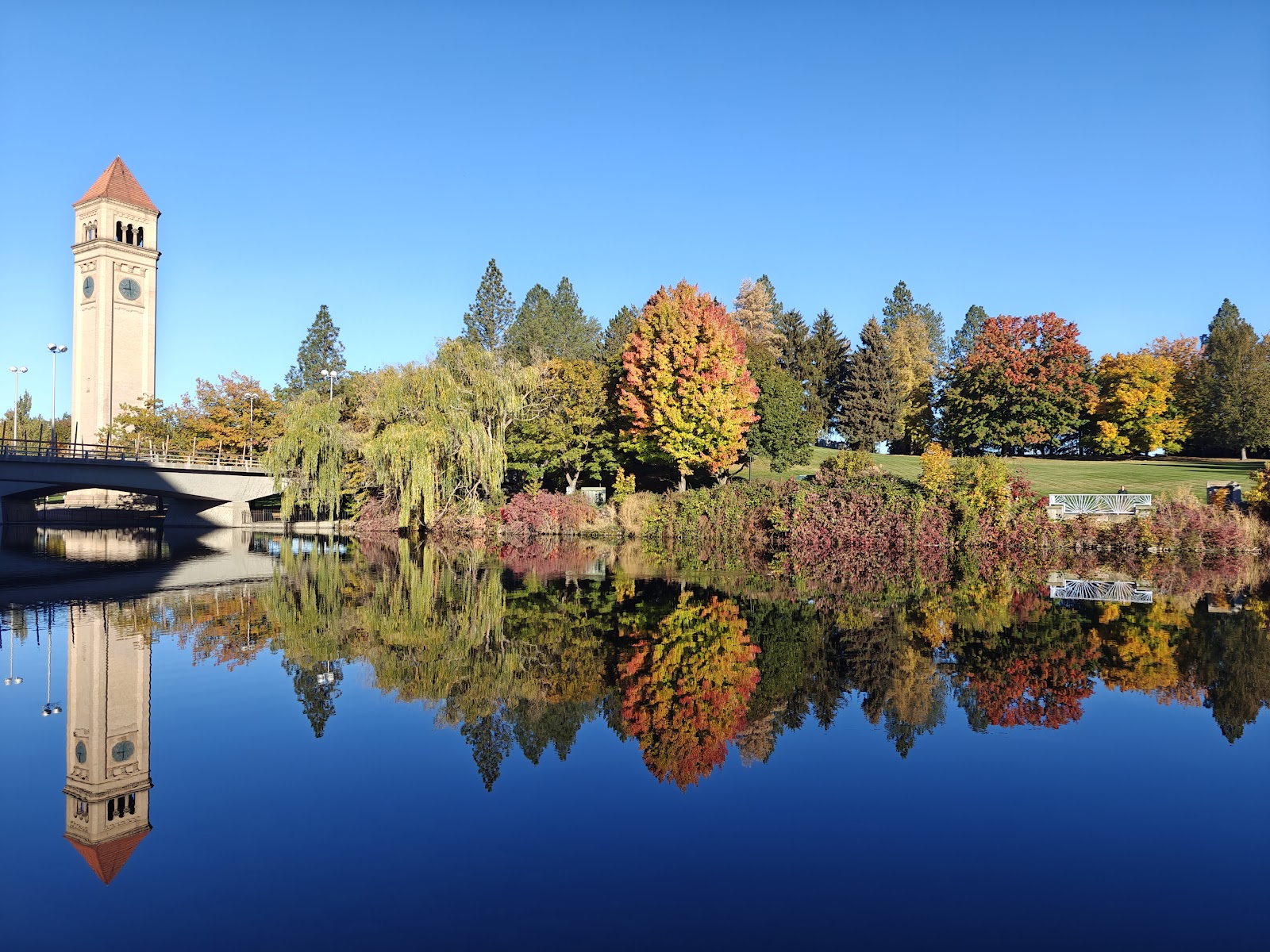
The park is the second asset and it is large. It was laid out for a world’s fair in the nineteen-seventies and retains structures from it, along with a clock tower left from a railway depot that stood here before. That tower is the single most useful built object in the park for a photographer: a tall masonry vertical, standing free, with sky around it and no adjacent building to confuse the outline. Photograph it dead on the centre line or firmly off axis, never two degrees off, and use it as a landmark that places the frame in this city rather than any city.
The bridges are the third. A bridge over a gorge gives you a diagonal, a repeating structure and an elevated viewpoint all at once, and from a bridge deck you are looking down at the falls rather than across them, which is a completely different and often better photograph. Check which bridges have footways and what the traffic noise is like, because a ceremony anywhere near a busy bridge deck is an audio problem for the officiant as much as anything.
Two permit notes. A city park will very often require a permit for commercial photography or for an event, and that requirement is not waived by a wedding. Ask the city rather than the venue, and ask early. And establish which parts of the park are within the venue’s arrangement, if any, because the convention centre and the park are not the same organisation.
Walking times: allow fifteen to twenty minutes each way to move a party of a dozen in formal clothing from the building to the falls and back, plus time on location. That is a commitment of about an hour and it is worth an hour. Put it on the timeline as an hour rather than as a good idea.
One last exterior note. Downtown Spokane has a compact, walkable centre with a good deal of early twentieth-century masonry in it — terracotta, brick, stone — which is a warmer and more textured material palette than the convention centre offers. A ten-minute walk gives you a street with age in it, and that contrast against the modern interiors is worth having in the set.
Spokane, and the year
Spokane sits at almost exactly the same latitude as Seattle — about forty-seven and a half degrees north — and has almost nothing else in common with it. That contrast is the most useful thing to understand here, particularly for a photographer who knows the western side of the state.
The Cascades stand between the two and they wring the moisture out of the incoming Pacific air, so where Seattle gets a marine overcast for two thirds of the year, Spokane gets a semi-arid continental climate: annual precipitation somewhere around seventeen inches, roughly a hundred and seventy sunny days, cold snowy winters and hot dry summers. The city also sits at about eighteen hundred feet, which thins the air a little further.
For a photographer that means the light here is the opposite of Seattle’s. Dry air scatters less, so shadows are deeper, contrast is higher, skies are a genuine saturated blue rather than white, and the sun has hard edges. Nothing about the forgiving softbox conditions on the coast applies. Bring the instincts you would bring to Denver or to the Southwest, not the ones you would bring to Puget Sound.
That has three practical consequences. Shadow fill has to be brought or found, because the air will not provide it — a subject in open sun has genuinely dark eye sockets here. Midday in summer is harsh and should be avoided outdoors, or used only in real shade. And the sky is worth including in a wide frame, which is not true on the western side, so compose upward and let the blue do work.
The diurnal range is large, which is a dry-climate signature: a summer day can start at fifty degrees and reach the nineties. That matters practically — a morning ceremony outdoors in July is comfortable and an afternoon one is not — and it also means mornings are clear and still, which is when the falls photograph best because there is less heat shimmer over the water.
The latitude still gives the long days and the generous dusk. In late June the sun sets after nine, there are about sixteen hours of daylight, and civil twilight runs close to thirty-seven minutes — of which the usable balance point, where the sky and the city lights are within a stop of each other, lasts perhaps eighteen to twenty minutes. That is nearly double what a southern venue gives you and it is long enough for two or three positions rather than one. In late December the sun is gone by about four, there are around eight and a half hours of daylight, and the noon sun never exceeds about nineteen degrees.
Winter here is a real winter, unlike Seattle’s. Spokane gets substantial snowfall over the season and temperatures well below freezing, which has two photographic effects, one excellent and one practical. Snow on dark basalt beside white water, under a low nineteen-degree sun, is about as good as this city looks — maximum tonal separation and raking light all day. And a wedding party outdoors in that for more than a few minutes is not viable, so the exterior work has to be short, planned and close to a door.
Ice on the falls is worth knowing about: in a hard cold spell the spray zone builds up ice on the rock and the railings, which is a genuinely distinctive subject. It also makes the footing dangerous. Look, photograph from a safe position, and do not take a wedding party onto it.
Late September into October is the best all-round window. The air is dry and clear, temperatures are comfortable in formal clothing, sun angles stay low enough that the whole afternoon works rather than only the last hour, and the deciduous planting in the park turns through the second half of October against dark basalt and evergreen.
May into June is the other good window: the river is at its highest from snowmelt, which means the falls are at their most impressive of the year, and the planting is fresh. High water is a real consideration — the falls in May are a different subject from the falls in September, and if the couple has seen photographs of them in full flood they should know which they are getting.
July and August are hot, dry and reliably sunny, with the harsh midday and the large diurnal range discussed above. The honest caution about late summer is wildfire smoke: since the late twenty-tens, August and September have brought smoke from fires in eastern Washington, Idaho and British Columbia with some regularity, and inland Spokane is affected more often and more heavily than coastal Seattle. Smoke gives an orange low-contrast light some people like and air quality that can make an outdoor event genuinely inadvisable. It cannot be forecast far out, so a late-summer outdoor plan needs an air-quality contingency as well as a rain one — and at this venue, where the main spaces are indoors, that is a manageable problem rather than a serious one.
One closing instruction that covers the whole year. The building is a working conference facility with its own bookings, so establish what else is on site on the date. A convention running in the adjoining halls changes the concourse from a quiet glazed room into a thoroughfare with lanyards in it, and that is the difference between the best interior light in the building being usable and not.
More frames from The Spokane Convention Center
The Spokane Convention Center wedding photography: common questions
Which interior space is best?
The glazed concourse, by a wide margin, and that inverts most people’s assumption. Modern convention centres invest in the pre-function circulation — tall glass, open volume, views out — because that is where delegates mingle, so the space that exists to be walked through is the one with the light in it. Put the subject side-on to the glass two or three metres back and work; the pale floor and ceiling fill the shadow side for free.
What is the main technical problem inside?
Accumulated mixed light sources. Convention centres gather lighting across renovations, so one hall may carry metal halide high bays, older fluorescent, newer LED panels and architectural accents at once — different temperatures with different and sometimes spiky spectra that no single white balance reconciles. Choose the dominant source, balance for that, let the rest fall, and gel any light you bring to match. Do not average; averaging is what makes institutional rooms look grey.
How do you handle an exhibit hall?
Treat it as a black box. It is large, likely windowless, with services exposed overhead and high-bay lighting that gives flat top light and dark eye sockets. Minimise time in it, light hard, and go long so the ductwork stays out of frame. The ceiling often will not take a bounce, and that is fine — one modifier close and feathered gives a clean portrait, and the darkness behind becomes an asset, because a subject lit at one end of a big dark space separates completely with no background work.
What should we photograph outside?
The falls and the park, and they are worth an hour on the timeline. The river goes over a stepped sequence of drops through dark flood basalt in the middle of downtown, which is rare. Decide between a fast shutter, which freezes the water into white masses, and a slow one on a tripod, which renders it as a smooth veil and makes the rock look harder — and carry a neutral density filter, because a long exposure is not achievable in Spokane’s bright dry daylight without one.
How is Spokane different from Seattle?
Almost entirely, despite sitting at the same latitude. The Cascades wring the moisture out of the incoming Pacific air, so Spokane is semi-arid and continental: about seventeen inches of precipitation, roughly a hundred and seventy sunny days, cold snowy winters and hot dry summers, at about eighteen hundred feet. The light is the opposite of the coast’s — deeper shadows, higher contrast, genuinely blue skies, hard-edged sun. Bring Denver instincts, not Puget Sound ones: fill has to be brought or found, and midday outdoors in summer is harsh.
When is the best time of year?
Late September into October for all-round reliability: dry clear air, comfortable temperatures, low sun angles all afternoon, and deciduous colour in the park through the second half of October against dark basalt. May and June are the other window, and the falls are at their most impressive then from snowmelt — worth knowing, because the river in May is a different subject from the river in September. Late summer carries a real wildfire-smoke risk, which inland Spokane gets more often and more heavily than coastal Seattle.
More Washington venue guides
We are writing a photographer’s guide to every venue we would happily shoot in Washington. Here are three more, plus the full index:
Planning a wedding at The Spokane Convention Center?
Concourse, ballroom, and an hour at the falls. Tell us your date.