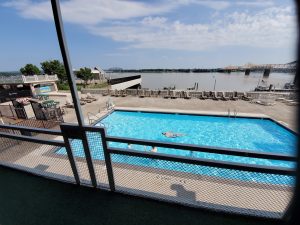
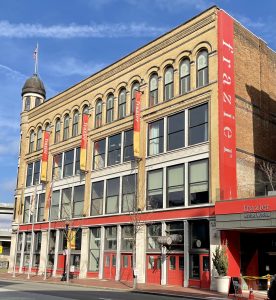
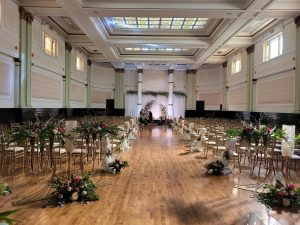
 The Henry Clay: Lighting a 1920s Lodge Building
The Shaker Village, Harrodsburg: Suits and Does Not Suit
Austerity is the whole aesthetic. That is either the point or the problem.
Most venue guides tell you what a place is good at. This one is more useful the other way round, because Shaker Village divides couples more sharply than almost anywhere in this library, and the division is not about budget or size. It is about whether you want ornament.
The village sits on around three thousand acres of Kentucky countryside near Harrodsburg, and it is a restored nineteenth-century Shaker community — a religious settlement whose members were celibate, communal and famously exacting about how things were made. It is the largest restored Shaker site in the country, with a substantial group of original buildings still standing, and it is a National Historic Landmark.
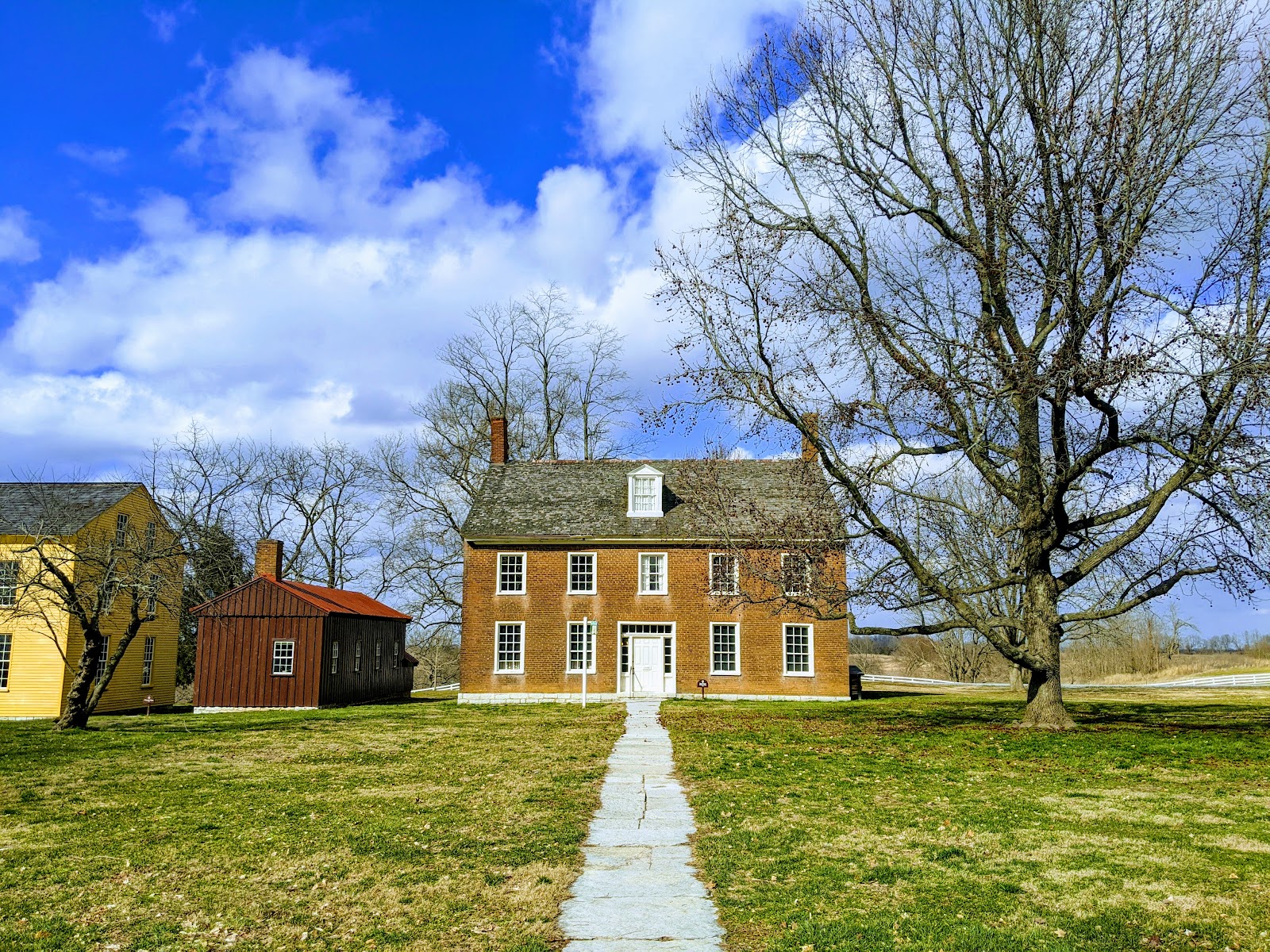
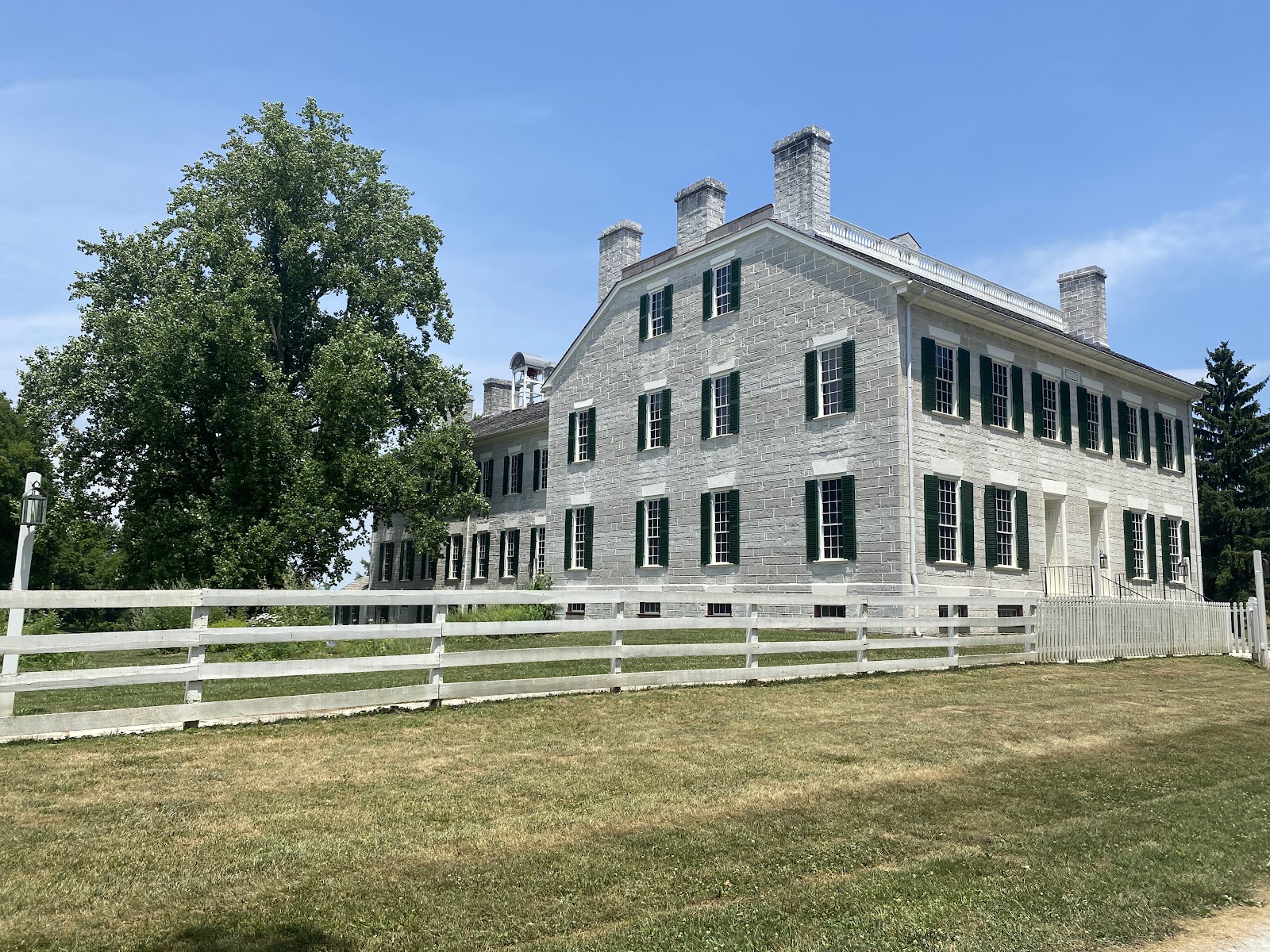
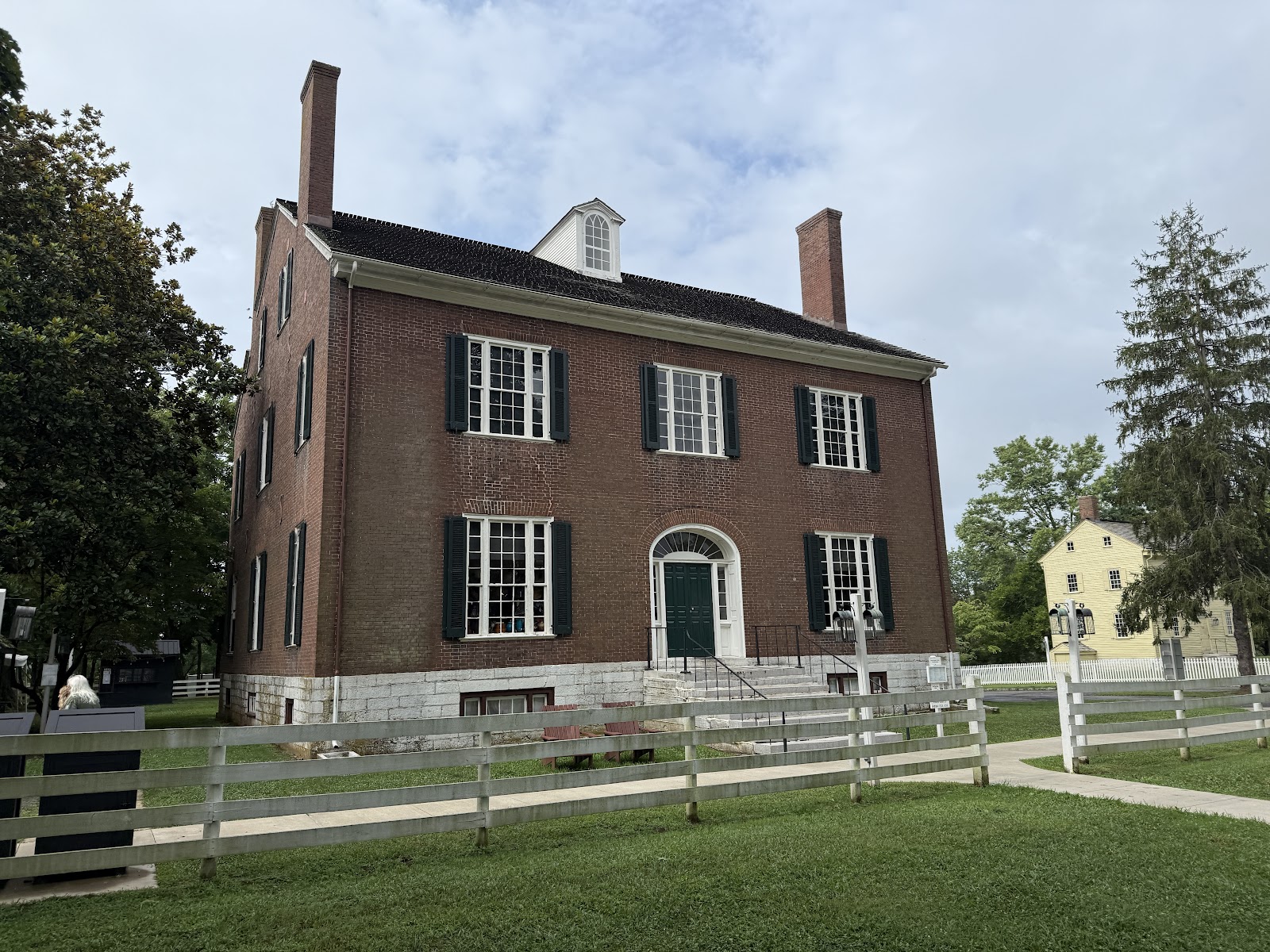
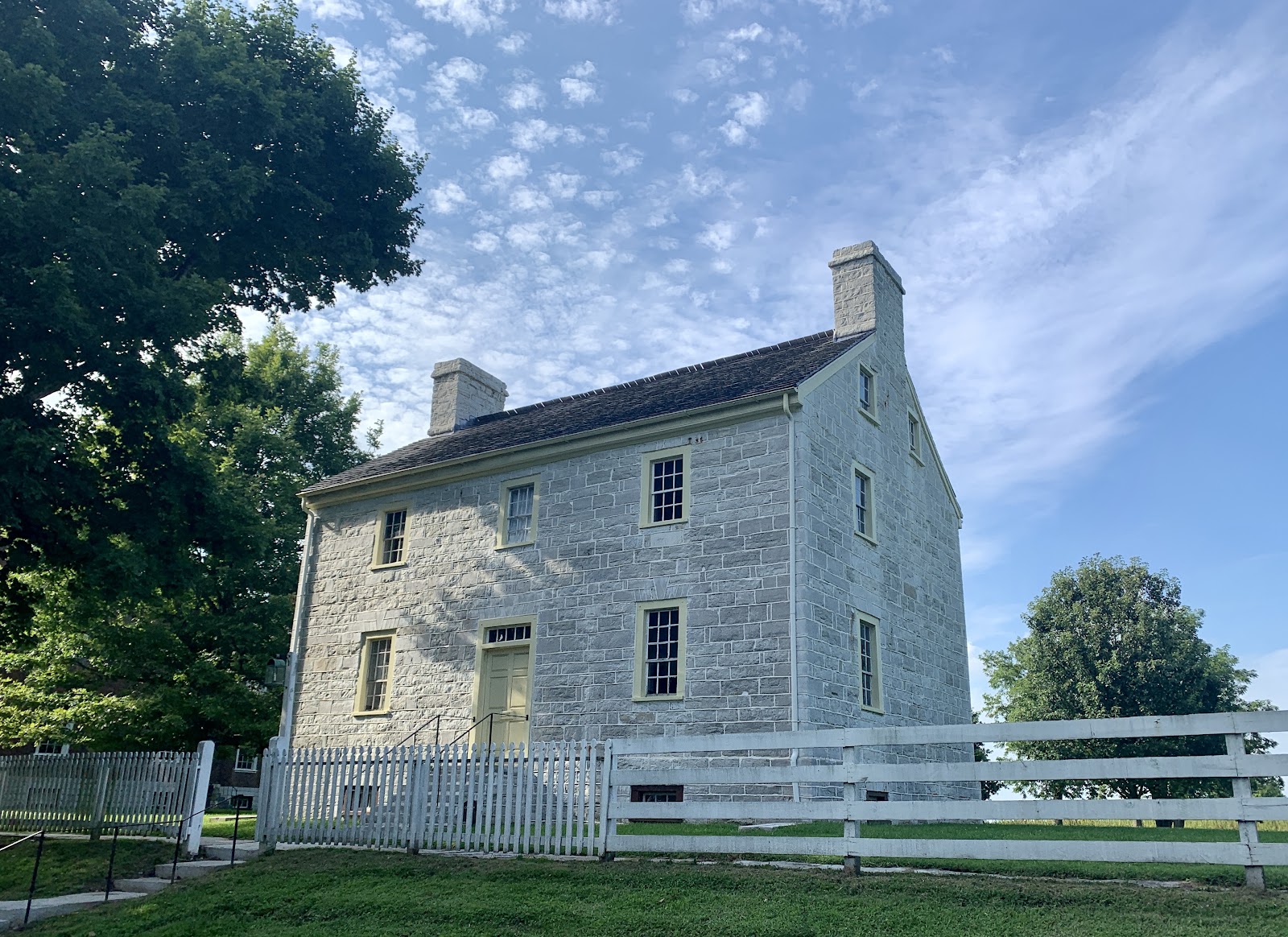
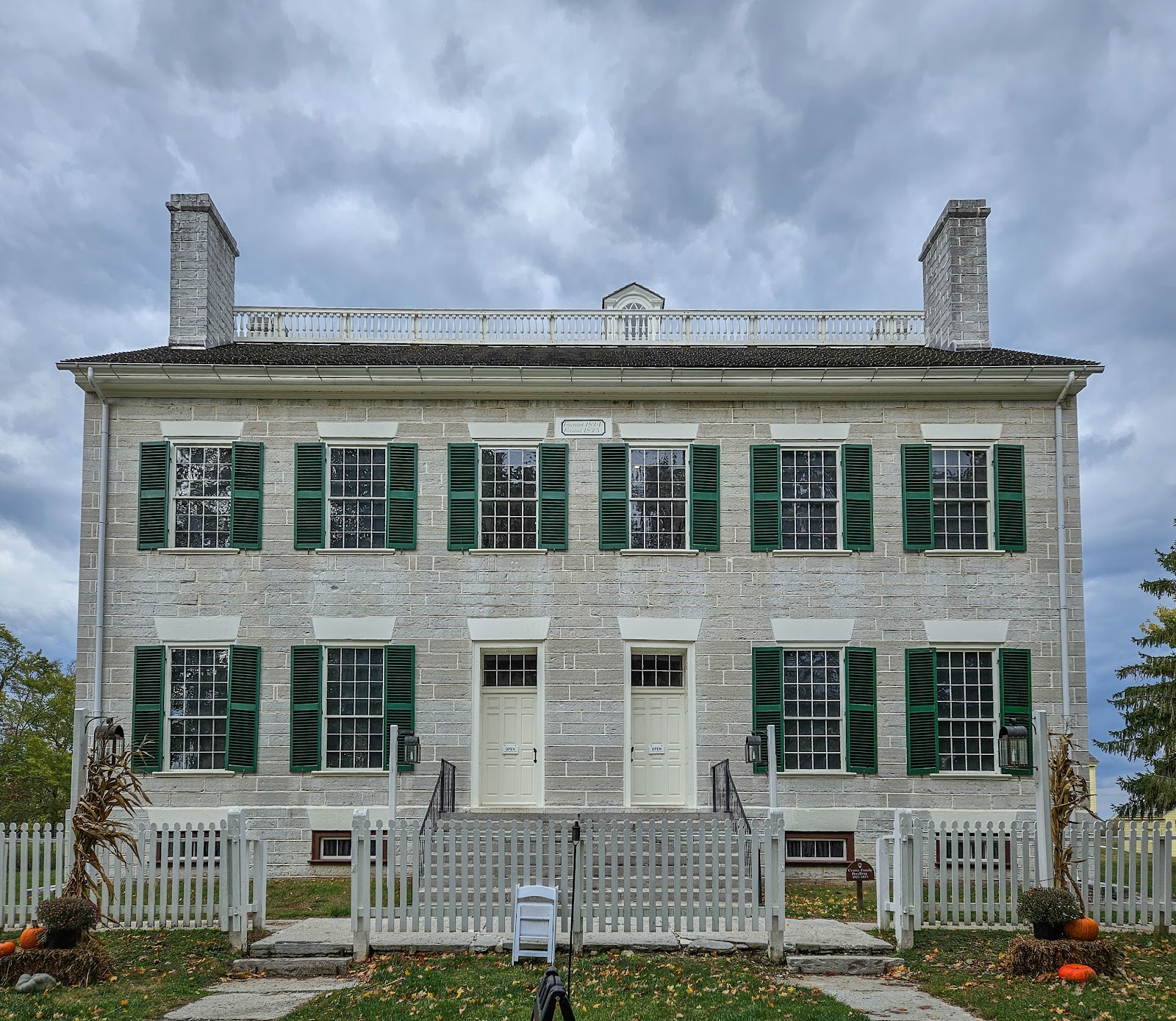
What that means architecturally is unusual and worth understanding before any decision is made. Shaker design removed ornament as a matter of belief rather than of economy. There is no carving, no moulded plaster, no applied decoration, no colour beyond what the material or the paint required. What is left is proportion, symmetry, material and light, executed to a standard that is genuinely remarkable — plain in the way a well-made tool is plain, not in the way a cheap room is plain.
There are three consequences for a photographer and all three are large.
The first is that the light is superb. Shaker buildings have large multi-pane windows in thick walls, pale interiors, and almost nothing on the walls to absorb or complicate what comes in. A whitewashed room with a big window in a deep reveal is close to an ideal portrait environment: the window collimates, the wall bounces, the falloff is fast, and there is no pattern competing with a face. You will not find better natural interior light in Kentucky.
The second is that the symmetry is a compositional gift. The Shakers separated men and women in daily life, which produced buildings with paired doors, paired stairs and paired circulation — and in one building a pair of spiral staircases winding up alongside each other. Doubled symmetry is a structure you can compose on directly, and it is not something most historic houses offer.
The third is the hard one. There is nothing to hide behind. A venue with plaster swags and chandeliers will flatter a mediocre frame; a whitewashed room with a plain floor will not. Every photograph here comes down to the placing of people, the quality of the light, and the geometry. That is either the best possible condition to work in or a very exposed one, and it depends entirely on the photographer and on what the couple actually wants.
So: what it suits, then what it does not, and then the Bluegrass and the year. Nothing below is a criticism of the village. It is one of the most coherent places in this collection. It simply is not for everybody, and pretending otherwise serves nobody.
The Shaker Village at a glance
| Where | A restored Shaker community on about three thousand acres near Harrodsburg, KY |
| Suits | Plain, considered, quiet weddings; small guest counts; natural-light work |
| Does not suit | Ornate or maximalist visions; large parties; anyone needing glamour from a room |
| The light | Large windows, deep reveals, whitewashed walls — the best in the state |
| Ask first | Which buildings are bookable, capacity per room, and the rain plan |
What it suits
It suits a couple whose taste is genuinely plain, and that is a smaller group than the number who say so.
The test is simple and worth putting to them early: show them a photograph of a whitewashed room with a wooden floor, a window, two chairs and nothing else, and see whether they light up or start describing what they would add. If they start adding, this venue will frustrate them for a year and then frustrate them on the day, because it does not take decoration well. Applied ornament in a Shaker room reads as a mistake in a way it does not in a Victorian one, because the room’s whole argument is the absence of it.
It suits small numbers. Shaker buildings were built for communal living rather than for assembly, which means a lot of medium rooms rather than a few large ones. That is a real strength for a wedding of forty or sixty — everyone in a room with good light, nobody at the back of a hall — and a real constraint above that. Establish the actual capacity of the specific room you are offered, not the site’s overall figure, and establish it early.
It suits natural-light photography better than almost anywhere. If a couple’s reference images are all soft window light and quiet interiors, this is the venue for it, and it will deliver in February as reliably as in June because the windows do the work rather than the weather.
It suits a photographer who likes geometry. The symmetry is not incidental — paired doors, paired stairs, repeated window rhythms, long corridors with a vanishing point — and it rewards being square to things. Get the camera parallel to a wall and level, put a subject on an axis, and the building composes the frame for you. That is a specific pleasure and this place offers a lot of it.
It suits an all-day event that moves outdoors and back. Three thousand acres is a genuine landscape, with pasture, restored native prairie, stone fences and a good deal of open sky, and the site runs down toward the Kentucky River, where the limestone palisades stand several hundred feet above the water. That is a serious piece of scenery and it is unlike anything else within a hundred miles.
It suits a couple who want the wedding to feel like it is somewhere rather than anywhere. This is not a hotel with a theme. It is a preserved settlement with a documented history and a landscape attached, and photographs made here are unmistakably of this place.
It suits an autumn or winter date better than most outdoor-leaning venues, because the interiors are genuinely good. A December wedding in a whitewashed room with a large window is a lovely proposition, and the site does not depend on flowers being out.
And it suits couples who are happy to be somewhere quiet. It is rural, the sound is birds and wind, and the evening is dark. If that is the appeal, it is completely the appeal.
One technical note that belongs here rather than in the next section, because it is an advantage. Whitewashed and pale-painted interiors are extremely efficient bounce surfaces. A single light aimed at a wall or a ceiling in a Shaker room will lift the whole space by a stop and a half and leave no evidence of having done so. Rooms like this are the easiest possible places to light well, which is the opposite of what people expect from historic buildings.
What it does not suit
It does not suit a large wedding. That is the first and most practical limitation. Buildings designed for communal life have no ballroom, and a guest count above the low hundreds will either be split across rooms or moved into a marquee, which is a different wedding in a field next to a historic site rather than a wedding in one. Both are fine; they are not the same product, and the difference should be clear before a deposit.
It does not suit a maximalist vision. Draping, uplighting in strong colours, heavy floral installations and large decorative structures fight the architecture rather than dressing it, and in photographs they look imposed. If the moodboard is full of that, a different venue will serve the couple better and you should say so kindly and early.
It does not suit a couple who need the room to do the work. A plain room requires that the people in it be well placed, well lit and actually looking like themselves. There is no chandelier to put in the corner of the frame. For a photographer that is an honest and rather good discipline; for a couple expecting the venue to supply glamour, it will feel like less than they imagined.
It does not suit a tight schedule or a guest list with mobility limitations spread across it. Three thousand acres means distance, and a historic site means original stairs, thresholds and floors that were not built to modern accessibility standards. Ask specifically which rooms are reachable without stairs, and ask about the surfaces between buildings, because gravel and grass in formal shoes over a hundred metres is slower than anyone plans for.
It does not suit a plan without a genuine rain answer. Rural Kentucky in spring and summer gets real thunderstorms, and a covered alternative at a historic site is usually a room with a capacity well below the lawn’s. Find the actual number. A rain plan that holds sixty when a hundred and twenty are coming is not a rain plan.
It does not suit anybody who wanted a short drive. It is properly rural, which is part of why it is beautiful and all of why some guests will find it inconvenient. Accommodation on or near site is the thing to establish, because a rural venue with a late reception and a long drive home is a problem the couple will hear about afterwards.
It does not suit a photographer who works mainly with heavy off-camera lighting and dramatic falloff. You can do that here, but you will be fighting a building whose entire argument is even, honest light, and the results tend to look like someone brought a studio into a Shaker room. The venue rewards restraint, which is a genuine constraint on style rather than a preference.
And a smaller one worth naming: it does not suit late nights outdoors in winter. Rural, unlit and at this latitude, the site goes properly dark, and a December evening outdoors is a lighting build rather than an opportunity. Plan the outdoor portion of a winter day for the early afternoon.
Set against all of that, the honest summary is this. If the couple’s taste is plain and their numbers are modest, there is very little in this region as good. If either of those is untrue, the venue will be a slight fight all the way through. Knowing which you have at the enquiry stage is the most valuable thing in this guide.
The Bluegrass, and the year
The Inner Bluegrass is a distinctive region for a specific geological reason, and the reason explains almost everything visible in it.
Underneath is Ordovician limestone, and this particular limestone is unusually rich in phosphate. Rain dissolves it, the minerals go into the soil, the soil grows grass with a high mineral content, and the animals that eat that grass build bone well — which is why this became horse country rather than something else. The same limestone filters the groundwater, removing iron and adding calcium, which is why bourbon is made here and not somewhere more convenient. One rock formation explains two entire industries and the whole look of the landscape.
It also explains the fences. The Bluegrass is full of dry-laid stone fences, built without mortar, largely by Irish immigrant and enslaved masons in the nineteenth century, using limestone lifted from the fields they enclose. A dry stone fence in raking light is a superb photographic subject — every stone has its own small shadow, so the whole wall reads as texture rather than as a line. Photograph it early or late; at midday it flattens to grey.
And the trees. Parts of this region were originally savanna-woodland rather than closed forest — widely spaced trees over grass — and the survivors of that, mostly bur oak and blue ash, are open-grown specimens with enormously wide low crowns rather than the tall narrow shapes a forest produces. An open-grown bur oak is a natural room: a single tree that shades forty people and frames a ceremony without any structure at all. Look for them specifically. They are the best outdoor ceremony positions on a site like this and they are not always where the venue suggests.
The latitude is about thirty-eight degrees north, which is a genuinely useful three degrees further north than Nashville, and it shows in one number: civil twilight here runs about twenty-nine minutes in midsummer, against twenty-four in Memphis. Five extra minutes at the end of the day sounds trivial and is not — it is roughly a fifty per cent increase in the workable balance-point window, and on a rural site with no light pollution the sky holds colour noticeably longer than it does in a city.
The midsummer noon sun reaches about seventy-five degrees, which is high but a little more forgiving than further south, and the midwinter noon sun sits near twenty-eight degrees, low enough to rake across pasture all day.
Humidity is an Ohio Valley humidity: July dewpoints around seventy, which fills shadows by perhaps a stop and a half to two stops against a dry climate. Shadow edges stay soft, eye sockets hold detail, and midday open shade under one of those bur oaks is genuinely good light. The costs are a pale sky in wide frames, haze on distance — which matters here, because the palisades and the long views are the point of the landscape — and a lens that fogs coming out of a cooled building into July air.
Late April into May is the region’s best-known window and it earns the reputation: dogwood and redbud in the woods, pasture at its most saturated green, mild air, and lengthening evenings. It is also the wettest part of the year and the active part of the severe-weather season, with organised fast-moving systems rather than passing showers. The rain plan matters most precisely when the venue looks best.
Late September into October is the better bet for reliability and it may be the best fortnight of the year here. Air dries out, the haze lifts so the long views actually resolve, temperatures are comfortable in formal clothing, sun angles stay low enough that the whole afternoon works, and the hardwoods turn through the second half of October. On a three-thousand-acre site with real distance in it, the difference between a hazy August view and a clear October one is the difference between a frame that works and one that does not.
Summer is workable with the middle of the day respected. Low nineties with a seventy-degree dewpoint on open pasture, in formal clothing, is uncomfortable, and the answer is the canopy and the interiors, both of which this site has in quantity. The compensation is a sunset after nine in late June, which is late enough that a whole reception can begin in daylight.
Winter is the underrated season here, precisely because the interiors are so good. Sunset near half past five in December is early but not brutal, the low sun models faces all afternoon, the air is completely clear so the palisades and the long views are at their sharpest of the year, and a whitewashed room with a big window does not care what month it is. Against it: rural roads, genuine freeze-thaw, and occasional Kentucky ice, which is a travel problem for guests and suppliers rather than a photographic one. A winter date deserves a contingency that assumes some people cannot drive.
One last note that applies in every season, and it is the most useful sentence in this guide. Photograph the empty rooms in the first thirty minutes you are on site. A Shaker interior with nothing in it but light is one of the finest photographic subjects in Kentucky, and once the chairs and the bags and the dresses arrive you will not see it again that day.
More frames from The Shaker Village
The Shaker Village wedding photography: common questions
How do we know if this venue is right for us?
Look at a photograph of a whitewashed room with a wooden floor, a window, two chairs and nothing else. If that appeals immediately, this is your venue. If your instinct is to describe what you would add, it is not — Shaker rooms do not take decoration well, because the absence of ornament is the room’s entire argument, and applied draping or heavy florals read as imposed in a way they would not in a Victorian house.
What size of wedding does it suit?
Modest. These buildings were built for communal living rather than assembly, so there are many medium rooms and no ballroom. Forty to sixty is where the site is at its strongest — everybody in a room with good light. Above that you are either split across rooms or in a marquee, which is a wedding beside a historic site rather than in one. Establish the capacity of the specific room you are offered, not the site’s overall figure.
Is the light really that good?
Yes, and it is the best natural interior light in the state. Large multi-pane windows in thick walls collimate the light into a defined direction with fast falloff, whitewashed walls bounce it back efficiently, and there is no pattern on the walls competing with a face. It is also consistent — the windows do the work rather than the weather, so a February interior is as good as a June one.
Do you need to bring lights?
Less than at most historic venues, and when you do they work unusually well. Pale walls and ceilings are extremely efficient bounce surfaces, so one light aimed at a wall lifts a whole room by a stop and a half invisibly. What does not suit the place is heavy dramatic off-camera lighting — you can do it, but you will be fighting a building whose whole argument is even honest light, and it tends to look like a studio was carried indoors.
What is the best time of year?
Late September into October, for reliability and for the long views: the air dries out, the haze lifts, temperatures are comfortable, sun angles stay low all afternoon, and the hardwoods turn late in the month. Late April and May are more famous and genuinely beautiful — dogwood, redbud, saturated pasture — but they are also the wettest and most storm-prone weeks, so the rain plan matters most exactly when the site looks best. Winter is underrated because the interiors do not care what month it is.
What should we check about the rain plan and access?
The actual capacity of the covered alternative, as a number. At a historic site it is usually well below the lawn’s, and a plan that holds sixty when a hundred and twenty are coming is not a plan. Also ask which rooms are reachable without stairs and what the surfaces between buildings are, because a historic site has original thresholds and floors, and a hundred metres of gravel and grass in formal shoes takes longer than anybody expects.
More Kentucky venue guides
We are writing a photographer’s guide to every venue we would happily shoot in Kentucky. Here are three more, plus the full index:
- The Woodford Reserve Distillery: The Venue’s Own Logic
- The Brennan House: Who This Small Venue Suits
- The Brown Hotel: Reading the Light in a 1923 Grand Hotel
Planning a wedding at The Shaker Village?
If plain is genuinely the plan, there is little better in Kentucky. Tell us your date.