 The Audubon Aquarium: Field Notes on Photographing Through Glass
The San Francisco Plantation, Garyville: The Problem, and Four Ways Out of It
The problem is what surrounds it. Four ways round.
The problem at this venue is not the house. It is everything within two hundred metres of it.
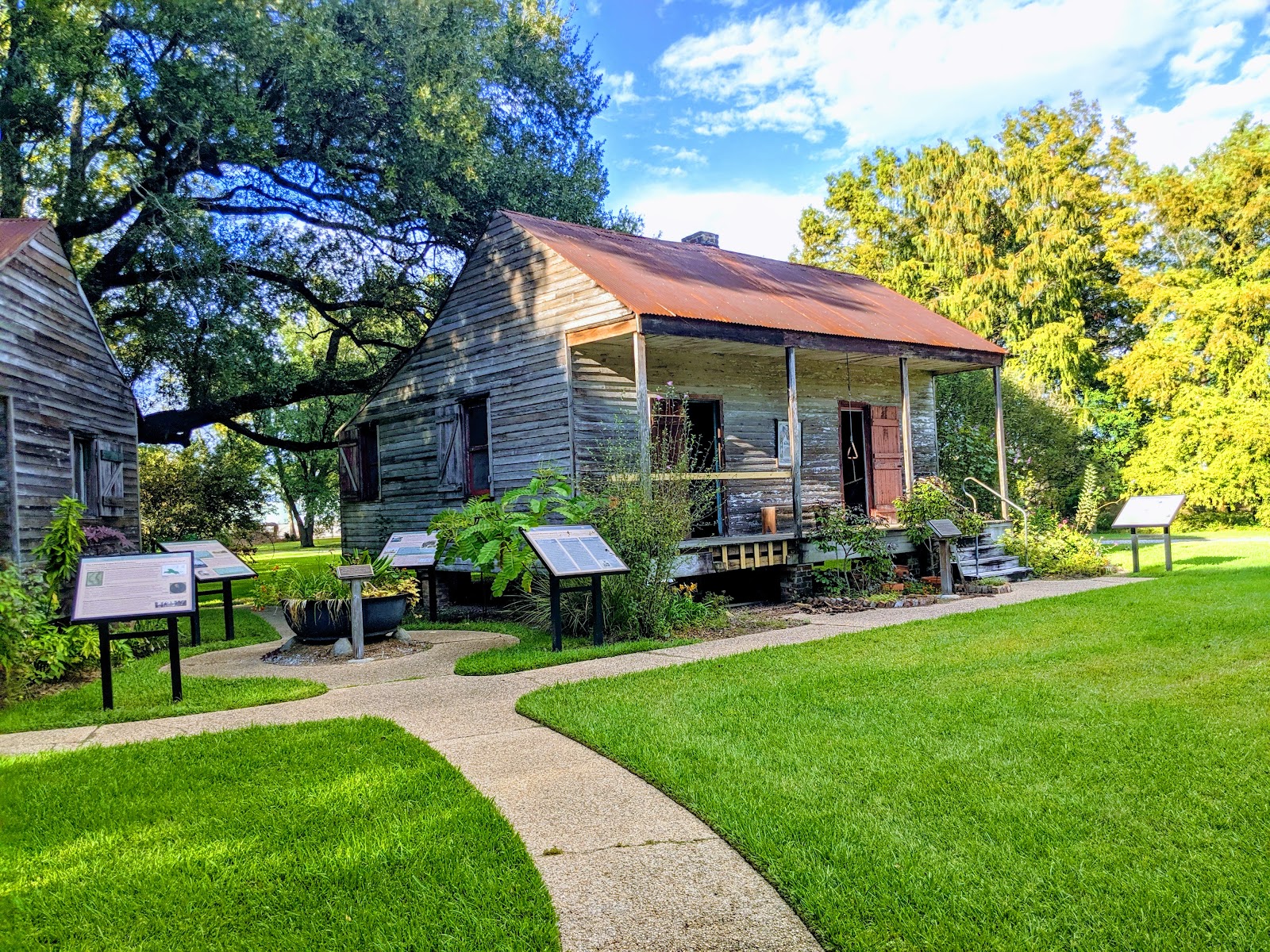
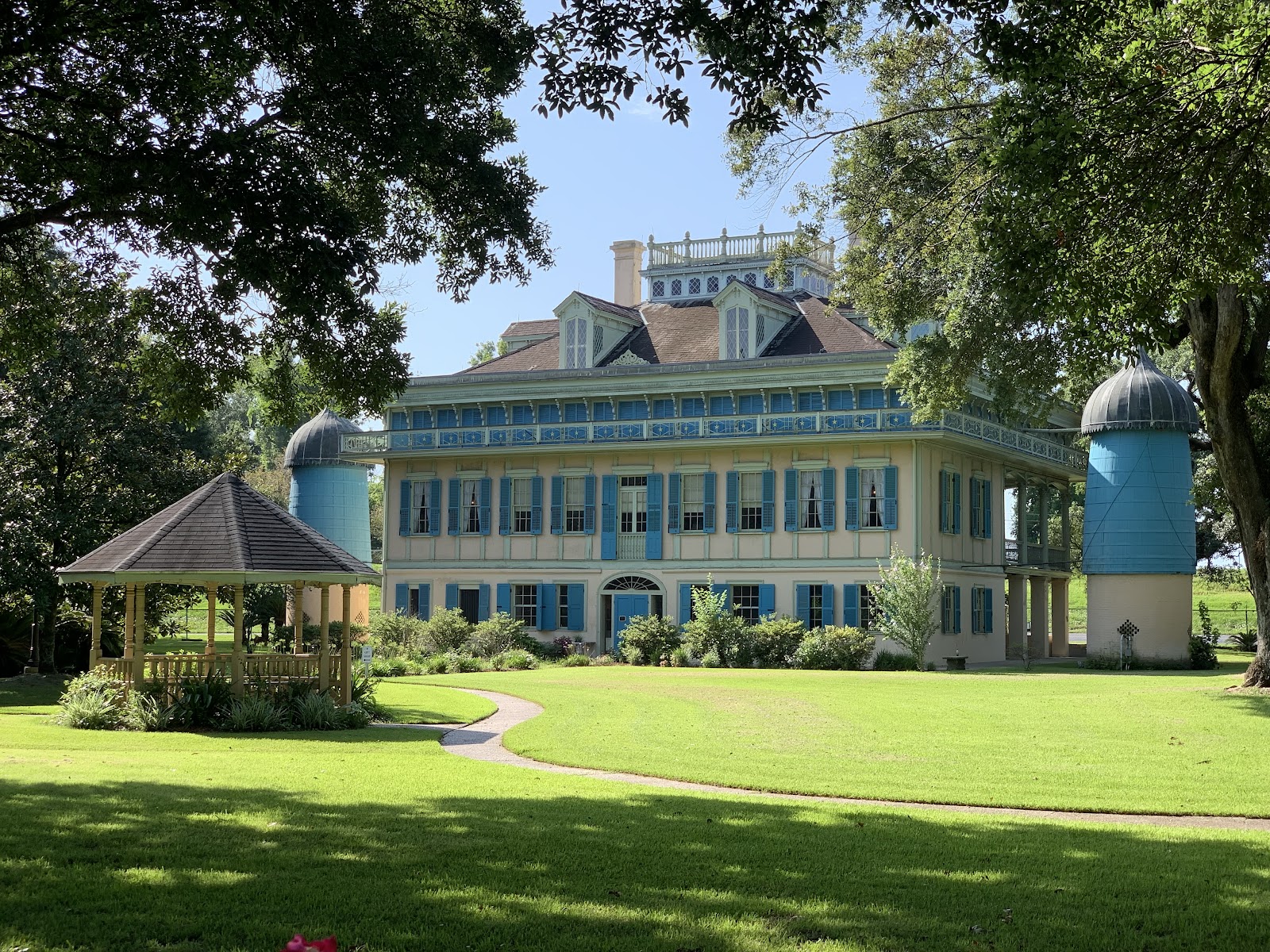
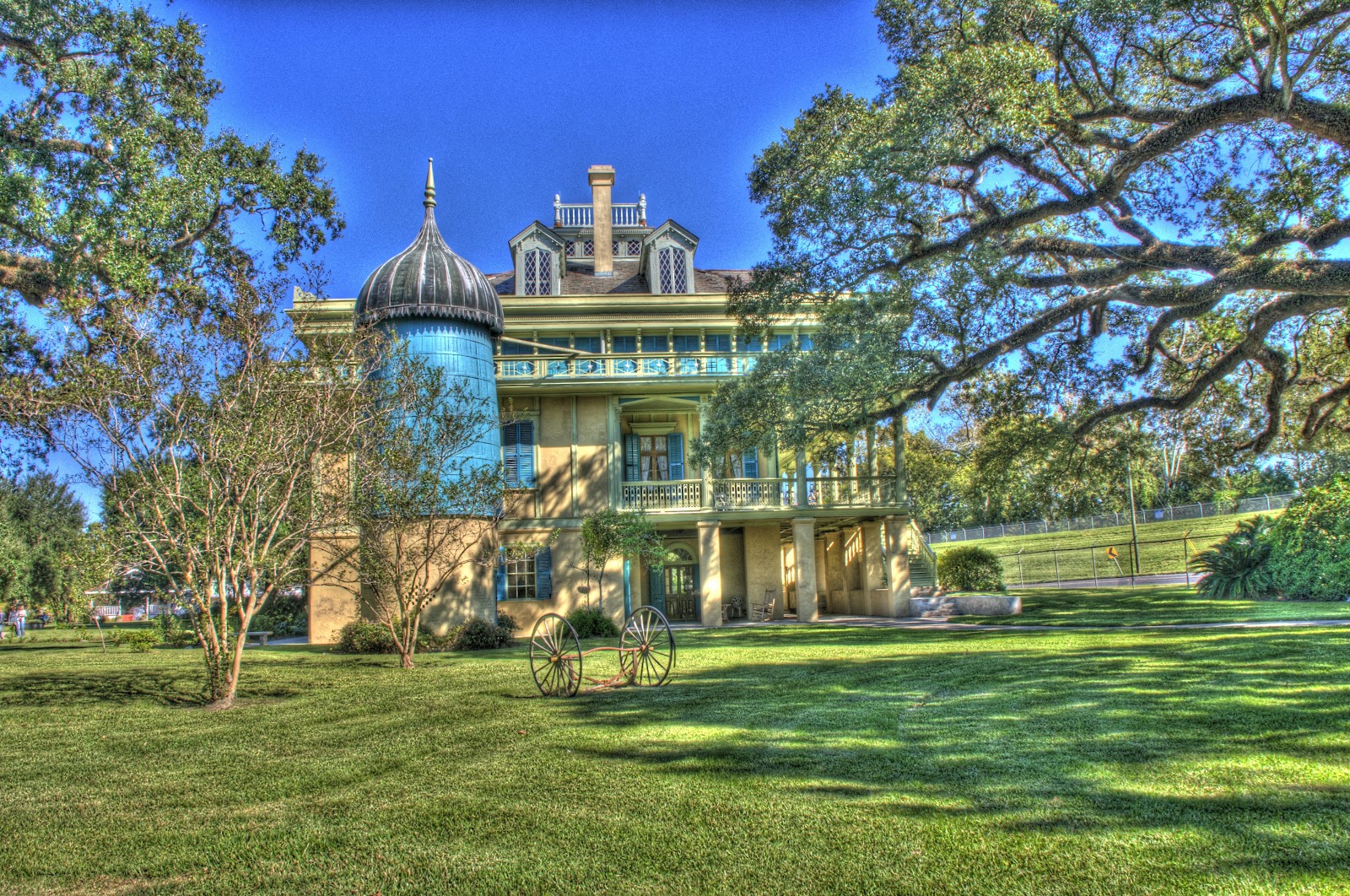
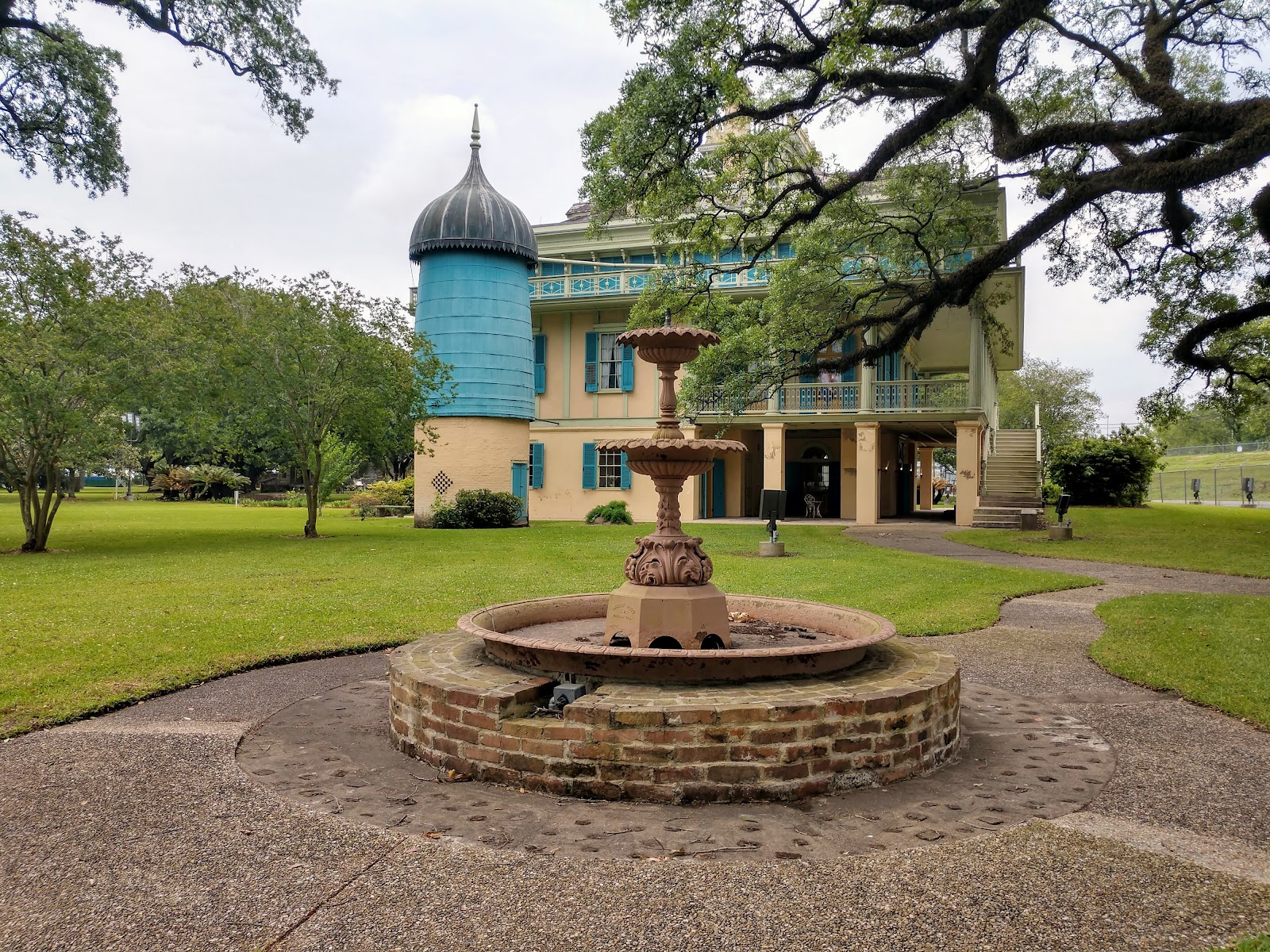
San Francisco Plantation stands at Garyville on the River Road, and the house itself is extraordinary: built in the mid-eighteen-fifties, ornate to a degree that is unusual even for its period, with double galleries, elaborate turned and sawn woodwork, and a colour scheme of blues, peaches and greens rather than the uniform white of its Greek Revival neighbours. It is often described as Steamboat Gothic, and the description is apt — it looks less like a house than like the upper works of a river vessel that has come ashore.
State the history plainly before the photography. This was a sugar plantation, and a sugar plantation was a forced-labour camp. Sugar was among the most lethal agricultural industries in North America, and the decoration and the woodwork that make this house remarkable were paid for by the labour of enslaved people. A couple should decide about that deliberately rather than by default. Many people, photographers included, decline plantation venues outright for that reason, which is a coherent position; others book them having thought it through. Booking without having thought about it is the option that tends to be regretted.
Now the surroundings, which are the working problem.
The house sits immediately behind the Mississippi levee. Not near it — behind it, within a short walk, with the grass embankment rising directly in front of the building. That embankment holds the river at a level above the surrounding land, so it blocks the view completely and the strip between levee and water is wooded. There is no frame of this house with the river behind it, and the levee crowds the front of the property in a way that limits where you can stand to see the facade.
And on the other sides, this stretch of the River Road is heavy industry. A large working petrochemical plant adjoins the property, and it is visible, lit, and audible. That is simply the condition of this part of the lower Mississippi — the same deep-water channel that made the sugar estates viable made the corridor attractive to refineries a century later — and it is not something the venue can do anything about.
So a photographer arriving expecting a pastoral frame of a grand house in open country will spend the evening cropping around a levee on one side and industrial plant on the other. That is the problem, and it is entirely solvable, but only by four specific manoeuvres rather than by wandering with a camera.
The first is to shoot upward, because the house is tall and the sky above it is clean.
The second is to use the levee rather than fight it: from the right position that embankment becomes an empty grass horizon that hides everything behind it.
The third is to go tight, because the detail on this building is genuinely exceptional and detail frames contain no surroundings at all.
And the fourth is to work at dusk, when industry stops being clutter and becomes lights — which, handled deliberately, is one of the more distinctive photographs available anywhere on this road.
Each of those in detail, then the year.
The San Francisco Plantation at a glance
| Where | An ornate 1850s house at Garyville, LA, behind the Mississippi levee |
| The problem | A levee crowding the front and heavy industry adjoining the site |
| Four ways out | Shoot upward, use the levee as a horizon, go tight, or work at dusk |
| The asset | Exceptional sawn and turned woodwork, in blues, peaches and greens |
| Understand first | A forced-labour sugar plantation; decide about that deliberately |
Ways one and two: shoot upward, and use the levee
The first manoeuvre is the simplest and it solves most of the wide frames: get the camera low and point it up.
This house is tall — two full galleried storeys over a raised base, with a substantial roof above that — and it is extravagantly detailed all the way up. From a low camera close to the building, the frame fills with gallery, balustrade, bracket and roofline, and the only thing behind it is sky. Nothing industrial, no levee, no cars. The surroundings simply drop out of frame.
That is the fix, and it changes the shape of the whole set. Instead of standing back for a full elevation with everything in it, work in close and upward and let the building read as mass and ornament against sky. It also suits the architecture, which was designed to be seen from below by someone standing in the grounds or arriving at the base of the steps.
Two cautions. A wide lens tilted up converges the verticals hard, which on a building this symmetrical looks like a mistake rather than a style, so either correct it in post or commit to a much steeper angle where the convergence is obviously deliberate. The mild middle case is the one that looks wrong. And a pale sky behind a dark ornate facade is a contrast problem — meter for the woodwork and accept a blown sky, or wait for a sky with something in it, because a flat white sky behind fine detail flattens the whole frame.
The best sky for this is a broken one. Cloud gives the upper half of the frame something to be, and this region produces excellent cloud in the wet season. A towering cumulus behind an ornate roofline is a considerably better photograph than clear blue.
Now the second manoeuvre, which is to stop treating the levee as an obstruction.
A levee is a clean, continuous, evenly graded grass embankment with nothing on it and open sky above it. Photographically that is a rare and useful thing: an empty horizon, at a height you can choose by moving closer or further away, that hides absolutely everything behind it.
Stand your subjects at the foot of it or on its lower slope and put the camera low, and the frame contains grass, two people and sky. No refinery, no levee crest, no road. It is the cleanest background on the property and it is the one most photographers here never use, because it looks like a bank of grass rather than like a venue.
From the top — and it is worth asking whether you may go up — the levee is the only high ground for miles, with a genuine long view and a low western sky. It is also the one place where the river is actually visible, though what you see is a working navigable channel with barge traffic rather than a picturesque stretch of water. Barge traffic, incidentally, can be a gift: a loaded tow passing behind a subject at dusk is a strong and very specific frame.
The levee crest also solves the industry, from the right angle. Industry sits behind the house; the levee sits in front of it. Standing on the levee looking inland puts the plant behind the house rather than beside it, which at a distance and with a long lens can be compressed out of the frame entirely — or, if the composition allows, used deliberately as a layer.
One practical note. Levee land is generally public or under the control of a levee district rather than the venue, so ask about access rather than assuming it, and ask whether there are rules about vehicles or equipment on the slope. Walking a wedding party up a grass embankment in formal shoes also takes longer than it looks, particularly if it has rained.
Ways three and four: go tight, and wait for dusk
The third manoeuvre is where this venue genuinely outperforms its neighbours, because the detail here is exceptional.
Mid-nineteenth-century ornamental woodwork of this kind — turned balusters, sawn brackets, pierced valances, panelled doors, applied mouldings — is a photographic subject in its own right, and at this house there is a great deal of it in a small area. A frame that is entirely woodwork contains no levee, no plant and no sky, so the problem disappears by composition.
Light it from the side. Applied and sawn ornament is all about relief, and relief needs raking light: a source almost parallel to the surface throws every bracket, bead and edge into its own small shadow, and the whole panel reads as three-dimensional. The same panel lit frontally goes flat and becomes a pattern. That is true of daylight and of anything you bring.
The colour is the other asset and it wants handling. A building painted in blues, peaches and greens is a coloured light source in direct sun, and it will throw its colour onto anybody standing close to it — a metre from a sunlit peach wall and skin has a warm cast on it that reads as odd rather than as flattering. This is not a white-balance problem, because the coloured light genuinely falls on the face. Distance is the control: three or four metres removes almost all of it, or use the same wall in shade, which reads as colour in the background while throwing nothing forward.
Used deliberately, though, the colour is a gift. Get the camera square to a large continuous painted field so the plane reads as a plane, stop down to f/5.6 or f/8 so the surface is sharp, put the subject off centre and small, and expose the wall two thirds to one stop under the meter — saturation reads highest slightly under, and a coloured wall metered correctly looks pale and washed.
Build the set from detail. Eight considered detail frames and three wide ones will serve this house far better than the reverse, and the detail frames are the ones nobody else has, because they require deciding to make them.
Now the fourth manoeuvre, which is the one that turns the site’s biggest liability into its most distinctive photograph.
After dark, a petrochemical plant is not clutter. It is a field of small warm lights, flare stacks, and structure picked out in sodium and white — and at a distance, out of focus, it reads as a luminous industrial texture rather than as a specific ugly thing. Against a deep blue twilight sky, with an ornate nineteenth-century roofline in front of it, that is a genuinely arresting image and it is unlike anything else on the River Road.
It also happens to be honest. This is what this stretch of the river actually is: sugar houses and refineries a few hundred metres apart, the same deep-water channel serving both across a hundred and fifty years. A photograph that includes both is a better record than one that pretends only one of them is there.
Make it at the balance point. Civil twilight at this latitude runs about twenty-two minutes and the usable window — where the sky, the house lighting and the plant lights are all within a stop or two — is perhaps ten minutes. Camera on a tripod, a second or two at base sensitivity, the plant deliberately soft at a wide aperture or far enough away to compress, and the couple lit by one small warmed source at low power.
Ten minutes is one frame made properly. So have the position marked in daylight, the light tested, and the couple already standing there. Ask the venue to switch on interior lights in the rooms facing you, which costs nothing and transforms the facade.
After that the site is dark. There is industrial light in the sky, which gives you a faint sodium glow rather than usable ambient, and everything from then on is lit entirely by you.
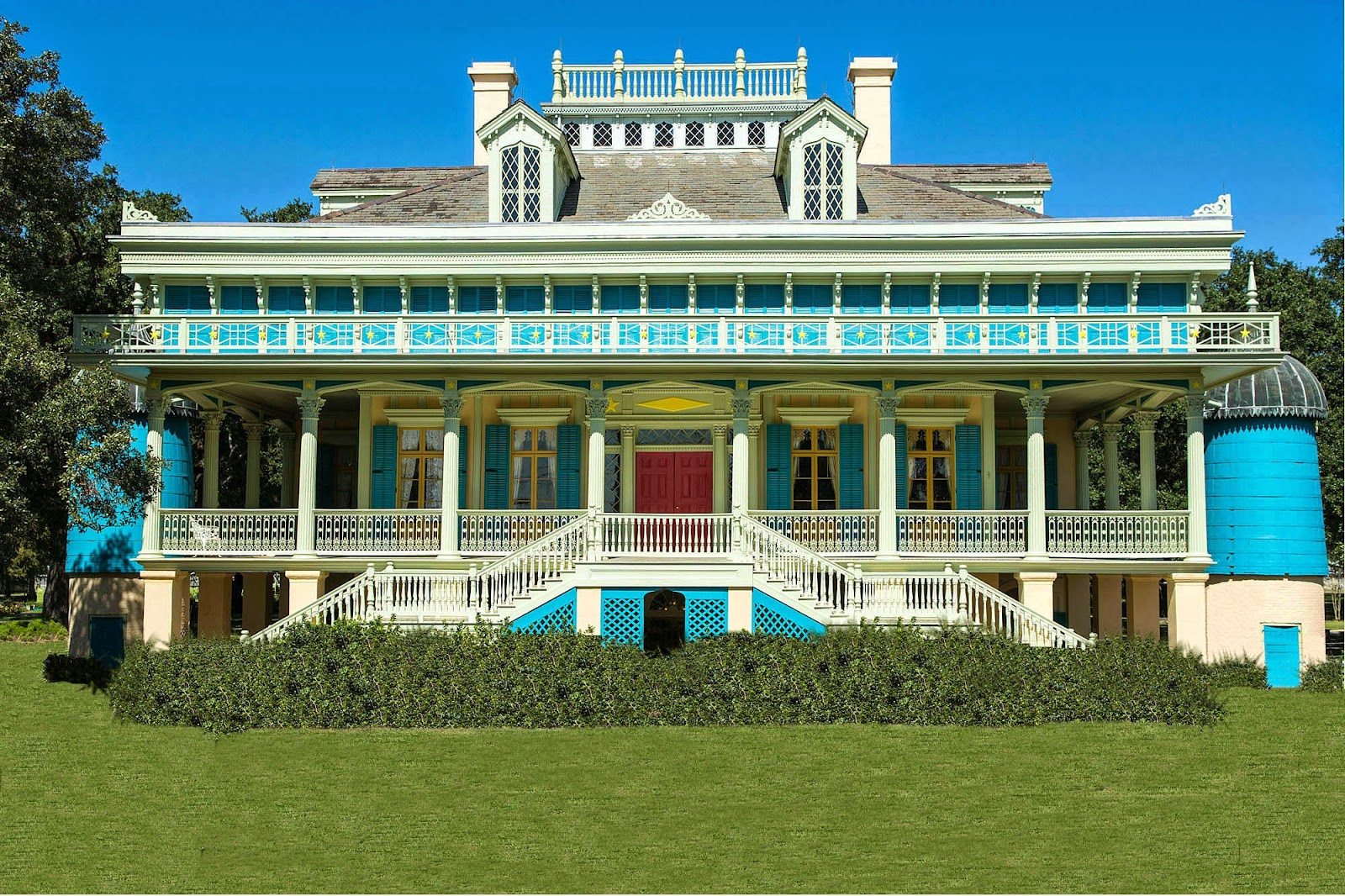
One working note about the history, because it affects what you photograph. Keep the wedding coverage to the house, the galleries, the grounds and the levee, and leave any surviving or reconstructed quarters out entirely. Using them as a picturesque backdrop is the specific failure that gets this genre of venue written about badly, and it happens by accident rather than intent — weathered timber photographs well and nobody paused to ask what building it was. Agree it with the couple in advance.
Garyville, and the River Road year
Garyville sits at about thirty degrees north, the lowest latitude of any mainland venue in this collection, and two numbers shape every hour here.
The midsummer noon sun reaches about eighty-three and a half degrees — within seven degrees of straight overhead — which is genuinely extreme and dominates the middle of the day from May into September. On a building this heavily ornamented that has a specific effect worth knowing: overhead light puts every horizontal surface in the woodwork into bright relief and every vertical face into shadow, which flattens the ornament into stripes rather than revealing it. The detail frames from the last section need morning or late afternoon light, not noon.
Civil twilight runs about twenty-two minutes, among the shortest in this library, of which perhaps ten minutes is the usable balance point. The end of the day is brief and it needs its frames decided in advance rather than discussed as the light goes.
Humidity is the compensator and it is among the strongest here. Summer dewpoints in the mid to high seventies mean the air is saturated with vapour, and vapour scatters light into shadows — a sunlit facade in July carries something like two and a half stops less shadow contrast than the same sun angle in a dry climate. Shadow edges are soft, eye sockets hold detail, and midday open shade is genuinely workable. The costs are a pale washed sky, which matters here because a pale sky behind fine woodwork flattens it, and haze on long lenses, which matters because a long lens is the tool for compressing the surroundings away.
There is also a condensation problem that is acute at this venue for a specific reason: you will be moving between an air-conditioned interior and a humid gallery repeatedly, and a lens fogs within seconds each time and takes minutes to clear. Keep the body warm rather than cool.
The land is delta sediment and dead level, with the natural levee beside the channel as the highest natural ground — which is why the houses are strung along the river at all, and why the industry is too. There is no relief, no elevated viewpoint except the artificial levee, and a level horizon in every direction, which makes any camera tilt immediately obvious. Use a level outdoors here.
The crop beyond the industrial fence line is sugarcane, and it gives the year a shape found nowhere else in this collection. Cane grows through summer to two or three metres, which turns the surrounding fields into a green wall — and that wall is useful here, because it screens things you would rather not have in frame. Grinding season runs from October into January, after which the same fields are flat stubble with an open horizon, and the screening is gone. So the surroundings are genuinely easier to manage in late summer than in midwinter, which reverses the usual advice at this one venue.
January through April is otherwise the season and the reversal against most of this library is emphatic: mild, comparatively dry, sunny, with a February noon sun near forty-five degrees that models rather than flattens — which for this building’s woodwork is exactly right, because a forty-five degree sun rakes ornament rather than striping it. Azaleas through late February and March. And because the live oaks are evergreen and Spanish moss hangs year-round, a January frame looks much like an October one.
May through September is the constraint. Nineties with high-seventies dewpoints, in formal clothing, is a welfare matter before it is a photographic one, and mosquitoes on the River Road in summer will determine how long anybody stands anywhere. The shape of a summer day is the two ends outdoors and the middle under a gallery roof — which is what the galleries were for.
Louisiana receives among the highest lightning densities in the country and afternoon convection is near-daily in the wet season, so a covered alternative must genuinely exist and be reachable in minutes, with its capacity known as a number. Hurricane season runs June through November, peaking in August and September, and on this stretch of river that is a real planning consideration: a named storm in the Gulf a week out disrupts travel and suppliers whether or not it lands nearby.
The compensation is the half hour after a cell clears and at this venue it is worth more than at most, for two reasons. Wet painted timber is glossy, and glossy picks up a specular sheen from the sky that dry matte paint never does, so the building is at its most saturated and most three-dimensional immediately after rain. And a washed sky with broken cloud is exactly the background the upward frames need. If a storm goes through at six, wait twenty minutes.
The last note is the one to leave a couple with. This is a remarkable building in a difficult setting, and the photographs that come out of it are better for the photographer having decided in advance which of the four manoeuvres each frame belongs to. Improvised, it is an evening of cropping. Planned, it is one of the most distinctive sets on this road.
More frames from The San Francisco Plantation
The San Francisco Plantation wedding photography: common questions
What is the problem with this venue?
The surroundings rather than the building. The house sits immediately behind the Mississippi levee, which is a grass embankment holding the river above the surrounding land — so it blocks the view completely and crowds the front of the property. And this stretch of the River Road is heavy industry: a large working petrochemical plant adjoins the site and is visible, lit and audible. Neither is something the venue can change.
So how do you photograph it?
Four manoeuvres. Get low and shoot upward, so the frame fills with gallery and ornament against clean sky and the surroundings drop out. Use the levee as a background — an empty graded grass horizon that hides everything behind it. Go tight on the woodwork, which contains no surroundings at all. And work at dusk, when the plant becomes a field of warm lights rather than clutter.
Can we see the Mississippi?
Only from the top of the levee, and it is worth asking whether you may go up, since levee land is usually controlled by a levee district rather than the venue. What you see is a working navigable channel with barge traffic rather than a picturesque stretch of water — though a loaded tow passing behind a subject at dusk is a strong and very specific frame. There is no view of the river from the house or grounds.
How should the woodwork be lit?
From the side. Turned balusters, sawn brackets, pierced valances and applied mouldings are all about relief, and relief needs raking light — a source almost parallel to the surface throws every bead and edge into its own small shadow and the panel reads three-dimensionally. Lit frontally, or from a near-overhead summer sun, the same panel goes flat and becomes a stripe pattern. Morning or late afternoon, never noon.
Does the paint cause problems?
Yes, in direct sun. A building painted in blues, peaches and greens reflects light of its own colour, and a metre from a sunlit wall that colour is genuinely on somebody’s skin — not correctable by white balance. Three or four metres removes almost all of it, or use the same wall in shade. Used deliberately it is an asset: square to a large painted field, stopped to f/8, subject small and off centre, and the wall exposed about a stop under the meter, because saturation reads highest slightly under.
Is the industry always a problem?
No, and at dusk it is the opposite. After dark a petrochemical plant is a field of small warm lights and structure picked out in sodium, and at a distance or out of focus it reads as luminous industrial texture against a deep blue sky, with an ornate nineteenth-century roofline in front of it. That is unlike anything else on this road, and it is also honest: sugar houses and refineries a few hundred metres apart is what this stretch of river actually is.
More Louisiana venue guides
We are writing a photographer’s guide to every venue we would happily shoot in Louisiana. Here are three more, plus the full index:
- The Audubon Aquarium: Field Notes on Photographing Through Glass
- The Audubon Zoo: A Season-by-Season Photography Guide
- The Hermann-Grima House: Who This French Quarter Courtyard Suits
Planning a wedding at The San Francisco Plantation?
Four manoeuvres, decided per frame, and ten minutes at dusk. Tell us your date.