 The Tlaquepaque Arts Village, Sedona: Field Notes on Courtyards
The Phoenician, Scottsdale: What It Suits, and What It Does Not
Scale is the variable. It suits some weddings and fights others.
A large destination resort is a particular kind of venue and the honest way to describe it is by what its scale does, because scale is the one property that touches every decision.
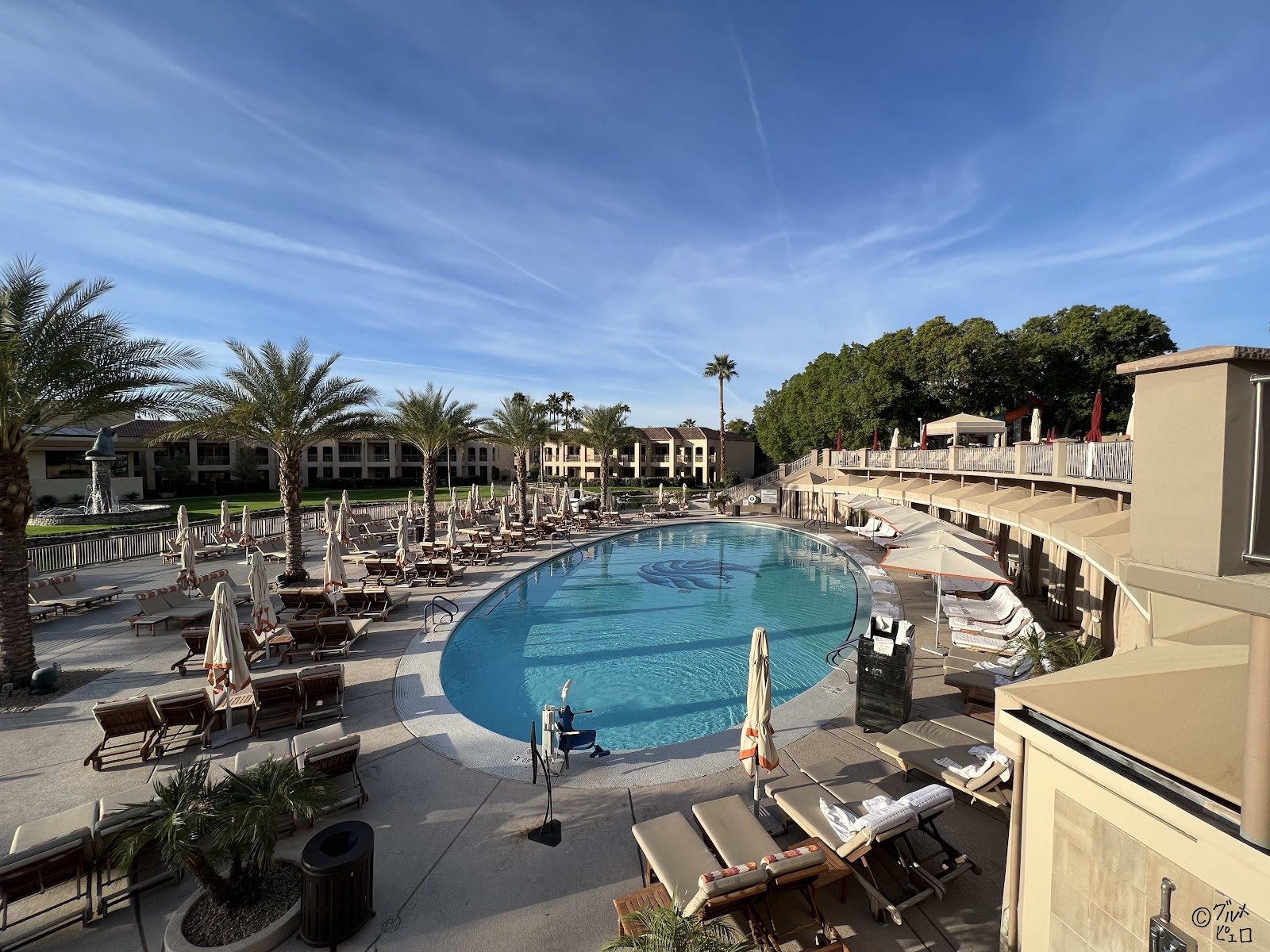
A resort of this size has multiple ballrooms, several lawns, more than one pool complex, a spa, restaurants and a few hundred rooms. It is a small town rather than a building, and it is operating several events at once on almost any Saturday.
That produces genuine advantages that smaller venues cannot match, and genuine costs that brochures do not mention. Both are worth stating plainly before anyone books.
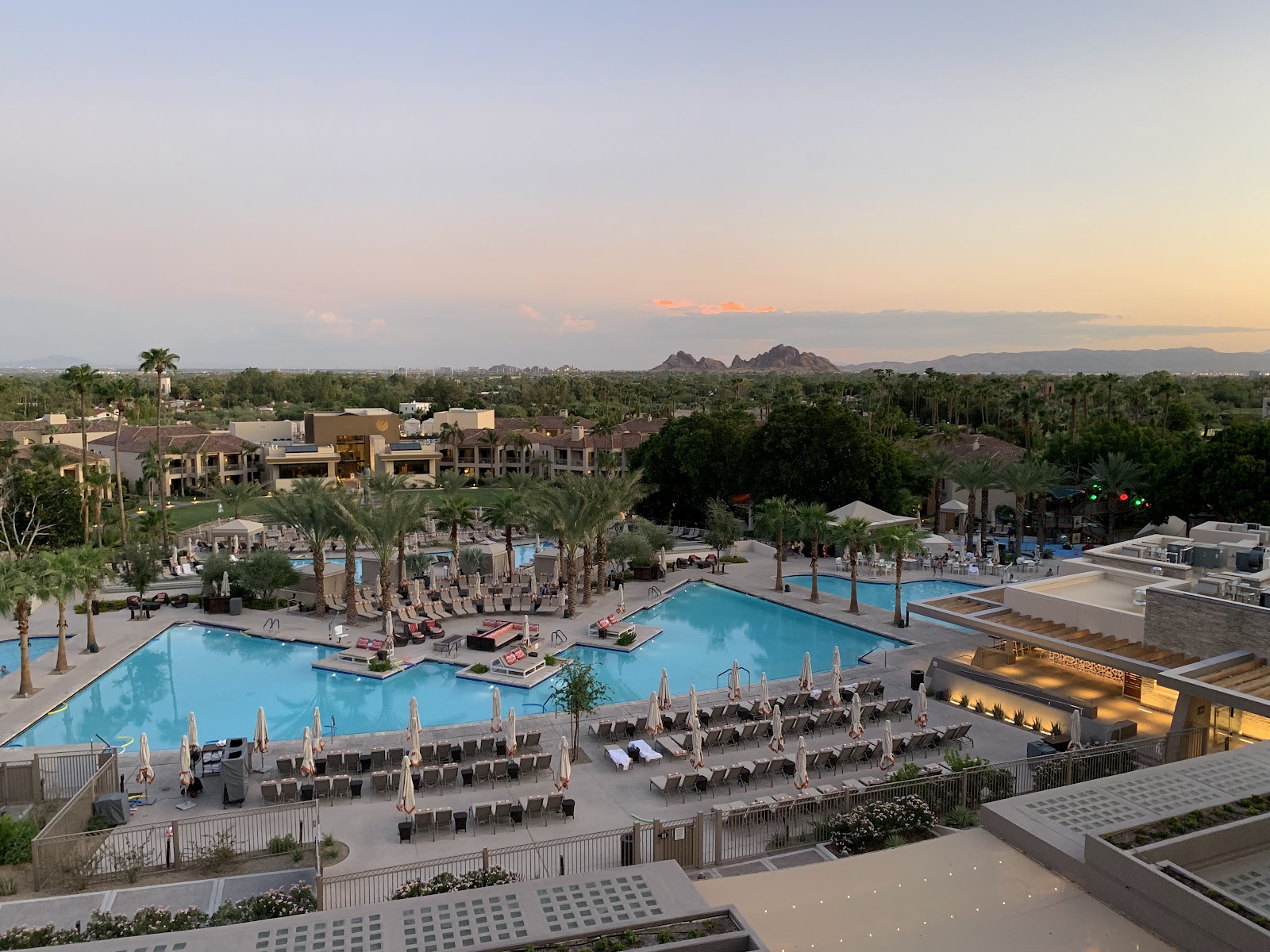
The setting is the resort’s strongest single asset and it is geological. The property sits at the foot of Camelback Mountain, which is the most recognisable landform in the Salt River valley — a red mass of Precambrian sandstone and conglomerate rising about twelve hundred feet above the surrounding ground.
That rock matters photographically because of what it does with light. Red sedimentary rock takes a low frontal sun and returns a saturated warm colour, and in the exceptionally clear dry air of the low desert it holds that colour and its detail in a way a hazier climate would not permit. Camelback at the last twenty minutes of a clear day is among the strongest backgrounds available anywhere in these guides.
Scottsdale sits at about thirty-three and a half degrees north; this part of the valley is at roughly thirteen hundred feet. The June noon sun reaches around eighty degrees, the December noon sun about thirty-three, days run from about ten hours fifteen to fourteen hours twenty, and civil twilight is roughly twenty-five minutes — short, with an abrupt fall-off in clear air.
We have not photographed a wedding here. Which lawns and ballrooms are bookable, whether Camelback is visible from the space you are offered, and what the permitted hours are, are questions for the resort — and the second one is the one that decides whether the setting is actually yours.
The Phoenician at a glance
| Where | A large resort at the foot of Camelback Mountain, Scottsdale |
| Suits | Large guest counts, multi-day events, weather-proof plans, out-of-town parties |
| Does not suit | Small intimate weddings, tight budgets, and anyone wanting exclusivity |
| The asset | Camelback — red sandstone that goes saturated warm in the last twenty minutes |
| Ask first | Whether Camelback is visible from the space you are offered |
What it suits
It suits a large guest count, and that is the clearest case. A resort with several hundred rooms and multiple ballrooms can hold three hundred people for dinner without anything feeling improvised, and it can do it in a room designed for the purpose rather than a marquee erected for it.
For a photographer a large room is easier than a small one in one specific respect: there is space to work. A three-hundred-person reception in a purpose-built ballroom has aisles, a proper dance floor, sightlines to the top table and room to stand back with a longer lens — none of which a converted barn at the same headcount provides.
The lighting is the trade and it is discussed below. But the geometry is genuinely better.
It suits a multi-day event. A resort with rooms, restaurants and a spa can absorb a welcome dinner, a morning activity, the wedding and a farewell brunch without anyone driving anywhere, which for an out-of-town party is the single biggest practical benefit of the type.
That is also the best photographic argument for a resort. Coverage spread across three days in different light, different spaces and a more relaxed register produces a much fuller record than eight hours on one day ever can, and the resort is the venue type that makes it easy.
It suits an out-of-town guest list, which in Arizona is most of them. A resort is legible to people who have never been to the state: it has a front desk, a shuttle, a concierge who answers the phone, and no need for anyone to work out where to stay. That sounds mundane and it removes a large amount of friction from a destination wedding.
It suits a weather-proof plan, and in the low desert that matters more than it sounds. A resort has real indoor alternatives for every outdoor space, staffed and available at short notice — which during the July-to-September monsoon, when a cell can arrive faster than a wedding party can walk, is the difference between a plan and a hope.
And it suits a winter date particularly well. From November to April the low desert is mild, dry and calm, and the December noon sun at about thirty-three degrees never climbs high enough to flatten a face or erase a building’s form — which means the whole short day has directional light with no bad hour. A resort with many outdoor spaces has all of them available in that season, and none of them in July.
What it does not suit
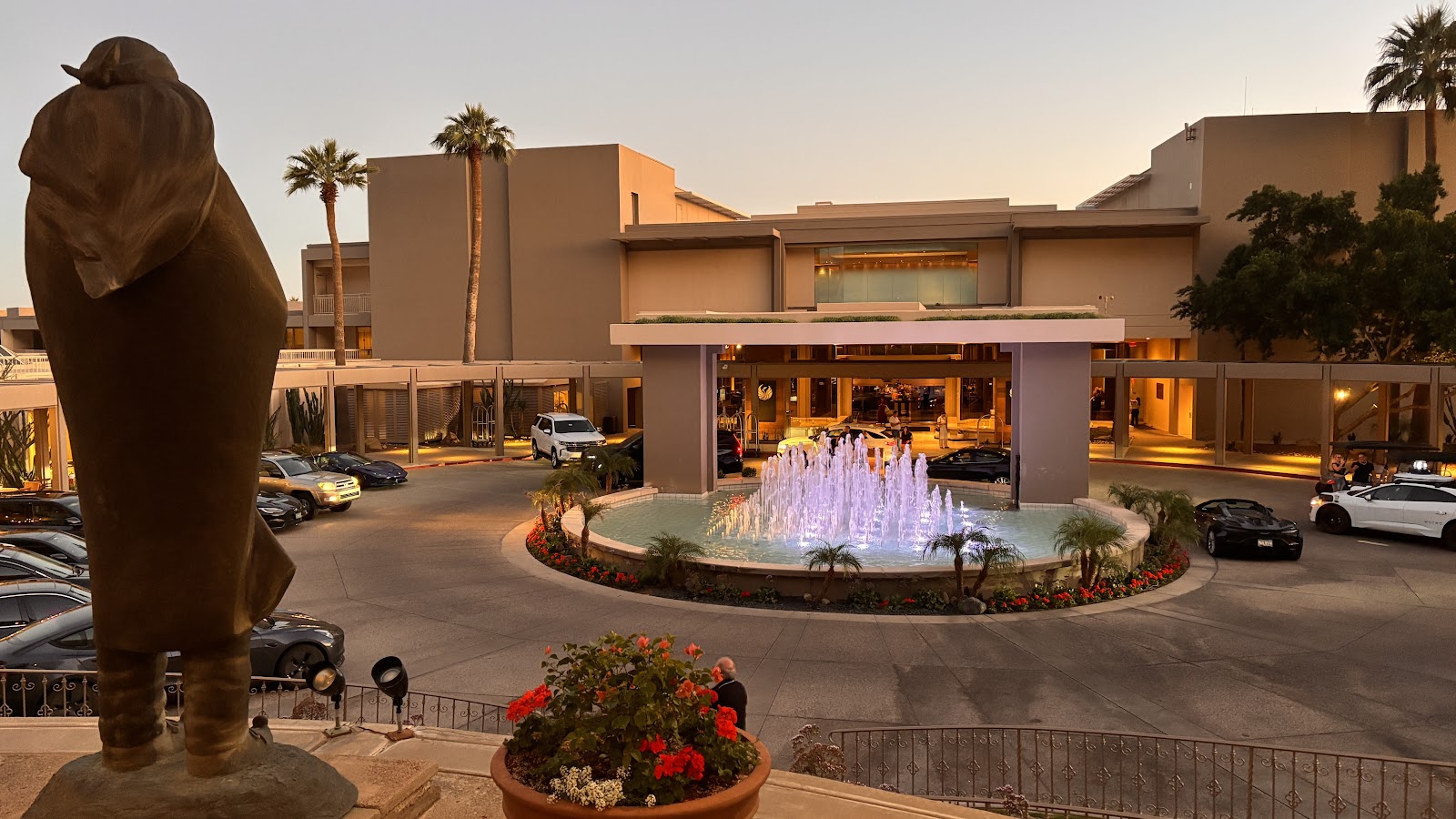
It does not suit a small wedding, and the mismatch is structural rather than a matter of service.
A room built for three hundred holds forty badly. The ceiling is too high, the distances are too great, the tables are too far apart, and a photograph of forty people in it shows mostly empty floor. Resorts do offer smaller spaces, and the smaller spaces at a large resort are usually the least distinguished parts of it — a meeting room rather than a ballroom.
So a small wedding at a large resort is generally paying for scale it cannot use and being housed in the part of the property that has the least character. A forty-person wedding is better served by a venue built at forty.
It does not suit exclusivity. A resort is a working hotel and it will have other guests, other events and other weddings on the same day. That means people in swimwear crossing the frame behind a ceremony, a second wedding party on the next lawn, and a photographer who has to be tactical about background rather than able to assume a clear one.
None of that is a scandal and all of it is normal. But a couple who imagine the property to themselves will be disappointed, and it is better said now.
It does not suit a tight budget, and the reason is worth being specific about. A resort of this kind typically has minimum spends, mandatory catering, service charges and a per-head structure that scales quickly — and the vendor arrangements may restrict who you can bring. That last point matters to photography directly: some resorts maintain preferred-vendor lists with real consequences for anyone outside them.
Ask about that early rather than late.
It does not suit anyone who wants an unmistakable sense of place, and this is the most interesting of the objections. A large international-standard resort is designed to be excellent and legible to a guest from anywhere, which tends to mean the interiors are handsome rather than local. A ballroom in Scottsdale and a ballroom in Florida are more alike than either is to the landscape outside.
That puts the burden of place entirely on the exteriors, and it makes the question of whether Camelback is actually visible from your ceremony site the most important thing to establish. A resort at the foot of the most recognisable mountain in Arizona may still offer you a lawn that faces the other way.
And it does not suit a summer date, though no low-desert venue does. Phoenix-area afternoons regularly exceed a hundred and ten degrees, which for a party in formal clothing outdoors is a welfare question rather than a comfort one. A resort handles it better than most venues because it has indoor everything — but the lawns, the mountain views and the reason for choosing Arizona are all unavailable between about eleven and five.
- Establish whether Camelback is visible from the space you are offered
- A room built for three hundred photographs forty badly
- Expect other guests, other events and swimwear in the background
- Ask about preferred-vendor restrictions before anything else
- Winter is the season; a summer date loses the lawns between eleven and five
Working it, once you are there
Four practical things govern a resort of this scale and none of them is difficult once anticipated.
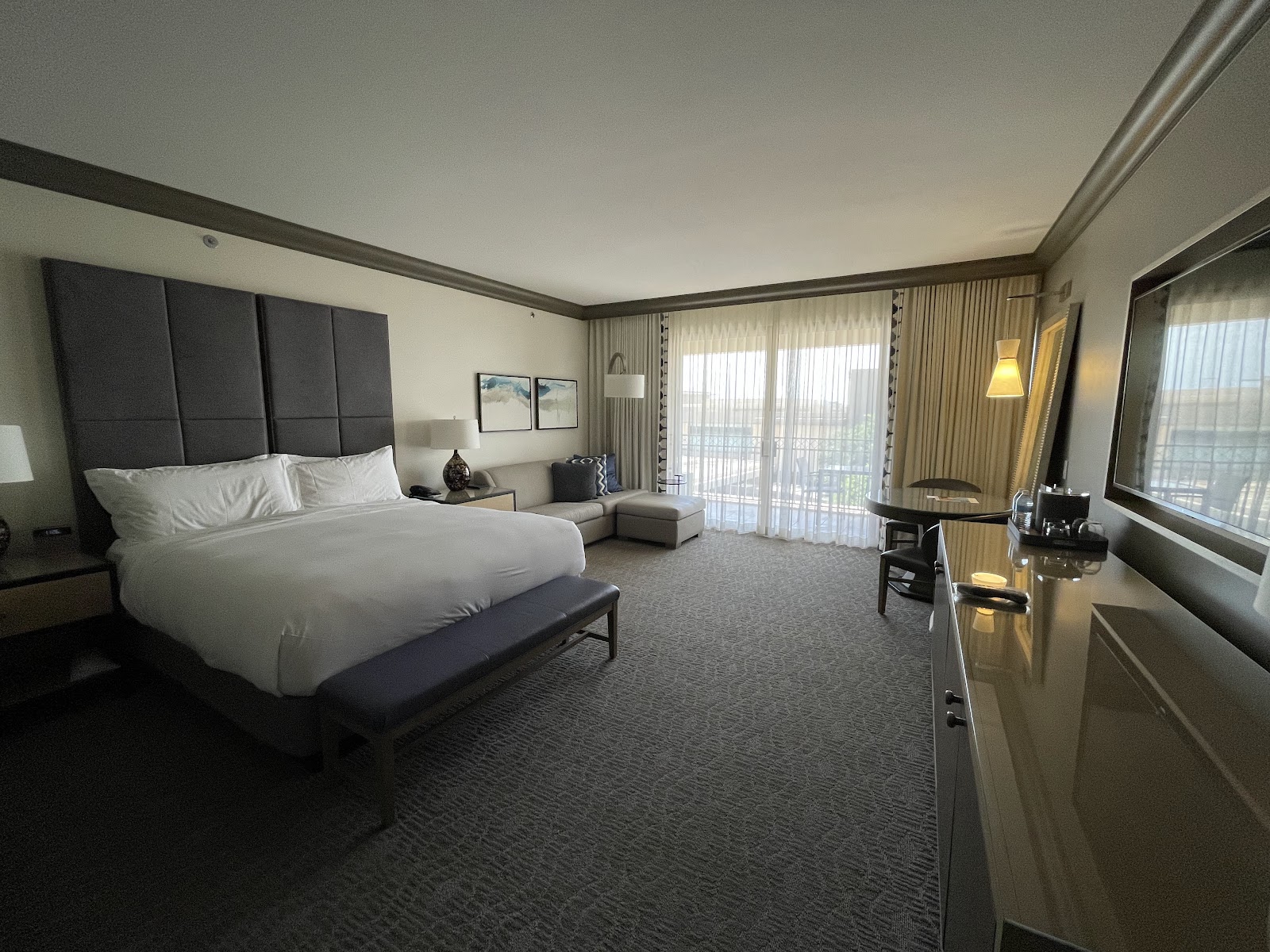
The ballroom lighting is the first. A large modern ballroom is lit by recessed downlights at high level, which produces a strong top light with dark eye sockets and a chin shadow — the single most common failure in resort coverage. The dimmers are usually set low for atmosphere, which makes it worse rather than better.
The answer is to stop using the room light as a key and to treat it as background. Bounce a source off a wall or ceiling for a soft key that has direction, gel it warm to match the tungsten downlights rather than fighting them, and drag the shutter enough that the room’s own light registers behind the subject. That gives a lit face in a warm atmospheric room instead of a dark face in a dim one.
The second is distance. A resort’s spaces are large, which means a bounced flash may be too far from any surface to do anything, and an on-camera unit at twenty metres is doing nothing at all. Real distances need real sources on stands, and a ballroom at three hundred people needs two or three of them rather than one.
The third is Camelback itself, and it needs a longer lens than instinct suggests. A wide lens renders twelve hundred feet of mountain at its true angular size, which reduces it to a modest ridge across the top of the frame. A moderate telephoto from further back compresses it to the scale the eye perceives — which is the whole point of having it.
Expose for the rock, because the rock is what the frame is about, and lift the subjects with a warm-gelled source at about a stop over the ambient falling on them. An ungelled source here is the classic desert error: at this latitude in dry air the sky is a deep saturated blue, so open shade reads distinctly cool while the sunlit mountain reads warm, and a neutral flash puts a yellow-green face in front of a red mountain.
The fourth is the plantings, which at an irrigated desert resort are the only real shade on the property. This matters more here than in most regions, because the Sonoran Desert’s own trees are useless as cover: palo verde and mesquite carry leaves measured in millimetres on open filigree branches, and a face beneath one at midday is covered in small hard patches that no amount of care recovers.
An irrigated resort grows things the surrounding desert cannot — olive, Aleppo pine, eucalyptus, mature oversized mesquite — and those do cast genuine shade. Find them on arrival, because at eighty degrees of sun elevation they are the only unassisted midday portrait on the property.
Date palms are the exception and they need understanding rather than avoiding. A palm gives almost no useful shade, because the crown is high and the fronds sparse, so the shadow is a small pattern on the ground well away from the trunk. As a background, though, it is excellent: a tall clean trunk with a burst at the top reads as a strong graphic vertical, and it photographs best against open sky rather than against other vegetation.
Bougainvillea is the reliable colour. Its display is in bracts rather than petals, which means papery magenta, orange or white that holds for months instead of weeks — and against a warm stucco wall it is the strongest dependable colour a desert resort has, at any time of year.
The wider desert calendar completes it. February to April is the best window in the state, because this desert flowers in spring: brittlebush yellow across the slopes from February, Mexican gold poppy and lupine in March in a year with adequate winter rain, ocotillo red on the tips of its whip-like stems, and palo verde in mass yellow bloom through April into May. In May the saguaros flower white at the crown, five metres up, which needs a long lens and is a small specific subject rather than a landscape one.
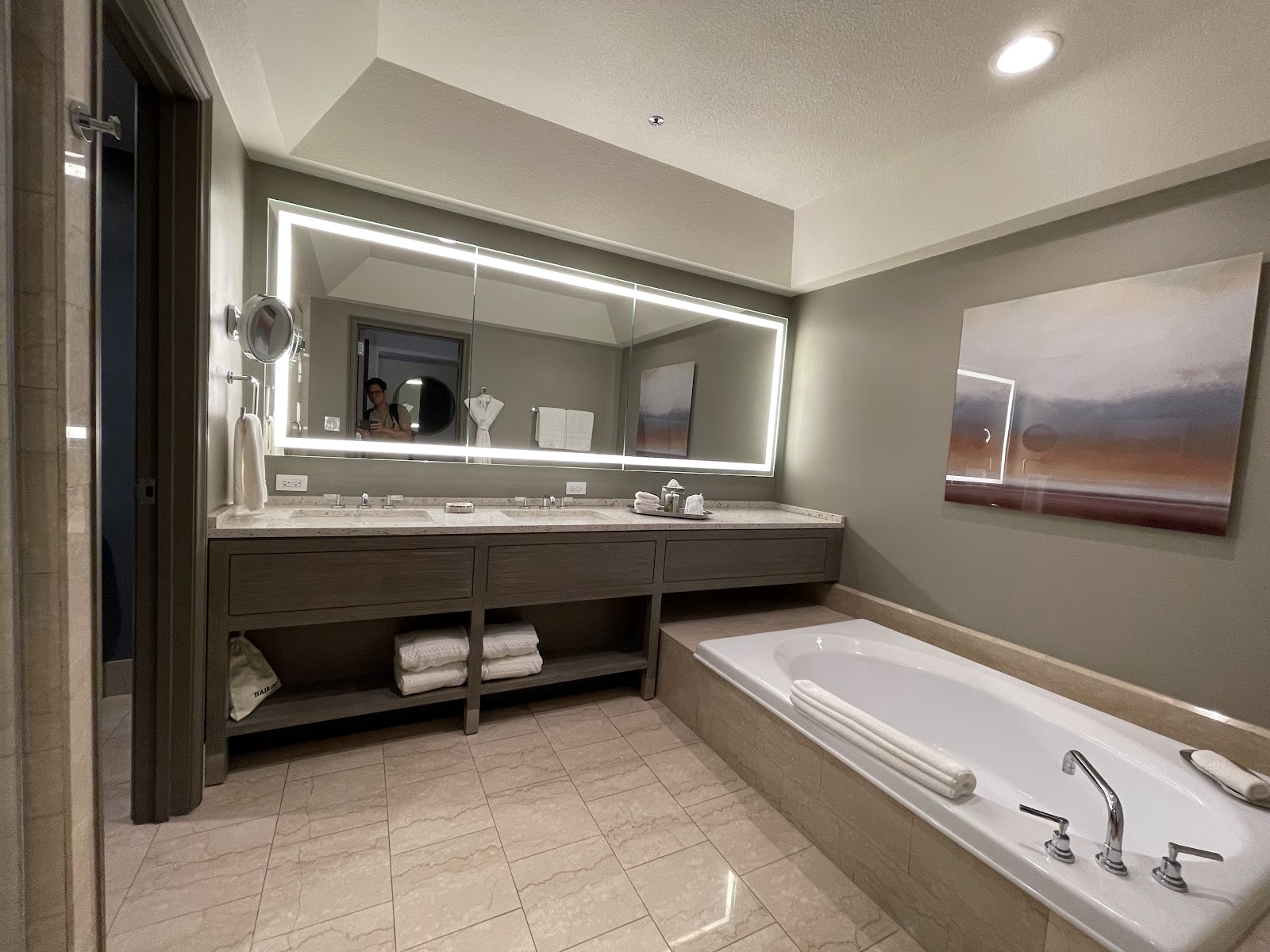
More frames from The Phoenician
The Phoenician wedding photography: common questions
What does a resort of this scale suit?
Large guest counts, multi-day events, out-of-town parties and weather-proof plans — and a winter date, when every outdoor space is available.
What does it not suit?
Small weddings, tight budgets and anyone expecting exclusivity. A room built for three hundred photographs forty badly, and the property will have other guests and other events.
What should I ask first?
Whether Camelback Mountain is actually visible from the space you are offered. A resort at its foot may still give you a lawn facing the other way.
How do I handle ballroom light?
Stop using it as a key. Bounce a warm-gelled source for a directional key and drag the shutter so the room’s own light registers behind the subject.
What lens for Camelback?
A moderate telephoto from further back. A wide lens renders twelve hundred feet of mountain at true angular size, which makes it a ridge.
Where is the shade?
Under the irrigated specimen trees — olive, Aleppo pine, oversized mesquite. Native palo verde casts a hard dapple, and palms give almost none at all.
More Arizona venue guides
We are writing a photographer’s guide to every venue we would happily shoot in Arizona. Here are three more, plus the full index:
- The Pinnacle Peak Patio, Scottsdale: The Problem, and Four Ways Out of It
- The Ramada at South Mountain, Phoenix: One Frame, and How It Is Made
- The Royal Palms Resort, Phoenix: The Problem, and Four Ways Out of It
Planning a wedding at The Phoenician?
Scale, and a red mountain behind it. Tell us your date.