 The Tlaquepaque Arts Village, Sedona: Field Notes on Courtyards
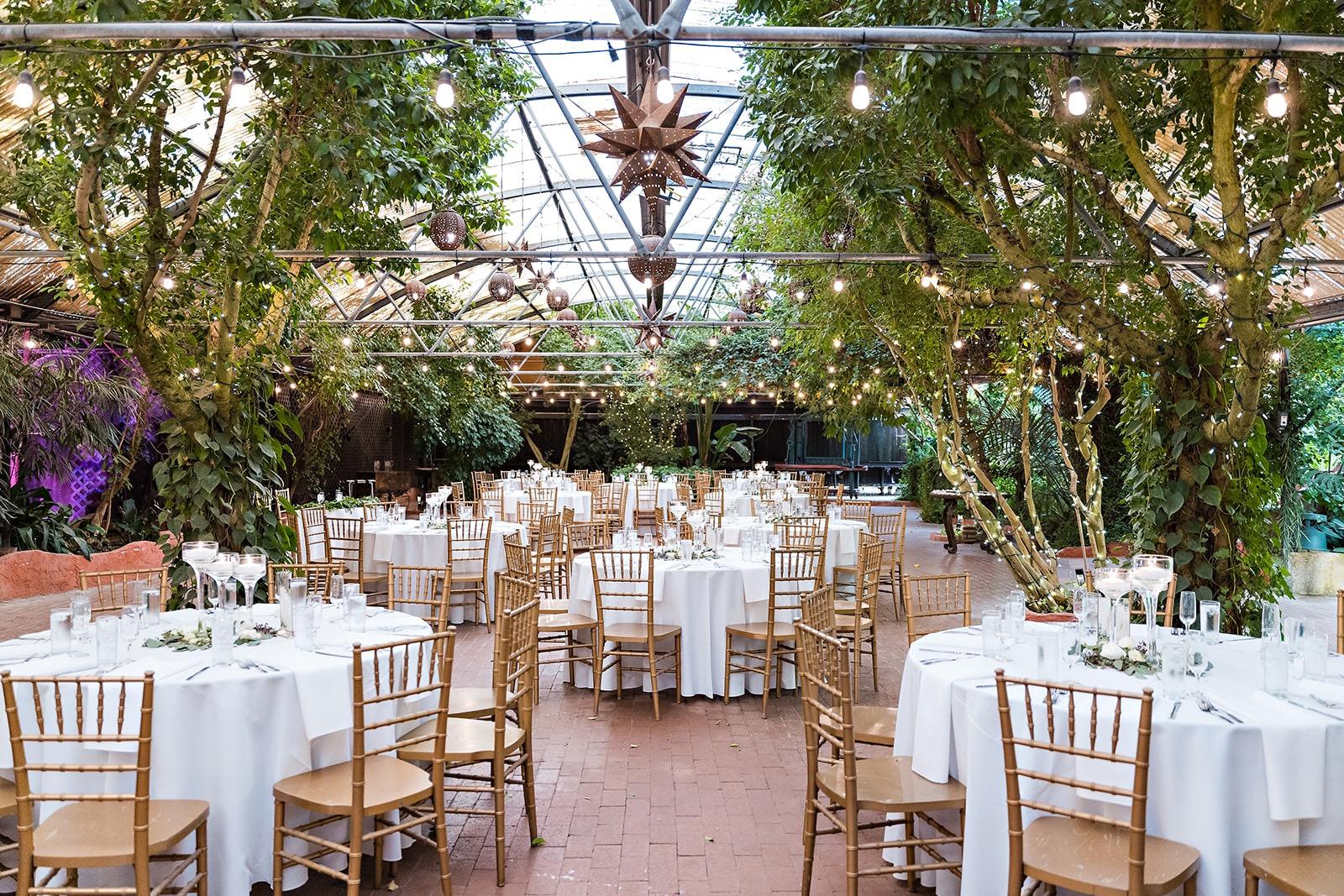
The Boojum Tree, Phoenix: The Venue’s Own Logic
Named for a plant that looks like nothing else alive.
A venue named for a single plant is telling you what it is, and in this case the plant is worth knowing about because it explains the whole idea.
The boojum tree is Fouquieria columnaris, and it grows wild in almost nowhere: a narrow strip of the central Baja California peninsula and one small population across the Gulf in Sonora. It is a relative of the ocotillo, and it looks like nothing else alive.
The form is a tapering column — thick at the base, narrowing to a point many metres up, so it resembles an enormous inverted carrot or parsnip stood on end. Thin twig-like branches stick out from the trunk at right angles along its whole length, carrying small leaves when there is water and nothing when there is not. Mature specimens reach fifteen or twenty metres. It grows extremely slowly, perhaps a few centimetres a year, which makes a large one very old.
It was named by a botanist who encountered it in 1922 and reached for Lewis Carroll — the boojum is a creature in The Hunting of the Snark, and the joke was that the plant seemed equally improbable.
A venue built around one is therefore built around a specimen, and that is the organising logic: this is an oasis garden, a collected and irrigated place, rather than a piece of desert with a building on it.
Everything follows from that. An oasis garden in the low desert is walled or hedged, because enclosure holds moisture and blocks wind. It is densely planted, because irrigation permits density that rainfall never would. And it is stocked with species from every arid region rather than from this one, because a collector plants what interests them.
Phoenix sits at about thirty-three and a half degrees north at roughly eleven hundred feet. The June noon sun reaches around eighty degrees, the December noon sun about thirty-three, days run from about ten hours fifteen to fourteen hours twenty, and civil twilight is roughly twenty-five minutes.
We have not photographed a wedding here. Which parts of the garden are included, what covered space exists and the permitted hours are questions for their team.
The Boojum Tree at a glance
| Where | A walled oasis garden in Phoenix |
| The name | Fouquieria columnaris — a tapering column from central Baja California |
| The logic | An irrigated collected garden, not a piece of desert with a building on it |
| What that gives | Density, real shade, and species from every arid region |
| Ask first | Included garden areas, covered space, permitted hours |
How to photograph the specimen, and the garden around it
The boojum itself is a difficult subject and it is worth thinking about before standing in front of one, because the obvious approach fails.
The difficulty is the proportions. A tall narrow tapering column is a shape that a horizontal frame cannot contain and that a vertical frame renders as a thin line up the middle — so the instinctive wide shot produces a tall thin nothing with a great deal of empty sky either side.
There are three better approaches. Compose vertically and very tight, so the column fills the frame’s width at the base and tapers out of the top, which accepts that the whole plant will not appear and gets the form across. Shoot from close to the base looking up, which exaggerates the taper into a dramatic convergence and puts the sky behind it. Or include it as one element among several rather than as the subject, letting its silhouette do the work at the edge of a wider garden frame.
The right-angled branches are the detail worth getting. They stick straight out from the trunk along its whole length, which at close range against a bright sky reads as a strange bristling geometry unlike any other plant — and it is that detail, not the overall shape, that makes the plant memorable in a photograph.
Backlighting helps enormously. A low sun behind the column rims the trunk, lights the thin branches so they glow, and simplifies a complicated subject into a silhouette with a halo. That is the frame to wait for.
The rest of the garden is the venue’s real working resource and it behaves quite differently from the surrounding desert, because it is irrigated.
That single difference is the most practically important thing about an oasis garden in Arizona: it has shade. The wild low desert does not. Palo verde and mesquite, the region’s two significant natives, carry leaves measured in millimetres on open filigree branch structures — drought adaptations that make them cast a fine hard moving dapple rather than cover. A face beneath one at eighty degrees of sun elevation is covered in small hard patches that nothing recovers.
An irrigated garden grows what the desert cannot. Ficus, eucalyptus, olive, Aleppo pine, jacaranda, citrus, date palm, and oversized mesquite grown far beyond wild proportions — and the broadleaf species among those cast genuine, usable, solid shade.
Finding them on arrival is the most valuable five minutes of the day. At noon in the warm half of the year they are the only unassisted portrait on the property, and the difference between a garden that has a mature ficus and one that does not is the difference between a workable midday and none.
Each shade tree has a character worth distinguishing. Ficus is dense, dark and low-crowned, which gives deep even shade and a very dark background. Eucalyptus is high, open and grey-green, giving a lighter dappled shade and a pale airy background, with bark that peels in strips and photographs well. Olive is fine-leaved and silvery, giving partial shade and a sculptural gnarled trunk that works as a portrait background at any hour.
Jacaranda is the one to time. Where it grows in this region it flowers a startling blue-violet in late spring, usually May, and drops the flowers into a carpet of the same colour beneath — which is the single most striking colour event on any irrigated Southwest property and lasts a few weeks.
Date palms need understanding rather than avoiding. The crown is high and the fronds sparse, so a palm’s shadow is a small pattern well away from the trunk — useless as shelter, excellent as a background. A tall clean trunk with a burst at the top reads as a strong graphic vertical and photographs best against open sky.
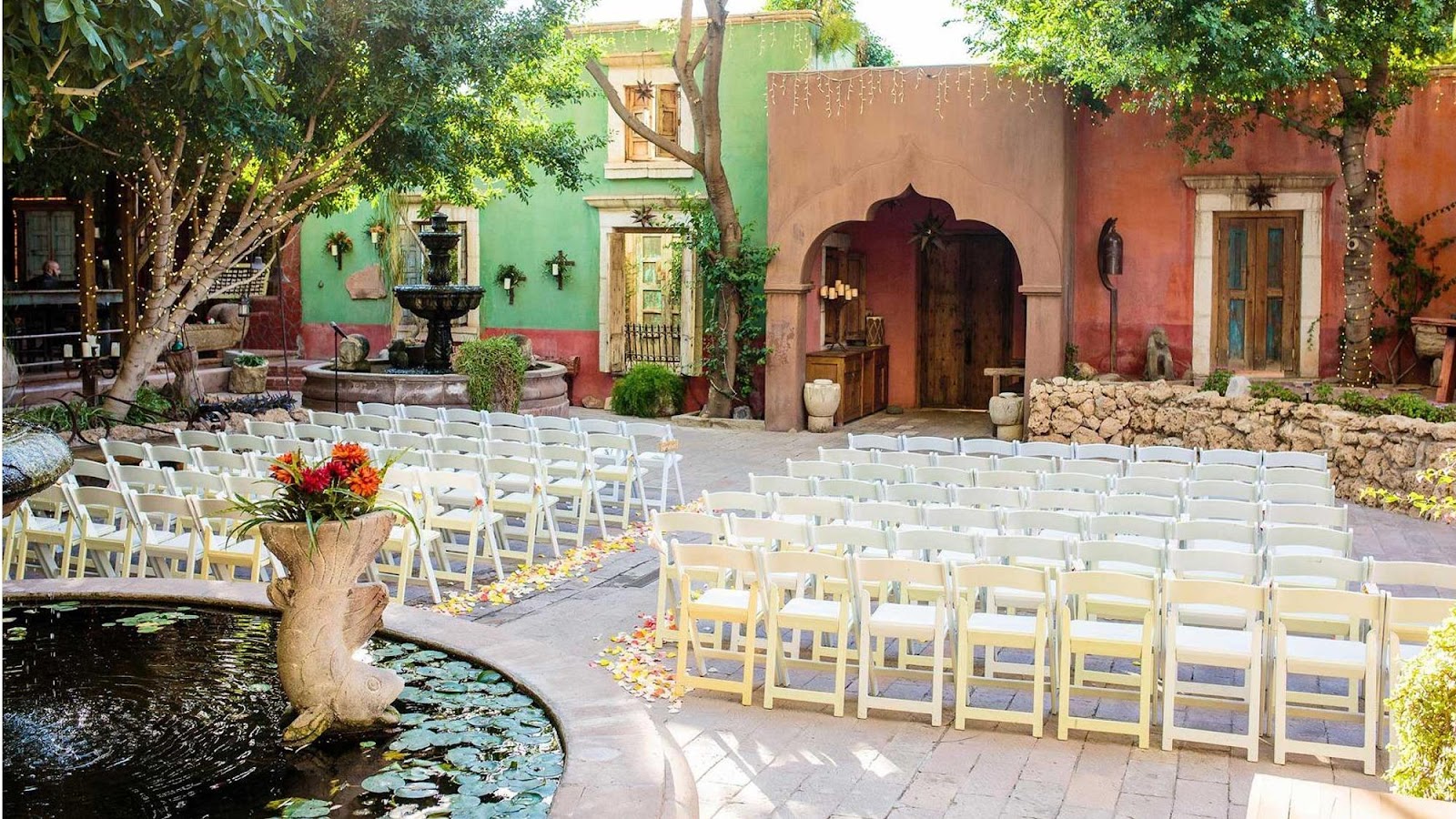
The walls, the density and the water
An enclosed garden is an open-topped room and it behaves like one, which means the walls are lighting instruments rather than boundaries.
A wall’s usefulness as a source depends on how much light it reflects, how diffusely, and in what colour. Pale stucco is close to a studio softbox: it returns a high proportion of the light, scatters it broadly, and gives a near-neutral colour. A subject four metres out from a sunlit pale wall is lit by a source the size of the wall, with a wrap no portable modifier reproduces at that scale.
Distance from the wall is the control and further is usually better. A metre away, the wall subtends a narrow angle and the light is harsh; four metres out it subtends a wide angle and wraps.
Tan or ochre stucco does the same with a warm cast, which flatters skin and needs acknowledging in white balance — set it on a face in the actual position rather than on a preset, or the correction will neutralise the warmth that made the light good.
A hedged rather than built enclosure behaves differently and worse: foliage absorbs rather than reflects, so a green hedge gives no useful bounce and a subject in front of one is lit by sky alone. It does give a clean dark background, which is worth something.
The enclosure also blocks the wind, and in the desert that is a genuine advantage. Desert afternoons build a thermal breeze as the ground heats, strongest in the two or three hours before sunset — and a walled garden is measurably calmer than open ground, which means a veil hangs and a table setting stays put when an open lawn would not permit either.
It is not eliminated. Wind in an enclosed space eddies and gusts rather than blowing steadily, which makes hair move unpredictably rather than consistently, and a fast shutter is the only answer.
Density is the garden’s third property and it is what an oasis garden offers that a desert landscape cannot. Irrigation permits planting at a closeness that rainfall would never support, which means the beds are full, the sightlines are short, and almost every direction gives a green background.
That is a real advantage for portraits and a real constraint for groups. A dense garden has no long views and no large clear spaces, so a group of fifty needs whatever lawn or terrace exists and cannot be arranged in the planting.
It also means backgrounds are close. A subject with foliage a metre and a half behind them has a background that will not blur much at any reasonable aperture, which makes separation a matter of tone rather than of focus: put a lit subject against a shaded background, or a shaded subject against a lit one, and the depth reads without needing the background soft.
Water is the fourth element and an oasis garden usually has some — a pool, a rill, a fountain, a small formal basin. In a desert that is disproportionately valuable, because it is the one reflective surface the landscape otherwise withholds.
A small water feature does three things. It doubles whatever is above it, which at dusk means doubling the best thing the climate produces. It fills from below with sky-coloured light, which is cooler than the green fill a lawn gives and considerably better for skin. And it makes sound, which is not photographic but changes how a garden feels and therefore how people behave in it.
A fountain needs a shutter decision made deliberately. Fast, and the water freezes into distinct droplets and threads; slow, and it becomes a smooth white veil. Both are legitimate and the choice should be conscious rather than whatever the meter happened to give.
- Shoot the boojum vertical and tight, or from the base looking up — never wide
- The irrigated broadleaf trees are the only real shade; find them on arrival
- Four metres out from a sunlit pale wall, not one
- Separate by tone rather than focus — close backgrounds will not blur
- Warm-gel every source: blue-sky shade against warm sun is the desert split
The year in an irrigated garden
An irrigated garden runs on a different calendar from the desert around it, and knowing both is the point.
The desert’s year is the governing one for comfort and light. November to April is the season: mild, dry, calm, with a December noon sun of about thirty-three degrees that never climbs high enough to flatten a face or erase a form — which means directional light for the whole short day and no bad hour at all.
The garden’s winter is better than the desert’s. Irrigation means the broadleaf species hold their leaves or leaf early, the citrus carries coloured fruit from November through March, and the aloes and other southern-hemisphere succulents flower in tall orange and red spikes through the cool months — so a January garden here has substantial colour when the wild desert has none whatsoever.
That is a real reason to prefer a garden venue for a winter date, and it is a consequence of the collection being global rather than local.
February and March bring the citrus bloom, and it is the strongest sensory event in any Southwest garden. Orange, lemon and grapefruit flower white in clusters and the scent is powerful enough to define the place for those weeks — which is not a photographic fact but is what everyone present will remember. Visually it photographs best close, against dark glossy foliage, rather than wide.
March into May is the peak. The wild Sonoran natives flower — brittlebush yellow, Mexican gold poppy, lupine, ocotillo red on the tips of its whip-like stems, and palo verde in mass yellow bloom through April into May, the strongest colour the low country produces. In a garden those appear alongside whatever global species are also in flower, which means the beds can carry colour from several continents at once.
May is the jacaranda, where there is one: a blue-violet crown and a carpet of the same colour beneath, for a few weeks and no longer. It is worth asking whether the garden has a mature specimen and when it usually flowers, because a May date planned around it is planned around something genuinely spectacular.
The boojum’s own schedule is worth knowing and it is odd. It leafs out in response to water rather than to season, which in cultivation means it can be in leaf or bare at almost any time of year depending on how it has been watered — and it flowers in small creamy clusters at the very top of the column, many metres up, which needs a long lens and a good reason.
So a photographer should not plan around the boojum’s appearance, because it is not predictable. Plan around the light and take the plant as it is.
May to September is the honest constraint. Phoenix afternoons regularly exceed a hundred and ten degrees, which for a party in formal clothing outdoors is a welfare question rather than a comfort one — and an enclosed garden is warmer than open ground rather than cooler, because the walls store heat and block the breeze.
There is one Phoenix-specific summer problem worth naming, because almost nobody plans for it: the evening does not cool. In undisturbed desert the daily swing is very large, because dry air holds little heat and the ground radiates freely after dark — which is why a desert evening is traditionally the pleasant part of a hot day. The Phoenix metropolitan area has largely lost that, because decades of growth replaced desert with paving and buildings that store the day’s heat and release it overnight. Metro nighttime lows now run roughly ten degrees warmer than the surrounding desert.
The practical consequence is direct: an outdoor evening reception in Phoenix in July is still genuinely hot at ten at night. A walled garden, with its own stored heat and blocked breeze, is at the warmer end of that.
The monsoon from July is the photographic compensation. Convective cloud building over the mountains through the afternoon turns an empty blue sky into a structured one, thunderstorms come late, and the half hour after a cell passes gives washed air, wet foliage, saturated colour and a low sun under a broken ceiling — the best light of the year.
In a dense garden, rain is also a subject in itself. Water on waxy succulent cuticles beads rather than soaking in, so a rained-on agave or cactus carries droplets along every rib and at the base of every spine — and backlit, each droplet is a point of light. It lasts about twenty minutes and it is the best the planting ever looks.
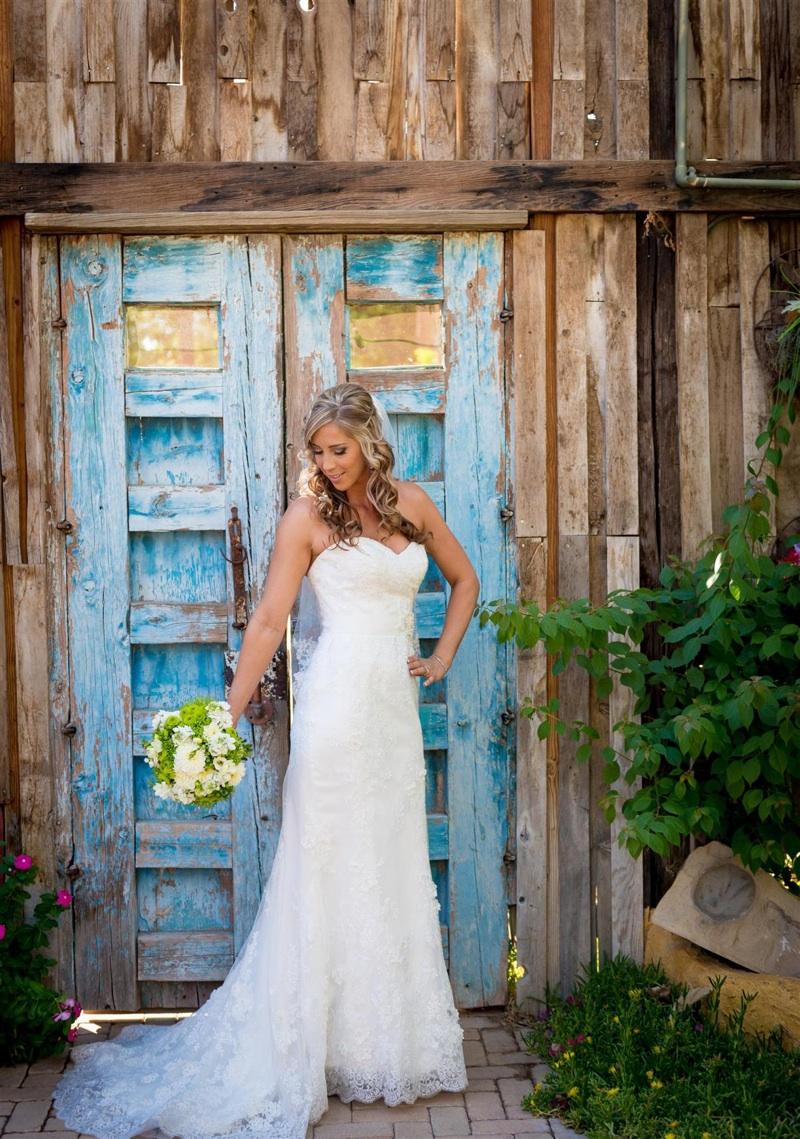
More frames from The Boojum Tree
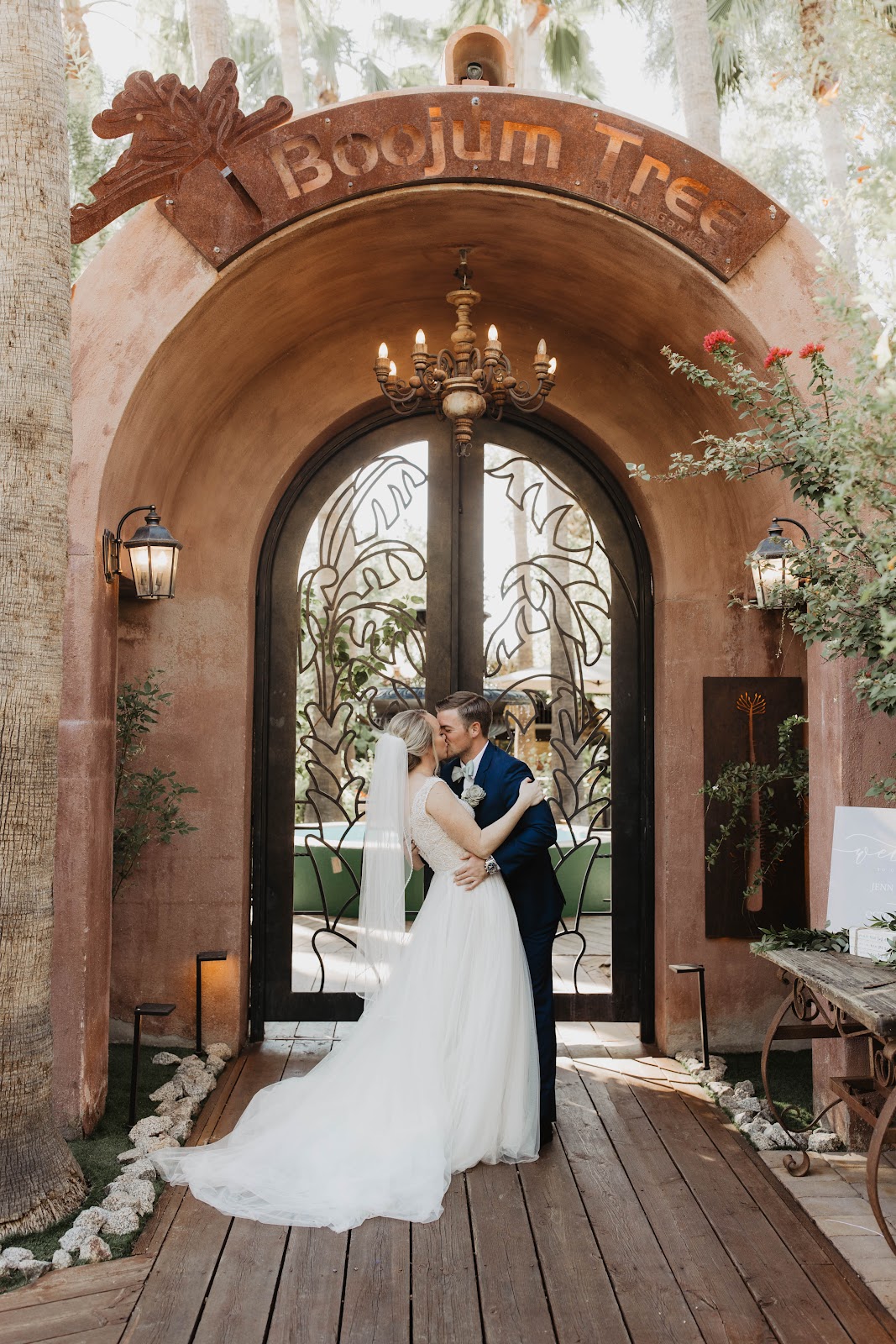
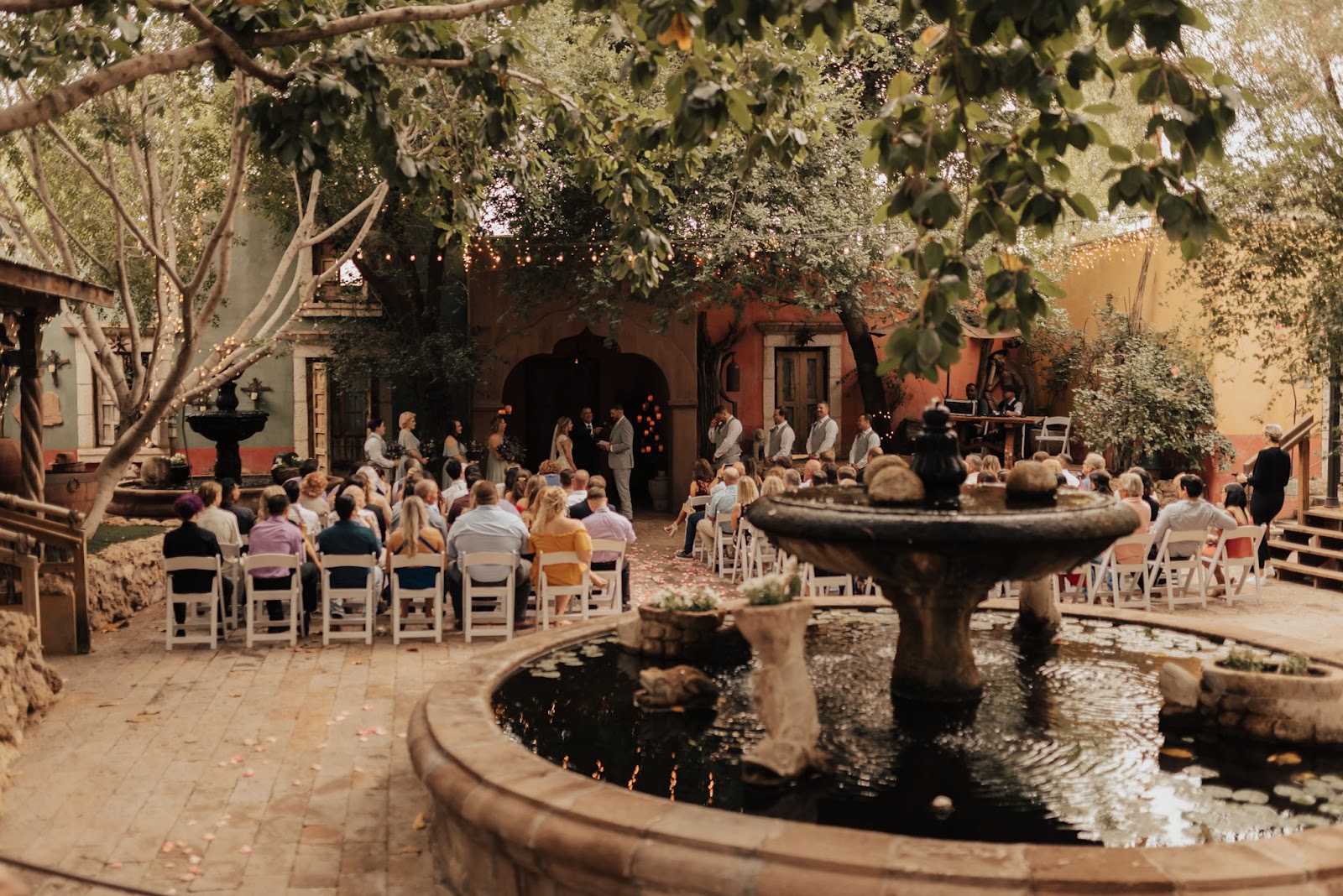
The Boojum Tree wedding photography: common questions
What is a boojum tree?
Fouquieria columnaris, a tapering column from central Baja California that looks like an inverted carrot with right-angled twigs along it. It grows a few centimetres a year.
How should I photograph it?
Vertical and tight, or from the base looking up so the taper converges. A wide shot gives a thin line with a lot of empty sky.
Does an oasis garden have real shade?
Yes, and that is its main advantage over the surrounding desert. Irrigation grows ficus, eucalyptus and olive, which cast genuine cover. Native palo verde does not.
How do I separate a subject from a close background?
By tone rather than focus. Put a lit subject against shade or a shaded one against light — foliage a metre and a half back will not blur at any sensible aperture.
Does a garden have winter colour?
More than the desert does. Citrus fruit from November, aloes flowering in orange spikes through the cool months, and the citrus bloom in February.
Is a walled garden cooler in summer?
No, warmer. The walls store heat and block the breeze — and metro Phoenix evenings no longer cool, because the urban heat island holds the night about ten degrees above the open desert.
More Arizona venue guides
We are writing a photographer’s guide to every venue we would happily shoot in Arizona. Here are three more, plus the full index:
- The Cave at Lake Pleasant, Peoria: The One Decision That Governs Everything
- Copper Sky, Maricopa: The One Decision That Governs Everything
- Desert Botanical Garden, Phoenix: What It Suits, and What It Does Not
Planning a wedding at The Boojum Tree?
Named for something improbable. Tell us your date.