 The Laniakea YWCA: A Building Organised Around Its Courtyard
Grand Wailea, Wailea: How the Light Moves on a Leeward Resort
A dry west-facing coast. Reliable, and reliably hard at midday.
The leeward south coast of Maui is the driest and sunniest part of the island, and both halves of that matter photographically.
The reason is topography. Haleakala rises to over ten thousand feet behind this coast, and it intercepts the trade winds coming from the north-east — wringing the moisture out of that air on its windward slopes and leaving the south-west shore in a deep rain shadow. The result is a coast that is genuinely arid, reliably clear, and facing west.
The photographic consequences divide cleanly into good and bad.
The good: the sun goes down into the ocean here every evening, with a reliability that a wet coast cannot offer, and the long views across the channels to other islands are clear more often than anywhere on the windward side. A plan made for this coast usually happens.
The bad: there is nothing to soften the sun. A dry rain-shadowed coast has fewer clouds, which at twenty and seven-tenths degrees north means the near-vertical midday sun arrives undiffused for most of the year. At the June solstice it reaches about eighty-eight degrees, and it passes exactly through the zenith twice a year — in late May and mid-July — when a vertical object casts essentially no shadow at all.
That combination makes this coast a venue of two halves: the middle of the day is the hardest light in these guides and has to be worked around entirely, and the ends of the day are among the best and are reliable.
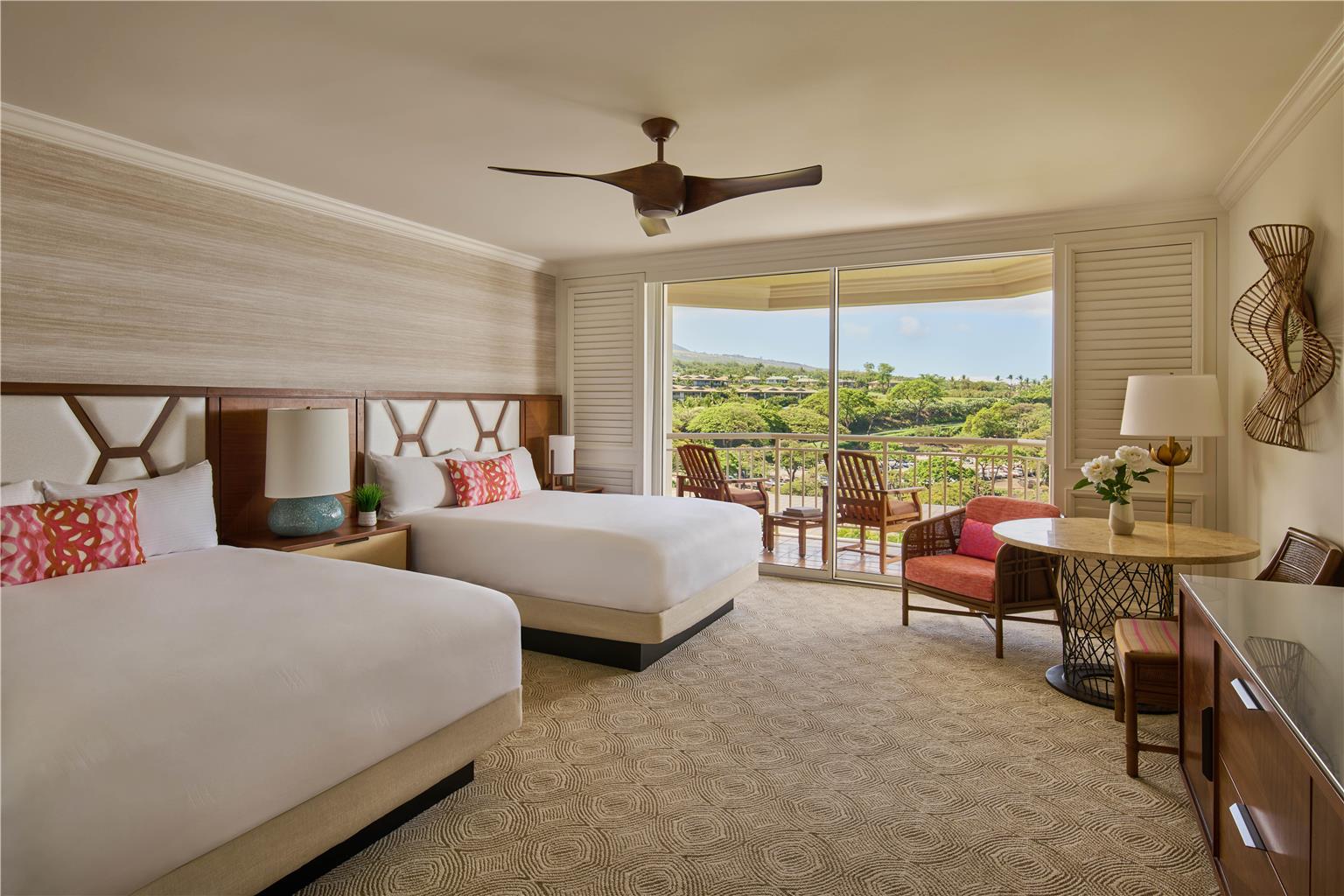
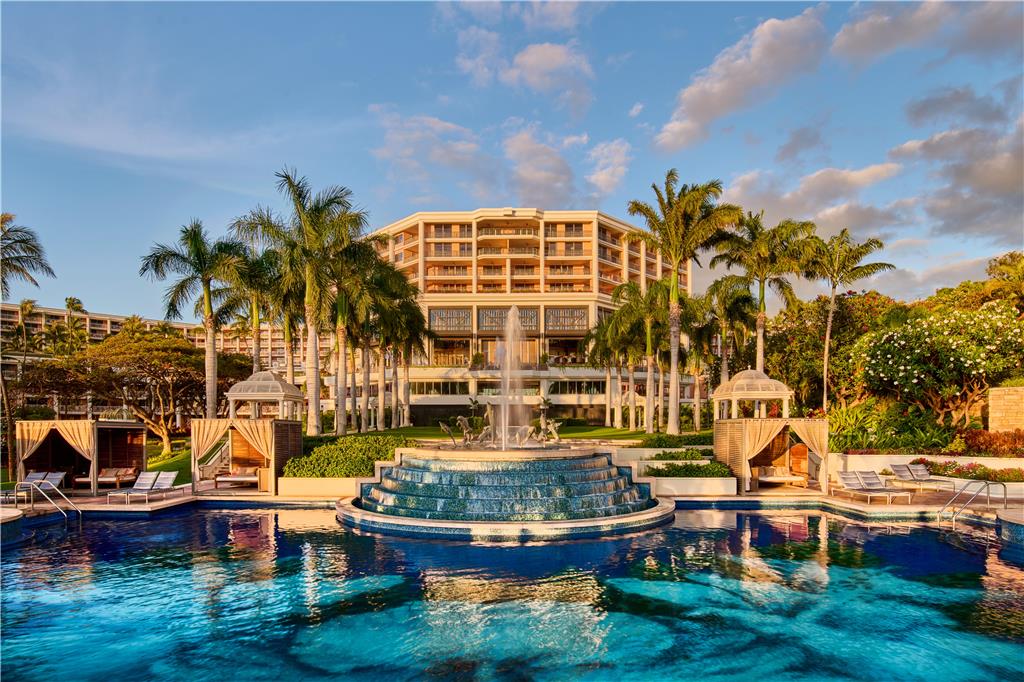
The resort itself is a very large modern property with extensive water features, planting and glazing, which is a separate set of problems and opportunities dealt with below. But the schedule is set by the coast, not by the building.
Days run only from about eleven hours to thirteen and a quarter, and civil twilight is around twenty-two minutes — the shortest in this guide, with an abrupt end.
We have not photographed a wedding at this resort. Which spaces and grounds are included, what beach access and setup allow, what covered alternatives exist and what the permitted hours are, are questions for their team.
Grand Wailea at a glance
| Where | A very large resort on the dry leeward south coast of Maui |
| The rain shadow | Haleakala takes the moisture; this coast is arid, clear and west-facing |
| The good | A reliable sunset into the ocean and clear long views to other islands |
| The bad | Few clouds, so a near-vertical midday sun arrives undiffused |
| Ask first | Included spaces, beach access and setup, covered alternatives, hours |
Dawn into midday
The first hour on a leeward coast is the quiet one and it has a specific character worth using. The sun rises behind Haleakala, which means the coast is in the mountain’s shadow well after the almanac’s sunrise — often by an hour or more.
That period is long, soft and shadowless: the sky is fully light, the ocean is lit by it, and the beach and the resort are in even open shade with no direction at all. It is forgiving light that suits groups and unposed work, and it lasts considerably longer than the twenty-two-minute civil twilight suggests because the mountain extends it.
It is also the calmest air of the day. The trades build as the land heats, which means a pool or a water feature is a mirror at first light and a texture by mid-morning — and on a resort with extensive water, that is the single most useful scheduling fact.
When the sun does clear Haleakala it arrives suddenly and from behind, which means the coast is frontally lit and the mountain is a dark mass behind. That gives a short window of low warm light on faces with the ocean in front of them, and it is the only time of day the low light comes from the landward side.
Mid-morning is the best portrait window before the evening. With the sun between twenty and forty degrees, faces have modelling rather than shadowed sockets, and a group with the sun behind the camera at this hour needs nothing added.
It is also the clearest hour for the long views, and on this coast those are the distinctive wide frame. Because the shore faces west across the channels, other islands are visible from it — which puts a layered horizon in a frame rather than a flat one. That layering needs a moderate telephoto: a wide lens renders each island at its true angular size and the whole thing flattens into thin bands.
The water colour is worth understanding because it changes through the morning. A reef-flat shore reads pale turquoise over coral sand and deepens to blue where the bottom drops away, and the colour is strongest when the sun is high enough to penetrate — which means the turquoise peaks in the middle of the day, exactly when the light on people is worst. That is a conscious trade rather than a problem.
Midday is the hardest light in these guides and on this coast there is no cloud to help. The answers are architectural and botanical and there is no third.
The architecture first. Depth back from any covered edge — a lanai, a colonnade, a porte-cochère, a doorway — is the whole lighting control: at the edge flat and frontal, two or three metres back dramatic with the sunlit ground beyond four or five stops down. On a large modern resort there are many such edges and establishing where they are and which way they face on arrival takes five minutes.
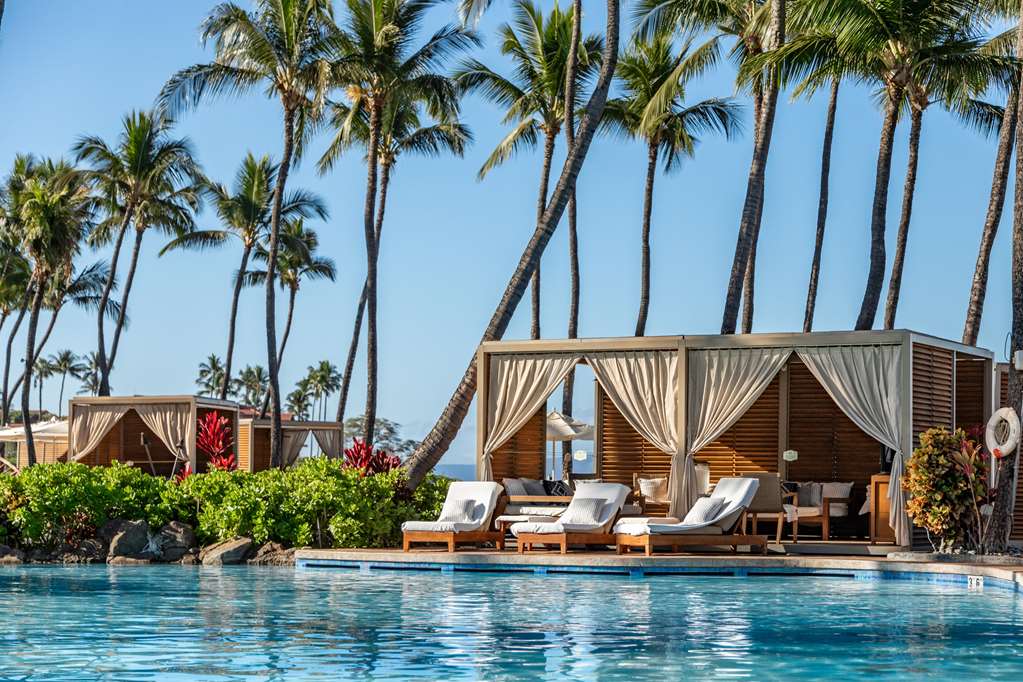
The botany second, and the species distinction in these islands is absolute. Broadleaf canopy — monkeypod above all, which has an enormous spreading crown of small dense leaves and gives the best natural shade in Hawai’i, plus banyan and mango — blocks almost all light and gives soft reliable cover.
Palms do the opposite. A frond is a row of stiff parallel blades, and with the sun within two degrees of vertical its shadow falls straight down a face as hard stripes that no exposure recovers. A resort of this kind is planted with a great many palms and they are background material only — beautiful ones, but not cover.
Afternoon to dark, and the resort
Early afternoon is still hard and the right time for the interiors, which on a large modern resort present a separation problem rather than a light problem.
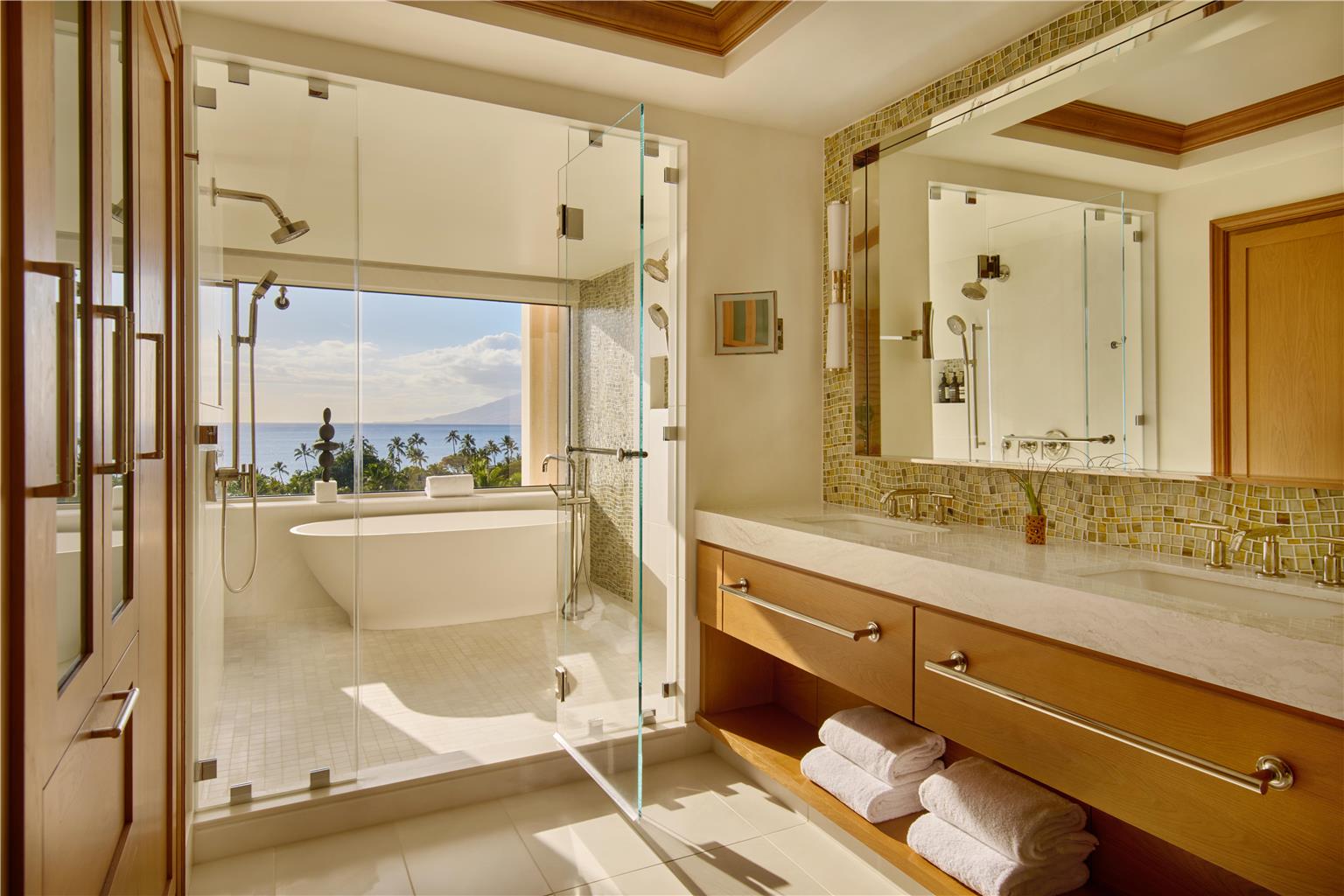
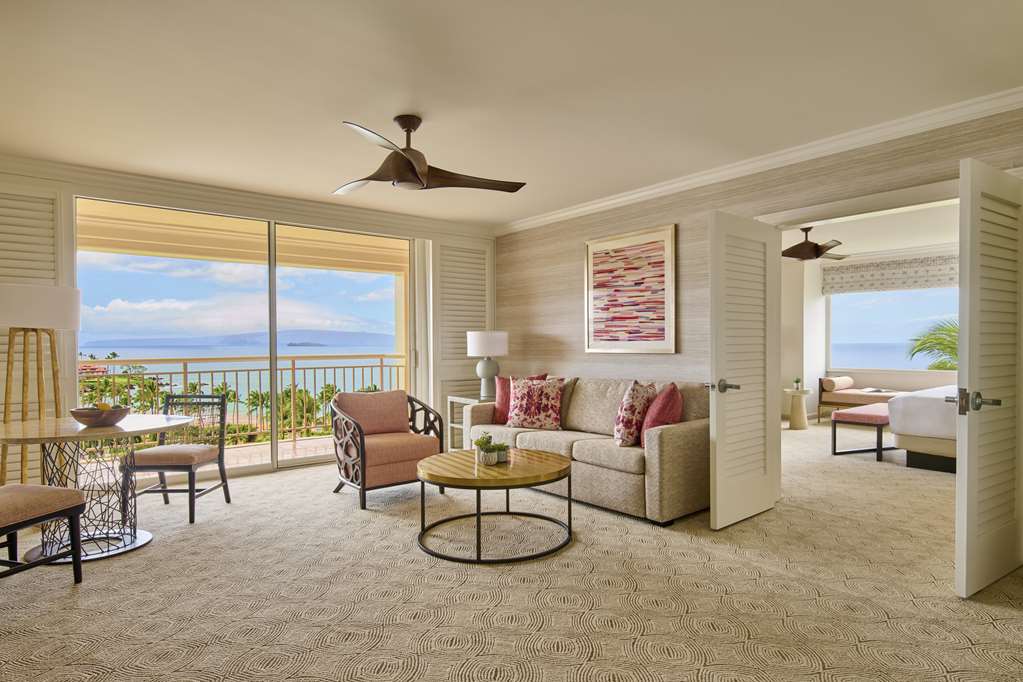
Contemporary resort architecture means pale surfaces, high ceilings and generous glazing, which means light is never scarce and a subject has nothing to sit against. The answers are three: find something dark — a doorway into an unlit space, a shaded recess, a dark timber or stone element; use the glazing at forty-five degrees so the opposite side of the face falls off; or add a source a stop over ambient so the subject has a shadow side at all.
The glazing is the best of the three and on this coast it is exceptional. A large ocean-facing window receives light that has bounced off pale coral sand and bright water rather than off vegetation — brighter, cleaner and more neutral than any inland window — and a subject at forty-five degrees to it is lit as well as by any window in this guide.
The caution is colour: sand-and-sea light is noticeably cool, so the white balance goes on a face rather than on a preset.
The water features are the resort’s other interior-scale asset and they behave like any still water. They return light upward onto faces from below — precisely where a near-vertical sun leaves them dark — which makes the edge of a pool one of the few workable midday positions outdoors. And they mirror when calm, which on a trade-wind coast means the early morning.
The reflection rule applies: compose so the reflection is of something dark — planting, a structure, the mountain — rather than of the bright sky, and the two sit within a stop of each other and need nothing.
The planting is worth using deliberately rather than as decoration. A large resort is heavily planted, which supplies the one thing a coast of sand, water and pale architecture lacks: strong colour and dark mass. A subject in front of a dense flowering shrub at portrait distance, thrown soft, has a colour field behind them that nothing else on the property provides — and the bounce caution applies, because a saturated mass in sunlight reflects its own hue onto skin at close range. Control it with distance.
Mid-afternoon into the last two hours is when this coast becomes the best in these islands. The sun drops toward the ocean, the light warms, and the whole west-facing shore is lit frontally at an angle low enough to model faces without help.
The last ninety minutes are reliable here in a way they are not on a wet coast, and three frames belong to them. The couple with the sun behind them over the water, exposed for the sky and the ocean and lifted by a close warm-gelled source — because metering on faces gives a white sky and a colourless sea. The couple with the sun behind the camera and the ocean behind them, which needs nothing. And a silhouette exposed for the sky alone, which works because a clean ocean horizon gives a simple graphic field.
The gel is not optional. A sun close to the horizon is extremely warm and the open shade is lit by a blue tropical sky, so a daylight-balanced flash puts cool faces into a gold landscape — the most recognisable error in beach work.
Then dusk, and it is short. At twenty and seven-tenths degrees north the sun descends steeply, which compresses civil twilight to about twenty-two minutes, and the fall from usable light to dark is abrupt. A plan assuming a leisurely golden hour will lose most of it: work faster than instinct suggests, get the direct-light frames first, and treat the blue period as a separate short session.
Two practical notes. Salt aerosol on an exposed leeward shore settles on front elements within minutes rather than hours. And vog — volcanic haze from Hawai’i Island’s vents — drifts onto leeward Maui with some regularity, which softens distance and removes the layered-island frames while reddening the sunsets.
- The mountain behind delays the first sun and lengthens the soft light before it
- Water is a mirror at first light and a texture by mid-morning
- Depth back from any covered edge is the whole midday answer
- Monkeypod is cover; palms are background and never cover
- Twenty-two minutes of dusk: work faster than instinct suggests
The leeward year
Hawai’i has two seasons rather than four and the difference is rain rather than temperature — and on a coast in the rain shadow of a ten-thousand-foot volcano, the rain barely arrives.
That makes this one of the most weather-reliable venues in these guides, and the reliability is the point: a plan made for this coast usually happens, which on the windward side of the same island it would not.
The drier season runs roughly May to September. The trades are steadiest, the rain shadow is at its most effective, and the sunset over water is available on most evenings.
The costs are the sun and the haze. The near-vertical noon sun is at its worst in these months, and the two dates when it passes exactly overhead fall in late May and mid-July — which makes the middle of those days the hardest light of the year anywhere in this guide, with no cloud to diffuse it.
And vog is more persistent in the drier months, because the trades carry volcanic emissions north-west from Hawai’i Island. Vog softens distance, which removes the layered-island frames that make this coast distinctive; warms and reddens the light at sunset, which is either an asset or a colour problem depending on whether it was expected; and produces a haze no adjustment restores.
The wetter season runs roughly November to March and on this coast it is not very wet. What changes is that the trades are interrupted more often by Kona weather — a reversal bringing wind and rain from the south-west, which is the one condition that brings real rain here — and that cloud is more frequent generally.
For photographs the wetter season is better in three substantial ways. The December noon sun at about forty-six degrees is the lowest of the year, which means the middle of the day is workable rather than hostile. Cloud is more frequent, which softens the extreme contrast an undiffused tropical sun produces on pale sand and pale architecture. And it is whale season.
That last matters more on this coast than almost anywhere. Humpback whales are in Hawaiian waters from roughly December to April, and the channels off south and west Maui are where they concentrate most densely — which means a frame looking out over the water in those months can contain whales, visible from the shore, in a way no other venue in this guide offers.
Winter also brings the south swell’s absence and the north swell’s arrival, which for a south-facing coast means the water here is calmest in winter and roughest in summer — the reverse of the north shores. That is a genuinely useful fact for a beach ceremony: a south-facing Maui shore is at its most placid between November and March.
And a chance of snow on Haleakala’s summit, which from this coast is directly visible above the resort — a snow-capped volcano above a tropical beach is one of the more improbable frames available anywhere.
There is no autumn colour here and no dormant season: tropical vegetation holds its leaves year-round, which removes the seasonal cue photographs elsewhere in this guide depend on. Nothing in an image made here says what month it is except the angle of the light, the clarity of the air, the state of the sea and whether there are whales in it.
What does change is flowering, and at a heavily planted resort that is the useful question to ask rather than assume — plumeria through the warmer months and various tropical flowering trees on their own cycles. Central Pacific hurricane season runs from June to the end of November, though direct strikes are rare.
More frames from Grand Wailea
Grand Wailea wedding photography: common questions
Why is this coast so reliable?
Haleakala intercepts the trade winds and leaves the south-west shore in a deep rain shadow — genuinely arid, reliably clear, and facing the sunset.
Why is midday so hard here?
A dry coast has few clouds, so a near-vertical sun arrives undiffused. It passes exactly overhead twice a year, in late May and mid-July.
When is the water a mirror?
First light. The trades build as the land heats, so a pool or water feature is a mirror at dawn and a texture by mid-morning.
What happens before sunrise here?
The sun rises behind Haleakala, so the coast stays in the mountain’s shadow for an hour or more — long, soft, shadowless light that suits groups.
Can we use the palms for shade?
No. A frond is a row of stiff blades and with the sun near vertical its shadow falls straight down a face. Monkeypod is the cover here.
When is the coast at its best?
The winter months: a lower sun, more cloud to soften it, the calmest sea of the year for a south-facing shore, and whales in the channel.
More Hawaii venue guides
We are writing a photographer’s guide to every venue we would happily shoot in Hawaii. Here are three more, plus the full index:
- Hā: Breath of Life, Laie: One Frame and How It Is Made
- Ho’omaluhia Botanical Garden, Kaneohe: One Frame and How It Is Made
- Hotel Wailea: The Problem and Four Ways Out of It
Planning a wedding at Grand Wailea?
A coast where the plan usually happens. Tell us your date.