 The Blue Ball Barn, Wilmington: A Walk Through a Converted Barn
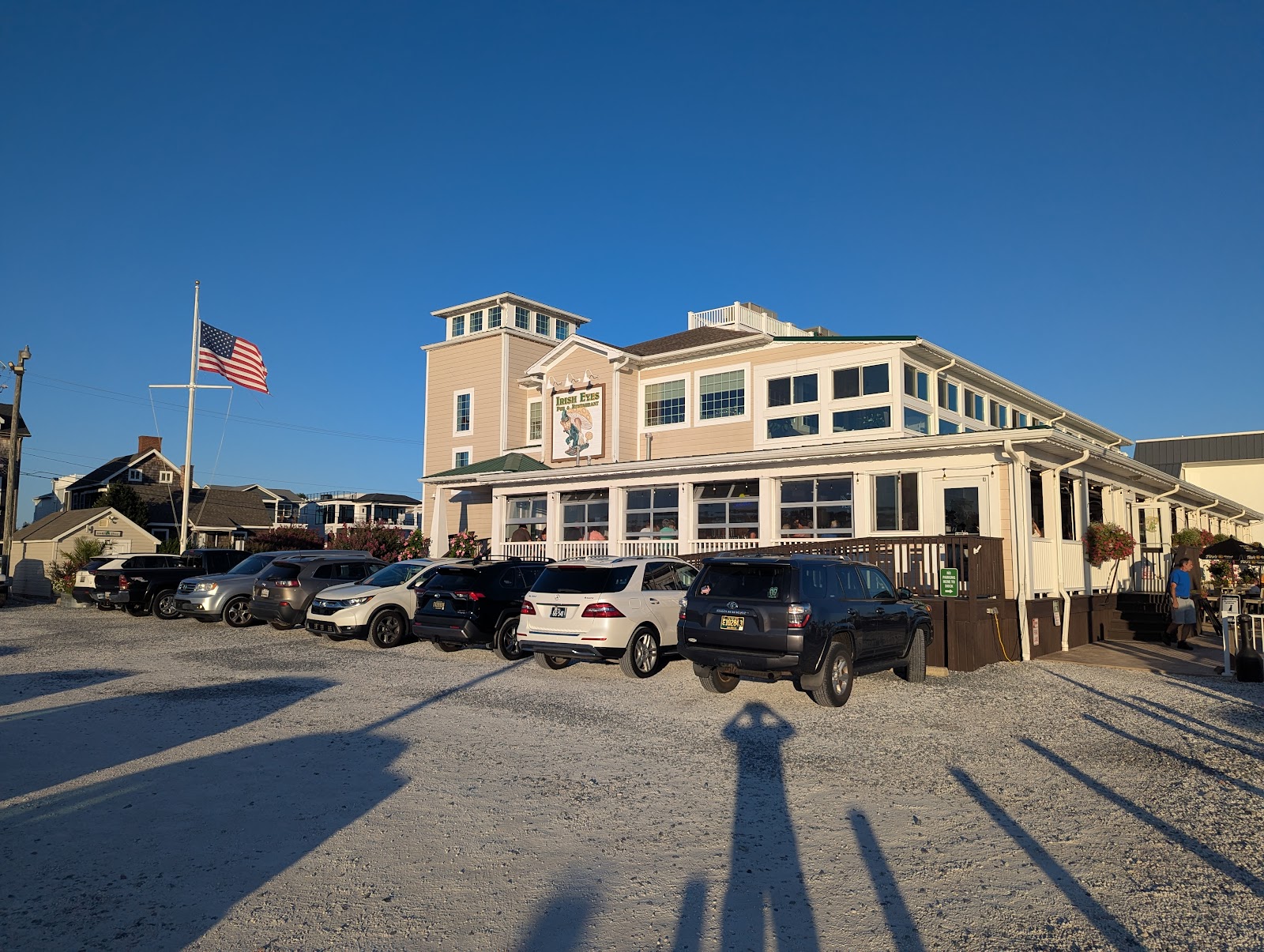
Irish Eyes Pub, Lewes: A Walk Through the Site
A dark bar, a bright deck and a working channel. Three stops apart.
The best way to describe this site is to walk it, because it has three environments in a very small area and they are separated by several stops of light.
There is the interior: a pub bar, which means dark timber, low warm artificial light, small windows and a great deal of surface detail at close range. There is the deck: a covered or partly covered outdoor space over the water, which is the transition. And there is the channel itself, which is open water with a working waterfront beyond it.
The distance between them is a few metres and the difference in light between them is four or five stops, which is the whole practical point. A day here is a sequence of moves between environments that need entirely different settings, and the failure mode is carrying the settings from one into the next.
The walk runs bar, deck, water — from the darkest and most controlled to the brightest and least — and it is the right order because it goes from the light that is always there to the light that depends on the hour.
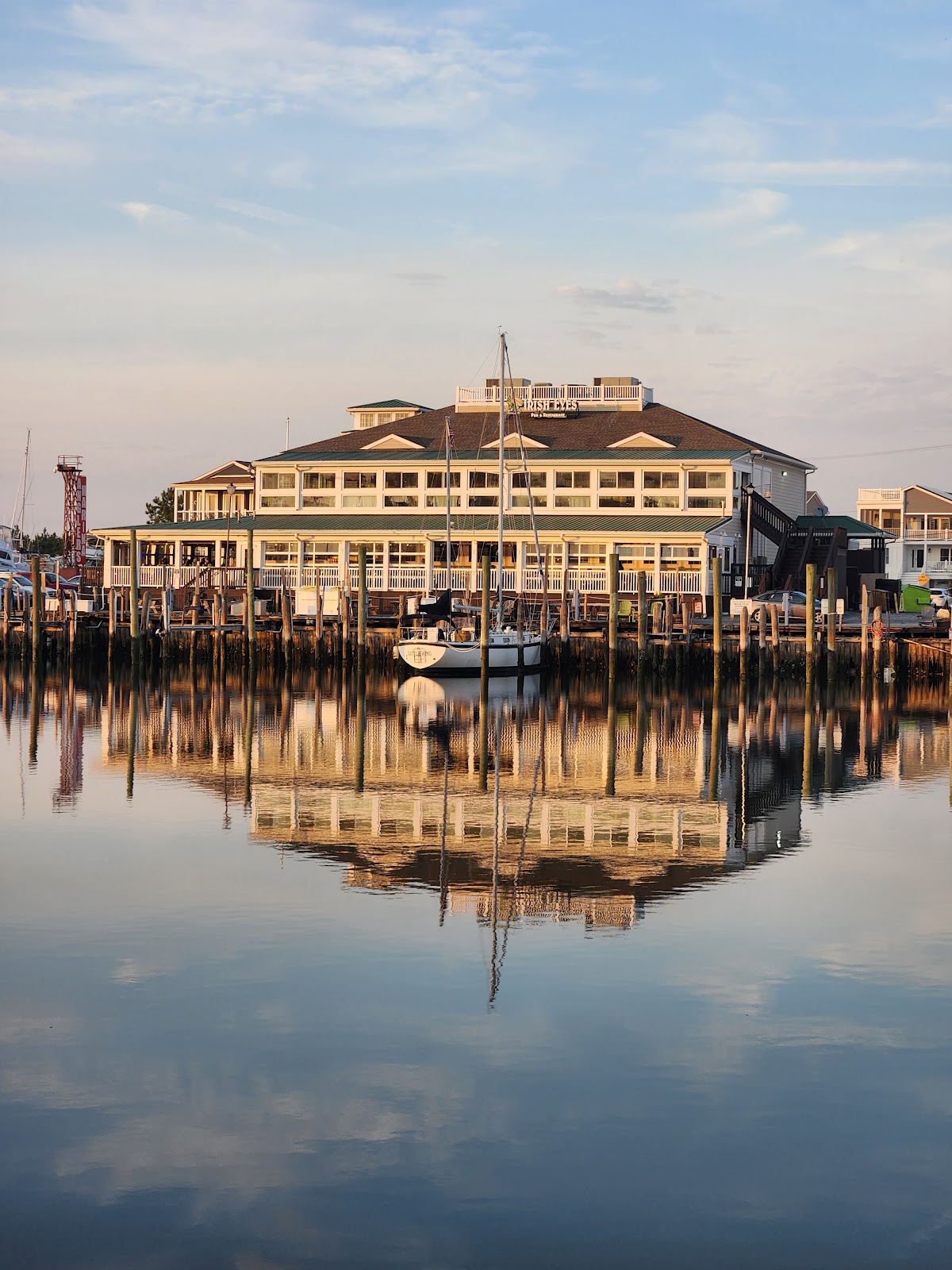
The setting is Lewes, on the canal near the mouth of Delaware Bay, which means a working channel rather than open water: two banks close together, moorings and fishing boats, pilings, and the fabric of a small port. That is a background with real content and real clutter, and using it deliberately is most of the work outdoors.
One fact about the water governs the exteriors and it is worth establishing first: which way the channel runs. A narrow waterway receives light largely from a strip of sky along its axis, which means the sun crosses it for most of the day and comes down it only when the headings align — and that alignment is the frame worth waiting for.
Lewes sits at about thirty-eight and three-quarter degrees north. The June noon sun reaches around seventy-four and a half degrees, the December noon sun about twenty-eight, days run from about nine hours twenty-five to fourteen hours fifty, and civil twilight is around twenty-nine minutes.
We have not photographed a wedding at this venue. Which spaces are included, what access there is to the deck and the water’s edge, and what the permitted hours are, are questions for their team.
Irish Eyes Pub at a glance
| Where | A waterfront pub on the working canal at Lewes, Delaware |
| Three environments | A dark bar, a deck over the water, and the channel beyond |
| The gap | Four or five stops between them, across a few metres |
| First job | Establish which way the channel runs — it predicts the exteriors |
| Ask first | Included spaces, deck and water’s edge access, permitted hours |
The bar and the deck
Start in the bar, because it is the most controlled light on the site and it is available at any hour of any day.
A pub interior of this kind is dark timber and low warm artificial light, which means two things simultaneously. The ambient sits well below what the eye reports — the eye adapts and a meter does not — and the fall-off from any window is extremely steep, because timber absorbs and gives no fill back. The drop from a face at a small window to a surface two metres behind it is often four stops.
That is the gift rather than the difficulty. Meter on skin, place the subject at forty-five degrees to whatever window there is, and let the room go dark: a lit face against a near-black ground, with no equipment.
The artificial light needs a decision rather than a correction. Pub lighting is warm, low and mounted high or behind the bar, which produces a pool-and-gap pattern with strong local brightness and dark gaps between. Balance for the fittings rather than for a flash, gel any added source warm so the subjects belong to the room, use the pools as key rather than filling them out, and let the gaps go black.
Restraint is the technique: a stop over ambient models, two starts to look lit, three looks like a flash photograph in a dark room. And never bounce off the ceiling in a room whose light already comes from above — in a dark timber room most of it goes into the wood and does not come back at all.
The bar itself is the best position in the interior, for three reasons. It is a long horizontal at exactly leaning height, which is one of the most useful things a room can offer. It has a concentration of surface detail at close range — glass, brass, bottles, taps, timber — which is the texture a pub has and a function room does not. And the light behind or over a bar is usually the brightest in the room, which makes it a found key light.
A subject leaning at a bar, lit by the fittings over it, with the dark room behind them, is the frame a pub produces that nothing else does.
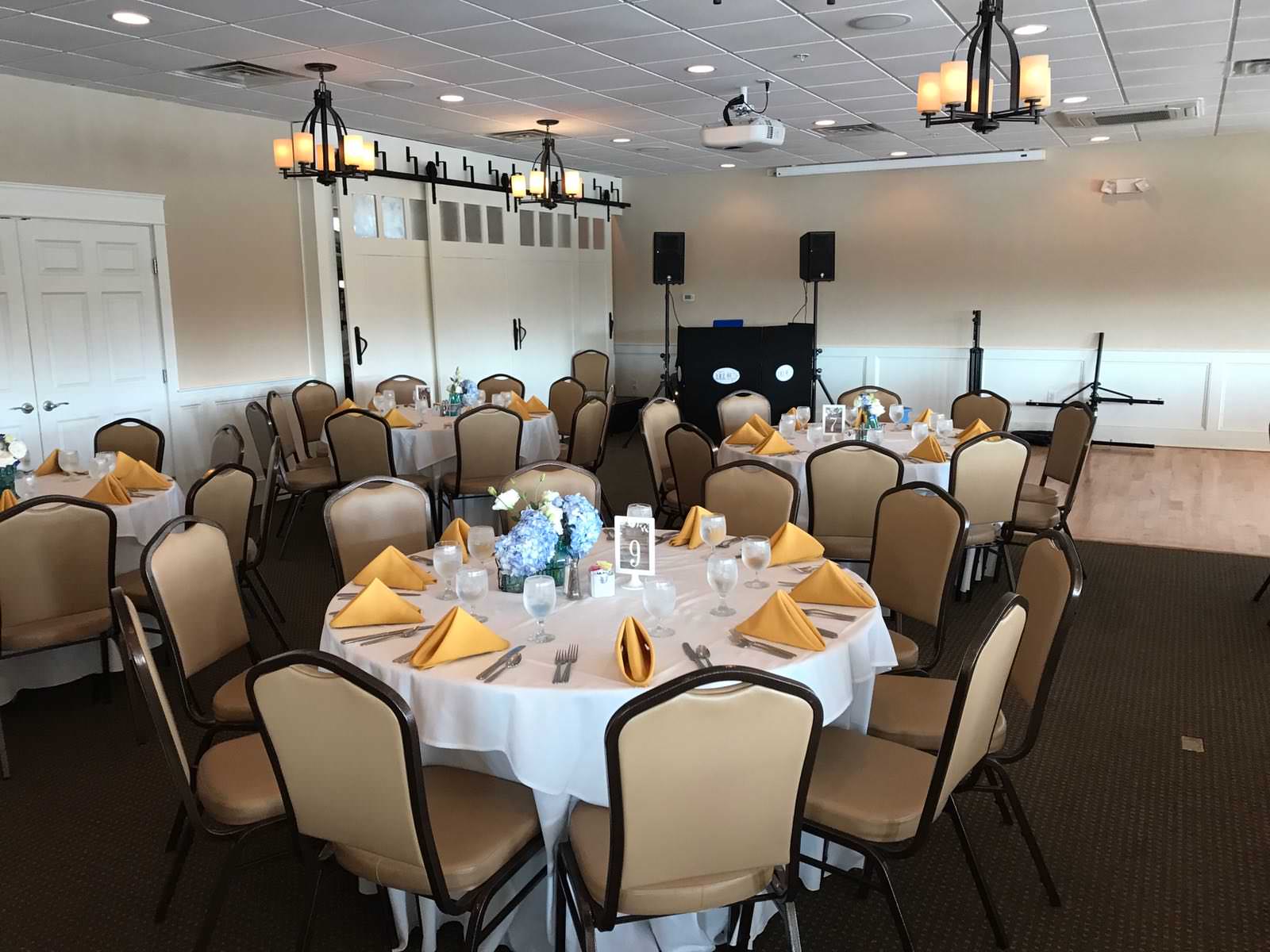
Then the deck, which is the transition and the most technically interesting part of the site.
A covered deck over water is a directional soft source with a hard mask, and depth back from its open edge is the whole lighting control. At the edge the light is bright and nearly frontal and the result is flat; two or three metres back, against the building, the ratio is dramatic and the water beyond has fallen four or five stops.
That deep position is the best unassisted portrait on the property and it works at any hour, including the middle of a July afternoon when the deck’s open part is unusable and the bar is too dark for a group. It also works in rain, which on a mid-Atlantic summer afternoon is worth as much as the light.
And a deck over water has one property a deck over ground does not: uplight. The water returns light upward onto faces from below — precisely where a high sun leaves them dark — which means a subject at the deck rail at noon is filled in a way a subject on a terrace is not. The colour of that fill is the colour of the channel reflecting the sky, which on brown-green water reads cool and slightly green, and which needs a warm gel on any added source rather than a global correction.
The channel and the town
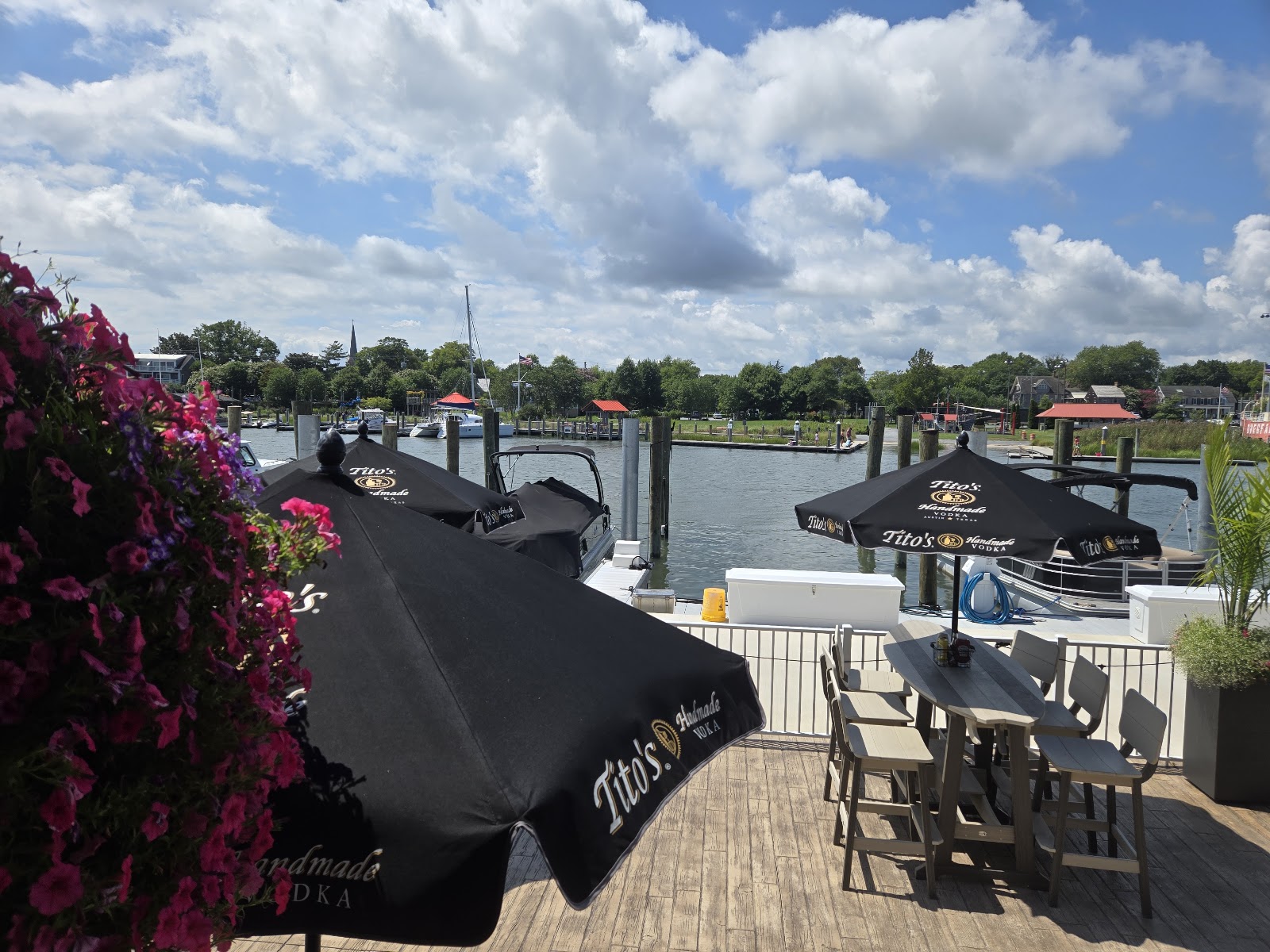
The water is the third environment and the channel’s geometry decides what it offers.
Establish the bearing on arrival. A narrow waterway is lit from a strip of sky along its axis, which means the water is lit when the sun is high and in shade when it is low and across — except at the hour when the low sun runs down the channel, which is the frame worth calculating for.
When that happens the effect is specific: the water becomes a corridor of light, the pilings and hulls on both banks are rim-lit, and a subject on the deck or the wharf has warm directional light along the water with dark banks to either side. Working out when it will occur — from the channel’s bearing and the sun’s azimuth at sunset on the date — is five minutes that is worth more than any amount of technique.
The tide is the other variable. At Lewes the range is around five feet, which is moderate and enough to change a working waterfront substantially: at high water the channel is full, the boats float level, the water reaches the built edge and every reflection frame works; at low water the edge has withdrawn, exposed mud and pilings show, and boats in shallow berths sit differently.
Looking it up takes two minutes and it decides whether a deck-rail frame looks out over water or over mud.
The channel is also sheltered, which means it is calm far more often than open water — so reflections are available at hours when a bay is a texture. The reflection rule applies: a reflection is about a stop darker than what it reflects, so compose so the reflection is of dark hulls, pilings and the far bank rather than of open sky, and the two sit within a stop of each other.
The working waterfront’s clutter is the thing to manage. Moorings, gear, pilings, vehicles and the commercial fabric of a small port are all legitimate parts of the place and all of them together are a background with too much in it.
Three answers work. Commit to one strong element — a painted hull, a stack of buoys, a run of pilings — and exclude the rest, remembering that painted hulls and buoys are the most saturated things on this coast and the only strong colour in a landscape of grey water and pale sand. Compress with a longer lens, which narrows the field and turns other people into soft texture. Or go close with a shallow depth of field, which turns the whole waterfront into tone.
And dusk does the fourth thing: it removes the clutter entirely. A working waterfront at blue hour becomes a field of lit points — mast lights, boat windows, the buildings along the channel — over dark still water that doubles all of them, with everything unlit invisible.
The crossing point is the frame: the sky and the lit waterfront sit within about a stop of each other for roughly ten minutes, and at this latitude civil twilight runs around twenty-nine minutes around it. Scout the camera position in daylight.
Lewes itself is the fourth resource and a genuinely good one: one of the oldest towns in Delaware, with a coherent historic core of clapboard and brick, a short walk away and completely different material from a pub and a wharf.
And Cape Henlopen, at the bay’s mouth, gives dunes, pale quartz sand and pine within a short distance. The bay beaches there host the horseshoe crab spawning and shorebird migration around the new and full moons in May and June — of real interest, and a reason to check access in those weeks.
Two practical matters. Salt aerosol on a waterfront settles on front elements within minutes rather than hours. And a channel funnels wind along its axis, which makes a lightstand a liability on the deck and every source handheld or weighted.
- Meter on skin in the bar; the timber will fool the camera every time
- The bar is a horizontal at leaning height with a found key light over it
- Depth back from the deck’s covered edge is the whole lighting control
- A deck over water fills faces from below — in the channel’s cool green
- Calculate when the low sun runs down the channel. That is the frame
The Lewes year
Four real seasons at the mouth of a large estuary, and a venue whose interior is indifferent to all of them — which is the practical argument for it.
The bar is the same in February and July. Its light comes from fittings and small windows, it is metered on skin, and nothing about the weather reaches it. On a coast whose spring is foggy and whose summer is crowded, that is worth something.
What the season changes is the deck, the channel and the town.
Winter empties the waterfront. Many boats are hauled out, the gear is stowed, and the moorings are bare — which removes most of the clutter and leaves the buildings, the pilings and the water. For a photographer that is a substantial simplification and it makes winter the cleanest the channel looks all year.
The December noon sun at around twenty-eight degrees means the whole short day rakes rather than floods, which is exactly what weathered piling, painted hull and brick want, and it means there is no bad hour at all. The channel runs slate grey under it and ices at its edges in a hard winter.
Winter also brings the earliest dusk — sunset just after half past four — which puts the blue-hour waterfront crossing at around five rather than after nine. For an evening reception that lands the best exterior frame of the day before the event rather than in the middle of it.
The costs are cold, a nine-and-a-half-hour day, and wind funnelled along the channel that is worse in winter than at any other time — which makes the covered deck more valuable, not less.
Spring is the fog season, because warm air moving over water still cold from winter condenses. On a narrow channel fog does something rather good: it removes the far bank and the town, leaving the nearest pilings and hulls in soft even light against white, which is the cleanest this venue’s exterior ever looks and is a genuinely good photograph once.
Late spring brings the horseshoe crab and shorebird season to the bay beaches nearby, around the new and full moons of May and June.
Summer is the busy season and the hardest for light. Days run to nearly fifteen hours at the solstice, the middle of one at seventy-four and a half degrees of elevation on an open deck is the worst light of the year, dew points in the low twenties Celsius put haze in the air, and the waterfront is at its fullest — which means at its most cluttered and at its most alive.
The compensations are the warmth, the long evening, and the fact that the covered deck and the dark bar are both entirely unaffected.
Early autumn is the strongest window and it is emphatic. September and October bring drier, clearer air than August, the end of the fog season, thinning crowds, the calmest conditions of the year, and the most frequent dawn mist on the channel — which with a low sun behind it is the frame that defines a mid-Atlantic port.
The Delaware coastal plain turns late — the second half of October into early November — with sweetgum purple-red, red maple scarlet and oak russet against dark loblolly pine and evergreen holly. On a waterfront that colour appears in the town’s street trees and on the far bank rather than on the wharf, which makes it a background resource: warm colour against a slate channel and weathered timber is the best combination of the year.
November empties the waterfront again, the sun is low all day, the air is at its clearest, the dusk crossing arrives at a civilised hour, and the bar is warm. It is quietly the best month here.
More frames from Irish Eyes Pub
Irish Eyes Pub wedding photography: common questions
What are the three environments?
A dark timber bar, a deck over the water, and the working channel beyond — separated by four or five stops across a few metres.
What is the best interior frame?
A subject leaning at the bar, lit by the fittings over it, with the dark room behind them. A bar is a horizontal at leaning height with a found key light above.
How do I work the deck?
Depth back from its covered edge is the whole control. Two or three metres in gives a dramatic ratio with the water beyond four or five stops down.
What does a deck over water add?
Uplight. The channel returns light onto faces from below, in the cool green of brown-green water reflecting the sky — which needs a warm gel, not a correction.
What should I calculate in advance?
When the low sun runs down the channel’s axis rather than across it. That turns the water into a corridor of light and rim-lights both banks.
When is the waterfront at its cleanest?
Winter and November, when the boats are hauled out and the gear is stowed — and the dusk crossing arrives before five in the afternoon.
More Delaware venue guides
We are writing a photographer’s guide to every venue we would happily shoot in Delaware. Here are three more, plus the full index:
- The Milton Theatre, Milton: One Frame and How It Is Made
- Newark Country Club, Delaware: The Problem and Four Ways Out of It
- The Peninsula on the Indian River Bay, Millsboro: Field Notes, Problem and Solution
Planning a wedding at Irish Eyes Pub?
A dark bar and a bright channel. Tell us your date and we will walk the three.