 The Blue Ball Barn, Wilmington: A Walk Through a Converted Barn
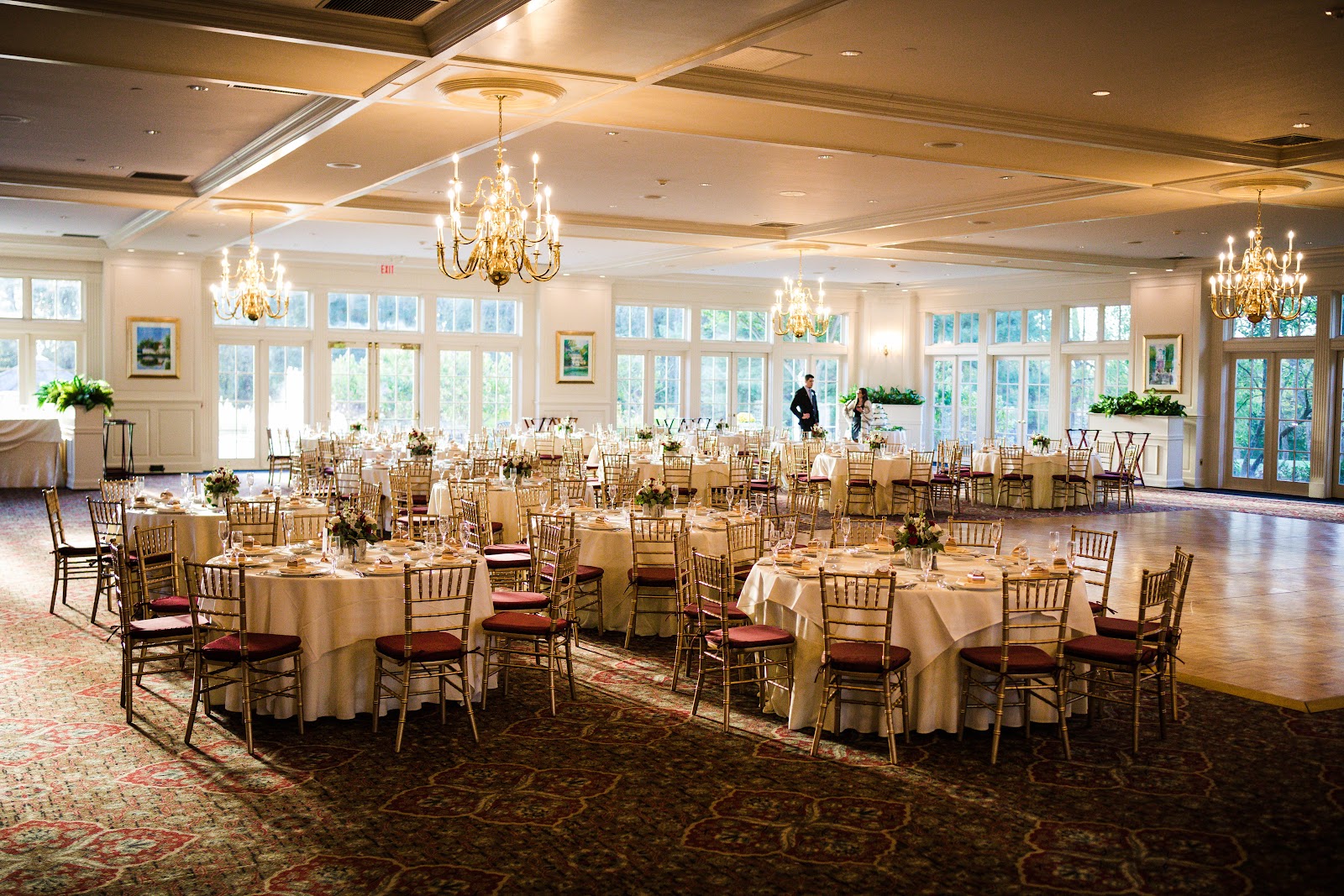
Deerfield Golf Club, Newark: Field Notes, Problem and Solution
Near the Fall Line, which is where Delaware stops being flat.
These are field notes rather than a description, organised as problems and what solves them, because a golf club presents a specific and repeating set of conditions.
The setting first, and it is worth understanding because it is the single thing that distinguishes a northern Delaware club from a coastal one.
The Fall Line runs across the top of this state — the boundary where the hard crystalline rock of the Piedmont gives way to the soft sediments of the Atlantic Coastal Plain. Above it the country is rolling, with rocky soils, stream valleys and mature deciduous woodland. Below it Delaware is flat, sandy and pine-covered for a hundred miles.
A club in this corner therefore has relief, hardwood and stream valleys — three things that nine-tenths of the state does not offer, and relief in particular is the most useful topographic feature a photographer can have.
The problems are the standard club set, and the relief solves more of them than anything else does. There is no overhead cover across most of the property, which under a seventy-three-and-a-half-degree June sun makes open turf unusable for portraits in the middle of the day. The landscape is uniform. There is almost no texture at close range. And from May to October everything is green.
Newark sits at about thirty-nine and two-thirds degrees north. The June noon sun reaches around seventy-three and a half degrees, the December noon sun about twenty-seven, days run from about nine hours twenty to fifteen hours, and civil twilight is around thirty minutes.
We have not photographed a wedding at this club. Which spaces are included, what course access is available and when, whether a cart is offered and what the permitted hours are, are questions for their team.
Deerfield Golf Club at a glance
| Where | A golf club in northern Delaware, above the Fall Line |
| The setting | Rolling Piedmont country with hardwood and stream valleys — unique in this state |
| The problems | No cover, a uniform landscape, no close texture, and green for half the year |
| The solutions | The gradient, the evergreen margins, five scales, and the calendar |
| Ask first | Included spaces, course access and timing, cart availability, hours |
Four problems and what solves them
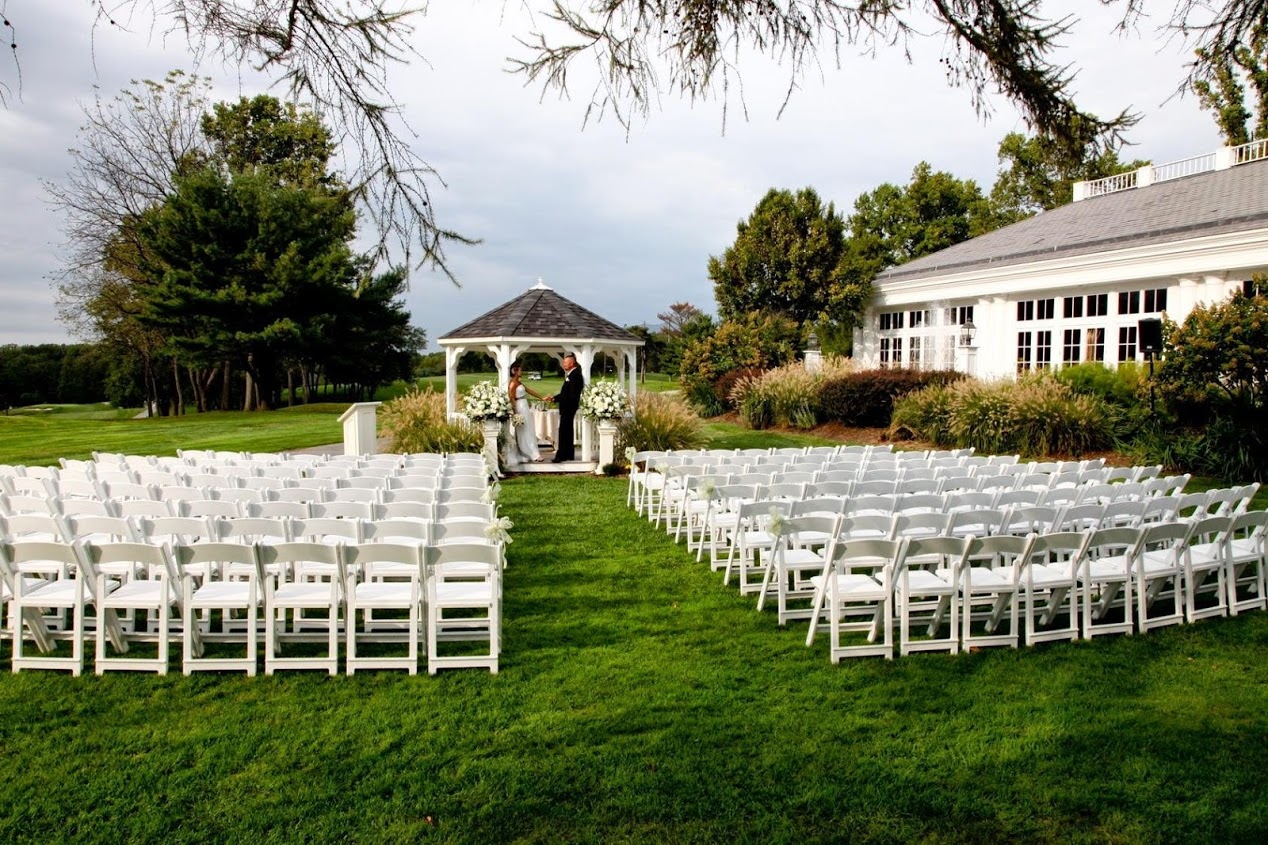
Problem one: no cover. A course has no overhead shade across most of its area, and at seventy-three and a half degrees of June elevation the sun puts eyes in shadow and foreheads in light with no position on open turf that fixes it.
The solution is the margins, and in northern Delaware the two species that matter are American holly — the state tree — and eastern redcedar. Both are evergreen, dense and very dark, which makes their margin one of the few genuinely near-black backgrounds available anywhere in Delaware.
A subject standing a metre inside a holly or cedar margin, facing out toward the sunlit turf, has soft directional light in front and three or four stops of near-blackness behind. That is a free studio portrait with a dark background at any hour, including the middle of a July afternoon — and it also solves the green problem, because a dark evergreen mass at three stops down reads as near-black rather than as green.
The hardwood margins are the lesser version: tulip poplar, beech, oak and hickory give soft even light with a green cast, corrected by standing two metres inside the canopy edge and facing out rather than going deeper. Tulip poplar is the most useful of them for a camera, because it is very tall and straight with a high canopy and pale grey bark — which means the space at eye level is open and the background at eye level is a field of pale vertical trunks rather than of foliage.
The boundary line — bright mown turf meeting near-black evergreen — is the best single compositional element on any club property.
Problem two: uniformity. Mown turf is one colour, the mowing pattern is consistent, the tree lines are similar all round, and the features repeat. Five wide fairway frames are the same picture five times, and a set made by walking further rather than by working differently looks monotonous even when every frame is competent.
The solution is scale rather than distance. From one position: a close frame at conversational range; a margin portrait with dark evergreen as the whole background; a boundary-line frame; a low-camera frame that puts the subjects against sky; and one wide landscape frame. Five different photographs from one spot.
Problem three: no texture at close range. There is no weathered timber, no rock, no untidy edge — the surfaces are smooth and maintained, which means the interest has to come from light, from the people and from composition.
There is one exception here and it is the Piedmont’s gift: the stream valleys. A course above the Fall Line cut through rocky ground frequently has a stream in a wooded cut, and a stream over rock with hardwood on both banks is the one genuinely textured environment on the property.
Moving water in shade is also one of the most forgiving photographic subjects there is: the shade prevents the blown highlights that ruin a sunlit stream, and a slow shutter is easy when the light is already low — which means the hours the course is unusable are exactly the hours the stream works best.
Problem four: green for half the year, and the flip side of that is precision. With nothing rough to hide in, a frame a degree off level against a horizon of mown turf reads as a mistake immediately. There is no fix beyond care.
For the green itself there are three answers: the near-black evergreen margins; the low camera, which replaces the green with sky; and the season, which removes it outright from mid-November to April.
Further notes from the field
On the gradient, which is this club’s real advantage and the reason to choose it over a coastal-plain one.
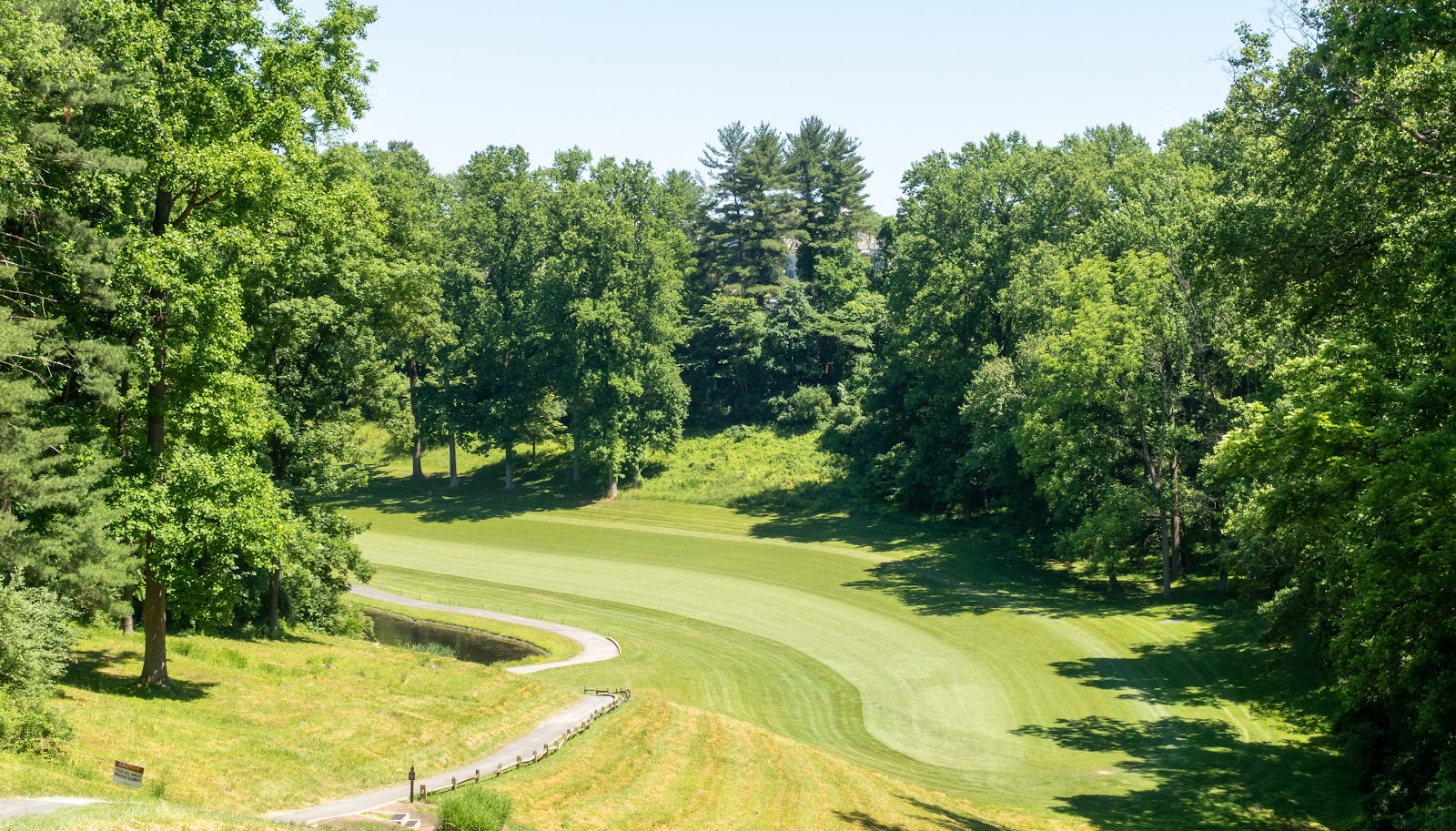
From below the subjects on any rise, they stand against open sky with no horizon behind them. That is the cleanest background available in any conditions and any weather, and it drops every flag, cart path, bin, building and guest below their level out of the frame — which solves the clutter problem completely and removes the green at the same time.
From above them, the course and the treelines fill the space behind, which is the place rather than the people. Two completely different frames from one spot, decided by walking twenty metres uphill or down.
It also solves groups. A large group needs everyone visible; on level ground that means a raised camera or a compromise, and on a slope the level change is free — arrange the group up the hill with the camera downhill and every face is visible without anyone standing on anything.
The requirement is everyone in the same light: full open shade at an evergreen margin, full overcast, or full sun with the sun behind the camera. And on uneven ground, where heads at the same height are wanted, find the flattest bench and arrange in ranks across the slope rather than up it.
On the low light. A course at the ends of the day is the best version of itself: a low sun rakes across level mown turf rather than falling onto it, which puts texture into a surface that is flat at noon, turns the mowing pattern into long graphic lines, and on rolling ground puts relief into every rise and hollow.
Civil twilight here runs around thirty minutes, and on rolling open ground with a western horizon that is further away and lower than in a valley, most of it is usable. The frames for that window: the couple with the sun behind them, exposed for the sky and lifted by a close warm-gelled source; the couple with the sun behind the camera, which needs nothing; a low-camera frame against the deeper sky opposite the sun; and a silhouette against the treeline.
The gel is not optional. Low sun here is strongly warm and open shade is lit by a blue sky, so an ungelled flash puts cold faces into a gold landscape.
On the water. Where a course has ponds, they are horizontal reflectors that fill faces from below — where a high sun leaves them dark — and mirrors when calm, which on an inland pond means the early morning and the last hour because the air moves as the land heats. Compose reflections against the dark treeline rather than the open sky and the exposure looks after itself.
On the Piedmont rock. Above the Fall Line the bedrock is hard crystalline rock and it shows in stream cuts, outcrops and old field walls — grey, low in saturation, and a high-frequency texture that is spectacular under raking light and dull under flat light. It is the one genuinely low-saturation natural background on the property and worth locating, because in a landscape of green turf and green woodland a clean grey field is disproportionately valuable.
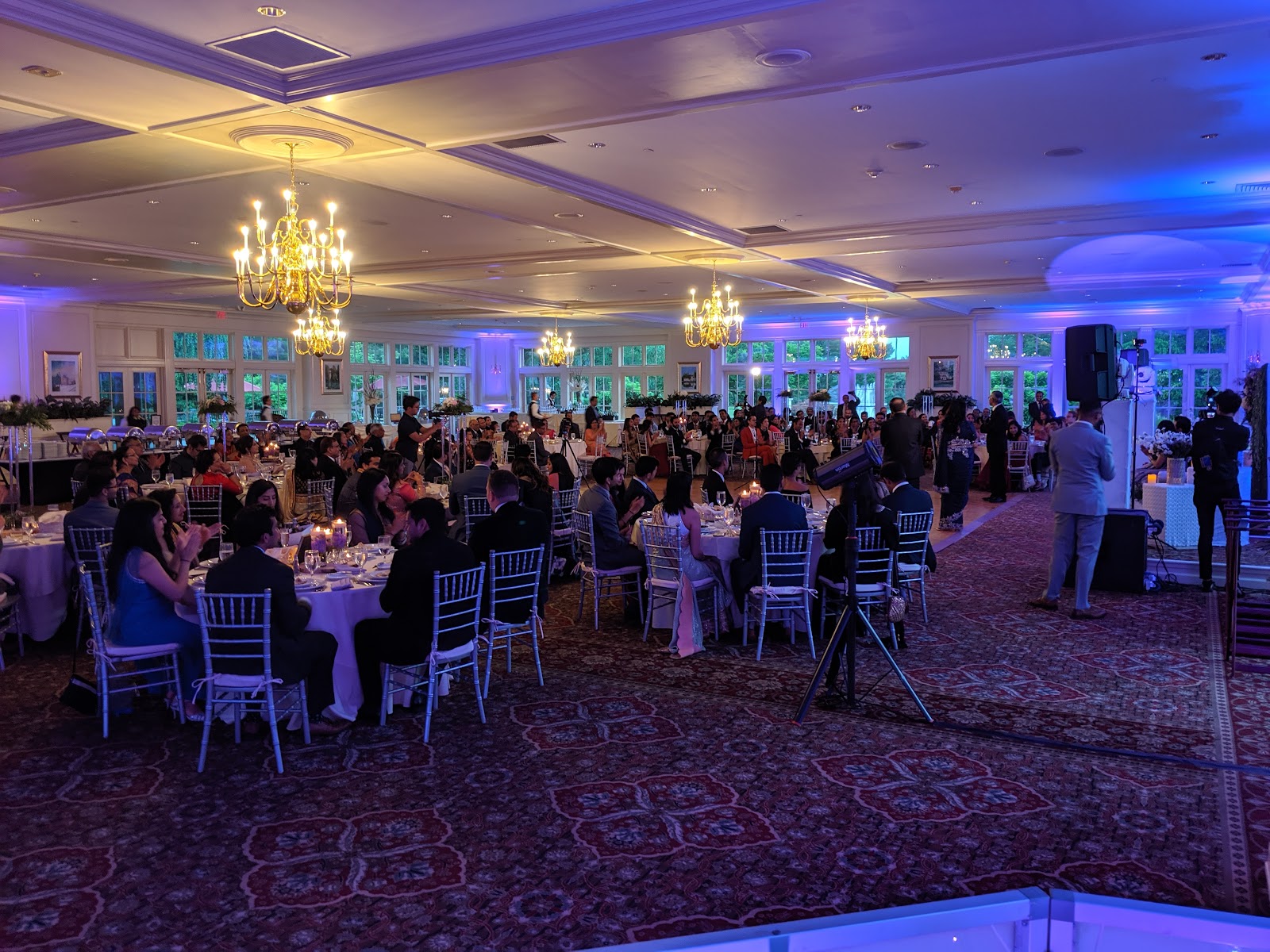
On indoors. A clubhouse is likely to be either timber or pale and modern. Timber absorbs, which means the ambient sits a stop or two below what the eye estimates and the background falls away for free — meter on skin and let the room go dark. Pale and modern inverts the problem to separation: find something dark, use the glazing at forty-five degrees, or add a source a stop over ambient.
Two practical matters. Ticks are a genuine consideration in northern Delaware woodland and rough from spring through autumn. And the mid-Atlantic severe-weather season brings thunderstorms from April into summer, which on open turf with no cover makes a named indoor alternative a requirement rather than a courtesy.
- Camera below subjects on a rise: the cleanest background, and the green goes
- Holly and redcedar margins give three or four stops of near-black at any hour
- The stream valley is the one textured environment — and best in the worst light
- Five scales from one position, not one scale from five positions
- Piedmont rock is the only low-saturation natural background here
The Fall Line year
Four real seasons above the Fall Line, and the calendar here runs two weeks ahead of the Delaware coast in autumn and two weeks behind the northern states.
Winter is the best light of the year and the best background of the year together, which is an unusual combination and worth planning for. The December noon sun at around twenty-seven degrees never rises high enough to flatten anything, so the whole short nine-hour-twenty day rakes; the hardwoods are bare so the woodland is open and light reaches the ground everywhere; and the green is gone.
American beech is the winter surprise in this region and it is worth locating: it holds pale tan dead leaves on the tree through much of the winter, which means a beech stand in February is a warm-toned space rather than a bare grey one — and a subject in front of one has a background with colour in it when nothing else does.
Holly and redcedar stay near-black, which in a landscape of browns and greys makes them the one solid dark mass rather than one dark thing among many. That makes them more useful in winter, not less.
Snow transforms the course when it lies: the turf becomes a clean white plane, the evergreen margins go near-black, every golf feature is buried, and what remains is a simple winter landscape with the widest brightness range the property ever has. Snow is the best natural fill available, lifting shadows to within a stop and fooling a meter by about two stops.
Freezing rain is the more characteristic mid-Atlantic winter event and an ice-glazed hardwood against a grey sky is remarkable and unplannable.
Spring is early here and genuinely fine, and the Piedmont fringe has more flowering understorey than the coastal plain. March brings the first bulbs; April brings dogwood white, redbud magenta on bare wood and cherry, all lit directly before the canopy closes; and the turf greens through late April.
That two-to-three-week window before leaf-out completes is the best fortnight of the year in Piedmont woodland, because a flowering understorey in full light is a condition that does not recur.
The costs are the severe-weather season building from April and ground that is wet on rocky soils in early spring.
Summer is the weakest season and the busiest. Everything green, the middle of the day the hardest light of the year on open turf, and dew points in the low twenties Celsius putting haze in the air — which on a course, where the subjects are close and the backgrounds are the treeline, costs less than it would at a venue with a view.
What summer gives is fifteen hours of daylight and a thirty-minute twilight, which is an unhurried schedule, and the stream valley at its most inviting.
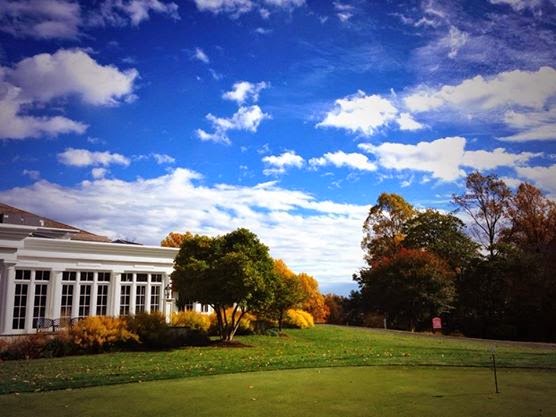
Autumn is the second strong season and it is late: the second half of October into early November. The Piedmont palette is rich — tulip poplar clear yellow, sugar maple orange and scarlet, sweetgum purple-red, beech bronze, oak russet, dogwood deep red — and on a course it arrives exactly where it is most useful, in the treelines that form every background.
A boundary-line frame with a subject on the edge of green turf against a wall of warm colour, backed by near-black holly, is the strongest thing this venue produces all year. And because oak and beech colour and drop slowly, the window is a genuine three weeks rather than two.
Late November strips it to structure — bare hardwood, tan beech, near-black evergreen, brown turf, grey Piedmont rock and a very low sun all day — and the course is empty. It photographs austerely and extremely well.
More frames from Deerfield Golf Club
Deerfield Golf Club wedding photography: common questions
What does being above the Fall Line change?
Rolling ground, hardwood woodland and stream valleys — three things that nine-tenths of Delaware does not have, and relief is the most useful of them.
What is the main problem on a course?
No overhead cover anywhere between the treelines, which makes open turf unusable for portraits in the middle of a summer day.
Which margins give a dark background?
American holly and eastern redcedar. Both are evergreen, dense and very dark, and at three stops down they read near-black rather than green.
What is the one textured environment here?
The stream valley — water over Piedmont rock with hardwood on both banks. And it works best in exactly the hours the open course does not.
How do I avoid a monotonous set?
Work five scales from one position rather than one scale from five positions, and use the gradient, which gives two backgrounds from one spot.
When is the club at its best?
The second half of October into early November for warm treelines behind green turf — and any clear winter afternoon, when the low sun rakes all day.
More Delaware venue guides
We are writing a photographer’s guide to every venue we would happily shoot in Delaware. Here are three more, plus the full index:
- Dogfish Head Craft Brewery, Milton: The Venue’s Own Logic
- Fenwick Island State Park, Delaware: The Problem and Four Ways Out of It
- Irish Eyes Pub, Lewes: A Walk Through the Site
Planning a wedding at Deerfield Golf Club?
The only rolling ground in the state. Tell us your date and we will use it.