 The Portland Regency: A Season-by-Season Guide
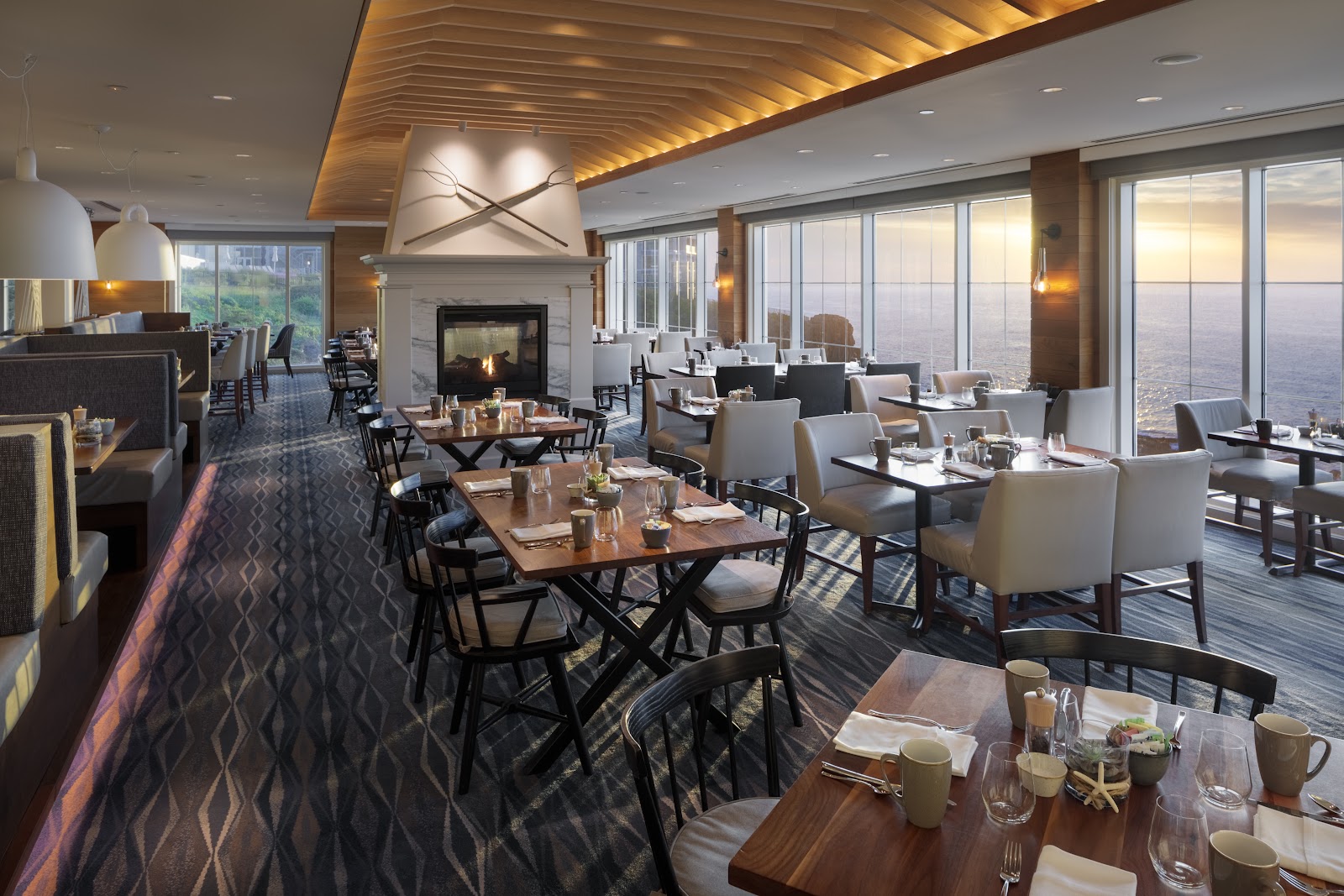
The Cliff House, Cape Neddick: The Problem and Four Ways Out of It
No shelter, no shade and a constant wind. Four ways to work with that.
A resort on an open cliff is a spectacular proposition and a demanding one, and the demands are worth stating plainly rather than discovering on the day.
The problem has three parts and they compound. There is no shade: an exposed clifftop has no trees of any size, because salt and wind prevent them growing, so between roughly ten and four in the summer months a face outdoors has shadowed eyes and a lit forehead with no position available that fixes it.
There is no shelter: nothing breaks the weather, which means rain, fog and wind all arrive unimpeded and there is nowhere outdoors to retreat to. And the wind is not occasional. On an Atlantic clifftop in Maine a working breeze is the baseline condition, not a feature of bad days — which means a lightstand is a liability, a veil is a hazard, hair does what it wants, and anything light-weight moves.
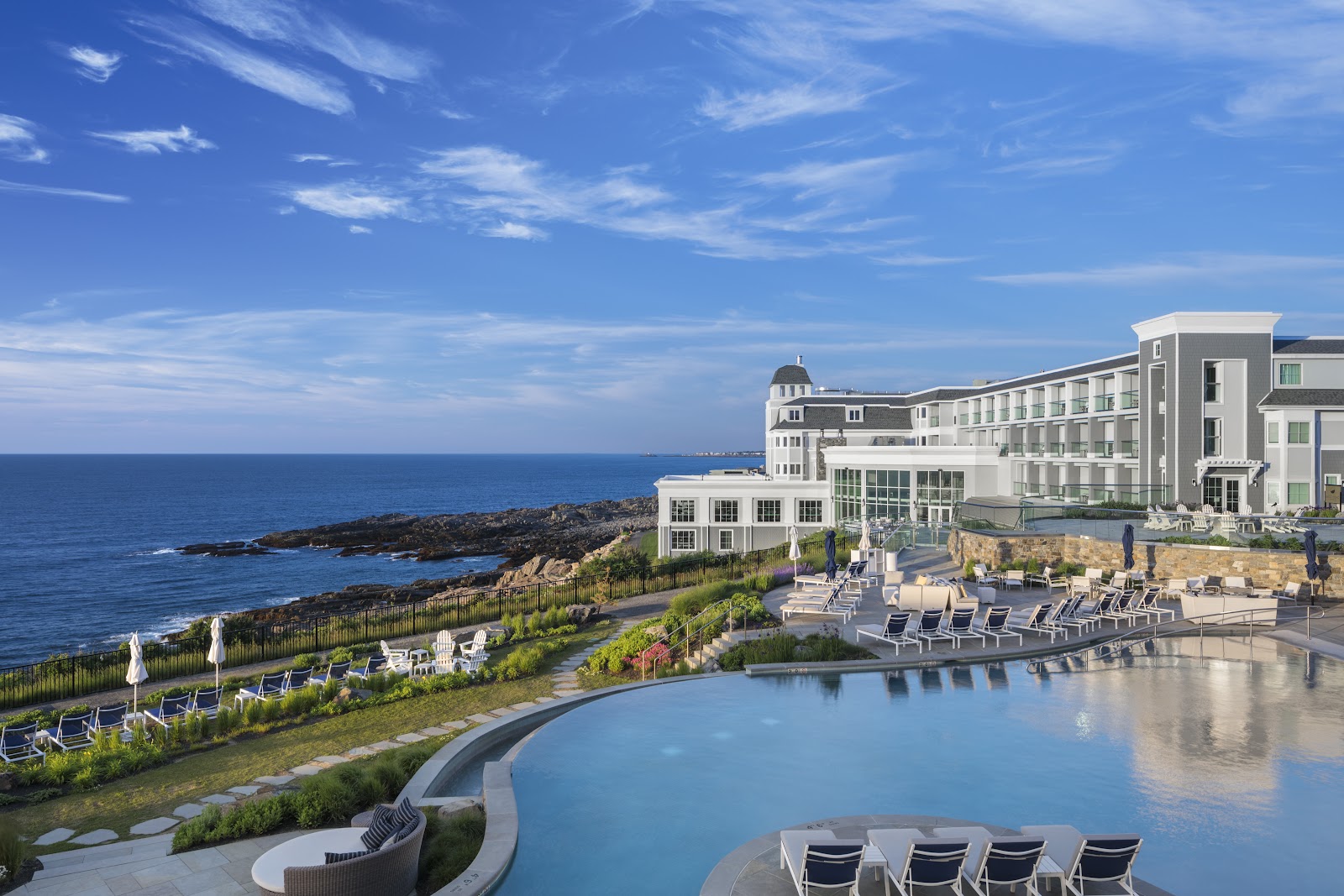
Against that, the site has the single most dramatic setting in this guide: open granite cliff, the North Atlantic below, an unbroken horizon, and a sky that occupies most of every wide frame.
The problem has four distinct solutions, and each produces a different photograph. Choosing among them deliberately is the whole job, and the failure mode is standing a party on an open clifftop at one in the afternoon in a fifteen-knot wind and hoping.
One further thing distinguishes this coast and it is worth saying early: the water is cold. The Gulf of Maine is one of the colder stretches of the western Atlantic, which produces sea fog whenever warm humid air moves over it — frequently in June and July, and sometimes arriving within half an hour. A cliff in fog is a completely different venue from a cliff in sun.
Cape Neddick sits at about forty-three and a fifth degrees north. The June noon sun reaches around seventy degrees, the December noon sun about twenty-three, days run from about nine hours to fifteen hours twenty, and civil twilight is around thirty-three minutes.
We have not photographed a wedding at this resort. Which spaces and grounds are included, what covered alternatives exist, what access the cliff allows and what the permitted hours are, are questions for their team.
The Cliff House at a glance
| Where | A resort on the open Atlantic cliff at Cape Neddick, southern Maine |
| The problem | No shade, no shelter, and a constant wind |
| Four ways out | The architecture; the anti-solar sky; the fog; the ends of the day |
| The setting | Open granite, the North Atlantic, and an unbroken horizon |
| Ask first | Included spaces, covered alternatives, cliff access, permitted hours |
The first two ways out
The first way out is the architecture, and on a treeless clifftop it is the only shade there is.
Any covered outdoor space — a terrace with a roof, a porte-cochère, a colonnade, a deep entrance, a balcony overhang — works the same way: it is a directional soft source with a hard mask, and depth back from its open edge is the whole lighting control. At the edge the light is bright and nearly frontal and the result is flat. Two or three metres back, against the wall, the ratio is dramatic and the sunlit ground beyond has fallen four or five stops.
That deep position is the best unassisted portrait on the property, it works at any hour including the middle of a bright July afternoon, and it works in rain and wind — which on this site is worth more than the light alone.
A doorway is the purest version. A subject standing a metre inside an open door is lit by the entire open sky in front of them and backed by the dark interior: a giant softbox and a four or five stop black backdrop, positioned by the architecture, available in any weather.
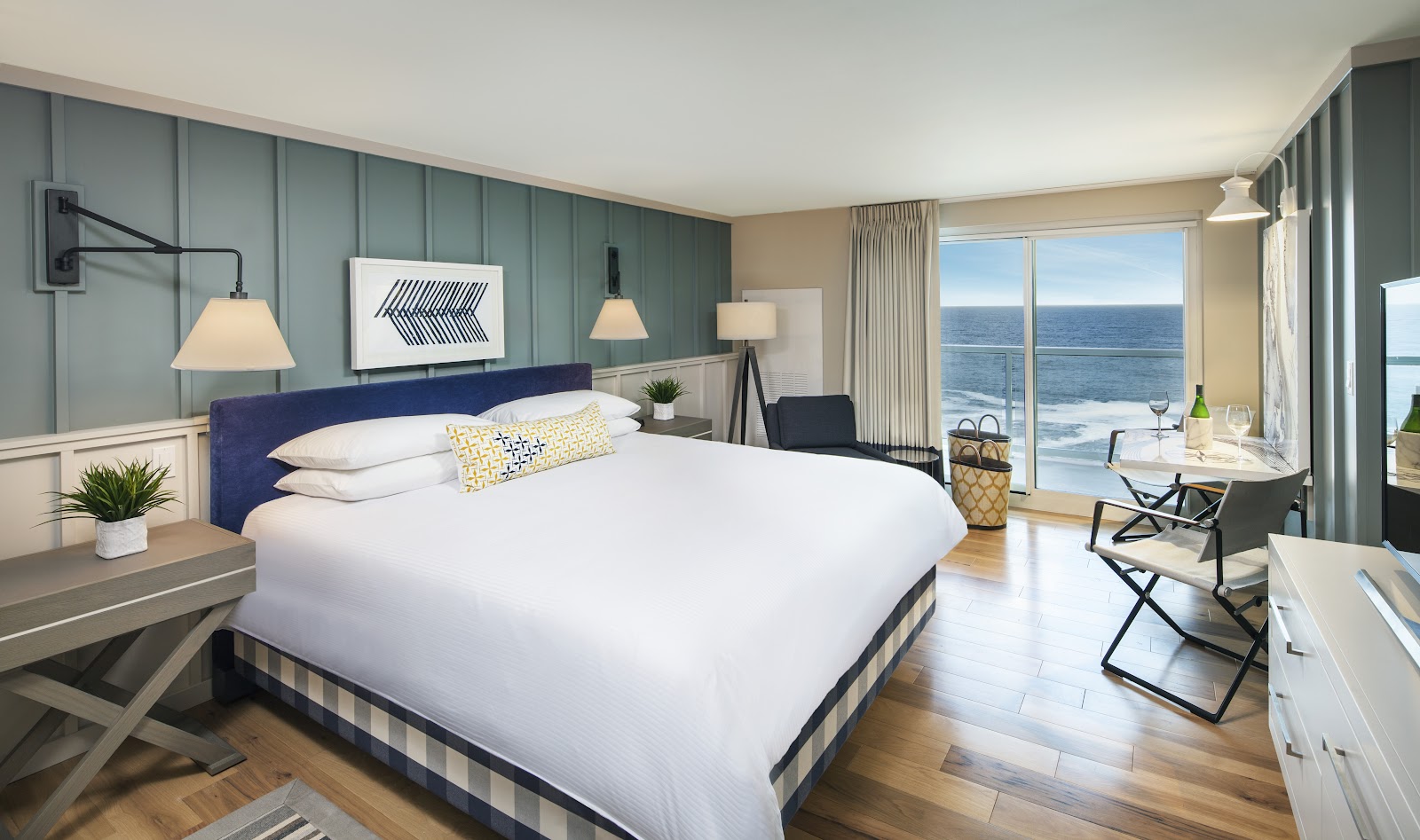
Modern glazing is the indoor equivalent. A large window wall is a room-sized softbox, and a subject placed at forty-five degrees to it — not facing it, not backed to it — gets a lit side and a shadow side. On a cliff resort the glazing faces the sea, which means the light coming through it has bounced off water and sky rather than off grass: brighter, cooler and more neutral than a typical inland window.
The second way out is the anti-solar sky, and it is the technique that makes clifftop portraits work when there is no shade at all.
The part of the sky opposite the sun is always deeper in colour and lower in brightness than the part near it. Turning the subjects so the sun is behind the camera does two things at once: it lights their faces frontally, and it puts the richest, darkest part of the sky behind them.
On an open clifftop with no background other than sea and sky, that is the difference between a pale washed frame and a saturated one, and it costs nothing but a change of orientation.
The complement is the low camera. With the camera below the subjects and grass or granite across the bottom of the frame, everything behind them is above the horizon — which on a clifftop means sky, and nothing else. That removes the resort’s buildings, the paths, the furniture and the other guests in one move, and it is the fastest route to a clean background anywhere on the site.
The exposure note for both: on a bright clifftop the brightness range between a lit face and a bright sky is manageable if the sun is behind the camera and considerable if it is not. Where the sun is behind the subjects, expose for the sky and lift them with a close warm-gelled source at about a stop over the ambient — handheld, because a stand on a cliff in wind is not a proposition.
The second two, and the cliff itself
The third way out is the fog, and treating it as a solution rather than a problem is the right way round on this coast.
Sea fog forms because the Gulf of Maine is cold, and on the southern Maine coast it is frequent from late spring through midsummer. When it arrives, every problem at the top of this page disappears simultaneously: there is no hard sun, so no shade is needed; the brightness range collapses to two or three stops; the light is soft, even and entirely flattering; and groups need no arranging because everyone is in the same light everywhere.
What fog gives instead is atmosphere and what it takes is the horizon. A cliff in fog has no sea view — the water disappears into white a short distance out — which means the wide frames become subjects against nothing. That is a genuinely beautiful photograph and it is one photograph, not five.
So the plan on a foggy day is: one deliberate atmospheric wide frame, and then close work. Close work in fog is exceptionally good, because the diffuse light renders skin and fabric beautifully and a white dress reads as delicate rather than blown.
The granite is the other thing fog improves. Wet rock is darker and more saturated than dry rock, and its texture reads better — which means a foggy or freshly rained-on clifftop has better foreground material than a dry sunny one.
The fourth way out is the ends of the day, and at this latitude they are generous: around thirty-three minutes of civil twilight, with an unobstructed horizon in at least one direction.
The coast here faces broadly east and south-east, which means the sun rises over the water and sets over the land behind. That reverses the usual expectation and it has two consequences. Sunrise is the sea frame: low warm direct light coming straight off the Atlantic into the subjects’ faces, on an empty clifftop, in the calmest air of the day. It is the best light this site ever has and it requires getting up for it.
And sunset is an afterglow frame: the sea and the cliff lit by the whole eastern sky rather than by the sun, which is soft, even, slightly cool, and shadowless — with a pink band above the horizon opposite the sunset. That is a forgiving light that suits large groups and people who do not want to be posed, and it is entirely different from a west-coast sunset.
Anyone who wants the sun over the water at this venue has to take it in the morning.
The cliff itself is the last element and the granite is the material to understand. Coastal Maine’s bedrock is largely granite — coarse-grained, pink-grey, with visible feldspar crystals, often glacially polished. Photographically it is a high-frequency texture that is spectacular under raking light and reads as a flat grey field under flat light, and it is genuinely low in saturation, which makes it the kindest background in this guide for skin and white fabric.
The tide matters even on a cliff. The Gulf of Maine’s range here is around nine feet, which changes how much rock is exposed below, how close the sea is to the base, and whether the surf is breaking against the cliff or on the ledges below it. A breaking sea is a photographic subject and a safety consideration in the same breath: on an exposed Atlantic shore a wave larger than the last one is normal, and nobody stands in the wet zone.
Two practical matters. Salt aerosol on an exposed cliff settles on front elements within minutes rather than hours, and it softens contrast in a way that looks like haze but is on the glass. And every light is handheld, every time.
- Depth back from any covered edge is the only shade on a treeless cliff
- Turn the subjects so the sun is behind the camera and the deep sky is behind them
- A low camera puts the whole resort out of frame in one move
- Fog solves every light problem here and costs you the horizon — one frame, not five
- Sunrise is the sea frame on this coast; sunset is afterglow
The southern Maine coast year
Four sharply separated seasons, all governed by water colder than the land, and a clifftop that feels every one of them.
Winter is austere and photographically excellent from indoors and from sheltered ground, and genuinely hostile on the open cliff. The December noon sun at around twenty-three degrees means the whole short day rakes rather than floods, which is exactly what granite wants, and the sea runs slate to near-black under a low sun.
Winter storms on this coast produce the most dramatic sea this site ever sees — and the most dangerous. A nor’easter against an Atlantic cliff is a photograph taken from well back and from shelter, not from the edge.
Snow on granite is the best natural fill available, lifting shadows to within a stop and fooling a meter by about two. Sea smoke on a very cold still morning is the winter equivalent of summer’s fog.
The costs are cold, a nine-hour day, and wind that is worse in winter than at any other time by a wide margin.
Spring is late on this coast because the cold sea holds the air temperature down. April is bare, grey and raw; the shoreline warms slowly through May. It is also the beginning of the fog season, as the air starts to warm while the water does not.
Blackflies are severe in inland Maine from mid-May into June and are essentially a non-issue on an exposed clifftop, where the wind that causes every other problem solves this one.
Summer is the season and the days are very long: over fifteen hours at the solstice with about thirty-three minutes of civil twilight, which gives an unhurried evening and an early sunrise — before half past five — that makes the morning sea frame available to anyone willing to set an alarm.
The costs are fog at its most frequent in June and July, the middle of the day at seventy degrees of sun elevation on a treeless cliff, and crowds on the southern Maine coast in high summer. Lupines flower along this coast in mid to late June, which is a genuinely regional foreground where it occurs.
Early autumn is the strongest window on this coast by a clear margin. September brings drier, clearer air than August, the end of the fog season, a sea at its warmest of the year so the light over it is stable, the calmest air of the year, and thinning crowds. For a site whose central problem is wind and fog, September removes both.
Mid-October brings the colour, and on the immediate coast it is two to three weeks behind inland Maine because the sea delays it. A clifftop has few trees of its own, so the colour arrives landward of the site rather than on it — which means it is a background resource reached by walking inland rather than a subject on the cliff.
The coastal palette is red maple scarlet, birch yellow and oak russet against near-black spruce and grey granite, and against a pale resort building that is the strongest combination of the year.
November strips it to structure: grey granite, slate sea, bare hardwood inland, and a very low sun all day. It photographs austerely and extremely well from sheltered ground, and the cliff is already a winter proposition.
More frames from The Cliff House
The Cliff House wedding photography: common questions
What is the problem here?
No shade, because salt and wind prevent trees growing; no shelter from weather; and a wind that is the baseline condition rather than an occasional event.
What is the only shade on the site?
The architecture. Depth back from a covered edge — a roofed terrace, a porte-cochère, a doorway — is the whole lighting control, and it works in any weather.
How do I get a good background with only sea and sky?
Turn the subjects so the sun is behind the camera, which puts the deepest part of the sky behind them; and drop the camera below them so nothing else is in frame.
Is fog a disaster?
It is a solution. It removes every light problem at once and costs you the horizon — so take one deliberate atmospheric wide frame and then work close.
Which end of the day is the sea frame?
Sunrise. This coast faces east, so the sun comes out of the water in the morning and the evening is an even, shadowless afterglow instead.
When is the site at its best?
September. Drier clearer air, the end of the fog season, the calmest wind of the year, and thinner crowds — the month that removes both of the site’s problems.
More Maine venue guides
We are writing a photographer’s guide to every venue we would happily shoot in Maine. Here are three more, plus the full index:
- Hidden Pond, Kennebunkport: What It Suits and What It Does Not
- Norumbega Inn, Camden: A Walk Through the Site
- Portland Head Light, Cape Elizabeth: One Frame and How It Is Made
Planning a wedding at The Cliff House?
Four ways out of an exposed cliff. Tell us your date and we will pick the right one.