 The Portland Regency: A Season-by-Season Guide
Camden Harbour Inn, Camden: How the Light Moves Over a Working Harbour
Hills behind, a tidal harbour below, and boats that move all day.
Camden is unusual on the Maine coast because the hills come down to the water. Most of this shoreline is low, rocky and rolling; here the Camden Hills rise directly behind the harbour, which changes the light in ways worth knowing before the day.
Three things follow. The high ground to the west and north-west takes the last of the direct sun earlier than the almanac’s sunset, sometimes by a substantial margin — which means the evening sequence has to be planned on the basis of the ridgeline rather than the published time.
The same high ground gives a background that no other Maine harbour has: a wooded hillside rising behind the town, which turns a waterfront frame into a layered one and which carries autumn colour at a height where it reads as a landscape rather than as a canopy.
And the hills mean relief, which means a gradient — and a gradient is the most useful topographic feature a photographer can have, because a camera below the subjects puts them against open sky while a camera above them puts the harbour and the hills behind.
The harbour is the other governing element and it is a working one: a tidal anchorage with moorings, lobster boats, and the large wooden schooners that sail from this coast. A working harbour is a background with real content and real movement — boats swing with the tide and the wind, so the arrangement behind a subject is never the same twice.
The tide is the specific variable. The Gulf of Maine’s range at this point is around ten feet, two highs and two lows a day, which in a shallow harbour changes everything: the water’s edge moves, the moored boats sit differently, and the intertidal zone appears and disappears.
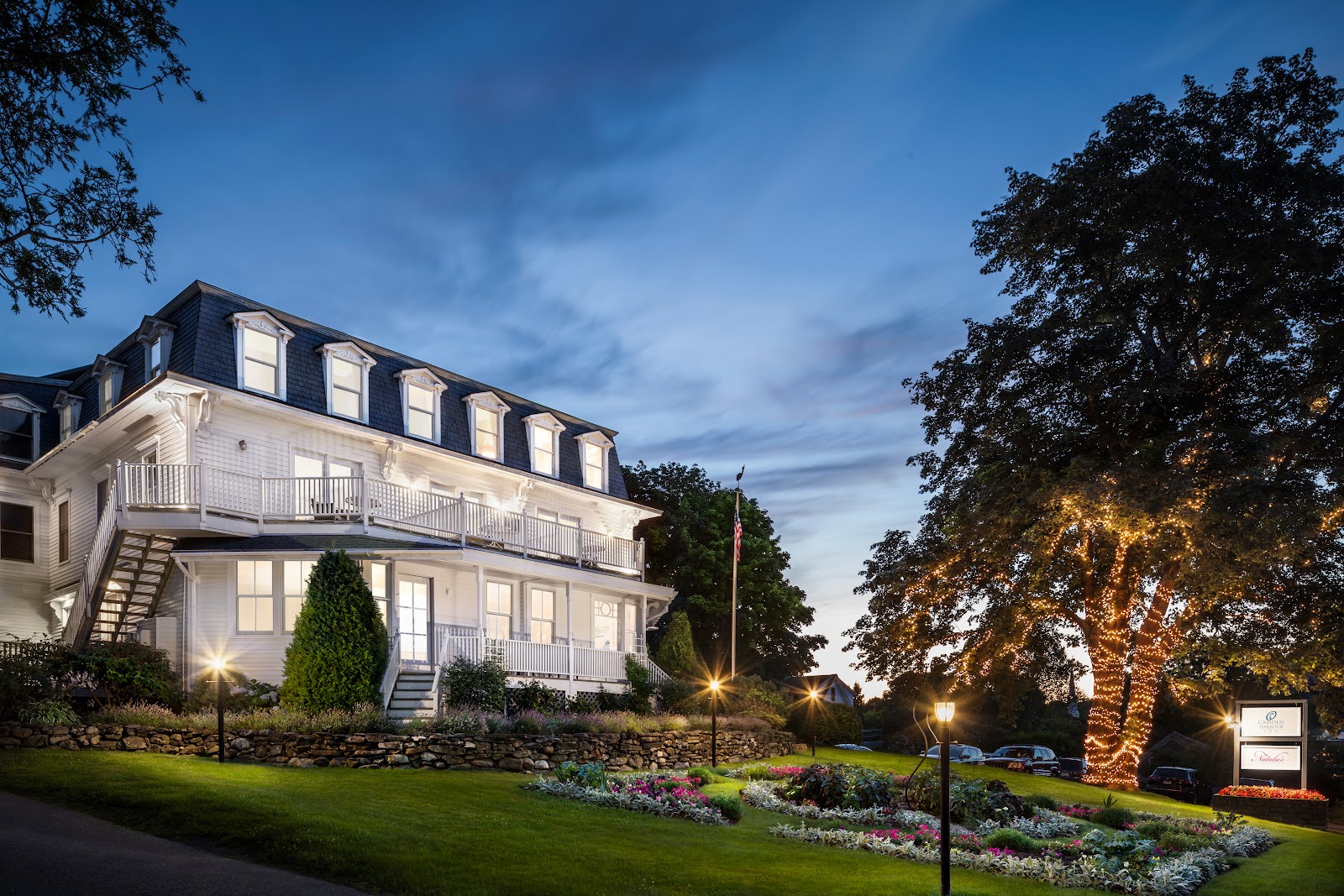
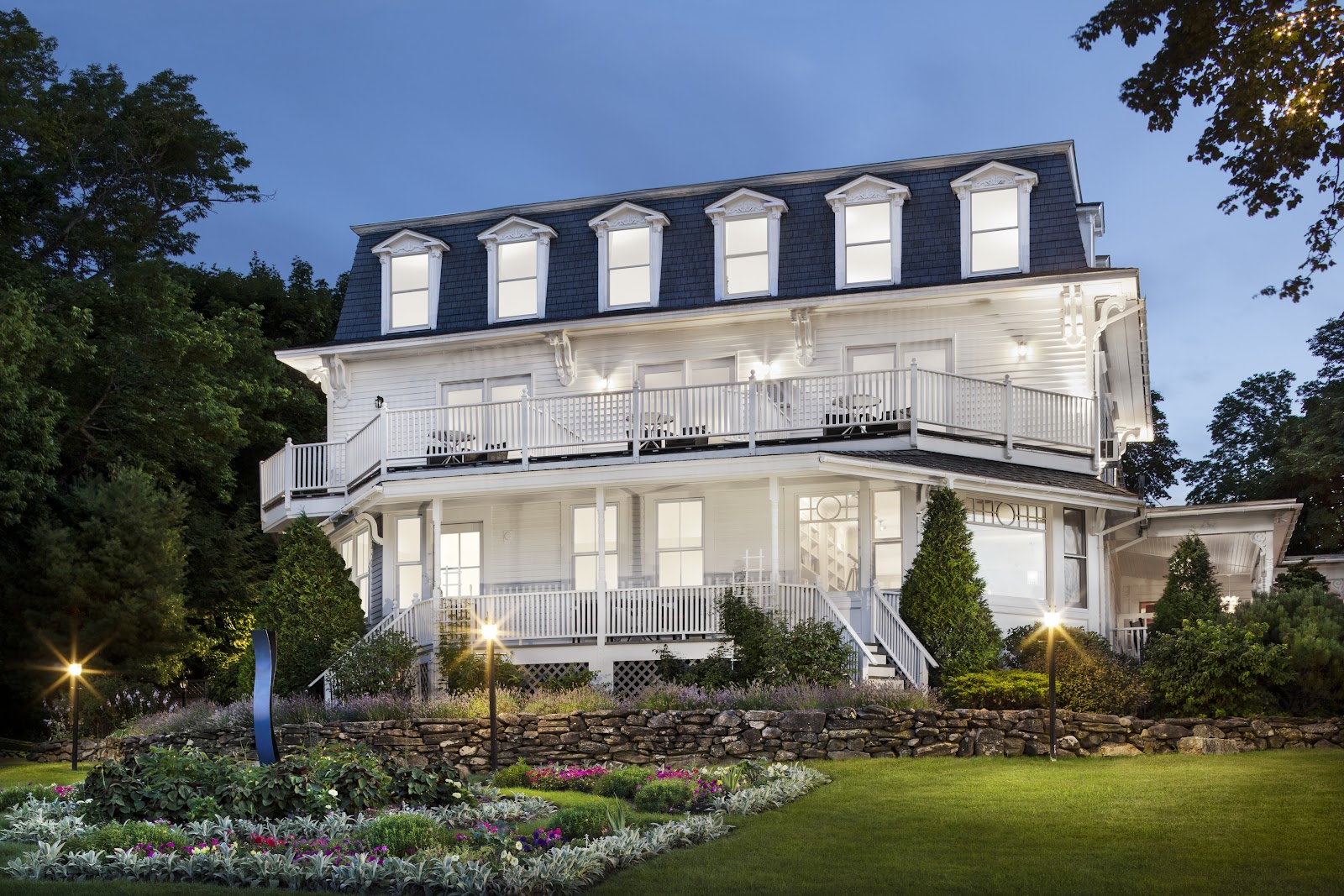
The building is a Victorian inn above the harbour, which means the interior character of a nineteenth-century house: tall narrow windows, moderate to generous ceilings, and finishes more likely to be decorative than plain.
Camden sits at about forty-four and a fifth degrees north. The June noon sun reaches around sixty-nine degrees, the December noon sun about twenty-two, days run from about eight hours forty-five to fifteen hours thirty-five, and civil twilight is around thirty-six minutes.
We have not photographed a wedding at this inn. Which rooms and grounds are included, what access there is to the harbour front, and what the permitted hours are, are questions for their team.
Camden Harbour Inn at a glance
| Where | A Victorian inn above Camden harbour on the Maine midcoast |
| The hills | High ground to the west takes the last direct sun early — plan on the ridgeline |
| The harbour | A working tidal anchorage: boats move with the tide and the wind |
| The tide | Around ten feet of range, twice a day |
| Ask first | Included rooms and grounds, harbour front access, permitted hours |
Morning into midday
The first hour belongs to the harbour and it is the one worth getting up for.
Camden’s harbour opens broadly to the east and south-east, which means the sun rises over the water — and on the Maine coast that is the reliable direction for a low sun over the sea. At first light the boats are lit from the front, the hills behind the town are still in their own shadow, and the harbour surface is unbroken because the air has not begun to move.
A calm working harbour at dawn is the most photogenic thing on this coast: a mirror holding masts, hulls and moorings, with the town behind it. The reflection rule applies — a reflection is about a stop darker than what it reflects, so compose so the reflection is of dark hulls and the wooded hillside rather than of the open sky, and the two sit within a stop and need nothing.
Mist on the harbour is common on warm mornings, because the Gulf of Maine’s water is cold enough that any warmer air over it condenses. Mist among masts with a low sun behind it is the frame that defines this coast.
Mid-morning is the best land portrait window before the evening. With the sun between twenty and forty degrees, faces have modelling rather than shadowed sockets and the ground has texture, and a group with the sun behind the camera at this hour needs nothing added.
It is also the right time for the inn’s exterior if the front faces east or south — a Victorian façade needs light raking across it to show its detail, because ornament, joinery, brackets and window surrounds read under shallow light and disappear under frontal light.
And it is the hour when the harbour’s colour is at its strongest. Painted hulls, buoys and trim on a working waterfront are the most saturated things on this coast, and with the sun high enough to light them and low enough to model them, mid-morning is when they read most strongly. A frame of a white dress against a stack of painted buoys or a red hull is a bold graphic picture that no inland venue can produce.
Midday is the hardest light of the day. At sixty-nine degrees of June elevation the sun puts eyes in shadow and foreheads in light, and a harbour front has little cover. The answers are architectural — doorways, porches, the shaded side of a building — and the spruce margins on the hillside.
Coastal Maine’s spruce and fir are the darkest natural background in the northeast: red spruce, white spruce and balsam fir hold dense evergreen canopies that block almost all light, so a subject a metre inside a spruce margin has soft directional light in front and three or four stops of near-blackness behind. On a waterfront where everything else is white paint, bright water and open sky, that is the only dark background available.
A doorway is the other midday answer and the best free setup anywhere: a subject a metre inside an open door is lit by the whole sky in front and backed by the dark interior — a giant softbox and a four or five stop black backdrop, in any weather.
Afternoon to dark, and inside
Early afternoon is the weakest window and the right time for the interiors.
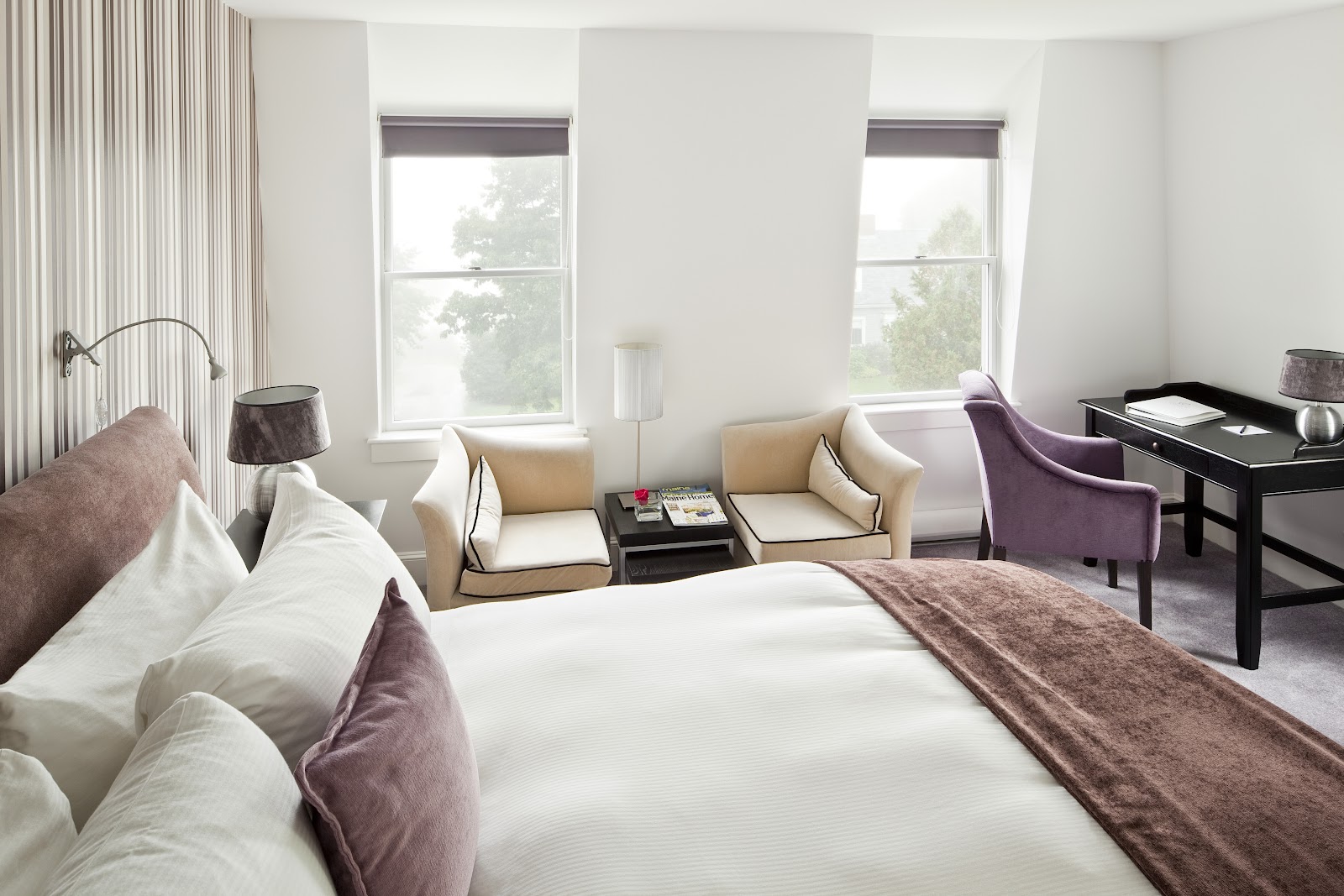
A Victorian inn has tall narrow windows and finishes that absorb more than they bounce, which means the light coming in is directional and the fall-off is fast — often three or four stops from a face at a window to the wall behind it. That does the separation for free: meter on skin and let the room go dark.
The method is to treat each window as a studio source. Subject at forty-five degrees to it, at a distance that sets the ratio, with the room falling away behind. Tall narrow windows in particular act as a soft strip light, which gives a long vertical gradient down a standing figure that a square window does not.
In a corner room with windows on two walls, one becomes key and the other fill — a complete lighting setup made of architecture. Corridors and stair halls are, as always, better than they look, and a Victorian stair with a balustrade and a landing window is one of the best interior structures in any building of the period.
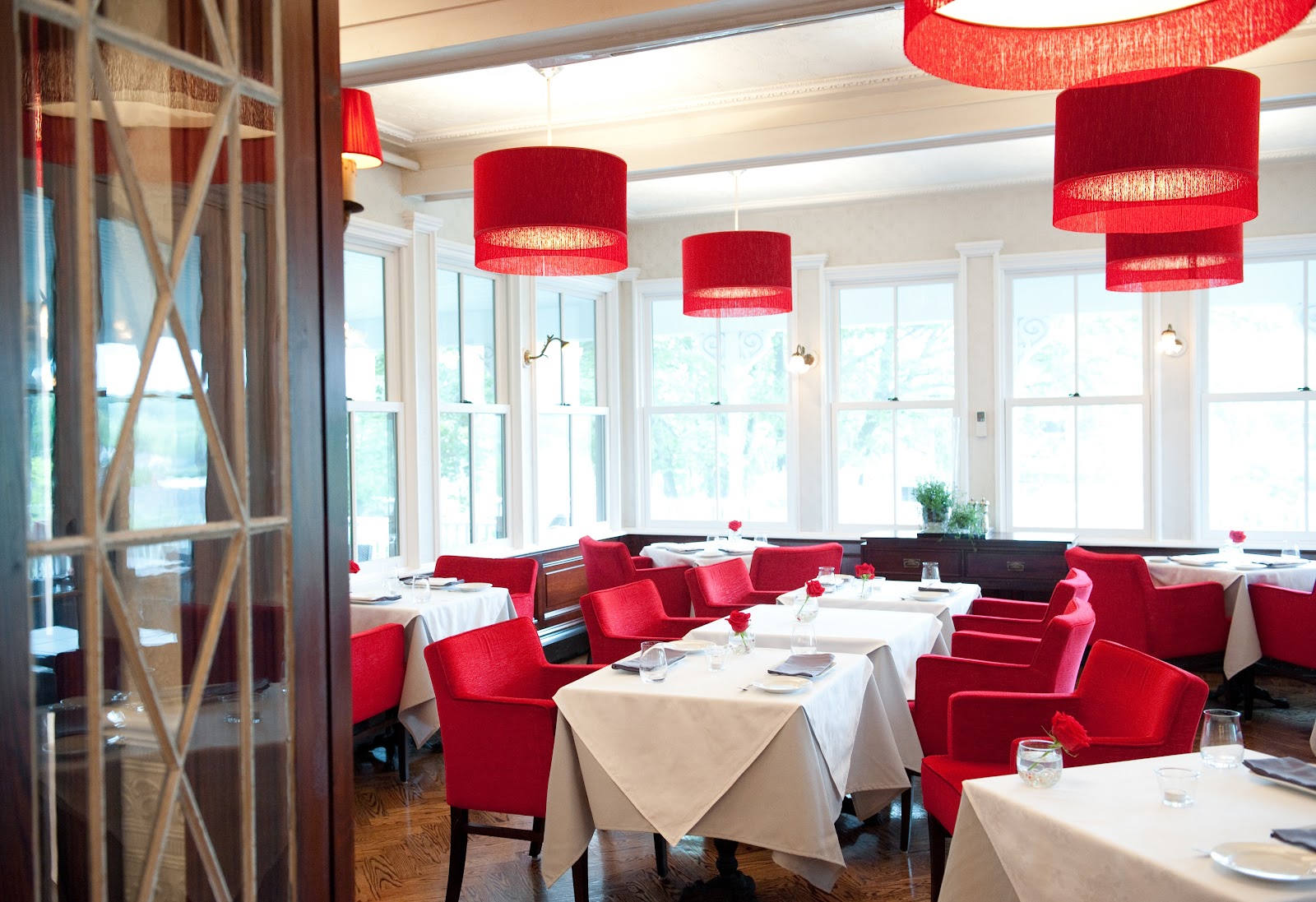
Where a room is pale and decorative the problem inverts to separation: everything is bright, so a subject needs something dark behind them or a source a stop over ambient. And decorative surfaces are busy, which means a subject placed against patterned wallpaper or ornamental plaster needs either enough separation to throw it out of focus or enough intent that it reads as setting.
Mid-afternoon the light comes round onto the harbour side and the property begins to improve — and this is where the hills matter. The ridge to the west will take the direct sun off the harbour front earlier than the published sunset, sometimes by half an hour or more depending on the season and the exact orientation.
The practical consequence is that the evening sequence has to be worked earlier than instinct suggests, and that the last direct light of the day is on the water and the far shore rather than on the near one. A frame with subjects in even shade on the harbour front and a brightly lit far shore or hillside behind them is the reliable version, and it is a good one — studio separation supplied by topography.
For actual low direct sun on faces, the answer is elevation: a position higher up the hillside gets the sun for longer than the waterfront does, and that is worth planning as a location change rather than discovering as a loss.
Then dusk, and at this latitude it is the most generous in this guide: around thirty-six minutes of civil twilight. Over a harbour that is a substantial working window, and it is when the site produces its best frame of the day.
A working harbour at blue hour is a field of lit points — mast lights, moored boats, the town’s windows and street lighting — over dark still water that doubles all of them. The crossing point applies: the sky and the lit town come within about a stop of each other for roughly ten minutes, and that crossing is the frame. Scouted in daylight, because ten minutes is not enough time to search.
The tide governs the whole waterfront and it is worth two minutes of preparation. At high water the harbour is full, the boats float level, the water reaches the built edge and every reflection frame works. At low water the edge has withdrawn, the intertidal is exposed as dark rockweed over barnacle and mussel, and in shallow berths boats may be sitting rather than floating — which is a different picture, and a good one if it is chosen.
Two practical notes. Salt aerosol settles on front elements within minutes on an exposed waterfront. And a harbour surrounded by hills funnels the wind in ways that are locally unpredictable, which makes a lightstand a liability and every source handheld or weighted.
- The calm harbour and the mist belong to the first hour
- Painted hulls and buoys are the most saturated things on this coast
- Plan the evening on the ridgeline, not the published sunset
- For low sun on faces, move up the hillside
- Thirty-six minutes of twilight — the most generous in this guide
The midcoast year
Four sharply separated seasons, governed by cold water and framed by hills.
Winter is austere and the light is the best of the year for everything except the hillside frames. The December noon sun at around twenty-two degrees means the whole short day rakes rather than floods, which is exactly what Victorian ornament, painted hulls and granite want.
A harbour in winter is emptier — many boats are hauled out — which changes the background substantially and is worth knowing: the frames that depend on masts and moorings are a seasonal proposition. What replaces them is bare water, ice at the sheltered margins, and a town that reads more clearly without a forest of rigging in front of it.
Snow is the best natural fill available, lifting shadows to within a stop and fooling a meter by about two, so open up deliberately. Snow on spruce above a slate harbour is the characteristic midcoast winter image. Sea smoke on a very cold still morning is the winter equivalent of summer’s fog and it is spectacular.
The costs are cold, an eight-hour-forty-five-minute day, wind at its worst, and hills that take the sun off the harbour very early indeed.
Spring is very late on this coast. The cold sea holds the air temperature down, so leaf-out on the midcoast runs into late May — April and early May are bare, grey and raw, and the harbour is at its emptiest before the season starts.
It is also the start of the fog season, because the air begins to warm while the water does not. Blackflies are severe inland from mid-May into June and much less troublesome on a breezy waterfront.
Summer is the season. Days are over fifteen and a half hours at the solstice with thirty-six minutes of civil twilight, the harbour is full of working boats and schooners, the hills are deep green, and the light at both ends of the day is excellent.
The costs are fog at its most frequent in June and July, the middle of the day, and crowds — Camden in high summer is busy, which means a frame that reads as an uncrowded waterfront usually needs early morning. Lupines flower along this coast in mid to late June.
Early autumn is the strongest window and on the midcoast it is exceptional, because this is the one part of the Maine coast where the hills give the colour somewhere to be.
September brings drier, clearer air, the end of the fog season, a sea at its warmest of the year and thinning crowds. The colour arrives on the midcoast in the first half of October — earlier than the southern coast because this is further north, and higher up the hillside earlier still, which means for a week or two there is colour on the ridge and green below it.
Red maple scarlet, birch yellow and oak russet on a wooded hillside above a working harbour, with near-black spruce between them and the whole thing doubled in still water at dawn, is the best photograph this coast produces. The window is about two weeks.
November strips it to structure — bare hardwood, black spruce, slate water, a very low sun all day — and the harbour empties. It photographs austerely and extremely well.
More frames from Camden Harbour Inn
Camden Harbour Inn wedding photography: common questions
What do the hills change?
They take the last direct sun off the harbour front well before the published sunset, and they give a wooded backdrop no other Maine harbour has.
Where should I be for low sun on faces?
Higher up the hillside. The waterfront loses the sun first, so treat the elevation gain as a planned location change.
When is the harbour a mirror?
The first hour after sunrise, before the air begins to move. Mist over the water is common then too, because the sea is colder than the air.
How do I expose a harbour reflection?
Compose so the reflection is of dark hulls and the wooded hillside rather than of open sky. A reflection runs about a stop darker than what it reflects.
Does the tide matter?
Around ten feet of range here, twice a day. At high water everything floats level and reflects; at low water the edge withdraws and boats may be sitting on the bottom.
When is the midcoast at its best?
The first half of October, when colour arrives on the hillside above the harbour — and it comes earlier on the ridge than at sea level.
More Maine venue guides
We are writing a photographer’s guide to every venue we would happily shoot in Maine. Here are three more, plus the full index:
- The Cliff House, Cape Neddick: The Problem and Four Ways Out of It
- Hidden Pond, Kennebunkport: What It Suits and What It Does Not
- Norumbega Inn, Camden: A Walk Through the Site
Planning a wedding at Camden Harbour Inn?
A harbour, a hill and a tide. Tell us your date and we will plan the ridgeline.