 The Portland Regency: A Season-by-Season Guide
Bug Light Park, South Portland: The One Decision That Governs Everything
The lighthouse here is small. What you do about that is the whole decision.
The lighthouse at Bug Light Park is small, and that single fact is the decision every frame here turns on.
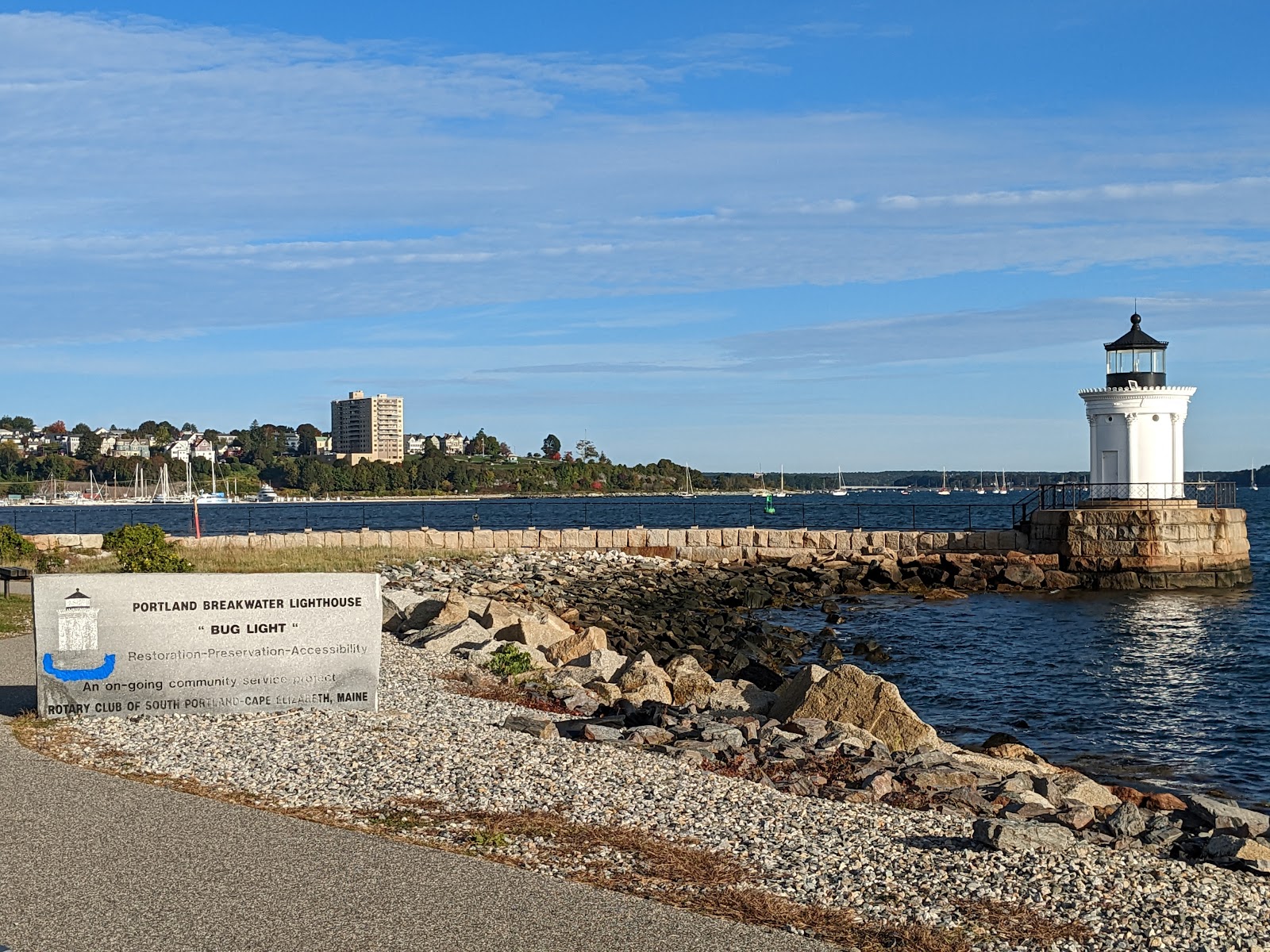
Most lighthouses are tall. This one is not: it is a low, ornate cast-iron structure at the end of a breakwater — modelled on a classical monument, with columns around its base — and it stands perhaps a couple of storeys high rather than the ten or twelve of a headland tower. Its nickname comes from its size.
That changes the photographic problem completely. At a tall lighthouse the question is how to fit it in the frame with the people at a reasonable size. Here the question is the reverse: the building is small enough that a couple standing near it are comparable in scale, and a frame containing both reads as two people and a small ornate object rather than as two people beneath a landmark.
So the decision is which scale to work at, and there are three coherent answers.
Close, with the building as an architectural element: the columns, the ironwork, the detail, used as a background or a frame at portrait distance. At this range the structure is elaborate and interesting and its size is irrelevant, because none of the frame is about how tall it is.
Matched, with the couple and the building at similar scale in one frame: which works precisely because it is unusual. Two people standing beside a small ornate lighthouse is a picture with a wit to it, and it is the frame that no tall lighthouse can produce.
Or distant, with the building as a silhouette on the breakwater and the subjects small or absent: which is where the site’s real asset comes in, because across the water from here is the Portland skyline and the working harbour, and at a distance the lighthouse becomes a foreground element in a much larger picture.
The failure is the middle distance without a choice — a couple ten metres from a small building, both awkwardly sized in the frame, with the skyline too far away to read.
South Portland sits at about forty-three and a half degrees north. The June noon sun reaches around seventy degrees, the December noon sun about twenty-three, days run from about eight hours fifty-five to fifteen hours twenty, and civil twilight is around thirty-four minutes.
We have not photographed a wedding here. Whether ceremonies are permitted, what permit is required, which areas may be used and what the hours are, are questions for the city — and at a public park those are rules rather than preferences.
Bug Light Park at a glance
| Where | A small ornate lighthouse and waterfront park at South Portland, Casco Bay |
| The decision | Which scale: close and architectural, matched, or distant with the skyline |
| Close | The columns and ironwork at portrait distance — size becomes irrelevant |
| Distant | A silhouette on the breakwater, with the Portland skyline beyond |
| Ask first | Permits, permitted areas, group limits and hours — public park rules |
Working the three scales
Close, the building is a set of architectural details and the most useful of them are the columns. A colonnade at any size is a rhythm of verticals with light and shade between them, and a subject placed in an intercolumniation is framed by the structure.
Because the building is small, the columns are close together and close to the subject, which makes the framing tighter and more emphatic than the same device at a large building — and it means a camera has to be close, which in turn means a wider lens and care about distortion at the frame edges.
The ironwork is the other close subject. Cast iron holds fine detail, and painted cast iron under raking light shows every moulding, bolt and edge; under flat light it reads as a smooth pale field. That makes the close frames a first-or-last-hour proposition, and worth timing.
The paint colour decides the approach. A white-painted structure is a large neutral reflector at close range, which fills faces from the side generously and neutrally — the most flattering free light available. It also fools a meter by about a stop in any frame containing much of it, and it has almost no silhouette against a pale overcast sky.
Matched, the frame is about the relationship between two people and one small object, and it needs three things. Distance enough that the whole building is in shot with room around it. A camera height at or slightly below the subjects’ eye level, so the building is not looked down on. And a background that is either sea and sky or the skyline, so that the frame is clean enough for the comparison to read.
This is the frame that makes the site distinctive and it is worth taking properly rather than incidentally.
Distant, the picture becomes a waterfront landscape and the lighthouse becomes a foreground element. Across the water are the Portland skyline and a working harbour — moored boats, shipping, and the far shore’s buildings — which is a background with genuine content.
The technique is compression. A moderate telephoto brings the skyline forward so it reads at something closer to the scale the eye perceives, and stacks it behind the lighthouse and the breakwater. A wide lens renders the far shore at its true angular size, which is small, and gives a frame that is mostly water and sky with a thin band of city in it.
The exposure in a skyline frame depends on the hour. In daylight the city and the water sit within a stop or two and nothing is difficult. At dusk the crossing point is the frame: the sky and the city’s lights come within about a stop of each other for roughly ten minutes, and that is when a lit skyline over dark water with a silhouetted lighthouse in front of it balances by itself.
At this latitude civil twilight runs about thirty-four minutes, which is generous by the standards of the southern half of this guide, but the crossing itself is still roughly ten minutes — planned in advance, with the camera position scouted in daylight.
And the skyline frame depends on air clarity, which on this coast is best in September and October and worst in the humid heart of summer.
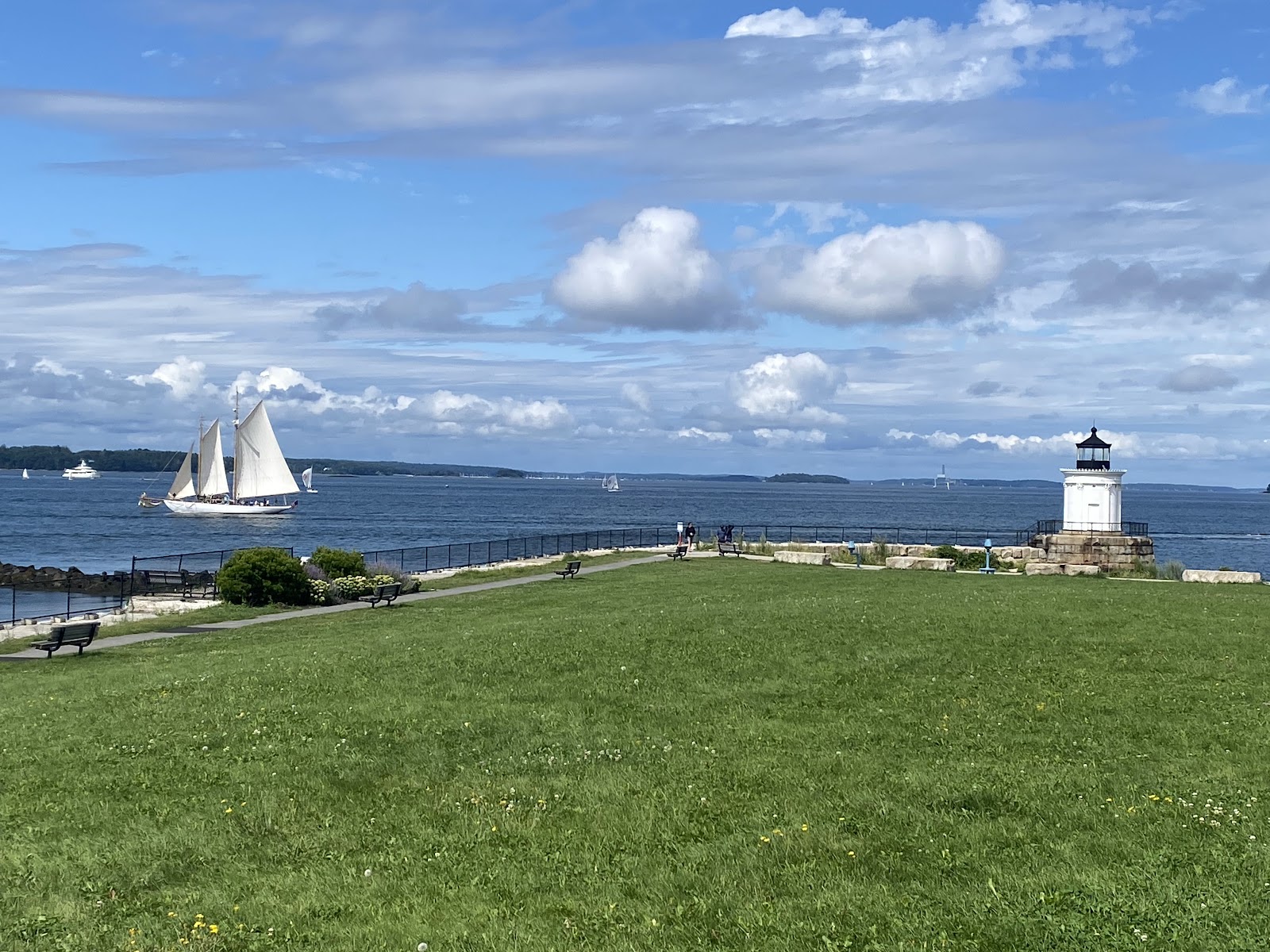
The park, the tide and the water
The park itself is the second environment and it is more useful for a wedding than the lighthouse.
Open grass on a waterfront point is level, clean and generous, which is what a group photograph needs, and the water on more than one side means a choice of background at any hour. The requirement, as always, is everyone in the same light — full open shade, full overcast, or full sun with the sun behind the camera.
The midday problem applies as everywhere: at seventy degrees of June elevation the sun puts eyes in shadow and foreheads in light, and a waterfront park has limited cover. The answers are any planted margin, the lighthouse’s own shaded side, and the structures.
The trees at a Maine waterfront park are likely to include coastal spruce and fir, and those are the darkest natural background in the northeast. A subject standing a metre inside a spruce margin has soft directional light in front and three or four stops of near-blackness behind — which on a site dominated by white paint, bright water and open sky is disproportionately valuable.
The site’s industrial history is worth a note, because it shows and it is usable. This stretch of the South Portland waterfront was a shipbuilding yard, and remnants of that — concrete ways, pilings, hard edges — are part of the ground. Concrete is the most colour-neutral background in this guide, and a piece of weathered industrial concrete beside a white ornate lighthouse is a contrast worth using deliberately rather than avoiding.
The tide governs the shoreline, and on this coast that is a substantial variable: around nine feet of range at Portland, two highs and two lows a day. At high water the sea reaches the edge and a waterfront frame is clean; at low water there is an exposed intertidal zone banded with dark brown rockweed over barnacle and mussel.
That band is an excellent dark foreground and a genuinely slippery surface, which means photographing it from dry ground with a longer lens rather than standing in it. Looking up the tide is a two-minute job that decides what a shoreline frame looks like.
It also decides the boats. In a tidal harbour, moored boats swing with the current and, in shallow berths, sit differently at low water than at high — which changes a working-harbour background across an afternoon in ways that are worth anticipating.
The water’s colour is worth knowing. Casco Bay is cold, nutrient-rich water that reads deep blue-grey to slate rather than clear blue, taking its colour largely from the sky — which makes it a darker element in a frame than most water, and a good one under white paint and a pale sky.
The cold water also produces the coast’s characteristic weather: sea fog, formed when warm humid air moves over water this cold, most frequent in June and July and capable of arriving within half an hour.
For this site fog does something specific: it removes the skyline entirely, which takes away the distant frame and leaves the close and matched ones intact. That is a useful thing to know in advance, because it means a foggy day here loses one third of the plan rather than all of it.
Two practical matters. Salt aerosol settles on front elements within minutes on an exposed waterfront. And onshore wind on a point is close to constant, which makes a lightstand a liability and means every source is handheld or weighted.
- Choose the scale before the frame: close, matched, or distant with the skyline
- Cast-iron detail needs raking light; under flat light it is a smooth pale field
- Compress the skyline with a moderate telephoto — wide makes it a thin band
- Look up the tide: nine feet changes the shoreline and the moored boats
- Fog removes the skyline frame and leaves the other two intact
The Casco Bay year
Four sharply separated seasons, all governed by water colder than the land.
Winter is austere and, for the close and matched frames, the best light of the year. The December noon sun at around twenty-three degrees means the whole short day rakes rather than floods — which is exactly what cast-iron mouldings and concrete want, and which means the detail reads all afternoon rather than for twenty minutes.
The sea runs slate to near-black, and a white ornate structure against a low winter sun and a deep blue sky is the cleanest version of the matched frame there is. Snow covers the grass and the industrial ground, which removes the park’s visual clutter and gives the best natural fill available — lifting shadows to within a stop and fooling a meter by about two, so open up deliberately.
Winter also brings the earliest dusk: sunset just after four in December, which puts the skyline crossing point at around half past four rather than after nine. For an evening reception that lands the dusk sequence before the event rather than in the middle of it.
Sea smoke — steam fog rising off relatively warm water on a very cold still morning — is the winter equivalent of summer’s fog, and it does the same thing to the skyline.
The costs are cold, an eight-hour-fifty-five-minute day, and wind that is worse in winter than in any other season.
Spring is late on this coast because the cold sea holds the air temperature down, and it is the weak window. April is bare and grey; May improves and brings the start of the fog season as the air warms while the water does not.
Summer is the season and the days are very long: over fifteen hours at the solstice with about thirty-four minutes of civil twilight, which gives an unhurried evening. The grass is green, the harbour is busy, and the light at both ends of the day is excellent.
The costs are fog at its most frequent in June and July, humidity haze that softens the skyline, the middle of the day, and visitor traffic at a popular waterfront park. The skyline frame is at its weakest in July for the haze alone.
Early autumn is the strongest window and it is the skyline’s season. September brings drier, clearer air than August, the end of the fog season, and the clearest views across the bay of the year — which is precisely what the distant frame depends on. Crowds thin, and the sea is at its warmest so the light over it is stable.
Mid-October brings the coastal colour, two to three weeks behind inland Maine because the sea delays it: red maple scarlet, birch yellow and oak russet against near-black spruce. Against white cast iron and grey concrete, that warm palette is the strongest combination the site offers.
By November the trees are bare, the sun is very low all day, the air is at its clearest of the year, and the dusk skyline crossing arrives at a civilised hour — which makes late autumn quietly the best time here for the frame the site is really about.
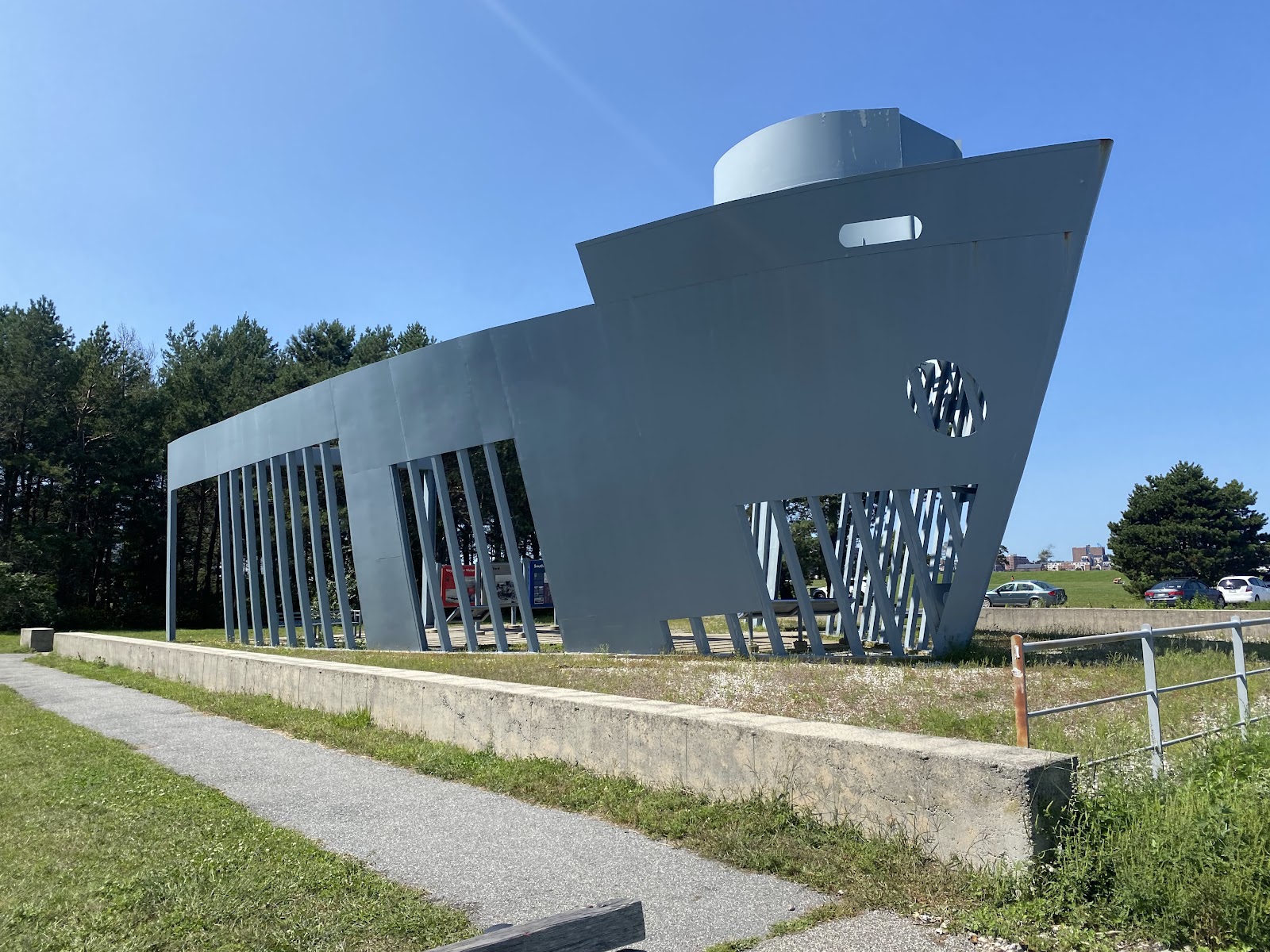
More frames from Bug Light Park
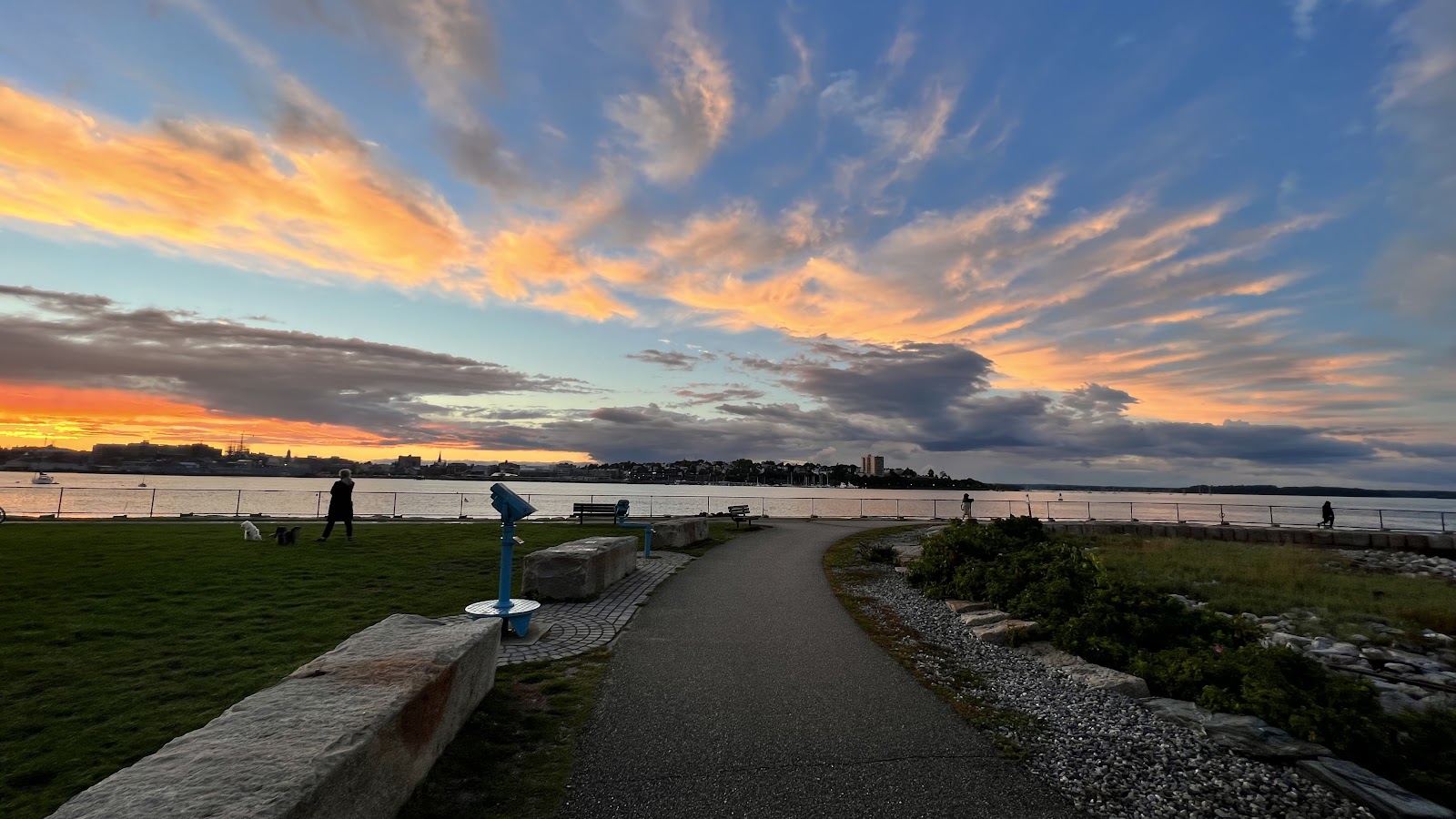
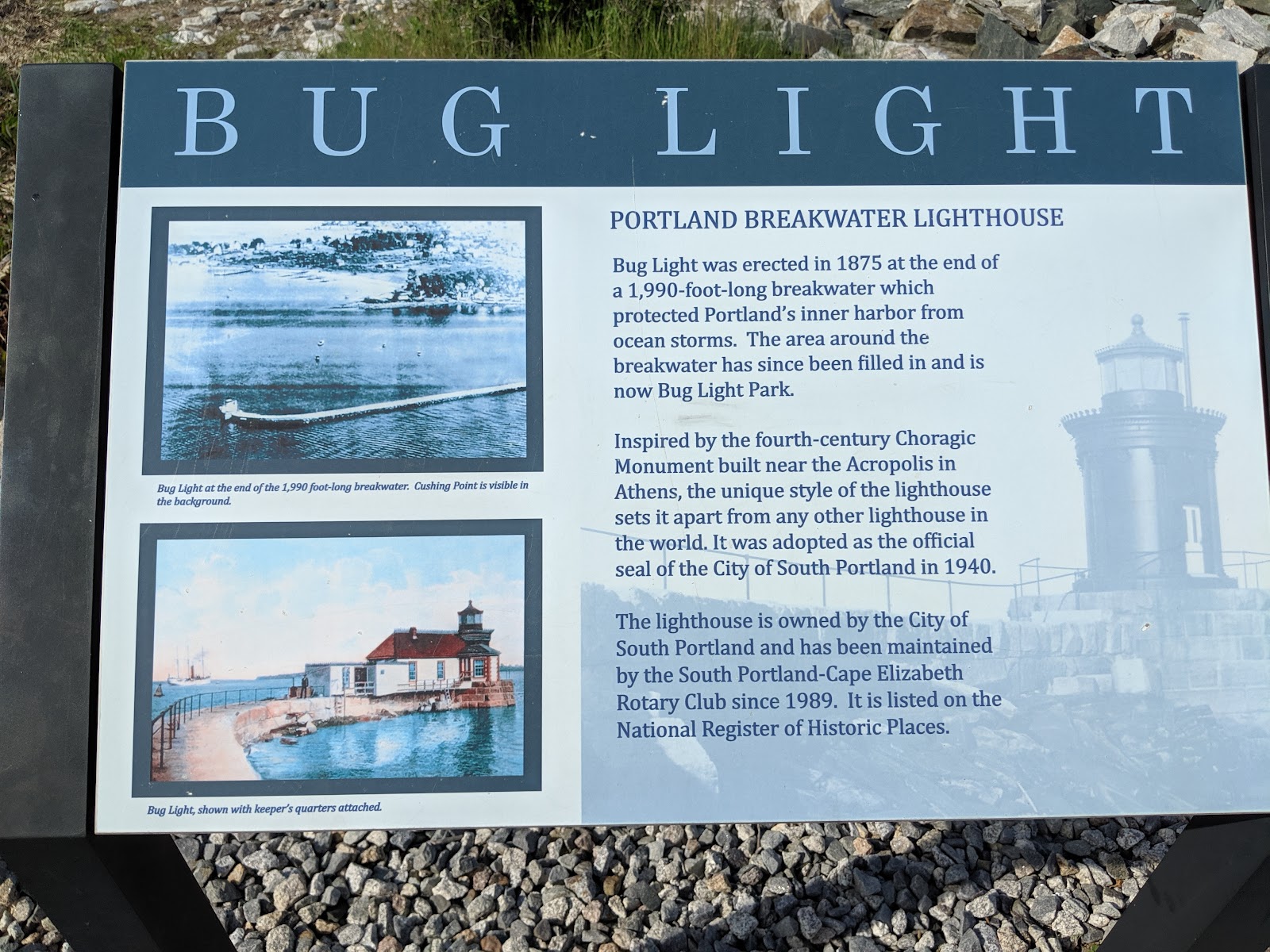
Bug Light Park wedding photography: common questions
Why does the lighthouse's size matter?
It is only a couple of storeys high, so a couple standing beside it are comparable in scale. That inverts the usual problem of fitting a tall tower into a frame.
What are the three scales?
Close, using the columns and ironwork as architecture; matched, with the couple and the building at similar scale; and distant, with the Portland skyline behind.
Which is the distinctive frame?
The matched one. Two people beside a small ornate lighthouse is a picture no tall lighthouse can produce.
What lens for the skyline?
A moderate telephoto. A wide lens renders the far shore at its true angular size, which gives a frame that is mostly water and sky.
What does fog do here?
It removes the skyline and takes away the distant frame, leaving the close and matched ones intact. A foggy day loses a third of the plan, not all of it.
When is the site at its best?
September and October, for the clearest air across the bay — and late autumn, when the dusk skyline crossing arrives before five in the afternoon.
More Maine venue guides
We are writing a photographer’s guide to every venue we would happily shoot in Maine. Here are three more, plus the full index:
- Camden Harbour Inn, Camden: How the Light Moves Over a Working Harbour
- The Cliff House, Cape Neddick: The Problem and Four Ways Out of It
- Hidden Pond, Kennebunkport: What It Suits and What It Does Not
Planning a wedding at Bug Light Park?
Three scales, and one of them is right for you. Tell us your date.