 The Portland Regency: A Season-by-Season Guide
Boothbay Harbor Inn, Maine: The Problem and Four Ways Out of It
A working waterfront is a background with too much in it. Four ways to deal with that.
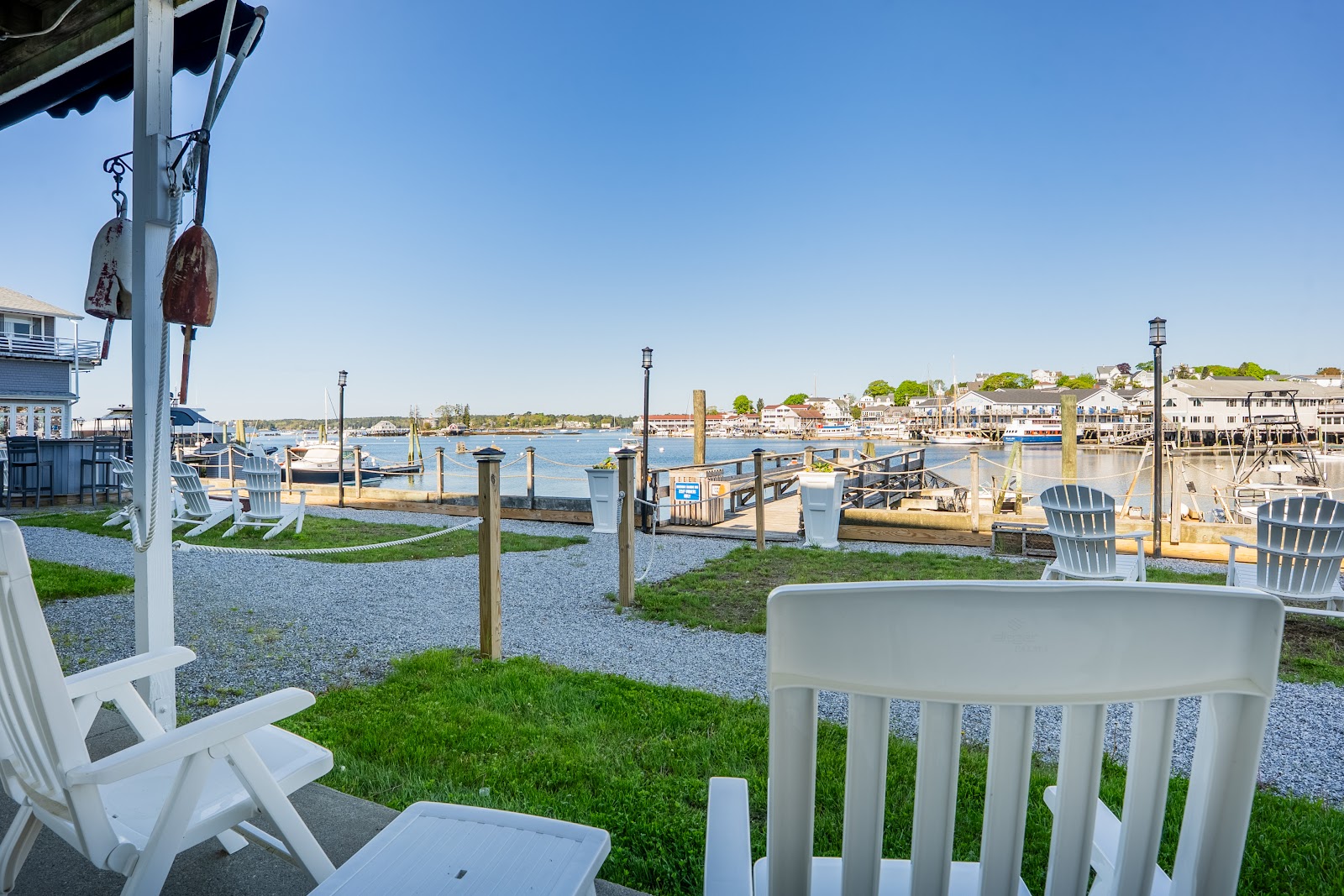
A working harbour is a wonderful place to photograph and a difficult background, and the difficulty is worth naming rather than discovering.
The problem is density. A harbour front contains moored boats, masts, rigging, mooring buoys, floats, gear, painted hulls, wharves, pilings, the town’s buildings, parked vehicles, signage, and — in season — a great many other people. Every one of those is a legitimate part of the place, and all of them together are a background with too much in it.
The consequence is the frame that happens by default: a couple at conversational distance with a partly visible boat, a corner of building, a mast and two strangers behind them, none of it legible and none of it chosen. That photograph is about nothing in particular.
A second problem stacks on the first, which is movement. Boats swing with the tide and the wind, and the tide here runs around ten feet twice a day — which means the arrangement behind a subject changes across an afternoon and is never exactly repeatable. A composition set up twenty minutes ago has moved.
And a third, which is that the harbour front is public. An inn on a working waterfront does not control the view, which means a frame that reads as private has to be composed to exclude what is beside it.
Those problems have four distinct solutions and each produces a different photograph. Choosing among them deliberately, rather than photographing whatever is behind the couple, is the whole job at a venue like this.
Boothbay Harbor sits at about forty-three and five-sixths degrees north on the Maine midcoast. The June noon sun reaches around sixty-nine and a half degrees, the December noon sun about twenty-two and a half, days run from about eight hours fifty to fifteen hours twenty-five, and civil twilight is around thirty-five minutes.
We have not photographed a wedding at this inn. Which spaces and grounds are included, what access there is to the waterfront and any float or dock, and what the permitted hours are, are questions for their team.
Boothbay Harbor Inn at a glance
| Where | An inn on the working waterfront at Boothbay Harbor, Maine |
| The problem | A background full of boats, gear, buildings and other people — all of it legitimate |
| Four ways out | Commit to one element; compress; go close; or wait for the light to simplify it |
| The complication | A ten-foot tide, so boats and the water’s edge move all day |
| Ask first | Included grounds, waterfront and dock access, permitted hours |
The first two ways out
The first way out is to commit to one element, which means choosing a single strong object and building the frame around it rather than letting five compete.
A harbour is full of candidates and the best of them are the painted ones. Hulls, buoys and trim on a working waterfront are the most saturated things on this coast — often the only strong colour in a landscape of grey granite, black spruce and slate water — and a single red hull, or a stack of painted buoys, behind a white dress is a bold graphic picture that no inland venue can produce.
The requirement is that the object is whole and unambiguous, and that nothing else of comparable strength is in the frame. A subject beside a stack of buoys with a mast, a truck and a shopfront also visible is back to the default frame; the same subject with the buoys filling the background and nothing else is a photograph.
The other strong elements are the pilings, which are vertical, dark and weathered; the floats and gangways, which are lines; and the working gear — traps, coils, crates — which are texture. Each works the same way: fully included and deliberately placed, or excluded.
The second way out is compression. A longer focal length does three things at once on a busy waterfront: it narrows the field so fewer elements are in frame, it throws the background out of focus so what remains reads as tone rather than as objects, and it makes the far shore or the town read at something closer to the scale the eye perceives.
That last effect is the one that is usually underrated. A wide frame across a harbour renders the far shore at its true angular size, which is small, and gives a picture that is mostly water and sky with a thin band of town in it. A moderate telephoto stacks the far shore, the boats and the subjects into layers, which is a far stronger picture and it also removes everything to the sides.
A long lens also solves the public-place problem more elegantly than anything else. Other people thirty metres away become a soft texture rather than a group of identifiable strangers, and the frame reads as uncrowded without anybody having to be asked to move.
The technical cost of compression is working distance: the camera has to be a long way back, which on a waterfront means finding a position with that distance available and a clean line between camera and subjects. Establishing where those positions are on arrival is worth five minutes.
And a note on the tide, which interacts with both of these solutions. At high water the boats float level and high, which puts hulls and painted topsides at a useful height behind standing subjects. At low water they sit lower — and in shallow berths may be resting on the bottom, tilted — which changes the background substantially and is worth anticipating rather than discovering. Looking up the tide takes two minutes.
The second two, and the rest of it
The third way out is to go close, and it is the most reliable of the four because it does not depend on anything.
At portrait distance with a shallow depth of field, the background ceases to be a problem: it becomes a field of soft tone and colour, and the harbour’s visual density turns from a liability into an advantage, because a busy background thrown well out of focus is more interesting than a plain one.
The close frames also suit the material. A working waterfront has texture everywhere at small scale — weathered timber, rope, painted metal, rust, barnacled piling — and a close frame of a hand on a rope, or a subject against a section of peeling paint, is specific to the place in a way a wide harbour view is not.
Two or three close abstract frames in a set are worth more than two or three more wide views, and at a venue like this they are easy to find.
The fourth way out is to wait for the light to simplify the scene, and on this coast it does so in two ways.
Low sun simplifies by contrast. At the ends of the day the difference between lit and unlit parts of a harbour is several stops, which means most of the clutter falls into shadow and only the lit elements read. A harbour at the last hour is a much simpler picture than the same harbour at noon — a few bright hulls, a lit mast, a strip of water, and everything else dark.
Fog simplifies by removing. Sea fog forms because the Gulf of Maine is cold, and on this coast it is frequent in June and July. In fog a harbour loses its background entirely: the far shore goes, the town goes, the further boats go, and what remains is the nearest two or three objects in soft even light against white.
That is the cleanest this venue ever looks, and it is worth saying that fog is a gift at a cluttered venue in a way it is not at a scenic one. A foggy day here removes the problem this page is about.
Blue hour does the third version of the same thing. A working harbour at dusk becomes a field of lit points — mast lights, boat windows, the town’s lighting — over dark still water that doubles all of them, with everything unlit invisible. The crossing point applies: the sky and the lit town come within about a stop of each other for roughly ten minutes, and at this latitude civil twilight runs a generous thirty-five minutes around it.
That frame is the best the site produces and it needs the camera position scouted in daylight, because ten minutes is not enough time to search.
The rest of the property follows the standard Maine coastal pattern. The midday problem is real — at nearly seventy degrees of June elevation the sun puts eyes in shadow and foreheads in light, and a waterfront has little cover — and the answers are architectural: a doorway is the best free setup anywhere, giving the whole sky as a softbox and the dark interior as a four or five stop backdrop.
Coastal spruce inland of the shore is the only dark natural background: a subject a metre inside a spruce margin has soft directional light in front and three or four stops of near-blackness behind. Granite is the local stone, low in saturation and spectacular under raking light. And white-painted clapboard, which is what most of this coast is built of, is a substantial neutral reflector that fills faces generously — and fools a meter by about a stop.
Two practical matters. Salt aerosol settles on front elements within minutes on a waterfront. And a harbour funnels wind locally and unpredictably, which makes a lightstand a liability.
- Commit to one strong element — a painted hull, a stack of buoys — and exclude the rest
- Compress: a long lens narrows the field and turns strangers into texture
- Go close and let a busy background become soft tone
- Low sun and fog both simplify a harbour; fog does it completely
- Look up the tide — boats float high at one end of it and sit low at the other
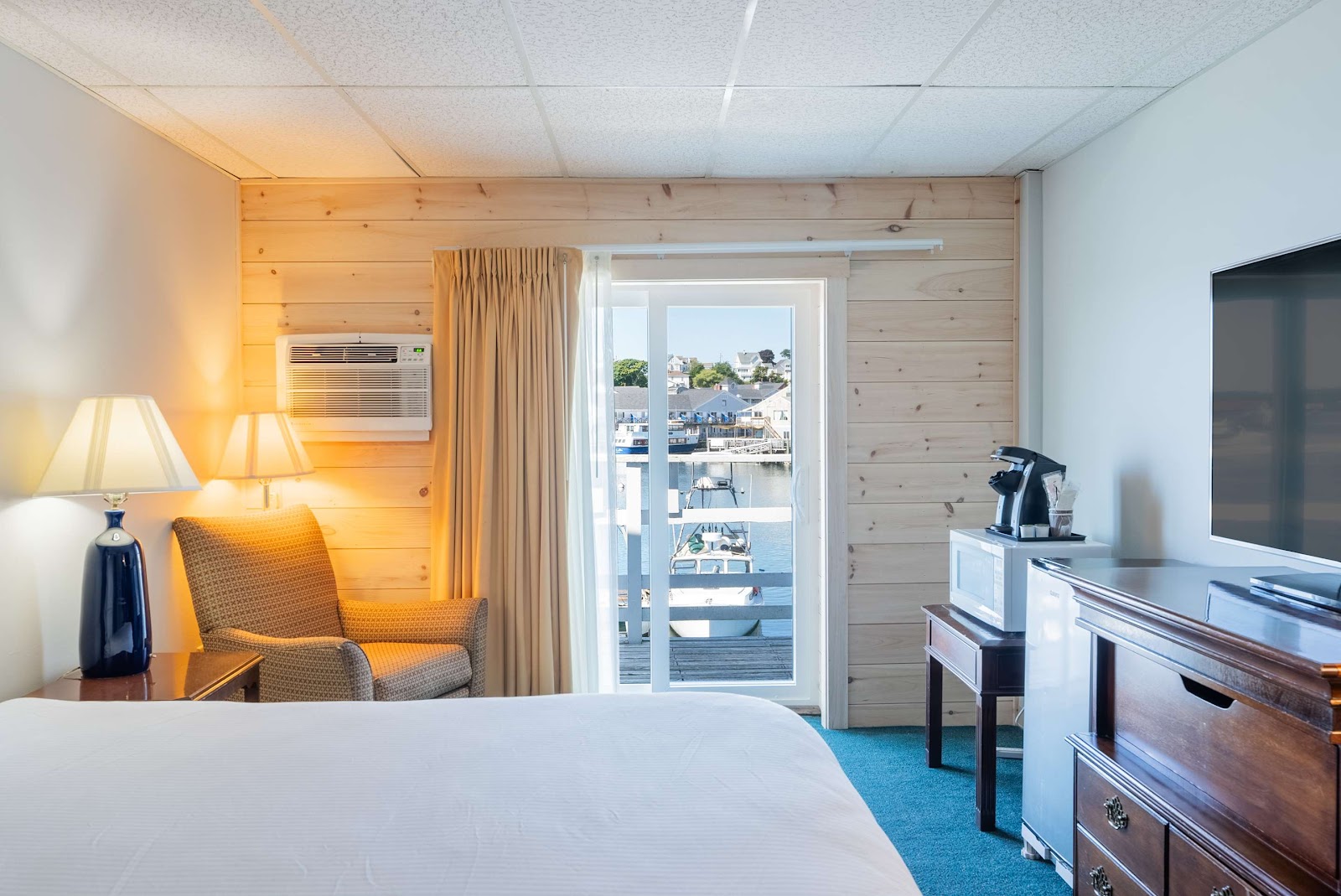
The midcoast year
Four sharply separated seasons, and a harbour whose content changes with them as much as its light does.
Winter empties it. Many boats are hauled out, the working gear is stowed, and the moorings are bare — which removes most of the clutter this page is about and leaves the town, the wharves and the water. For a photographer that is a substantial simplification, and it makes winter the cleanest the harbour looks all year.
The December noon sun at around twenty-two and a half degrees means the whole short day rakes rather than floods, which is exactly what weathered timber, granite and white clapboard want. Ice forms at the sheltered margins. Snow covers the wharves and the ground, which removes the remaining visual noise and gives the best natural fill available — lifting shadows to within a stop and fooling a meter by about two, so open up deliberately.
Winter also brings the earliest dusk: sunset just after four in December, which puts the blue-hour harbour crossing at around half past four rather than after nine. For an evening reception that lands the best frame of the day before the event rather than in the middle of it.
Sea smoke on a very cold still morning is spectacular and it does what fog does: it removes the background entirely.
The costs are cold, an eight-hour-fifty-minute day, and wind at its worst of the year.
Spring is very late on this coast because the cold sea holds the air temperature down. April and early May are bare, grey and raw, and the harbour is still largely empty before the season starts — which keeps the simplification and removes the light.
It is also the start of the fog season, as the air warms while the water does not, and blackflies are severe inland from mid-May into June.
Summer is the season and the harbour is at its fullest — which means at its most cluttered and at its most alive. Days are over fifteen and a half hours at the solstice with thirty-five minutes of civil twilight, which gives a generous evening and a sunrise before half past five.
The costs are the crowds, which on the midcoast in July and August are substantial and which make the compression and close-frame solutions essential rather than optional; summer haze, which softens the far shore; the middle of the day; and fog at its most frequent in June and July — which, as argued above, is a help rather than a hindrance here.
Lupines flower along this coast in mid to late June.
Early autumn is the strongest window. September brings drier, clearer air than August, the end of the fog season, thinning crowds, a sea at its warmest of the year so the light over it is stable, and a harbour that is still working but no longer full of visitors.
The colour arrives on the midcoast in the first half of October, two to three weeks behind inland Maine: red maple scarlet, birch yellow and oak russet against near-black spruce and grey granite. On a harbour front that colour appears on the hillsides and headlands around the water rather than on the wharves themselves, which makes it a background resource — and a warm one against a slate harbour and white clapboard, which is the strongest combination of the year.
November empties the harbour again, the sun is very low all day, the air is at its clearest, and the dusk crossing arrives at a civilised hour. It is quietly the best time here for the frame the site is really about.
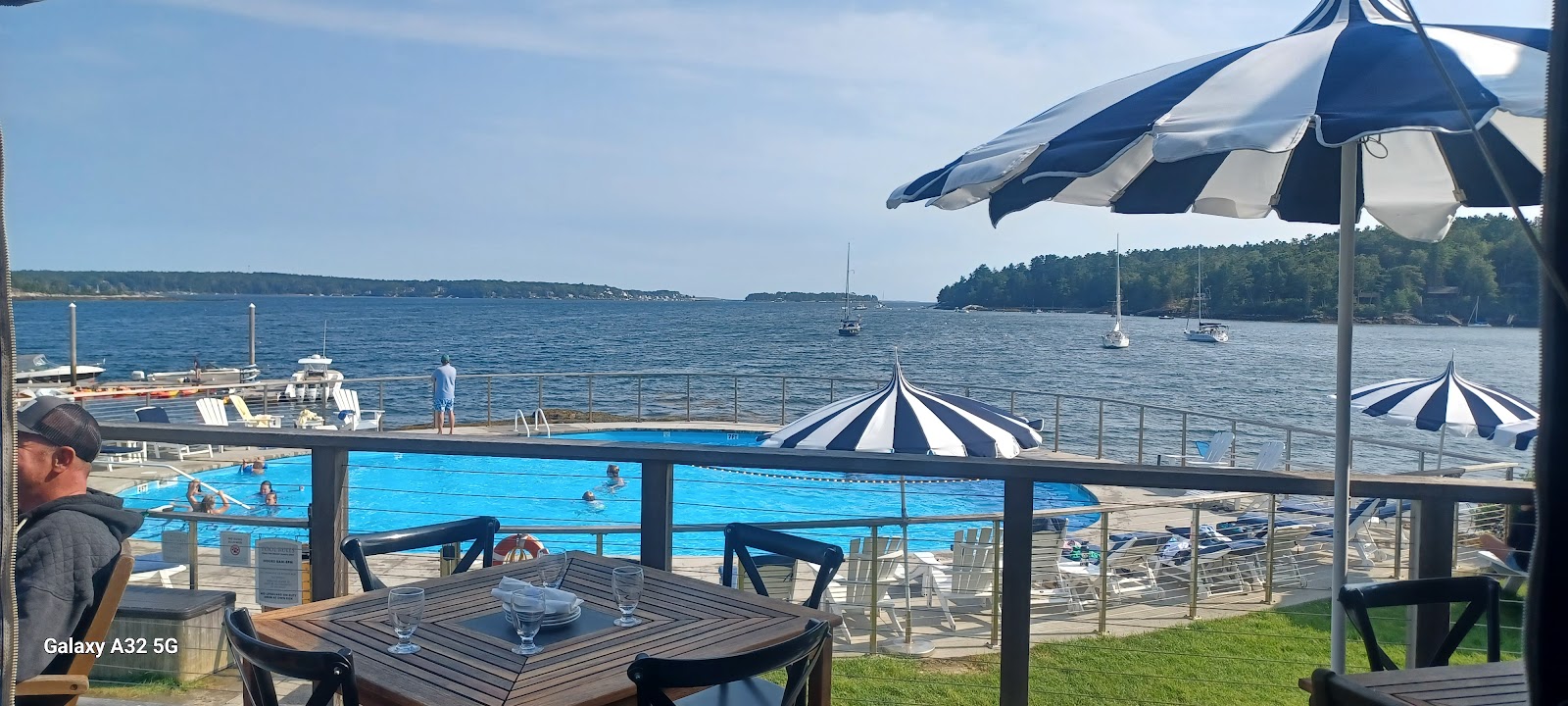
More frames from Boothbay Harbor Inn
Boothbay Harbor Inn wedding photography: common questions
What is the problem with a working harbour?
Density. Boats, masts, gear, buildings, vehicles and other people are all legitimate parts of the place and all of them together are a background with too much in it.
What is the most reliable solution?
Go close with a shallow depth of field. A busy background thrown well out of focus is more interesting than a plain one.
Why use a long lens?
It narrows the field, throws the background to tone, stacks the far shore into readable layers, and turns strangers thirty metres away into soft texture.
Is fog a problem here?
It is a gift. It removes the background entirely and leaves the nearest two or three objects in soft even light — the cleanest this venue ever looks.
What is the best frame of the day?
Blue hour: a harbour becomes a field of lit points over dark water, with everything unlit invisible. Scout the camera position in daylight.
When is the harbour at its cleanest?
Winter and November, when the boats are hauled out and the gear is stowed — and the dusk crossing arrives before five in the afternoon.
More Maine venue guides
We are writing a photographer’s guide to every venue we would happily shoot in Maine. Here are three more, plus the full index:
- Bug Light Park, South Portland: The One Decision That Governs Everything
- Camden Harbour Inn, Camden: How the Light Moves Over a Working Harbour
- The Cliff House, Cape Neddick: The Problem and Four Ways Out of It
Planning a wedding at Boothbay Harbor Inn?
Four ways to simplify a crowded harbour. Tell us your date.