 The Ozark Mountain Lodge, Eureka Springs: The Problem, and Four Ways Out
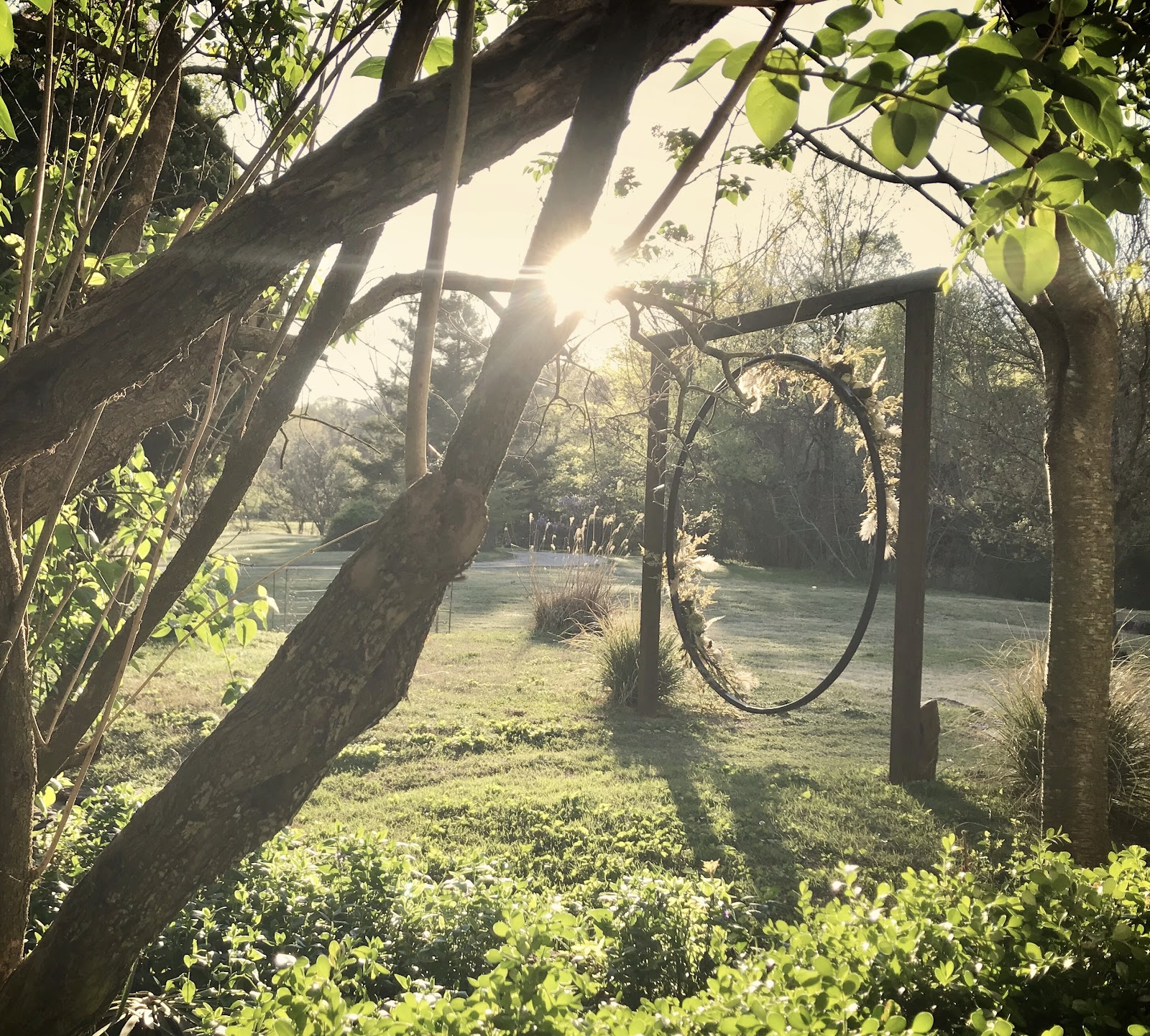
The Box Turtle Venue, Rogers: The Problem and Four Ways Out of It
Open ground, a high sun, and green as far as you can see. Four ways out.
An open-field venue in the Ozarks presents a problem that is easy to describe and easy to underestimate.
There are two halves to it. The first is light: open mown or pasture ground has no overhead cover, and at this latitude the June noon sun reaches about seventy-seven degrees, which is high enough to put eyes in shadow and foreheads in full light with no position available that fixes it. Between roughly ten and four in the warmer months, a face on open ground here is not a difficult exposure but a poor one.
The second half is colour, and it is less obvious. In an Arkansas summer, a rural site is green in every direction — grass green underfoot, oak-hickory green at every margin, and hazy green-grey at distance. Green is the least useful background colour there is, because human skin sits close to it in luminance and complementary to it in hue, which makes a subject either merge into it or look oddly pink against it.
A set of photographs made without addressing either problem looks like this: squinting faces in the middle of the day, and thirty frames in which everything behind the couple is the same shade of green.
Both problems have solutions and there are four of them. None is a workaround; each produces a different and legitimate photograph, and choosing among them deliberately rather than by default is the whole job at a venue like this.
Rogers sits in northwest Arkansas at about thirty-six and a quarter degrees north, on the Ozark plateau. The June noon sun reaches around seventy-seven degrees, the December noon sun about thirty, days run from about nine hours fifty to fourteen hours twenty, and civil twilight is around twenty-eight minutes.
We have not photographed a wedding at this venue. Which spaces and grounds are included, what covered alternatives exist, whether the woodland margins are accessible and what the permitted hours are, are questions for their team.
The Box Turtle Venue at a glance
| Where | A rural venue near Rogers, on the Ozark plateau of northwest Arkansas |
| The problem | No overhead cover under a high sun, and green in every direction |
| Four ways out | The cedar margins; the sky; the stone; the ends of the day |
| Why green is hard | Skin sits close to it in luminance and complementary in hue |
| Ask first | Included grounds, covered alternatives, margin access, hours |
The first two ways out
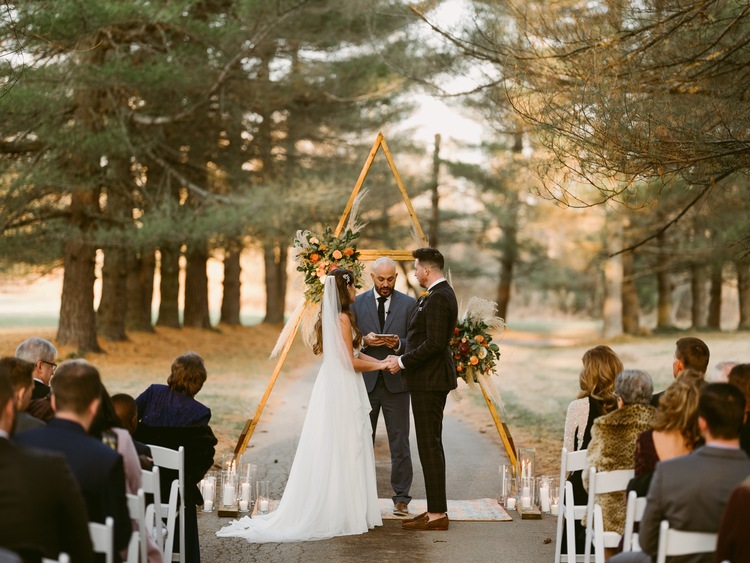
The first way out is the eastern redcedar, and it solves both halves of the problem at once — which is why it is the first and most important.
Redcedar is a juniper rather than a true cedar, and it is the most useful tree in the Arkansas landscape for a photographer. It is dense and very dark, and it blocks almost all direct light, which makes it the outdoor equivalent of a studio backdrop: a subject standing a metre inside a redcedar margin, facing out toward sunlit ground, has soft directional light in front and three or four stops of near-blackness behind.
That deals with the light problem. It also deals with the colour problem, because redcedar’s foliage is so dark and so blue-green that at three stops down it reads as near-black rather than as green — which means a subject against it has a genuinely dark background rather than a green one.
Redcedar colonises thin limestone soils and old fields, which in Ozark pasture country means it grows precisely at the boundaries where a photographer needs it. Locating the cedar margins on arrival takes five minutes and is the most valuable preparation available.
Oak and hickory canopy is the lesser version of the same solution. It gives soft even light, which solves the light problem, and a green cast, which makes the colour problem worse. The correction is positional: standing at the canopy edge rather than deep inside it means most of the light on a face arrives from open sky rather than through leaves, which cuts the cast to something manageable. Deep under canopy, a warm-gelled source a stop over ambient overrides the transmitted green on skin while leaving the foliage as it is.
The second way out is the sky, reached by lowering the camera. This is the simplest and most under-used technique at any open-field venue.
A camera placed below the subjects’ eye level, with grass across the bottom of the frame, puts everything behind them above the horizon — which is to say, sky. That removes the green entirely, replaces it with a graduated blue or a structured cloud field, and it works from any position on the property in any weather.
In Ozark country it works even better than on flat ground, because the topography is dissected and uneven — a rise is available almost everywhere, and a camera below the subjects on a rise puts them clear of the horizon by a wide margin.
What makes or breaks the frame is what the sky is doing. A clear blue Arkansas summer sky is even and featureless, which is better than green but not interesting. A convective sky with structured cumulus is the best background this venue ever has, and in an Arkansas summer afternoon that is frequently available.
The technical note is that a low camera against sky is a backlight or side-light situation more often than not, which means either exposing for the sky and lifting the faces with a close warm-gelled source, or turning the subjects so the sun is behind the camera and the sky behind them is the darker part of the hemisphere — the band opposite the sun is always deeper in colour, which is worth knowing and using.
The second two, and the rest of it
The third way out is the stone. Northwest Arkansas sits on limestone, and on the Ozark plateau that stone shows at the surface as ledges, outcrops, low bluffs and old field walls.
Pale grey weathered limestone is the most valuable background colour available in a green landscape, because it is genuinely low in saturation — which means a white dress reads as white against it and skin holds its own colour without a cast. It is also a high-frequency texture that is spectacular under raking light and dull under flat light, which makes it a first-and-last-hour surface rather than a midday one.
A low limestone ledge is additionally a strong horizontal at seated height, which is one of the most useful things a landscape can offer. And where a property has weathered timber — a barn wall, a fence, an outbuilding — that is the other non-green background, dark and textured and kind to a white dress in exactly the way a bright wall is not.
Finding the three or four non-green surfaces on a rural property, before the day, is the difference between a varied set and a monotonous one.
The fourth way out is the ends of the day, and at this venue it does more than it does at most.
Open ground at low sun is the best version of itself, because a low sun rakes across grass rather than falling onto it — which puts texture into a surface that is flat at noon and turns every rise and hollow in dissected Ozark ground into visible relief. The green also changes: low warm light shifts grass from a flat mid-green toward gold, which substantially reduces the colour problem described above.
Civil twilight here runs around twenty-eight minutes, which is shorter than New England’s thirty-five but longer than Florida’s twenty — a workable window, but one that has to be planned rather than drifted into. The sequence that fits it is: the couple with the sun behind them, exposed for the sky and lifted by a close warm-gelled source; the couple with the sun behind the camera, which needs nothing; a low-camera frame against the deepening sky opposite the sun; and one silhouette.
The gel is not optional. Low sun at this latitude is strongly warm and open shade is lit by a blue sky, so an ungelled flash puts cold faces into a gold field — the most recognisable error in outdoor work.
Groups are the one subject for which none of the four solutions fully works, and that deserves stating. A group cannot be lit by a single close source, cannot be silhouetted, and will not all fit inside a cedar margin. What a group needs is everyone in the same light, which means full open shade, full overcast, or full sun with the sun behind the camera — and the practical answer is to schedule the groups for the hour before the low light rather than during it, when the brightness range is smaller and any of those three states is easy to find.
On uneven Ozark ground, a group also needs the flattest available bench, arranged in ranks across the slope rather than up it, so heads sit at the same height.
Two practical matters for any rural Arkansas date. Chiggers and ticks are a genuine consideration in tall grass and at woodland edges from about May into September, and they belong in the planning conversation rather than in the surprises.
And this state sits in the secondary severe-weather corridor of the southeastern United States, with a peak in April and May and a smaller one in November. Supercells, hail and high winds are real, and on open ground a named indoor alternative is a requirement rather than a courtesy.
- Redcedar margins solve the light and the colour at once
- Lower the camera and the green is replaced by sky
- Find the three or four non-green surfaces before the day
- Low sun shifts grass from flat green toward gold
- Schedule the groups for the hour before the low light, not during it
The Ozark plateau year
Four real seasons with long shoulders, and the green problem described above is overwhelmingly a summer problem — which makes the calendar the fifth way out.
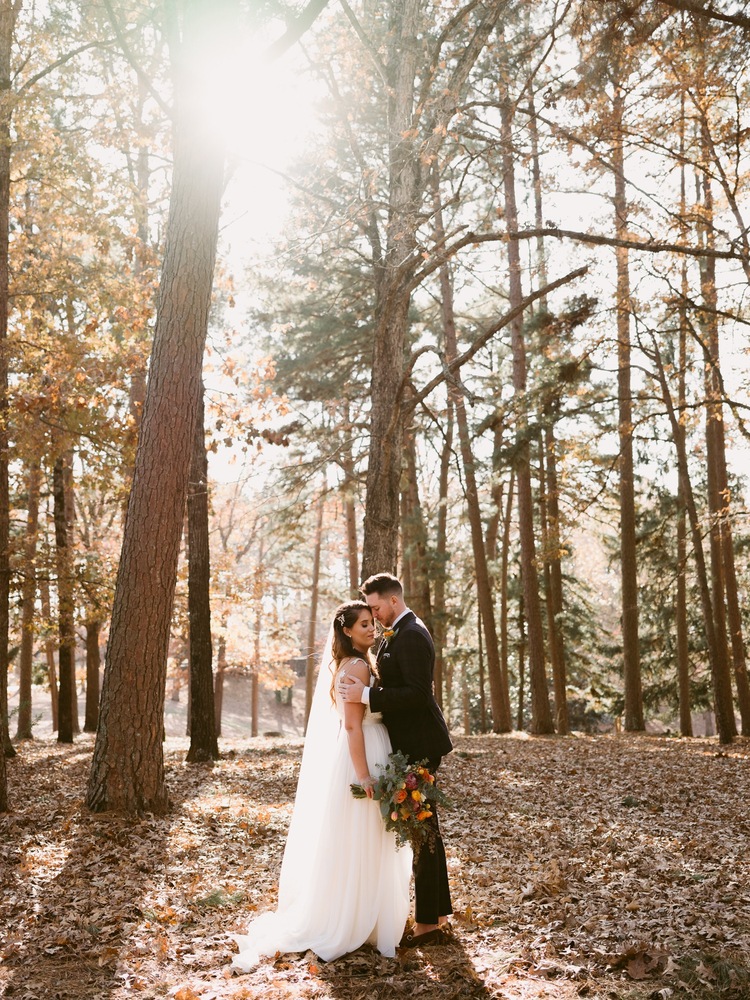
Winter removes it entirely. Bare oak and hickory, brown grass, exposed pale limestone and near-black redcedar produce a landscape with almost no green in it, and a subject placed anywhere in that has a background of neutral browns and greys that is kind to skin and white fabric.
The December noon sun at around thirty degrees means the whole short day models rather than flattens, which removes the high-sun problem completely — there is no bad hour in an Arkansas winter day. And at nine hours fifty the day is meaningfully longer than a northern winter one.
Snow occurs but rarely lasts. The characteristic Arkansas winter event is freezing rain, which glazes every twig in clear ice: spectacular for about a day, hazardous for longer, and impossible to plan for. An ice-glazed hickory against a grey sky is one of the more unusual conditions in this guide.
Spring is the region’s best season and it is early. Leaf-out runs from late March into early April, and before the canopy closes the flowering understory does the work: redbud flowering magenta on bare wood, dogwood white beneath, serviceberry and wild plum.
Redbud is the one to plan for, and specifically because of the timing. It flowers before its own leaves emerge and before the canopy closes above it, which means it is lit directly rather than filtered — a saturated magenta mass in full sun. Against pale limestone or weathered timber, and in a landscape that is still brown, it is the strongest colour this site produces all year, and it lasts about two weeks.
The cost is the severe-weather peak in April and May, and it should be taken seriously rather than mentioned in passing.
Summer is when the problem at the top of this page is at its worst: everything green, the sun at seventy-seven degrees, and dew points in the low to mid twenties Celsius putting haze into the air that takes contrast out of anything at distance. In dissected plateau country, where the wide frames look across wooded valleys, that haze removes the one thing a wide frame had going for it.
The honest summer strategy is to work close: the cedar margins, the low-camera sky frames, the stone, and the ends of the day. Fireflies in the Ozark valleys in June are worth a frame if an evening runs late, and chiggers and ticks are at their worst from May through September.
Autumn is the other strong season and it is much later than in the north. Oak-hickory forest turns from the last week of October into the first week of November — three to five weeks behind New England — and it holds for longer, because oak colours and drops slowly.
For this venue’s particular problem, autumn is the direct answer: the green simply leaves. Hickory gold, oak russet and deep red, sweetgum purple-red, sassafras orange and black gum near-claret replace it, and against pale limestone and near-black redcedar that is the most varied and useful background the site ever has. The window is genuinely three weeks rather than two.
November brings a second, smaller severe-weather peak, and by late in the month the woods are bare, the stone is exposed, and the low sun models everything all day.
More frames from The Box Turtle Venue
The Box Turtle Venue wedding photography: common questions
What is the problem here?
Open ground with no cover under a high sun, and green in every direction — a colour that human skin sits close to in luminance and complementary to in hue.
What is the single best solution?
The eastern redcedar margins. Redcedar blocks almost all light and is dark enough to read as near-black, so it fixes the light and the colour at once.
How do I get rid of the green?
Lower the camera below the subjects’ eye level with grass across the bottom of the frame. Everything behind them becomes sky.
Which part of the sky is best?
The band opposite the sun, which is always deeper in colour. Turn the subjects so the sun is behind the camera and that band is behind them.
When should I photograph the groups?
The hour before the low light, not during it. A group cannot be lit by one close source or silhouetted, and needs a smaller brightness range.
Which season solves the problem outright?
Autumn and winter. The green leaves, and what replaces it — russet, gold, brown grass, pale limestone, near-black cedar — is far better background material.
More Arkansas venue guides
We are writing a photographer’s guide to every venue we would happily shoot in Arkansas. Here are three more, plus the full index:
- The Chapel at Sugar Creek, Pea Ridge: One Frame and How It Is Made
- The Columns at The Grand, Benton: What It Suits and What It Does Not
- The Crystal Ballroom, Little Rock: The Venue’s Own Logic
Planning a wedding at The Box Turtle Venue?
Green is the problem and there are four ways out. Tell us your date.