 The Sheraton Portsmouth: What a Conventional Hotel Actually Buys You
Bedford Village Inn, Bedford: A Walk Through the Site
Three periods of building on one site, and each one takes light differently.
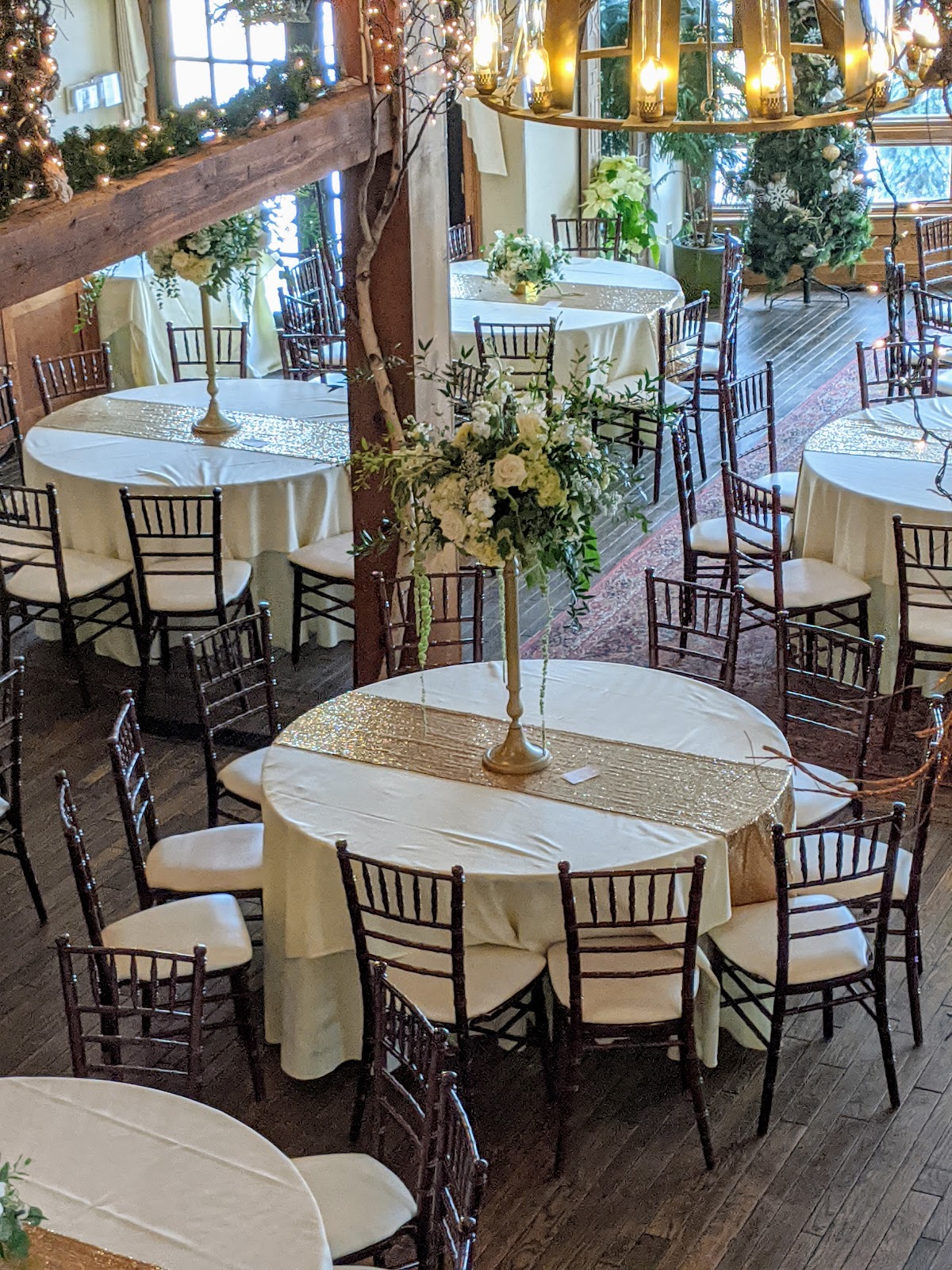
The useful way to describe this property is to walk it, because it is not one building but a farmstead that has accumulated — and the parts were built in different centuries, for different purposes, out of different materials.
That accumulation is the photographic interest. A converted New England farm typically has a timber barn built to store crops and shelter animals, a house built to be lived in, and later additions built to accommodate guests, and those three things have almost nothing in common optically. The barn absorbs and admits light in slots; the old house has small deep-set windows and dark finishes; the new work has large glazing and pale surfaces.
Walking the site in that order — barn, house, additions, grounds — gives a set of photographs that look like different places, which is exactly what a wedding set needs and what a single-period building cannot supply.
The second thing to understand is the southern New Hampshire setting. Bedford is in the Merrimack valley, well south of the mountains, at about forty-three degrees north. That means a longer growing season, later autumn colour, more oak in the woods and less sugar maple, and a landscape of gentle wooded hills rather than dramatic relief.
It also means the site’s character comes from its buildings and its planting rather than from a view. There is no mountain to point a camera at, which is a limitation and a discipline: everything here has to be made from light, material and arrangement.
The June noon sun at this latitude reaches around seventy degrees, the December noon sun about twenty-three, days run from about nine hours to over fifteen, and civil twilight is around thirty-three minutes — a long dusk by the standards of the southern half of this guide.
We have not photographed a wedding at this inn. Which buildings and grounds are included, what the restrictions are on the barn and the older interiors, and what the permitted hours are, are questions for their team.
Bedford Village Inn at a glance
| Where | A converted New England farmstead in Bedford, southern New Hampshire |
| The sequence | Barn, older house, modern additions, grounds |
| Why walk it | Three periods of building take light in three different ways |
| The limitation | No distant view — everything is made from light, material and arrangement |
| Ask first | Included buildings and grounds, barn and interior restrictions, hours |
The barn and the older house
Start in the barn, because it is the strongest photographic environment on the site and the one that most rewards understanding.
A New England timber barn is a large volume with a dark interior and openings in a few specific places — the main doors, gable windows, and gaps between boards. That produces a lighting situation that no modern building offers: a very dark room with a small number of very bright apertures, which means the brightness range inside is enormous and the fall-off from an opening is extremely fast.
The consequence is that the barn hands over a studio setup for nothing. A subject standing a metre or two inside a large open door, lit by the sky outside and with the barn’s interior behind them, is lit by a huge soft source with four or five stops of black behind — which is the effect people build equipment to achieve.
The depth is the control and it should be chosen deliberately. At the threshold the light is bright and frontal and the ratio is low. A metre in, it acquires direction. Three metres in, the ratio is dramatic and the doorway beyond has become a blown rectangle. Each of those is a different picture and the difference is a step.
The board gaps are the barn’s other signature and they are worth working properly. Where a timber wall has gaps between boards, direct sun outside produces hard parallel stripes of light across the interior — a slatted pattern that is one of the most recognisable effects in barn photography. On a face it is unusable; on a floor, a wall or a dress at a distance it is structure.
The rule is to keep the pattern off the faces and in the frame, which usually means placing the subject in a shadow band and letting the stripes fall behind and around them.
The wood matters to colour. Aged timber is warm and it is also a strong absorber, which means two things: the ambient inside is a stop or two below what the eye estimates, and the light bouncing around has picked up a warm cast. Set white balance on skin in position and keep some of the warmth — it is what the building looks like — and meter on skin rather than on the scene, because a meter reading a dark interior will overexpose everything that matters.
The older house is the second environment and it behaves differently. A federal-period New England house has small, deep-set, multi-paned windows, thick walls and dark interior finishes — which means less light, more directional light, and very fast fall-off.
The working method is the standard one for any historic interior: subject at forty-five degrees to a window, meter on skin, and let the room fall away. The deep reveals act as a snoot, narrowing the beam and steepening the fall-off further, which makes the effect stronger than a modern window of the same size would give.
Multi-paned glazing has a specific and useful side effect: the muntins break the light into a grid, which on a nearby surface reads as a soft pattern and on a face reads as nothing at all. It is free texture for the background at no cost to the subject.
Stair halls and corridors in a house of this period are reliably better than they look. A hallway with a window at one end has several stops of fall-off along its length, and a subject three or four metres in is separated from the background by architecture alone.
The additions, the grounds and the year
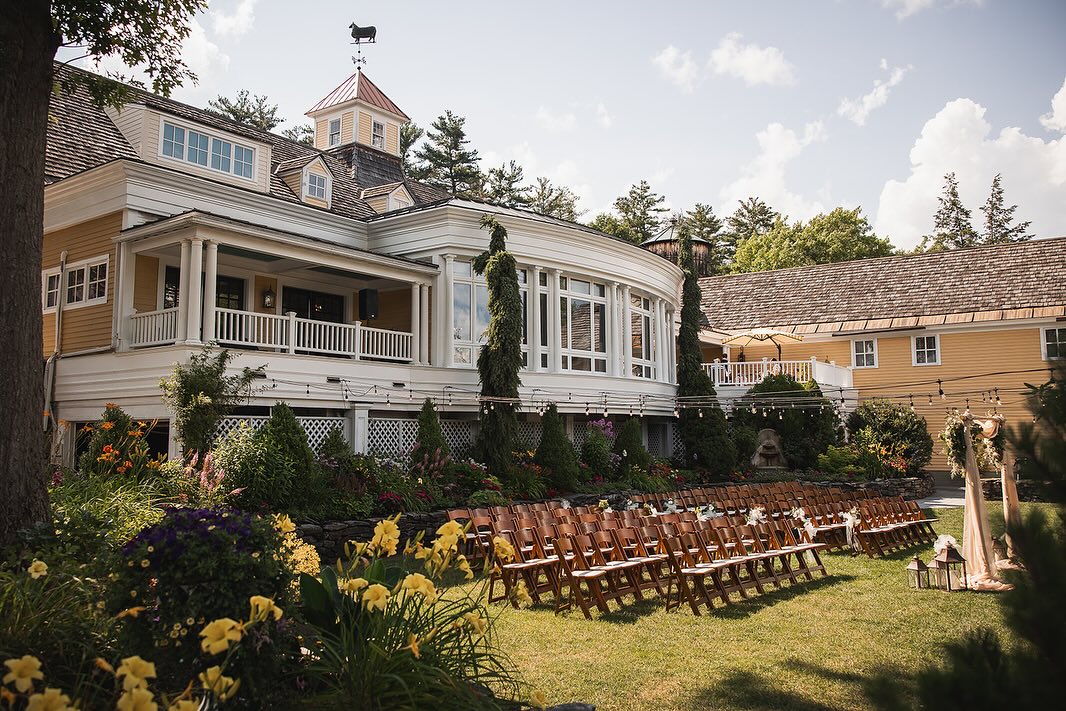
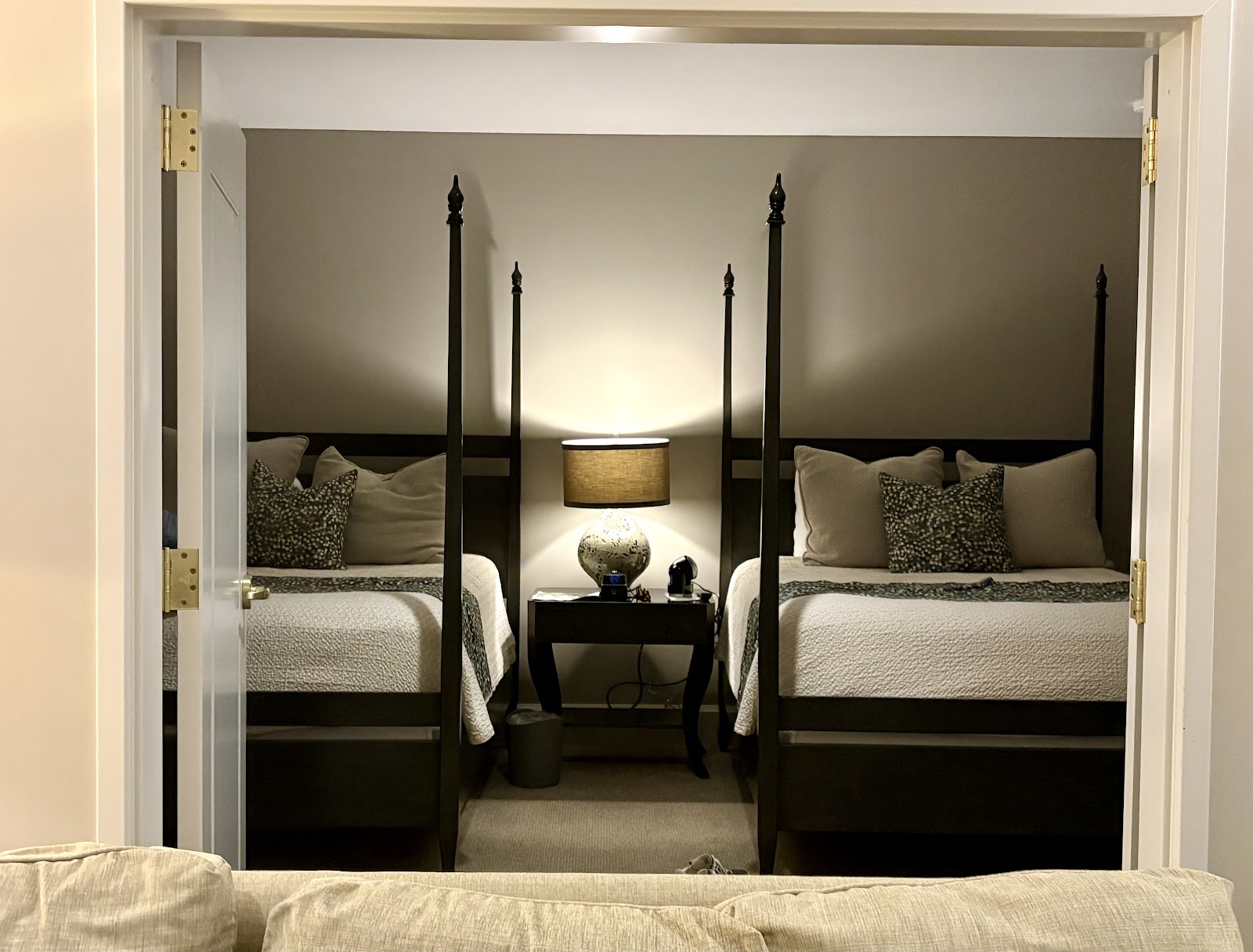
The modern accommodation is the third environment and it inverts every problem the first two present. Large glazing, pale walls, higher light levels — which means light is never the difficulty and separation always is.
A subject against a pale wall in a bright room has nothing to sit against. The answers are to find something dark — a doorway, a shaded corner, a piece of dark furniture — or to add a source a stop above ambient so the subject has a shadow side at all, or to use the glazing as a directional source at forty-five degrees and let the opposite side of the face fall off naturally.
Wide glazing used that way is a room-sized softbox and it is the best light in any modern building. The caution is colour: a large window facing a lawn returns green, and a window facing snow returns a very cool blue. White balance goes on a face rather than on a preset.
The grounds are the fourth environment and in southern New Hampshire they are wooded and gentle rather than open and dramatic. The species distinction that governs every New England venue applies: white pine, spruce and hemlock block almost all light, which makes their edge the best free separation available — a subject a metre inside a conifer margin has soft directional light in front and three or four stops of near-black behind.
Hardwood canopy gives soft even light with a green cast, fixed by standing at the edge rather than deep inside it. And white paper birch against dark conifer is the highest-contrast natural background in New England, a graphic field of pale verticals on black.
Two features of the New England farm landscape appear on almost any property of this kind and both are worth locating. Stone walls are nineteenth-century field boundaries, built when this land was cleared for farming and left when the woods grew back — and as a photographic element a low granite wall is a strong horizontal at seated height, which is one of the most useful things a landscape can offer.
Granite itself is the region’s stone: coarse-grained, pale grey, with visible crystals, making it a high-frequency texture that is spectacular under raking light and dull under flat light, and a low-saturation background that treats skin and a white dress kindly.
The year in southern New Hampshire is milder and later than in the mountains and that changes the calendar meaningfully.
Winter is cold with reliable snow cover most years but less of it than in the north. Snow is the best natural fill available — it lifts shadows to within a stop and fools a meter by around two, so open up deliberately — and against a dark timber barn and dark conifer it gives the widest brightness range in this guide. A weathered barn in snow under a December sun at twenty-three degrees is the strongest exterior frame of the year here.
Spring is earlier than in the mountains: mud season is compressed, leaf-out runs through late April and into May, and the pale transmissive green of new foliage backlights beautifully for about three weeks. Southern New Hampshire also has more flowering understory — dogwood, shadbush, apple — than the north, which gives a spring that the mountains cannot match.
Black flies are less severe this far south than in the north country but they are present from about mid-May into early June.
Summer is long-day and warm. Over fifteen hours of daylight, generous twilight, full canopy — and the middle of the day at seventy degrees of sun elevation is the hardest light of the year on open ground, which puts the midday work in the barn, the house and the canopy edges.
Autumn is late here relative to the mountains, because the timing runs southward and downhill: the White Mountains peak in late September and the first week of October, and southern New Hampshire follows in the second and third weeks of October. The palette is different too — more oak and hickory, less sugar maple — which means bronze, russet and gold rather than the mountains’ reds, and it holds on the trees longer.
Against weathered timber and grey granite, that quieter autumn is arguably a better match than the mountains’ version. November strips it to structure and photographs austerely and well.
- Depth inside the barn door sets the ratio — a step changes the picture
- Keep the board-gap stripes off faces and in the frame
- Deep-set older windows act as a snoot: stronger fall-off than a modern one
- In the modern rooms the problem is separation, not light
- Southern New Hampshire’s autumn is two weeks later and bronze rather than red
The Merrimack valley year in detail
Some further seasonal notes, because a site whose interest is in its buildings and planting changes more with the season than a site with a view does.
The barn is the one environment here that is genuinely season-proof, and that deserves saying because it is unusual. Its light comes from a doorway and from board gaps, which behave the same in February and July — the only variable is the brightness outside, and since the interior is being metered on skin rather than on the scene, that variation mostly does not matter.
The one seasonal difference inside a barn is colour: sunlight coming through a door in winter has bounced off snow and arrives cool and very bright, while in summer it has bounced off grass and arrives warm and green. A custom white balance on a face in position handles both; a preset handles neither.
The older house is similarly stable and for the same reason. Small deep windows admit a narrow beam whose character is set by the reveal rather than by the season, which makes the interiors reliable in a way the grounds are not.
The grounds carry all the seasonal variation and the best two windows are the ones people least expect. The first is the second half of October, when the southern New England palette of oak and hickory bronze arrives against weathered timber and grey granite — a quieter combination than the mountain reds and a better match to the material of this site.
The second is a clear afternoon in the depth of winter with snow on the ground. The December sun at twenty-three degrees never rises high enough to flatten anything, so the whole day rakes; snow fills every shadow; the timber goes near-black by contrast; and a weathered barn against a white field is the single cleanest composition the property offers.
The window to avoid is mid-March to mid-April. Snow rotting off leaves grey ground, brown grass and bare trees under flat light, and there is no version of the grounds that photographs well in it. If a date falls there, the honest plan is to work the barn and the interiors and treat the outside as incidental — which is a perfectly good plan at this particular venue, because the barn is strong enough to carry it.
Summer’s compensations are length and warmth. Over fifteen hours of daylight means an unhurried schedule; thirty-three minutes of civil twilight means the blue period is a separate session rather than a scramble; and the full canopy means the conifer margins and hardwood edges are at their most effective, which is what the midday hours need.
The specific summer caution in southern New Hampshire is humidity, which produces haze at distance. On a site with no distant view that costs almost nothing, which is one of the few advantages of having no view at all.
Two practical notes that apply year-round. A converted farmstead usually has working areas — service yards, parking, plant — in close proximity to the guest areas, and those appear in frames taken without checking edges. The fixes are ordinary: a step sideways, a lower camera, a longer lens at a wider aperture.
And glass carried from a cold exterior into a heated interior fogs, which is the reverse of the problem in the southern half of this guide and has the same answer: acclimatise in a bag on the way in, and treat whichever environment holds the next frame as home base.
More frames from Bedford Village Inn
Bedford Village Inn wedding photography: common questions
What is the best environment here?
The barn. A dark volume with a few very bright openings gives four or five stops of fall-off from a doorway — a studio setup at no cost.
How do I handle the light stripes from board gaps?
Keep them off the faces and in the frame. Place the subject in a shadow band and let the stripes fall behind and around them.
Why do the old house's windows work so well?
Deep reveals act as a snoot, narrowing the beam and steepening the fall-off, so the effect is stronger than a modern window of the same size.
What is the problem in the modern rooms?
Separation, not light. Everything is bright and pale, so a subject needs something dark behind them or a source a stop over ambient.
When does autumn arrive here?
The second and third weeks of October — two weeks after the White Mountains — and the palette is oak and hickory bronze rather than sugar maple red.
What is the window to avoid?
Mid-March to mid-April. The grounds have no good version of it, though the barn and interiors carry a date in that window perfectly well.
More New Hampshire venue guides
We are writing a photographer’s guide to every venue we would happily shoot in New Hampshire. Here are three more, plus the full index:
- Capitol Center for the Arts, Concord: One Frame and How It Is Made
- The Derryfield Country Club, Manchester: Field Notes, Problem and Solution
- Grappone Conference Center, Concord: What It Suits and What It Does Not
Planning a wedding at Bedford Village Inn?
A barn, an old house and a new one. Tell us your date and we will walk all three.