 Dry Tortugas National Park: A Walk Through an Island Fort
The Ringling, Sarasota: How the Light Moves Across the Estate
A west-facing bay, which changes everything about how the day should be planned.
The single most useful fact about photographing on the Gulf coast of Florida is one of orientation: the water is to the west. The sun sets into it.
That sounds obvious and it is not, because the Atlantic side of the same state does the opposite, and a photographer who works on both coasts has to reverse the plan each time. On Sarasota Bay the end of the day belongs to the water, the house and grounds are lit warmly from across it, and the last hour is the strongest hour on the property. Everything else in the day arranges itself around that.
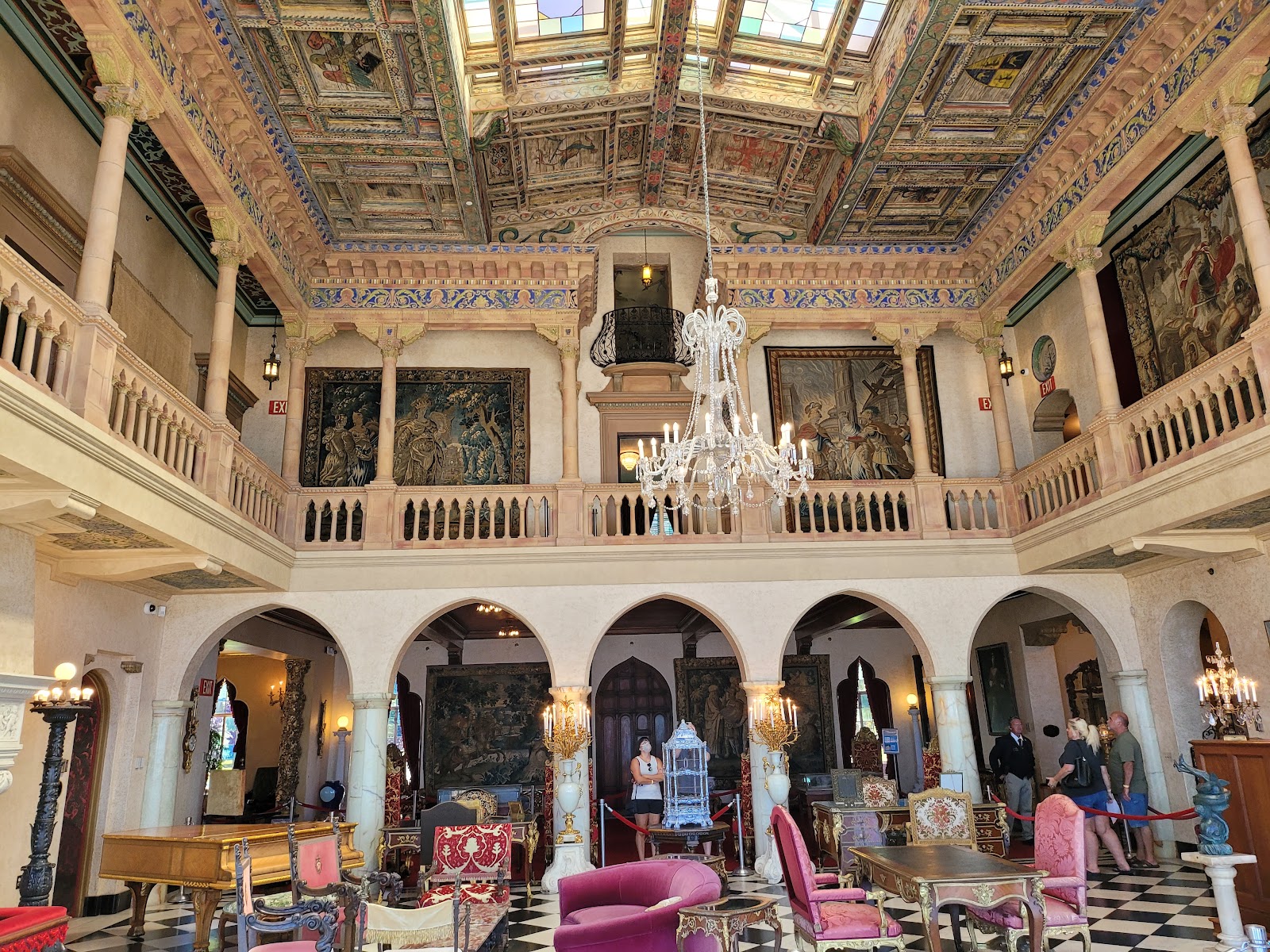
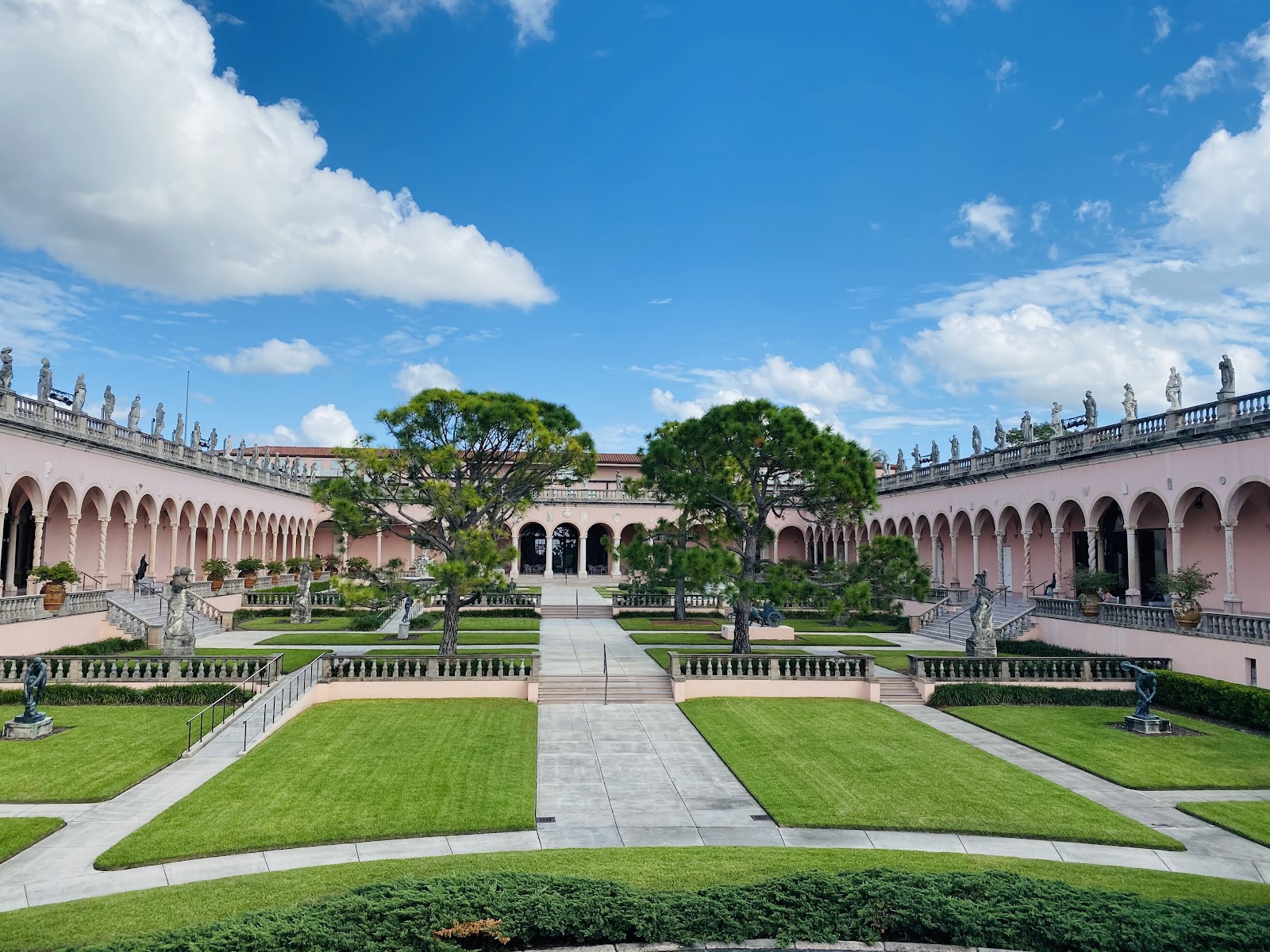
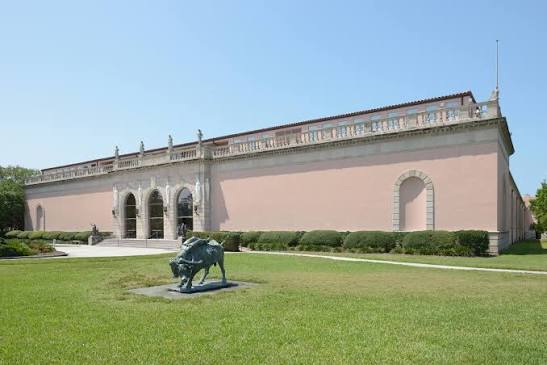
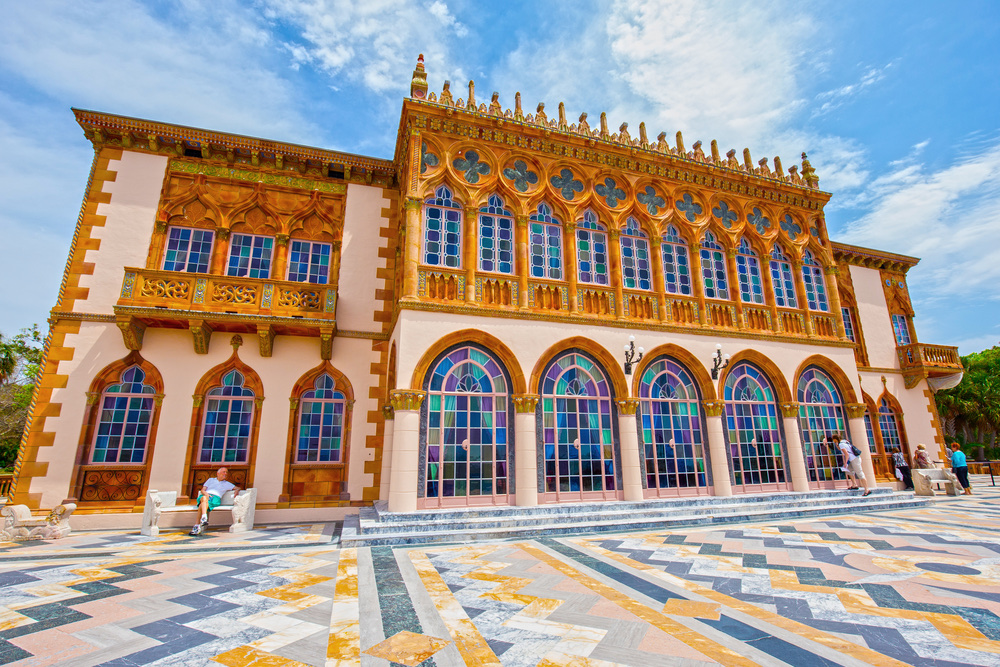
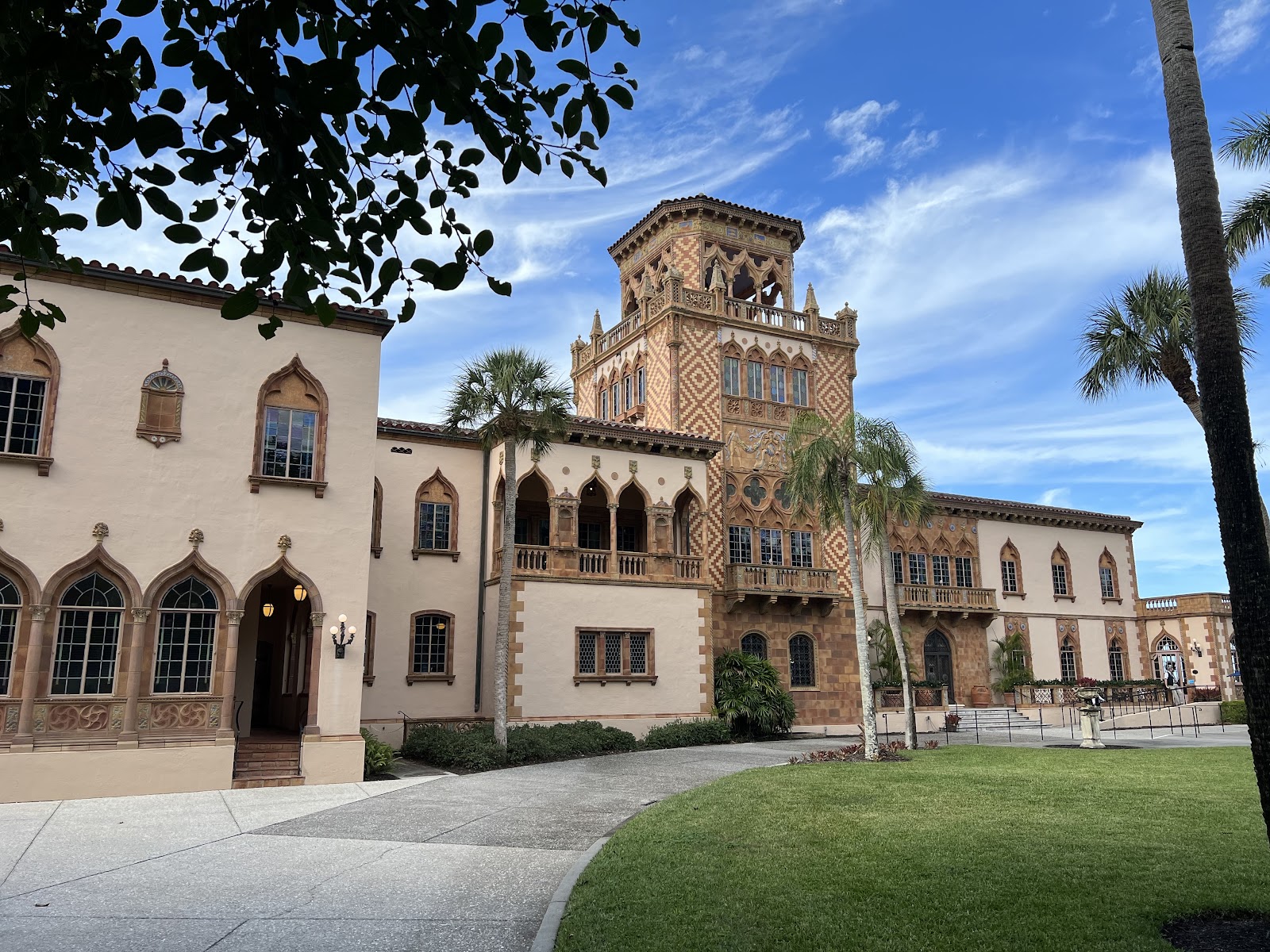
The estate has three distinct photographic environments and they peak at different times. There is a Venetian Gothic house on the bay, elaborately decorated and facing the water. There is a museum building arranged around a large colonnaded courtyard, which is an open-topped room with a hard geometric rhythm. And there are grounds with banyans, live oaks and a rose garden between the two.
Those three do not share a best hour. The courtyard is at its best in the middle of the morning and again late; the house front is at its best in the last ninety minutes; the grounds are at their best whenever the sun is off them.
Sarasota sits at about 27.3 degrees north. The June noon sun reaches about eighty-six degrees — effectively overhead — and the December noon sun about thirty-nine. The practical reading is that the middle of a summer day is unusable in the open and that the middle of a winter day is perfectly good, which inverts the northern habit of protecting the midday hours and spending the evening freely.
We have not photographed a wedding at the Ringling. Which buildings and grounds are included, what the restrictions are inside the house and the galleries, and what the permitted hours are on the bayfront are questions for their team.
The Ringling at a glance
| Where | A bayfront estate on Sarasota Bay, Florida’s Gulf coast |
| The orientation | West-facing: the sun sets into the water |
| Three environments | Venetian Gothic house, colonnaded courtyard, banyan grounds |
| Peak hours | Courtyard mid-morning and late; house front last ninety minutes |
| Ask first | Included buildings, interior restrictions, bayfront hours |
Morning into midday
Early morning on a west-facing shore is backwards from what the setting suggests. The sun comes up behind the buildings and over the land, which means the bay is in the property’s own shadow and the water reads flat grey-green rather than lit. The house front, facing west, is in shade for the whole first half of the day.
That is not a loss. A large west-facing façade in morning shade, with a bright sky over the water in front of it, is lit by an enormous soft source and has no hotspots anywhere on it — which makes the first hours the best time to photograph the building as architecture and the worst time to photograph it as a sunlit backdrop.
Mid-morning is the courtyard’s hour. A colonnaded courtyard is a rhythm of columns around an open rectangle, and while the sun is still at a moderate angle one long side is lit and the other is in full shade. Standing a subject in the shaded colonnade facing the lit one gives directional, even, generously filled light with the columns receding behind — the best unassisted portrait light on the estate.
The geometry rewards precision. Columns repeat, which means small camera movements decide whether the rhythm frames the subject or cuts through them, and the floor and the entablature give strong horizontals that are visibly wrong if the camera is a degree off level.
Sculpture in such a courtyard is a second resource and a trap. Statues at human scale in the background of a portrait compete directly with the people, because the eye reads them as figures. The working fix is to place them deliberately — fully included and clearly a statue, or thrown far enough out of focus to be a shape — and never to leave one half-resolved at a subject’s shoulder.
By late morning the sun is high enough that the courtyard loses its directional advantage and becomes a bright box with overhead light in the middle and thin shade at the colonnade edge. That edge still works. The middle does not.
Midday in the open is the hardest light of the day. On the Gulf coast it is made harder by the ground: the sand and pale paving return a great deal of uplight, which fills but does not soften, so faces come out lit from above and below with no modelling at all. The move is indoors, into the colonnade, or under the broadleaf canopy.
The banyans and live oaks are the property’s real midday asset, and they work because of what they are — dense evergreen canopies with overlapping leaves that block almost all direct light. Under one of them at noon the illumination is soft, even, a stop or two down and entirely usable. Under a palm at the same hour it is a hard slatted stripe across a face. The species decides the picture.
Afternoon to dark
Mid-afternoon is the turn. The sun crosses onto the western side and begins to light the house front and the bay, and from that point the property improves continuously until dark.
The first stage is harsh. A low-ish westerly sun on a highly decorated façade produces very high contrast on the ornament, which is either the best or the worst thing that can happen to it: raking light on relief detail is spectacular, and the same light on a face standing in front of it is unusable. The practical answer is to separate the two jobs — photograph the ornament while it rakes, and photograph people in the shade of the building’s own returns, recesses and loggias.
The last ninety minutes are the estate’s hour. The sun drops toward the water, which at this point is a very large and increasingly warm reflector; the house is lit frontally and the light is low enough to model the detail rather than to blast it; and the grounds between the two receive the same light through the gaps.
Three frames belong to this window. The couple on the bayfront with the sun behind them over the water, which needs a close source to hold the faces — exposing for the water and lifting the subjects with a warm-gelled light, because metering on faces gives a white sky and a colourless bay. The couple on the terrace or steps with the lit façade behind, which needs no help at all. And a long-lens frame from across the lawn with the house compressed behind them.
The gel matters. The sun at this point is strongly warm and the open shade is lit by a blue sky, so an ungelled flash puts a cold face in a gold landscape. A half or full warming gel and a white balance set for the sun resolves it.
Then dusk, and it is short. At twenty-seven degrees north the sun sets at a steep angle rather than sliding along the horizon, which compresses civil twilight to a little over twenty minutes — against thirty-five or more in a northern state. The blue period is correspondingly brief and the fall from workable to dark is abrupt.
The plan has to be faster than instinct: get the direct-light frames done first, then treat the blue period as its own short session rather than as the leisurely tail of the last one.
That blue period is genuinely good here, because a lit ornamental façade against a deep blue sky, with the bay holding the last of the colour, balances almost by itself. The working exposure is the one where the building’s own lighting and the sky sit within about a stop of each other, which on a clear evening lasts roughly ten minutes.
After dark the galleries and interiors take over. Expect a low ambient at a warm colour temperature, mixed sources, and lighting designed for paintings rather than for people — which means strong pools and dark gaps. Gel the flash warm to match the room, balance for the room rather than for the flash, and use the pools as they are rather than flattening them out.
Mosquitoes arrive at dusk near the water in the wet season, and salt off the bay settles on front elements all day. Both are routine rather than dramatic, and both are worse for the person who did not expect them.
- West-facing water: the last hour is the best hour
- Mid-morning colonnade is the best unassisted portrait light
- Photograph ornament while it rakes and people in the recesses
- Expose for the water and lift the faces warm-gelled
- Twilight is about twenty minutes — plan faster than instinct
The Gulf coast year
The Gulf coast runs on two seasons, and the good one is winter.
The dry season, roughly November to April, brings lower humidity, clearer air, better contrast at distance, no daily storms and a noon sun around thirty-nine degrees that models faces instead of flattening them. That is the difference between a whole workable day and two workable ends of one.
Its costs are the short day — about ten and three-quarter hours at the solstice — and the fact that it is the busy season.
The wet season, roughly May to October, is a different climate. Dew points in the mid-twenties Celsius produce haze rather than fog: distant frames lose contrast, lights bloom, and nothing added afterwards puts back what the moisture took out. Across the bay, that is the difference between a defined far shore and a pale suggestion of one.
It also brings the condensation problem that defines Florida work. Air-conditioned interiors sit far below the outdoor dew point, so a lens carried out of a gallery fogs immediately, inside and out, and clears in ten to twenty minutes. At an event that moves repeatedly between a cooled building and the bayfront, that is the structural problem of the day, and the solution is acclimatisation and a second body kept outside rather than cycling one.
Afternoon storms in the wet season have a mechanism. Sea breezes push inland from both the Gulf and the Atlantic and collide over the peninsula, forcing air upward — which is why Florida’s interior records more lightning than anywhere else in the United States, and why the storms arrive on something close to a schedule in the afternoon and early evening.
Sarasota sits on the Gulf side rather than in the collision zone, which moderates it but does not remove it; a named covered alternative for any open ceremony between June and September is a requirement.
Hurricane season runs June to the end of November and peaks from mid-August into October. It belongs in the planning conversation even though it rarely belongs in the photographs.
The vegetation here is evergreen, which removes the seasonal cue that photographs in most of this guide depend on. What signals the time of year instead is flowering: the rose garden through the cooler months, and the scarlet of a royal poinciana in late spring and early summer.
The tidal range on this coast is small — the Gulf here runs a mixed tide of well under a metre — which means the bayfront composes the same way all day. That is a real convenience. A seawall frame planned in the morning is still there at seven in the evening, which is not true on most coasts in this guide.
More frames from The Ringling
The Ringling wedding photography: common questions
Which way does the water face?
West. Sarasota Bay takes the sunset, which is the opposite of Miami and Key Biscayne on the Atlantic side.
When is the courtyard best?
Mid-morning, when one colonnade is lit and the opposite is in shade — the best unassisted portrait light on the estate.
What is the best frame here?
The bayfront in the last ninety minutes, exposed for the water with the faces lifted by a close warm-gelled source.
How long does twilight last?
A little over twenty minutes. At this latitude the sun drops steeply, so the blue period is short and the end is abrupt.
Where is the midday shade?
Under banyan and live oak, whose dense evergreen canopies block almost everything. Never under palms.
Which season is best?
The dry season from November to April — clearer air, real contrast, no afternoon storms, and a sun low enough to model.
More Florida venue guides
We are writing a photographer’s guide to every venue we would happily shoot in Florida. Here are three more, plus the full index:
- The Ritz-Carlton Key Biscayne: What It Suits and What It Does Not
- The Dalí Museum, St. Petersburg: The One Decision That Governs Everything
- South Pointe Park, Miami Beach: A Walk Through the Site
Planning a wedding at The Ringling?
A west-facing bay and a short dusk. Tell us your date and we will plan the last hour properly.