 The Riverside Hotel, Boise: The Light Through a Day
Willow Creek Ranch, Spirit Lake: A Walk Through the Site
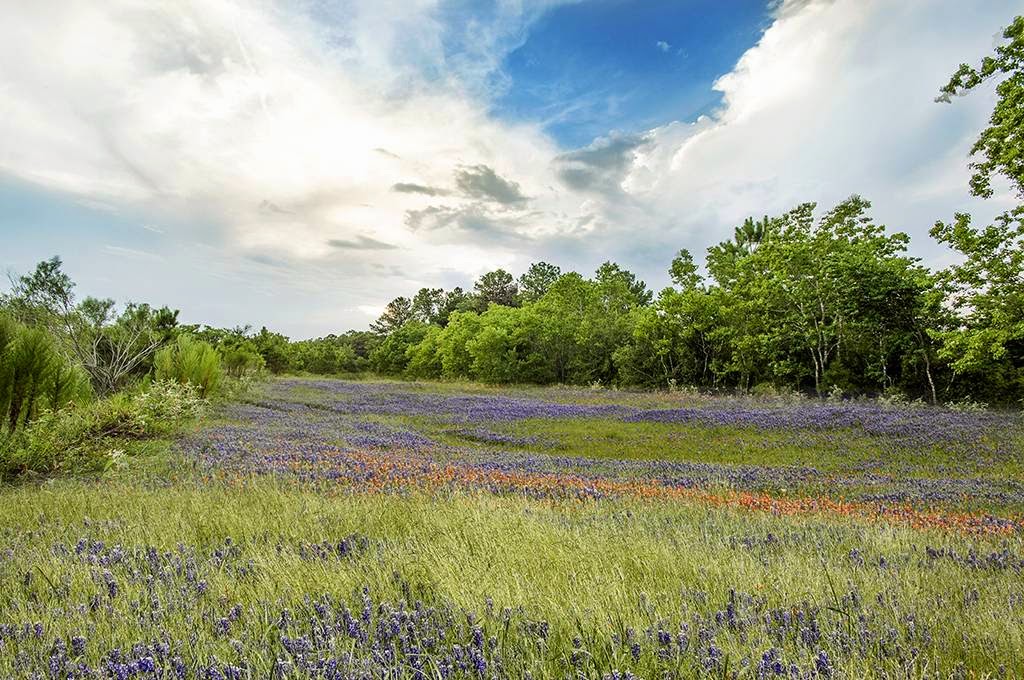
Cleared pasture inside dense forest. The clearing is the light and the forest is the frame.
This is a walk through the site in the order a wedding day tends to use it, and the organising fact is that a north Idaho ranch is a clearing rather than a landscape.
This part of the state is inland maritime forest — western red cedar, western hemlock, grand fir, Douglas fir and western larch on damp ground — and the cleared pasture that makes a ranch possible was cut out of it. Which means the property has a hard edge: pasture, then wall of forest, with very little in between.
That gives a simple and useful structure. The clearing is where the light is: open sky, room for a ceremony, level ground and a horizon of treetops. The forest is where the contrast is: dense, dark, and giving three or four stops of separation at its margin. And the boundary between them is where most of the good frames are made.
The second fact is the climate, and it is what makes this easier than the same geography further south. North Idaho has a high proportion of overcast days, which means the clearing is under diffuse light far more often than under hard sun — and under that overcast the open ground’s problems disappear entirely: no dappling, no squinting, no clipped whites, colour at full saturation, and no hour to avoid.
The third is the creek. Willow-lined water through a pasture is a line through the site, a source of mist in the cooler months, and a thing loud enough to matter at a ceremony.
We have not photographed a wedding at Willow Creek Ranch; north Idaho ranch venues behave consistently. Which buildings and areas are included, whether the barn is heated, the covered alternative, what power is available at the field positions, and what the ground is like on the date are questions for their team.
Willow Creek Ranch at a glance
| Where | Cleared pasture in inland maritime forest near Spirit Lake, north Idaho |
| The structure | A clearing inside forest, with a hard edge and nothing between |
| The clearing | Where the light is; under frequent overcast it works at any hour |
| The forest | Where the contrast is — cedar and hemlock give three or four stops |
| Ask first | Areas included, barn heating, field power, ground on the date |
The clearing and the forest edge
Start in the clearing, because it is where the ceremony and the groups happen and because in this climate it is usable far more often than an open site in dry country would be.
The pasture has nothing overhead, which on a clear day means the ordinary open-ground problem: vertical shadows under the brows, dark eye sockets, a hard line under every chin, and a face half in sun that is unrecoverable. In north Idaho that condition is the exception rather than the rule, which is the site’s quiet advantage — but it is worth having a plan for it rather than assuming cloud.
The plan is the forest edge and it is the most useful position on the property. Standing a metre or two inside the canopy at the margin of the pasture gives soft directional light from the open side and near-total darkness behind — three or four stops of free separation and no equipment at all.
Because this is cedar and hemlock rather than the pine of southern Idaho, that background is darker than it would be almost anywhere else in the state: dense damp conifer absorbs across the spectrum, which makes the frame stronger. And because the edge runs the length of the boundary, the position can be chosen for the direction of the light as well as for what is behind the subject.
The exposure discipline is the standard one and at this site it is severe, because the two conditions are extreme and adjacent. A meter looking at dark cedar overexposes a face by a couple of stops; a meter looking at bright open pasture underexposes it; and those positions are five paces apart. Manual, metered on skin, reset at every crossing.
The white balance reverses at the same boundary. A damp conifer edge bounces green onto anything in it, while open pasture under overcast is cool and near-neutral — so a custom setting made on a face in position is worth the thirty seconds and needs resetting at the edge.
The group photographs belong in the clearing and they need the light chosen before the composition. Everyone in the same light is the requirement: full even shade at the forest edge, full overcast, or full sun with the sun behind the camera. A large group half in dappled edge shade is unfixable.
The pasture’s own properties are worth using. Mown or grazed grass bounces, which fills faces from below at the cost of uplight under the chin — the diagnosis is to look at the chin in the first frame. And in low raking light the ground has texture in every blade where at midday it is flat, with any track, fence line or grazing pattern becoming a graphic element that leads into a frame or cuts across it.
Western larch is the boundary’s distinctive tree and it changes the site for two weeks. It is a deciduous conifer: the needles turn a clean intense gold through the second half of October and drop, which means the dark forest wall becomes a gold-and-black one. Nothing else in this guide does that, and it is the single strongest thing this landscape produces.
Ponderosa on the drier ground is the exception in the treeline — a high open crown that filters into hard patches rather than blocking, which makes it a background rather than a shade, with massive orange-brown plated trunks that compress well on a longer lens.
The creek, the buildings, and the north Idaho year
The creek is the site’s third element and a willow-lined creek through pasture does three things.
It gives a line through the clearing. A watercourse is a natural perspective element, and a frame along it has convergence and depth that an open field does not — while a frame across it has the willow as a foreground layer.
It gives mist. Water that is warmer than the air above it produces surface vapour, and in this climate cool mornings are frequent — which makes mist over the creek and the low pasture reliable in the cooler months and heaviest in autumn. Mist over a pasture with a dark forest wall behind it is the most atmospheric condition the site offers.
And it gives willow, which is genuinely useful. Willow is dense at close range, low, and its leaves are thin enough to transmit light — which means a backlit willow edge glows and a subject standing against it has a soft green-lit background rather than a hard one. It is the only intermediate-height cover on the property.
It is also loud, which is worth knowing: moving water competes with unamplified vows, which makes amplification a more important question at a creekside ceremony than the setting suggests.
The buildings are the fourth element and the reliable shade in any weather. A barn or shed with a large opening gives a dark interior with light entering horizontally from one side, which produces steep fall-off and free separation: two or three metres inside is the working position, turned about forty-five degrees to the opening, and unpainted weathered timber absorbs almost everything.
At this latitude that frame is better than it would be further south for two reasons. The frequent overcast means the light at the door is diffuse far more often, which widens the usable band inside the opening. And the very low winter sun — the December sun here reaches only about eighteen degrees above the horizon, the lowest in this guide outside Alaska — comes through the opening almost horizontally and reaches much further in.
Any porch, overhang or covered area is the other version: a solid roof restricting the light to a horizontal band, bouncing off the ground to fill from below, and incapable of dappling. And whether the barn is heated is a real question, because north Idaho winters are cold with substantial snowfall.
The practical ranch notes apply. Ground conditions in this climate are wetter than in southern Idaho: spring is saturated, autumn depends on the rain, and a pasture that has been grazed or cut recently is a different surface from one that has not. That is a question for the ranch rather than a weather app, and shoes are worth raising with a couple.
Power at a field position may be absent, which means battery sources only. And what the ranch will be doing on the date is worth asking, because a working property in August is a busy place.
The year in north Idaho runs later and wetter than the rest of the state.
Winter is long and snowy with substantial accumulation. Snow transforms the site: the pasture becomes a clean white plane that reflects light up into every face, the forest wall becomes near-black, and the whole property is simplified. Snow against cedar gives the widest brightness range in this guide — expose for the snow and let the conifer go black, overexposing deliberately relative to the meter, which snow fools by about two stops.
And the very low winter sun rakes across the snow all day, which removes the clearing’s problem entirely. On the light alone, winter is the easiest season here.
Spring is long, wet and slow: snow lingers into April, the pasture is saturated, and the ground is mud before it is green. Late spring is when the forest becomes luminous — new growth on cedar tips, ferns unrolling, grass at its most saturated — and mosquitoes arrive near the creek in June.
Summer is warm rather than hot and the days are very long at this latitude, with light until past nine — which means the good low light arrives late and lasts. The honest late-summer note is wildfire smoke, which from roughly July into September can fill the valley for days, remove any distance and shift everything warm in a way no white balance resolves.
Late September into October is the best window of the year. The pasture goes to straw, birch and aspen at the edge turn gold in late September, and then the larch turns through the second half of October — which gives a gold-and-black forest wall above a straw-coloured clearing, with mist over the creek at dawn. That is the strongest thing this site produces and it exists nowhere else in this guide.
- The forest edge is the most useful position: soft light in front, cedar behind
- Manual metering, reset at the boundary — it reverses in five paces
- Custom white balance at the edge; damp conifer bounces green
- Willow is the only intermediate cover, and it glows when backlit
- Overcast removes the clearing’s problem entirely, and it is common here
The north Idaho year
North Idaho has an inland maritime climate: wetter, cloudier and milder than the rest of the state, with heavy winter snowfall and a high proportion of overcast days through much of the year.
Winter is long and snowy, and at a cleared ranch it is transformative. A snow-covered pasture is a clean white plane that reflects light up into every face — exactly the fill the summer grass provides only partially — and it covers the ordinary untidiness of a working property entirely.
The December sun at this latitude reaches only about eighteen degrees above the horizon, the lowest of any venue in this guide outside Alaska, which means the whole short day rakes rather than floods. On open snow that is the best condition of the year, and it comes through a barn opening almost horizontally.
Snow against near-black cedar and hemlock is the widest brightness range in this guide: expose for the snow and let the conifer go black, overexposing deliberately relative to the meter, which snow fools by about two stops.
Whether the barn is heated and whether the access is passable are the two practical questions for a winter date, and both have definite answers.
Spring is long, wet and slow. Snow lingers into April, the pasture is saturated and muddy, and the ground does not green until late in the season — which makes early spring the weakest part of the year outdoors and the barn the honest plan for an April date.
Late spring is when the forest becomes luminous: new growth on cedar and hemlock tips, ferns unrolling at the edge, and the pasture at its most saturated green. The light lengthens fast at this latitude, and the creek runs full.
June and July are green, long-lit and mosquito-prone near the water. The days are very long — light until past nine — which means the good low light arrives late and lasts, and a portrait session at half past eight is entirely reasonable and better lit than one at two.
The honest late-summer note is wildfire smoke. The regional fire season runs from roughly July into September and smoke from fires anywhere in the northern Rockies or eastern Washington can fill the valley for days — turning the sun orange, flattening contrast and shifting everything warm in a way no white balance resolves. In a clearing surrounded by forest the air does not move much, which makes it worse.
Late summer is also when the pasture is cut or grazed down and the ground is at its driest and firmest, which is the best footing of the year.
Late September into October is the best window and north Idaho’s autumn is distinctive. Birch and aspen at the forest edge turn gold in late September; the willow along the creek follows; and then the western larch turns — a deciduous conifer going a clean intense gold through the second half of October, scattered through near-black cedar and hemlock.
A gold-and-black forest wall above a straw-coloured pasture, with mist over the creek at dawn and the first snow on the ranges beyond, is the strongest thing this site produces. The window is roughly the second half of October and it is the only answer worth giving a couple with a movable date.
November brings the rain in earnest and the first snow, and by December the ranch is in winter — when the barn frame and the snow-covered clearing are both at their best.
More frames from Willow Creek Ranch
Willow Creek Ranch wedding photography: common questions
What is the structure of the site?
A cleared pasture inside dense inland maritime forest, with a hard edge and almost nothing between. The boundary is where the good frames are.
Why is the forest edge so useful?
Cedar and hemlock are dense and damp, so they absorb across the spectrum — giving a darker background than southern Idaho’s pine and three or four stops of separation.
Why does the metering reverse in five paces?
Dark cedar makes a meter overexpose a face by a couple of stops and bright pasture makes it underexpose. Manual, metered on skin, reset each time.
Is overcast a problem?
The opposite. It removes the clearing’s problem entirely and it is the commonest condition here — which makes this site easier than a dry-country one.
What does the creek give?
A line through the clearing, reliable dawn mist in the cooler months, and willow — the only intermediate-height cover on the property.
When is the site at its best?
The second half of October: a gold larch and black cedar forest wall above straw pasture, with mist over the creek at dawn.
More Idaho venue guides
We are writing a photographer’s guide to every venue we would happily shoot in Idaho. Here are three more, plus the full index:
- The Clark House, Hayden: The Venue’s Own Logic
- Cascade Golf Course, Cascade: What It Suits and What It Does Not
- Chateau des Fleurs, Eagle: The Building’s Own Logic
Planning a wedding at Willow Creek Ranch?
A clearing with a dark wall around it. Tell us your date and we will work the edge.