 The Riverside Hotel, Boise: The Light Through a Day
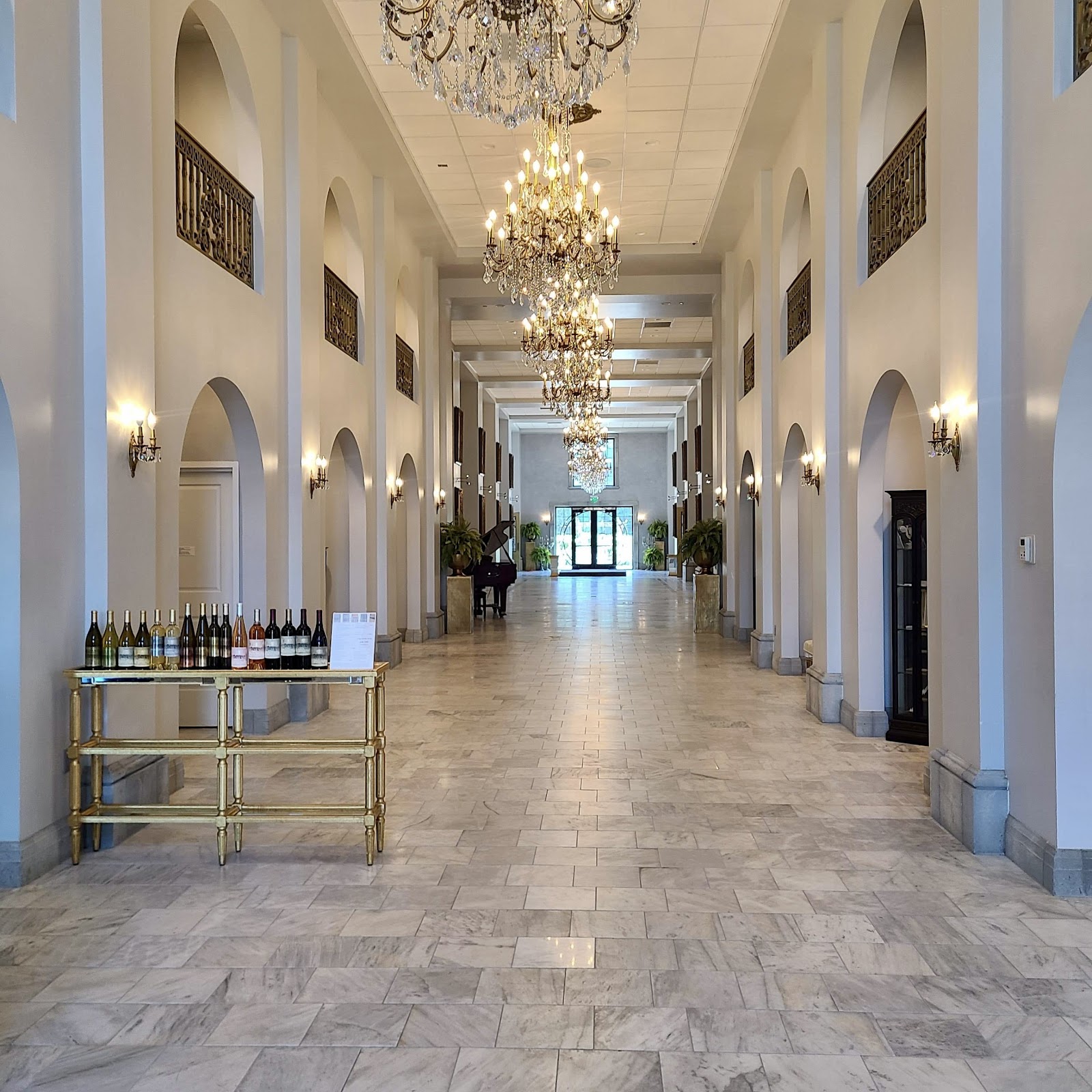
Chateau des Fleurs, Eagle: The Building’s Own Logic
Formal architecture and green gardens in sagebrush country. That contradiction is the whole site.
A purpose-built formal venue in the Boise valley has a logic that is deliberate and, once it is seen, straightforward to work with: it is a European idea placed in a high desert.
The architecture is formal — symmetrical, pale-rendered or stone-faced, with a designed relationship between building and grounds. The planting is irrigated, which means it is green, dense and maintained in a landscape that is naturally sagebrush and dry grass. And the two together are a designed contradiction rather than an accident.
Three photographic consequences follow.
The building is symmetrical, which means it has one correct camera position — square on the axis, level in both planes — and a metre off it reads as a mistake rather than a choice. The approximate middle position is the only real error and it is the commonest one.
The pale surfaces bounce. Rendered or light stone walls are efficient reflectors, which means the site reads high-key: anything standing in the building’s shade is lit softly from the front for nothing, shadows fill themselves, and a meter looking at the walls underexposes rather than overexposing.
And the grounds are green in a landscape that is not, which gives a dense saturated foreground and background that no unirrigated site in this valley could offer — but only within the property’s boundary, beyond which the country reverts to sage and dry grass.
The fourth element is the setting: the Boise valley is high desert at around two and a half thousand feet, dry, clear, hot in summer and cold in winter, with a very large difference between day and night temperatures.
We have not photographed a wedding at the Chateau des Fleurs; purpose-built formal venues behave consistently. Which spaces and grounds are included, whether the function-room lighting can be dimmed, the covered alternative, what the actual timings are, and whether more than one event runs on a date are questions for their team.
Chateau des Fleurs at a glance
| Where | A purpose-built formal venue at Eagle, in the Boise valley |
| The logic | Formal European architecture and irrigated gardens in high desert |
| The architecture | Symmetrical: one correct camera position, and everything else looks wrong |
| The surfaces | Pale and reflective — high-key, and every meter underexposes |
| Ask first | Spaces included, lighting control, timings, other events that day |
The architecture: the axis, the bounce and the openings
Start with the façade, because it is the one frame the building is designed to give and it is easy to get wrong.
Square on the axis, level in both planes, and far enough back that the verticals stay close to parallel — that is the frame. A camera at eye level close to a tall symmetrical front has to tilt up, which makes the building converge and appear to lean backwards, and correcting it afterwards costs resolution and crops the frame. Standing further back with a longer lens is the better answer.
Where the couple stands in that frame is the next decision. A formal building is designed to be imposing, which means two people small and centred on the axis reads as intended, while two people filling the frame makes the architecture incidental. Both are pictures; only one is a picture of this building.
The pale surfaces are the second element and their exposure is the thing most often got wrong. Sunlit render or light stone can sit four or five stops above a face standing in the building’s shade, and a meter averaging them gives a grey building and dark faces.
The correction is a habit: meter on skin, work in manual, and expose deliberately brighter than the camera suggests — often by a stop when a lot of pale wall is in frame. The check is whether the render reads pale with its texture visible rather than grey or blank.
Used as a source rather than fought, a large sunlit pale wall is one of the best soft lights anywhere. A subject in shade on the opposite side, facing it, gets soft directional light for nothing — and the working position is facing the lit wall with shaded architecture behind, which gives light in front and separation behind. Used backwards, facing away from the lit wall, the same position gives flat light and a bright background.
The colour of that bounce is worth knowing: pale render is close to neutral, which is an advantage over stone or brick — but warm-toned render bounces warm, and at this elevation the sky bounces a strong cool blue into the same face. A custom white balance set on a face in position handles the mixture, and it needs resetting when the position changes.
Openings and colonnades are the third element and they are the most dependable positions on the property. Any arcade, loggia, portico or deep overhang blocks the overhead component, restricts the light to a horizontal band that models a face properly, bounces off pale paving to fill from below, and cannot dapple. Two or three metres in from the open edge, at any hour in any weather.
In this climate that matters. The Boise valley is dry and clear, which means summer sun is harder than in humid country: a face half in sun at midday is unrecoverable rather than difficult, and the covered positions are therefore disproportionately valuable.
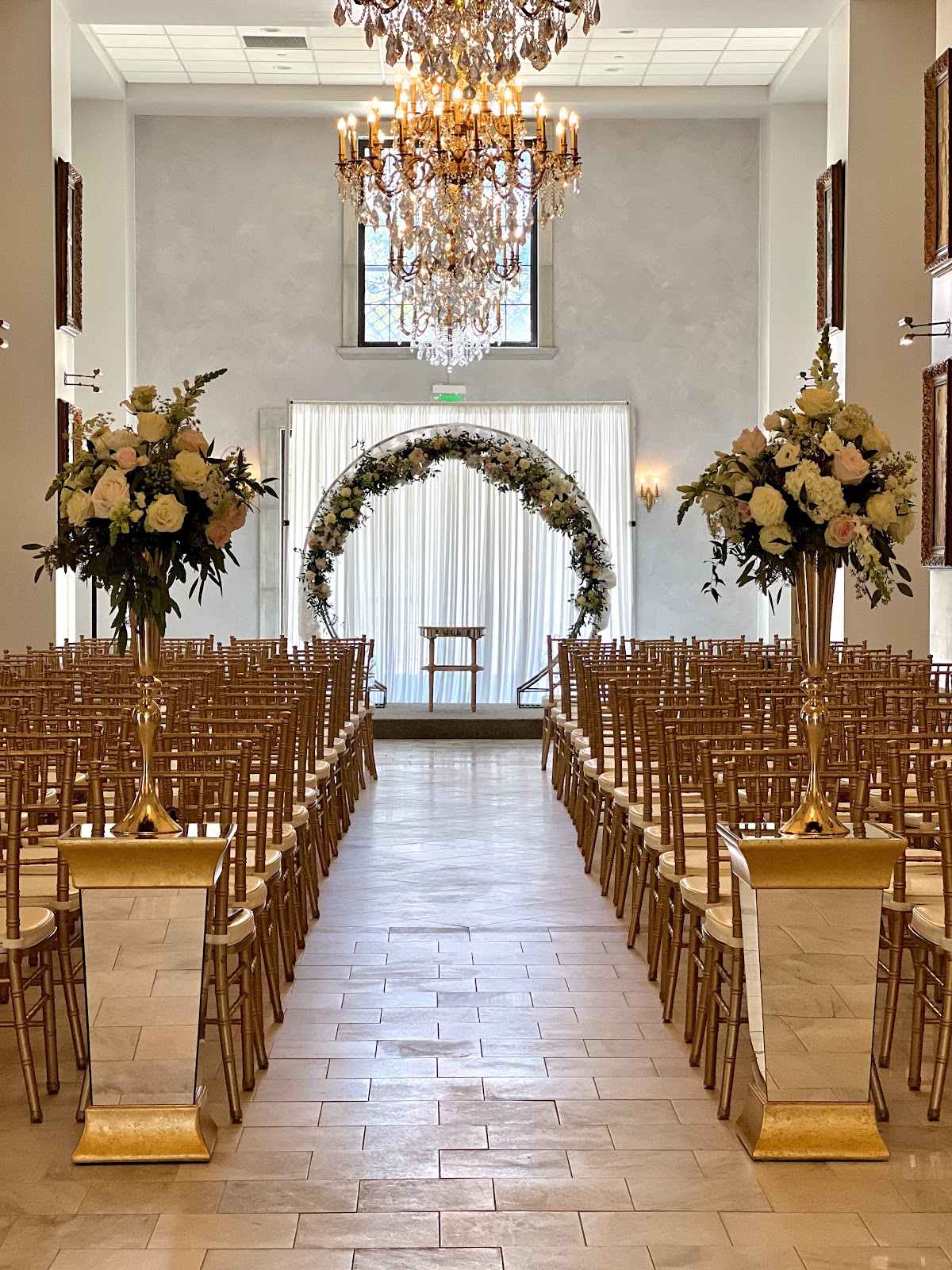
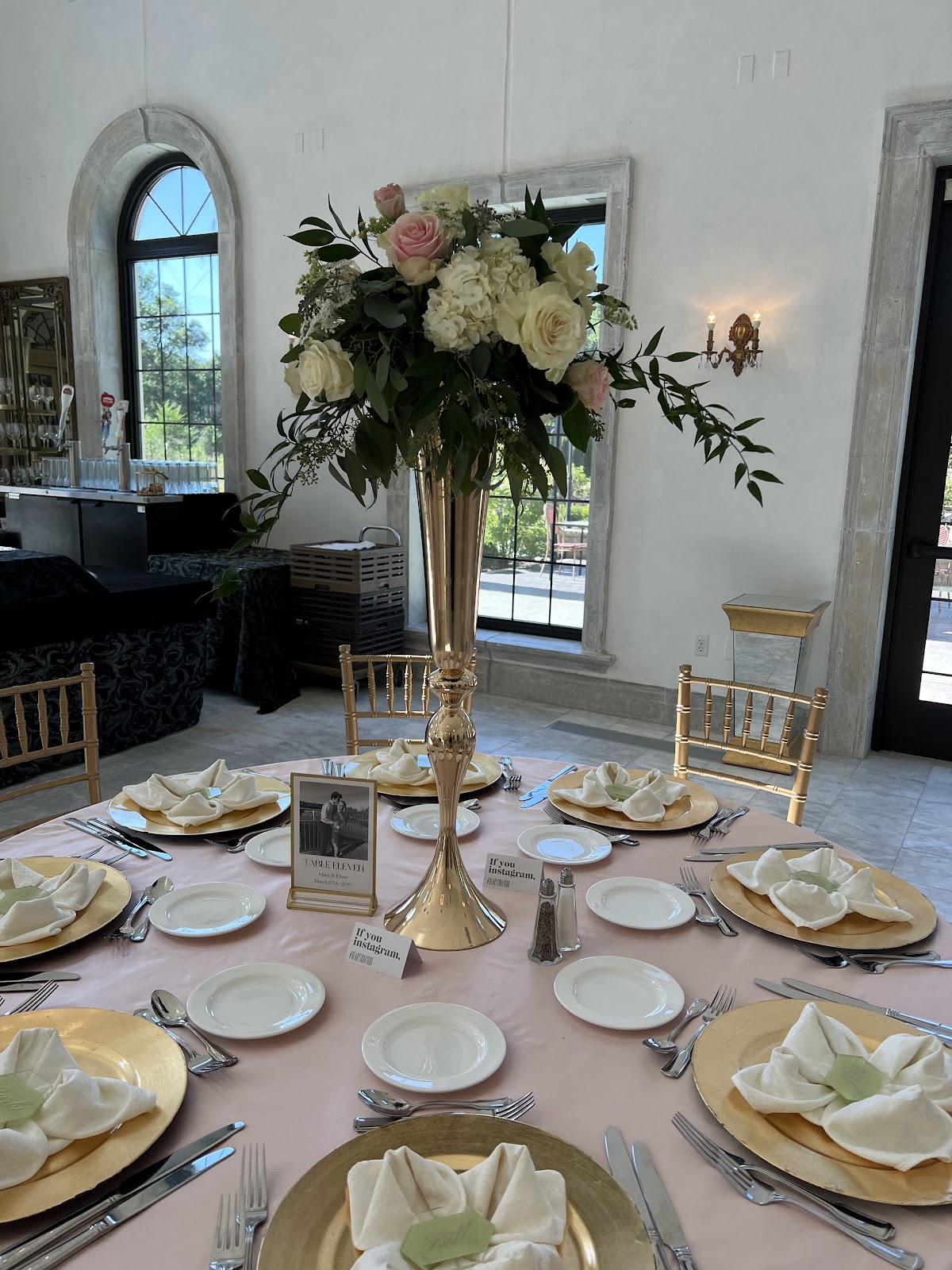
Indoors, a purpose-built formal venue usually has tall glazing and pale finishes, which means the problem is separation rather than light: soft bounced light against pale walls gives no fall-off, no shadow side and no tonal difference, so the frames read flat and identical wherever they are made.
The three fixes are consistent. Find something genuinely dark to put behind the subject — a doorway to an unlit space, a corridor receding away, drapery, a dark panel. Use the glazing as a directional source, with the subject a metre from it turned about forty-five degrees. Or add a source at a stop above the ambient specifically to restore the shadow side the room’s own bounce has filled in.
Large glazing also reflects, and by the evening it becomes a mirror as the exterior darkens — which means every frame pointed that way contains the lit room twice. A few degrees off perpendicular removes it.
For the reception, expose the ambient about a stop under what faces need so the room keeps depth, then add one warm-gelled source just above skin level with the white balance set to the gel. A lower ceiling is a usable bounce surface, and a high ornate one is not.
The gardens, the boundary, and the high desert year
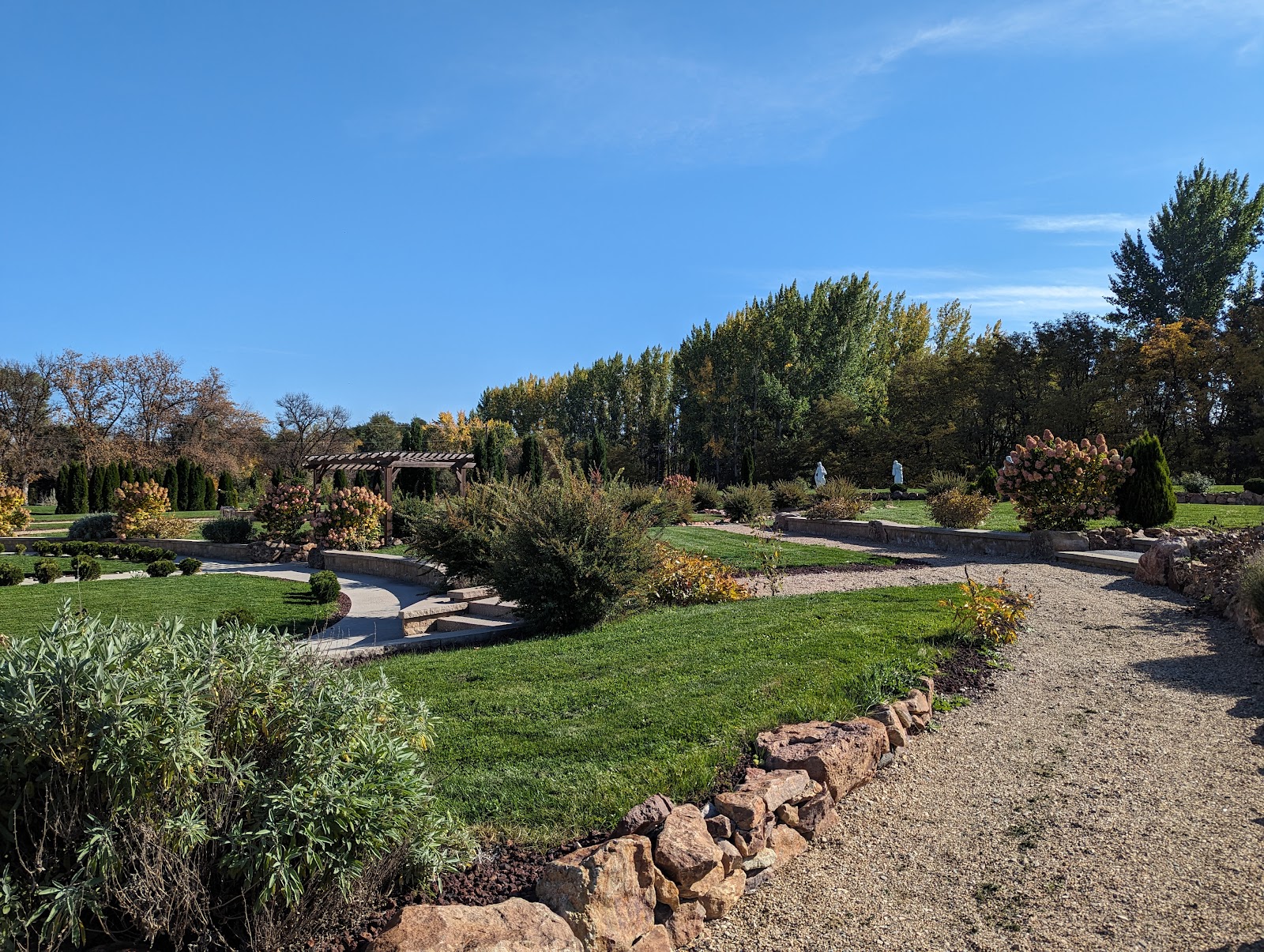
The gardens are the site’s other half and their virtue is density. Irrigated planting in high desert country grows vigorously under a long sunny season, which means the borders, hedges and specimen trees are fuller and greener than the surrounding landscape allows — and that density is what gives the property its dark backgrounds.
Dense clipped hedge is the best background in any garden: a dark, even, textureless mass two or three stops below a subject with nothing in it to distract. The metering correction is to meter on skin rather than on the hedge, because a dark mass makes a meter overexpose a face — and it reverses the correction needed against the pale walls, which means a day here needs the exposure reset repeatedly.
The formal geometry applies to the grounds as well as to the building. A designed garden has axes, and standing on one gives a frame where everything resolves; a metre off it gives a frame where nothing balances. Height helps too, because a laid-out bed is designed to be read from above — a step, a terrace or an upper window reveals it as a pattern where a low camera shows a mass of foliage.
What the garden does not have is overhead cover except where the specimen trees are mature. Beds and paths are open by design, and any arbour or pergola with gaps between its members is not shade but a striped dappling machine. The test is universal: look at the face rather than the ground, and any hard edge on skin means move.
The mature specimens, where the planting is old enough, are the real canopy. In this valley they are likely to be the trees that thrive with irrigation — maple, ash, linden, London plane and conifer — and the canopy edge is the reliable position: a metre or two inside on the side facing open sky gives soft directional light in front and a dark canopy behind.
The boundary is the site’s honest limitation and it is worth planning around. A green irrigated property in high desert country has a hard edge: beyond the planting, the land reverts to sage, dry grass, agricultural ground or development — which means the wide frames work in a limited set of directions and the illusion depends on the camera staying inside it.
The answers are positional. Walking a full circle from the ceremony position and noting which directions are clean is ten minutes that decides the coverage. A low camera with a border or a hedge across the bottom of the frame hides most of what is at ground level behind it. And a longer lens at a wider aperture dissolves whatever remains into tone.
Overhead wires and poles are the specific thing to check, because the eye edits them out and a photograph does not — looking at the sky in the viewfinder before the first frame in any position is worth the second it takes.
The high desert conditions are the last thing to read and they affect comfort more than light.
Summer in the Boise valley is hot and dry — commonly the nineties Fahrenheit and frequently above a hundred in July and August — but with low humidity, which means it is a different kind of heat from the Southeast: more tolerable in shade, harsher in sun, and with a very large drop after sunset.
That diurnal swing is the useful part. Dry air at elevation holds little heat overnight, which means an evening here cools quickly and is comfortable in a way an Alabama evening is not — and a party in formal clothes at ten o’clock may want a layer, which is worth mentioning.
The days are long at this latitude in summer: light until past nine, which means the good low light arrives late and lasts. At a venue with fixed timings that is the scheduling question of the season, and asking in advance about stepping outside during the evening is much easier than asking on the night.
Wind is the practical constraint on open ground in this valley, and the dry clear air is the compensation: distant mountains hold detail on a long lens in a way they do not in humid country, which means a compressed frame of the Boise foothills or the ranges beyond is genuinely available where the boundary allows it.
- Square on the axis or out of the frame; nothing approximate works
- Meter on skin and expose brighter — pale render fools every meter
- Face the lit wall from the shade; backwards wastes it
- Hedges reverse the correction; reset the exposure at every crossing
- Walk a circle and note the clean directions; the boundary is hard here
The Boise valley year
The Boise valley is high desert at around two and a half thousand feet with hot dry summers, cold winters and a long sunny season, which makes most dates workable and turns the calendar into a question of comfort and colour.
Winter is cold and comparatively dry: hard freezes occur, snow falls but does not always lie long at valley level, and the deciduous planting is bare. At a garden venue that is the season’s honest weakness, because the property’s density is what makes it work and half of it is gone.
What winter gives is the light. The December sun at this latitude reaches only about twenty-four degrees above the horizon, which is low enough that the whole short day rakes rather than floods — and on pale formal architecture that is the best condition of the year: raking light brings out every string course, every cornice shadow and every render texture, where midday flattens all of it.
Indoors the same low sun enters tall glazing almost horizontally and travels much further into a room than a summer sun does, which widens the whole usable area near the glass.
Winter is also when the air is clearest, which for any compressed frame of the foothills or the ranges matters. Inversion fog is the valley’s characteristic winter condition and it is worth knowing about: cold air pooling in the valley can produce days of low grey fog, which flattens everything and removes any distance — a soft even condition that is easy to work in and short on drama.
Snow, where it lies, simplifies the grounds and the boundary at once: beds become shapes, the hard edge of the irrigated property disappears, and the whole site reduces to a clean plane. Expose for the snow and let everything else go dark, overexposing deliberately relative to the meter, which snow fools by about two stops.
Spring is the valley’s best season for the gardens. The planting comes into leaf and flower through April and May, the light lengthens, the temperatures are comfortable, and the surrounding foothills are briefly green rather than gold — which is the one period when the boundary is less obvious because the country beyond is green too.
That combination lasts a few weeks and it is worth knowing: in May the contradiction between irrigated garden and high desert is at its least visible.
Summer is hot and dry and it is the busiest season. The gardens are at their fullest and the middle of the day is the hardest light of the year — dry clear air at elevation makes it harder than the same temperature in humid country — which pushes everything to the arcades, the mature canopy and the ends of the day.
The long days are the compensation and the complication: light until past nine means the good low light is available and that it falls after most receptions begin. Asking about stepping out later is worth doing rather than hoping.
The honest late-summer note is wildfire smoke. Idaho’s fire season runs from roughly July into September and smoke from fires anywhere in the region can fill the Boise valley for days — turning the sun orange, flattening contrast, removing the foothills entirely and shifting everything warm in a way no white balance resolves. It cannot be planned for, only acknowledged.
Autumn is the best season overall. The heat breaks in late September, the smoke risk passes, the air clears, and the irrigated planting turns — which in this valley means the maple, ash and linden that were planted for exactly this, giving concentrated colour on the property while the surrounding country is dry gold.
That is the most striking version of the site’s central contradiction: a green-turning-gold garden in a tan landscape, with clear air and a low sun. Late September into October is the best window of the year, and the colour arrives earlier here than in the Southeast because the valley is colder and the elevation is higher.
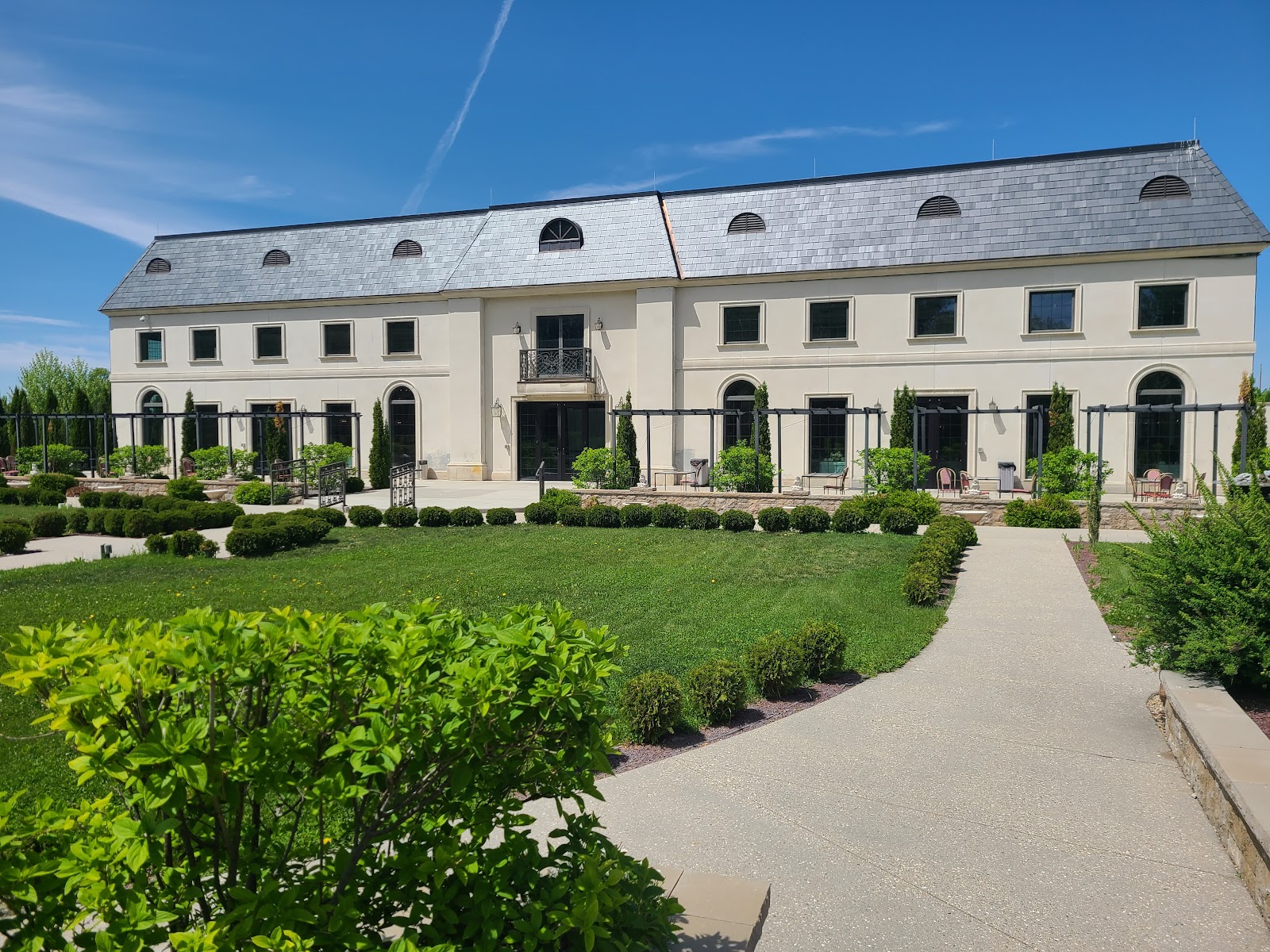
More frames from Chateau des Fleurs
Chateau des Fleurs wedding photography: common questions
What is the building's logic?
Formal symmetrical architecture with irrigated gardens, placed in high desert — a deliberate contradiction, and the thing to photograph.
What does symmetry demand?
One correct camera position — square on the axis, level, far enough back that the verticals stay parallel. Anything approximate looks wrong.
Why expose brighter than the meter says?
Pale render sits four or five stops above a shaded face, and a meter averaging them gives a grey building and dark faces.
What is the most dependable position?
Two or three metres into an arcade, loggia or portico. It restricts the light to a horizontal band and cannot dapple.
What is the site's limitation?
A hard boundary. Beyond the irrigated planting the land reverts to sage and dry grass, so the wide frames work in a limited set of directions.
When is the site at its best?
Late September into October, when the planted colour turns against a dry gold landscape in clear air — and May, when the boundary is least visible.
More Idaho venue guides
We are writing a photographer’s guide to every venue we would happily shoot in Idaho. Here are three more, plus the full index:
- Hidden Springs Ranch, Meridian: The Problem, and Four Ways Out
- Highlands Event Center, Post Falls: The Problem, and Four Ways Out
- Hitching Post, Hayden: One Frame, and How It Is Made
Planning a wedding at Chateau des Fleurs?
A green garden in a dry valley. Tell us your date and we will use both.