 Salmonberry Inn, Anchorage: One Frame, and How It Is Made
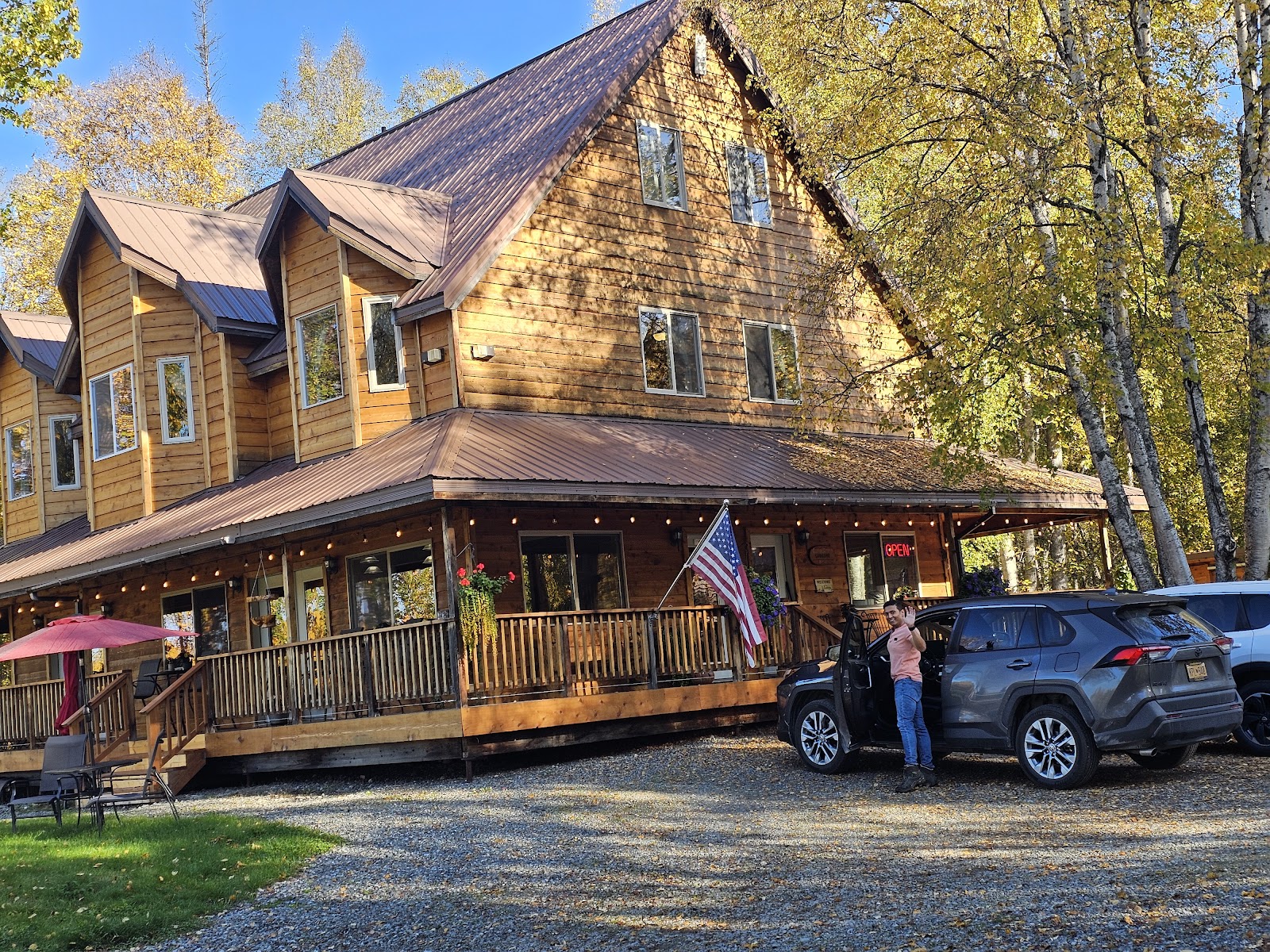
Susitna River Lodge, Talkeetna: What It Suits and What It Does Not
A braided glacial river is grey, wide and patterned. It is a graphic subject, not a pretty one.
A lodge on a large braided glacial river is a specific proposition, and the honest way to describe it is by what that kind of river suits and what it does not.
The Susitna is a braided river, which means it is not a single channel but a wide bed of shifting gravel with many channels woven through it — because a glacial river carries far more sediment than it can keep in suspension, drops it, and then finds a new way around what it dropped.
Three characteristics follow and they govern every frame. The water is grey and opaque, because it carries rock flour in quantity, which means it does not go the colour of the sky and does not brighten a frame the way clear water does. The bed is wide and pale, mostly exposed gravel rather than water. And the pattern of channels across it is the visual subject — a woven grey-on-grey structure that reads from above or along rather than across.
That makes it a graphic landscape rather than a picturesque one, and it is worth understanding in advance because it does not look like the rivers in most wedding photographs. A clear blue river is pretty; a braided glacial river is remarkable, and the difference matters when setting expectations.
The fourth element is the setting: Talkeetna sits at a confluence with the Alaska Range to the north, in spruce and birch country, at around sixty-two degrees north — which means the light rakes rather than falls at every hour of the day.
We have not photographed a wedding at the Susitna River Lodge; lodges on braided glacial rivers behave consistently. Which spaces are included, what access there is to the riverbank and where the safe limits are, the covered alternative, and what the bear guidance is are questions for their team — and river access is a safety matter rather than a photographic one, because a glacial river is cold, fast and opaque.
Susitna River Lodge at a glance
| Where | A braided glacial river near Talkeetna, southcentral Alaska |
| The water | Grey and opaque with rock flour — it does not brighten a frame |
| The bed | Wide pale gravel with woven channels; the pattern is the subject |
| Suits | Graphic wide frames, scale, autumn colour, and winter |
| Does not suit | Reflections, blue-water expectations, or wading anywhere |
What it suits
It suits graphic wide frames, and that is the river’s real gift. A braided bed seen from a bank or a bluff is a pattern: pale gravel bars, darker grey channels, and the woven relationship between them, extending across a wide flat plain toward mountains.
That reads best on a longer lens looking along the river rather than a wide one looking across it, because compression stacks the bars and channels into layers and makes the pattern legible — where a wide lens from the bank gives a foreground of gravel, a thin grey line of water and a great deal of sky.
It also reads best from height. Any bluff, bank top or raised position makes the braiding visible as a pattern rather than as a sequence of edges, which is why the frames from above the river are stronger than the ones at its level.
It suits scale. A braided river is wide — far wider than the water in it — and a couple standing on a gravel bar with the bed extending behind them and mountains beyond gives a sense of space that a narrow river cannot. The ground is level, pale and open, which means the figures read clearly against it.
That pale gravel is also a reflector, and it is the one thing in this landscape that bounces generously: it throws light upward into faces, filling the shadows the sun makes. The cost is uplight under the chin, which something solid on one side corrects — and the diagnosis is to look at the chin in the first frame.
The exposure trap goes with it. A meter looking at a large pale gravel bed pulls it toward mid-grey, which underexposes the whole frame and gives grey ground with dark faces. Metering on skin, in manual, and exposing deliberately brighter than the camera suggests is the rule, and the check is whether the gravel holds texture rather than reading flat.
It suits autumn colour by contrast. A grey river bed and grey water are entirely neutral, which means any warm colour placed against them reads at full saturation with nothing competing — and in late August the birch and cottonwood along the banks turn a clean intense gold while the alder and willow turn yellow.
Gold foliage against a grey braided bed is a stronger contrast than the same foliage against blue water, for exactly the reason a dark background holds colour better than a bright one. It is the best combination this site produces.
It suits winter, and for a specific reason: the river partly freezes. A braided bed in an Alaskan winter is a landscape of ice shelves, open channels, frost-covered gravel and snow — which turns the grey-on-grey pattern into a white-on-grey one with far more tonal separation in it. Where the water is still moving, dark open channels against snow-covered bars is the cleanest graphic frame the site gives.
And it suits the long Alaskan evening. Because the sun’s path is shallow at this latitude, the low warm light lasts two or three hours rather than forty minutes, and in June the usable light runs until near eleven at night. Low raking light across a braided bed picks out every bar and channel edge, which is when the pattern is at its most visible.
What it does not suit
It does not suit reflections, and that is the clearest limitation. A braided river is fast, shallow and broken, which means the surface is disturbed almost everywhere — and opaque grey water in motion does not mirror anything.
A couple who want the doubled-mountain frame that a still lake gives will not get it here. Where there is standing water in a side channel or a slough it may be possible, and finding those is worth a walk — but the main river will not provide it at any hour or in any weather.
It does not suit blue-water expectations, and this deserves saying plainly because it is the commonest surprise. Glacial rock flour makes the Susitna grey-tan and opaque, and no light, filter or edit makes it blue. A couple picturing turquoise water has the wrong river in mind, and a couple who understand that it is grey and remarkable get the photographs the place actually offers.
The colour also has a technical consequence: grey water fills faces near the bank with a cool neutral-grey cast, which a daylight preset renders slightly flat and lifeless. A custom white balance set on a face at the water’s edge fixes it in thirty seconds, and it needs resetting away from the shore.
It does not suit wading, walking out or any approach to the water, and this is a safety matter rather than a compositional one. A glacial river is close to freezing, fast, and opaque — which means the depth is not visible, the bed shifts, and cold water incapacitates a person very quickly. Whatever the lodge’s limits are, they are followed rather than judged, and a photograph is not worth a step into it.
Gravel bars are the related caution: a bar that is dry in the morning may not be in the afternoon, because glacial rivers rise through the day as the sun melts ice upstream. That is a genuine daily cycle rather than a rarity, and it is worth asking about.
Two further limitations. The bed is open with no shade on it at all, and the spruce and birch along the banks are the shade — which means the middle of the day belongs to the bank rather than the bar. The canopy edge is the reliable position: a metre or two inside a stand at the margin of an opening gives soft directional light in front and near-darkness behind, three or four stops of free separation.
The metering trap reverses between the two: a meter looking at dark spruce overexposes a face by a couple of stops and a meter looking at pale gravel underexposes it, and those positions are a few paces apart. Manual, metered on skin, reset at every transition.
And wind along a river bed is the practical constraint. A wide open valley funnels air, which means a lightstand is a liability and a held modifier is a sail — so handheld or bracketed sources are the working configuration, and the lee of a bank or a spruce stand is worth walking to.
The Alaska Range to the north is the site’s other subject and it is worth a note. Denali is visible from this area on clear days, which are a minority — and any plan whose best frames require it is a plan that will most likely not happen. The honest approach is to plan for the river and the forest, keep a long lens ready, and treat the mountain as a bonus.
When it does appear, the frame needs a genuinely long lens: a wide one renders it as a small pale triangle above a great deal of gravel, which loses the scale entirely. The interior air here is clean and dry, which means compression holds snow structure and ridgelines at a great distance.
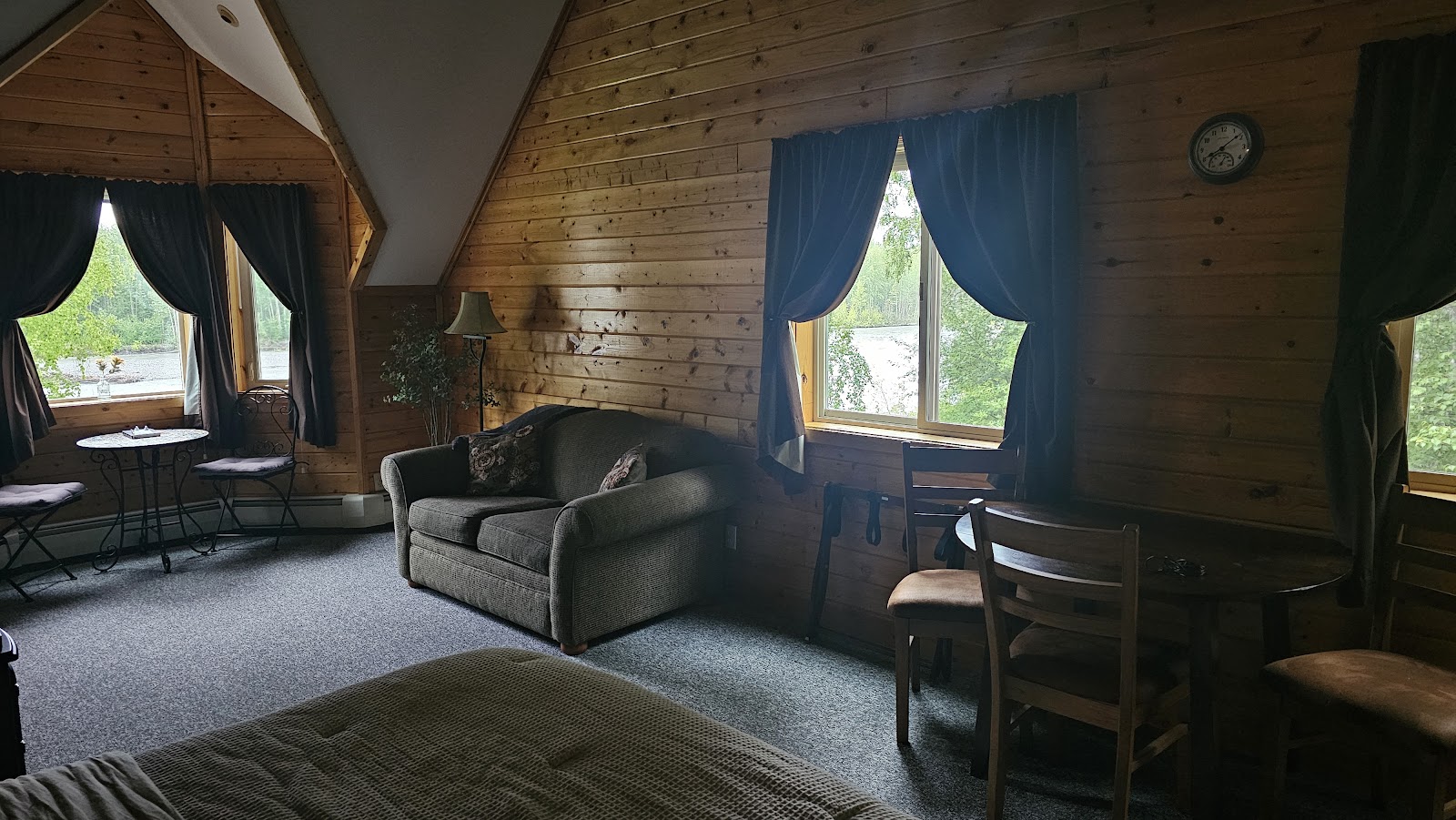
Indoors, a lodge in this climate is timber and it absorbs, which means the ambient is a stop or two below what the eye estimates and the background drops away for free. A subject a metre from a window turned about forty-five degrees to it gets horizontal light with steep fall-off — room lights off, custom white balance on a face — and because the sun is low all year, that light travels much further into the room than it would further south.
- Look along the river, not across it, and get height — the pattern needs both
- Meter on skin and expose brighter; pale gravel underexposes every meter
- Set white balance at the water’s edge; grey water renders flat on a preset
- No reflections here, and no wading anywhere. Both are settled facts
- Gold foliage against grey gravel is a stronger contrast than against blue water
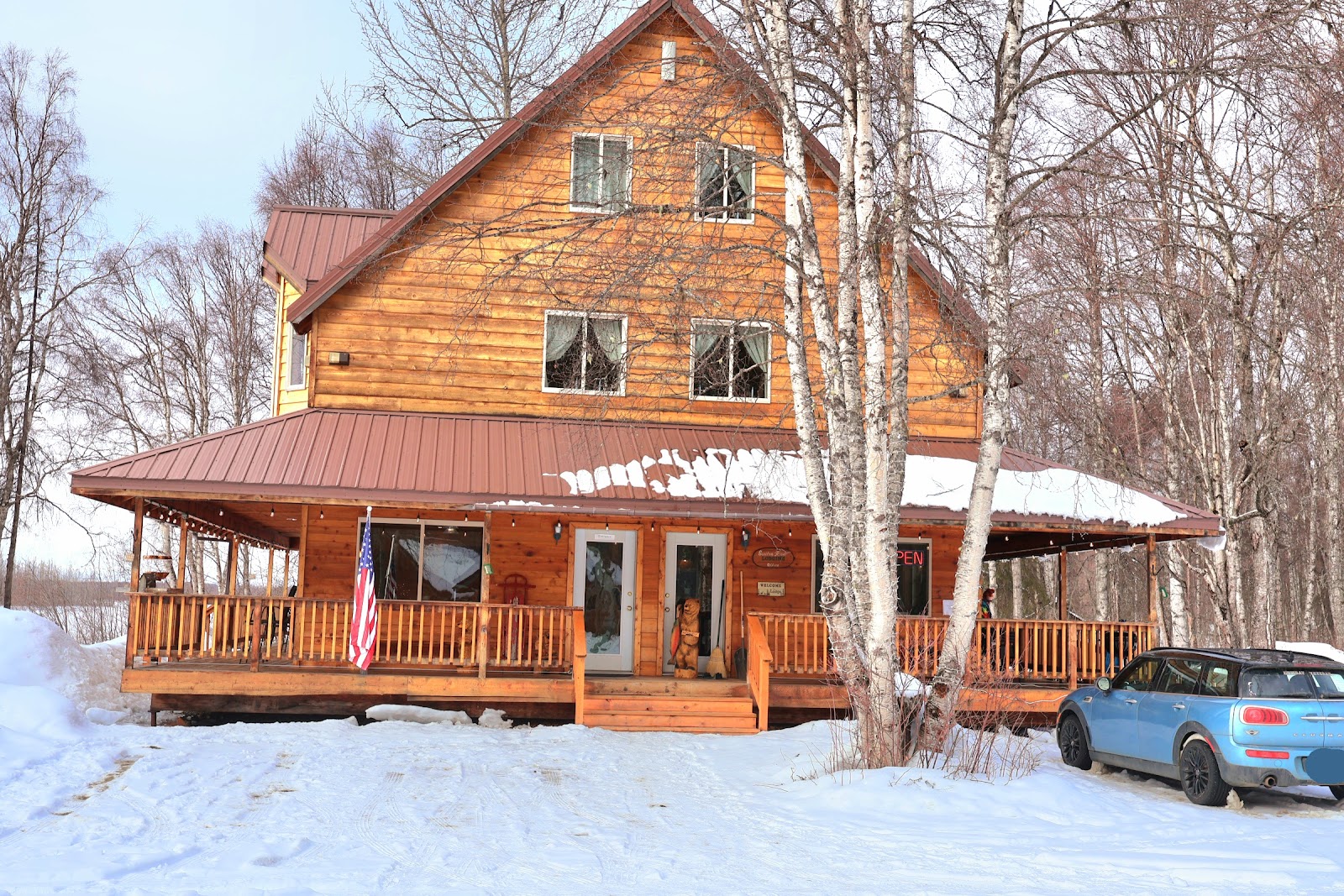
The Susitna year
This is the transition between southcentral and interior Alaska, which means a continental-leaning climate with a large annual range and the enormous daylight swing that defines the state.
Midwinter gives about five hours of daylight with the sun reaching only about four degrees above the horizon, which means the whole short day is an extended twilight — soft, raking and strongly blue and pink toned. Over a partly frozen braided bed with spruce and the Alaska Range beyond, that is among the most distinctive light in this guide.
Winter transforms the river, as described above: ice shelves, snow-covered bars, dark open channels and frost, which gives the grey-on-grey pattern the tonal separation it lacks in summer. It is the season in which the river is at its most graphic.
Snow is the winter asset: the best natural fill available, lifting every shadow and throwing light upward into faces. Snow against near-black spruce is the widest brightness range in this guide — expose for the snow and let the conifer go black, overexposing deliberately relative to the meter, which snow fools by about two stops.
The winter safety note is that river ice on a braided glacial river is never reliable, because channels shift and move beneath it. That is a harder limit than the summer water and it belongs in the same conversation.
Winter is aurora season from roughly September to April on clear nights, and this area has dark skies and a good latitude for the auroral oval. Northern lights over a frozen river bed with spruce and the range beyond is available nowhere else in this guide — tripod, wide fast lens, a few seconds to half a minute, and a party willing to stand still in serious cold.
Break-up in April and May is the least attractive time of year and on a glacial river it is also the most dramatic: the ice goes out in a matter of days, the river runs high, brown and fast with melt, and the bed is at its most unstable. It is not a wedding season, and early May here is not spring in any recognisable sense.
June is when it turns and it turns fast. The green arrives within a fortnight and the days are enormous — but the river is at its highest of the year, because this is when the glacial melt is strongest, which means the gravel bars are at their smallest and the water at its most heavily loaded and grey.
That matters for the frames: a braided river at high water is less braided, because the channels merge. The pattern is at its most visible in late summer and autumn when the flow has dropped and the bars are exposed.
Mosquitoes arrive with the green and are a genuine consideration in June and early July, less bad on an open windy gravel bed than in the spruce.
July is the warmest month and fireweed gives the strongest colour of the Alaskan summer — tall magenta spires along the banks and cleared ground in quantity, which against grey gravel reads at full saturation.
Late August into September is the best season overall and it is not close. The flow has dropped, so the braiding is at its most pronounced; birch and cottonwood turn a clean intense gold; the alder and willow along the bars turn yellow; the first snow appears on the Alaska Range; the air reaches its clearest of the year, which improves the odds on the mountain; and the nights are dark enough for aurora while the days are still long.
Gold foliage against a fully exposed grey braided bed, with fresh snow on the range and aurora after dark, is the strongest combination this site produces — and the window is roughly the last week of August through the middle of September.
October brings the rain, the dark and the first ice, and by November the river is freezing and the winter season has begun.
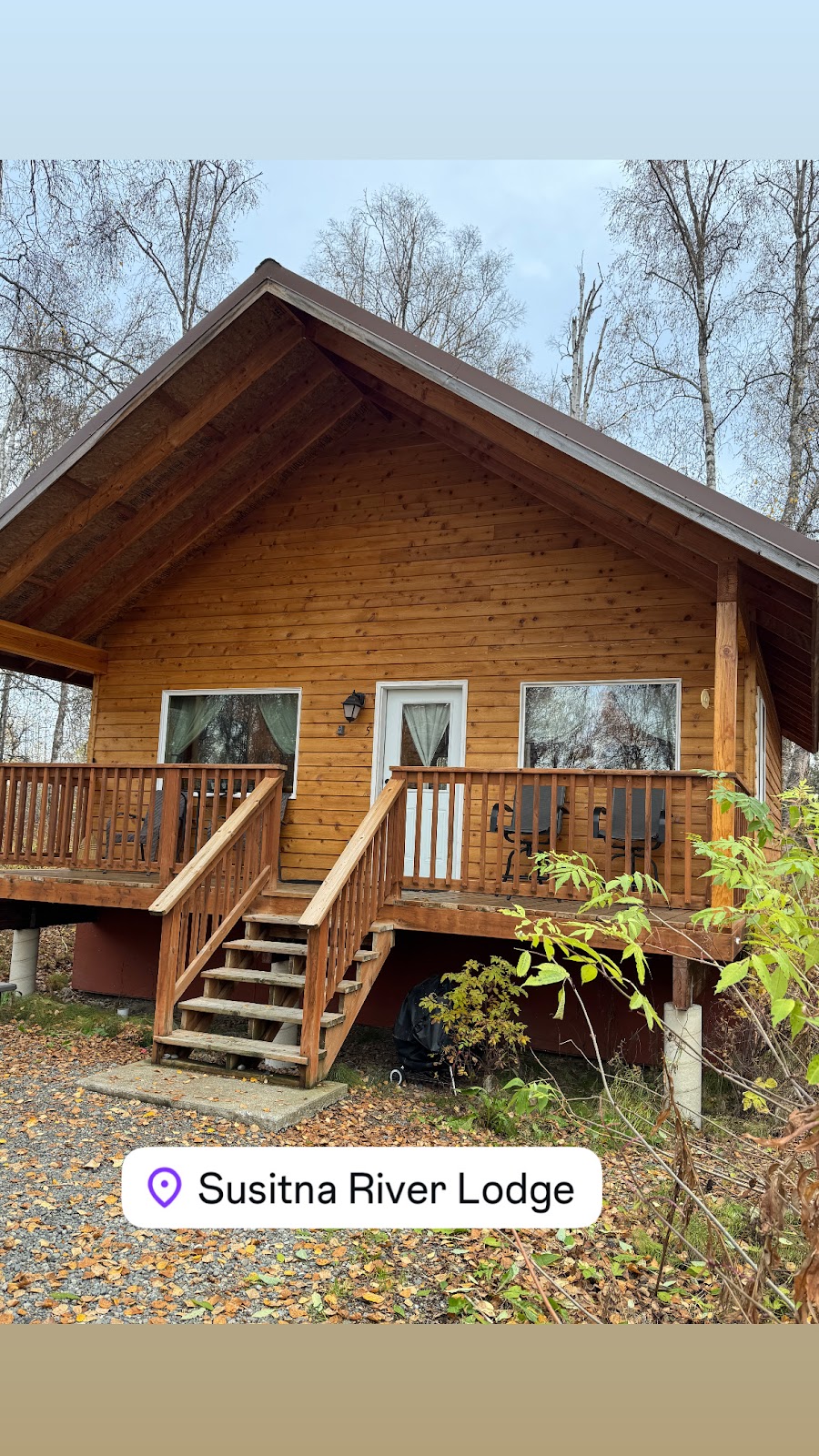
More frames from Susitna River Lodge
Susitna River Lodge wedding photography: common questions
Why is the river grey?
It carries glacial rock flour in quantity, which makes it opaque. No light, filter or edit makes it blue, and it is worth setting that expectation early.
What is the best way to photograph a braided river?
Looking along it rather than across it, on a longer lens, from any height available. Compression and elevation are what make the pattern legible.
Why does the exposure need correcting?
Pale gravel makes a meter underexpose. Meter on skin, work in manual, and go brighter than the camera suggests — the gravel should hold texture.
Are there reflections?
Effectively none. The water is fast, shallow, broken and opaque. Side channels and sloughs are the only possibility.
Can we walk out to the water?
No. A glacial river is near freezing, fast and opaque, so depth is invisible and cold incapacitates quickly. The lodge’s limits are followed.
When is the river at its best?
Late August into mid-September, when the flow has dropped and the braiding is fully exposed — with gold foliage against grey gravel.
More Alaska venue guides
We are writing a photographer’s guide to every venue we would happily shoot in Alaska. Here are three more, plus the full index:
- Tordrillo Mountain Lodge, Skwentna: The One Decision That Governs Everything
- ZJ Ranch, Delta Junction: The Light Through the Day
- The Alaskan Garden, Palmer: Field Notes, Problem and Solution
Planning a wedding at Susitna River Lodge?
A grey river worth understanding. Tell us your date.