 Salmonberry Inn, Anchorage: One Frame, and How It Is Made
Stillpoint Lodge, Halibut Cove: A Walk Through the Site
Everything here arrives by boat, including the guests and the equipment. Plan for that first.
This is a walk through the site in the order a wedding day tends to use it, and the first thing to understand about a boat-access lodge has nothing to do with light.
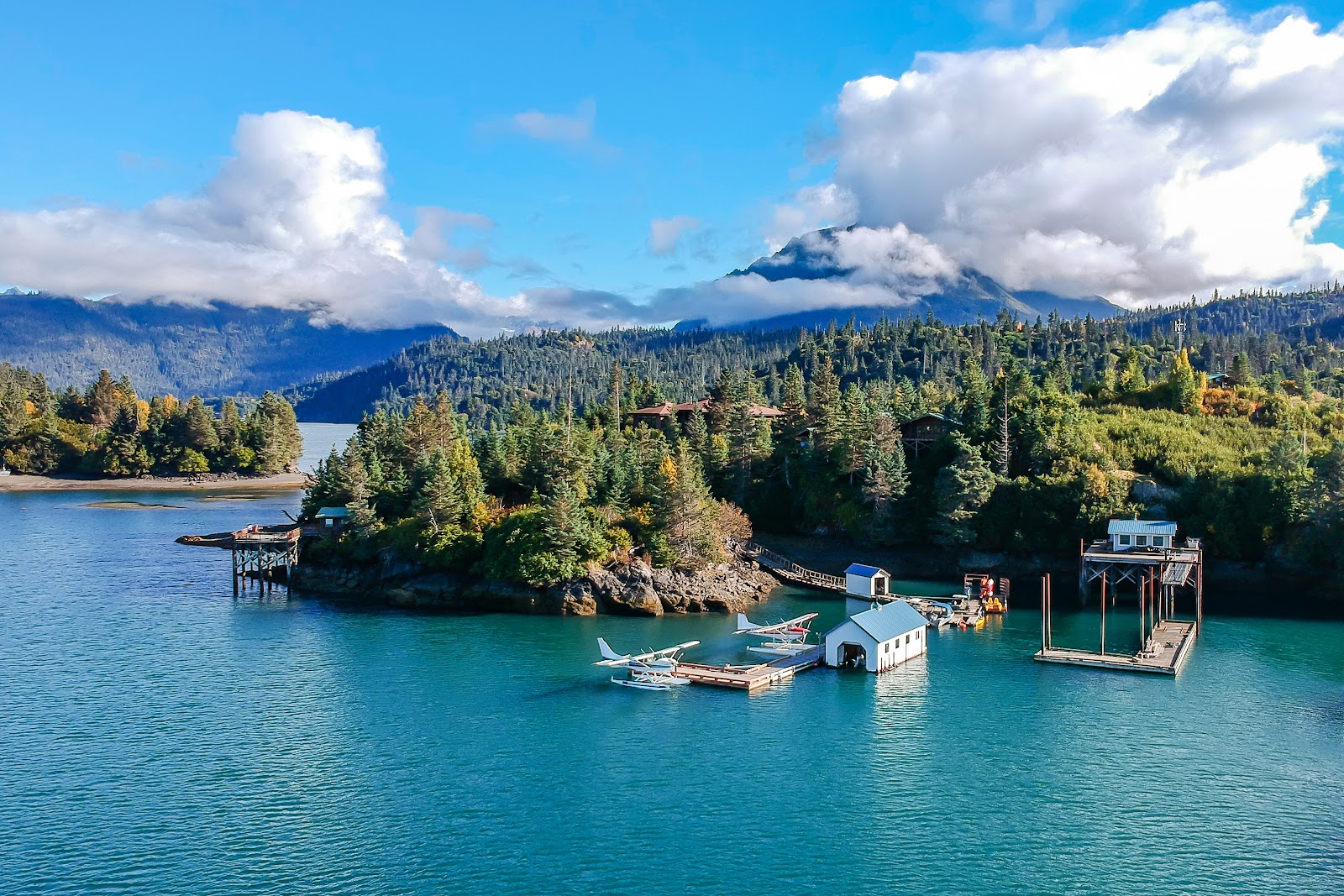
Everything arrives by water. The guests, the dress, the flowers, the food, the photographer and every piece of equipment cross a bay to get here — which means the guest list is limited by boat capacity, the schedule is set by crossings rather than by the light, the weather can delay or prevent arrival, and there is no possibility of going back for something that was left behind.
That reorders the planning entirely. A wedding at a boat-access site is a small, self-contained, weather-dependent event by nature, and knowing the crossing times and the contingency before anything else is the preparation that matters.
The photographic consequences follow from the same fact. Equipment has to be what can be carried, which in practice means one or two bodies, a small number of lenses, and battery-powered light rather than anything mains-dependent. Redundancy matters more than range: a spare body is worth more than a fifth lens when there is no shop and no car.
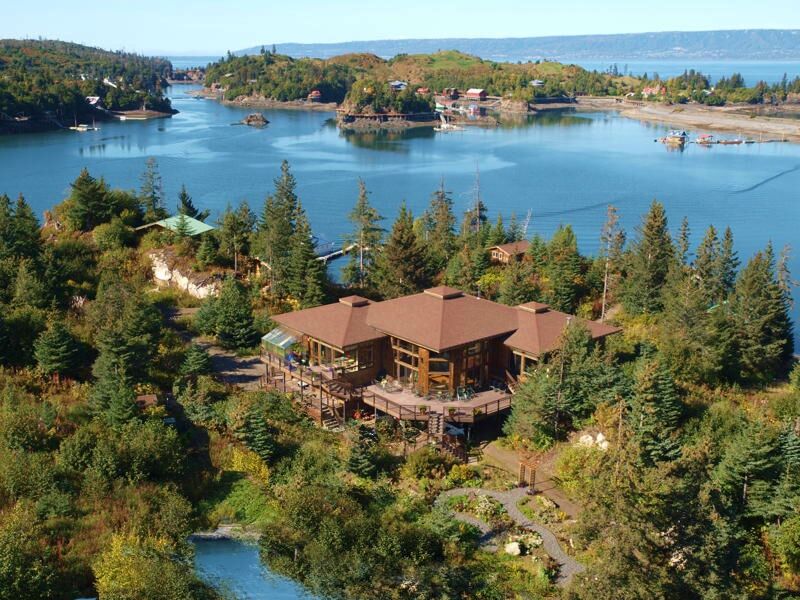
What the remoteness buys is the reason to be here. A site across a bay from the nearest road has nothing in the frame that is not landscape: water, mountains, rainforest, and the lodge itself. In a guide full of bounded properties with roads beyond the hedge, that is rare.
The setting is Kachemak Bay on the lower Kenai Peninsula — coastal temperate rainforest, steep mountains rising from the water, very large tides, and light that at around fifty-nine degrees north rakes rather than falls all day.
We have not photographed a wedding at Stillpoint Lodge; boat-access lodges on this coast behave consistently. Crossing times and the weather contingency, guest limits, which spaces are included, the covered alternative, what power is available, and what the bear guidance is are questions for their team — and the first of those decides everything else.
Stillpoint Lodge at a glance
| Where | A boat-access lodge on Kachemak Bay, lower Kenai Peninsula, Alaska |
| The first fact | Everything arrives by water — guests, equipment and the schedule |
| The kit | What can be carried, with redundancy rather than range |
| The reward | Nothing in the frame that is not landscape |
| Ask first | Crossings and contingency, guest limits, power, covered alternative |
The water: the crossing, the tide, and the shore
Start at the water, because it is the first thing anyone sees and because it changes more through the day than anything else on the property.
The crossing itself is worth photographing and it is frequently overlooked. A boat carrying a wedding party across a bay, with mountains beyond and a wake behind, is a frame that belongs to this kind of site and no other — and it happens once, at a known time, which makes it plannable.
Two technical notes on it. A moving boat means a shutter fast enough to hold both the subjects and the horizon, and a horizon that is dead level, because water gives an absolute reference and a degree off is glaring. And spray is a real risk to equipment on an open boat, which argues for one body out and the rest sealed.
The tide is the site’s largest variable and Kachemak Bay has an exceptionally big one — a range of several metres between high and low water on a roughly six-hour cycle. That is enough to change the shoreline entirely: at high water the beach is narrow or gone and the water comes up to the vegetation, and at low water a broad expanse of rock, gravel and mud is exposed.
Both are usable and they are different sites. High water gives reflections and a clean margin; low water gives foreground texture, tidepools, kelp, and the graphic pattern of a drained bay. It is entirely knowable in advance, and checking the tide for the date takes a minute and decides which one the wedding gets.
The tide also decides the crossing, which is the more important point: boat access at some sites depends on water level, and that is a question for the lodge rather than an assumption.
The water’s colour is worth knowing. Kachemak Bay carries glacial silt, which means it is grey-green rather than blue — it does not brighten a frame the way clear water does, and it fills faces near the shore with a cool grey-tinged light. A custom white balance set on a face at the water’s edge handles it, and it needs resetting away from the shore.
What the water does give is a large horizontal reflector, which throws light upward into faces standing above it — filling the shadows a high sun carves, at the cost of uplight under the chin. The diagnosis is to look at the chin in the first frame, and something solid on one side corrects it.
And it gives the mountains across the bay, which are the site’s principal wide subject. Those need a longer lens: compression stacks the ridges into layers and brings them forward, where a wide lens reduces them to a thin band above a great deal of water. In the exceptionally clean cool air here that compression holds detail with almost no haze, which is why the frame works.
The exposure for it goes on the distance rather than on skin, with the faces lifted by a close warm-gelled source — because metering on faces gives a white sky and a washed-out range. Close matters because nothing over water bounces enough to lift a face: a source at two metres needs roughly a quarter of the output it needs at four.
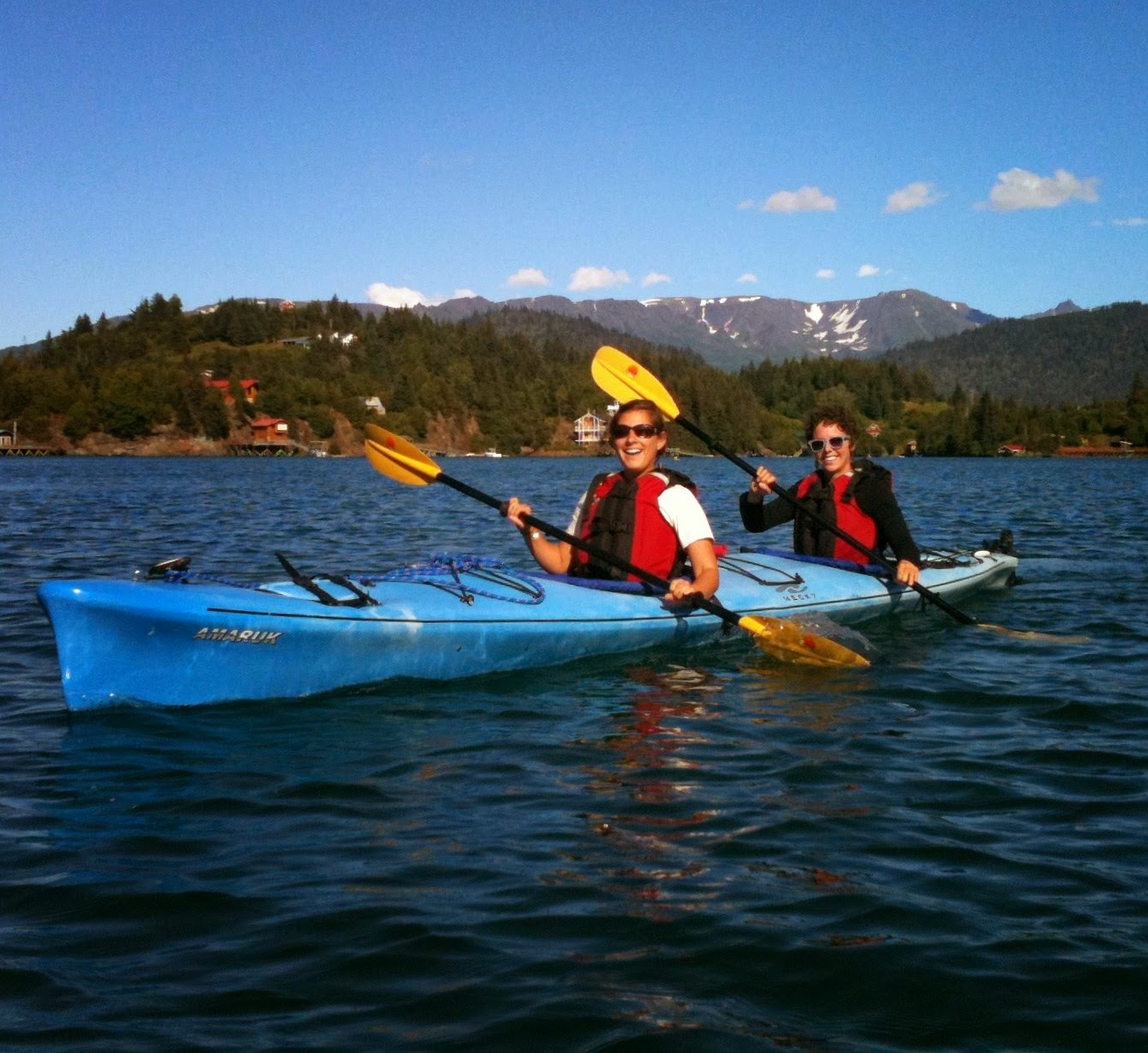
Wildlife is part of this shoreline rather than an event: eagles, otters, seabirds and, in season, whales in the bay. A long lens kept in reach is worth more here than at any venue in this guide, and a frame with a wedding party and a bald eagle in it is not a fantasy on this coast.
The forest, the buildings, and the very long day
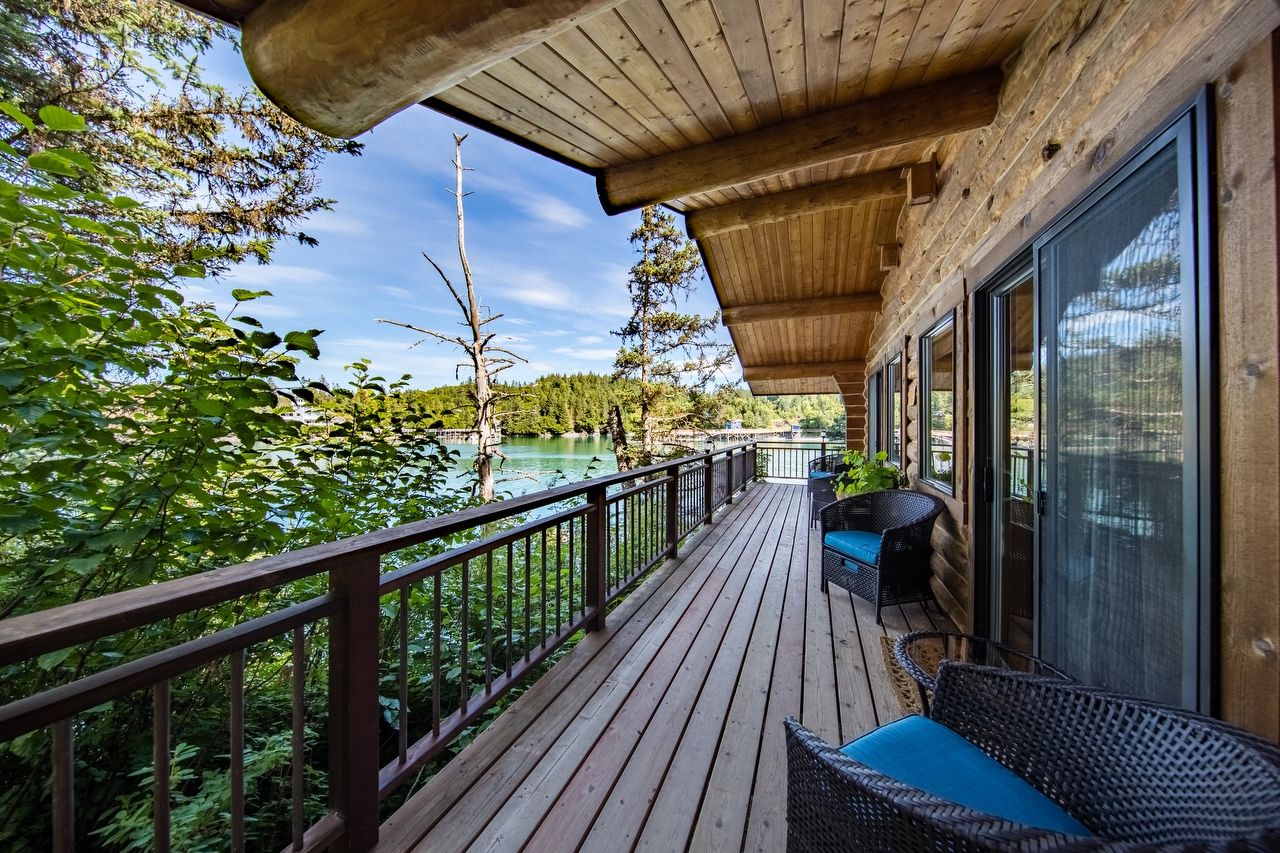
Moving up from the shore, the rainforest is the site’s shade and its enclosure.
Coastal temperate rainforest here means Sitka spruce and western hemlock, with alder and willow in the disturbed ground and devil’s club in the understorey. Spruce and hemlock block almost everything, which means the canopy edge is the most reliable position on the property: a metre or two inside at the margin of an opening gives soft directional light in front and near-darkness behind, three or four stops of free separation and no equipment.
The metering correction is the standard one and it is pronounced here: a meter looking at dark conifer overexposes a face by a couple of stops while the bright water a few paces away fools it hard the other way. Manual, metered on skin, reset at every transition.
Moss is what distinguishes this forest from a northern one and it is worth using. Everything is mossed — trunks, branches, ground, fallen timber — which means the forest is green from top to bottom and it bounces green onto anything in it. A custom white balance set on a face in the forest is not a refinement, it is the difference between plausible skin and skin with a green cast.
Rain is the default in this climate and it suits the forest better than sun does. Wet moss glows, spruce darkens, every surface holds water, and the light is soft and even with no dappling anywhere. A grey wet day here is the condition the landscape was made in, and it should be presented to a couple as such rather than apologised for.
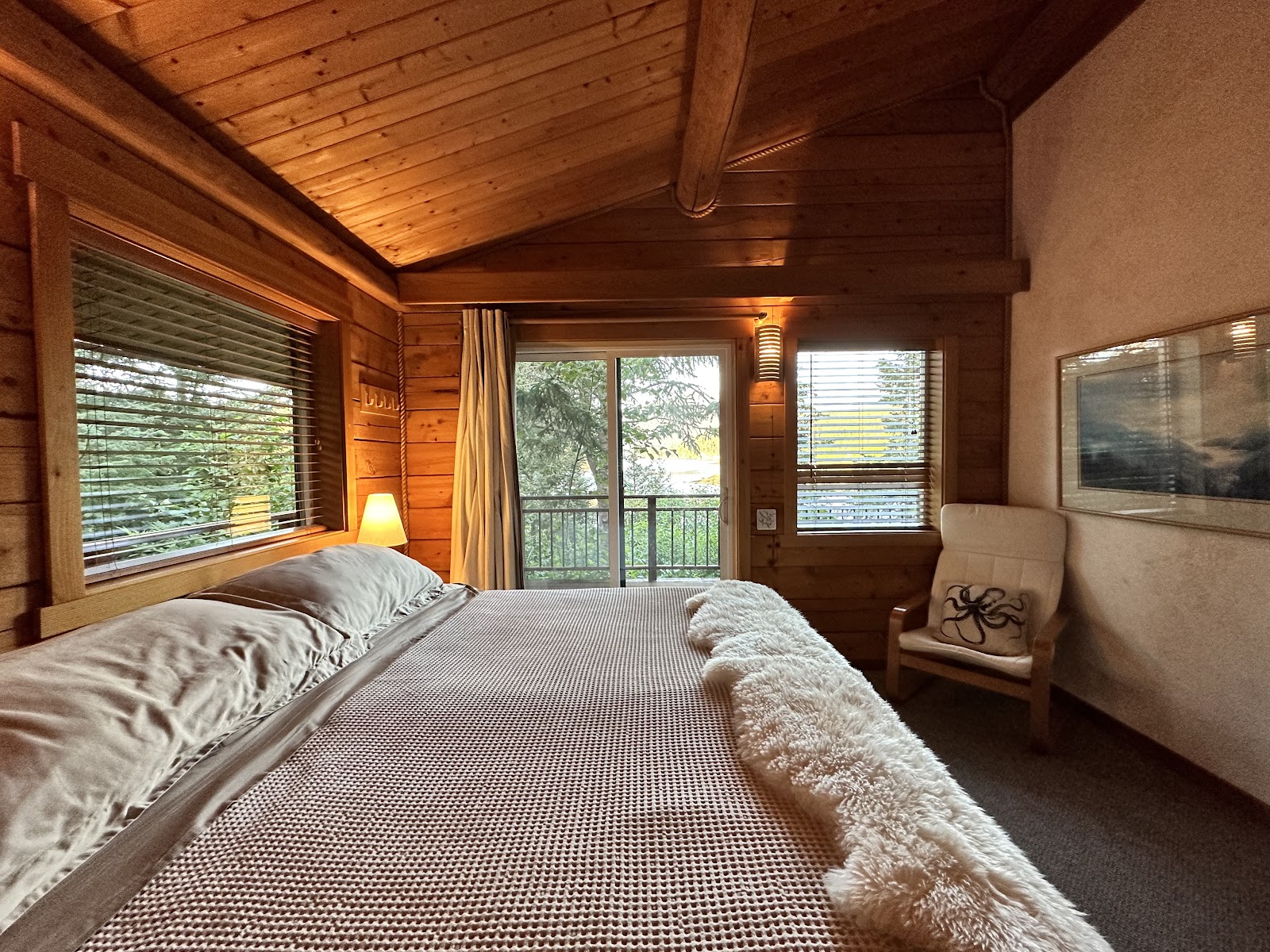
The buildings are the weather-independent part and a lodge in this climate is built of timber, which absorbs — so the ambient indoors is a stop or two below what the eye estimates and the background behind a subject drops away for free. A subject a metre from a window turned about forty-five degrees to it gets horizontal light with steep fall-off behind, room lights off, custom white balance set on the face.
The latitude helps indoors more than people expect. Because the sun is low all year, it enters a window almost horizontally and travels much further into a room than it would further south — which means a lodge interior in Alaska is better lit relative to its window size than the same room in Arizona.
Power is the practical question that decides what light can be used. A remote lodge may run on generator, solar or limited supply, which means battery sources rather than anything mains-dependent — and it is worth asking rather than assuming, because the answer changes what can be brought across the water.
The very long summer day is the site’s greatest practical asset. Because the sun’s path is shallow at this latitude, the low warm light that lasts forty minutes further south lasts two or three hours here, and in June the usable light runs from early morning until near midnight.
At a boat-access site that has a specific value: the schedule is constrained by crossings rather than by daylight, which means portraits can happen late without anyone worrying about the light. A ceremony at six and portraits at ten is entirely reasonable, and the light at ten will be better than the light at two.
The bear question belongs in a planning conversation rather than a footnote. This is brown bear country and a rainforest shoreline is bear habitat, which means whatever the lodge’s guidance is should be followed — and that is their answer rather than a photographer’s judgement.
And the last practical note is that a remote site has no backup. No second venue, no nearby shop, no quick drive for a forgotten item, and no easy exit if the weather turns. That is the trade for a frame with nothing man-made in it, and it is worth making knowingly.
- Everything arrives by boat — plan the kit for redundancy, not range
- Check the tide: several metres of range changes the shoreline completely
- Spruce and hemlock are the shade; moss makes a custom white balance essential
- Longer lens across the bay; expose for the distance and lift faces close
- In summer the good light runs to eleven — the crossings constrain you, not the sun
The Kachemak Bay year
This coast has a maritime Alaskan climate: wet, cool, and less extreme in temperature than the interior, but with the same enormous swing in daylight.
Midwinter gives about six hours of daylight with the sun barely clearing the mountains, which in a steep bay means it may not reach the shore at all for weeks. The light that does arrive is soft, raking and blue-toned, and against snow, water and dark spruce it is genuinely beautiful.
The honest winter note is access. Boat crossings in winter on an Alaskan bay depend on weather and sea state, which makes a winter wedding at a boat-access site a considerably larger logistical proposition than a summer one. That is a question for the lodge rather than a guess.
Snow is the winter asset: the best natural fill available, lifting every shadow and throwing light upward into faces. Snow against near-black spruce and grey-green water is the widest brightness range in this guide — expose for the snow and let the conifer go black, overexposing deliberately relative to the meter, which snow fools by about two stops.
Winter is aurora season too, and a frame with northern lights over a bay is available nowhere else in this guide. It needs a tripod, a wide fast lens, a few seconds to half a minute, a dark clear sky, and a party willing to stand still in the cold — and it cannot be promised, only planned for.
Break-up in April and May is the least attractive part of the year: dirty patchy snow, mud, bare alder and nothing green. The bay is still cold and the weather unsettled, and early May here is not spring in any recognisable sense.
June is when it turns and it turns fast. Under twenty hours of daylight the green arrives within a fortnight, the days are enormous, and the crossings are at their easiest. The costs are mosquitoes in the forest, which are a genuine consideration, and cloud.
July is the warmest and greenest month, and fireweed — tall magenta spires that come up across cleared ground and shoreline in quantity — is the strongest colour of the Alaskan summer and a genuine foreground rather than a detail. Whales are in the bay in summer, which is a real presence rather than a rarity.
Late August into September is the best season overall. Birch, cottonwood and alder turn gold in late August at this latitude — weeks before foliage anywhere in the lower forty-eight — the alpine tundra on the mountains across the bay turns red and orange, the first snow appears on the peaks, and the nights are dark enough for aurora while the days are still long enough to work in.
Gold deciduous colour against near-black spruce, red tundra above it, fresh snow on the peaks and northern lights after dark, with a bay in front of all of it, is unique in this guide. The window is roughly the last week of August through the middle of September, and it is the single strongest argument for a date here.
The autumn caveat is weather: September on this coast brings the first of the season’s storms, which for a boat-access site is the risk that matters. It cannot be planned for, only acknowledged, and it is another reason the crossing contingency is the most important conversation to have.
October brings the rain and the dark in earnest, and by November the season is over. The whole calendar runs several weeks earlier than a photographer from further south will expect, which is the most useful thing to tell a couple choosing a date.
More frames from Stillpoint Lodge
Stillpoint Lodge wedding photography: common questions
What does boat access change?
Almost everything about the planning: guest numbers, the schedule, the equipment you can bring, and whether the wedding happens at all in bad weather.
What should I bring?
What can be carried, with redundancy rather than range — a spare body matters more than a fifth lens when there is no shop and no car.
Does the tide matter?
A great deal. Kachemak Bay has several metres of range, which changes the shoreline completely and may affect the crossing itself.
Why does the forest need a custom white balance?
Everything is mossed, so the forest bounces green onto anything in it. A daylight preset renders skin with a visible green cast.
Is rain a problem?
It is the default, and it suits coastal rainforest better than sun does. Wet moss glows and the whole brightness range collapses.
When is the site at its best?
Late August into mid-September: gold deciduous colour against dark spruce, red tundra, fresh snow and aurora, with the bay in front of it.
More Alaska venue guides
We are writing a photographer’s guide to every venue we would happily shoot in Alaska. Here are three more, plus the full index:
- Susitna River Lodge, Talkeetna: What It Suits and What It Does Not
- Tordrillo Mountain Lodge, Skwentna: The One Decision That Governs Everything
- ZJ Ranch, Delta Junction: The Light Through the Day
Planning a wedding at Stillpoint Lodge?
A site with nothing man-made in the frame. Tell us your date and the crossing times.