 Salmonberry Inn, Anchorage: One Frame, and How It Is Made
Settlers Bay Lodge, Wasilla: Field Notes
This water moves by metres, not centimetres. Check the tide before anything else.
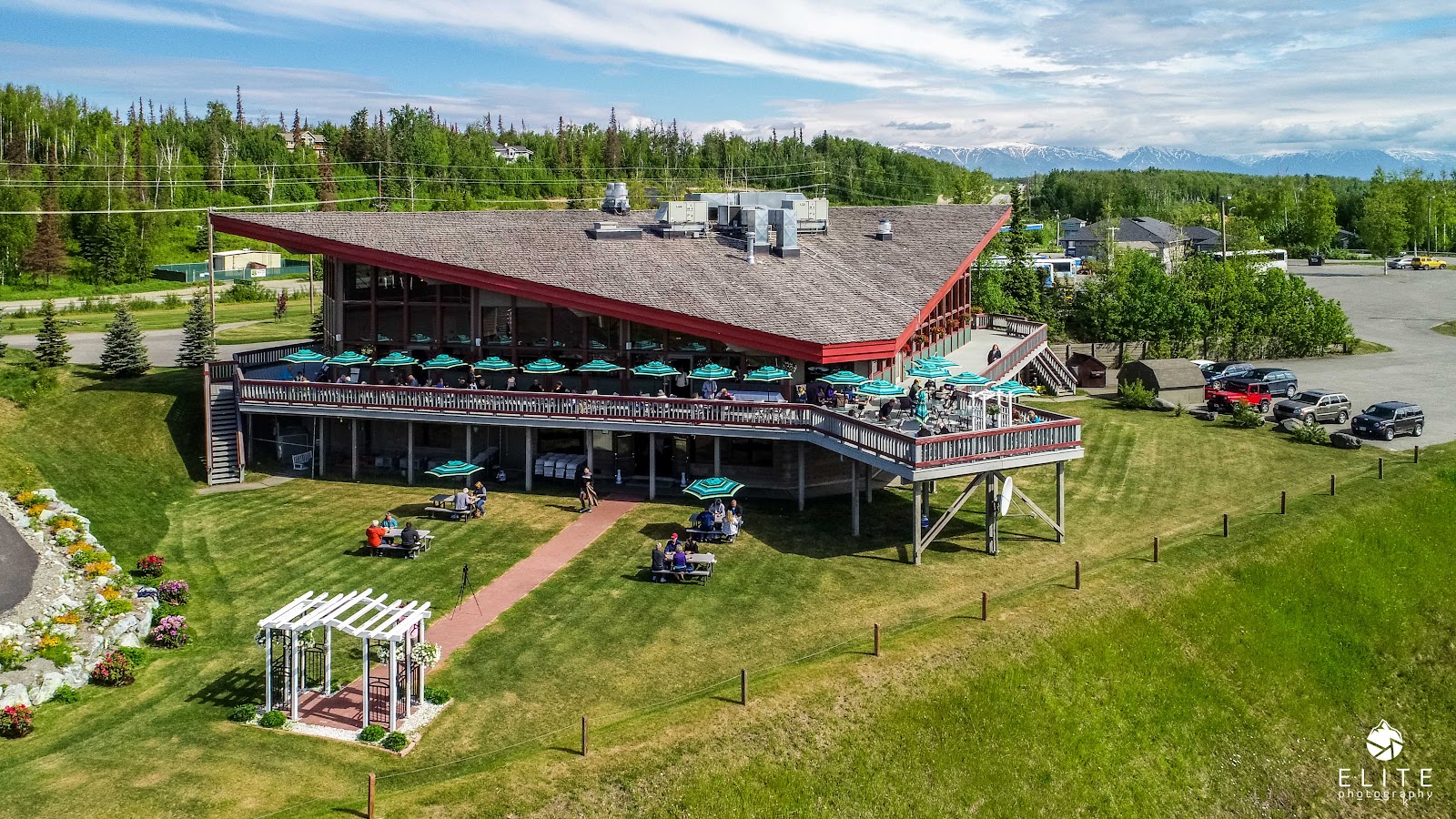
These are field notes on a lodge above a tidal arm of Cook Inlet, and the first note is the one that shapes everything: the tidal range here is among the largest in the world.
Cook Inlet and its arms have a range that can exceed nine metres between low and high water on a roughly six-hour cycle. That is not a variation, it is a transformation: the same view is a broad arm full of water in the morning and an expanse of grey mudflats with a channel in the middle by the afternoon.
The photographic consequence is direct and it is a planning matter rather than a technical one. A frame composed at high water does not exist at low water, and the difference between a ceremony at two and a ceremony at five can be the difference between water and mud in every wide picture.
It is entirely knowable in advance. Checking the tide table for the date takes a minute, and it decides which of two quite different sites the wedding gets — which makes it the single most useful piece of preparation available here.
The second note is the colour. Cook Inlet water is heavily loaded with glacial silt, which makes it grey-tan and opaque rather than blue. It does not brighten a frame the way clear water does, it does not go the colour of the sky, and it fills faces near the shore with a cool grey-tinged light — which needs a custom white balance set on a face rather than a preset.
The third note is safety, and it belongs early rather than late: Cook Inlet mudflats are genuinely dangerous ground rather than merely soft. That is a matter for the venue’s guidance and for nobody’s judgement on the day, and a photograph is not worth a step onto them.
We have not photographed a wedding at Settlers Bay Lodge; lodges above Cook Inlet arms behave consistently. Which spaces are included, what access there is toward the water and where the safe limits are, the covered alternative, and what the tide does on the date are questions for their team.
Settlers Bay Lodge at a glance
| Where | Above a tidal arm of Cook Inlet at Wasilla, southcentral Alaska |
| The tide | Among the largest ranges in the world — metres, on a six-hour cycle |
| The water | Grey-tan with glacial silt; it does not brighten a frame |
| The flats | Genuinely dangerous ground. Follow the venue’s limits |
| Ask first | Water access and safe limits, spaces included, covered alternative, tide |
The tide and the water: problems and solutions
The problem the tide creates is that there are two sites and only one is available at a given hour, and they photograph completely differently.
At high water the arm is full: a broad sheet of grey-tan water reaching the vegetation line, with mountains beyond it and reflections if the wind allows. That is the version most people picture and it is the cleaner frame — the water reads as water, the shoreline is a line, and the composition is simple.
At low water the arm is mostly mud: a vast expanse of grey flats with a channel winding through them, ribbed by the current and catching light in bands. That reads as an estuary rather than a bay — and photographed honestly it is the more interesting of the two, because the pattern in the flats is a graphic subject that a sheet of water is not.
The solution is simply to know which one the date gives, and then to compose for it. High water calls for the wide clean frame and any reflection; low water calls for a longer lens compressing the channel pattern, or a low camera using the ribbed mud as a foreground layer leading toward the mountains.
What does not work is planning a high-water frame and getting a low-water day, which is a fifty-fifty proposition if the tide has not been checked.
The colour problem needs the same deliberate handling. Grey silt-laden water is dark and neutral rather than bright and blue, which has two consequences. It does not lift the exposure of a wide frame the way clear water does, so a frame containing the arm and a bright sky spans a wider range than it would at a clear-water site.
And it fills nearby faces with grey-tinged light rather than the cool blue that clear water gives. A custom white balance set on a face at the water’s edge fixes it in thirty seconds, and it needs resetting when the subject moves away from the shore.
The compensation is that dark water holds a warm reflection without competing with it. When the sky is warm at the ends of the day, grey water takes the colour and keeps it — where blue water would fight it. That makes the evening frames here stronger than the water’s daytime colour suggests.
The wind is the other water variable and Cook Inlet has plenty of it. Wind removes any reflection and it builds through the afternoon, which means the still-water frames belong to the morning and the evening. It also makes a lightstand a liability and a held modifier a sail, so handheld or bracketed sources are the working configuration.
The mountains are the wide subject and they are on more than one side: the Chugach to the east and southeast and, on a clear day, the Alaska Range to the north and west. Those need a longer lens — compression stacks them into layers and brings them forward as a presence, where a wide lens reduces them to a pale band above a great deal of water or mud.
The air here is drier and clearer than the outer coast, which means that compression holds detail well. And the exposure goes on the mountains rather than on skin, with the faces lifted by a close warm-gelled source, because metering on faces gives a white sky and a washed-out range.
Close matters because nothing over water or mud bounces enough to lift a backlit face: a source at two metres needs roughly a quarter of the output it needs at four.
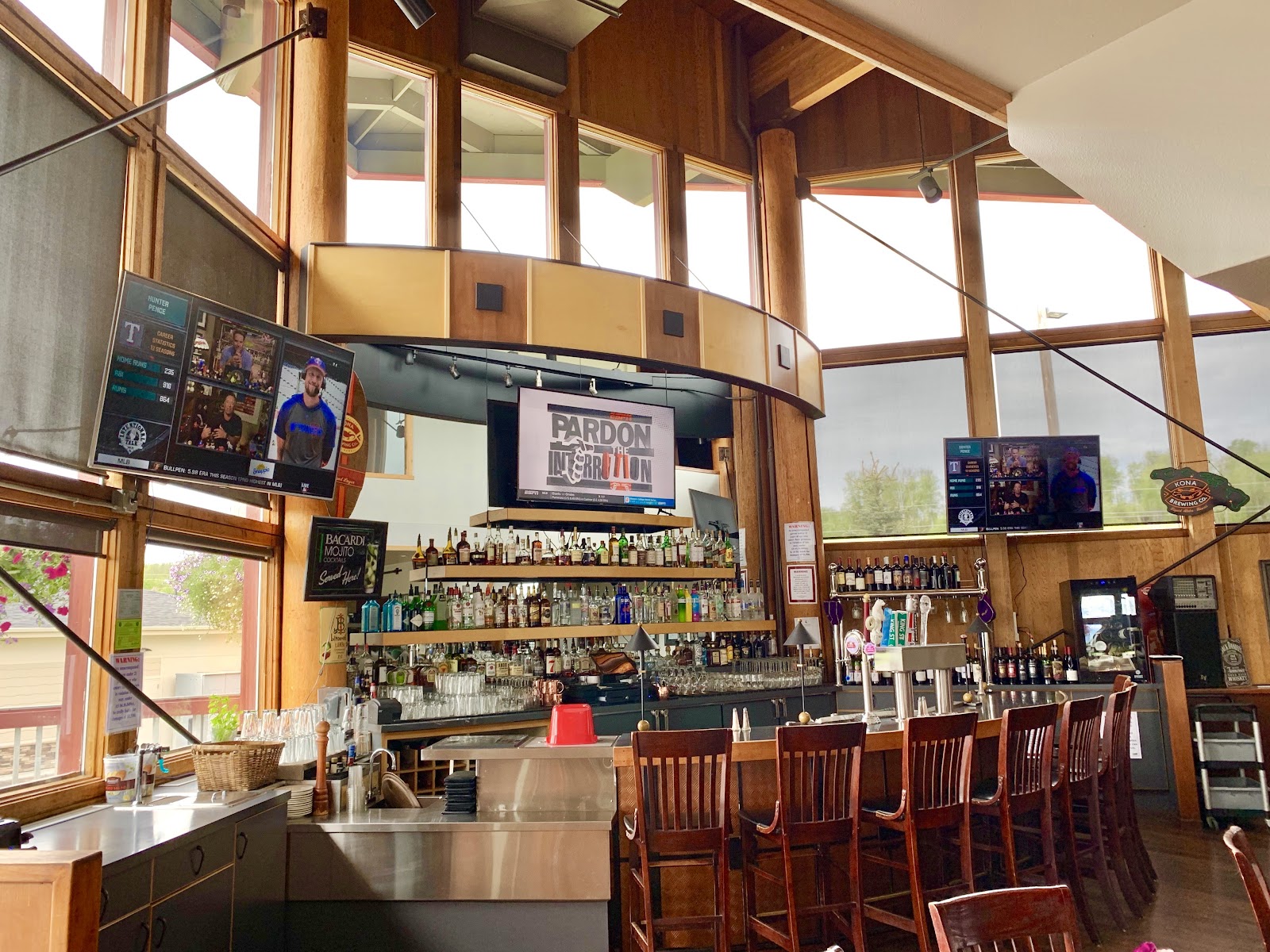
The land, the light, and the very long day
Above the water the site is boreal forest and cleared ground, and the rules are the southcentral Alaskan ones.
Spruce is the shade and the dark background. White and black spruce are dense and narrow-crowned, which means the canopy edge is the most reliable position on the property: a metre or two inside at the margin of an opening gives soft directional light in front and near-darkness behind, three or four stops of free separation and no equipment.
Birch and cottonwood are the counterpart. Paper birch has bright white bark, which makes a birch stand a pale background of vertical lines rather than a dark one — and broad thin leaves transmit as well as block, which gives soft green-tinged light beneath them. Both need a custom white balance for different reasons.
White birch against near-black spruce in one frame is the northern signature and the Mat-Su area has it everywhere.
The metering trap is severe at a site with both dark forest and bright water. A meter looking at spruce overexposes a face by a couple of stops and a meter looking at a lit arm or bright mudflats fools it the other way, and those positions can be a few paces apart. Manual, metered on skin, reset at every transition.
Open cleared ground is the other surface and it behaves as pale ground does: it throws light upward into faces, filling the shadows the sun makes, at the cost of uplight under the chin. The diagnosis is to look at the chin in the first frame, and something solid on one side corrects it.
The light is the site’s underlying advantage and it is the same one that runs through every Alaskan venue in this guide. At around sixty-one degrees north the sun reaches only about fifty degrees above the horizon at midsummer noon and far less the rest of the year, which means it rakes rather than falls. There is no hour at which the sun is high enough to flatten a face, which means the position matters and the hour does not.
The second advantage is the length of the day. Because the sun’s path is shallow, the low warm light that lasts forty minutes further south lasts two or three hours here, and in June the usable light runs until near eleven at night.
That combines usefully with the tide. If the tide is wrong in the afternoon it may be right in the evening, and at this latitude the evening is long enough and well enough lit to use — which means a difficult tide is a scheduling problem with an answer rather than a lost day.
The buildings are the weather-independent part. A lodge in this climate is timber and it absorbs, which means the ambient indoors is a stop or two below what the eye estimates and the background behind a subject drops away for free. A subject a metre from a window turned about forty-five degrees to it gets horizontal light with steep fall-off, room lights off, custom white balance set on a face.
The latitude helps indoors: because the sun is low all year, it enters a window almost horizontally and travels much further into a room than it would further south, which means an Alaskan lodge is well lit relative to its window size — and better lit in winter than in summer.
Where the building looks over the arm, the window is a subject as well as a source: exposing for the view silhouettes the subject, exposing for the subject whites out the view, and the resolution when both are wanted is a close source at roughly the window’s brightness.
Any porch or covered deck is the reliable rain answer: a solid roof restricting light to a horizontal band, bouncing off the decking to fill, and incapable of dappling.
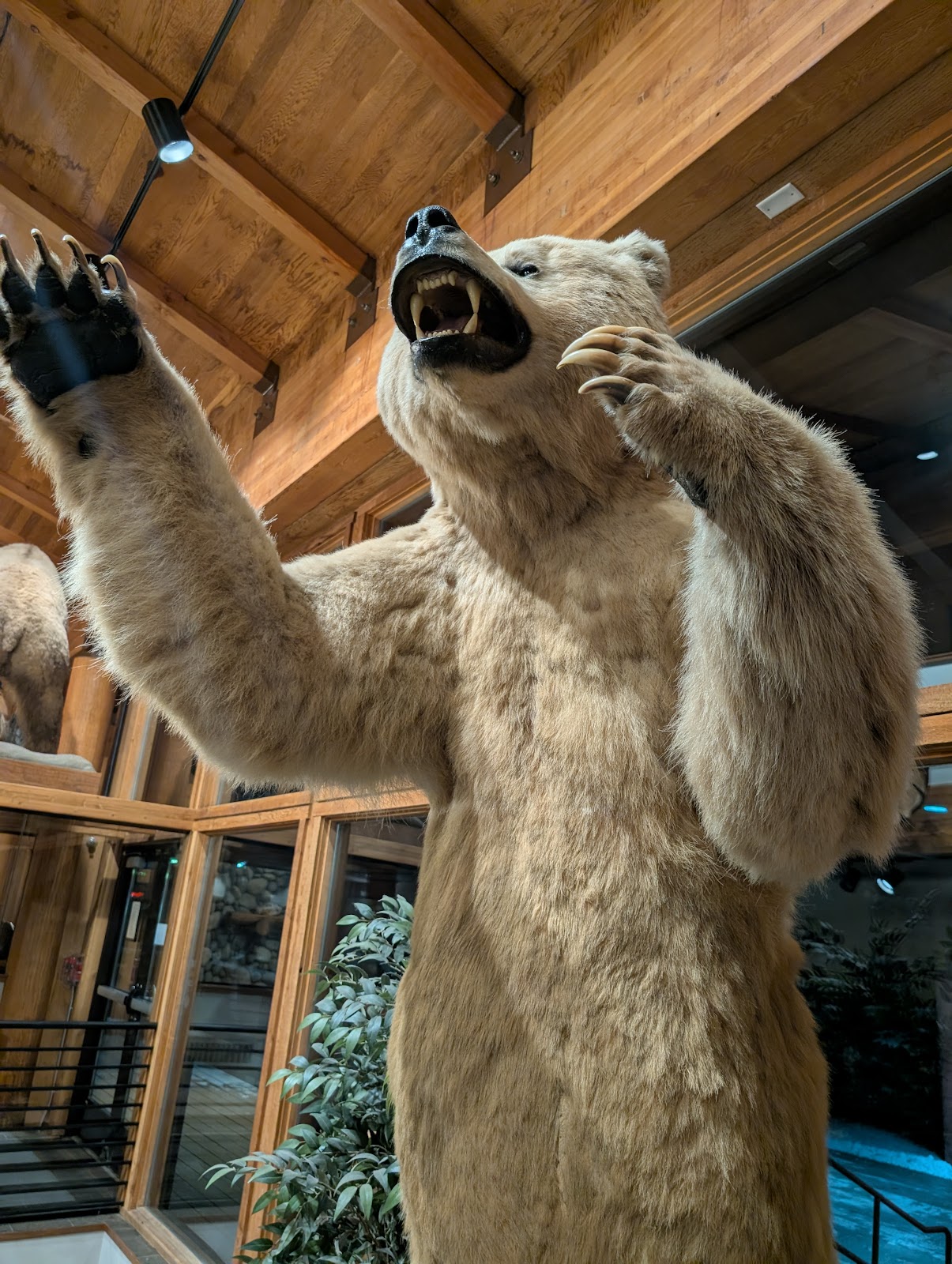
And the bear question belongs in a planning conversation rather than a footnote. This is bear country and a wooded shoreline is bear habitat, which means the lodge’s guidance is followed rather than judged.
- Check the tide first — it decides which of two sites the wedding gets
- Set white balance at the water’s edge; grey silt light is not blue
- Low water is the more graphic frame: compress the channel or get low
- Longer lens for the Chugach and the Alaska Range; expose for the mountains
- A wrong tide in the afternoon may be right at nine — the evening is long here
The Mat-Su year
This area has a southcentral Alaskan climate that leans continental: drier and sunnier than the coast, colder in winter, and with the enormous daylight swing that defines Alaska.
Midwinter gives about five and a half hours of daylight with the sun reaching only about five degrees above the horizon, which means the whole short day is an extended twilight — soft, raking and blue-toned. Against snow, dark spruce and a frozen arm that is among the most distinctive light in this guide.
Winter transforms the water. A tidal arm in an Alaskan winter fills with ice: pans and floes moving with the tide, ice stranded on the flats at low water, and shore ice building at the margins. That is a graphic subject that no other season offers and it is genuinely striking — and ice against grey water and dark spruce gives a wide brightness range that needs metering on skin and letting the dark go dark.
Snow is the winter asset: the best natural fill available, lifting every shadow and throwing light upward into faces. Snow against near-black spruce is the widest range in this guide — expose for the snow and let the conifer go black, overexposing deliberately relative to the meter, which snow fools by about two stops.
The winter safety note is important: ice on a tidal arm is never safe to walk on, because the tide moves it constantly. That is a harder limit than the summer mudflats and it belongs in the same conversation.
Winter is aurora season from roughly September to April on clear nights, and the Mat-Su area has genuinely dark skies away from Anchorage. Northern lights over a frozen arm with mountains behind is available nowhere else in this guide — tripod, wide fast lens, a few seconds to half a minute, and a party willing to stand still in the cold.
Break-up in April and May is the least attractive time of year: dirty patchy snow, mud, bare trees, and an arm running high and heavily silted with melt. Early May here is not spring in any recognisable sense.
June is when it turns and it turns fast. The green arrives within a fortnight, the days are enormous, and the arm settles. Mosquitoes arrive with the green and are a genuine consideration in June and early July, less so on the open breezy shoreline than in the woods.
July is the warmest month and the clearest by local standards, which matters here because the Alaska Range is only visible on clear days — and when it is, it is the strongest wide frame the site has. Fireweed gives the strongest colour of the Alaskan summer, tall magenta spires along cleared ground in quantity.
Late August into September is the best season overall. Birch and cottonwood turn gold in late August; the alpine tundra on the Chugach turns red and orange; the first snow appears on the peaks, locally called termination dust; and the nights are dark enough for aurora while the days are still long.
Gold birch against dark spruce, red tundra on the Chugach, termination dust on the peaks and a grey arm holding the warm colour of an evening sky is the strongest combination this site produces. The window is roughly the last week of August through the middle of September, and the light arrives at a civilised hour rather than at ten at night.
And September has a specific practical advantage here: the highest tides of the year tend to occur around the equinoxes, which for a site whose best wide frame needs water rather than mud is worth knowing when choosing a date.
October brings the rain and the dark, and by November the arm is icing and the season has closed.
More frames from Settlers Bay Lodge
Settlers Bay Lodge wedding photography: common questions
How big is the tidal range?
Among the largest in the world — it can exceed nine metres on a roughly six-hour cycle, which turns a full arm of water into mudflats within an afternoon.
What should I do about it?
Check the tide table for the date. It decides whether the wide frames have water or mud in them, and it takes a minute.
Why is the water grey?
It carries a heavy load of glacial silt, which makes it opaque and neutral rather than blue. It also fills nearby faces with grey-tinged light.
Can we walk out on the flats?
No. Cook Inlet mudflats are genuinely dangerous ground, and the venue’s limits are followed rather than judged.
Is a low tide a lost day?
No — it is a different and arguably more graphic frame. Compress the channel on a longer lens, or get low and use the ribbed mud as a foreground.
When is the site at its best?
Late August into mid-September: gold birch, red tundra, termination dust, and the year’s highest tides around the equinox.
More Alaska venue guides
We are writing a photographer’s guide to every venue we would happily shoot in Alaska. Here are three more, plus the full index:
- Snowgoose Restaurant, Juneau: The Building’s Own Logic
- Stillpoint Lodge, Halibut Cove: A Walk Through the Site
- Susitna River Lodge, Talkeetna: What It Suits and What It Does Not
Planning a wedding at Settlers Bay Lodge?
Check the tide, then plan the day. Tell us your date.