 Salmonberry Inn, Anchorage: One Frame, and How It Is Made
49th State Brewing Co, Healy: The Building’s Own Logic
A brewery is a workspace that lets people in. Photograph the working parts, not the decor.
A brewery with a taproom has a logic that comes from its function rather than from any designer’s intention, and reading that function is what makes the photographs belong to the place.
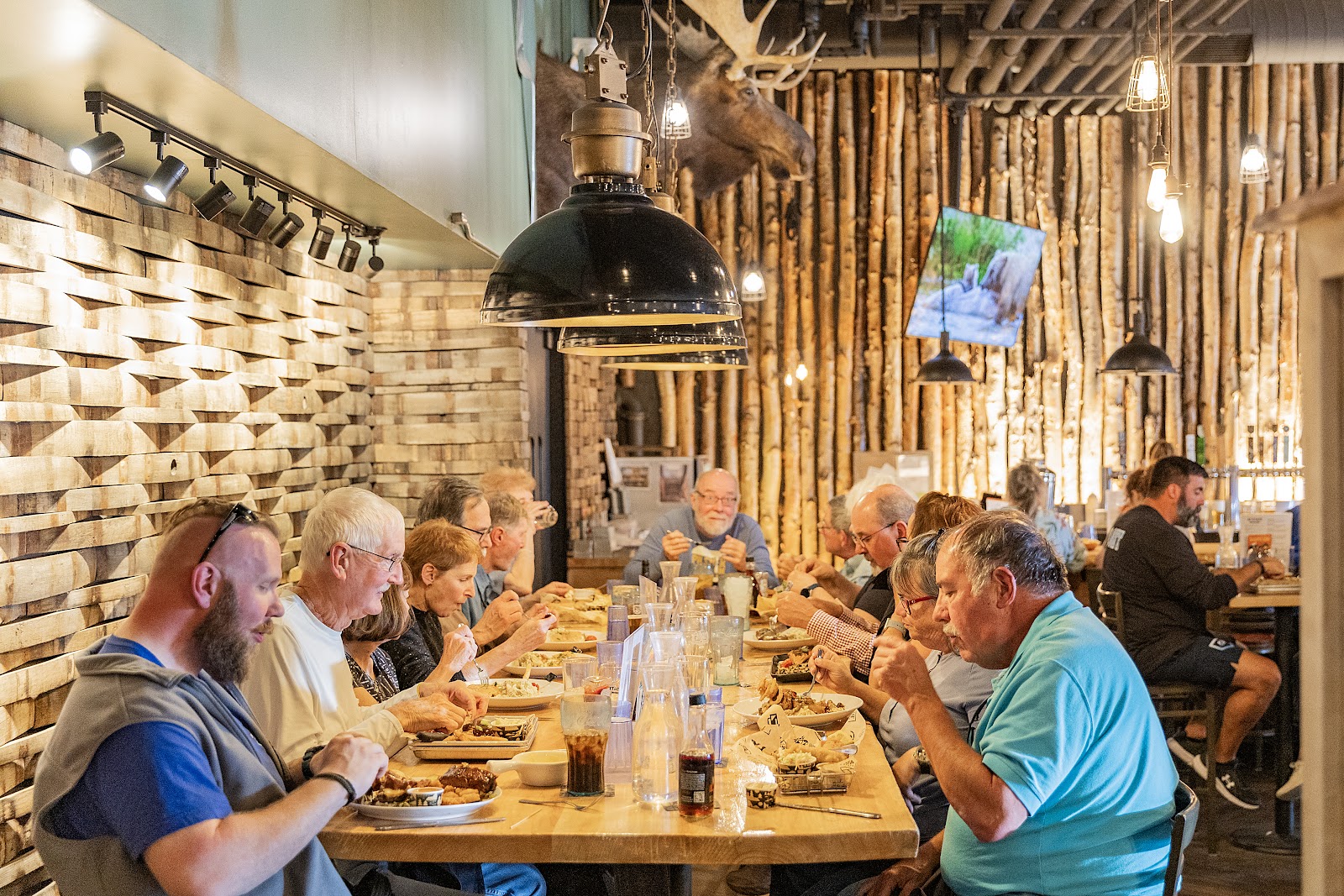
It is a workspace first. Brewing requires tall stainless vessels, hard washable floors, drains, pipework, hoses and bright practical lighting — and all of that is present whether or not there is a wedding in it. The taproom is the part that has been made comfortable; the brewery behind it has not, and that is where the character is.
Three photographic consequences follow.
Stainless steel is a mirror with a curve. Brewing vessels are polished cylindrical tanks, which means they reflect the room, the lights and the photographer — and they reflect them distorted, stretched around the curve. Used deliberately that is a striking frame; ignored it means an unmistakable reflection of a photographer in the background of every tank shot.
The lighting is functional rather than flattering. A working brewery is lit for safety and inspection — high-output fixtures from above, often cool in colour and frequently mixed with warmer taproom lighting — which puts light on the top of a head and leaves the eyes dark, and creates two colour temperatures within a few metres of each other.
And the surfaces are hard. Concrete, tile, steel and glass do not absorb, which means the space is reverberant, the light bounces energetically, and the fall-off that a timber room gives for free is absent. Separation has to be built.
The fourth element is the setting, and near the Denali park entrance it is subarctic: taiga, tundra, the Alaska Range on the skyline, and light that at around sixty-four degrees north rakes rather than falls all day.
We have not photographed a wedding at the 49th State Brewing Co; breweries with taprooms behave consistently. Which spaces are included, whether the brewery floor is accessible and under what conditions, whether the lighting can be adjusted, the covered alternative, and what the actual timings are are questions for their team — and brewery access in particular decides where the best frames are.
49th State Brewing Co at a glance
| Where | A brewery and taproom near the Denali park entrance at Healy, Alaska |
| The logic | A working brewery with a taproom attached — the work is the character |
| The steel | Curved mirrors: they reflect the room and the photographer, distorted |
| The lighting | Functional, from above, and mixed in colour with the taproom’s |
| Ask first | Spaces included, brewery access, lighting control, timings |
The brewery: steel, lighting, and hard surfaces
The brewery floor is where the distinctive frames are and it is worth asking about specifically, because access is frequently restricted for good reasons and it is much easier arranged in advance.
The tanks are the subject and they need handling as mirrors rather than as backgrounds. A polished cylindrical vessel reflects everything in front of it, compressed into a vertical band and stretched around the curve — which means the photographer, the camera and any light stand appear in it whenever the camera is anywhere near perpendicular.
The fix is the same as at any mirrored surface: a few degrees off perpendicular, or a metre to one side, and the reflection goes somewhere else. The habit is to check the background of the first frame in every new position.
Used deliberately, the reflection is the strongest frame a brewery gives. A couple reflected in a tank, distorted and elongated, is unmistakably of this place — and a row of tanks receding with a reflection in each is a repeating pattern that no other kind of venue offers.
The steel also behaves oddly with light. A curved polished surface returns a specular highlight rather than a soft gradient, which means any source will appear in it as a bright line or spot rather than as illumination — and that line moves as the camera moves. The practical answer is to place the added light so its reflection falls outside the frame, which is a positional decision rather than a power one.
The lighting needs a decision. Brewery fixtures are high-output, from above, and often cool; taproom fixtures are lower, warmer and decorative. A subject standing between the two is lit from above in one colour and from the side in another, and no single white balance renders both.
The rule is the one that applies to any mixed environment: set the white balance for whatever is landing on the skin, and let the rest fall where it falls. Correct skin in a room with a colour shift behind it is a picture; skin rendered cool grey or orange is not, and it is not recoverable.
The better answer where it is possible is to make your own light dominant on the face — one source off the camera axis, gelled to whichever fixture is closest in colour, set a stop or more above what the ambient gives the skin. That renders the face consistently regardless of where in the building the couple stands, which at a venue with two lighting systems is worth more than subtlety.
The hard surfaces are the third element and their effect is on the fall-off. Concrete floors, tiled walls and steel bounce energetically, which means light spreads through a brewery rather than falling off — so a background three metres behind a subject is not two stops down the way it would be in a timber room.
That has to be built instead. The available dark things in a brewery are specific: an open doorway to an unlit space, the shadowed side of a tank, a pipework run, a dark-painted wall, or the gap between two vessels. Finding three or four before the day is ten minutes and it is what makes the frames have structure.
And the practical notes of a working space apply. Floors are wet, drains are open, hoses run across walkways, and there may be hot or pressurised equipment — which means a party in formal shoes moves carefully and whatever the venue’s guidance is should be followed rather than negotiated.
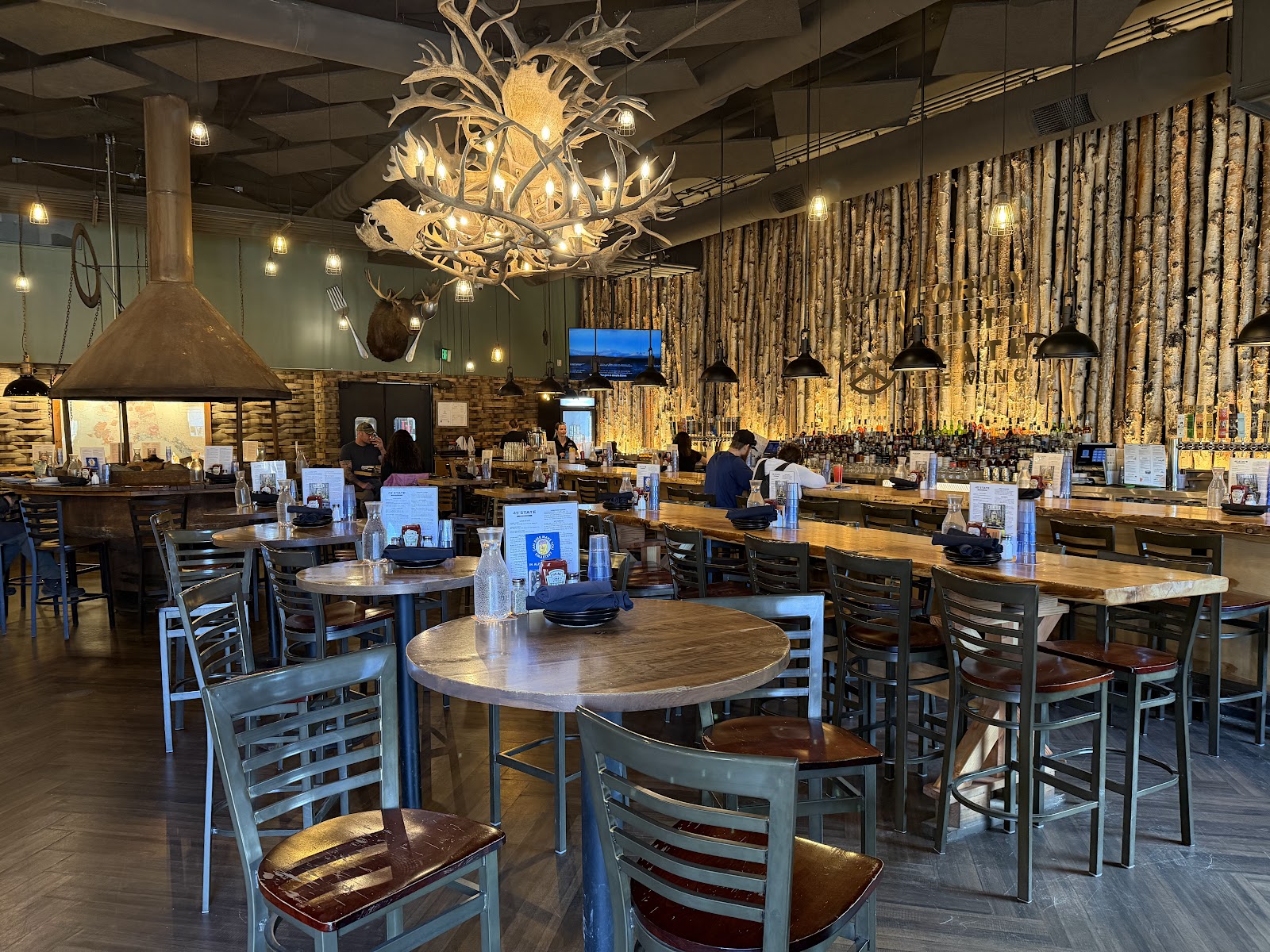
The taproom is the easier half and it follows the standard method. Where it is dark and timber-lined, meter on skin and let it go dark, because the background drops away for free. Where it is pale and modern, the problem is separation rather than light. And for the evening: expose the ambient about a stop under what faces need so the room keeps depth, then add one warm-gelled source just above skin level with the white balance set to the gel.
Outside: subarctic country and a very long day
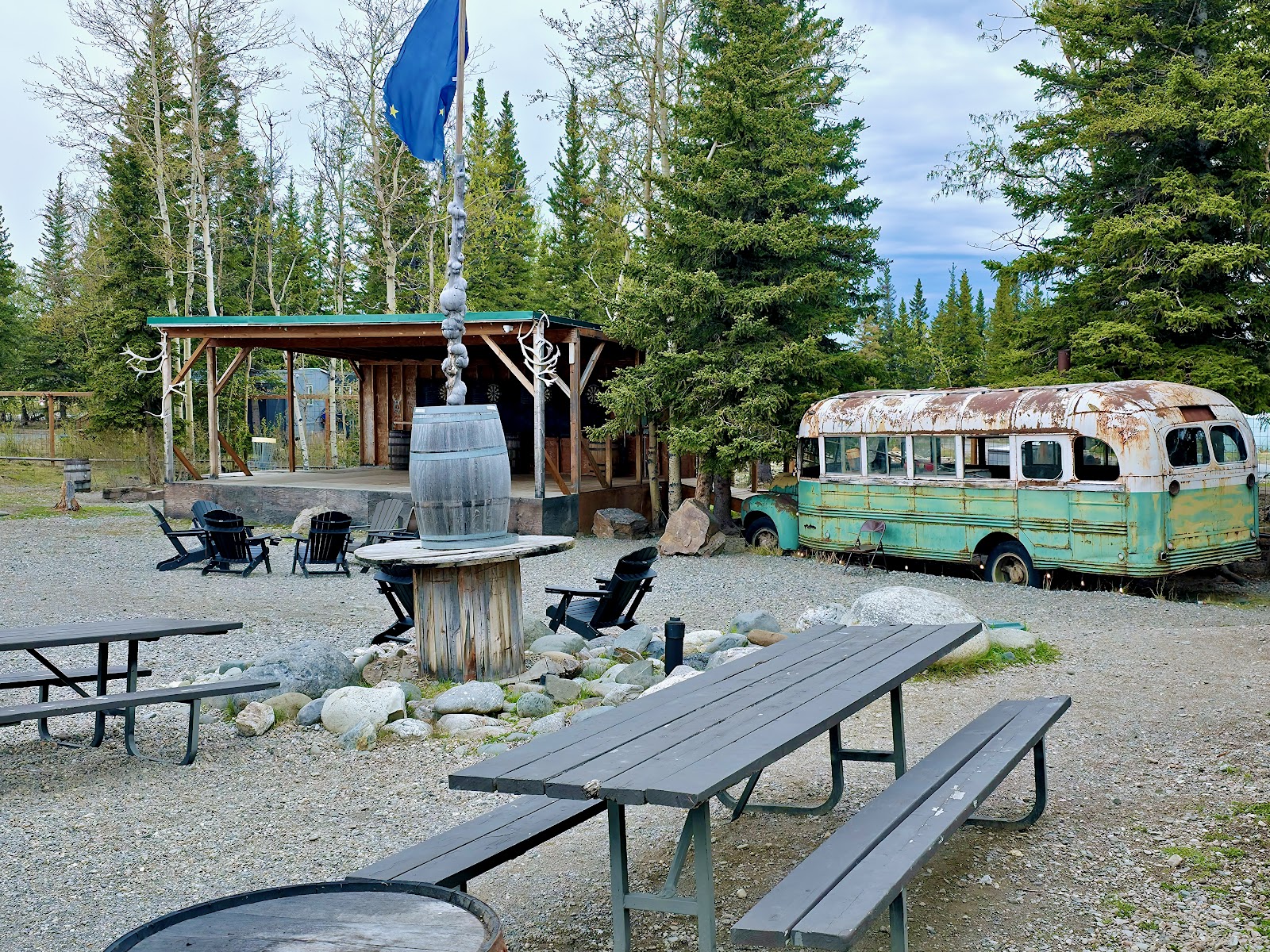
Outside, the setting is the thing that makes this venue different from a brewery anywhere else, and it is worth using deliberately rather than treating as a car park.
The country here is subarctic: black and white spruce, paper birch and aspen on the lower ground, and tundra above the treeline. It is open, it is vast, and the Alaska Range is on the skyline.
The light is the first advantage and it is the same one that runs through every Alaskan venue in this guide. At around sixty-four degrees north the sun reaches only about forty-nine degrees above the horizon at midsummer noon and far less the rest of the year, which means it rakes rather than falls, all day. There is no hour at which the sun is high enough to flatten a face, which means the position matters and the hour does not.
The second advantage is the length of the day in summer. Because the sun’s path is shallow, the low warm light lasts two or three hours rather than forty minutes, and in June the usable light runs from about three in the morning until near midnight. A portrait session at ten in the evening is entirely reasonable and will be better lit than one at two in the afternoon — and at a venue whose reception is indoors anyway, that is free to use.
The spruce is the shade and the dark background. Interior spruce grows narrow and spire-shaped on cold ground, which means the canopy is thin and dapples more than a coastal stand — but a spruce mass behind a subject is still three or four stops down, which is free separation. The metering correction is the standard one: meter on skin in manual, because dark spruce makes a meter overexpose a face by a couple of stops.
Birch and aspen are the counterpart and they do the opposite: paper birch has bright white bark, which makes a stand a pale background of vertical lines rather than a dark one — and the meter will underexpose because the bark is bright. White birch against near-black spruce in one frame is the northern signature and it is at its cleanest in the interior.
The Alaska Range is the wide subject and it needs a longer lens. The interior air is exceptionally clear and dry, which means distant peaks hold structure and snow detail at a great distance — so compression stacks them into layers and brings them forward as a genuine presence, where a wide lens reduces them to a pale band above a lot of foreground.
The exposure goes on the range rather than on skin, with the faces lifted by a close warm-gelled source. Close matters because open ground bounces some light but not enough: a source at two metres needs roughly a quarter of the output it needs at four.
Wind on open subarctic ground is the practical constraint — a lightstand is a liability and a held modifier is a sail, so handheld or bracketed is the configuration.
Mosquitoes are the summer constraint and in the Alaskan interior they are serious rather than annoying. They are worst in June and early July, and worse in sheltered taiga than on open breezy ground — which makes the position and the date the mitigation rather than anything technical.
And the industrial exterior of a brewery is worth using rather than hiding. Tanks, pipework, cladding, signage and a loading bay are honest elements of what the building is, and a frame that includes them reads as a brewery rather than as a generic venue — which in a landscape this dramatic is a useful contrast rather than a compromise. Low raking light on corrugated metal or steel is a strong graphic condition and it is available for most of the day here.
- Ask about brewery floor access early — that is where the frames are
- Tanks are curved mirrors: a few degrees off perpendicular removes you
- Set white balance for what lands on the skin; two lighting systems here
- Hard surfaces mean no free fall-off — find the dark or build it
- Outside, there is no bad hour, and the good light runs to eleven at night
The Denali-area year
This is interior Alaska and the year is among the most extreme in this guide, with a short intense season and a long dark winter.
Midwinter gives about four and a half hours of daylight with the sun reaching barely four degrees above the horizon, which means the whole short day is an extended twilight — soft, raking and strongly blue and pink toned. Against snow and spruce that is the most distinctive light in this guide.
The honest winter fact is the cold. Interior Alaska in January routinely reaches thirty or forty below zero Fahrenheit, which makes an outdoor ceremony a matter of a few minutes rather than an hour and a welfare judgement rather than a preference. Batteries fail fast, lubricants stiffen, and a cold camera fogs badly when brought into a heated taproom — spares in an inside pocket and bodies bagged until they warm.
There is also a seasonal access question in this area that is worth asking about: much of the tourist infrastructure near the park entrance operates seasonally, and whether a venue is open in February at all is a definite question rather than an assumption.
What winter gives is snow and aurora. Dry crystalline interior snow is exceptionally reflective and the best natural fill available; snow against near-black spruce is the widest brightness range in this guide, so expose for the snow and let the conifer go black, overexposing deliberately relative to the meter, which snow fools by about two stops.
And the aurora here is as good as anywhere on earth, because interior Alaska sits under the auroral oval with clear dry air and long dark nights. A frame with northern lights over spruce and snow is the most distinctive picture available in this guide — tripod, wide fast lens, a few seconds to half a minute, and a party willing to step outside briefly in serious cold.
Break-up in April and May is the least attractive time of year: dirty patchy snow, mud, bare trees and roads that suffer. Early May in the interior is not spring in any recognisable sense.
June is when it turns and it turns fast. Under twenty-one hours of daylight the green arrives within a fortnight, the days are enormous, and the season opens. Mosquitoes arrive with the green and are at their worst in June and early July.
July is the warmest month and the busiest, and fireweed gives the strongest colour of the Alaskan summer — tall magenta spires across cleared ground and roadside in quantity, a genuine foreground rather than a detail.
Late August into early September is the best season overall and it is not close. The tundra above the treeline turns red and orange several weeks before foliage anywhere in the lower forty-eight; birch and aspen turn a clean intense gold; the first snow appears on the Alaska Range; and by early September the nights are dark enough for aurora while the days are still long enough to work in comfortably.
Red tundra, gold birch, near-black spruce, fresh snow on the range and northern lights on one date is the strongest combination available in this guide, and the window is short — roughly the last week of August through the middle of September.
For a venue whose interiors are hard, bright and industrial, that outdoor colour is worth a great deal: twenty minutes outside in early September gives the whole set of pictures a place and a season that a taproom cannot. It is the single best argument for the date.
More frames from 49th State Brewing Co
49th State Brewing Co wedding photography: common questions
What is the brewery's logic?
It is a workspace with a taproom attached. Tall steel vessels, hard washable surfaces and functional lighting — and the working parts are where the character is.
How do I handle the tanks?
As curved mirrors. A few degrees off perpendicular removes your reflection, and a couple reflected deliberately in a tank is the strongest frame here.
What is the lighting problem?
Two systems at once — cool high-output brewery fixtures and warmer taproom ones. Set the white balance for what lands on the skin, or dominate with your own light.
Why is there no free separation?
Hard surfaces bounce rather than absorb, so light spreads instead of falling off. The dark backgrounds have to be found or built.
Is the outside worth using?
Very much. The Alaska Range on a long lens, spruce and birch, and a sun that never gets high enough to flatten a face at any hour.
When is the site at its best?
Late August into mid-September: red tundra, gold birch, fresh snow on the range and aurora after dark. Also check whether the venue is open at all in winter.
More Alaska venue guides
We are writing a photographer’s guide to every venue we would happily shoot in Alaska. Here are three more, plus the full index:
- Alaska Botanical Garden, Anchorage: A Walk Through the Site
- Alaska Wedding Chapel, Seward: One Frame, and How It Is Made
- Alyeska Resort, Girdwood: The Light Through the Day
Planning a wedding at 49th State Brewing Co?
A working building in enormous country. Tell us your date.