 Park Hyatt Aviara, Carlsbad: The One Decision That Governs Everything
Pema Osel Ling, Corralitos: What It Suits and What It Does Not
A retreat property is built for stillness, not display. Three things that suits well, and three it does not.
A mountain retreat centre is a particular kind of wedding venue, and the honest way to describe it is by what it suits rather than by praising it.
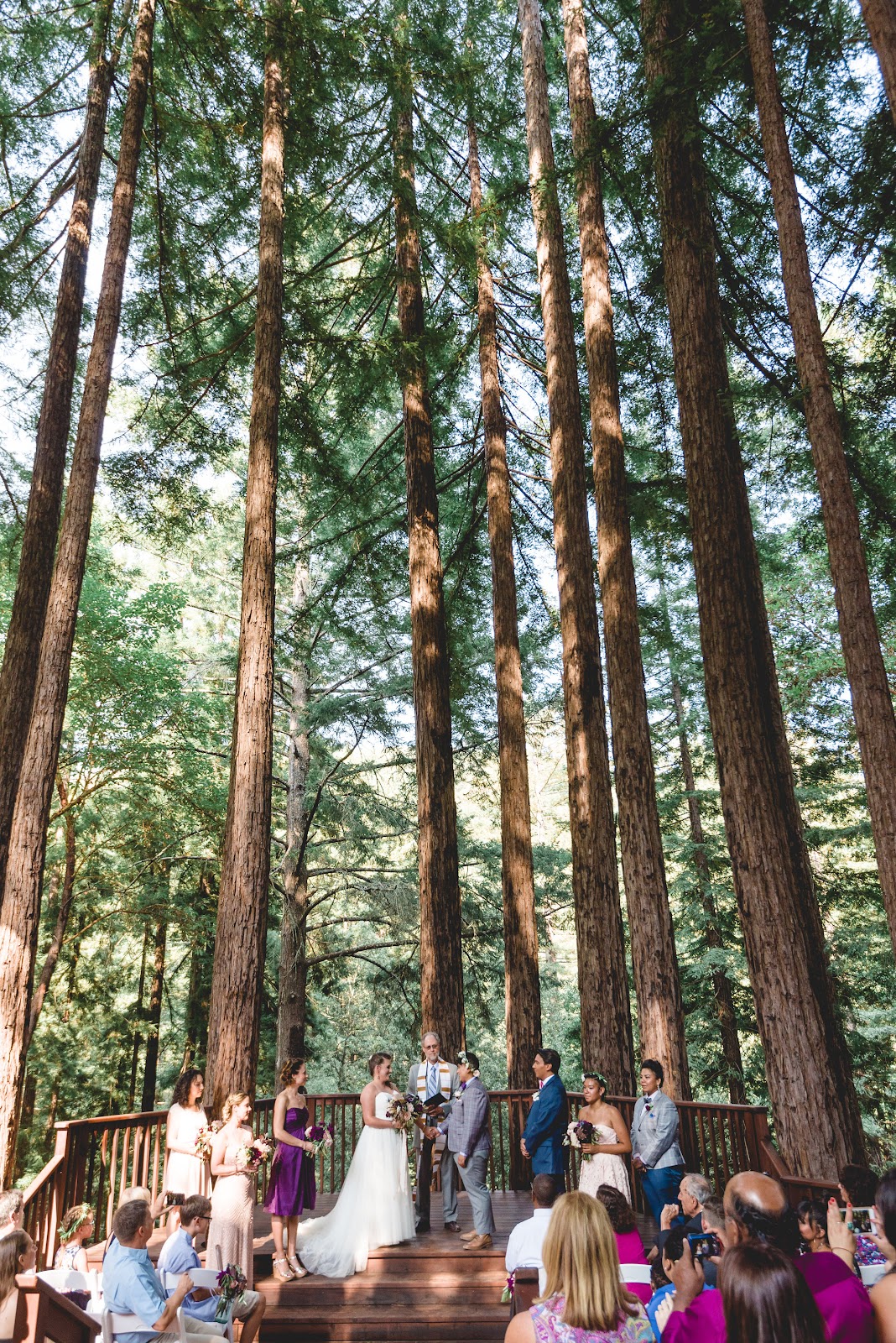
The shape of it matters. A retreat property is built for a resident community and for people who come to be quiet: modest buildings rather than grand ones, spaces arranged for sitting still rather than for processing through, planting and paths that serve contemplation rather than display, and a great deal of woodland around it all.
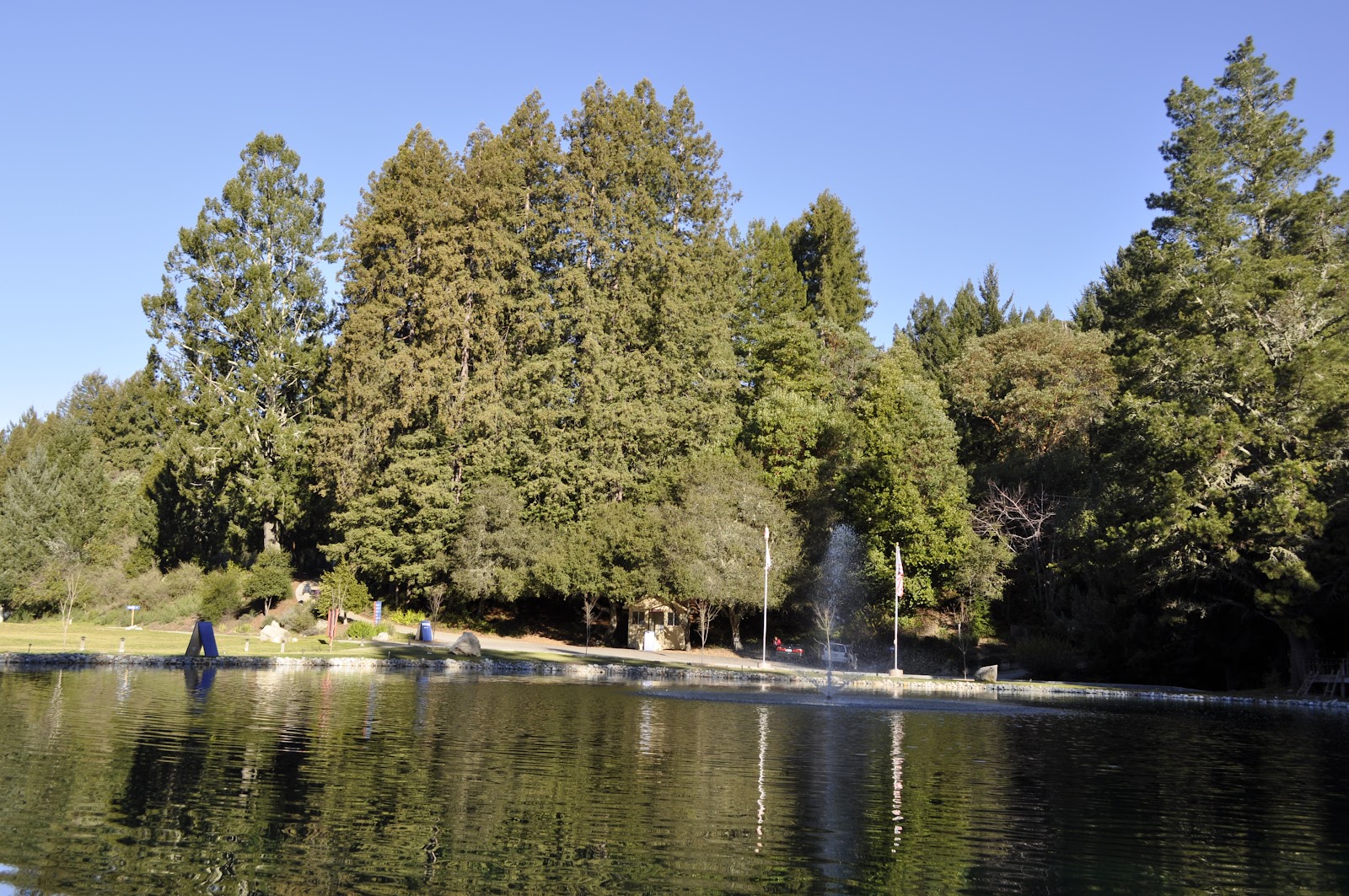
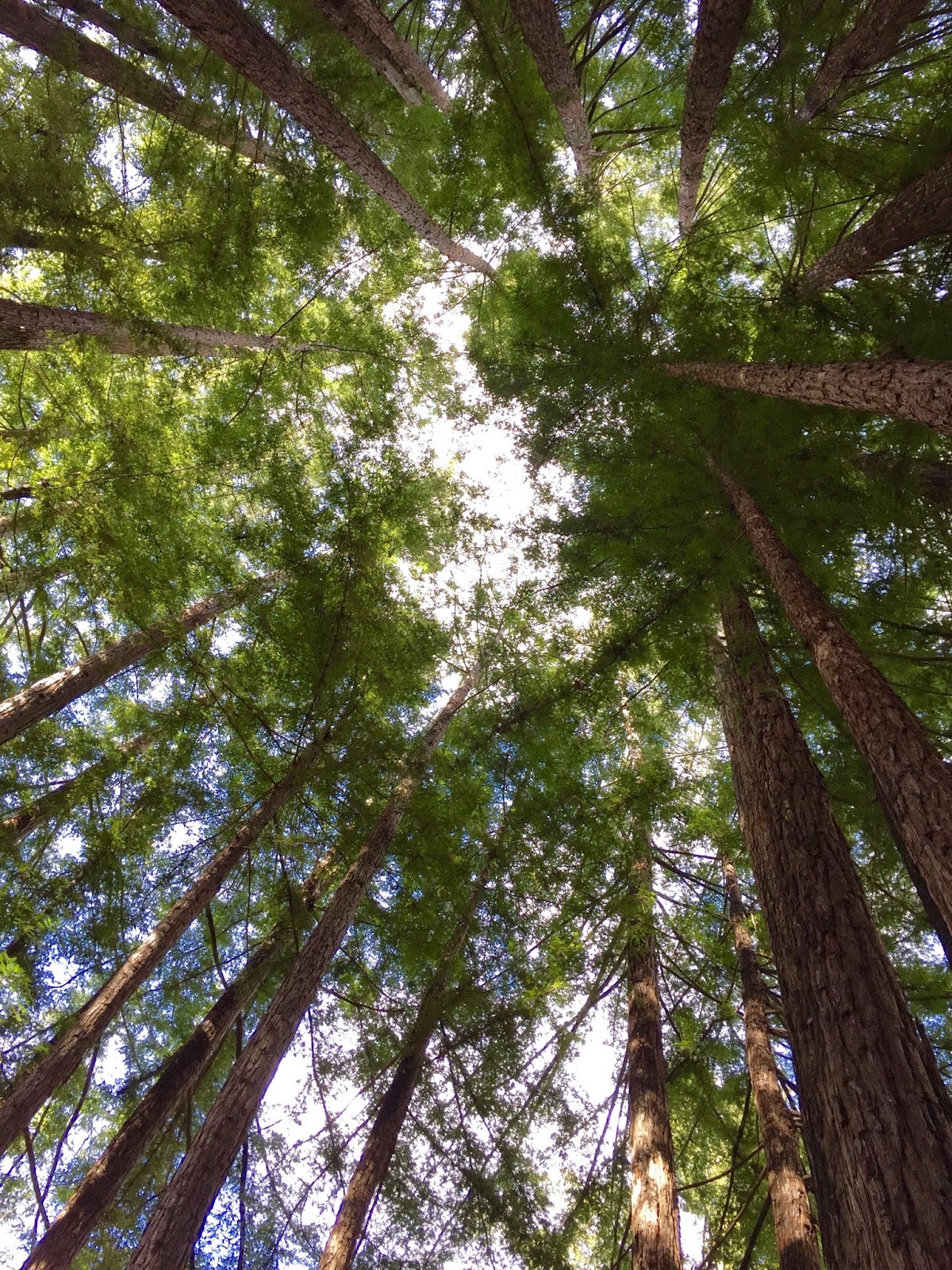
The setting is a Santa Cruz Mountains ridge, which means mixed forest — redwood in the damp draws, oak and madrone and bay on the drier slopes — steep ground, a narrow access road, marine fog coming over from the west, and a climate cooler and wetter than the valleys either side.
Those two things together produce a consistent photographic character: low light, small spaces, natural materials, colour in the built fabric, quiet, and views that appear at gaps rather than everywhere.
That suits some weddings extremely well and others poorly, and the difference has nothing to do with the property’s quality. We have not photographed a wedding at Pema Osel Ling; wooded mountain retreat properties behave consistently. Which buildings and areas are available for a wedding, the guest limit, the covered alternative, what the access and parking arrangements are, and what the house’s own expectations are about noise, alcohol and dress are questions for their team — and that last set matters more here than at a commercial venue.
Pema Osel Ling at a glance
| Where | A ridge in the Santa Cruz Mountains above Corralitos |
| Suits | Small guest counts, quiet documentary coverage, and strong colour |
| Does not suit | Large groups, grand-room formality, or a tight schedule |
| The light | Low and wooded: clearing edges and window light do the work |
| Ask first | Guest limit, covered alternative, access, and the house’s own expectations |
What it suits
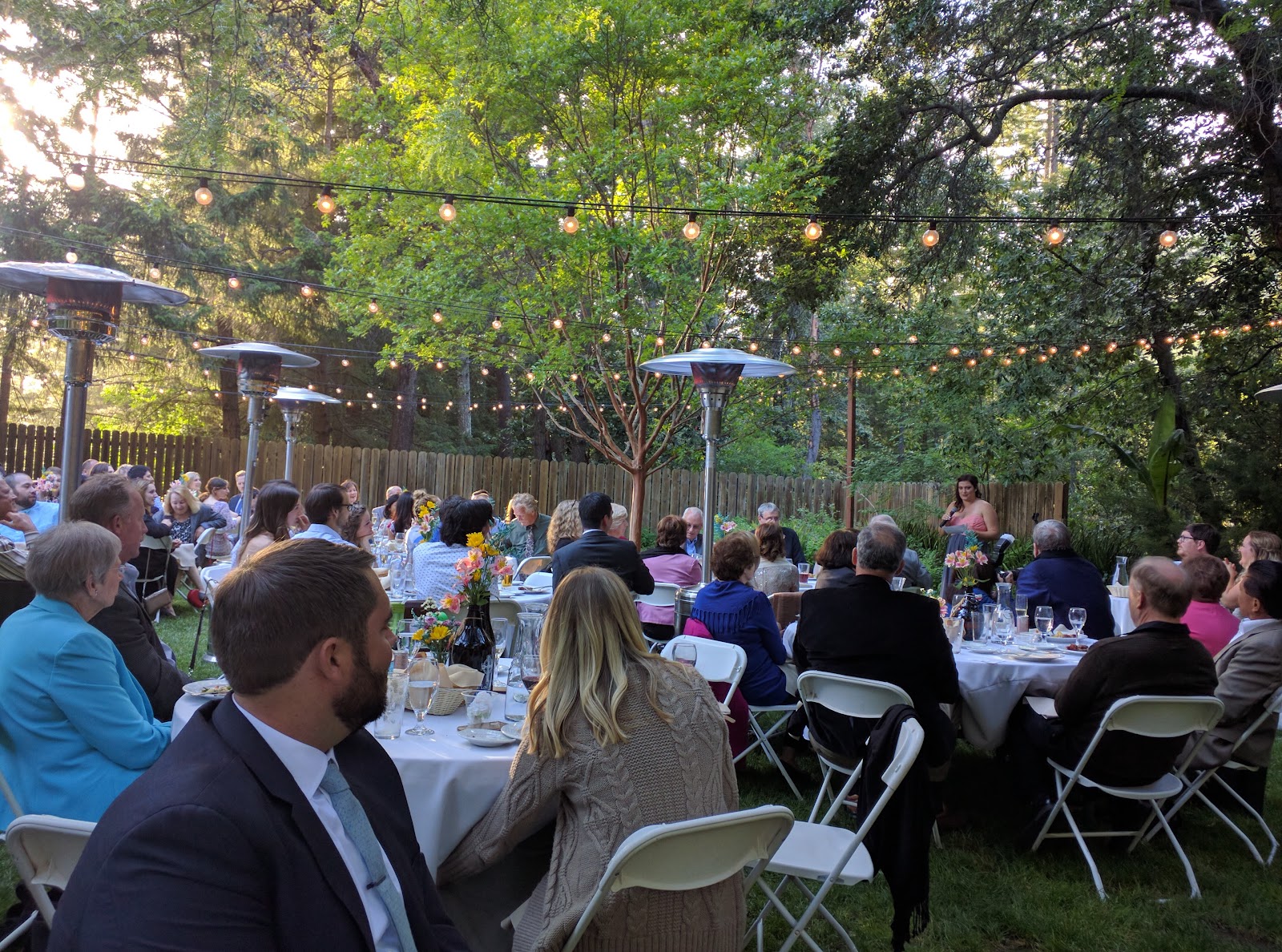
It suits a small guest count, and that is the first and clearest thing. A property of modest buildings and intimate spaces photographs a wedding of forty far better than one of a hundred and forty, because the rooms and the clearings are sized for the smaller number and the pictures then show a full space rather than a sparse one.
The photographic gain is specific: with a small group the coverage can be close. Faces at conversational distance, hands, glances across a room — the frames that a large wedding does not permit because the photographer is always further back managing scale. A retreat property is built for exactly that distance.
It suits quiet documentary coverage better than any other kind. There is little here to arrange and a great deal to observe: a resident community’s buildings have a lived-in texture that a commercial venue does not, the light is soft, and the whole place is designed to slow people down. Photographs made by watching rather than by directing are what such a site produces naturally.
And it is quiet in the literal sense, which changes the work. On a ridge in forest there is no traffic noise, which means a photographer working unobtrusively is genuinely unobtrusive, and a shutter is audible — worth knowing, because a quiet ceremony in a small room is a place to work sparingly rather than continuously.
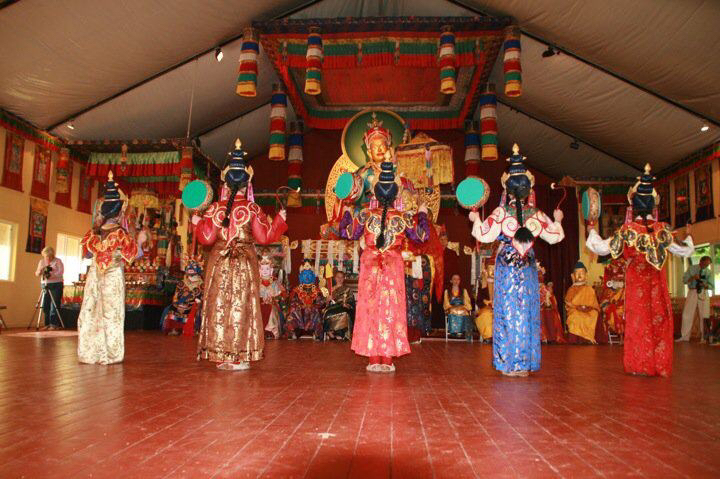
It suits strong colour, and this is the thing that distinguishes such a property from every other wooded venue in this guide. Buddhist retreat architecture uses saturated colour deliberately — prayer flags, painted timber, gold, deep reds and yellows, textiles — and in a dark forest setting that colour is the visual subject.
Photographically, saturated colour in low light needs two things. It needs a custom white balance set on a face in position, because a red or gold surface bouncing light onto skin shifts it warm, and a green canopy overhead shifts it the other way — and a preset in that mixture renders skin badly. And it needs exposure judged to keep the colour rather than to brighten the scene, because a saturated red is the first thing to lose its detail when a frame is pushed bright: it clips in one channel while everything else still looks dark.
The practical instruction is to expose for the reds. If the deep colours hold their texture the frame works, and skin can be lifted afterwards — the reverse is not recoverable.
It also suits weddings that will honour the setting. A retreat property has its own life and its own expectations, and a wedding that fits itself around those reads as belonging rather than as an event booked into a backdrop. That is a real difference in the photographs, and it is more about the couple than about the camera.
And it suits a multi-day gathering, which retreat properties accommodate naturally. The photographic gain is the morning: a ridge at dawn in this range is frequently above or inside fog, and the hour after first light is the most beautiful of the day here by some distance.
What it does not suit
It does not suit a large guest count, and that is the firmest limit. Small spaces and narrow paths on steep wooded ground mean that a hundred and fifty people are physically distributed rather than gathered, which produces photographs of parts of a wedding rather than of a wedding.
A large group portrait needs open level ground with everyone in the same light, and on a forested ridge that combination is scarce — the open patches are small, the light through mixed canopy is dappled, and the level ground is limited. Where such a frame is required, the answer is the largest even-light position available and the light chosen before the composition: full shade, full overcast, or full sun behind the camera. A hundred people half in dappled shade is unfixable.
It does not suit grand-room formality. There is no ballroom, no ceremonial stair, no processional sequence of increasingly elaborate spaces — the things that make a grand hotel or a historic mansion photograph the way it does. A couple who wants that kind of picture has chosen a property whose character is the opposite, and saying so is more useful than approximating it.
What is available instead is intimacy and texture, which is a different and equally strong set of pictures. But it is not the same set, and expectations set by a hotel wedding will not be met here.
It does not suit a tight schedule, and this is the practical trap. Distances on a wooded ridge are longer in time than in metres: steep paths, steps, gravel, and a party in formal shoes moving slowly. Add a narrow mountain access road, limited parking and a guest list arriving from a city an hour away, and the day runs later than planned unless the plan allows for it.
The photographic consequence is that a schedule with three positions close together produces more than one with six spread across the property, and that the portrait window has to be placed where the light is rather than where a timeline says. On a forested ridge the light goes early — a clearing can be in full even shade by four on a summer afternoon while the sky above is still bright — so the portraits belong earlier than instinct suggests.
The light itself needs handling on its own terms. Mixed forest here dapples badly in sun, because oak, madrone and bay all filter rather than block while redwood blocks completely — which means the canopy is uneven and a face can be half lit and half shaded within a single step. The test never changes: look at the face rather than the ground, and a bright patch on skin means move a metre.
The clearing edges are the good light and they are where the work happens. A metre or two inside the canopy at the margin of an opening gives soft directional light from the open side and a dark background behind, which is three or four stops of free separation and no equipment. The exposure goes on skin, in manual, with the background allowed to stay dark — because a meter looking at dark forest overexposes a face by a couple of stops and a bright clearing fools it the other way a minute later.
Indoors, buildings here are timber and dark, which puts a room a stop or two below a pale interior. Measure rather than estimate. The compensation is steep fall-off, so a background two metres behind a subject drops away for nothing, and one warm-gelled source at about a stop above the ambient does more than three lights while keeping the room’s character. And windows are better light than they look, because the canopy outside softens everything coming through them.
Power is the last practical question and it is a real one at a rural property: whether the outdoor positions have anything usable, or whether the plan is battery sources only. Worth knowing in advance rather than at six in the evening.
- Suits small counts, documentary coverage and saturated colour
- Does not suit large groups, grand formality or a tight timeline
- Expose for the reds — saturated colour clips before skin does
- Custom white balance per position: painted surfaces and canopy fight
- Clearing edges are the light; the forest itself dapples badly
The Santa Cruz Mountains year
This range sits between the ocean and the inland valleys, and a ridge property gets more rain and more fog than either side of it — which shapes the year more than the calendar does.
The wet season runs roughly November through March and this range catches substantially more rain than the valleys, because the air rises to cross it. A covered alternative is not optional in those months, and paths stay damp long after the rain stops.
What rain gives is the forest at its best. This is temperate rainforest in character, and it is only fully itself wet: bark darkens, moss and fern saturate, creeks run, and the brightness range narrows because the sky becomes an even source rather than a hard one. The dappling problem disappears completely and the whole property becomes photographable rather than patches of it. A soft rainy day here is better than a bright one.
Fog is the range’s defining condition and on a ridge it is dramatic rather than merely grey. Marine fog comes over from the west and fills the draws below while the ridge stands clear, or pours across it — and the burn-off hour, when shafts begin to cut through thinning fog among trunks, is the most atmospheric window the site has. It happens in the first hours of the day and it is worth scheduling for rather than hoping for.
Spring is green, cool and comfortable. Ferns are at their freshest, the creeks are still running, and any ornamental planting is at its fullest through late spring. It is the easiest season overall.
Summer is the driest and most reliable season and the hardest for light: a high sun over mixed canopy makes the dappling worst and the shaft contrast most extreme, which pushes everything to the clearing edges and the early and late hours.
The compensation is comfort, and it is substantial. Forest shade on a ridge here runs considerably cooler than the valleys — commonly ten or more degrees Fahrenheit cooler on a hot afternoon — and the marine influence keeps the nights cold. A party in formal clothes is comfortable here on a day that would be difficult in open country, and coats matter in the evening in a way people do not expect in August.
Fire risk is the honest note for these mountains in late summer and autumn, and it belongs in a planning conversation rather than a footnote. The likelier photographic reality is smoke rather than flame: a layer of it turns the sun orange, flattens contrast, shifts everything warm in a way no white balance fully resolves, and in forest it removes the shafts entirely by scattering the light. It cannot be planned for, only acknowledged, and what a venue’s own contingency is remains a fair question.
Autumn brings the clearest air of the year, the end of the heat, and the first rains. Late autumn is when the deciduous element turns — bigleaf maple in the damp draws goes yellow through November here, later than in colder regions — and yellow foliage against dark redwood and evergreen oak is the strongest colour the forest itself produces, which on this property competes interestingly with the colour of the buildings.
Winter is the light. The December sun at this latitude reaches only about thirty-two degrees above the horizon, which in tall forest means it comes in almost horizontally through the trunks rather than down through the crowns — long low shafts raking across the ground rather than stabbing into it, all through the short day rather than for an hour. It is the most beautiful light the forest receives, and almost nobody plans a wedding for it.
The other winter feature on a ridge is the view. Winter air is the clearest of the year and the fog is least persistent, so the gaps in the canopy that give views over the valleys show more in December than in July — which for a property whose views appear only at gaps is a real seasonal difference.
More frames from Pema Osel Ling
Pema Osel Ling wedding photography: common questions
What size of wedding does this suit?
A small one. The buildings and clearings are sized for forty rather than a hundred and forty, and the coverage can then work at conversational distance.
What does it not suit?
Large groups, grand-room formality, and a tight schedule. There is no ballroom or ceremonial sequence, and wooded ridge distances are slow.
How should saturated colour be exposed?
For the reds. A deep red clips in one channel while the rest of the frame still looks dark, and that is not recoverable — skin can be lifted afterwards.
Where is the usable light?
At the clearing edges: a metre or two inside the canopy at the margin of an opening. Mixed forest itself dapples badly in sun.
Is it cooler than the valleys?
Yes, commonly ten or more degrees Fahrenheit cooler in forest shade, and cold in the evening. Coats matter more than an August date suggests.
When is it at its best?
Foggy mornings for atmosphere, soft rainy days for the forest, and December for the light — a low sun rakes horizontally through the trunks all day.
More California venue guides
We are writing a photographer’s guide to every venue we would happily shoot in California. Here are three more, plus the full index:
- Post Ranch Inn, Big Sur: One Frame, and How It Is Made
- Rosewood Sand Hill, Menlo Park: The One Decision That Governs Everything
- Solage Calistoga: What It Suits and What It Does Not
Planning a wedding at Pema Osel Ling?
A quiet property that suits a quiet wedding. Tell us your date and your guest count.