 Park Hyatt Aviara, Carlsbad: The One Decision That Governs Everything
Solage Calistoga: What It Suits and What It Does Not
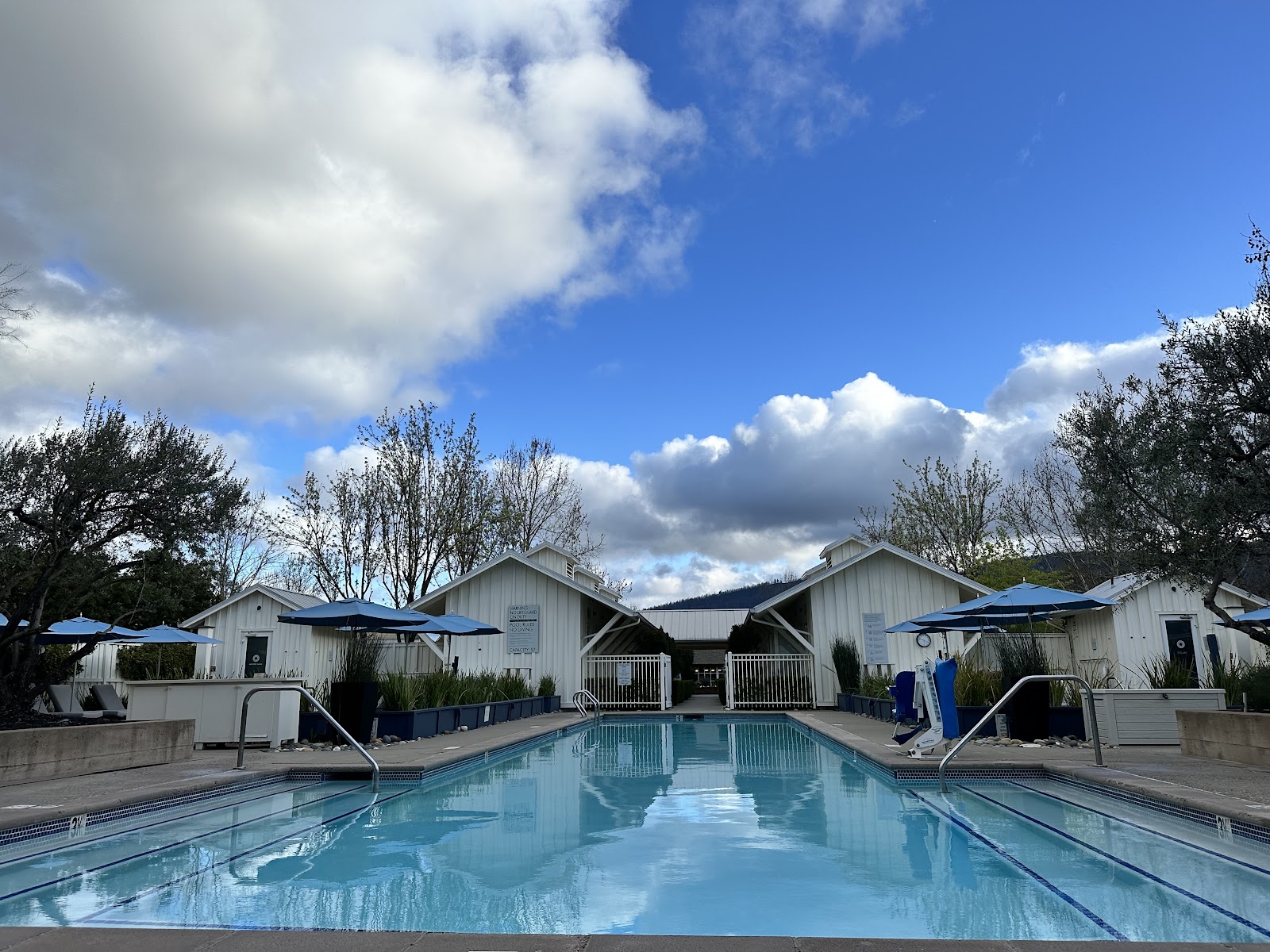
Flat ground, low buildings, pale surfaces and no canopy. Three things that suits, and three it does not.
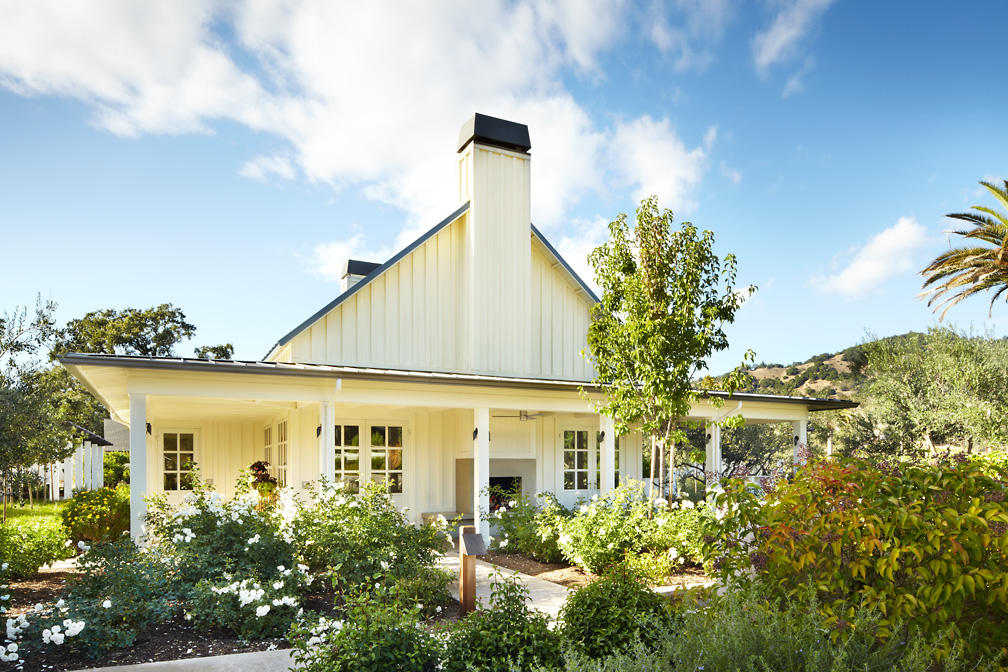
A flat, open, modern resort on a valley floor is a very different photographic proposition from the wooded and hillside properties around it, and being clear about which weddings it suits is more useful than praising it.
The shape of it is what governs everything. Low buildings rather than tall ones, spread across level ground rather than stacked on a slope. Pale walls and pale paving rather than dark timber and stone. Open sky overhead rather than canopy. And clean modern lines rather than historic ornament.
Those four facts produce a consistent character: a bright, airy, high-key site with a great deal of reflected light, wide open skies, long sightlines to the surrounding hills, and almost nowhere to hide from the sun.
The other governing fact is heat. This is the north end of the Napa Valley, the hottest part of it, regularly above ninety-five degrees Fahrenheit in July and August because it sits furthest from the marine air that cools the southern end — and on flat open ground with pale paving, that heat is not moderated by anything.
We have not photographed a wedding at Solage Calistoga; open modern valley-floor resorts behave consistently, and the reasoning below is from that behaviour rather than from their particular rooms. Which areas are included, the covered alternative and its capacity, whether the lighting can be adjusted, and what shade structures exist are questions for their team.
Solage Calistoga at a glance
| Where | The Napa Valley floor at Calistoga, the valley’s hottest end |
| Suits | Bright airy aesthetics, large guest counts, and a clean modern look |
| Does not suit | Deep shade at midday, moody low-key frames, or heat-averse guests |
| The light | High-key: pale surfaces bounce, so shadows fill themselves |
| Ask first | Shade structures, covered alternative and capacity, lighting control |
What it suits
It suits a bright, airy, high-key aesthetic, and it does that better than any wooded or historic venue can. Pale walls and pale paving are efficient reflectors, which means the light on this kind of site bounces from every direction: the shadows a high sun carves under eyes and chins fill themselves, contrast is lower than the raw sunlight suggests, and skin renders clean and light.
That is not a small thing. On a dark timber site a photographer spends the day building light; here the site builds it, and the work goes into shaping rather than supplying. A subject in the open shade of a pale wall on pale paving is lit from in front by the wall, from below by the ground and from above by open sky — which is close to a three-source setup arriving for free.
The exposure trap runs the opposite way to a wooded site and it matters. A meter looking at a large pale surface tries to pull it toward mid-grey, which underexposes the whole frame and gives grey walls and dark faces. So metering on skin and working in manual is the rule, and the deliberate direction is overexposure relative to what the camera suggests — which is exactly the opposite instinct to the one a dark venue trains.
It suits a large guest count. Flat open ground with low buildings means level surfaces, wide sightlines, easy circulation and somewhere to put a hundred and fifty people without anyone being behind a tree — and a large group portrait is genuinely possible, which it is not on a canyon floor or a hillside terrace.
The group requirement here is a single one: everyone in the same light. A hundred people half in dappled shade is unfixable, so the position is either full open shade, full sun with the sun behind the camera, or full overcast. The light sets the frame before the composition does.
It suits a clean modern look, which is a real aesthetic decision rather than an absence of one. Modern architecture gives straight lines, flat planes, strong repetition and clean negative space, and a frame built on those reads deliberate in a way that a frame built on ornament does not. Wide compositions with a lot of empty pale wall and one small figure work here and nowhere else in the valley.
The other side of modern lines is that they punish carelessness: a horizon a degree off level or a vertical converging where it should be parallel is immediately visible against a straight roofline, where the same error hides completely in woodland. It is a site that rewards attention to geometry.
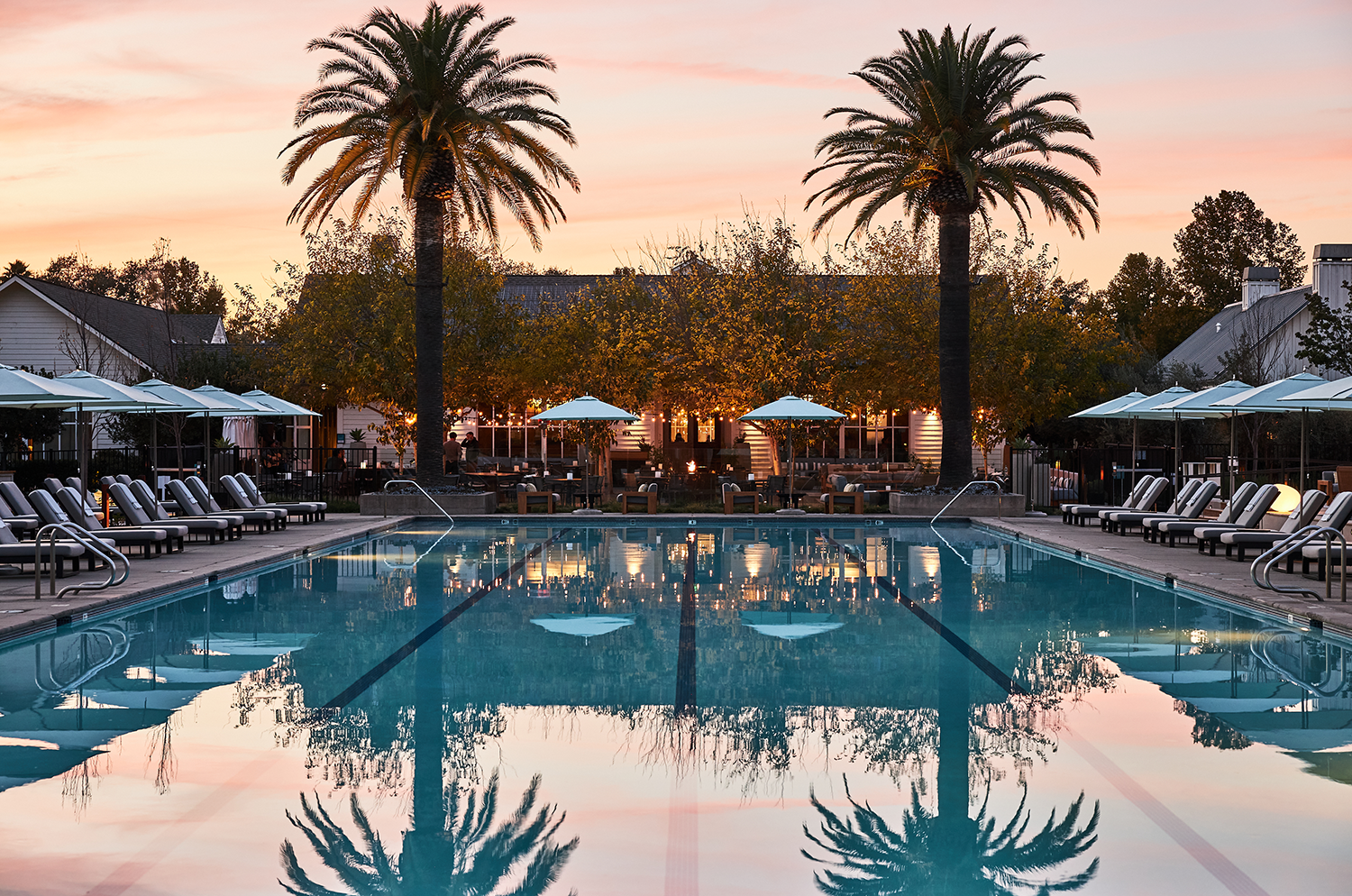
And it suits the end of the day extremely well. Open ground on a valley floor means an unobstructed view of the western hills, and because those hills are close the sun leaves earlier than a sunset table says — which gives a long clean afterglow over a low silhouette, with pale buildings taking on the colour of the sky.
Pale surfaces at that hour are the site’s best quality. They pick up the warm light and hold it, so an entire wall turns amber for twenty minutes and lights everything standing near it. Nothing needs adding at all, which is rare.
What it does not suit
It does not suit deep shade at midday, and in the hottest part of the Napa Valley that is the real limitation. Open ground with low buildings and no mature canopy means the shade available is architectural rather than botanical: what a roofline, a pergola, a colonnade or a wall throws, and nothing else.
Architectural shade is excellent where it exists — a solid roof blocks the overhead component, restricts the light to a horizontal band and bounces off pale paving to fill, which cannot dapple and works at any hour — but it exists in specific places rather than everywhere. A pergola with slats rather than a solid roof is not shade: it is a striped dappling machine, and a face under it is unusable in direct sun.
So the midday plan is a small number of known positions rather than a wander, and finding them is a twenty-minute walk rather than an improvisation. What is not available is the option a wooded property has, of simply stepping into the trees.
It does not suit a moody, low-key, dark-toned set of pictures. That look depends on a dark background two or three stops under the subject, and on a pale open site there is almost nothing that goes dark. A pale wall behind a subject is a bright background; open sky is brighter still; pale paving fills from below whether it is wanted or not.
It can be done, but only by building it — a deep doorway, a dark interior behind a subject standing in a bright opening, or an added source strong enough to let the ambient go several stops under. That is work rather than a choice the site offers, and a couple who wants dark romantic frames has chosen a venue whose whole character is the opposite. Saying so is more useful than delivering a compromise.
It does not suit heat-averse guests in high summer, and this is the firmest of the three. Ninety-five degrees on open pale paving with limited canopy is a genuinely uncomfortable afternoon, and a party in formal clothes will feel it in a way that shows in the photographs: colour in faces, hair, damp shirts, and people standing where they want to rather than where they were asked to.
The honest mitigations are scheduling and shade rather than technique. A morning ceremony, a covered reception, water available, and portrait trips that are short and deliberate rather than long. Any of those is worth more than a lighting decision.
Two further notes on the limits. The site has no elevation, which means the surrounding hills are seen across flat ground rather than looked down on — so the valley view that a hillside property gives is not available here, and a wide lens reduces the hills to a thin band above a lot of foreground. A longer lens that compresses them into layers behind the couple is the only way they read as a presence, and in dry clear Napa air that compression holds detail with very little haze.
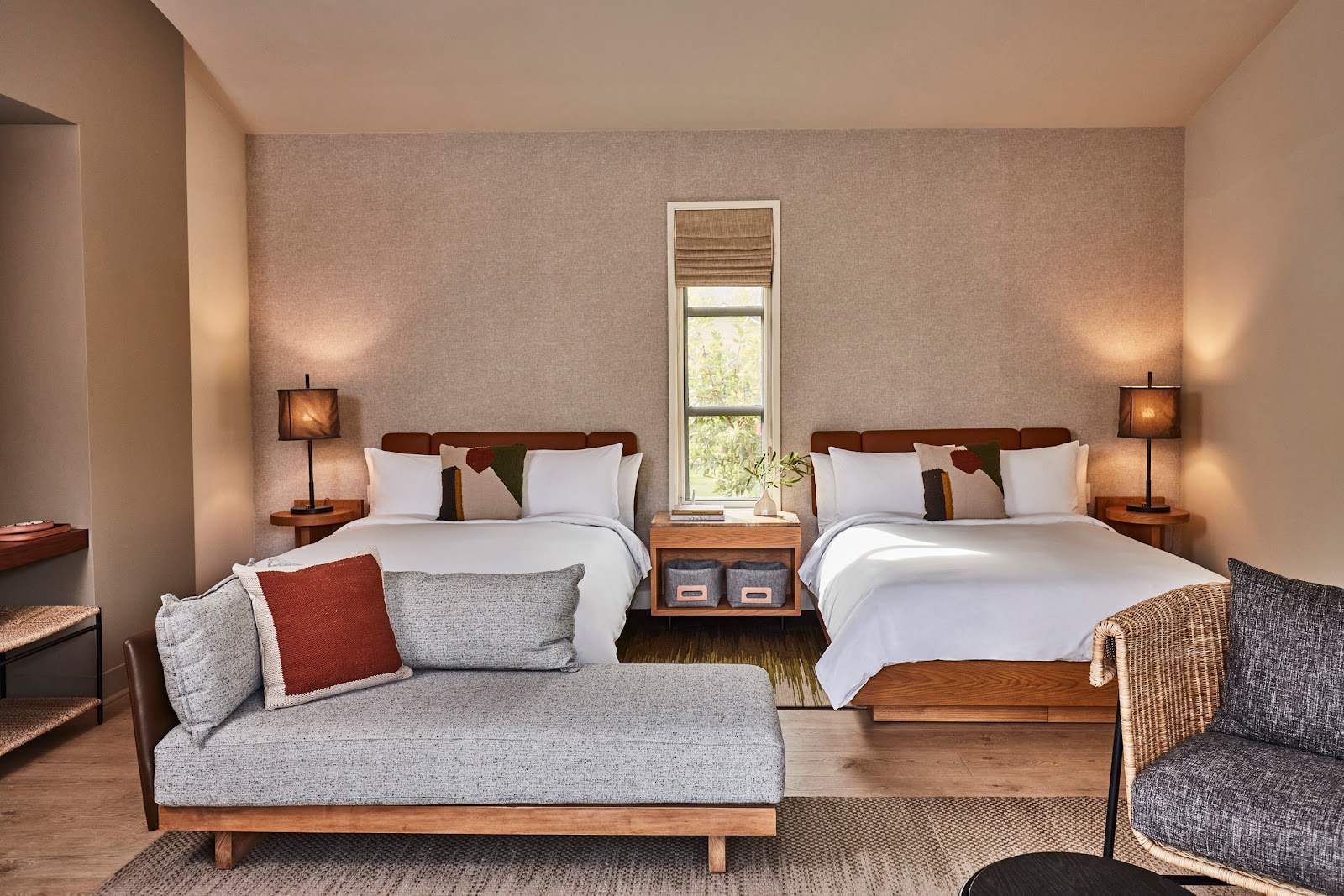
And modern interiors are frequently glass-walled, which is a mixed gift. Large glass gives soft abundant light and a subject a metre inside a window needs nothing added — but glass also reflects, which means a camera, a photographer and half the room appear in the background of any frame shot toward it. The fix is angle rather than equipment: a few degrees off perpendicular removes the reflection, and finding that angle is the first thing to do in any glass-walled room.
- Suits high-key, large groups and clean modern geometry
- Does not suit midday deep shade, low-key frames or hot-weather guests
- Meter on skin and overexpose relative to the camera — pale surfaces lie
- Slatted pergolas are not shade; they are a striped dappling machine
- Longer lens for the hills; flat ground gives no view, only a horizon
The upper valley year
The Napa calendar is Mediterranean — a dry summer and a wet winter — and an open site on the valley floor experiences both more directly than a sheltered one.
The dry season runs roughly May to October, and rain in those months is genuinely unlikely, which is the reason most weddings are booked then. On an open site that certainty is worth a great deal, because there is no canopy to shelter under and the outdoor plan is therefore the whole plan.
Summer is hot and it is the season this site handles least well. The compensation is the diurnal swing, which in the Napa Valley is large: marine air pulls up from the bay overnight, so a July morning can start in the fifties Fahrenheit while the same afternoon exceeds ninety-five. A morning here is therefore comfortable, bright and clean — and on an open pale site the early light is exceptional, because the surfaces glow and nothing is yet harsh.
That argues strongly for a morning-weighted day in high summer: ceremony early, portraits early, and the afternoon spent under cover. It is a scheduling answer rather than a technical one, and it costs nothing.
Morning fog reaches the upper valley less often than the lower, but when it does it transforms an open site completely — the brightness range collapses, the pale surfaces stop clipping, and a flat bright property becomes soft and even. A foggy morning here is the easiest morning of the year.
Fire season is the honest note for this part of California. Late summer and autumn carry real wildfire risk in the north valley, and smoke rather than flame is the likelier photographic reality: a smoke layer turns the sun orange, flattens contrast and shifts everything warm in a way no white balance fully resolves. On an open site with no shelter and long sightlines, it changes every frame. It cannot be planned for, only acknowledged, and it is worth asking a venue what their own contingency is.
Autumn is the best season here by a clear margin. The heat breaks, the air is at its clearest of the year, the days shorten so the gold hour arrives at a civilised time, and the surrounding vineyards turn — through late October and into November, in large uniform panels of yellow, orange or red, because each block is planted to a single variety. Seen across flat ground on a long lens, those panels stack into bands of colour behind the buildings.
Harvest runs from roughly late August into October and puts activity into the landscape, which for an open site with long views is genuinely useful: tractors, bins and work in the rows give the background something happening in it rather than a static field.
The wet season runs roughly November to April, and on an open site a covered alternative is not optional in those months — it is the plan for any date in that window. What rain gives in exchange is the one condition that solves the site’s central problem: soft even light with no dappling anywhere, pale surfaces that stop clipping, saturated colour, and wet paving that becomes a mirror for the buildings and the sky.
A wet winter day here is photographically better than a bright summer one, which is not true of most venues and is worth telling a couple with a January date.
And the winter light is the technical bonus. The December sun at this latitude reaches only about thirty degrees above the horizon, so the whole short day rakes across the ground rather than falling onto it — which removes the site’s hard-light problem entirely, puts modelling on every flat pale plane, and makes even the open areas usable from morning to evening. On the light alone, winter is the easiest season on an open modern site; on certainty, the least.
More frames from Solage Calistoga
Solage Calistoga wedding photography: common questions
What does an open pale site do to the light?
Pale walls and paving bounce from every direction, so shadows fill themselves and contrast is lower than the raw sunlight suggests. It is a high-key site.
Why overexpose here?
A meter looking at large pale surfaces pulls them toward mid-grey, which gives grey walls and dark faces. Meter on skin and go brighter than the camera suggests.
Is a pergola shade?
Only if it has a solid roof. A slatted one is a striped dappling machine, and a face under it in direct sun is unusable.
Can we get dark, moody photographs here?
Only by building them — a deep doorway, or an added source strong enough to let the ambient drop several stops. The site’s character is the opposite.
How hot does it get?
The north end of the Napa Valley regularly exceeds ninety-five degrees Fahrenheit in July and August. Mornings, though, can start in the fifties.
Which season is best?
Autumn — the heat breaks, the air is clearest, and vineyard blocks turn in uniform panels. A wet winter day is also better here than a bright summer one.
More California venue guides
We are writing a photographer’s guide to every venue we would happily shoot in California. Here are three more, plus the full index:
- Sunstone Winery, Santa Ynez: Field Notes
- University of California Botanical Garden, Berkeley: A Walk Through the Site
- Viansa Winery, Sonoma: The One Decision That Governs Everything
Planning a wedding at Solage Calistoga?
Bright, open and hot. Tell us your date and your guest count and we will schedule around it.