 Park Hyatt Aviara, Carlsbad: The One Decision That Governs Everything
Viansa Winery, Sonoma: The One Decision That Governs Everything
Wind decides this site. Hilltop or lee — everything else follows from that one choice.
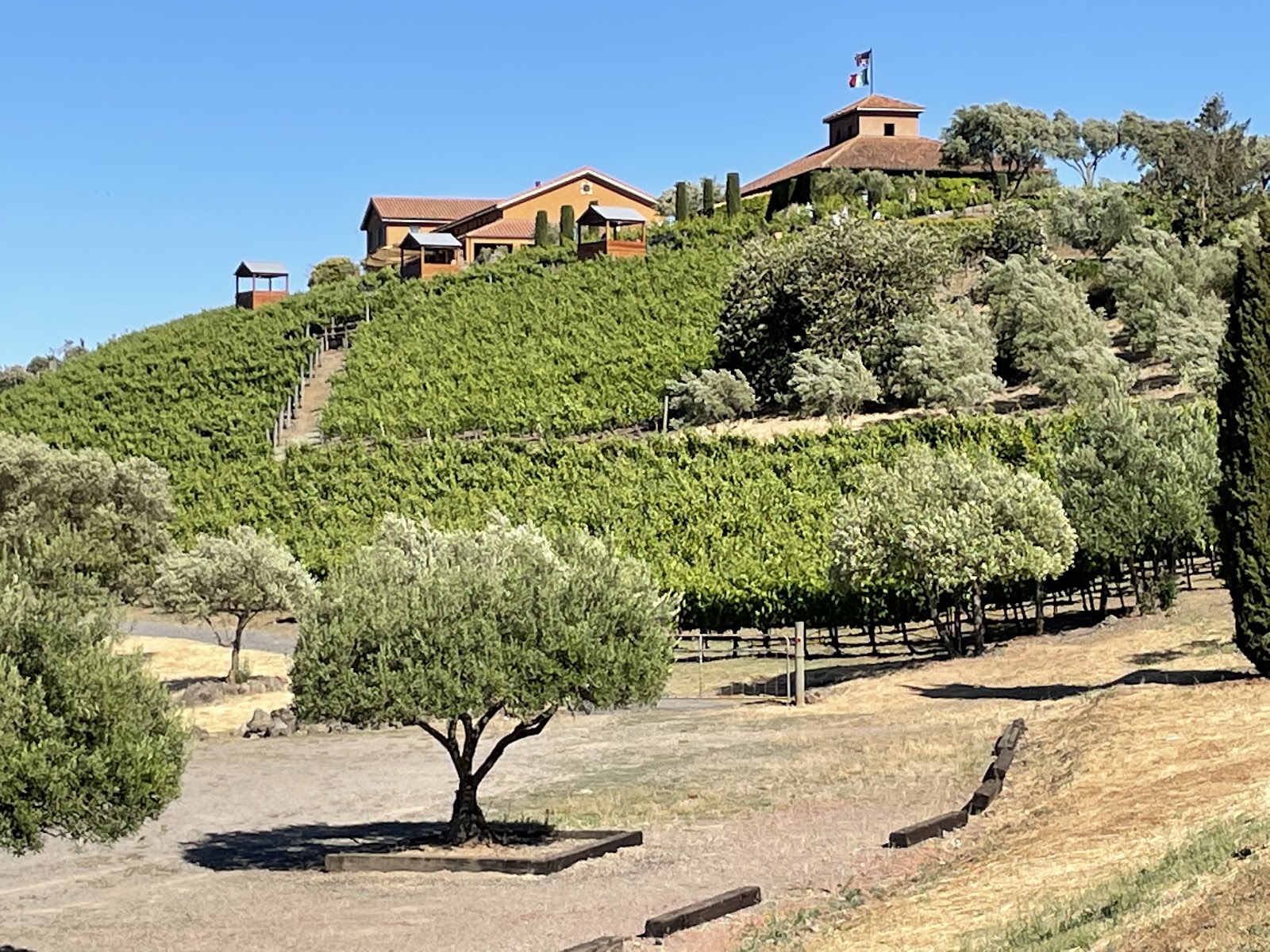
At a hilltop winery at the southern end of the Sonoma Valley, one decision governs the day, and it is not about light. It is whether the wedding happens on the exposed side of the hill or in its lee.
The reason is the location. This is the Carneros end of the valley — the part nearest San Pablo Bay, and therefore the coolest and windiest wine country in the region. Marine air pulls off the bay and across the wetlands, and a hilltop in its path gets the full force of it, building through the afternoon and easing after sunset.
That wind is not a nuisance to be worked around. It decides whether a veil is usable, whether a lightstand can be put up, whether a ceremony can be heard, whether a hairstyle survives the afternoon, and whether a party is comfortable in what they have chosen to wear. Everything else on the site is secondary to it.
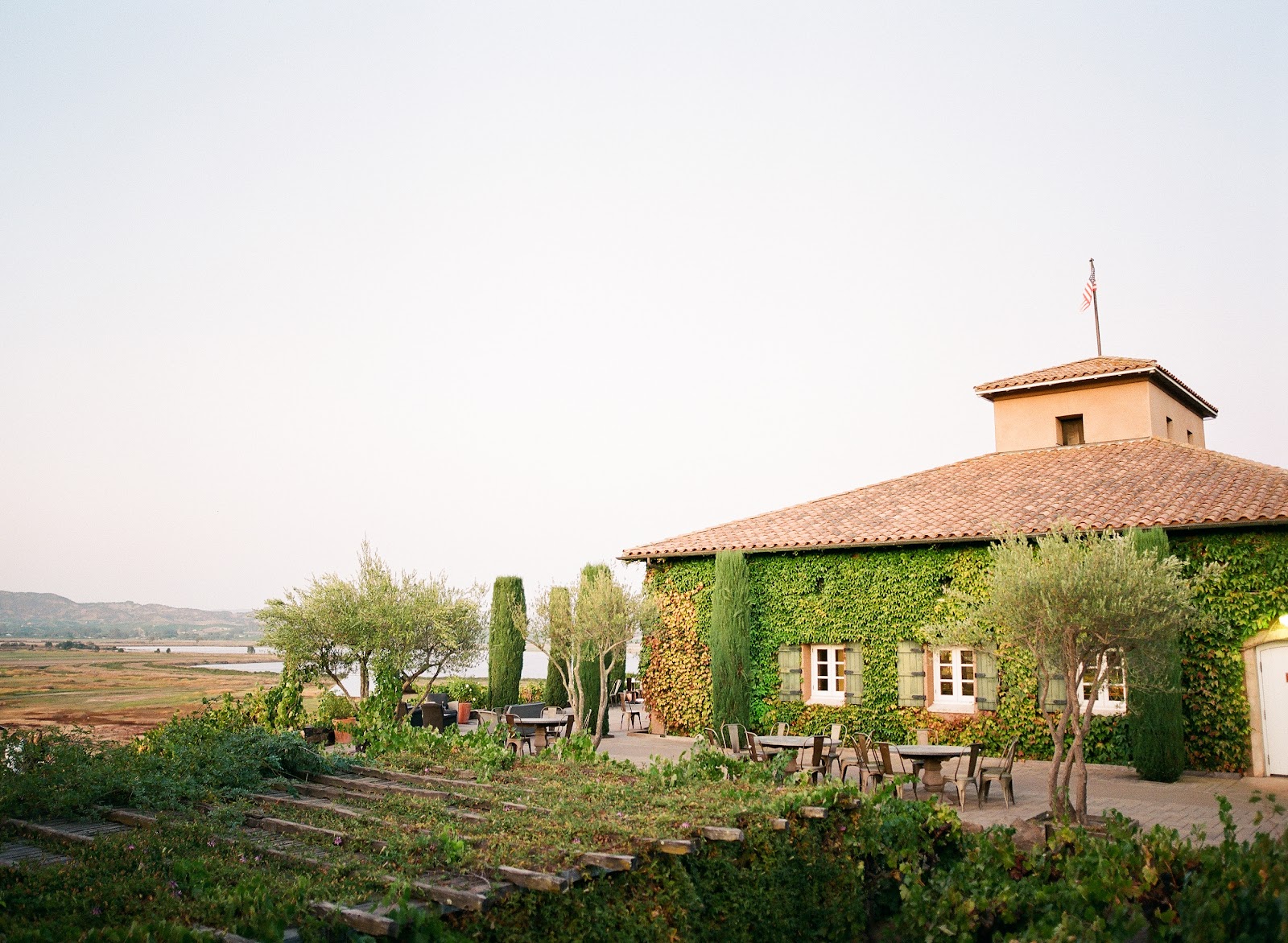
The trade is that the exposed side is where the view is. A hilltop above wetlands gives long sightlines across water, marsh and salt flats to the bay, with hills beyond — which is the frame the property exists to give, and it is on the windward side.
We have not photographed a wedding at Viansa Winery; hilltop sites at the bay end of Sonoma behave consistently. Which terraces and rooms are included, the covered alternative and its capacity, whether amplified sound is permitted outdoors, and which spaces are sheltered are questions for their team — and those answers, rather than anything here, decide which side of the decision a wedding lands on.
Viansa Winery at a glance
| Where | A hilltop above the Carneros wetlands, southern Sonoma Valley |
| The decision | The exposed windward side, or the sheltered lee |
| Windward | The view across the wetlands, and the full force of the marine wind |
| Lee | Comfort, usable equipment, audible vows, and no view |
| The climate | The coolest and windiest wine country in Sonoma |
If it is the windward side
The windward side gives the view and takes almost every convenience, and both halves are worth stating plainly.
What it gives is water. A wetland is a large horizontal reflector, which in photographic terms is the most useful landscape feature there is: it doubles the sky, it holds colour after the sun has gone, and it throws light upward into faces standing above it. That last effect is subtle but real, and it is why a hilltop above water is a softer place to stand than a hilltop above dry ground.
It also gives a background that changes with the tide and the season. Marsh is green in spring, straw in late summer, and reflective when flooded — and the channels through it make natural leading lines that only read from an elevated position, which is exactly what this site has.
The lens decision matters here more than usual. A wide lens above a wetland gives a great deal of pale flat foreground and a thin band of distant hills, which loses the subject. A longer lens compresses the marsh into layered texture and brings the far hills forward as a presence, which is the stronger frame — and in this air, which is clean but frequently humid off the bay, that compression can pick up haze in a way that inland valleys do not. Late afternoon, after the day’s haze has settled, holds the most detail.
The exposure goes on the water and the distance rather than on skin. Metering on faces above a bright wetland produces a white sky and a flat washed landscape, which is the standard failure of open water sites. So the ambient is set for the background and the faces are lifted by a close source gelled warm to match.
And here is where the wind becomes a technical problem rather than a comfort one. A source on a stand in exposed marine wind will go over — not might, will, and usually at the worst moment — so the configuration is a source in a hand or on a bracket, and a held modifier is a sail rather than a tool. This is the single most common practical failure on exposed hilltop sites, and the answer is to plan for handheld from the start rather than to discover it at six o’clock.
The other wind effects are on the subjects rather than the equipment. A veil in marine wind is unpredictable and can be magnificent or ruinous within a single frame, which means shooting more frames than usual and accepting that the good one is partly luck. Long hair moves constantly. Loose fabric flattens against the body on one side and balloons on the other. All of that is worth mentioning to a couple in advance, because a wedding party who expect it are far happier than one who do not.
Sound is the non-photographic consequence that matters most. Vows spoken into marine wind do not reach the back row, and whether amplification is permitted outdoors is therefore one of the more important questions a couple can ask about this kind of site.
And cold is the last of it. The Carneros end of the valley is the coolest wine country in Sonoma, and marine wind adds chill on top — so an evening ceremony that is pleasant at six is cold by eight, in a place people assume is warm because it is in California. Coats matter more here than the setting suggests.
If it is the lee
The lee gives up the view and gets back everything the exposed side removes, and for a large number of weddings that is the correct trade.
It gives usable equipment. Out of the wind a stand goes up, a modifier stays where it is put, and the lighting decisions available become the full set rather than the handheld subset. That widens what is possible in the evening considerably.
It gives audible vows and comfortable guests, which are the two things a couple actually remembers. And it gives a hairstyle and a veil that behave, which for the portraits is worth more than any background.
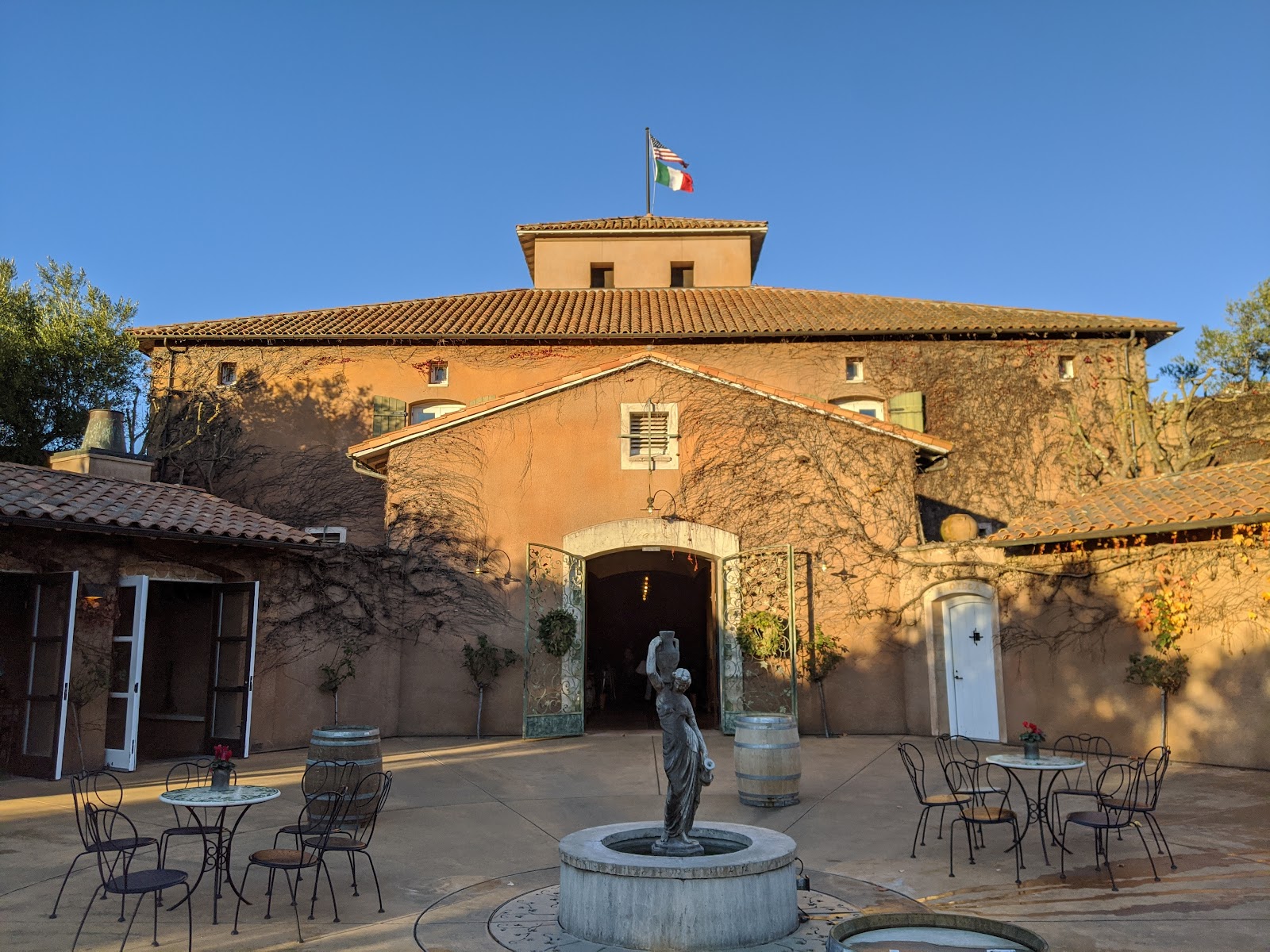
What the lee gives photographically is walls and structures, and those are better than they sound. A building that shelters a courtyard also gives openings, and an opening in a substantial wall restricts daylight to a horizontal band, which models a face the way a window does — and unlike a tree it cannot dapple, which makes it the most dependable position on the property at any hour.
Two or three metres in from the opening is the working distance. Closer and the overhead sky reaches the face again; further and there is not enough light to hold the exterior. The catchlight settles it: low and horizontal means the opening is working, high in the eye means step back.
A sheltered courtyard with pale surfaces also produces a large amount of free bounce, so a subject in shade there is lit from the front by a sunlit wall, from below by paving and from above by open sky. The exposure trap is the one that comes with all bright surfaces: a meter pulls large pale areas toward mid-grey, which underexposes the face — so metering on skin and working brighter than the camera suggests is the rule.
And if the surfaces are warm-toned, as they often are in this style of building, the bounced light is warm and a custom white balance set on a face in position renders skin correctly where a daylight preset gives an orange cast.
What the lee gives up is the whole reason for choosing a hilltop. Standing on the sheltered side, the view is behind the hill rather than in front of the camera, and the frames become about the building and the immediate planting. Those can be excellent, but they could be at a great many properties, and the wetland frame could only be here.
Which is why the answer for most weddings is neither one nor the other but a sequence: ceremony and reception in the lee where the comfort, the sound and the equipment are, and a short deliberate trip to the windward side for twenty minutes of portraits in the last hour of light.
That configuration takes the wind on for the one part of the day where the view earns it, and it means a party of a hundred is not standing in it for two hours. It is worth proposing whenever the decision is genuinely open.
The timing of that trip is set by the sun and the wind together. Marine wind typically eases after sunset while the sky still holds colour, and over water that afterglow lasts longer than it does inland because the wetland reflects it — so the ten minutes immediately after the sun has gone is frequently both the calmest and the most colourful window of the entire day. It is worth putting in the running order explicitly rather than hoping for it.
- Wind decides everything: plan handheld sources from the start
- Expose for the water and the distance; lift faces close and gelled
- Ask whether amplified sound is allowed — vows do not carry into wind
- Lee for the ceremony, windward for twenty minutes of portraits
- The calmest and most colourful window is just after sunset
The Carneros year
The southern end of the Sonoma Valley has the region’s Mediterranean calendar with the marine influence turned up, which makes it the coolest and the most weather-driven wine country in the area.
The wet season runs roughly November to April, and on an exposed hilltop a covered alternative is not optional in those months — wind-driven rain off the bay is a different proposition from rain falling straight down, and a marquee is a poor answer to it.
What winter gives is the wetlands at their best. Flooded marsh is a mirror rather than a field, which doubles every sky and turns a grey day into a luminous one, and the hills around are green rather than the straw they are all summer. A wet winter day here, photographed from a sheltered position looking out, is one of the strongest things the site does.
Spring is green, mild and comfortable, and it is the most straightforward season. The marsh is green, the hills are green, wildflowers appear in the open grassland, and the wind has not yet reached its summer strength. Late spring is when this site is easiest.
Summer is the season of the wind and the fog, and it is the counterintuitive one. Marine air is strongest from late spring through summer, which means the Carneros end can be grey and blowing at eleven in the morning while the top of the valley is hot and clear. Temperatures here commonly sit fifteen or twenty degrees Fahrenheit below the north end of the Napa Valley on the same afternoon.
Fog is the gift inside that. Under fog the brightness range collapses, the wetland stops clipping, the greens saturate, there is no dappling anywhere and no bad hour — so a foggy morning is the easiest light of the year, and the fog moving across a marsh below a hilltop is a frame nowhere else in wine country offers.
The hills turn gold and dry by June and the marsh goes straw in late summer, so the second half of the year has a warm, pale, dry landscape rather than a green one. It suits low sun extremely well and it is worth showing a couple in advance rather than letting a spring photograph set the expectation.
Harvest runs from roughly late August into October. Carneros is early-ripening country, so the work here starts at the front of that window, which means an early-September wedding is likely to be in the middle of an active vineyard rather than beside a quiet one.
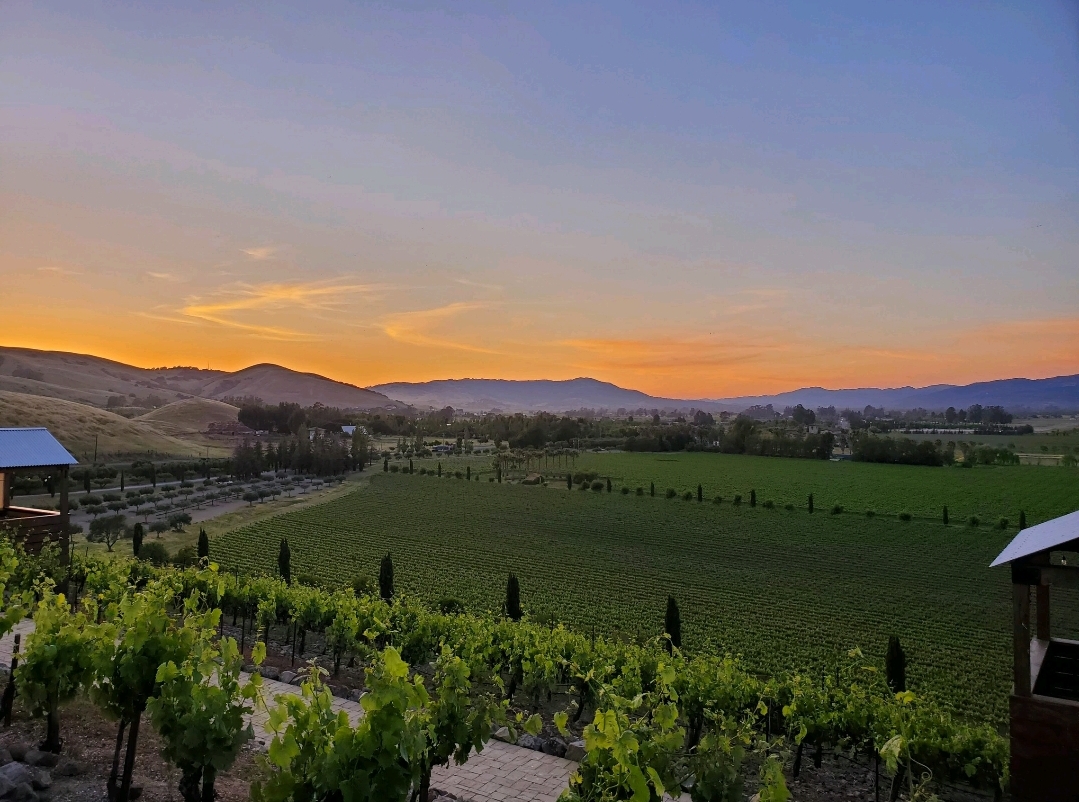
Autumn is the best season overall and by a good margin. The wind eases, the fog retreats, the air reaches its clearest of the year — which for a site whose subject is a distant view across water matters more than it does anywhere inland — and the vines turn through late October into November in large uniform panels, because each block is planted to a single variety.
Birds are the other autumn and winter feature, and on a wetland they are a real presence rather than a detail: migratory waterfowl use these marshes in large numbers through the cooler months, and a flock lifting off water below a hilltop is a frame worth keeping a long lens ready for.
Winter light is the technical bonus. The December sun at this latitude reaches only about thirty degrees above the horizon, so the whole short day rakes across the marsh rather than falling onto it — which removes any hard-light problem, puts texture into every channel and reed bed, and makes the hilltop usable from morning to evening on any day the wind allows.
More frames from Viansa Winery
Viansa Winery wedding photography: common questions
Why does wind govern this site?
It is the Carneros end of the valley, nearest the bay, so marine air comes off the water and across the wetlands onto an exposed hilltop, building through the afternoon.
What does that mean practically?
Plan handheld light sources from the start — a stand in exposed marine wind will go over. And ask whether amplified sound is permitted outdoors.
What does the wetland give photographically?
A large horizontal reflector: it doubles the sky, holds colour after sunset, and throws light upward into faces standing above it.
Should the ceremony be in the lee?
Usually yes, with a short deliberate trip to the windward side for portraits in the last hour. That takes the wind on only where the view earns it.
When is the best window of the day?
The ten minutes just after sunset — the wind typically eases while the marsh is still holding the colour of the sky.
Which season is best?
Autumn: the wind eases, the fog retreats, the air is clearest, and the vineyards turn in uniform panels. Winter gives a flooded, mirrored marsh.
More California venue guides
We are writing a photographer’s guide to every venue we would happily shoot in California. Here are three more, plus the full index:
- Wayfarers Chapel, Palos Verdes: One Frame, and How It Is Made
- The Carneros Resort, Napa: The Light Through the Day
- The Meadowood, Napa: Field Notes, Problem and Solution
Planning a wedding at Viansa Winery?
The wind decides. Tell us your date and we will plan both sides of the hill.