 Park Hyatt Aviara, Carlsbad: The One Decision That Governs Everything
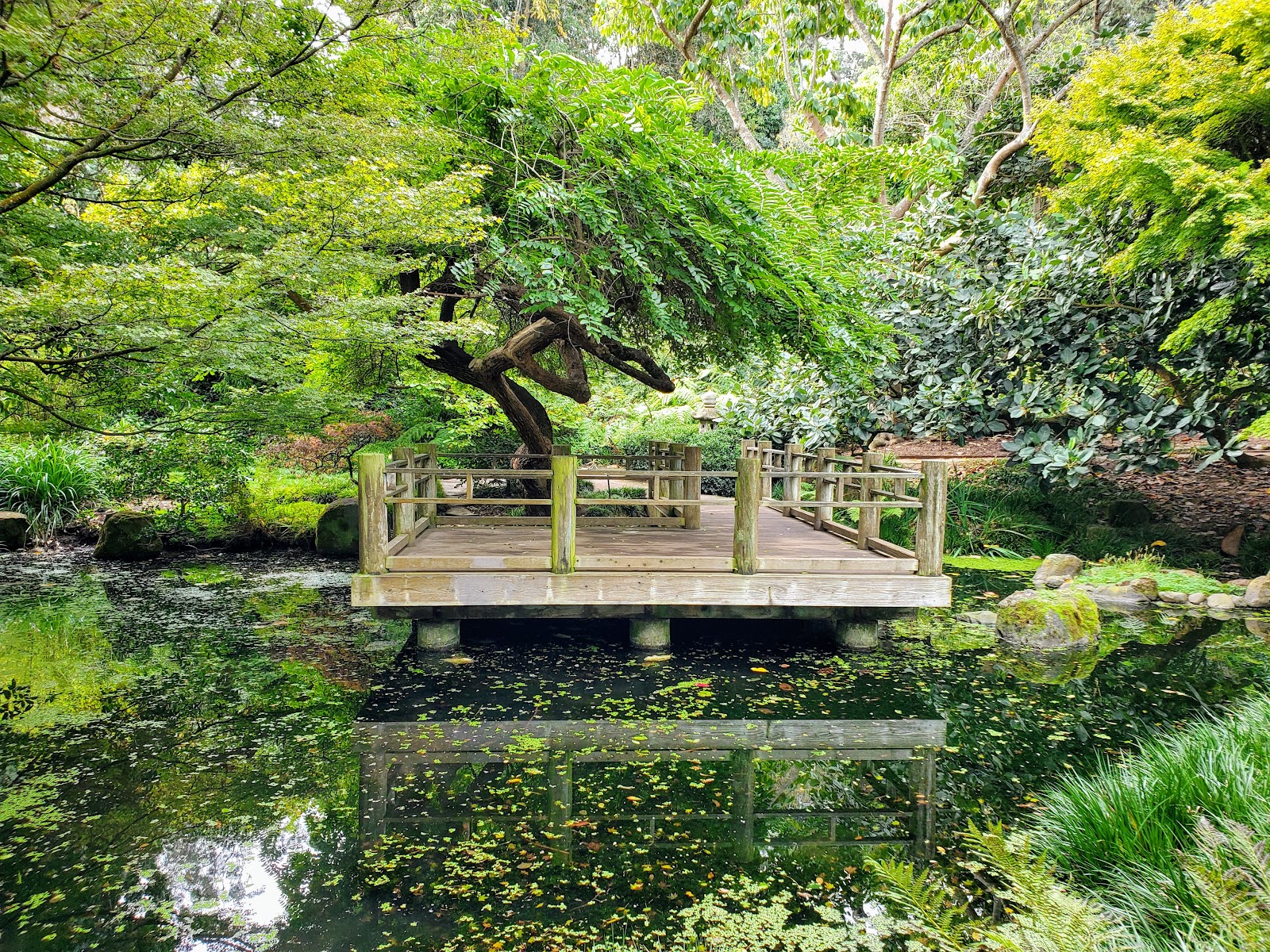
Gardens of Golden Gate Park, San Francisco: Field Notes
San Francisco fog is not weather here, it is the default. Plan for it and the day gets easier.
These are field notes on a garden complex inside a large San Francisco park, and the first note is the one that reorders everything else: in this city, summer is the grey season.
The mechanism is specific and reliable. Cold water offshore and a hot interior valley pull marine air through the Golden Gate, and that air condenses into a low fog layer that sits over the western half of the city through much of June, July and August. It burns back in the afternoon and returns in the evening, and on some days it does not burn back at all.
That has a geography inside the park, which is the second note. A park that runs east to west from the city toward the ocean has a foggier, windier, cooler western end and a clearer, calmer, warmer eastern end — frequently on the same afternoon. Which garden a ceremony happens in therefore changes the light available, not just the backdrop.
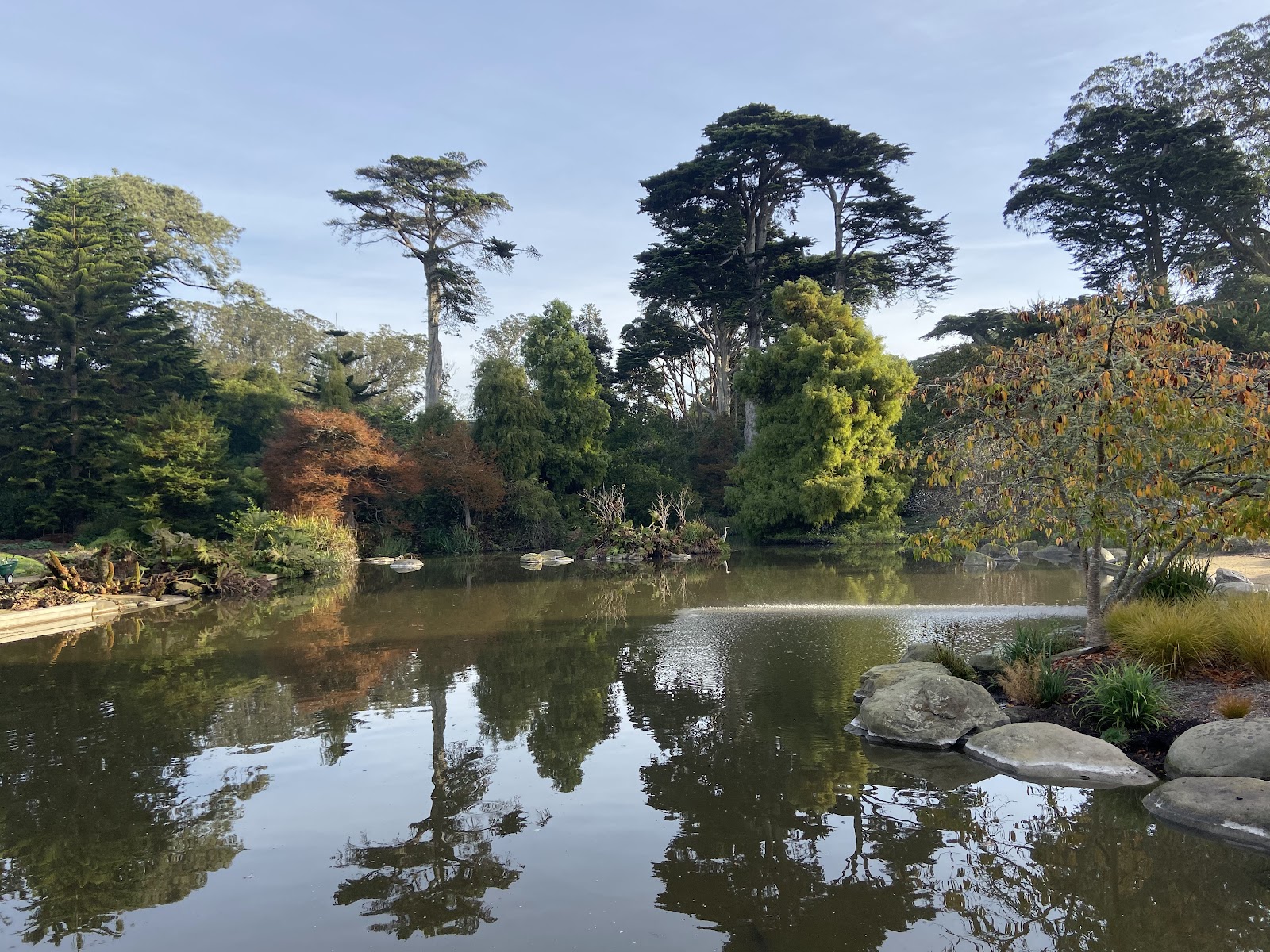
The third note is that every tree here was planted. This ground was sand dunes before the park was made, so the canopy is a deliberate Victorian and Edwardian planting — dominated by eucalyptus, Monterey cypress and Monterey pine, none of which behave like the broad-leaved trees most garden advice assumes.
We have not photographed a wedding in the Gardens of Golden Gate Park; coastal city gardens and this fog pattern behave consistently. Which gardens are available for a ceremony, what permits apply, how many guests are allowed, whether amplified sound or a structure is permitted, and what the covered alternative is are questions for the park authority, and those answers decide the shape of a day more than anything here.
Gardens of Golden Gate Park at a glance
| Where | The garden complex within Golden Gate Park, San Francisco |
| The problem | Summer fog, and an east-to-west gradient inside the park itself |
| The solution | Treat fog as the light, not the setback — it is a citywide softbox |
| The trees | Eucalyptus, cypress and pine — all planted, none behaving like oak |
| Ask first | Permits, guest limits, sound and structures, and the covered alternative |
The fog: the problem, and why it is the solution
The problem couples name is that they booked a summer wedding in California and got a grey one, and at fifty-eight degrees Fahrenheit with a wind off the ocean, that is a real disappointment rather than an imagined one.
The photographic problem is narrower and easier to solve than the comfort one. Fog light is flat, cool and low in contrast. Nothing in a frame separates from anything else, faces have no modelling, the sky is a white void, and a garden that looked saturated in a brochure photograph reads pale and grey.
The solution has three parts and none of them require much equipment.
First, build the contrast the light will not give. A dark background does more for a face in fog than any amount of added light — dark evergreen foliage, a shaded doorway, deep planting, wet paving. The frame gets its structure from what is in it rather than from the light falling on it, which means composition carries more weight on a grey day than on a bright one.
Second, set a custom white balance on a face in position. Fog is lit by a white sky that is cooler than daylight, and a daylight preset renders skin blue-grey. Set properly, the same frame reads as soft rather than cold, and the correction is free.
Third, add one source and keep it subtle. A single light just off the camera axis at about half a stop above the ambient restores the modelling fog removes without making the picture look lit. More than that and the frame stops being a foggy garden and starts being a studio portrait in a hedge.
What fog gives in return is worth stating plainly, because it is the reason not to fight it. The entire park becomes a softbox: there is no dappling anywhere, no squinting, no unrecoverable half-lit face, and no hour of the day that has to be avoided. Groups can stand anywhere. Greens saturate rather than glare. A ceremony at one in the afternoon works exactly as well as one at six.
So a foggy day removes every scheduling constraint a sunny one imposes, and the correct posture is to plan the day as though the fog will be there and treat sun as the variation.
Fog also does one thing nothing else does: it makes light visible. Where a beam of sun cuts through a eucalyptus stand in thinning fog, the shaft itself is the subject — the water droplets scatter the light, so it reads as a solid object in the air. That happens at the edges of the burn-off rather than in thick fog, and it is the most striking thing the park produces. It needs a long lens, a position looking toward the sun, and exposure set for the shaft rather than for anything in shadow.
Wind is the fog’s companion and the harder practical problem. Marine wind through the park makes a lightstand a liability, a held panel a sail and a veil unpredictable — so a source in a hand or on a bracket is the working configuration, and dense planting or a building’s lee is worth walking to. The eastern end of the park is consistently calmer than the western.
The trees, the glass, and the sun when it comes
The park’s planted canopy is the second field note and it needs handling on its own terms.
Eucalyptus is the commonest large tree in this landscape and it is a poor shade tree. The leaves are narrow, leathery and hang vertically rather than presenting flat to the sky, which means the canopy filters rather than blocks: light comes through in hard patches and a eucalyptus stand dapples badly in sun. It is also very tall with the crown high up, so there is little useful overhead cover at head height.
What eucalyptus gives instead is graphic structure. Tall pale peeling trunks receding into fog is one of the strongest backgrounds in the park, and it reads as this place rather than anywhere else. Use it as background, not as shade.
Monterey cypress is the opposite and it is the real shade. A mature cypress has a dense, dark, wind-flattened crown that blocks almost everything — genuine full shade, and three or four stops of free separation from a background that goes nearly black. That dark mass carries the standard exposure trap: a meter looking at it overexposes the face by a couple of stops, so metering on skin and working in manual is the rule.
Monterey pine sits between the two: denser than eucalyptus, more open than cypress, and worth testing on the day rather than assuming.
Colour under all three is a custom white balance job. Light filtered through dense evergreen foliage picks up green, and in a garden with dark surfaces and pale paving the mix changes from position to position, so setting the balance on a face where it stands beats a preset every time.
Glasshouses are the other distinctive environment, and a Victorian conservatory is one of the best rooms available to a photographer anywhere. The whole envelope is a diffuser, so light arrives from every direction at once, soft and abundant, with no hard shadow anywhere — and in a coastal city it is also warm and windless, which matters more than it sounds in August.
Two cautions inside glass. The light is overwhelmingly from above, which leaves eye sockets a little dark, so a subject facing outward toward the glass wall rather than standing under the ridge gets the modelling that the roof alone does not give. And on a rare sunny day a glasshouse is hot and the light through the structure throws hard geometric shadow patterns across faces, which is a lovely effect on a wall and a problem on skin.
Green cast is the third caution: dense planting inside glass bounces green into everything, which is exactly the situation a custom white balance solves and a preset does not.
When the sun does come — and September and October are the city’s warmest, clearest months rather than July and August, which surprises almost everyone — the park becomes an ordinary bright garden with ordinary bright garden rules. Full shade under cypress, covered structures at midday, the last hour for anything with a view, and the face checked rather than the ground for dappling under eucalyptus.
A sunny San Francisco afternoon is also short in usable terms, because the fog often returns over the western end in the early evening even on a clear day. So the gold hour here is less reliable than the middle of the day, which is the reverse of almost everywhere else, and it argues for taking the portraits when the light is there rather than holding them for a scheduled slot.
- Plan for fog and treat sun as the variation, not the reverse
- In fog: dark backgrounds, custom white balance, and one subtle source
- Eucalyptus is structure, not shade. Monterey cypress is the shade
- Glasshouses are the best light on site; face outward, not up
- September and October are the clear months, not July and August
The San Francisco year
The city’s calendar does not match the state’s, and that is the single most useful thing to tell a couple planning here.
Winter and early spring are the wet season, running roughly November through March. Rain is real in those months and a covered alternative is not optional — but the light on a wet day here is excellent, soft and saturated, and the park is at its greenest and most lush, because this is when the water comes.
Late winter is also when the garden colour starts. A Mediterranean-climate garden at this latitude has things flowering through the winter rather than in a single spring flush, and magnolias in particular are a February and March feature in this city, which is a month or two ahead of most of the country.
Spring is mild and green with lengthening light, and it is the most straightforward season. Fog is present but not yet dominant, the rain is tailing off, and the gardens are filling in.
Summer is the fog season and it is the counterintuitive part. June, July and August over the western half of the city are cool, grey and windy more often than not, with temperatures that can sit in the fifties Fahrenheit while an inland valley an hour away is above ninety. A party in summer clothes at an evening ceremony here will be cold, and saying so in advance is worth more than any photographic note.
The photographic consequence is that summer is the easiest season to shoot and the least flattering to a brochure. Everything works, nothing sparkles, and the pictures are soft and even. A couple who wants a sunlit garden should not choose July.
September and October are the best months by a clear margin, and they are the city’s real summer. The fog retreats, the air warms, the light is long and clean, and the gardens still carry planting from the season. If a date is movable and the couple wants sun, this is the answer.
Autumn colour is modest here, because the dominant trees are evergreen. What changes instead is the quality of the air and the angle of the light rather than the colour of the leaves, which is a different kind of autumn and worth setting expectations about.
Late autumn brings the first rains and, with them, one condition worth chasing: a park that has been dry for six months turning green again within a fortnight, with wet dark trunks and saturated foliage under soft cloud. It is the most alive the planting looks all year.
Winter light is the technical bonus. The December sun at this latitude reaches only about thirty degrees above the horizon, so on a clear winter day the whole short day rakes rather than floods — which removes the hard-light problem entirely and makes even open lawn usable from morning to evening. The trade is a short day, a real chance of rain, and a cold wind off the ocean.
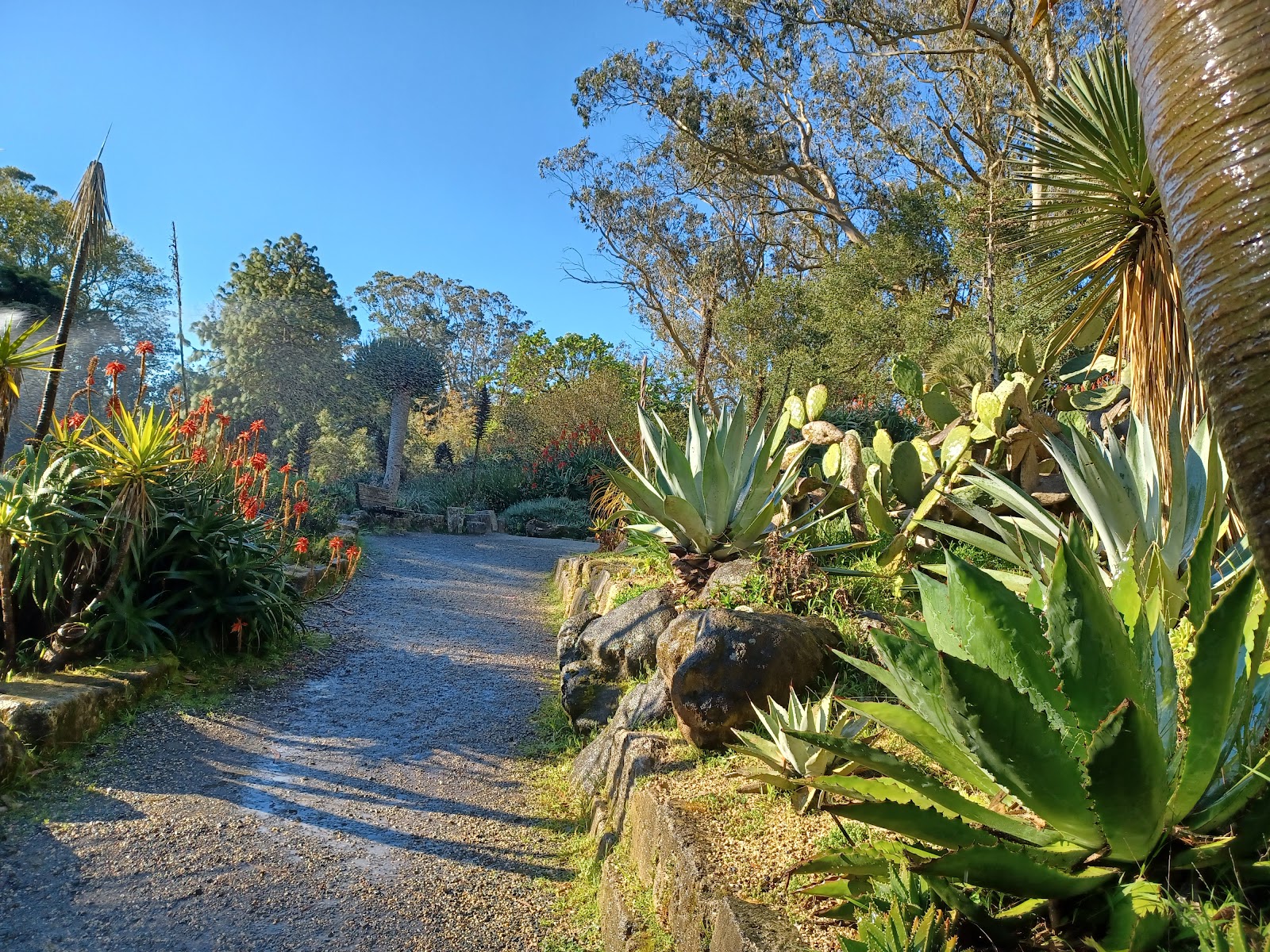
More frames from Gardens of Golden Gate Park
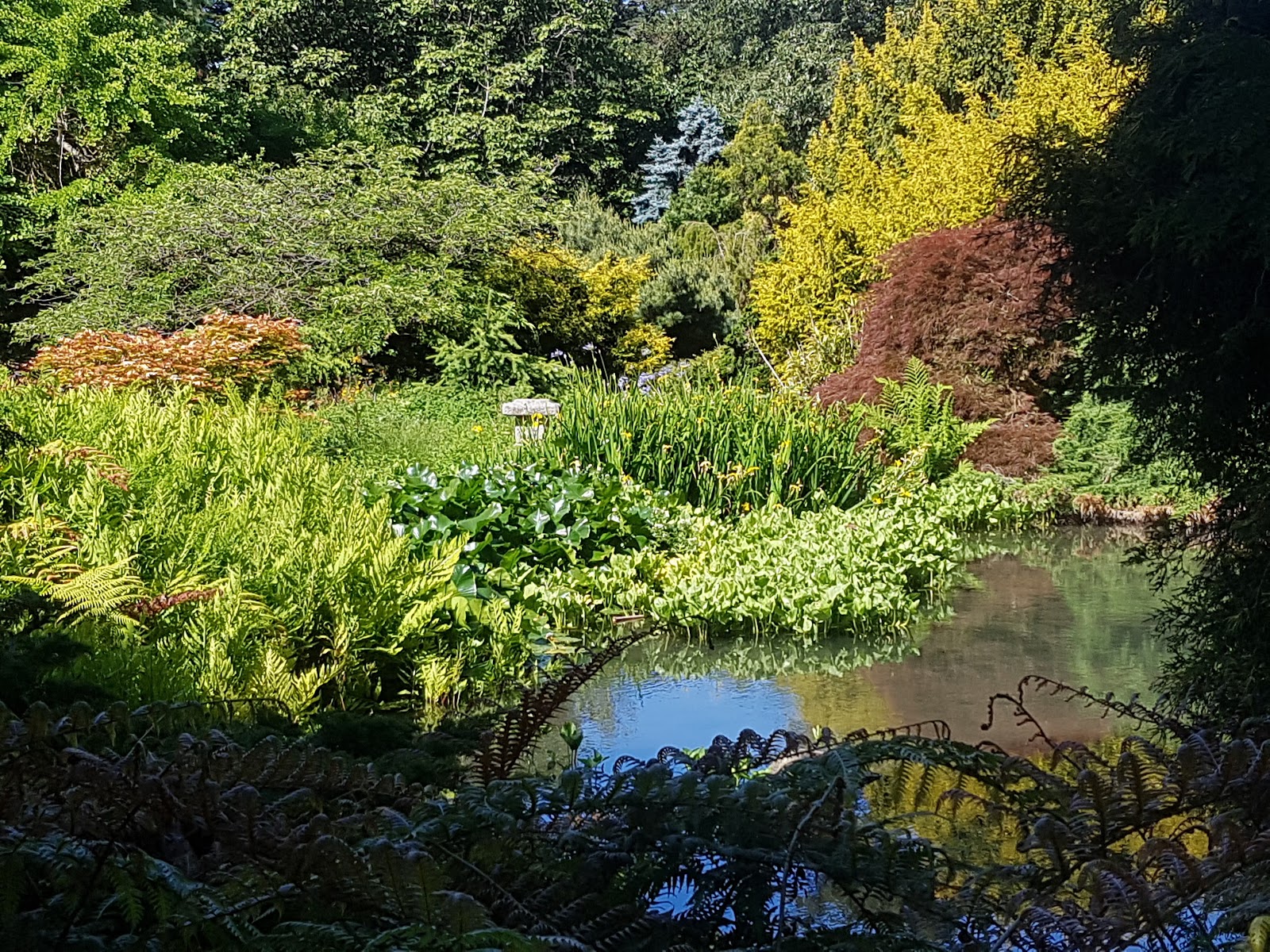
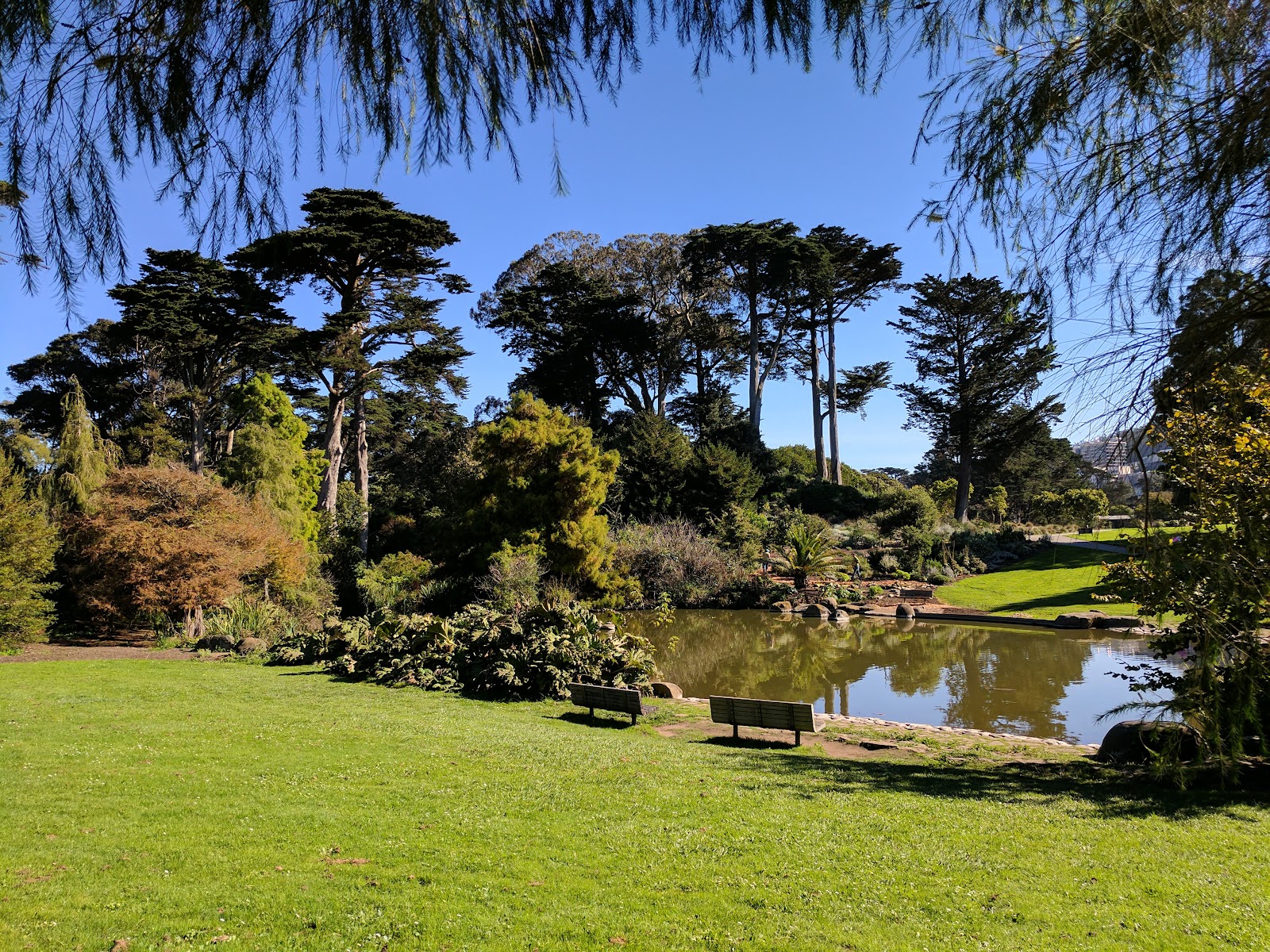
Gardens of Golden Gate Park wedding photography: common questions
Why is a San Francisco summer wedding grey?
Marine air pulled through the Golden Gate condenses into a fog layer over the western half of the city through much of June, July and August. It is the default, not bad luck.
Is fog bad for the photographs?
It removes every scheduling constraint — no dappling, no squinting, no bad hour. It needs dark backgrounds, a custom white balance and one subtle source.
Where is the real shade on a sunny day?
Under Monterey cypress, which is dense and wind-flattened. Eucalyptus filters rather than blocks and dapples badly.
What is the best light in the park?
A Victorian glasshouse. The whole envelope diffuses, so the light is soft and abundant — and it is warm and windless, which matters here.
When are the clear months?
September and October, which are the city’s warmest and least foggy. July and August are the grey ones.
What should we ask the park about?
Permits, guest limits, whether amplified sound or a structure is allowed, and what the covered alternative is. Those answers shape the day.
More California venue guides
We are writing a photographer’s guide to every venue we would happily shoot in California. Here are three more, plus the full index:
- Greystone Mansion, Beverly Hills: A Walk Through the Site
- Hakone Gardens, Saratoga: The Problem, and Four Ways Out
- Hotel del Coronado, Coronado: Field Notes
Planning a wedding at Gardens of Golden Gate Park?
Fog is the plan, not the problem. Tell us your date and we will work with it.