 Roots Run Deep, Fruita: The Site’s Own Logic
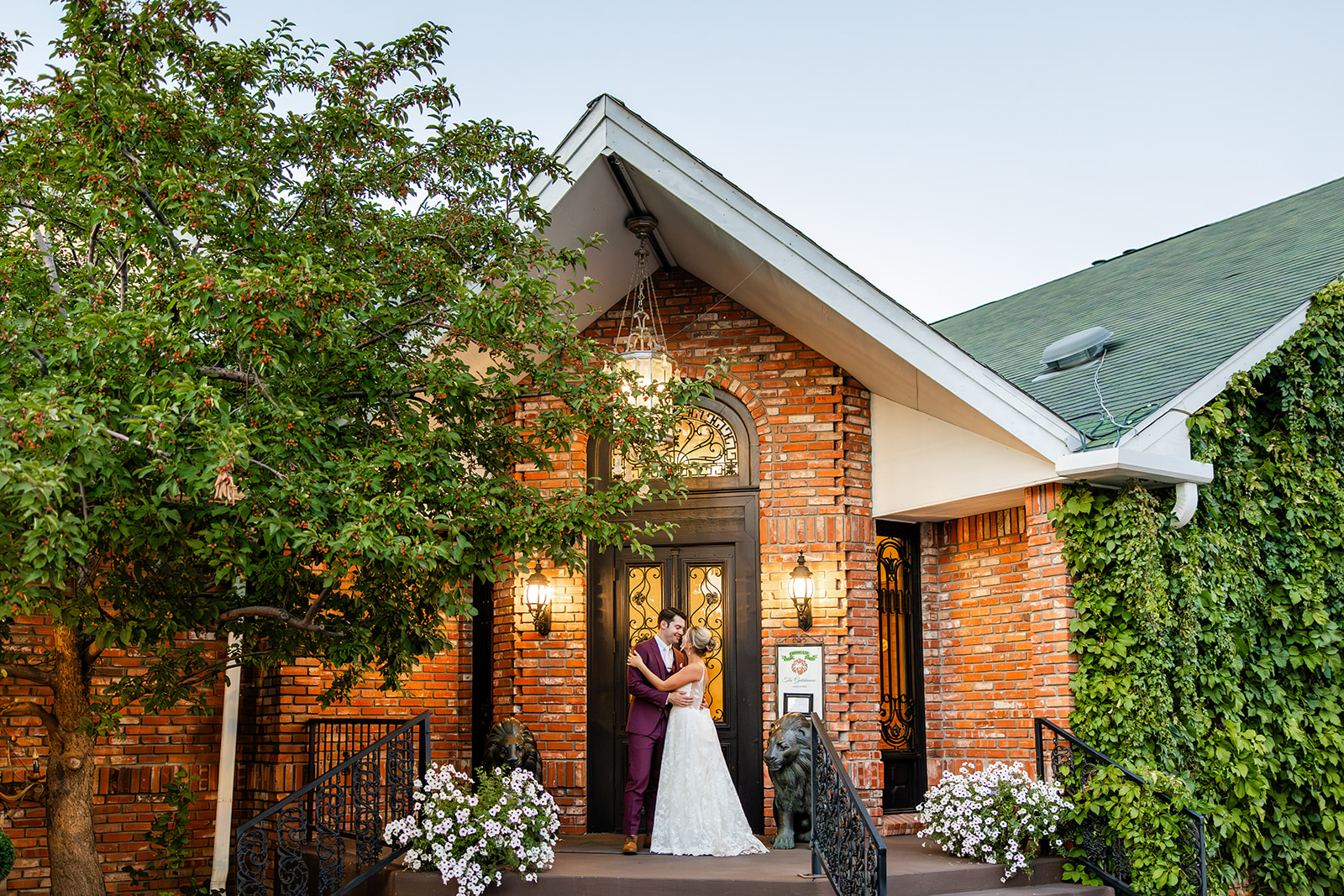
Lionsgate Event Center, Colorado: A Garden Made Against the Climate
On the Front Range plain nothing shades anything. A garden here is an argument with the climate.
A garden venue on the Front Range plain exists in opposition to its surroundings, and understanding that explains everything about its light.
The natural vegetation here is short grass and scrub. There are no trees on the open plain, because the rainfall does not support them — which means every substantial tree at a venue like this is irrigated, planted deliberately, and maintained against the climate rather than merely growing.
For a photographer that has one overwhelming consequence: the shade is where the water is. An irrigated garden’s mature trees are the only full shade for a considerable distance, and at over five thousand feet with dry clear air the sun they are blocking is harder than at sea level — so those trees are not scenery but infrastructure.
It has a second consequence that is easy to miss. Because the planting is deliberate rather than natural, it is placed — which means the garden has designed sightlines, screened enclosures and considered groupings that a wild site does not, and those are compositional assets in their own right.
We have not photographed a wedding at the Lionsgate Event Center; irrigated plains gardens behave consistently. Which areas are included, what the covered alternative is, and how mature the planting is are questions for their team — and the last of those matters more than it sounds.
The Lionsgate Event Center at a glance
| Where | The Front Range plain in Colorado, at about 5,200 feet |
| The logic | Irrigated planting sustained against a semi-arid climate |
| The consequence | The shade is where the water is, and there is none beyond it |
| The bonus | Deliberate planting means designed sightlines and screens |
| Ask first | Areas included, covered alternative, maturity of the planting |
What the irrigation gives, and what it does not
Mature irrigated trees are the first and most important asset, and the question worth asking before booking is how mature.
The distinction is not cosmetic. A tree with a broad closed crown gives genuinely full shade across an area a group can stand in; a young or narrow one gives dappled light, which puts bright patches and deep shadow on the same face at a ratio nothing holds. At over five thousand feet with dry air scattering very little, that ratio is worse than it would be lower down — so dappled light here is not a mild problem but an unusable one.
Ten minutes on arrival marking which trees genuinely qualify is the most valuable ten minutes of the day, and the test is universal: look at a face rather than the ground, and any bright spot on it means the position is not full shade and a metre will fix it.
Full shade lacks direction, and it is supplied by geometry rather than equipment. Standing near a trunk, a wall, a hedge or a structure blocks the light from one side and restores the modelling; standing in the middle of an open shaded lawn gives the flattest light on the property.
Dense irrigated canopy also throws green onto skin from whichever side it is thickest, localised so global white balance cannot remove it — a custom white balance set on a face in the position being used is the fix, and a metre further from the foliage roughly halves it. On a plains site the surrounding ground is pale and dry, which means the contrast between green-cast shade and warm open ground is stronger than in a wetter landscape.
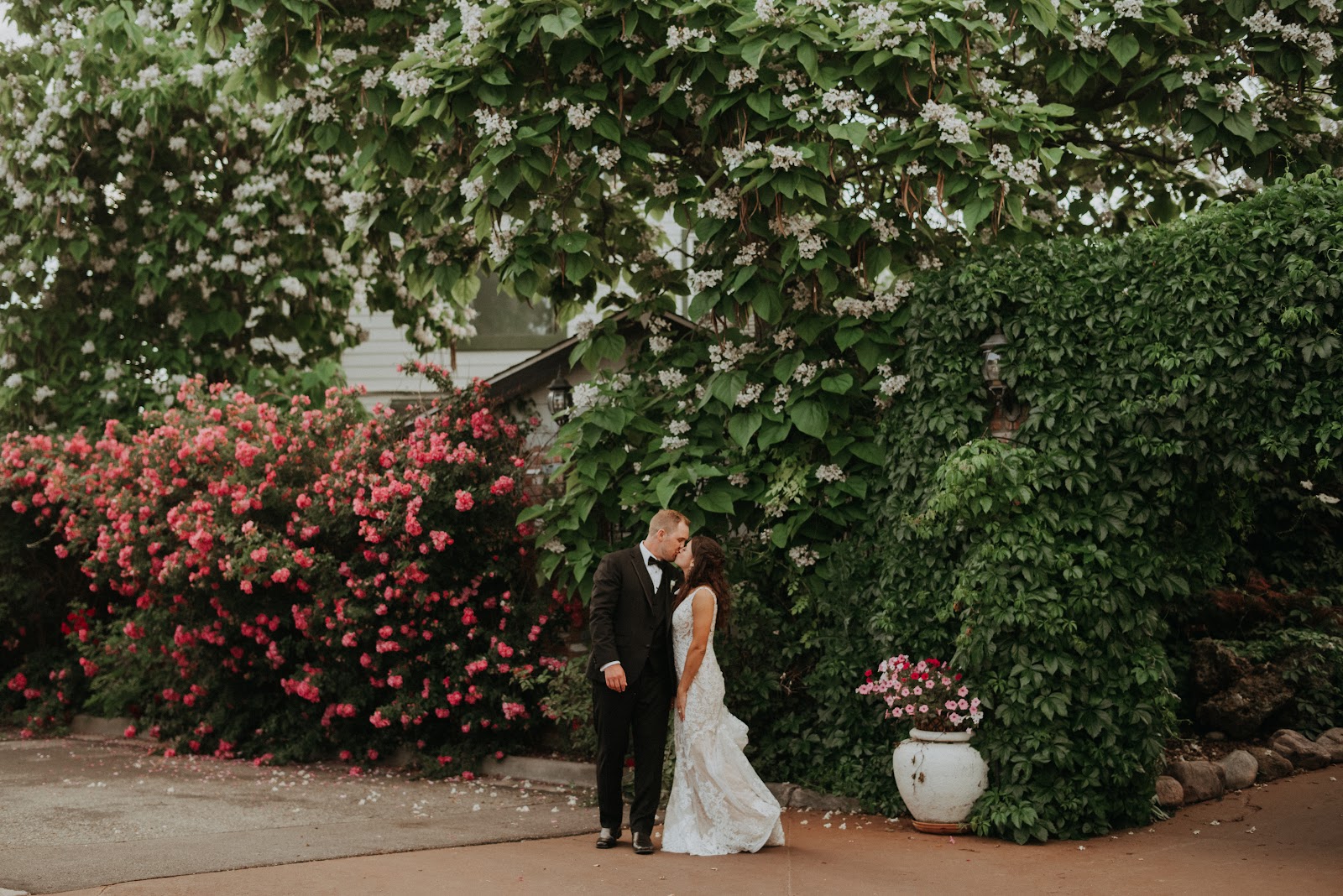
The deliberate placement is the second asset. Planting put in on purpose creates screens and enclosures, which means a garden on an open plain can have positions that feel sheltered rather than exposed — and it creates sightlines, so a subject placed on an axis has depth receding behind them that darkens by itself.
That matters particularly here because the alternative background is the plain: flat, pale, low-horizoned and with a great deal of sky. That is a genuinely good background for some frames and a poor one for others, and a garden’s screens let a photographer choose rather than accept.
What irrigation does not give is shelter. A garden on the plain is still on the plain — open to the sky, open to the wind, and with nothing above it — which means a named covered alternative with a known capacity is a requirement rather than a courtesy, and the reasons for that are in the last section.
And it does not change the ground. Away from irrigation the soil is pale and dry, which is a reflector: it bounces light upward, filling the shadows a high sun carves, at the cost of uplight under the chin. Something solid on one side corrects it, and the diagnosis is to look at the chin in the first frame.
The plain, the structures, and the mountain front
The plain is the garden’s setting and it gives three things worth using deliberately.
A low open horizon is the first, which means the sky occupies more of any wide frame than it would in enclosed country — so the sky is the subject rather than the backdrop, and the exposure for such a frame should be set for it with the faces lifted by a close source. Metering on skin gives a white sky, which is the commonest failure in open country.
Long raking light is the second. On a flat site with nothing to interrupt it, low sun runs unobstructed across the ground for the full length of the last hour — which means mown grass, paving and any structure are raked for longer here than in terrain that cuts the sun off early.
Wind is the third and it is a constant rather than an occasional condition on the Front Range plain. A lightstand outdoors is a liability rather than a tool, a veil behaves unpredictably, a held diffusion panel becomes a sail, and anything unweighted will move. A source in a hand or on a bracket is the working configuration — and the lee side of a hedge, a screen or a building is worth walking to, which is another use for deliberate planting.
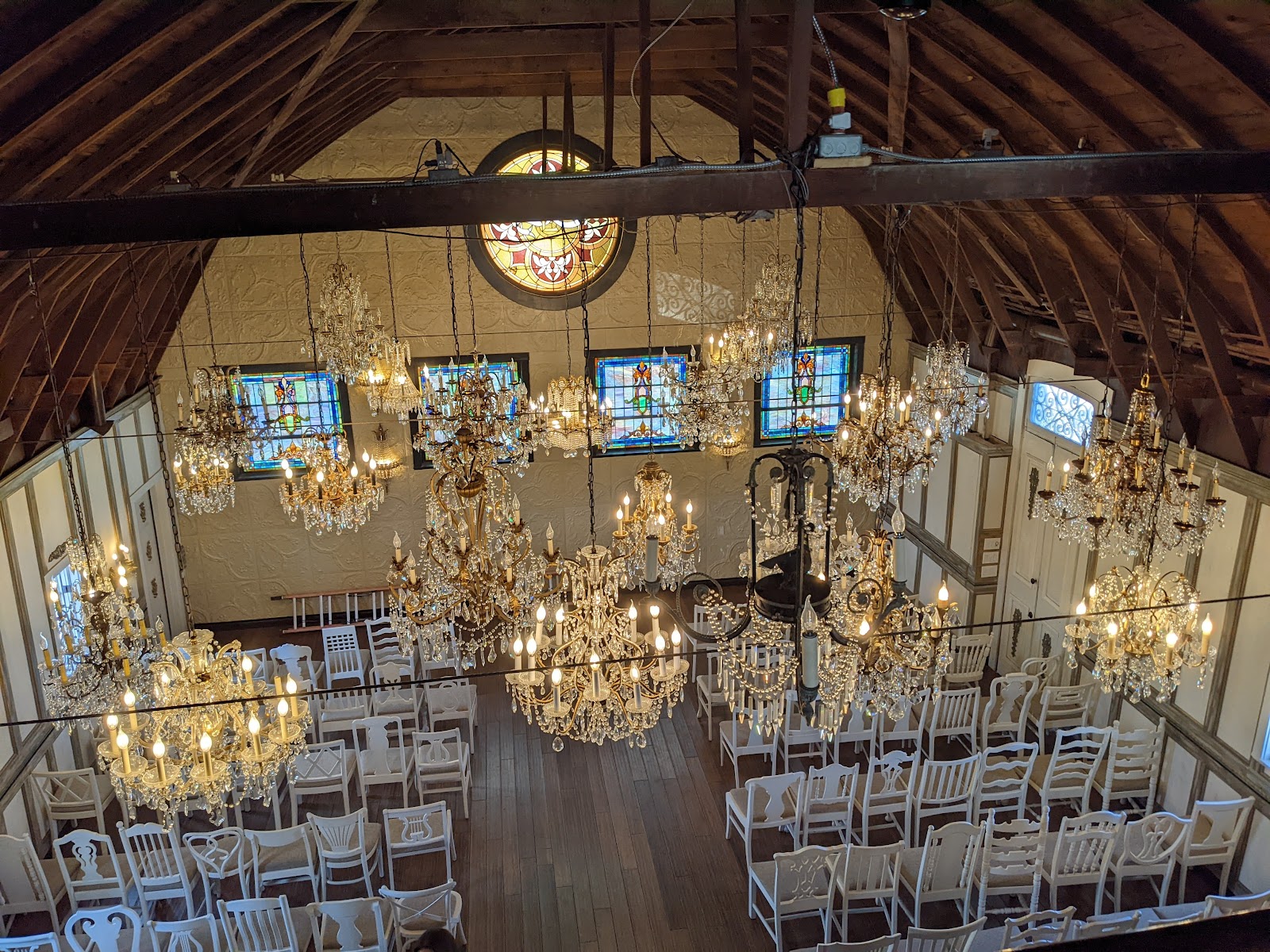
Structures are the second zone. Any roofed structure with an open face — a pavilion, a covered terrace, a pergola with a solid top — does three things at once: the roof blocks the overhead component of the sun, the depth restricts the light to a horizontal band, and the floor bounces it back to fill under the chin. That is a balanced setup occurring naturally and it cannot dapple, because the roof is solid.
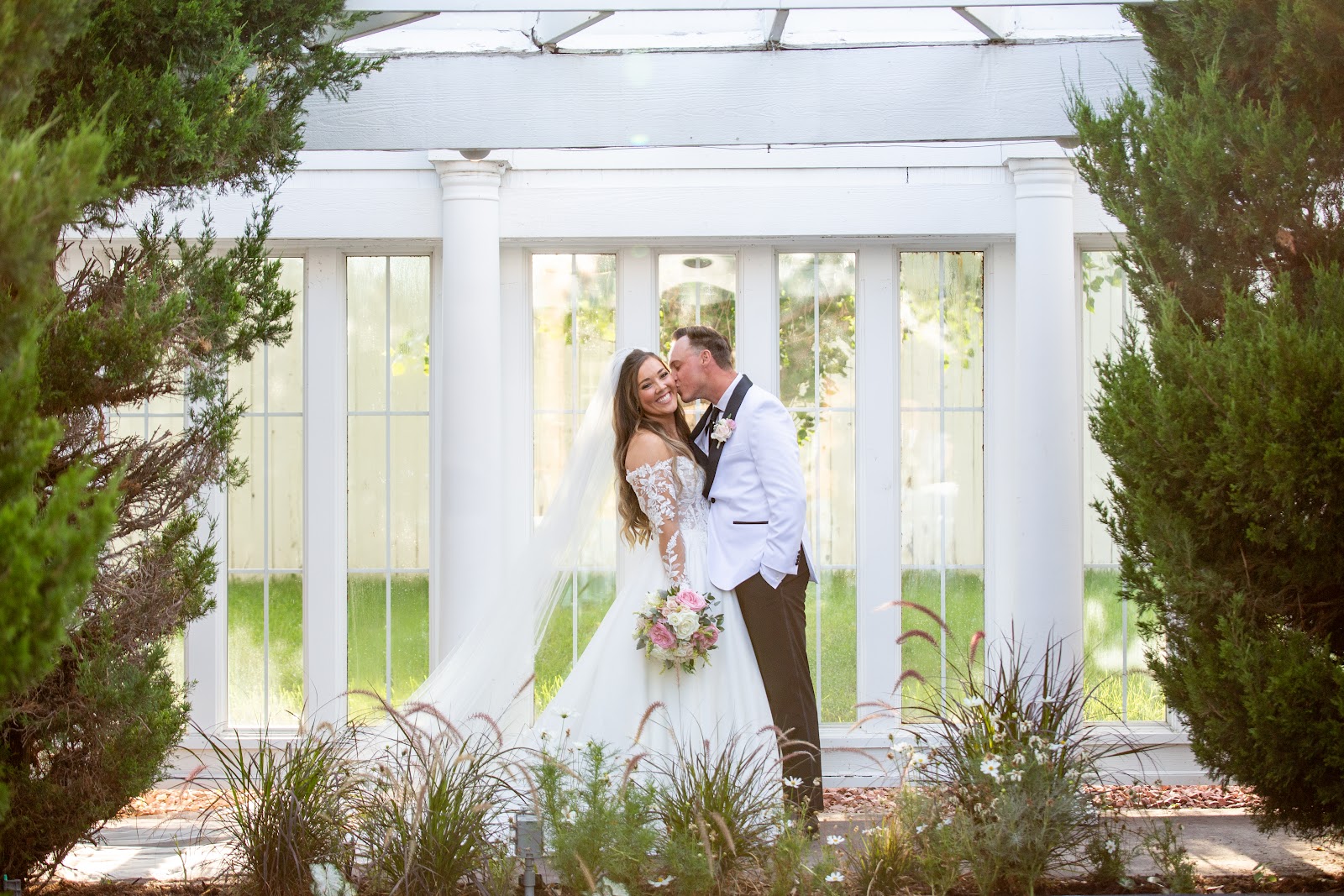
A pergola with an open slatted top is the exception and the trap: slats dapple as badly as a thin canopy, and in this hard clear light the bars across a face are severe. So the distinction between a solid roof and a slatted one is worth checking rather than assuming.
The working position under a solid roof is about a third of the way in from the open edge, and looking along a covered walk rather than out of it gives depth with the far end darkening by itself.
The mountain front is the third and it is the site’s distinguishing background. The Front Range rises a few miles west, which means a long lens pointed that way stacks terrain into a wall behind a couple — and in dry clear air at this elevation that view holds detail rather than hazing, which is why it works here and not in a humid climate. A wide lens gives a thin ridge above a lot of garden, which is the opposite of the point.
It also produces an evening reversal worth planning for: because the mountains lie west, the sun drops behind them earlier than the published sunset time, so the garden goes into shade while the sky above is still bright and the mountain slopes are the last thing lit. A couple in soft shade with lit terrain behind them is a frame only a site with terrain to the west can give.
The crossing follows and it is the one unmovable frame: sky still holding colour at about the brightness of any installed lighting. In dry air at altitude that window is shorter than in a humid climate and it comes earlier than a table implies, so it is a scheduled ten minutes.
- Ask how mature the planting is — it decides whether there is usable shade
- Look at the face, not the ground; any bright spot means move a metre
- Check whether a pergola roof is solid or slatted; slats dapple badly
- No stands: plains wind is constant, and use the lee of a hedge or screen
- Expect the sun to leave early; the mountains take it before the table says
The Colorado year
Colorado’s governing photographic variable is elevation, and on the Front Range plain the year is sharply divided by one seasonal hazard.
Summer afternoons bring it and it needs naming plainly rather than in passing. Convection builds over the mountains almost daily from July into September and moves east onto the plain, and these storms produce lightning — which in an open garden with no shelter is genuinely dangerous rather than inconvenient. Colorado has one of the highest rates of lightning casualties in the country, and open high ground under afternoon convection is precisely the reason.
Hail is the second plains-edge risk and it deserves a word to whoever is responsible for the party rather than to a photographer: this part of Colorado sees severe hail more often than most of the country, it arrives with very little notice, and it will end an outdoor event rather than delay it.
So a named covered alternative with a known capacity, agreed at booking, is a requirement — and in a garden with limited built structure that is a specific question rather than a general one. It also argues for an earlier ceremony in July and August, because mornings are stable and afternoons frequently are not.
The compensation is that a storm approaching across open plain is visible for a long time before it arrives, which is both a useful warning and the most dramatic sky the location produces. And building cumulus over the Front Range is the best diffusion the state offers: under it the dappling problem disappears entirely, the greens saturate rather than glare, and the middle of the day becomes usable for once.
Outside the storm season the sky is frequently cloudless, so waiting for diffusion is not a plan. The irrigated shade, the structures and the timing are the plan.
Spring is short and vivid on an irrigated site: the planting greens intensely and the canopy has not yet closed, which means more light reaches the ground and the dappling is at its mildest of the year. Late May into June is the best combination of green, comfortable temperatures and forgiving light, and it is before the worst of the storm season.
Summer is hot and very dry away from the irrigation, which means the contrast between the garden and the surrounding plain is at its strongest: green enclosure against pale dry distance. That is a genuinely distinctive pairing and worth composing for.
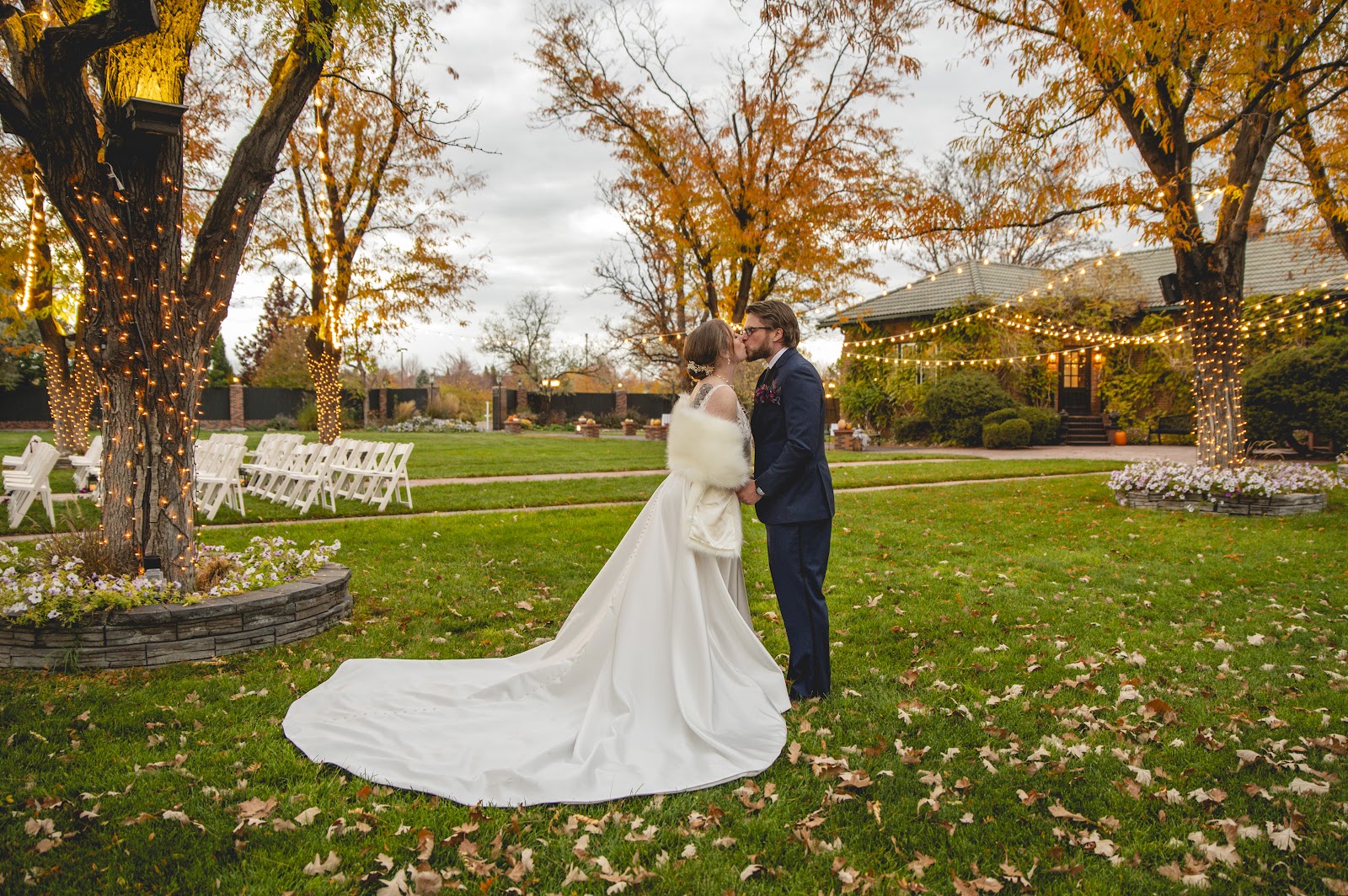
Autumn is the best window of the year: the air is at its clearest so the mountain front holds detail, afternoons stabilise, temperatures are comfortable, and low sun arrives at a civilised hour. The irrigated deciduous trees turn in that window — and because they are planted rather than wild, they turn individually rather than as a mass, which gives a single crown in full colour above green lawn.
Winter strips the planting, which removes both the shade and the screens — and with them the reason the garden works. But a December sun at about twenty-seven degrees above the horizon rakes everything all day, snow turns the ground into a reflector, and the mountain front reads as white against a deep sky, which is the clearest that view gets all year. A winter date here is an architectural and landscape date rather than a garden one, and it is worth saying so.
More frames from The Lionsgate Event Center
The Lionsgate Event Center wedding photography: common questions
Why is the shade so important here?
Because the plain has no trees — the rainfall does not support them. Every substantial tree is irrigated, which makes the garden’s shade the only shade for miles.
What should be asked before booking?
How mature the planting is. A broad closed crown gives genuinely full shade; a young or narrow one gives dappled light, which at this altitude is unusable.
What else does deliberate planting give?
Screens and sightlines. A garden on an open plain can have positions that feel sheltered, and axes that give depth receding behind a subject.
What should be checked about a pergola?
Whether the roof is solid or slatted. Slats dapple as badly as a thin canopy, and in this hard clear light the bars across a face are severe.
What are the summer hazards?
Afternoon lightning from July into September, and severe hail, which this part of Colorado sees more often than most of the country and which arrives with little notice.
Is winter usable?
As a landscape date rather than a garden one. The planting is bare, but a low sun rakes all day and the mountain front reads white against a deep sky.
More Colorado venue guides
We are writing a photographer’s guide to every venue we would happily shoot in Colorado. Here are three more, plus the full index:
- The Little Nell, Aspen: A Hotel at the Bottom of a Mountain
- The Morrison House, Colorado: The Light Through a Foothills Day
- Purgatory Resort, Durango: The One Decision That Governs Everything
Planning a wedding at The Lionsgate Event Center?
The shade had to be made. Tell us your date and we will find it first.