 Roots Run Deep, Fruita: The Site’s Own Logic
The Lafayette Hotel, Colorado: A Walk Through a Town Hotel
A small town hotel on the plains edge, with the Front Range on the western horizon. That changes the evening.
A small hotel in a Front Range town sits at the junction of two landscapes, and that produces a day with an unusual evening.
To the east is open plain: flat, wide, with a low horizon and a great deal of sky. To the west, a few miles away and rising abruptly, is the mountain front — which means the sun sets behind a wall of terrain rather than at the horizon.
The consequence is that the sun leaves the ground earlier than a sunset table says, and then the sky above stays bright for a while afterwards. That produces a longer, softer period of open shade at the end of the day than a flat-horizon town gets — and it produces a specific frame, because the mountains themselves catch the last light on their east faces before the valley loses it.
Inside, a small town hotel is a small town hotel: modest rooms, ordinary ceilings, and light concentrated at the street elevations. Which is easier to work with than a grand building, not harder.
Walked in the order a wedding day uses it, the site resolves into four zones. We have not photographed a wedding at the Lafayette Hotel; small town hotels and Front Range geography behave consistently. Which spaces are included, whether the lighting is adjustable and what may be attached are questions for their team.
The Lafayette Hotel at a glance
| Where | A Front Range town in Colorado at about 5,200 feet |
| The geography | Open plain east, mountain front west — the sun sets behind terrain |
| The consequence | The ground loses the sun early, and the sky stays bright after |
| Inside | Modest rooms, ordinary ceilings, light at the street elevations |
| Ask first | Spaces included, lighting control, fixings |
The rooms, and the public spaces
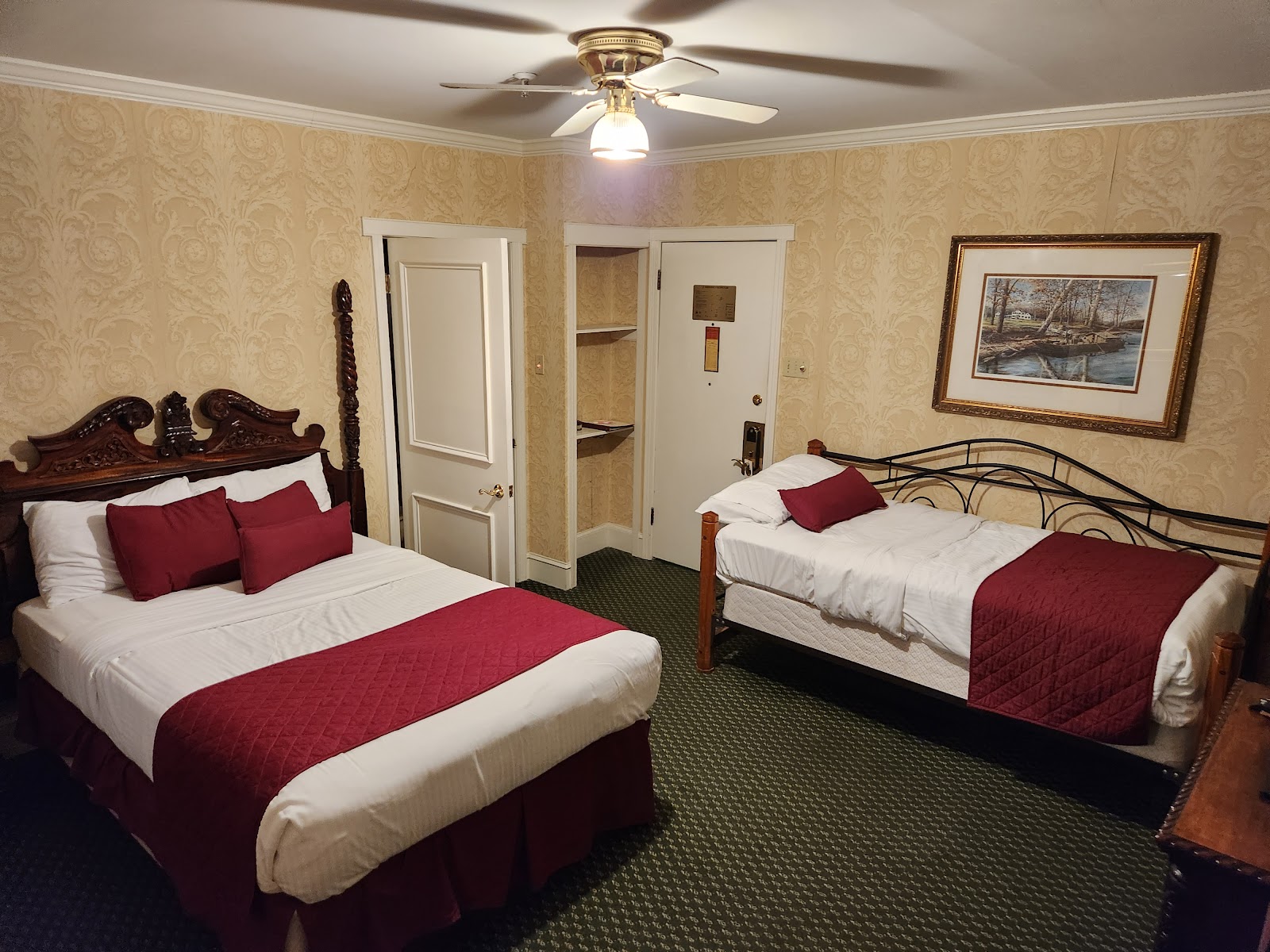
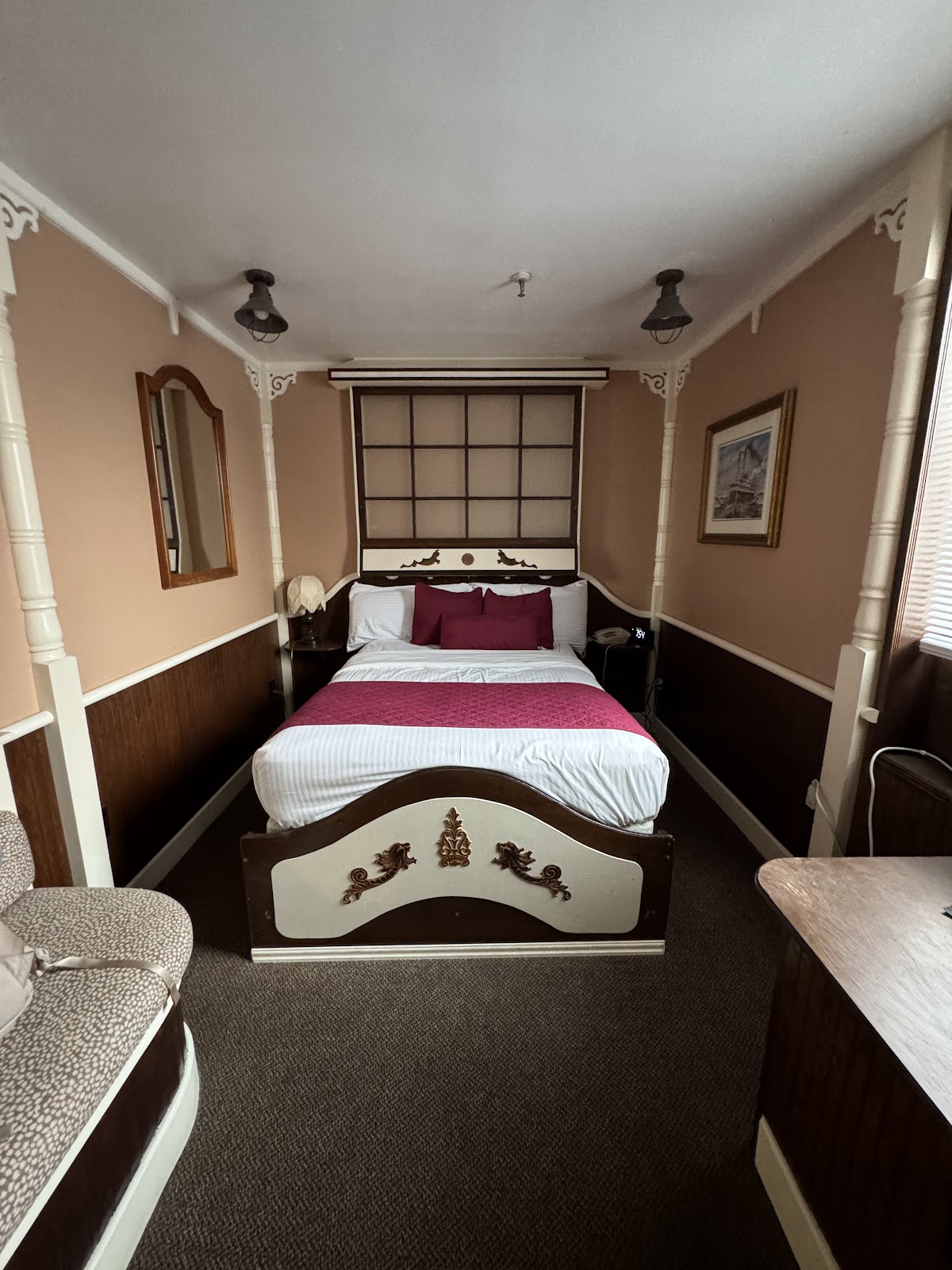
The guest rooms come first because the getting-ready coverage happens in them, and a small hotel’s rooms are easier to light than a grand hotel’s for three reasons.
The windows are domestic in scale, which makes them soft sources about right for two people at two or three metres. The walls are close enough to return light into the shadow side without any reflector. And the ceilings are ordinary, which means a flash aimed upward returns a great deal — a ceiling under three metres is a very large softbox, which is the one lighting advantage a modest building has over a grand one. One test frame confirms it.
Two to three metres back is the working distance, and every overhead and lamp fitting should be off so the room has one colour of light rather than two landing on the same face.
The shaded side is the requirement and in this climate it matters more than in a humid one, because at over five thousand feet in dry clear air direct sun through glass is a genuinely hard source — a sunlit window here is a hard edge rather than a soft field. At this latitude, about forty degrees north, a north-facing room is shaded all year and is the most reliable.
There is a local question worth asking: which rooms face west. A west-facing room has the mountain front in view, which is a background worth having — and it carries direct low sun in the evening, which is the hardest light of the day. Those are two different frames from the same window at different hours rather than one.
The public spaces are the second zone and in a small hotel they are modest rather than grand, which has consequences in both directions. There is no ballroom and no long gallery, so a large group will not fit and a wide interior frame is unavailable — which means the formals happen outdoors or somewhere else.
But the same modesty means ordinary ceilings, which means bounce works throughout rather than only upstairs, and it means there is usually a window in every room rather than only at the ends. In a small hotel the good light is distributed rather than concentrated.
The lack of distance is the constraint and the doorway is the answer: standing in one gains two or three metres at no cost, which is the difference between a wide lens distorting a face at two metres and a moderate lens at four, and it frames the subject with the doorway darkening the edges.
Where the building is older, the standing conditions apply: measure the ambient rather than estimating, because warm absorbent surfaces put a room a stop or two below a pale one; and warm bounce arrives on the shadow side of a face from several directions at once, which one warm-gelled source with white balance set to the gel handles and a global correction does not.
The street, and the mountain front
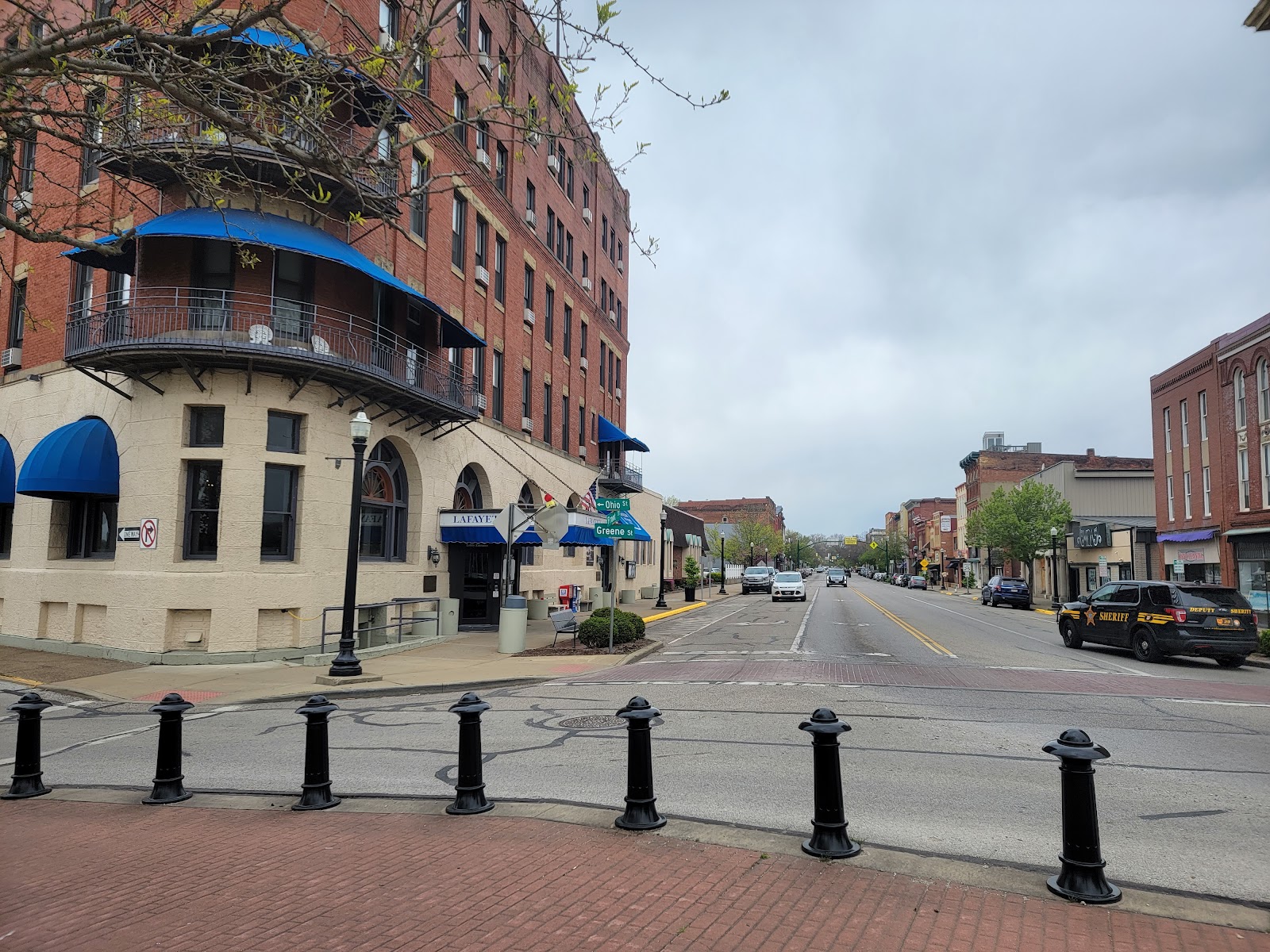
The street is the third zone and a small Front Range town gives what a city cannot: room to stand back. Streets are wide, buildings are low, and the whole hotel can be photographed from across the road — which is worth one frame, raked by low sun so brick or stone reads as material rather than as a flat wall.
Brick, where the building uses it, is a warm mid-toned reflector rather than a dark absorber, which means a sunlit elevation is a genuine soft source: a couple three or four metres out from one, facing it, is well lit for nothing, with a custom white balance set on a face because brick bounce is markedly warmer than daylight.
A low-built town also means the sky is present in every street frame, which on the plains edge is a substantial thing: the horizon is low and open to the east, so a wide frame down a street has a great deal of sky in it and a dramatic one is worth going out for. The exposure for that goes on the sky with the faces lifted by a close source, because metering on skin gives a white sky.
The mountain front is the fourth zone and it is the site’s distinguishing asset. A wall of terrain rising a few miles west means two frames that a flat-horizon town does not have.
The first is the compressed view. A long lens pointed west stacks the mountain front into a wall behind a couple, which makes the terrain read as scale rather than as a distant ridge — and in dry clear air at this elevation that view holds detail rather than hazing, which is why it works here and not in a humid climate. A wide lens gives a thin ridge above a lot of street, which is the opposite of the point.
The second is the evening reversal. Because the mountains rise to the west, the sun drops behind them earlier than the published sunset time — so the ground goes into shade while the sky above is still bright, and for a period the mountain front’s east-facing slopes are the last thing lit while the town is not. A couple in soft shade with lit mountain behind them is a frame available only where terrain lies west, and it needs the faces lifted by a close warm-gelled source rather than the mountain underexposed to match them.
After that the crossing follows: sky still holding colour at about the brightness of the building’s own lighting, so one exposure holds couple, hotel and sky. In dry air at altitude that window is shorter than in a humid climate, because clear air holds less afterglow — so it is a scheduled ten minutes rather than a leisurely wander, and it comes earlier than a sunset table implies.
Since the interior does not change through the day, taking those ten minutes costs nothing indoors — which is worth saying explicitly, because the request sounds larger than it is.
- Test bounce everywhere — ordinary ceilings mean it works throughout
- Ask which rooms face west; the view and the hard sun are the same window
- Work from doorways; two or three metres gained at no cost
- Use a long lens west: it turns the mountain front into a wall, not a ridge
- Expect the sun to leave the ground early; the crossing comes sooner than the table says
The Colorado year
Colorado’s governing photographic variable is elevation, and on the plains edge at around five thousand feet the year has sharper edges than a lowland one.
Summer afternoons bring the state’s defining hazard and it needs naming plainly rather than in passing. Convection builds over the mountains almost daily from July into September and moves east onto the plains, and these storms produce lightning — which on open ground is genuinely dangerous rather than inconvenient. Colorado has one of the highest rates of lightning casualties in the country.
At an entirely indoor venue that costs a decision rather than a picture, but any outdoor element needs a named alternative — and on the plains edge a storm is visible for a long time before it arrives, which is both a useful warning and the most dramatic sky the location produces. A storm over the mountain front with light breaking under it is the strongest weather frame available here.
Hail is the other plains-edge risk and it is worth a word to whoever is responsible for the party rather than to a photographer: this part of Colorado sees severe hail more often than most of the country, and it arrives with very little notice.
Summer is otherwise hot and very dry, which means the middle of the day is hard and the ends of it are exceptional: dry clear air at low sun gives the hardest and cleanest raking light a photographer will meet, which is what brick, stone and a mountain front all want.
Autumn is the best window of the year: the air is at its clearest so the mountain front holds detail, the afternoons stabilise, temperatures are comfortable, and low sun arrives at a civilised hour. Late September into October is the strongest period, and the aspen in the mountains to the west turn gold in that window — which from the plains edge is visible as colour on the slopes rather than as individual trees.
Winter is quietly good. The December midday sun at this latitude reaches only about twenty-seven degrees above the horizon, which means the whole short day is raking light rather than overhead light — exactly what brick and stone want, and the one season the middle of the day works outdoors.
It also means the interiors are better, because a low sun comes into windows at an angle rather than from overhead: the light is directional and usable through the whole short day instead of for two hours at each end. And snow turns the ground into a reflector, which brightens every window in the hotel and makes the mountain front to the west read as white against a deep sky — the clearest that view gets all year.
The diurnal swing is the constraint and at altitude in dry air it is large — twenty degrees Celsius between afternoon and evening is normal. A party comfortable at four is cold by seven, and coats are the answer. And ultraviolet increases with elevation, so a party outdoors for an hour burns faster than expected, including under cloud and over snow.
More frames from The Lafayette Hotel
The Lafayette Hotel wedding photography: common questions
What does the geography change?
The mountains rise a few miles west, so the sun leaves the ground earlier than the sunset table says and the sky stays bright afterwards.
What frame does that give?
A couple in soft shade with the mountain front’s east slopes still lit behind them — available only where terrain lies west, with the faces lifted by a close source.
Is a small hotel harder to light?
Easier. Domestic windows, close walls and ordinary ceilings mean bounce works throughout and the good light is distributed rather than concentrated.
What is the constraint indoors?
Scale. No ballroom means a large group will not fit, so the formals happen outdoors — and the doorway is the answer to the lack of distance.
Which lens for the mountains?
A long one. It stacks the front into a wall behind a couple; a wide lens gives a thin ridge above a lot of street.
Is there a seasonal warning?
Afternoon lightning from July into September, and severe hail, which this part of Colorado sees more often than most of the country.
More Colorado venue guides
We are writing a photographer’s guide to every venue we would happily shoot in Colorado. Here are three more, plus the full index:
- Lionsgate Event Center, Colorado: A Garden Made Against the Climate
- The Little Nell, Aspen: A Hotel at the Bottom of a Mountain
- The Morrison House, Colorado: The Light Through a Foothills Day
Planning a wedding at The Lafayette Hotel?
The mountains change the evening. Tell us your date and we will plan it early.