 Roots Run Deep, Fruita: The Site’s Own Logic
Devil’s Thumb Ranch, Tabernash: One Frame, and How It Is Made
Dark timber, a bright meadow, and four stops between them. The whole picture is that gap.
There is one frame a high timber ranch gives better than anything else, and it is worth describing in full because everything else at such a property is a variation on it.
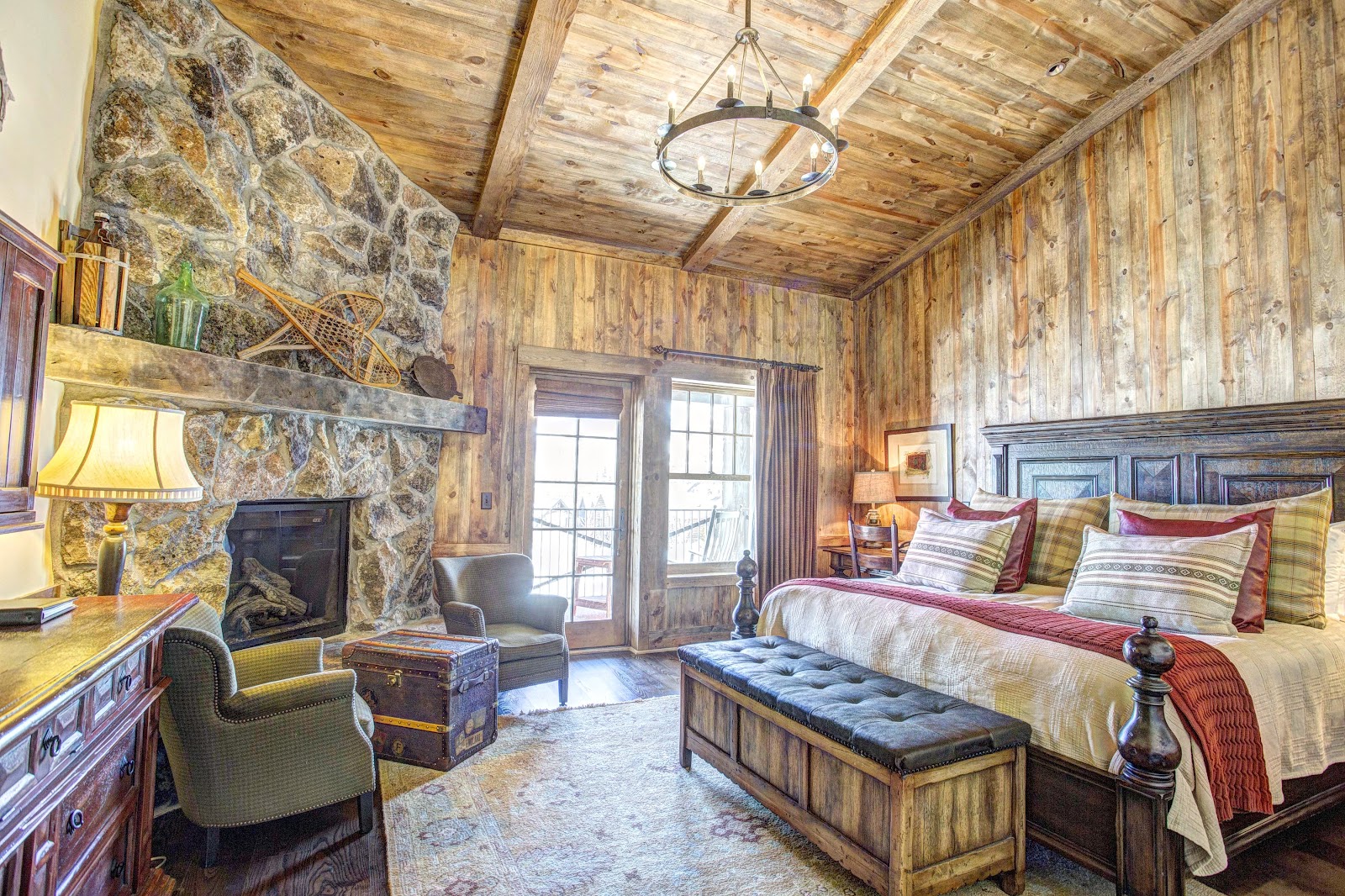
A couple stands just inside a large timber opening — a barn door, a lodge doorway, a covered porch mouth — with the valley and its ranges lit behind them. The interior is dark heavy wood. The exterior is open meadow at eight thousand feet. Between the two there are four stops or more, and the picture is made of that gap rather than in spite of it.
It works for a specific reason. Timber absorbs, so the surround goes genuinely dark and gives free separation with no equipment involved. The opening restricts the daylight to a horizontal band, which models a face the way a window does rather than flattening it from above. And the lit valley beyond says where you are in a single glance.
Everything that breaks it breaks in a predictable way, which is what the rest of this is about. We have not photographed a wedding at Devil’s Thumb Ranch; timber ranch buildings and high valleys behave consistently. Which buildings are included, what the covered alternative is, and whether the interior lighting is adjustable are questions for their team.
Devil's Thumb Ranch at a glance
| Where | A high valley at Tabernash, Colorado, around 8,000 feet |
| The frame | A dark timber opening, a couple in it, a lit valley beyond |
| Why it works | Timber absorbs, the opening restricts the light, the valley places it |
| The gap | Four stops or more between inside and out — the point, not the problem |
| What breaks it | Metering on the wrong thing, standing too deep, and midday sun |
How the frame is built
The position comes first and it is more precise than it sounds. Two or three metres inside the opening is the working distance, and it is a compromise between two failures.
Too far in and there is not enough light on the faces to hold them anywhere near the exterior, so the frame becomes a silhouette — which is a legitimate picture but a different one. Too close to the edge and the overhead sky reaches the face again, which reintroduces the top light the doorway exists to remove and flattens the modelling.
The test is to stand in the position and look at the catchlights in the eyes. A low horizontal catchlight means the doorway is doing the work. A catchlight high in the eye means the sky is still reaching and the position needs to move back.
The exposure decision is second and it is the one that decides whether the frame reads. There are three options and only two are honest.
Expose for the exterior and let the couple go dark. The valley holds its colour, the ranges hold texture, and the figures become shapes in a timber frame — graphic and strong, and the right call when the landscape is the subject.
Or expose for the faces and light them to sit closer to the exterior. One source, close, through the opening or just beside the camera, set about a stop above what the ambient gives the faces. That is the frame most couples want, because it keeps both their faces and their valley.
The dishonest option is to meter on the average, which gives grey faces and a washed valley and fails at both ends. Automatic exposure does exactly this, which is why the frame is worked in manual.
The added source has to be gelled and this is the detail that separates a frame that belongs from one that looks composited. At the ends of the day the exterior light is strongly warm; an ungelled flash on the faces reads cooler than everything around it, and the eye catches that immediately even when it cannot name it. A warming gel on the source and the white balance set to match it makes the added light indistinguishable from the daylight it sits in.
Distance governs the power because nothing in a dark timber space bounces. The light that reaches the faces is only the light aimed at them, so a source at two metres needs roughly a quarter of the output of the same source at four — which is an argument for close, and close also means softer relative to the subject.
The lens is the last build decision. A longer lens compresses the ranges beyond the opening into stacked layers and brings them forward, so they read as a presence rather than a thin pale band — and in dry clear air at this elevation that compression holds detail rather than hazing. A wide lens makes the opening dominate and the valley recede, which inverts the frame’s intent.
What breaks it, and what the rest of the site gives
Midday sun is the first thing that breaks the frame, and it breaks it outside rather than inside. At eight thousand feet there is roughly a third less atmosphere overhead, so direct sun is harder and shadows deeper than at sea level — which means a meadow at noon clips and a face anywhere near the opening’s edge goes half-lit and unrecoverable.
The frame wants the exterior in the last two hours or the first two, when the meadow is raked rather than flooded and the gap between inside and out narrows to something a single exposure can nearly hold.
Standing too deep is the second and it is the commonest error. A timber interior falls off steeply, which is the quality that makes the frame work and also the reason a metre too far back turns a lit face into a dark one. Step forward until the light arrives, then check the catchlight.
Overhead interior lighting is the third. Downlights in a timber lodge put a hard band on the top of a head and leave the eyes dark, and they are usually a different colour from daylight as well. Where they can be turned off or dimmed for a few minutes, that is the ask. Where they cannot, the added source has to be strong enough to dominate them and the gel matched to the mixture rather than to daylight alone.
Mixed colour is the fourth and it is worth naming. Warm interior tungsten, cool blue shade from a deep high-altitude sky and neutral late sun can all reach the same face in a timber doorway, and no single white balance renders all three. The resolution is to choose which one lands on the skin and let the others sit where they fall — skin correct, everything else a shade off, is a picture. Skin wrong is not.
The rest of the property is variations. A covered porch is the same frame with a longer opening and more bounce off the decking. A barn interior is the same frame with less light and more structure, which pushes it towards the silhouette version. The lodge’s windows are the same physics turned around: the light comes in rather than the view going out, and a subject a metre from a large window in a dark timber room is the most reliable indoor light on any such property.
That window light is dramatically better with snow outside, because a snow-covered meadow becomes an enormous reflector and roughly doubles what arrives through the glass.
In the open, the practical constraints of high country apply. Wind across a valley meadow makes a lightstand a liability and a held panel a sail, so a source in a hand or on a bracket is the configuration, and the lee of a building is worth walking to. Distances tire a wedding party faster at eight thousand feet than the same walk would at home, and anyone arriving from sea level will feel it. Ultraviolet increases substantially with elevation, so an hour outdoors burns faster than expected, including under cloud.
And where dense spruce occurs, that is the only real outdoor shade — full shade and three or four stops of separation, though narrow crowns at this elevation mean standing inside a stand rather than under one tree. Lodgepole, which is most of what grows here, dapples rather than shades: tall narrow trunks with small high crowns behave like a colonnade, and the test is to look at a face rather than the ground.
- Two or three metres in; a high catchlight means step back
- Expose for the exterior or for the faces, never the average
- Gel the added source and match the white balance to the gel
- Close beats far: nothing bounces, so distance costs output steeply
- Longer lens for the ranges beyond the opening; a wide one inverts the frame
The year, and when the frame is best
The frame exists year-round because it is made of a building and an opening, which is its principal virtue at a site where the outdoor conditions swing hard.
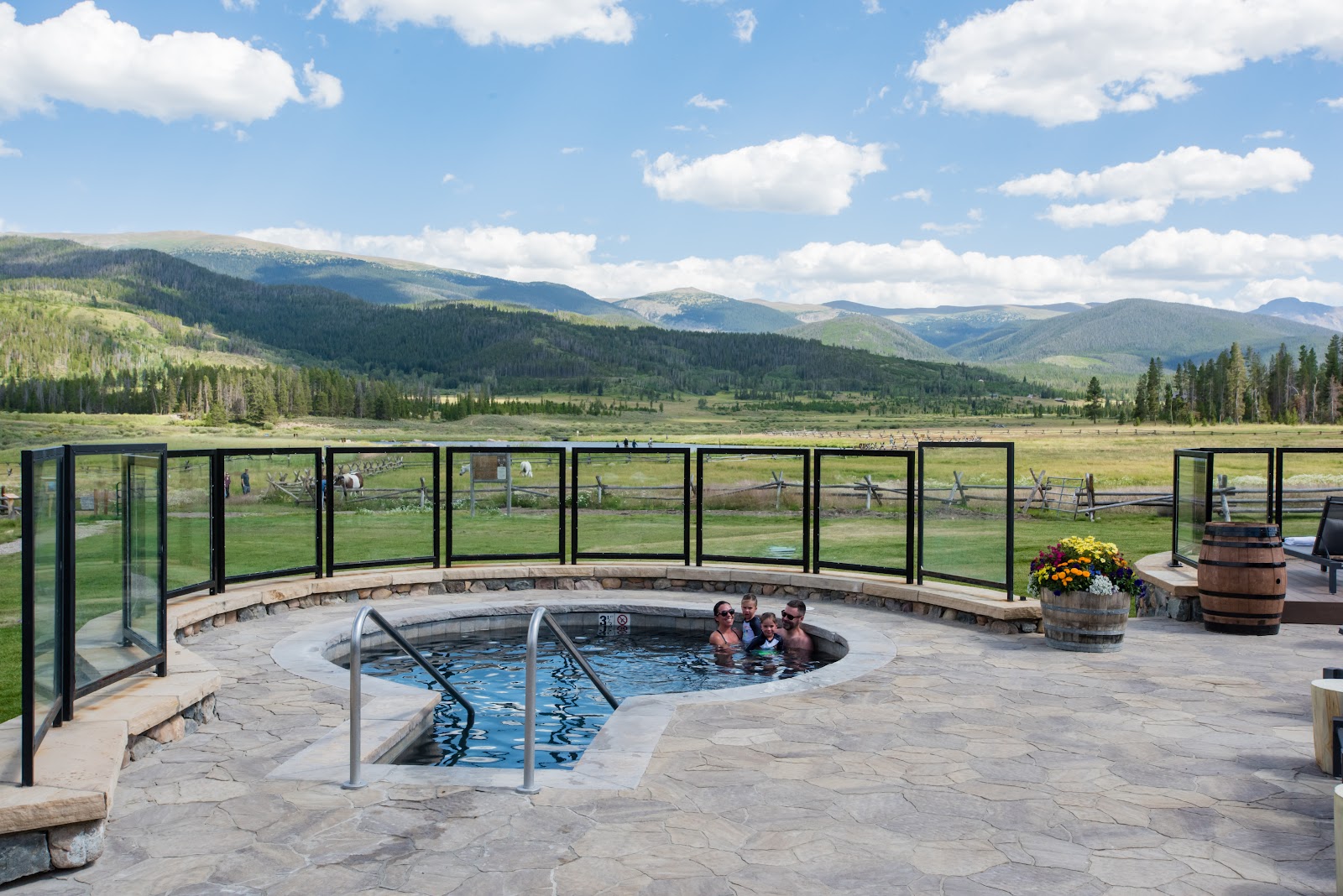
Summer at eight thousand feet is short, green and cool, and the frame’s exterior is at its greenest. The constraint is afternoon convection, which builds almost daily from July into September and produces lightning — genuinely dangerous in an open valley meadow rather than merely inconvenient, and Colorado has one of the highest rates of lightning casualties in the country for exactly this reason.
So a named covered alternative with a known capacity is a requirement rather than a courtesy, and a morning ceremony beats an afternoon one in high summer. The frame is unaffected either way, which is a real argument for building the day around it.
Cloud, when it comes without the storm, is the best diffusion available at altitude. Under it the four-stop gap collapses to one or two, the exterior stops clipping, the meadow saturates, and the frame works with nothing added at all. A cloudy morning here is an easier day than a clear one.
Autumn is the best the frame gets. Aspen among the lodgepole turn gold typically in the second half of September at this elevation, and because a grove is clonal — genetically a single organism connected below ground — the whole stand turns at once rather than tree by tree. A gold mass beyond a dark timber opening is the strongest version of this frame in the year, and the window is about a week either side of peak.
The air is also at its clearest in autumn, which makes the compressed long-lens view beyond the opening hold the most detail it will all year.
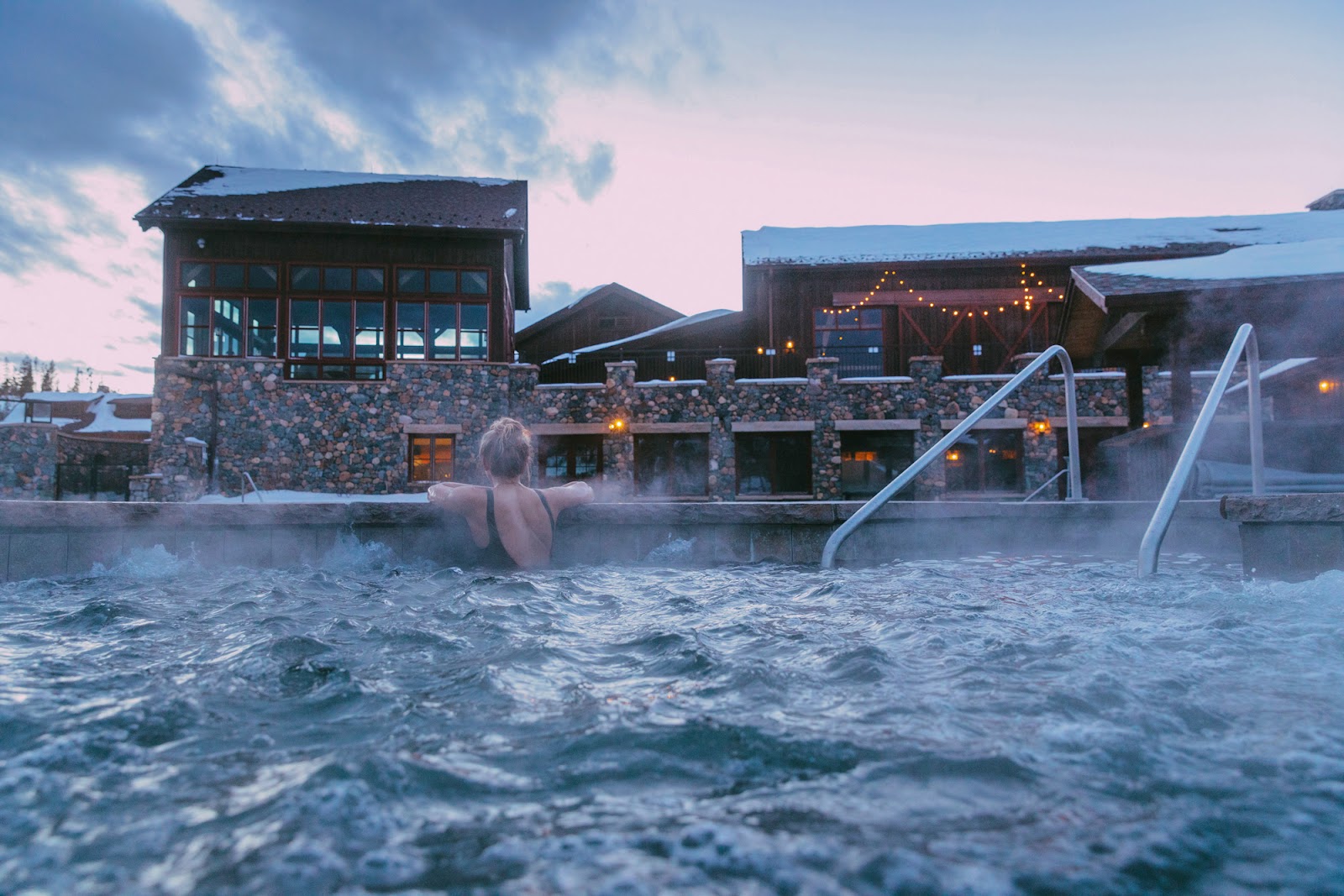
Winter is long here and it changes the frame’s economics entirely. Snow across the valley lifts the exterior brightness, which widens the gap — but it also throws light in through the opening and off the decking, which lifts the faces at the same time. The net effect is usually a frame that needs less added light rather than more, and one where the fill comes from the ground.
Snow fools a meter by about two stops toward underexposure, so the exterior in such a frame needs deliberate overexposure relative to what the camera suggests. Snow against dark spruce is the widest natural range there is: expose for the snow and let the conifer go near-black.
And the December sun at this latitude reaches only about twenty-seven degrees above the horizon, so the whole short day rakes — which means the exterior of the frame is usable from morning to evening rather than for two hours at each end. Winter is, on the light alone, the easiest season here.
The costs are cold, wind chill on open ground, batteries draining faster at altitude, and a cold body fogging when carried into a heated timber building — so spares in an inside pocket and bodies bagged until they warm.
More frames from Devil's Thumb Ranch
Devil's Thumb Ranch wedding photography: common questions
What is the frame?
A couple two or three metres inside a large timber opening, with the lit valley beyond. Dark surround, restricted horizontal light, and the place in one glance.
How do I know I'm standing in the right place?
Look at the catchlights. Low and horizontal means the opening is doing the work; high in the eye means the sky still reaches and you should step back.
How is it exposed?
For the exterior, letting the figures go graphic — or for the faces, lifted by a close gelled source. Metering on the average fails at both ends.
Why gel the light?
Because the exterior at the ends of the day is strongly warm, and an ungelled flash reads cooler than everything around it, which looks composited.
When does the frame work best?
Autumn, with gold aspen beyond the opening — and in winter, when a low sun rakes all day and snow lifts the faces from the ground.
What is the main hazard?
Afternoon lightning from July into September. An open valley meadow at eight thousand feet needs a named covered alternative, not a hope.
More Colorado venue guides
We are writing a photographer’s guide to every venue we would happily shoot in Colorado. Here are three more, plus the full index:
- The Evergreen Lake House, Colorado: The One Decision That Governs Everything
- The Four Seasons Vail: The One Decision That Governs Everything
- Gateway Canyons Resort, Grand Junction: A Walk Through the Site
Planning a wedding at Devil's Thumb Ranch?
One frame, built properly. Tell us your date and we will plan the hour around it.