 The Henry Clay: Lighting a 1920s Lodge Building
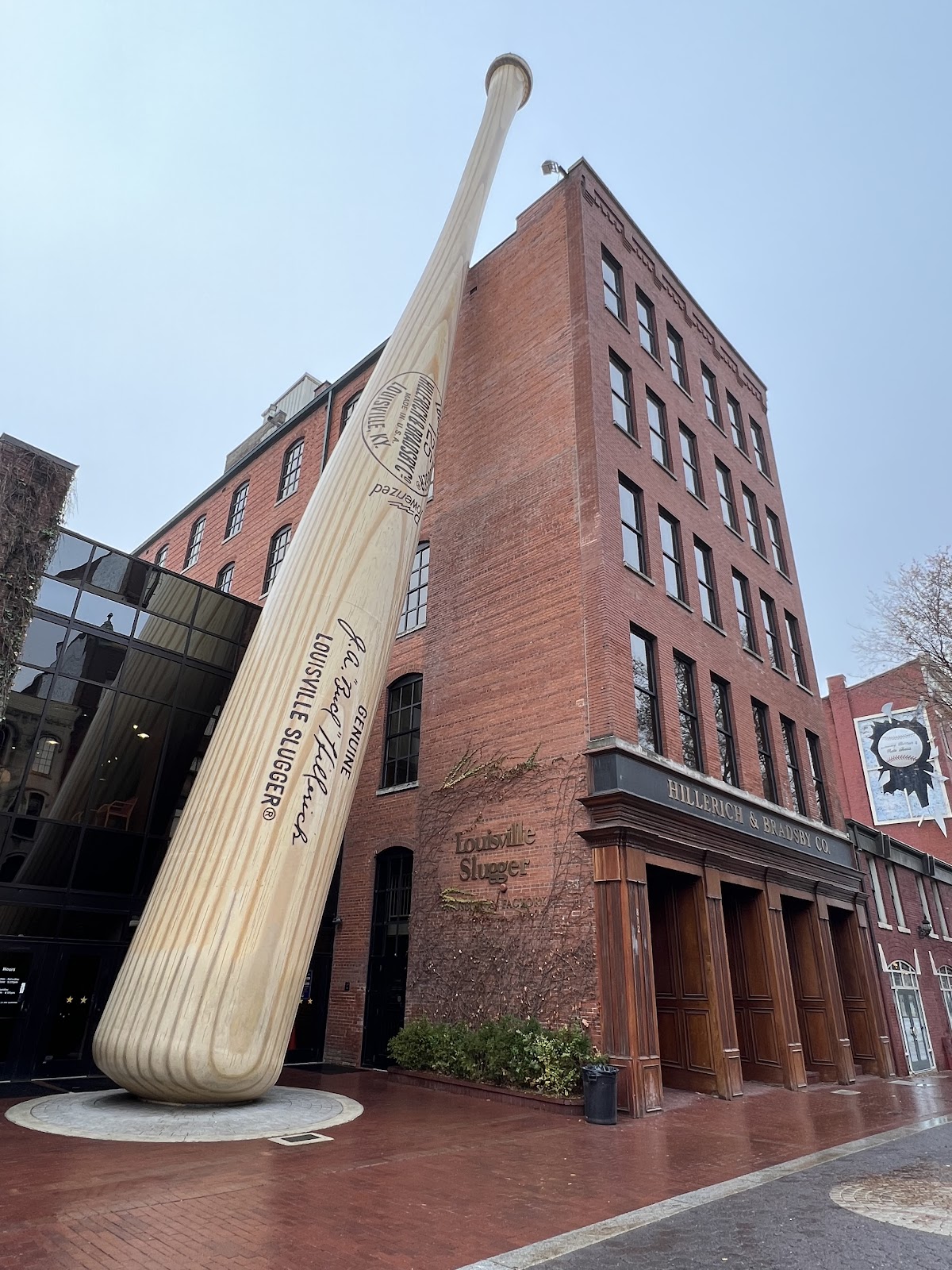
The Louisville Slugger Museum: A Working Factory Inside a Museum
One building lit for work and lit for conservation at the same time. Those are opposite briefs.
A museum built around a working factory runs on two lighting briefs that contradict each other, and knowing which room is which is most of the preparation.
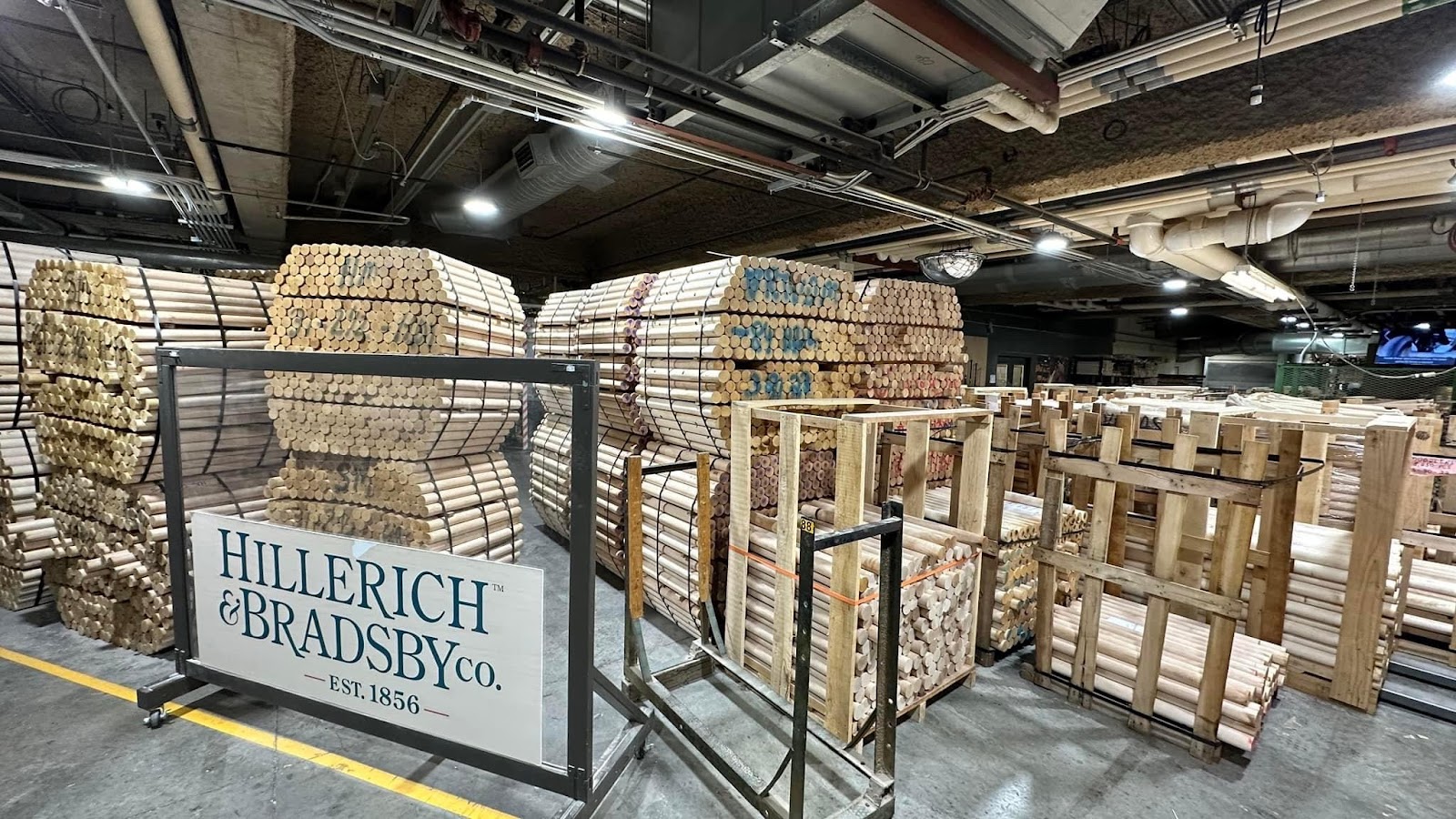
Production space is lit for work. Machinery needs to be seen, operators need to see what they are doing, and the fittings are chosen for output and durability rather than for colour — which historically meant discharge lamps and now means industrial LED, both bright and both frequently poor at rendering skin.
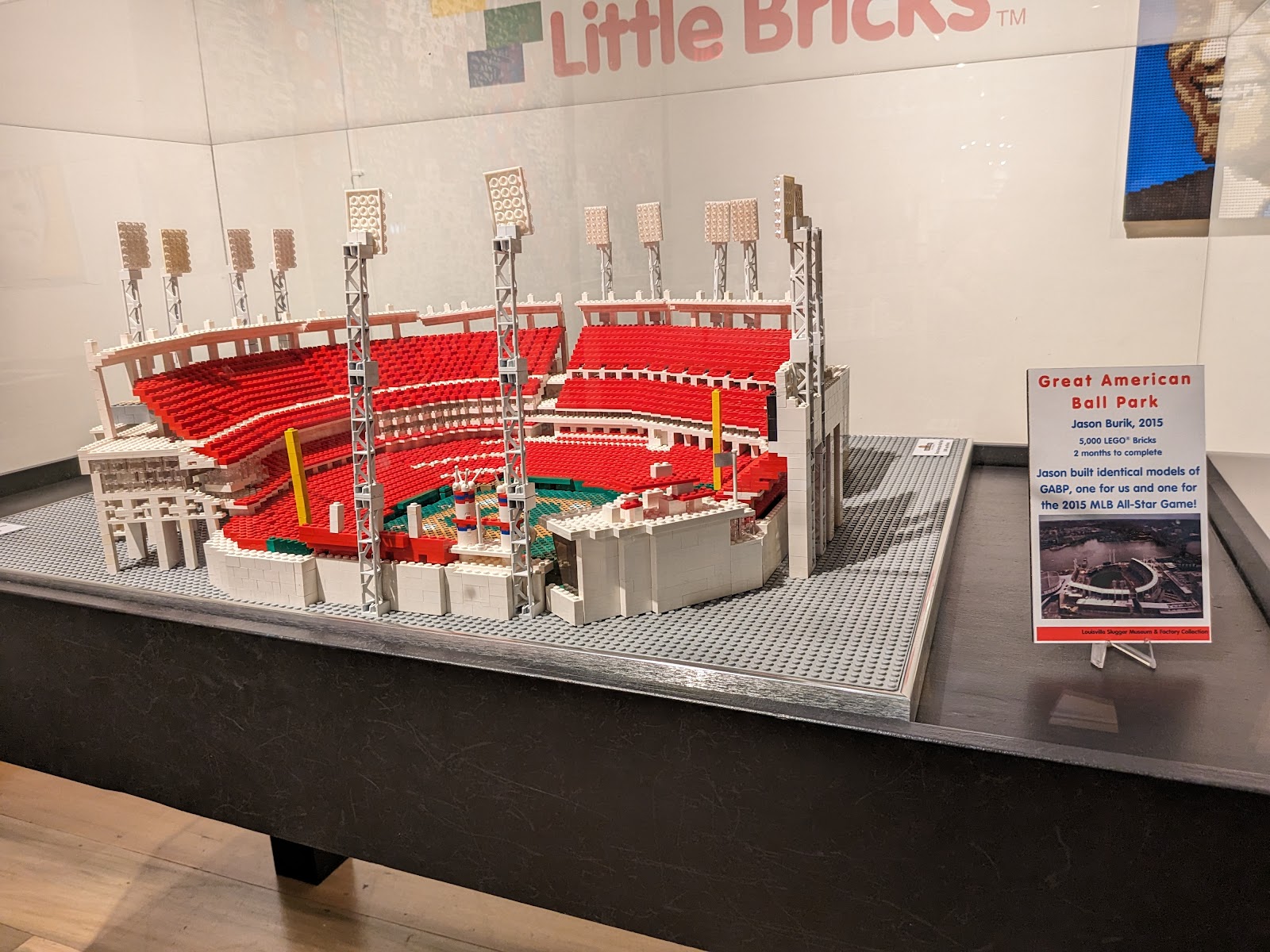
Gallery space is lit for conservation. Objects fade under light cumulatively and irreversibly, so fittings are low-output and aimed at cases rather than at people — which means the ambient is well below a normal interior and the light arrives in bright pools with darkness between them.
Those are opposite conditions in one building, and a photographer who carries a single configuration between them produces a sequence that looks like two different weddings. The answer is to treat them as two venues and change at the door.
We have not photographed a wedding at the Louisville Slugger Museum; factory museums behave consistently. Which spaces are included, the rules on flash and proximity to machinery and objects, and whether production areas are accessible are questions for their team — and the safety rules around working machinery are theirs to set rather than a photographer’s to interpret.
The Louisville Slugger Museum at a glance
| Where | Downtown Louisville, Kentucky |
| Two briefs | Production space lit for work; galleries lit for conservation |
| Production | Bright, high, poor colour rendering, specular machinery |
| Galleries | Dim, pooled, display glass, and the steepest free separation there is |
| Ask first | Spaces included, safety and flash rules, production access |
The production side
Production space is bright, which is the first surprise for anyone expecting an industrial interior to be dark. Work lighting is generous by design, which means a high ISO is not needed and a modest aperture is available — a genuinely easier exposure situation than most function venues.
What it is not is flattering. Industrial fittings are high and dense, which means the light comes from almost directly overhead: eye sockets go into shadow, a hard line falls under every chin, and the top of the head is the brightest thing in the frame. That is the same problem a casino floor has and it has the same answer, which is direction rather than quantity.
One source off the camera axis at face height fixes every face at once, and the amount needed is small — half a stop to a stop above the ambient, because the ambient is already providing plenty of exposure. It is direction that is missing rather than light.
The colour is the second condition and it needs handling rather than correcting. Industrial lighting renders skin poorly because its energy sits unevenly across the spectrum — that is a spectral problem rather than a white balance one, which means no preset and no correction produces natural skin from it.
So the method is to let one gelled source own the faces, with white balance set to that source, and treat the building’s own lighting as background illumination. Gelled to sit near the ambient’s apparent temperature, so the two do not fight.
Machinery is the third condition and it is the production side’s best asset. Working machines are large, dark, strongly shaped and full of specular metal — which means they are excellent backgrounds, separated by tone with no equipment, and they are also mirrors that will show a badly placed light at full brightness. The fifteen-second check from the camera position applies, and used deliberately a polished machine surface reflecting a couple is a frame nothing else gives.
Timber is the fourth and in a factory that works wood it is everywhere: stacked billets, sawdust, worn benches and finished stock. All of it reads only under raking light — light running along a stack of timber lifts every end grain, while light facing it flattens the stack to one tone. And timber is a warm mid-toned reflector rather than a dark absorber, which means a lit stack near a subject is a warm secondary source worth a custom white balance.
And the safety rules are not negotiable. A working factory has moving machinery, and the rules about where people may stand, what footwear and protection are required, and whether machines run during a visit belong to the venue rather than to a photographer. Those should be settled at booking, and the working assumption is escorted access, small numbers, no stands, and a source in a hand.
The gallery side, and the thresholds
The gallery side inverts everything. Fittings are low-output and aimed at objects because light damages them cumulatively, which means the ambient is two or three stops below a normal interior — measure it with one frame on arrival, because eyes adapt and meters do not.
The light arrives in bright pools with darkness between, which is the condition that catches people out: a subject standing between two pools is unlit while the case beside them is perfectly exposed. Two minutes of walking to note where the pools fall determines every position worth using.
Used deliberately those pools are the best thing the galleries offer, and the steepest fall-off any venue type gives: a subject standing in a directed pool with an unlit gallery behind them is separated completely with no equipment at all. Used accidentally they put faces half in a beam and half out, which has the same answer as dappled sunlight — move.
Display glass is the gallery hazard and it behaves like a mirror pointed wherever the camera is. A case will show the photographer, the camera, any light and the room opposite at full brightness, unremovable afterwards. The fix is geometry rather than a filter: photographing a case at an angle rather than square to it moves the reflections out of frame, because the glass then shows what is to one side rather than what is behind the camera. A polariser helps at an angle and does nothing at all straight on.
The conservation rules follow: restrictions on flash near objects, on stands, on moving anything, and on numbers in a space — all protecting things that cannot be replaced. The working assumption is no stands, a source in a hand, small numbers, and the large formals wherever the building has a clear floor or a lobby.
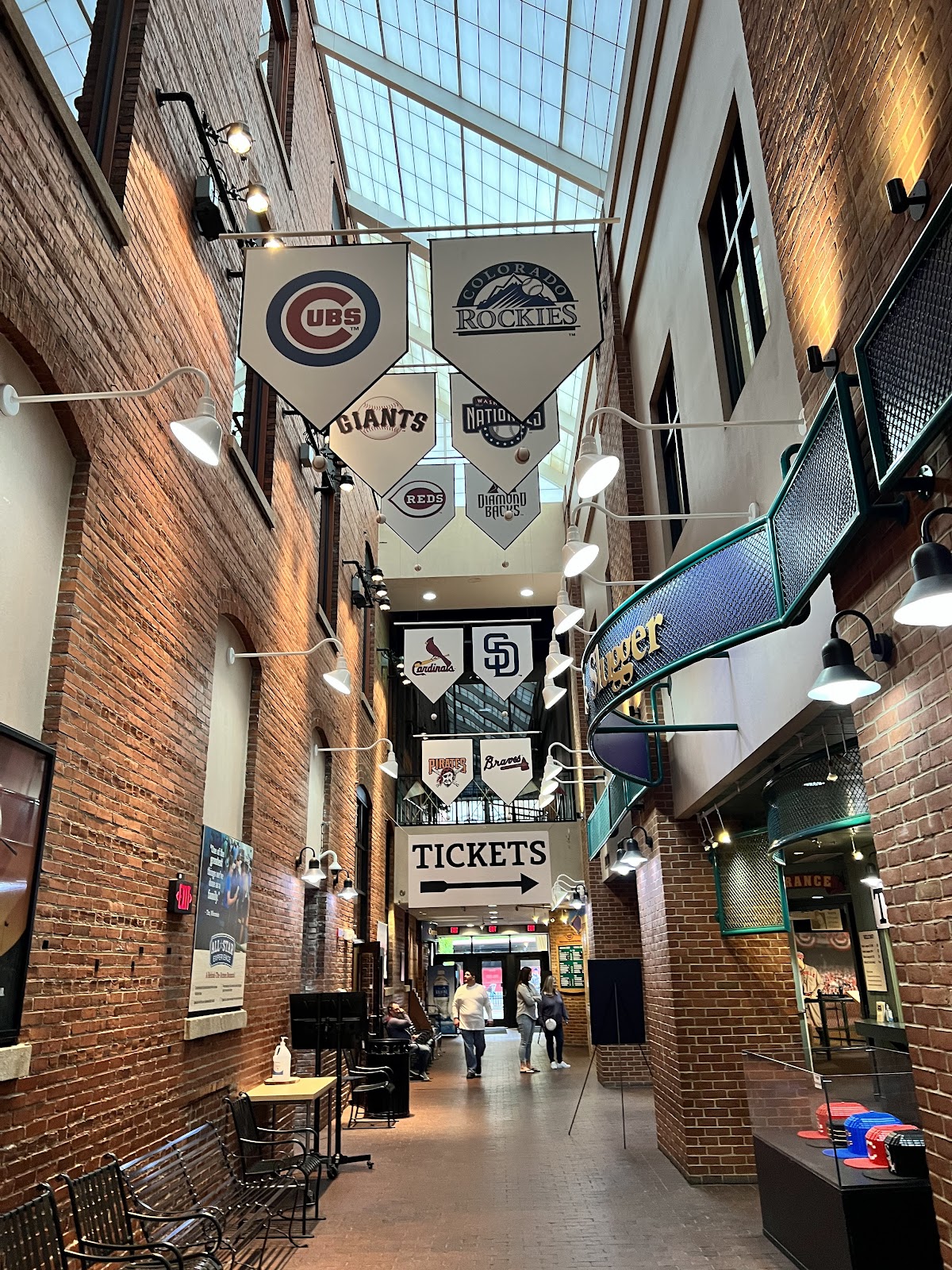
The thresholds between the two sides are where the building’s best frames are, and they exist because the brightness difference is large. Standing two or three metres inside a dim gallery facing out towards a bright production space gives a very large soft source in front and darkness behind — which needs nothing added and is better than either side on its own.
One test frame at two, three and four metres in shows where the trade sits, and what to watch is the wall behind rather than the face, which will be fine at all three.
The practical discipline is to change configuration at the door and to cluster the schedule by space rather than by activity. Production side: low ISO, modest aperture, one gelled source for direction. Gallery side: high ISO, wide aperture, white balance to the fittings or a gel, one close source or none at all.
Switching at the threshold rather than in the middle of a room is what produces a coherent gallery — and it is worth agreeing the clustered order with the couple in advance, because it changes the sequence they might expect.
- Production is bright but top-lit — add direction, not quantity
- Gel your own source; industrial lighting renders skin poorly, spectrally
- Machinery is a background and a mirror. Check it from the camera position
- Walk the galleries and note where the light pools fall
- Work the threshold between the two sides; it beats either one alone
Outside, and the Kentucky year
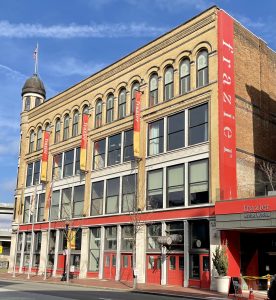
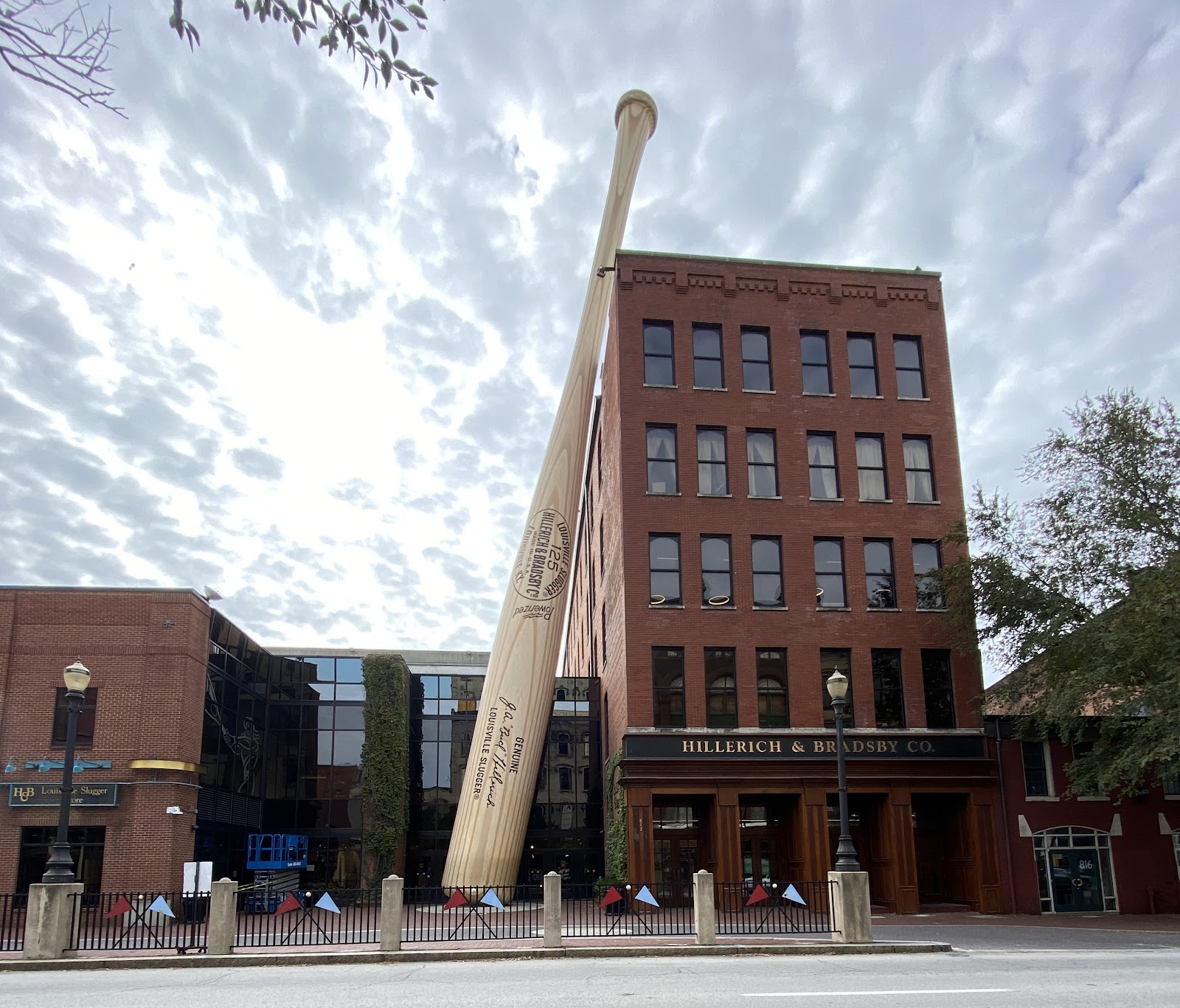
Downtown Louisville has an exterior asset that is genuinely distinctive: the city holds one of the largest collections of cast-iron building fronts in the country, mostly from the second half of the nineteenth century.
Cast iron is unusually photogenic because it was cast in repeating decorative units — columns, capitals, brackets and cornices — which means a facade is a rhythm of identical elements, and repetition at the right scale is a strong graphic subject. It is also painted metal, which reads only under raking light: light running along a cast column lifts every flute and moulding, while light facing it flattens the whole front into a field of one colour.
So those are low-sun frames and they suit tight framing: a couple against two or three bays of cast iron reads better than the same couple in front of a whole block.
Brick is the other local material and it behaves as a warm mid-toned reflector rather than a dark absorber — so a sunlit brick elevation is a genuine soft source, and a couple three or four metres out from one, facing it, is well lit for nothing, with a custom white balance set on a face because brick bounce is markedly warmer than daylight.
The Ohio River is the third element, and Louisville sits on the south bank looking north across the water — which means the river is backlit for very little of the day and reasonably frontlit for most of it, the reverse of a north-bank city. That makes riverside frames more forgiving here than in many river cities. Camera height decides between a mirror and the water’s own colour, and low is nearly always the answer.
The timed frame is the crossing: twenty-five to forty minutes after sunset, when the sky still holds colour at about the brightness of the city’s lighting, so one exposure holds couple, buildings and sky. Since neither the production side nor the galleries change through the day, taking ten minutes for it costs nothing indoors.
The seasons here are a humid transition between continental and subtropical. Summer is hot and genuinely humid, and the humidity rather than the heat is the photographic fact: moist air scatters light, which softens shadows and slightly flattens distance.
The fogging problem is severe in this climate and a museum makes it particular, because the galleries are climate-controlled for the collection while the production space may not be — which means a body can fog moving between the two as well as going outside. A bag opened twenty minutes before each transition is the fix.
Severe thunderstorms are a real possibility from spring through summer, which at an entirely indoor venue costs a decision rather than a picture.
Autumn is the best exterior light of the year: humidity drops, the air clears, and low sun arrives at a civilised hour, usually late October into November — which is also when the cast-iron frames are best, because the raking angle lasts longer through the day.
Winter is mild with frost rather than sustained freeze, and a December midday sun at about thirty degrees above the horizon rakes cast iron and brick all day rather than lighting them from overhead — which makes winter quietly the best season for the city’s architecture and the one time the middle of the day works outdoors.
More frames from The Louisville Slugger Museum
The Louisville Slugger Museum wedding photography: common questions
What are the two lighting briefs?
Production space is lit for work — bright, high and poor at rendering skin. Galleries are lit for conservation — dim, pooled and aimed at objects.
Is the production side dark?
No, it is bright, which surprises people. What it lacks is direction, because the fittings are high and dense, so a face needs a side source rather than more light.
Why gel the source there?
Because industrial lighting renders skin poorly on a spectral level rather than a colour-temperature one, so no preset produces natural skin from it.
How do you handle display glass?
Photograph at an angle rather than square on, so the glass shows what is to one side rather than what is behind the camera. A polariser helps at an angle only.
Where are the best frames?
At the thresholds between the two sides. Two or three metres inside a dim gallery facing a bright production space gives a very large source and darkness behind.
What is Louisville's exterior asset?
One of the country’s largest collections of cast-iron fronts — repeating painted metal units that read only under raking light, best in tight frames.
More Kentucky venue guides
We are writing a photographer’s guide to every venue we would happily shoot in Kentucky. Here are three more, plus the full index:
- The Mary Todd Lincoln House, Lexington: What It Suits, and What It Does Not
- The Muhammad Ali Center, Louisville: The Light Through a Day
- The Buffalo Trace Distillery, Frankfort: A Walk Through the Site
Planning a wedding at The Louisville Slugger Museum?
Two venues under one roof. Tell us your date and we will treat them as two.