 The Venue, Asheville: A Season-by-Season Guide
Biltmore Park Town Square, Asheville: Field Notes on a Planned District
A district built all at once has consistency instead of history. That is a real advantage and a real limit.
A planned mixed-use district is an unusual venue setting and worth taking on its own terms, because it differs from an old downtown in ways that cut both ways.
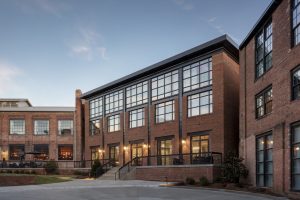
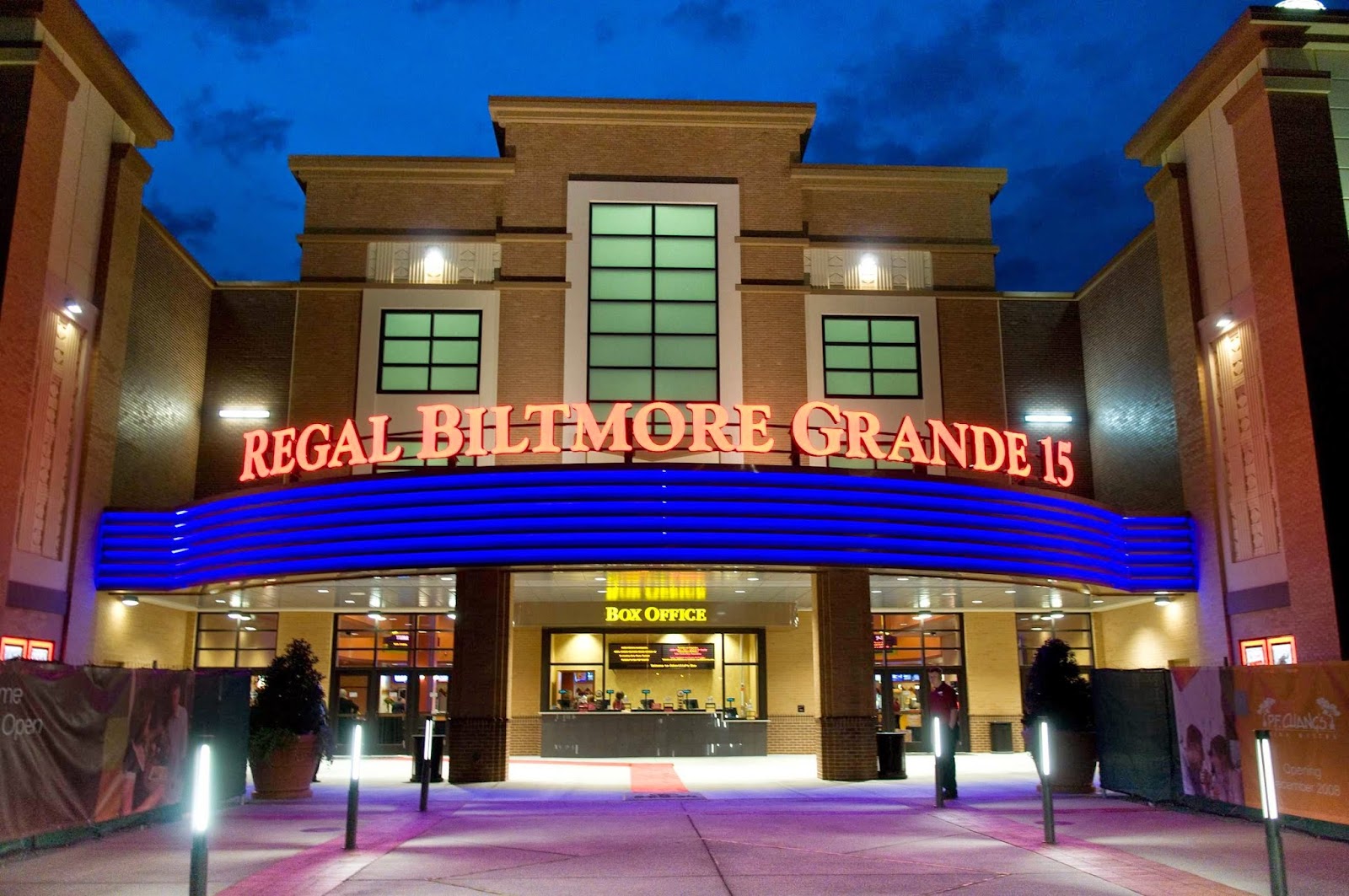
It was built at once, which means consistency. The brick is the same brick, the paving is the same paving, the street trees were planted together and the proportions were designed rather than accumulated. A gallery made here holds together without any reconciling work, which an old district’s mixture does not.
It withholds age. There is no weathered stone, no irregular pointing, no accumulated signage, no genuinely old surfaces — which means the texture available under raking light is cleaner and less interesting than in an older quarter, and nothing in a frame reads as historic.
And it was designed for people to walk in, which is a photographic advantage that is easy to overlook: the sightlines are deliberate, the squares are proportioned, the street trees are placed, and there is room to stand back — all of which an organically grown street frequently lacks.
These are field notes. We have not photographed a wedding at Biltmore Park Town Square; planned districts behave consistently. Which spaces are included, whether the public areas are part of the offer or simply nearby, and what the covered alternative is are questions for their team.
The Biltmore Park Town Square at a glance
| Where | Asheville, North Carolina |
| The advantage | Consistency — one brick, one paving, designed sightlines and room to stand back |
| The limit | No age, so less texture and nothing that reads as historic |
| The material | New brick: a warm mid-toned reflector, cleaner than old brick |
| Ask first | Spaces included, public-area access, covered alternative |
What you meet, and what each one needs
New brick is the first condition and it behaves differently from old brick in a way worth knowing. Brick of any age is a warm mid-toned reflector rather than a dark absorber, which means a sunlit brick elevation is a genuine soft source — and a couple three or four metres out from one, facing it, is well lit for nothing.
That needs a custom white balance set on a face in the position being used, because brick bounce is markedly warmer than daylight and a daylight setting renders it orange. And a global correction afterwards neutralises the face and turns the brick grey, which removes the reason for using it.
The difference with new brick is that it is uniform. Old brick has variation in colour, weathering and pointing, which gives texture under raking light; new brick is consistent, which gives less. So the raking-light frames are weaker here and the bounce frames are stronger, because a uniform wall is a more even source.
The practical consequence: use new brick as a light rather than as a subject.
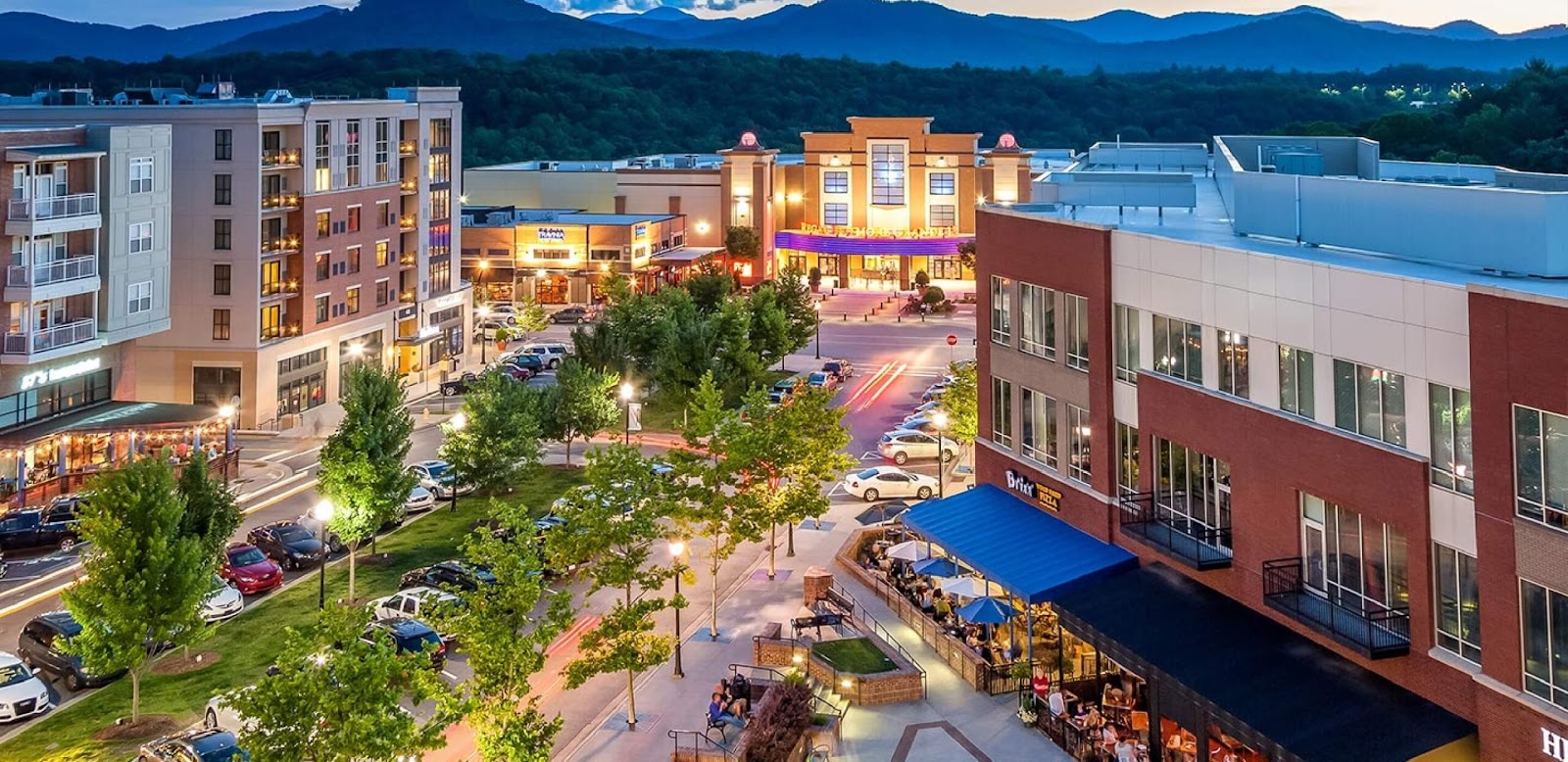
Designed sightlines are the second condition and they are the district’s real photographic asset. A street laid out deliberately has a vanishing point, a rhythm of trees or lamps, and a proportioned width — which means a subject placed on the axis has depth receding behind them that darkens by itself. That is separation with no equipment and it is available at any hour.
It also means there is room to stand back, which in a downtown setting is rare. A planned district’s squares and streets have open sightlines across them, so buildings can be photographed whole and the sky is available — two things a dense old quarter frequently refuses.
Street trees are the third condition and their age matters. A district planted all at once has trees of one size, and if the district is young those trees are small with open crowns — which means they dapple rather than shade, and dappled light puts bright patches and deep shadow on the same face at a ratio nothing holds. If the planting is mature, the crowns have closed and give genuine full shade.
The test is the same either way: look at the face rather than the ground, and any bright spot means move a metre. And ten minutes on arrival identifying which trees genuinely shade is the most useful ten minutes outdoors.
The fourth condition is that the public areas may not be the venue’s. A planned district’s streets and squares are frequently managed rather than owned by the hotel or restaurant hosting a wedding, which affects whether anything may be set up and sometimes whether a group may gather. That is a question with a definite answer and it is worth asking, because it changes what is possible rather than merely what is convenient.
Indoors, and the square
The interiors in a district of this kind are contemporary, which brings the familiar modern problem: pale, hard-surfaced, evenly lit spaces give a subject nothing to stand against, so the wall behind a face is as bright as the face and the picture flattens.
The answers are geometric and they all work. Distance between subject and background, so fall-off does something — five metres rather than one. The darker end of the room, because every evenly lit space is in fact unevenly lit. A background that is depth rather than a near wall: a corridor, an open doorway, a further space. And a source brighter on the face than the room is on the wall, which is the only version that works regardless of geometry.
Modern glazing is the compensation and in a contemporary building it is frequently generous, which makes it the best interior light: shaded side or overcast rather than direct sun, and about three metres back from the glass so a row of people is evenly lit rather than dropping two stops across it. One check — commercial glazing is often coated for solar control, which throws a localised green or blue cast worth finding with one frame rather than in editing.
Ceiling heights decide the bounce and vary by space: function rooms return little, while guest rooms, corridors and smaller spaces are lower and work. One test frame each.
Mixed colour is the standing condition after dark: neutral downlights, warmer decorative fittings, illuminated signage and any coloured uplighting for the event. Pick the one that should be correct, set white balance to it, and switch off or overpower whatever else lands on skin.
The square is the district’s centrepiece and it has three things worth using. Steps, which give elevation so a camera above a group sees faces rather than the backs of heads, and a way to arrange rows that open paving cannot. Installed lighting, which after dark becomes background points of light at a wide aperture — and which belongs behind a couple rather than on them, with one gelled source of your own on the faces, because decorative fittings are small, dim, warm and high.
And water, where there is any: it reflects and doubles anything lit, bounces light upward to fill facial shadows, and camera height decides between a mirror and a view of the basin, with low usually the answer.
The timed frame is the crossing: twenty-five to forty minutes after sunset, when the sky still holds colour at about the brightness of the district’s own lighting, so one exposure holds couple, buildings and sky. In a square with installed lighting that window is particularly good because the ground and the fittings both read — and on a mountain site the ridges beyond go deep blue while the buildings glow warm, which is a colour separation a flat city cannot give.
Since the interiors do not change through the day, taking ten minutes for it costs nothing.
- Use new brick as a light, not as a subject — it is uniform rather than textured
- Custom white balance on a face; brick bounce is much warmer than daylight
- Place subjects on a designed axis; depth darkens by itself
- Ten minutes finds which street trees genuinely shade rather than dapple
- Ask whether the public areas are the venue’s to use
The Carolina mountain year
Asheville sits at elevation in one of the wettest parts of the eastern United States, which makes it cooler and cloudier than the surrounding lowlands — and for a district of brick and glazing, frequent cloud is genuinely good news.
Overcast is the best soft source there is. It removes the direct-sun problem from every glazed wall, it removes the dappling problem from every street tree, and it saturates brick and planting rather than washing them out. A grey day in a district like this is a better photographic condition than a bright one, and it is common enough to plan around rather than hope for.
The Blue Ridge haze is in every frame with distance in it: forest-derived scattering that turns successive ridges into progressively paler blue layers. From a district with open sightlines that is available as a background — and it is aerial perspective occurring naturally, which means a long lens stacking ridgelines into layers of decreasing contrast is the region’s own frame. It should not be corrected, because a dehazed Blue Ridge looks like somewhere else.
Autumn is what the region is known for and it is long rather than sharp because of the elevation range: colour peaks at the highest elevations in early October and works down through the month into early November. The air clears as the humidity drops, so the long views are at their best — autumn gives the colour and the distance together, which is the region’s strongest combination.
The colour carries one exposure note: intense red and orange foliage saturates the red channel long before the overall exposure looks bright, so err a third of a stop darker and watch the individual channels. In a district with deliberately planted street trees that matters, because those trees turn together rather than staggered.
Summer is warm, very humid and frequently cloudy. The cloud helps; the humidity softens shadows; and the cost is the long views, which the haze thickens until distant ridges can dissolve almost entirely. Afternoon thunderstorms are a real possibility, which in a district whose spaces are largely outdoors means a named covered alternative with a known capacity, agreed at booking.
The compensations are real: wet brick and wet paving both photograph better than dry, darkening and saturating and reflecting installed lighting — and a shower followed by clearing gives the best light of any day because the air is washed clean and even the haze briefly thins.
The fogging problem is severe in this humidity: a body carried from an air-conditioned interior into July air fogs on every surface at once and does not clear quickly at these dew points. A bag opened twenty minutes early is the whole fix.
Winter is mild by northern standards, with cold snaps rather than sustained freeze. The December midday sun at about thirty-two degrees above the horizon rakes brick and paving all day rather than lighting them from overhead — which is the one time new brick’s limited texture reads at all, and the one season the middle of the day works outdoors.
The bare street trees also open the sightlines and the mountain views, and snow, which is occasional at this elevation, turns the ground into a reflector and brightens every window and every brick elevation in the district.
More frames from The Biltmore Park Town Square
The Biltmore Park Town Square wedding photography: common questions
What does a planned district give?
Consistency and designed sightlines. One brick, one paving, deliberate axes and room to stand back — which an organically grown street frequently lacks.
What does it withhold?
Age. No weathered surfaces means less texture under raking light and nothing in a frame that reads as historic.
How should new brick be used?
As a light rather than a subject. It is uniform, which makes it a more even bounce source and a less interesting textured one.
Do the street trees give shade?
It depends on their age. A young district’s trees are small and open-crowned, so they dapple. Look at the face rather than the ground to tell.
Is the frequent cloud a problem?
The opposite. It removes the direct-sun problem from the glazing, the dappling problem from the trees, and it saturates brick and planting.
When does new brick read as texture?
Winter. A December sun at about thirty-two degrees rakes it all day, which is the one time its limited variation shows at all.
More Asheville venue guides
We are writing a photographer’s guide to every venue we would happily shoot in Asheville. Here are three more, plus the full index:
- The Grand Bohemian Hotel Asheville: The Light Through a Day
- The North Carolina Arboretum, Asheville: A Garden in a Blue Haze
- The U.S. Cellular Center, Asheville: The Problem, and Four Ways Out
All Asheville Wedding Venues →
Planning a wedding at The Biltmore Park Town Square?
Consistency instead of history. Tell us your date and we will use what it has.