 The Sheraton Portsmouth: What a Conventional Hotel Actually Buys You
The Inn at Ellis River, Jackson: What It Suits, and What It Does Not
A small inn on a mountain river gives an intimate gallery and refuses a large one.
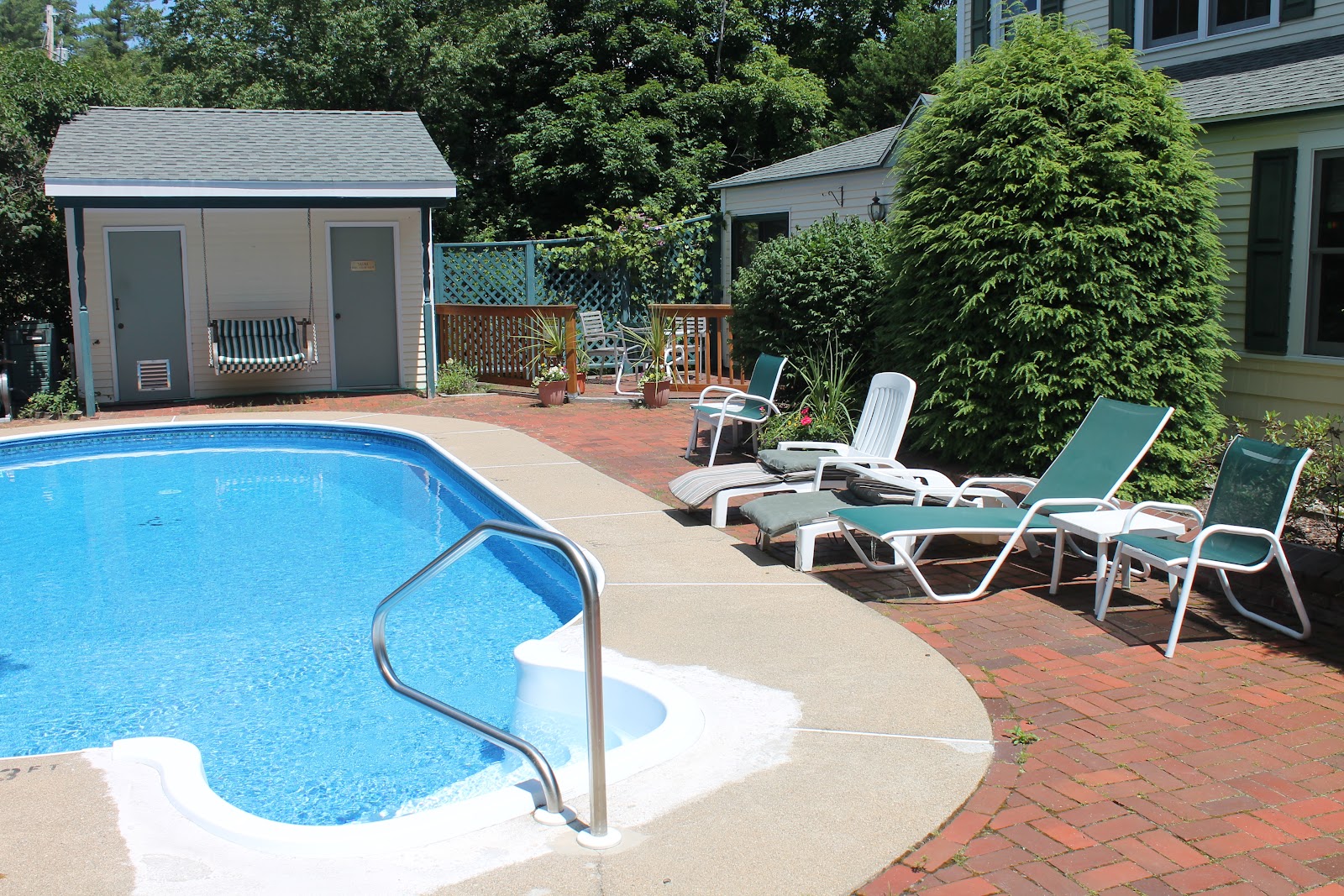
A small riverside inn in a mountain valley is honest about its scale, and both halves of what that means are worth saying.
What it gives is intimacy and a river. Domestic-scaled rooms are easier to light than grand ones, porches are the best light for miles, and a mountain river running past the property is the one element on it that moves, reflects and makes shutter speed a decision. A gallery from a place like this is close, warm and specific.
What it refuses is scale. There is no ballroom, no long gallery, no room in which to stand back, and no space to arrange thirty people indoors. And the valley itself refuses the timing most couples expect, because steep sides take the sun off the floor hours before it actually sets.
Neither of those is a fault. They are simply what a small inn in a narrow valley is, and a day planned around them produces a better gallery than a day planned against them.
We have not photographed a wedding at the Inn at Ellis River; small riverside mountain inns behave consistently. Which spaces are included, what the river access is, and what the covered alternative is are questions for their team.
The Inn at Ellis River at a glance
| Where | Jackson, New Hampshire, on a mountain river |
| Suits | Intimate interiors, porches, and a river that moves and reflects |
| Resists | Scale, distance, large groups, and a valley that shadows early |
| The best light | A porch a third of the way in from its open edge |
| Ask first | Spaces included, river access, covered alternative, site aspect |
What it suits
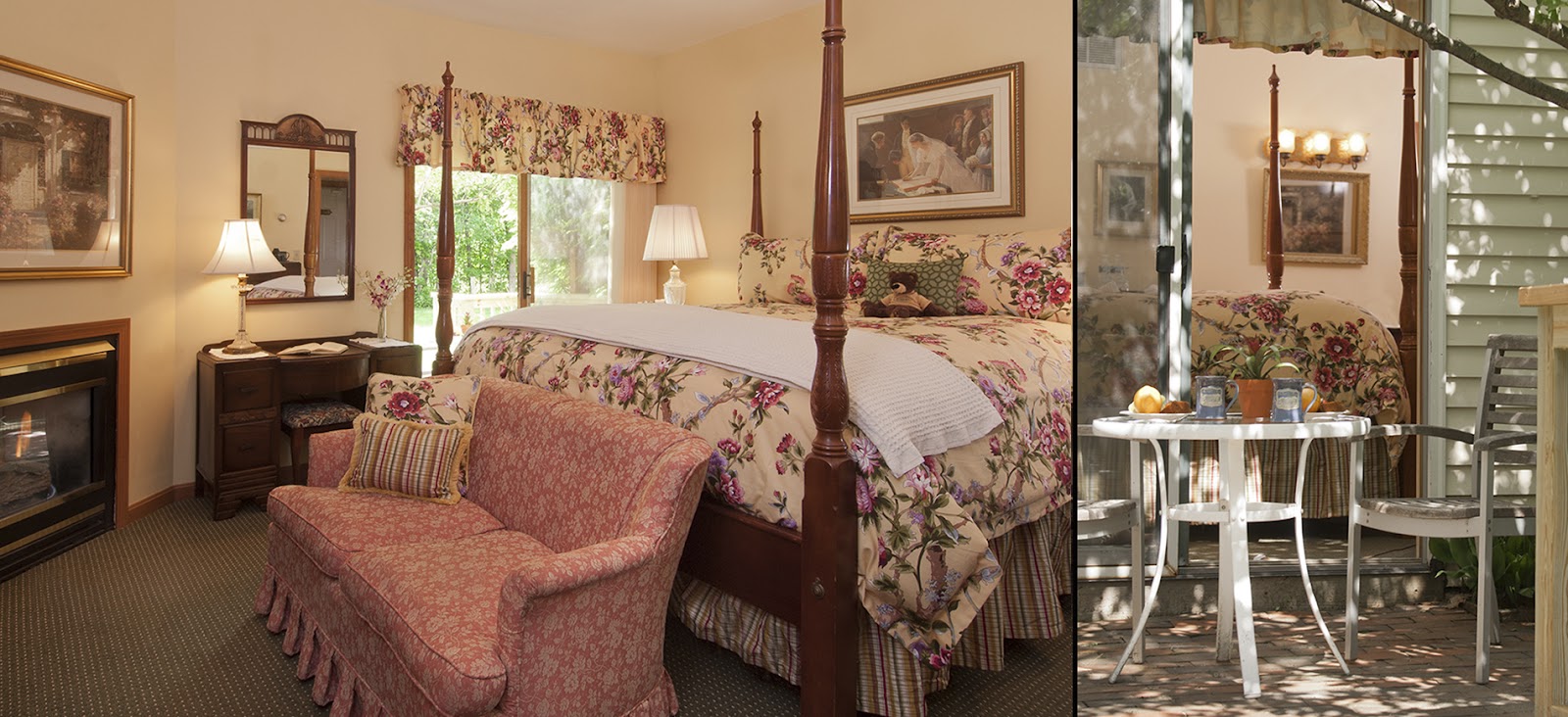
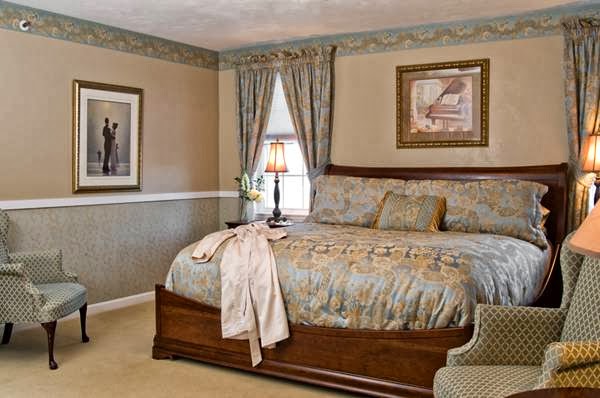
Domestic-scaled interiors are the first thing and they are easier than photographers arriving from grand venues expect. A window sized for a room is a soft source about right for two people at two or three metres; walls close enough to return light fill the shadow side without a reflector; and a ceiling under three metres is a very large softbox when a flash is aimed at it, which means bounce works properly here.
Two to three metres back is the working distance and every overhead and lamp fitting should be off, so the room has one colour of light rather than two landing on the same face. At this latitude, about forty-four degrees north, a north-facing room is shaded all year and is the most reliable.
Porches are the second and they are the most reliable light on the property. A roof with an open face blocks the overhead component that shadows eye sockets, restricts the light to a horizontal band, and a painted floor bounces it back to fill under the chin. White painted timber makes that stronger here than almost anywhere, because white paint is the most reflective architectural surface a photographer regularly meets.
The working position is about a third of the way in from the open edge, and looking along a porch rather than out of it gives posts repeating into depth with the far end darkening by itself. And it is rainproof, which in these mountains is a foundation rather than a fallback, because the weather here changes faster than forecast.
The river is the third asset and it does three things. It reflects, which doubles anything lit and gives a second version of the valley for nothing — and camera height decides whether you get it: low across the surface sees a mirror, high looking down sees the bed. It bounces light upward, which fills the shadows a high sun carves — so a shaded position beside water is materially better light than the same shade beside grass. And it moves, which makes shutter speed a deliberate choice: a long exposure turns a mountain river into a smooth white field and strengthens reflections, while a short one holds every drop.
In bright daylight the long version needs a neutral density filter, and a polariser is worth carrying because moving water in sun throws specular highlights several stops above everything else that clip and fool a meter.
Dark hardwood and conifer edges are the fourth asset and they are the region’s free separation. A dense stand absorbs almost all the light falling on it, which means a subject in front of it is separated by three or four stops with no equipment — and it carries the standard exposure trap, because a meter looking at it overexposes everything else by two stops. Meter on the faces and work in manual.
And the autumn colour is the fifth and the reason many couples choose the region at all: northern hardwood colour here is among the most saturated natural conditions in North America.
What it does not suit
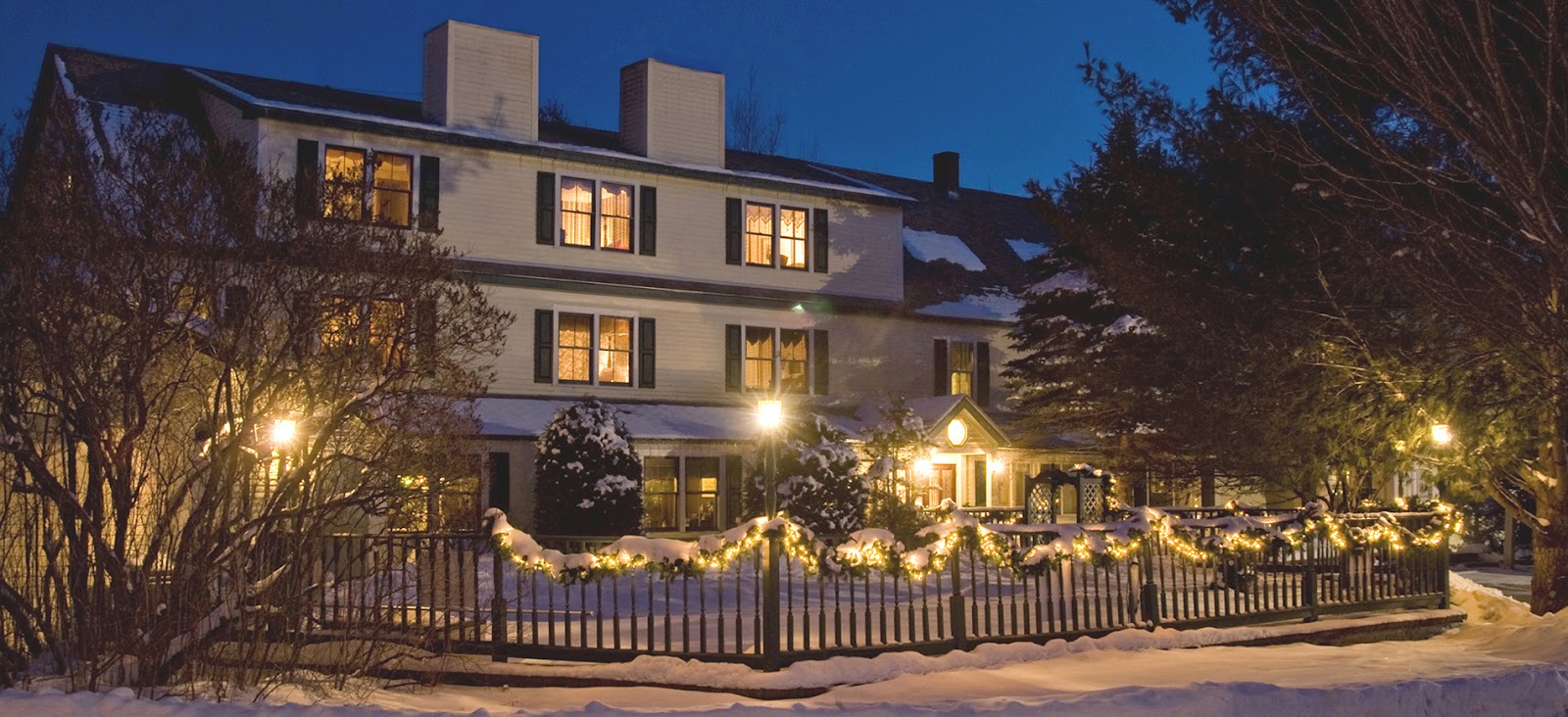
Scale is the honest refusal and it is worth being direct about. A small inn has no space in which to arrange a large group indoors, no long sightlines, and no room in which a photographer can stand well back — which means a thirty-person formal happens outdoors or on a lawn, and a wide interior frame simply is not available.
The consequence is that the day’s structure has to be agreed in advance rather than improvised. Large groups outdoors with a named covered alternative; small groups and couple frames indoors and on the porches. That is a workable plan when it is the plan.
Distance is the related difficulty and the doorway is the answer: standing in one gains two or three metres at no cost, which is the difference between a wide lens distorting a face at two metres and a moderate lens at four, and it frames the subject with the doorway darkening the edges. In a building of small connected rooms, shooting through rather than into gives depth and reads as a building rather than a wall.
Legibility is the third. Nothing in a small room can be hidden behind scale, so a cable, a bag, a hanger or a tray is fully visible in a frame — and none of it removable afterwards without visible repair. The habit that works is to look at the four edges before the exposure rather than at the centre.
The valley’s timing is the fourth and it is not the building’s fault. Steep sides mean the sun clears the eastern ridge long after it has risen and drops behind the western one long before it sets, so direct light on the floor may last five or six hours rather than the day’s length — and the sunset time is close to irrelevant. The most useful question to ask is when the sun leaves the site, and the venue will know precisely.
The compensation is a long period of open shade, which is genuinely good light: soft, downward, with no hard shadows, and with the river providing fill from below. Its deficiency is direction, supplied by standing near something solid rather than in the middle of a lawn.
The hardwood canopy is the fifth and it is the real hazard outdoors. A summer canopy is a very efficient dappling machine, because the leaves are broad and the gaps many — and dappled light puts bright patches and deep shadow on the same face at a ratio nothing holds. Full shade only: the deep interior of a dense stand, the shadow side of a building, or a porch.
Dense canopy also throws green onto skin from whichever side it is thickest, localised so global white balance cannot remove it. A custom white balance set on a face in the position being used is the fix, and a metre further from the foliage roughly halves it.
And the river carries a practical caution that deserves plain statement: a mountain river is cold, fast and uneven underfoot, the banks are loose or stony, a long dress near moving water is a hazard, and a camera dropped in is finished. Frames near water should be composed so nobody needs to stand on an edge — and in spring, when snowmelt is coming through, the river is higher, faster and louder than in autumn.
- Agree the structure in advance: groups outdoors, couples indoors and on porches
- Work from doorways; two or three metres gained at no cost
- Look at the four edges before exposing; a small room hides nothing
- Ask when the sun leaves the valley; the sunset time is irrelevant
- Full shade only outdoors; a summer hardwood canopy dapples badly
The New Hampshire year
Autumn is why most people come and the timing is tighter than the reputation suggests. Northern hardwood colour typically peaks at higher elevations in late September and in the valleys in the first half of October, so the peak moves downhill over a fortnight and a valley property does not peak the same weekend as a mountainside view.
It is also the busiest fortnight in these mountains — busy roads, populated positions, and parking a real consideration — which argues for early starts and one chosen position rather than a tour. And it carries one exposure note: intense red and orange foliage saturates the red channel long before the overall exposure looks bright, so err a third of a stop darker than instinct suggests and watch the individual channels.
For a riverside property autumn has a particular payoff, because turning hardwood reflected in moving water is the single strongest frame the place can produce — and it works both ways, with a long exposure smoothing the water into a field of colour or a short one breaking the reflection into fragments of it.
Summer is green, cool and comfortable, with the canopy at its densest — the most reliable full shade and the worst dappling at its edges. The river is lower and quieter than in spring. Afternoon thunderstorms build over these mountains from July into September and produce lightning, which near water is a genuine hazard rather than an inconvenience, and which is what the porches are for.
Mountain weather changes faster than forecast here and the region is known for it: a valley can be in cloud while the town is clear, and a clear morning can close in by afternoon. Mountain cloud is also the best diffusion available, so a valley with cloud moving through it is more atmospheric than a clear day and worth working rather than waiting out.
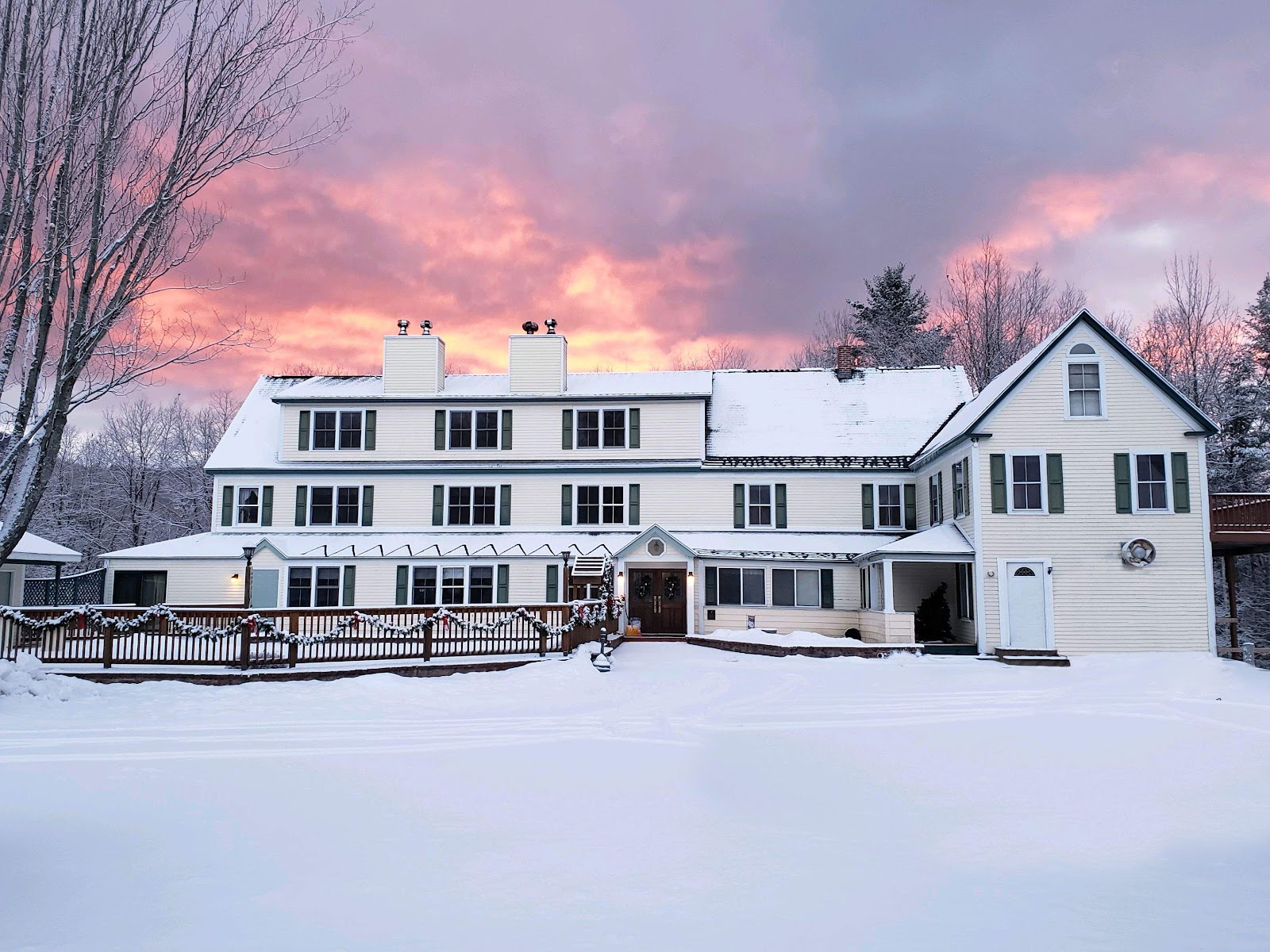
Winter is long, snowy and the region’s second season, and it improves a small inn in specific ways. Deep snow lying for months turns the ground into an enormous reflector, which means the porches get light from below as well as from the side so facial shadows nearly vanish, and the domestic windows are brighter and softer in February than in July.
Snow outdoors is the best natural fill available, lifting exactly the shadows a low sun carves while fooling a meter by about two stops toward underexposure — so a snow frame needs deliberate overexposure relative to what the camera suggests. And the bare hardwood canopy removes the dappling problem entirely while letting far more light reach the ground and the windows.
A river running black through snow with bare hardwood above it is the strongest winter frame the property offers, and it is a genuinely distinctive one. The December midday sun at this latitude reaches only about twenty-two degrees above the horizon, so the whole short day is raking light.
The practical constraints are real: cold drains batteries so spares belong in an inside pocket, an outdoor block near water is five minutes with coats rather than twenty without, and a cold body brought into a heated inn fogs on every surface at once and does not clear quickly.
Spring is the one season with no photographic argument for it — cold, late, muddy, neither foliage nor snow — with the single exception that the river is at its fullest and loudest, which if a dramatic water frame is wanted is the time to get it, at a distance.
More frames from The Inn at Ellis River
The Inn at Ellis River wedding photography: common questions
What does a small inn do well?
Intimate interiors that are easier to light than grand ones, porches that are the best light for miles, and a river that reflects, fills and makes shutter speed a decision.
What does it refuse?
Scale. No ballroom, no long sightlines, no room to stand back, and no space to arrange thirty people indoors — so groups happen outdoors.
Where should the camera stand indoors?
In the doorway. It gains two or three metres at no cost and lets you shoot through rooms, which gives depth and reads as a building rather than a wall.
Why is the valley's timing a problem?
Steep sides mean direct light on the floor lasts five or six hours rather than the day’s length, so the sunset time is close to irrelevant. Ask when the sun leaves.
What is the outdoor hazard?
Dappled light through a summer hardwood canopy. Bright patches and deep shadow on the same face exceed what any sensor holds — full shade only.
What is the strongest frame here?
Turning hardwood reflected in moving water in the first half of October — and in winter, a river running black through snow under bare branches.
More Jackson, NH venue guides
We are writing a photographer’s guide to every venue we would happily shoot in Jackson, NH. Here are three more, plus the full index:
- The Wentworth Resort, Jackson: The Light Through a Mountain Day
- The Christmas Farm Inn, Jackson: A Walk Through the Property
- The Eagle Mountain House, Jackson: The One Decision That Governs Everything
Planning a wedding at The Inn at Ellis River?
Intimate by design. Tell us your date and we will plan to its scale.