 The Sheraton Portsmouth: What a Conventional Hotel Actually Buys You
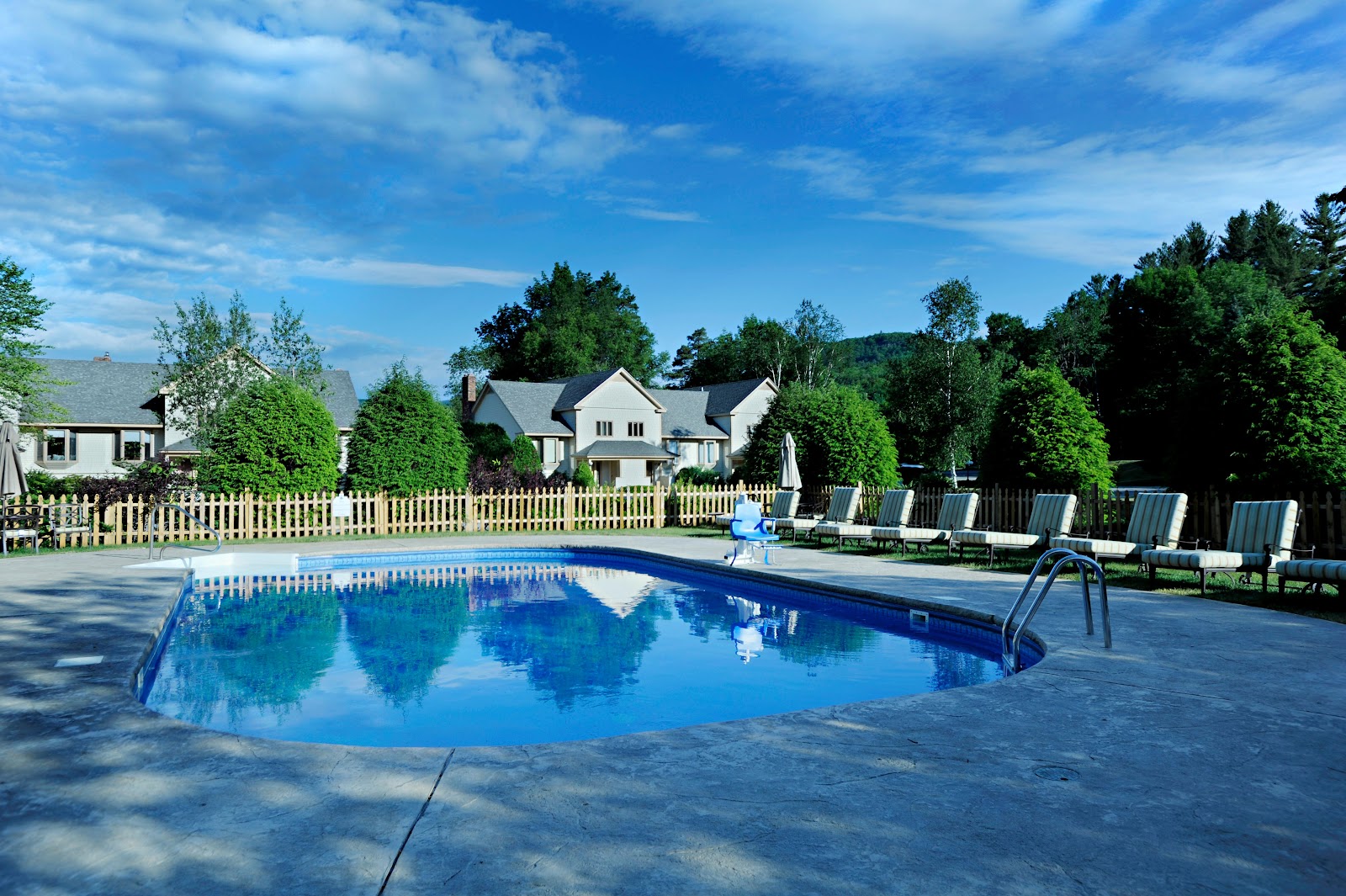
The Wentworth Resort, Jackson: The Light Through a Mountain Day
A narrow valley under a hardwood canopy has two clocks: the day’s and the year’s.
A resort in a White Mountain valley runs on two clocks at once, and both have to be read.
The day’s clock is the valley. Steep sides mean the sun clears the eastern ridge long after it has risen and drops behind the western one long before it sets, so the period of direct light on the valley floor may be five or six hours rather than the fourteen a June table promises. The most useful question to ask is when the sun leaves the site, which the venue will answer precisely.
The year’s clock is the canopy, and this is what distinguishes the eastern mountains from the western ones. This is northern hardwood forest — maple, beech and birch rather than conifer — which means the canopy is dense green in summer, spectacular for a fortnight in autumn, and completely absent all winter. A position that is deep shade in July is open and bright in November, and the same frame is three different pictures across the year.
That second clock matters more here than almost anywhere, because the autumn colour in this region is among the most intense in North America and it is the reason many couples choose the place.
This is the day in order. We have not photographed a wedding at the Wentworth Resort; White Mountain valleys and hardwood canopies behave consistently. Which areas are included, what the covered alternative is, and what the ceremony site’s aspect is are questions for their team.
The Wentworth Resort at a glance
| Where | Jackson, New Hampshire, in the White Mountains |
| Two clocks | The valley’s day, and the canopy’s year |
| Morning | Long open shade, which is genuinely good light |
| Midday | Full shade under hardwood; never dappled light through it |
| Evening | Earlier than the table says, then a long northern twilight |
Morning and midday
The first hours are open shade and they are better than most people expect. Before the sun clears the ridge the valley is lit by the strip of sky overhead and by whatever bounces off the slopes — soft, downward, with no hard shadows anywhere.
That is a genuinely good portrait condition and it has one property nothing else in the day has: it is the only time when a subject and the surrounding hills sit within a manageable brightness range of each other. Once the valley is in sun the range opens up, and in the evening, when the ridges are lit and the floor is not, the gap is wider still.
Open shade’s one deficiency is direction, and it is supplied by geometry rather than equipment: standing near a building, a stone wall or a dense edge blocks the light from one side and restores the modelling. The middle of an open lawn in flat light is the flattest position available.
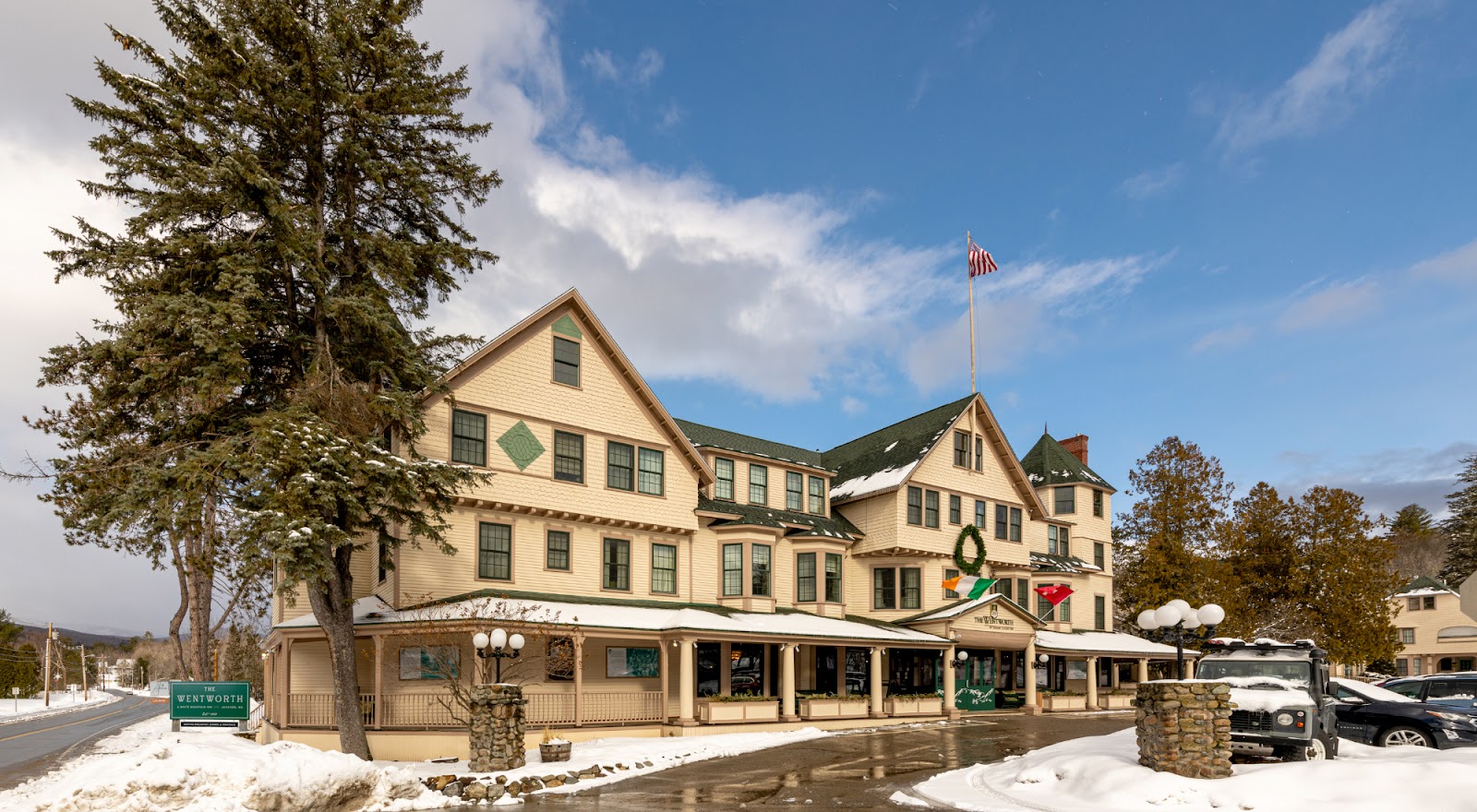
White clapboard is the local material and it changes that calculation, because white painted timber is the most reflective architectural surface a photographer regularly meets. A white elevation in open shade returns a great deal of light, which means a subject three or four metres out from one, facing it, is lit by a source the size of the building — soft, directional and neutral in colour. On a New England property that is the best free light available and it works under overcast as well as under clear sky.
Through mid-morning the sun clears the ridge and the transition is abrupt. Direct sun in a mountain valley is hard, and under a hardwood canopy it produces the single worst light there is: dappling. Bright patches and deep shadow on the same face, centimetres apart, at a ratio nothing holds — and a summer hardwood canopy is a very efficient dappling machine, because the leaves are broad and the gaps between them are many.
So the midday answer is full shade only, and it needs locating rather than assuming. The reliable versions are the shadow side of a building, the deep interior of a dense stand where no direct light penetrates, and a covered structure with an open face — which in this region frequently means a porch, a veranda or a covered bridge.
A covered bridge deserves naming because it is the region’s own light and it is excellent. A bridge with a roof and open ends is a tunnel with a large soft source at each end: the roof removes the overhead component that ruins faces, the sides restrict the light to a horizontal band, and the timber deck bounces it back to fill. A couple standing two or three metres inside the end of a covered bridge is beautifully lit with nothing added — and it is rainproof, which in these mountains matters.
Dense canopy also throws green onto skin from whichever side it is thickest, localised so global white balance cannot remove it. A custom white balance set on a face in the position being used is the fix, and a metre further from the foliage roughly halves it.
Evening, and the interiors
The afternoon light lengthens early, because the western ridge intervenes long before the sun actually sets — which means the best raking light on the valley floor arrives sooner than a table suggests and the whole evening is longer and softer than at sea level. The only reliable way to know when is to ask.
In that window the open ground is the asset. Mown grass takes raking light beautifully, picking up every blade, and a hardwood edge behind a couple goes darker by contrast. A white clapboard elevation raked by low sun is the strongest architectural frame the region gives, because the paint holds detail that a dark surface loses.
Then the valley falls into shadow and the interval begins: the surrounding ridges stay in direct sun after the floor has lost it, sometimes for twenty or thirty minutes, which gives a couple in soft shade with lit hillside behind them. In autumn, with the hardwoods turned, that lit hillside is the most saturated thing the region produces.
It has one technical requirement: the range between shaded faces and sunlit hillside is wide, so the faces need lifting by a close source gelled warm to match the light on the slope, rather than the slope being underexposed to match the faces.
After that the crossing follows — sky still holding colour at about the brightness of the buildings’ own lighting. At this latitude, about forty-four degrees north, that twilight is generously long in June and short and sharp in the clear cold air of winter, and in either case it is the last timed frame of the day.
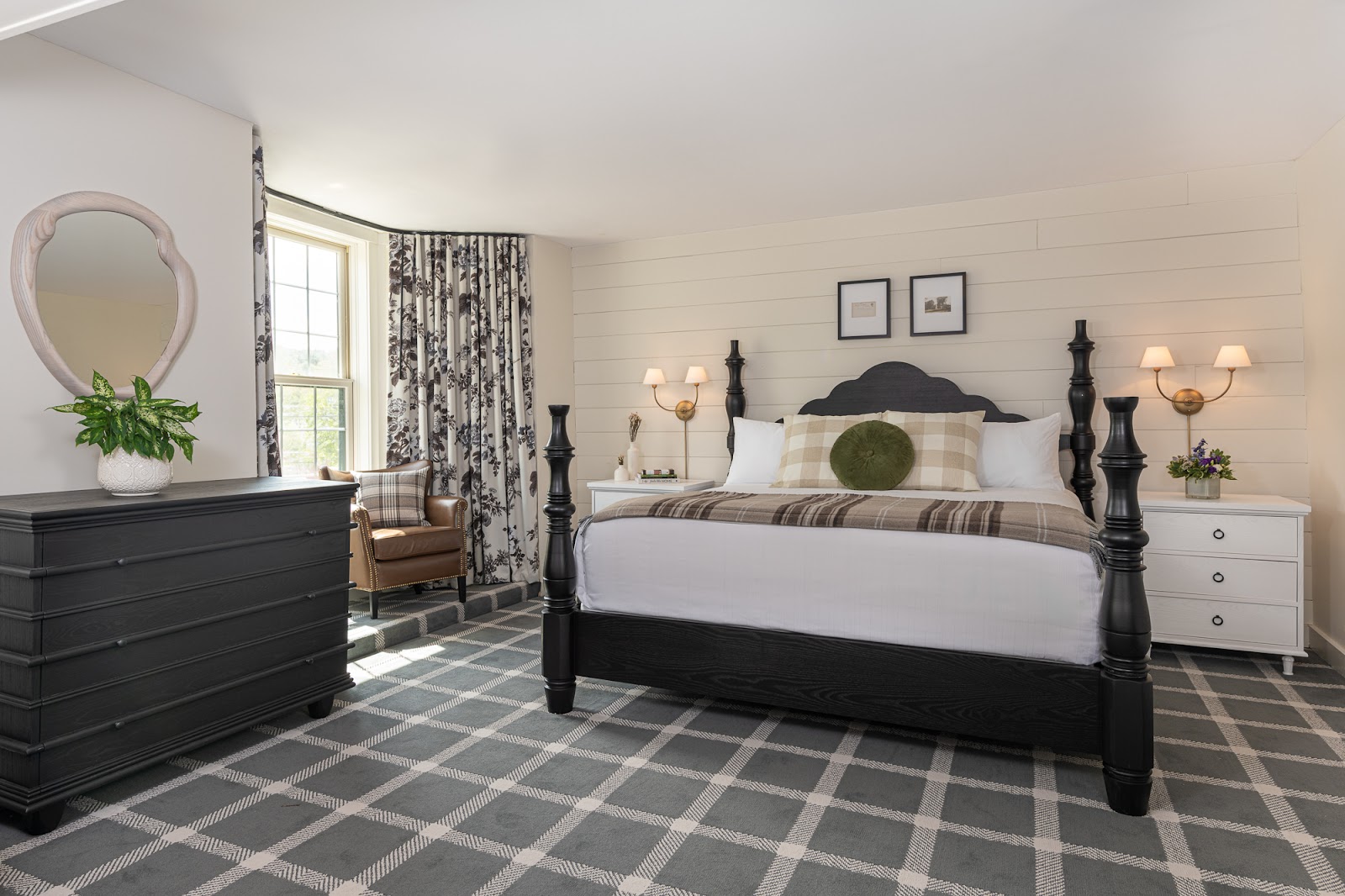
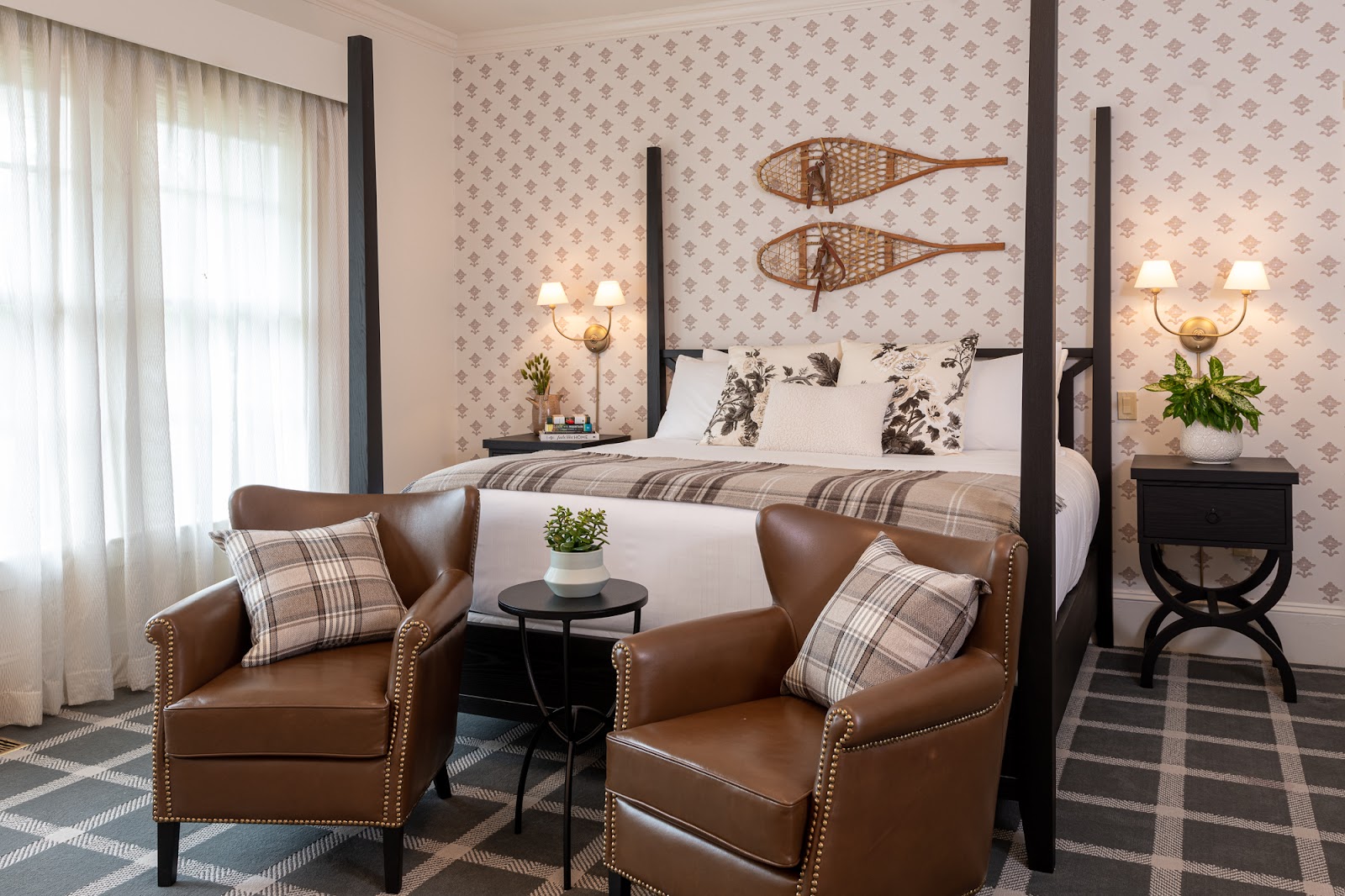
Inside, a New England resort of this kind is typically timber-framed with painted interiors rather than exposed dark wood, which means the rooms are brighter than a western lodge and bounce flash frequently works. One test frame per space settles it and the answer is usually yes, which is worth knowing because it changes what has to be carried.
The windows are the good interior light and a resort building oriented to look at a valley tends to have generous ones. Largest window on the shaded side, every overhead fitting off so the room has one colour of light, lamps out of frame, two to three metres back from the glass.
There is a snow-specific effect worth knowing and it is large in this region, because snow lies deep and for months: when there is snow outside, a window becomes dramatically brighter and softer, because the ground is an enormous reflector throwing light upward into the room. A window here in February is a better source than the same window in July, and it is cooler in colour, so a custom white balance beats an assumption.
And where an interior does have exposed dark timber or a stone hearth, those surfaces absorb and read only under raking light — a source pointed at them flattens them, while the same source placed to skim lifts every joint and course.
- Ask when the sun leaves the valley; a sunset table will not tell you
- White clapboard is a light source — three metres out, facing it
- Full shade only under hardwood; a summer canopy dapples badly
- A covered bridge is a tunnel with a soft source at each end, and rainproof
- Plan for the interval: lit hillside above a shaded floor, faces lifted
The New Hampshire year
Autumn is why most people come and it is worth being precise about, because the timing is tighter than the reputation suggests. Northern hardwood colour in this region typically peaks at higher elevations in late September and in the valleys in the first half of October — which means the peak moves downhill over a fortnight, and a valley venue and a mountainside view do not peak on the same weekend.
It is also the busiest fortnight of the year in these mountains, which has practical consequences rather than photographic ones: roads are busy, popular positions are populated, and parking at any well-known spot is a real consideration. The answer is the same as everywhere — early, and one chosen position rather than a tour.
The colour itself is genuinely the most saturated natural condition a photographer will meet in North America, and it comes with one exposure note: intense red and orange foliage saturates the red channel long before the overall exposure looks bright, so a frame that looks correct on a histogram may already have lost detail in the reds. Err a third of a stop darker than instinct suggests and watch the individual channels.
Summer is green, cool and comfortable, with the canopy at its densest — which means the most reliable full shade and the worst dappling at its edges. Afternoon thunderstorms build over these mountains from July into September and they produce lightning, which on open ground is a hazard rather than an inconvenience, so a named covered alternative is a requirement.
Mountain weather here changes faster than forecast, and the region is known for it — the nearby high summits record some of the most extreme surface conditions in the world. A valley can be in cloud while the town below is clear, and a clear morning can close in by afternoon. That argues for taking the frames when the light is there rather than saving them for a scheduled slot.
The compensation is that mountain cloud is the best diffusion available, and a valley with cloud moving through it — ridgelines appearing and disappearing, light shifting minute to minute — is more atmospheric than a clear day and worth working rather than waiting out.
Winter is long, snowy and genuinely the region’s second season. Deep snow lies for months, and it does two things. Outdoors it is the best natural fill available, lifting exactly the shadows a low sun carves while fooling a meter by about two stops toward underexposure — so a snow frame needs deliberate overexposure relative to what the camera suggests. Indoors it turns the ground into an enormous reflector and improves every window in the building.
The bare hardwood canopy is the other winter change and it is a large one: with no leaves, far more light reaches the ground and the windows, the ridgelines and the architecture become fully visible rather than screened, and the dappling problem disappears entirely. The December midday sun at this latitude reaches only about twenty-two degrees above the horizon, so the whole short day is raking light.
Snow against bare hardwood and white clapboard is a high-key palette unlike anything else — and the practical constraints are real: cold drains batteries so spares go in an inside pocket, and a cold body brought into a heated inn fogs on every surface at once and does not clear quickly.
Spring is the one season with no argument for it here: cold, late, muddy, with no foliage and no snow.
More frames from The Wentworth Resort
The Wentworth Resort wedding photography: common questions
What are the two clocks?
The valley’s day, because steep sides mean direct light lasts five or six hours; and the canopy’s year, because a hardwood forest is dense in summer and absent in winter.
Is the morning shade usable?
It is genuinely good light, and it is the only time a subject and the surrounding hills sit within a manageable brightness range of each other.
Why is white clapboard useful?
Because white paint is the most reflective architectural surface there is. A subject three metres out from a white elevation, facing it, is lit by a source the size of the building.
What is the midday answer?
Full shade only — the shadow side of a building, a dense stand, or a covered structure. A summer hardwood canopy is a very efficient dappling machine.
When does the autumn colour peak?
Higher elevations in late September and the valleys in the first half of October, so the peak moves downhill over a fortnight and a valley and a mountainside do not peak together.
Is there an exposure note for the foliage?
Yes. Intense reds saturate the red channel long before the overall exposure looks bright, so err a third of a stop darker and watch the individual channels.
More Jackson, NH venue guides
We are writing a photographer’s guide to every venue we would happily shoot in Jackson, NH. Here are three more, plus the full index:
- The Christmas Farm Inn, Jackson: A Walk Through the Property
- The Eagle Mountain House, Jackson: The One Decision That Governs Everything
- The Inn at Ellis River, Jackson: What It Suits, and What It Does Not
Planning a wedding at The Wentworth Resort?
Two clocks to read. Tell us your date and we will read both.