 The Blue Ball Barn, Wilmington: A Walk Through a Converted Barn
The Rehoboth Beach Country Club: The Light Through a Day
Near the coast the light changes quality as well as direction. Knowing when is the whole job.
Coastal light behaves differently from inland light and the difference is not subtle. Air over water carries more moisture, which scatters light and softens it; the sea and the pale sand together form an enormous low reflector; and the temperature difference between land and water drives a breeze that builds through the day and drops in the evening.
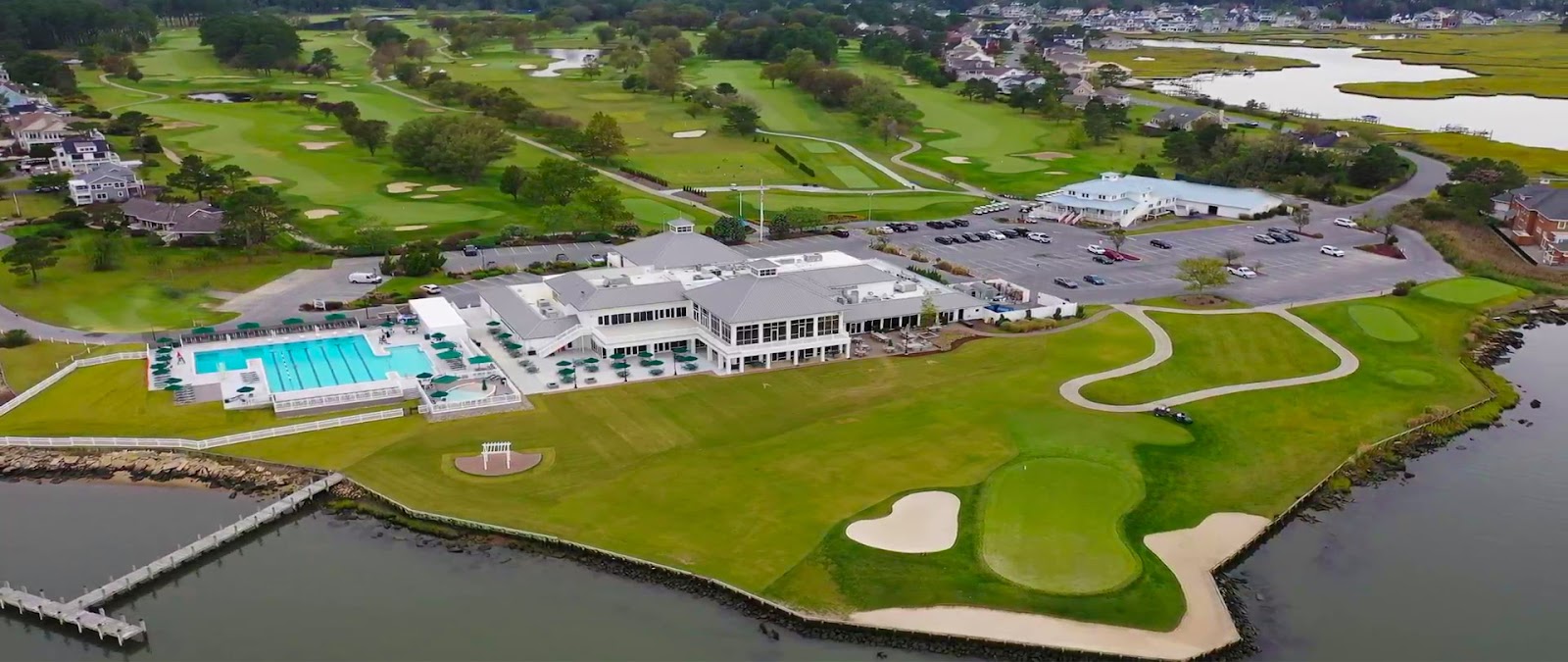
At a club a few minutes from the ocean, that produces a day with a distinct progression. The morning is clear and hard-edged. The middle of the day is bright and high. The late afternoon is the best of it, when the haze that builds over the water softens the low sun into something no inland venue gets. And the evening has a specific timed frame that the coast gives and inland does not.
Knowing that shape lets a photographer put the right thing in the right hour rather than treating the whole day as one condition.
This is that day in order. We have not photographed a wedding at the Rehoboth Beach Country Club; coastal clubs and shore light behave consistently. Which areas are available, whether the course may be used and when, and what the covered alternative is are questions for their team.
The Rehoboth Beach Country Club at a glance
| Where | Rehoboth Beach, Delaware, near the Atlantic |
| Morning | Clear and hard-edged; the clubhouse windows and full shade |
| Midday | High sun with strong upward fill from open ground |
| Late afternoon | The best of the day — coastal haze softening low sun |
| Evening | The crossing, and a breeze that drops for the still frames |
Morning and midday
Early morning on the coast is clearer and harder than most people expect. Overnight the air settles and the haze that builds through a summer day has not formed yet, which means the first hours give direct, sharp, contrasty light — good for texture and long views, less forgiving on faces.
So the morning belongs to two things. The clubhouse windows, which are the reliable interior light: largest window on the shaded side, every overhead fitting switched off so the room has one colour of light, lamps out of frame, two to three metres back from the glass so the fall-off is even across two faces. At Rehoboth’s latitude, about thirty-nine degrees north, the midday sun reaches roughly seventy-four degrees above the horizon in June and about twenty-eight in December — so a north-facing window is shaded all year and is the most reliable, while a south-facing one is a high source in summer and a low directional one through a winter afternoon.
And full shade outdoors, under whatever mature planting the property has. The rule is absolute: full shade under a dense canopy is excellent, while dappled light through a thin one puts bright patches and deep shadow on the same face at a ratio nothing holds. Full shade only, and it is worth ten minutes on arrival identifying which areas genuinely qualify.
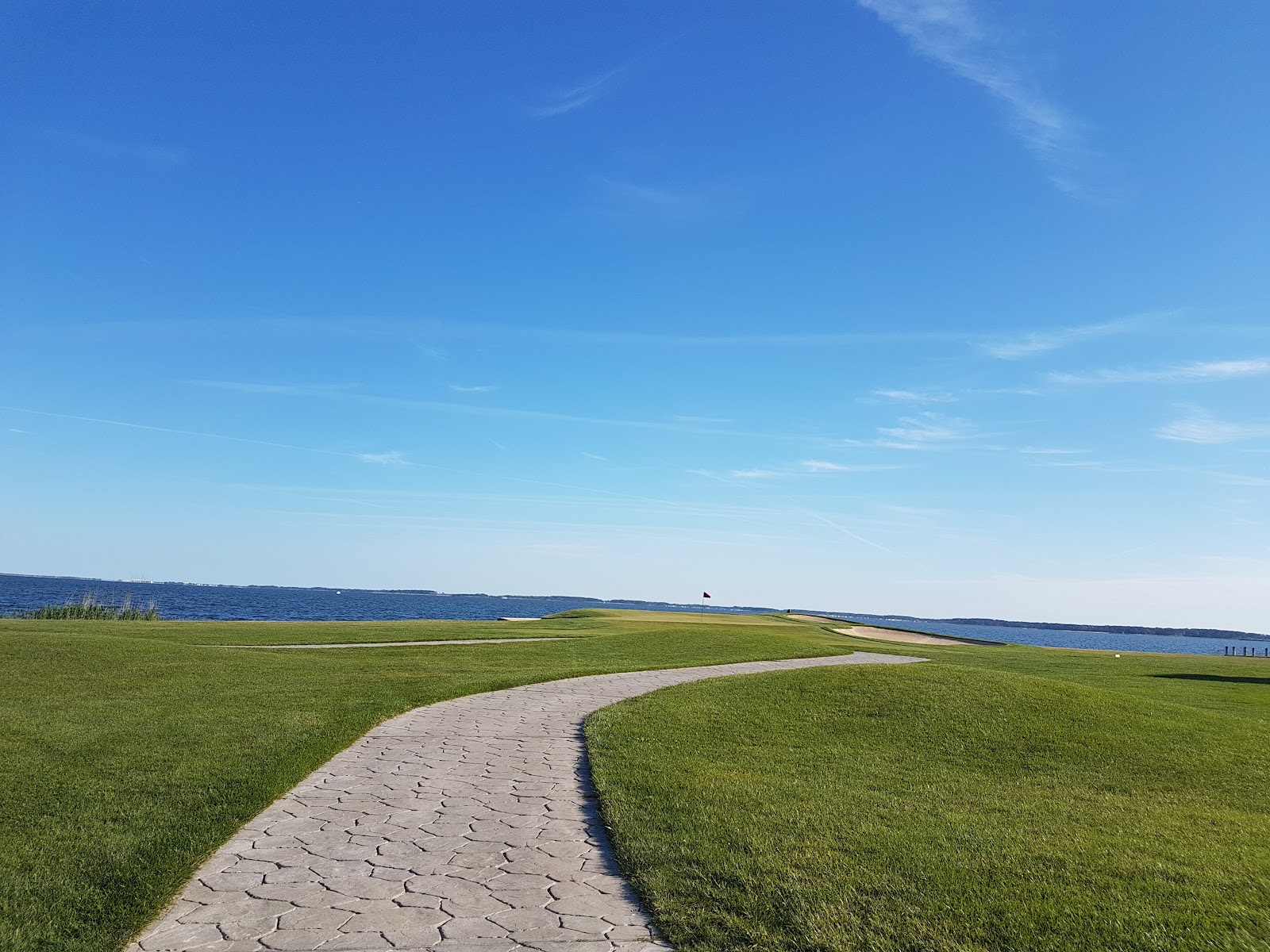
The middle of the day is high sun and on a coastal property it has one saving feature: the ground reflects. Open mown ground, pale sandy soil and any nearby water all throw light upward, which fills exactly the shadows that a high sun carves under eyes and chins. That makes midday on a coastal course better than midday inland, though not good.
It has a cost, which is uplight under the chin and into the nostrils, and the correction is to have something solid on one side — a treeline, a wall, a structure — which restores a downward-and-sideways balance. The diagnosis is simply to look at the chin in the first frame.
The breeze is the other midday condition and it builds rather than arriving. The temperature difference between land and water drives an onshore flow that strengthens through the morning and peaks in the afternoon, which means a still nine o’clock becomes a blustery three o’clock on most summer days.
That matters practically. A lightstand becomes a liability rather than a tool, a veil will not behave, a held diffusion panel becomes a sail, and hair needs managing — so the source goes in a hand or on a bracket, and positions on the lee side of a building or treeline are worth walking to. It also means the still-water frames, if there is any water on the property, belong to the morning and the evening rather than the afternoon.
Late afternoon, and the evening
The late afternoon is the best light of a coastal day and the reason is the haze. Moisture that has evaporated over the water through the day sits in the air near the coast, and low sun through it behaves like low sun through a diffusion panel — the edges soften, the contrast drops, the colour warms, and faces are lit without the hard shadows that the same sun angle gives inland.
That is a real and specific advantage of a coastal venue, and it means the good window is longer here than inland. Where an inland site has a sharp forty minutes of golden light, a coastal one has a softer ninety, and the last of it is the best.
Mown open ground is the surface that benefits most. Low sun across grass picks up every blade and every mowing line, which turns the same flat green field that looked like nothing at midday into a textured directional surface. The mowing lines are strong graphic elements and they either lead into a frame deliberately or cut across it distractingly — which depends entirely on where the camera stands, so it is worth two steps either way to check.
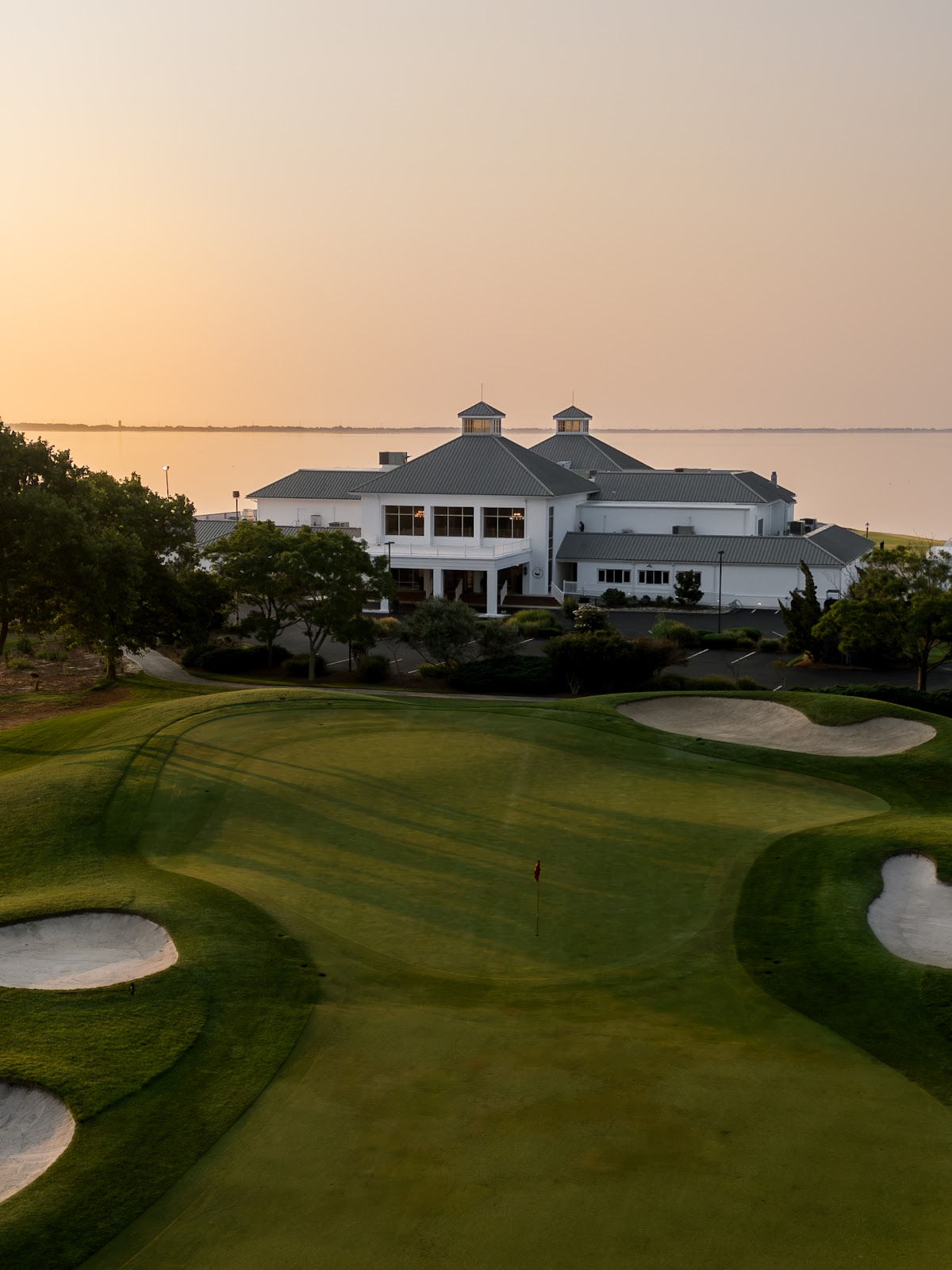
Deliberate planting is the other asset. A club has trees placed as screens and hazards rather than scattered, which means discrete dense stands — and a dense stand is the darkest natural background available, separating a subject by three or four stops with no equipment. A couple in lit mown grass with a dark treeline behind is the frame the property gives.
That carries one exposure trap: a meter looking at a dark treeline tries to lift it towards mid-grey, overexposing everything else by two stops. The background must be allowed to stay dark, which means metering on the faces and working in manual.
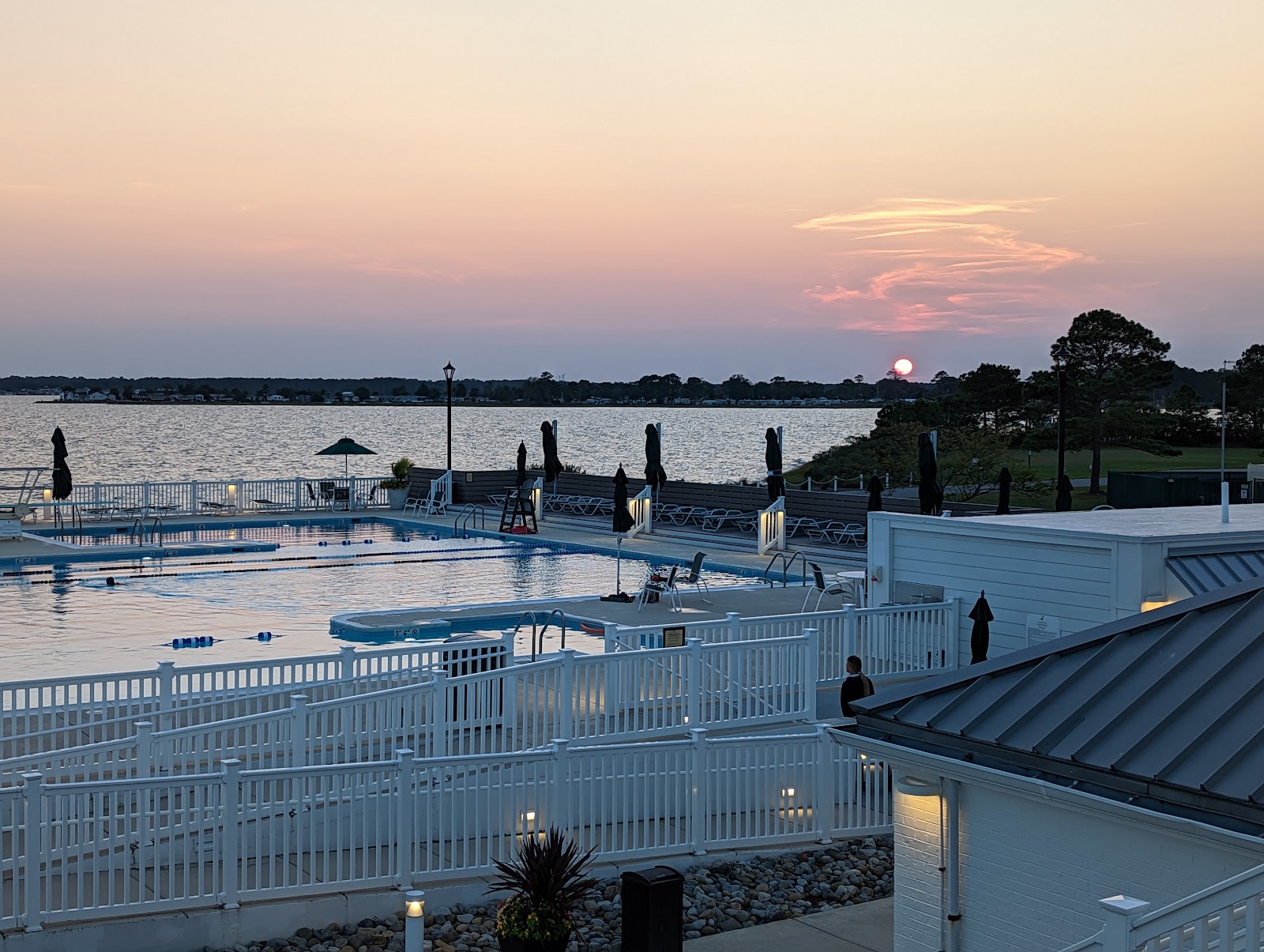
The evening brings two things the coast gives and inland does not. The breeze drops as the land cools and the temperature difference reverses, which means any water on the property goes still — so the mirror frames, where a low camera across a calm surface reflects sky and whatever stands beyond, belong to the last hour rather than the afternoon.
And the crossing is the timed frame: twenty-five to forty minutes after sunset, when the sky still holds colour at about the brightness of the clubhouse lighting, so one exposure holds couple, building and sky. Near the coast that window is frequently better than inland, because the moisture in the air holds and spreads the colour rather than letting it drain quickly.
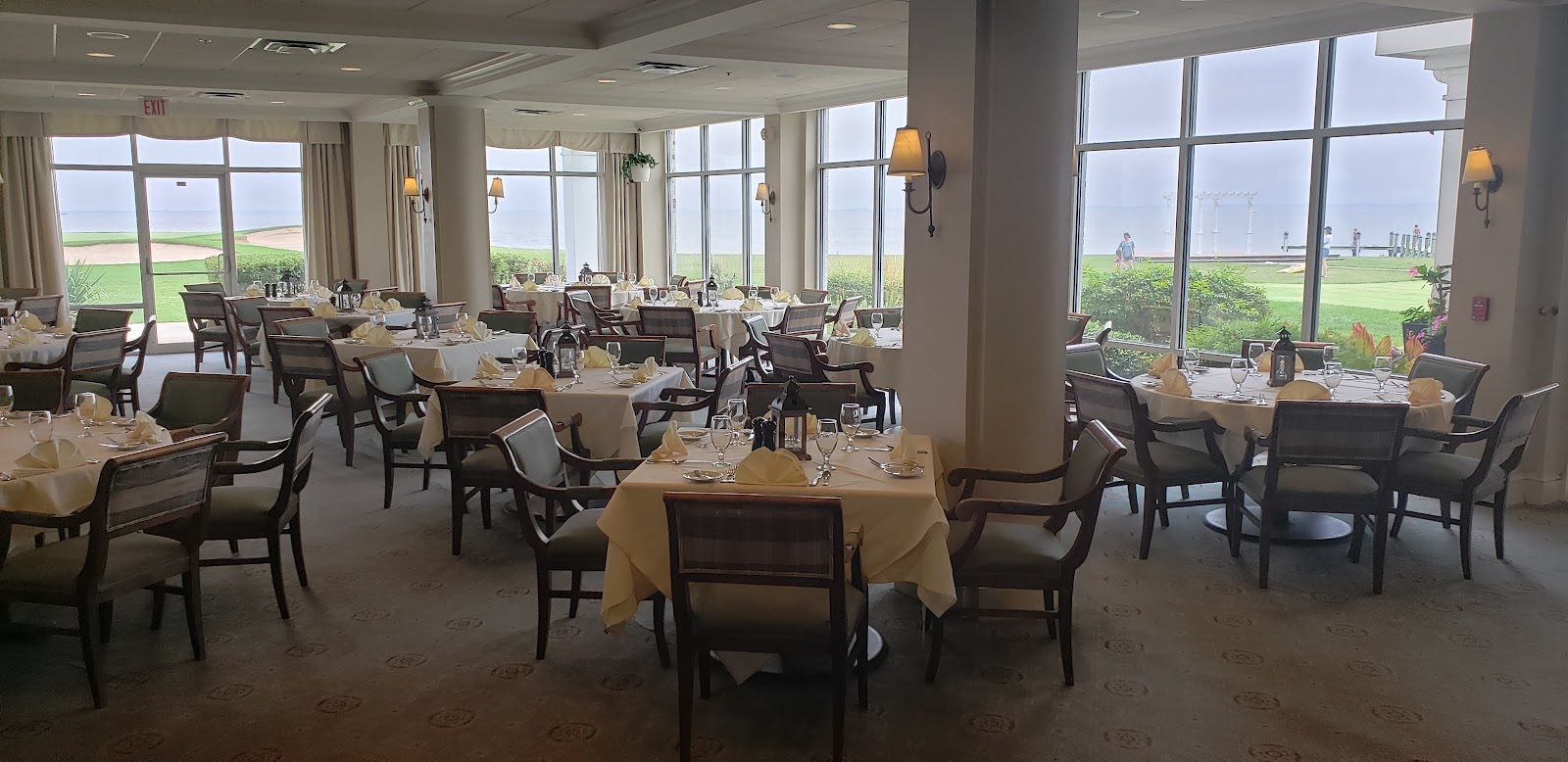
Inside, the clubhouse is warm and traditionally furnished in most cases, which means the surfaces absorb and the room sits a stop or two below a pale one with the same fittings — measure it rather than estimating. Ceilings are usually normal, so bounce works, which is worth one test frame. And warm bounce from timber and furnishing arrives on the shadow side of a face from several directions at once, which one warm-gelled source with white balance set to the gel handles and a global correction does not.
- Ten minutes on arrival finds which shade is genuinely full
- Check the chin at midday; open coastal ground overfills from below
- The breeze builds through the day and drops in the evening
- Work in manual; a dark treeline makes a meter overexpose by two stops
- Save the still-water frames for the last hour, when the breeze drops
The coast, and the Delaware year
Salt is what a coastal venue does to equipment and it deserves plain statement, because the damage is cumulative rather than immediate. Airborne salt settles on a front element and on exposed metal, attracts moisture and etches coatings over time — so a damp cloth on the front element and the body at the end of the day is routine rather than optional, and lens changes should be minimised in wind.
Sea fog is the coast’s distinctive seasonal condition and it runs on a lag that catches people out. Ocean water warms and cools far more slowly than land, which means the sea is coldest in spring — so warm spring air moving over cold water condenses, and late spring is the foggiest season here rather than autumn.
Fog is not a loss. It is diffusion at landscape scale, it separates successive treelines into grey layers, and it makes a frame no clear morning gives. It also erases the horizon, which on open ground turns the background into a plain field of tone.
The same lag makes September the best month on this coast. The water is at its warmest, the air is clear, the summer crowds have gone, and sunset falls at a civilised hour. September into early October is the ideal window for a coastal wedding here, and it is worth saying plainly.
Summer is hot and humid, and the humidity rather than the heat is the photographic fact: moist air softens shadows and slightly flattens distance, which is a gift for faces. The fogging problem is the equipment issue — a body carried from an air-conditioned clubhouse into July air fogs on every surface at once and does not clear quickly, so a bag opened twenty minutes early is the whole fix.
Thunderstorms are a real possibility through the summer and on open ground they are a genuine hazard rather than an inconvenience, which means a named covered alternative with a known capacity, agreed at booking, is a requirement. And a storm approaching from inland over open ground is visible for a long time before it arrives, which is both a warning and a dramatic sky.
Autumn brings nor’easters, which are genuine coastal storms with sustained wind rather than mere rain, and they need the alternative used rather than debated. The compensation is that a grey autumn sky over mown ground with a dark treeline is a quietly excellent portrait condition — overcast is the best soft source there is.
Winter is cold, windy and quiet. The December midday sun at this latitude reaches only about twenty-eight degrees above the horizon, which means the whole short day is raking light rather than overhead light — and for mown ground and treelines that is exactly right. Snow is occasional rather than reliable here, and when it comes it is the best natural fill available outdoors, lifting the shadows a low sun carves while fooling a meter by about two stops.
The constraint in winter is wind chill on exposed ground, which means five minutes with coats rather than twenty without.
More frames from The Rehoboth Beach Country Club
The Rehoboth Beach Country Club wedding photography: common questions
Why is coastal light different?
Moisture evaporated over the water sits in the air near the coast, which softens low sun like a diffusion panel — so the good evening window is longer and gentler than inland.
When is the best light?
The late afternoon. Where an inland site has a sharp forty minutes of golden light, a coastal one has a softer ninety, and the last of it is the best.
Why does midday work better here than inland?
Because open mown ground, pale soil and nearby water all reflect upward, filling exactly the shadows a high sun carves. Check the chin, though — it can overfill.
What does the breeze do?
It builds through the morning and peaks in the afternoon, then drops as the land cools. So no lightstands, and save the still-water frames for the evening.
When is sea fog most likely?
Late spring. The ocean is coldest then, so warm air over cold water condenses — which makes spring foggier than autumn on this coast.
What is the best month?
September into early October: the water is warmest, the air clear, the crowds gone and sunset at a civilised hour.
More Delaware venue guides
We are writing a photographer’s guide to every venue we would happily shoot in Delaware. Here are three more, plus the full index:
- Rockwood Park, Wilmington: The One Decision That Governs Everything
- The Rusty Rudder, Dewey Beach: The One Decision That Governs Everything
- The Salt Air, Rehoboth Beach: One Frame, and How It Is Made
Planning a wedding at The Rehoboth Beach Country Club?
A coastal day has its own shape. Tell us your date and we will follow it.