 The Blue Ball Barn, Wilmington: A Walk Through a Converted Barn
The Rusty Rudder, Dewey Beach: The One Decision That Governs Everything
Two shorelines, five minutes apart, facing opposite ways. Choosing between them is the whole plan.
Dewey Beach is built on a narrow strip of land with the Atlantic on one side and Rehoboth Bay on the other, and in places the distance between the two is only a few hundred metres.
That produces a photographic situation available almost nowhere else on the American coast: two shorelines, facing opposite directions, within a five-minute walk. Sunrise comes out of the ocean to the east. Sunset goes down over the bay to the west. Both from the same venue, on the same day.
It also means the two are completely different water. The ocean is surf, spray, wind and a hard horizon; the bay is shallow, sheltered, calm and reflective. They light differently, they photograph differently, and they suit different frames — so the governing decision is which water the day belongs to, and the answer is usually both but at specific times.
Getting that wrong wastes the one thing this location has that others do not. We have not photographed a wedding at the Rusty Rudder; the geography is a matter of a map and the light follows from it. Which areas are included, whether both shorelines are accessible and what the covered alternative is are questions for their team.
The Rusty Rudder at a glance
| Where | Dewey Beach, Delaware, between ocean and bay |
| The geography | Two shorelines facing opposite ways, minutes apart |
| Ocean, east | Sunrise, surf, wind, a hard horizon, strong sand reflection |
| Bay, west | Sunset, calm water, mirror reflections, shelter |
| Ask first | Access to both shorelines, areas included, covered alternative |
The ocean side, and the bay side
The ocean side faces east, which means its own light happens at dawn. At sunrise the beach is frontlit, the sand has texture, the water has colour, the sun comes out of the water rather than from behind anything — and the beach is empty, which in a resort town is true at no other hour.
Through the middle of the day the ocean side gives sidelight, which is the best beach light: with the sun south of the beach’s axis, one side of a face is lit and the other is filled by the sand, which reflects strongly upward. That fill is the single most useful fact about beach light and it is why a beach needs less equipment than a field. Its cost is uplight under the chin, corrected by having something solid on one side — a dune, a wall, a shelter.
By the evening the ocean side is in shadow with the sun behind the town, which gives silver water, rim-lit hair and a bright foreground. That works, but it is not what the evening should be spent on, because the other shoreline is doing something better.
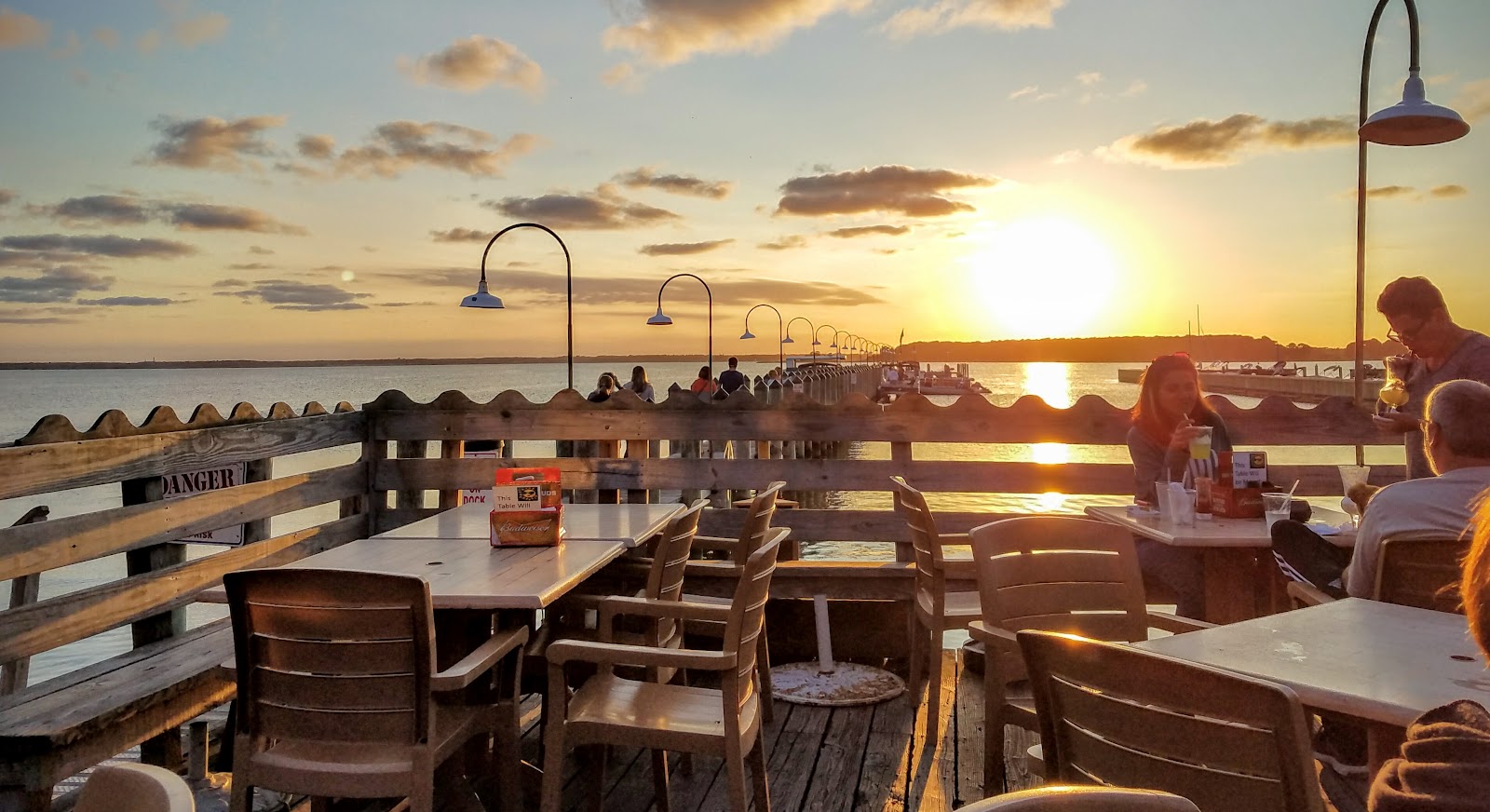
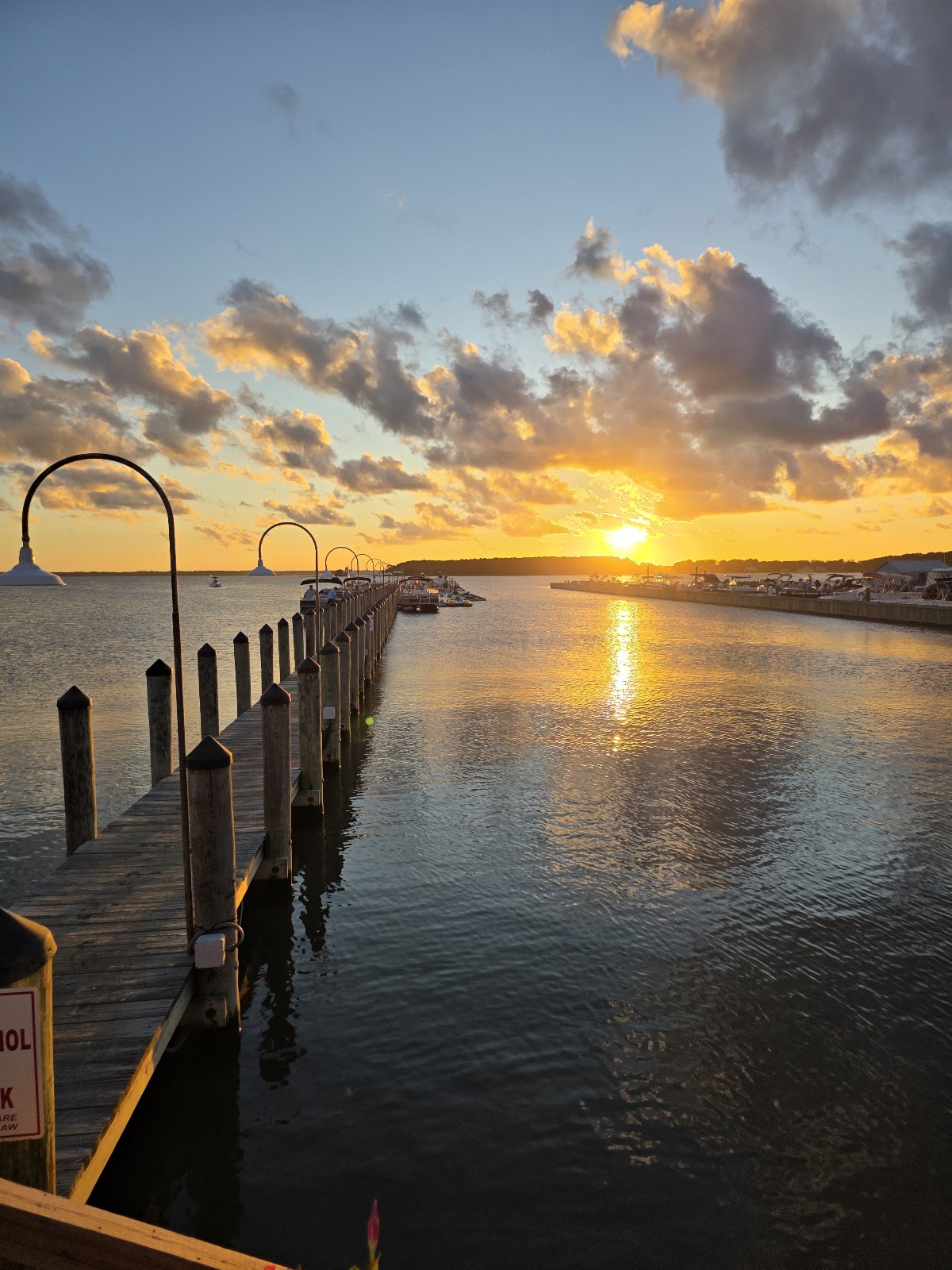
The bay side faces west and it is the evening venue. Shallow, sheltered water goes calm as the land cools and the onshore breeze drops, which means the bay becomes a mirror at exactly the hour the sun is setting into it. A low camera across still water reflecting a sunset sky, with a couple standing in it, is the frame this location exists to give.
Camera height is the governing variable on the bay, as with any water: low across the surface sees a mirror, high looking down sees through to the bottom — and a shallow bay is transparent, so a high camera sees mud and weed rather than sky. Half a metre of camera height is the whole difference, and low is the answer here.
The bay’s other properties follow from its shallowness. It is warmer than the ocean, which matters for comfort. It is calmer, which means a veil behaves and a reflection holds. And it is browner — shallow bay water carries sediment, which means it reflects well and looks poor when photographed through, reinforcing the low camera position.
So the working division is simple: the ocean at dawn and through the middle hours, the bay in the last hour and after sunset. And the twenty-five to forty minutes after sunset belong to the bay without question, because the sky holds colour in the west and the water doubles it.
There is one frame that uses both and it is worth knowing about: standing on the strip with the ocean behind and the bay in front, or vice versa, in the ten minutes after sunset when the western sky is warm and the eastern sky has gone deep blue. Two colours of sky in one location is a genuinely unusual thing and it takes a short walk rather than a drive.
What follows from the decision
Once the two shorelines are allocated, the rest of the day organises itself and the interior becomes the filler rather than the frame.
That is the right way round here. The buildings on a barrier strip are working resort buildings — timber, functional, built for weather and volume — which means their interiors are serviceable rather than beautiful, with limited windows, high or exposed ceilings, and industrial or functional fittings.
The conditions follow. The ambient is low, so measure it rather than estimating. Bounce depends on the ceiling: exposed structure or a dark one returns little, while a lower panelled ceiling works — one test frame settles it. And the fittings will be mixed, so pick the temperature that should be correct, set white balance to it, and let one gelled source own the faces where it matters.
Where a building has a deck or a covered outdoor space, that is the best of it — a roof with an open face removes the overhead component that ruins faces while the boards bounce light back to fill, which makes a soft directional source at the scale of two people, available at any hour and in rain. On a barrier strip a deck frequently faces one of the two waters, which makes it a viewing platform as well.
Wind is the condition that governs everything outdoors here, and on a narrow strip between two bodies of water it comes from both directions and there is very little to break it. A lightstand is a liability rather than a tool, a veil will not behave, a held diffusion panel is a sail, and anything unweighted will move. A source in a hand or on a bracket is the only workable configuration.
The bay side is the sheltered one relative to a sea breeze, which is worth knowing: when the onshore wind is up, the bay shore in the lee of the strip is the calm option, and it is where a veil and a reflection both survive.
Salt is what both waters do to equipment. Airborne salt settles on a front element and on exposed metal, attracts moisture and etches coatings over time — cumulative rather than immediate, and prevented by a damp cloth at the end of the day. Sand is worse in the short term, because a grain on a sensor or in a zoom barrel is a repair rather than a clean, which means minimal lens changes and everything bagged between positions.
And a polariser is the one filter that earns its place on either shoreline: water in sun produces specular highlights several stops above everything else, which clip completely and fool any metering system, and a polariser cuts that substantially while deepening the sky. Its two-stop cost is irrelevant in this much light.
- Ocean at dawn and midday; bay in the last hour and after sunset
- Camera low on the bay — shallow water is transparent from above
- The after-sunset crossing belongs to the bay, without question
- Use the bay shore as the lee side when the sea breeze is up
- Carry a polariser; specular glare clips and fools the meter
The two waters through the year
The two shorelines have different seasons, which is the last thing worth knowing about this geography.
The ocean runs on a thermal lag. Sea water warms and cools far more slowly than land, which means the Atlantic here is coldest in spring and warmest in September — and that drives two photographic consequences. Late spring is the foggiest season on the ocean side, because warm air moving over cold water condenses; and September is the clearest and most comfortable, which makes it the best month of the year on this coast.
Sea fog is not a loss. It erases the horizon completely, which turns the ocean and sky into one plain field of tone and leaves a couple as the only thing in the frame with edges — a striking and unusual version of the beach picture, and easier to expose than the clear one because the brightness range collapses.
The bay runs on a shorter lag because it is shallow, which means it warms quickly in spring and cools quickly in autumn, and it is more likely to be genuinely calm in the shoulder seasons when the temperature difference driving the breeze is smaller. For the mirror frames, a still May or October evening on the bay is better than a breezy July one.
Summer is hot and humid with the resort crowds at their peak, and on a narrow strip the crowds are concentrated. The ocean beach is populated by mid-morning and crowded by midday, which means first light or long lenses; the bay side is generally quieter, which is another argument for the allocation above. The humidity makes fogging severe: a body carried from air conditioning into July air fogs on every surface at once and does not clear quickly, so a bag opened twenty minutes early is the whole fix.
Autumn brings nor’easters, which are genuine coastal storms with sustained wind and heavy surf rather than mere rain. On a barrier strip that is a serious weather event rather than an inconvenience, and it means a named covered alternative with a known capacity, agreed at booking, is a requirement. Heavy surf under a grey sky is also the most dramatic frame this coast produces, from a safe distance.
Winter is cold, windy and empty, and the emptiness is the photographic point: both shorelines are unpopulated, and at this latitude — about thirty-nine degrees north — the December midday sun reaches only about twenty-eight degrees above the horizon, which makes the whole short day raking light. The sand has texture at any hour and the bay holds colour all afternoon.
The cost is wind chill on a strip exposed from both sides, which is a genuine welfare consideration rather than a matter of preference: five minutes with coats rather than twenty without, and a warm interior to return to between excursions.
And the practical advantage of winter on this particular geography is that both timed frames — sunrise over the ocean and sunset over the bay — fall at civilised hours rather than before six in the morning and after eight at night.

More frames from The Rusty Rudder
The Rusty Rudder wedding photography: common questions
What is unusual about Dewey Beach?
It is a narrow strip with the Atlantic on one side and Rehoboth Bay on the other, sometimes only a few hundred metres apart — two shorelines facing opposite ways.
How should the two be allocated?
The ocean at dawn and through the middle hours, the bay in the last hour and after sunset. The crossing belongs to the bay without question.
Why must the camera be low on the bay?
Because shallow bay water is transparent from above — a high camera sees mud and weed, while a low one across the surface sees a mirror.
What is the best beach light on the ocean side?
Sidelight in the middle hours, when the sun is south of the beach’s axis: one side of a face is lit and the other is filled by the sand.
What does the wind do here?
It comes from both directions with nothing to break it. No lightstands, a veil that will not behave — and the bay shore is the lee side when the sea breeze is up.
Which season suits the mirror frames?
The shoulder seasons. A still May or October evening on the bay is calmer than a breezy July one, because the temperature difference driving the breeze is smaller.
More Delaware venue guides
We are writing a photographer’s guide to every venue we would happily shoot in Delaware. Here are three more, plus the full index:
- The Salt Air, Rehoboth Beach: One Frame, and How It Is Made
- The Starboard, Dewey Beach: A Venue Built for the Season
- Baywood Greens, Long Neck: The Venue’s Own Logic
Planning a wedding at The Rusty Rudder?
Two shorelines, one schedule. Tell us your date and we will allocate them.