 The Henry Clay: Lighting a 1920s Lodge Building
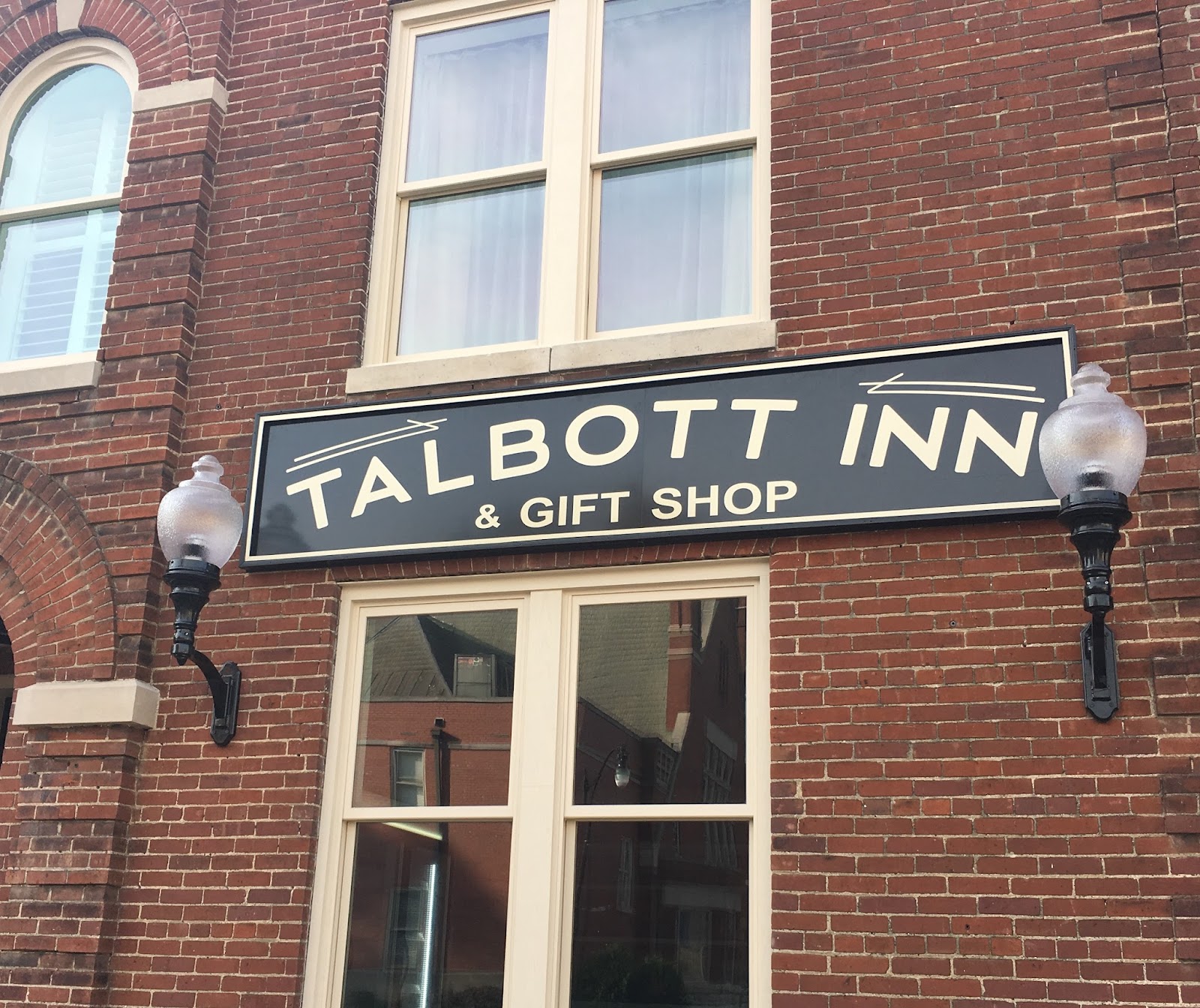
The Old Talbott Tavern, Bardstown: A Walk Through a Stone Inn
Thick walls, small windows and low ceilings. Every one of those changes what a photographer should do.
A stone inn of real age is built to a set of constraints that no modern building shares, and each of them changes a photographic decision.
The walls are thick, because stone is what held the building up before steel — which means the windows sit at the bottom of deep reveals rather than flush with the wall. The windows are small, because glass was expensive and heat mattered more than view. The ceilings are low, because low rooms were cheaper to heat. And the rooms are small, because that is how a building of this age is divided.
Every one of those is an advantage once it is understood. A deep reveal is a naturally shaded directional source. A low ceiling is a very large softbox when a flash is aimed at it. A small room has near walls that bounce. And small rooms mean doorways, which are the best camera positions in any old building.
The only genuine difficulty is that there is not much light, and it is concentrated in specific places rather than spread about.
This is the walk through, in order. We have not photographed a wedding at the Old Talbott Tavern; old stone inns behave consistently. Which rooms are included, what may be attached to historic fabric, and whether the lighting is adjustable are questions for their team.
The Old Talbott Tavern at a glance
| Where | Bardstown, Kentucky |
| The constraints | Thick walls, small windows, low ceilings, small rooms |
| Why they help | Deep reveals, working bounce, near walls, and useful doorways |
| The difficulty | Not much light, concentrated rather than spread |
| Ask first | Rooms included, fixings on historic fabric, lighting control |
The public rooms, and the deep reveals
The ground-floor public rooms come first because that is where a day starts and ends, and they have one asset worth finding before anything else: the window reveals.
A window set in a wall two or three feet thick sits at the bottom of a shaft, and that shaft does two things. It shades the glass from direct sun for most of the day, which means the window is a soft source rather than a hard one regardless of the hour. And it restricts the light to a narrow band, which is direction — the thing that most interior light lacks.
The reveal’s own surfaces bounce too, from the sides, which fills the shadow side of a face without any reflector. The one variable is how far in to stand: right at the reveal the light is strong and very directional; a metre back it is softer and broader. One test frame at each settles it, and the position is worth marking because the day will come back to it.
Low ceilings are the second asset and they are the one photographers arriving from grand venues most underuse. A ceiling under three metres is a very large soft source when a flash is aimed at it, which means bounce works properly here — a bounced source needs no stand, follows a walking pace and lights a small room evenly. One test frame confirms it, and the caveat is that dark beams absorb, so a bounce into the plaster between them works better than one into the timber itself.
Those beams are a subject in their own right and they need raking light: a source pointed at a beamed ceiling flattens it, while light running along the beams separates each one.
Stone is the third condition and it depends on the stone. Pale limestone — which is the regional material in this part of Kentucky, and the reason distilling happens here, since the limestone aquifer gives iron-free water — is warm and reflective, which makes an interior stone wall a warm secondary source near a window rather than just a background. A darker stone absorbs instead. One look and one test frame tells you which you have.
Where the stone is pale and warm, the colour needs handling rather than correcting: a custom white balance set on a face in the position being used, or an added source gelled warm with white balance set to that gel. A global correction turns skin grey and the stone the colour of cement.
Low ambient is the standing difficulty and it should be measured rather than estimated, because eyes adapt and meters do not. An old inn with small windows and dark timber is a stop or two below a pale modern room with the same fittings, and the number on arrival will be lower than the impression.
The stair, the guest rooms, and the street
The stair is the best single architectural feature in a building of this age and type. It gives elevation, so a photographer above sees faces rather than the backs of heads; a natural line for a descent, which is one of the few genuinely dramatic movements a day contains; and a vertical composition with a worn handrail and treads.
It wants light from one side, ideally a landing window or a reveal, because overhead light on a stair shadows every eye socket at once. In an old inn the stair is frequently narrow and enclosed, which means the light has to be brought — one source held low and to one side, gelled warm, with the exposure set so the timber still reads as timber rather than being lifted to grey.
The guest rooms are the second zone and in an old inn they are small, low-ceilinged and windowed, which is the easiest lighting environment in existence for the reasons above: a domestic window at the right size, near walls bouncing, and a ceiling low enough to bounce off.
The requests are the ordinary ones. Largest window on the shaded side, every overhead fitting off so the room has one colour of light, lamps out of frame, and two to three metres back from the glass — which in a small room may be as far back as the room allows, in which case the doorway is the camera position.
That doorway habit is the thing worth carrying through the whole building. Standing in a doorway gains two or three metres at no cost, which is the difference between a wide lens distorting a face at two metres and a moderate lens at four, and it frames the subject with the doorway darkening the edges. In a building of small connected rooms, shooting through rather than into gives two or three planes of depth and reads as a building rather than as a wall.
Legibility is the other small-room discipline and it is not optional. A grand space hides clutter in its own scale and a small one does not, so the habit is to look at the four edges of the frame before the exposure rather than at the centre.
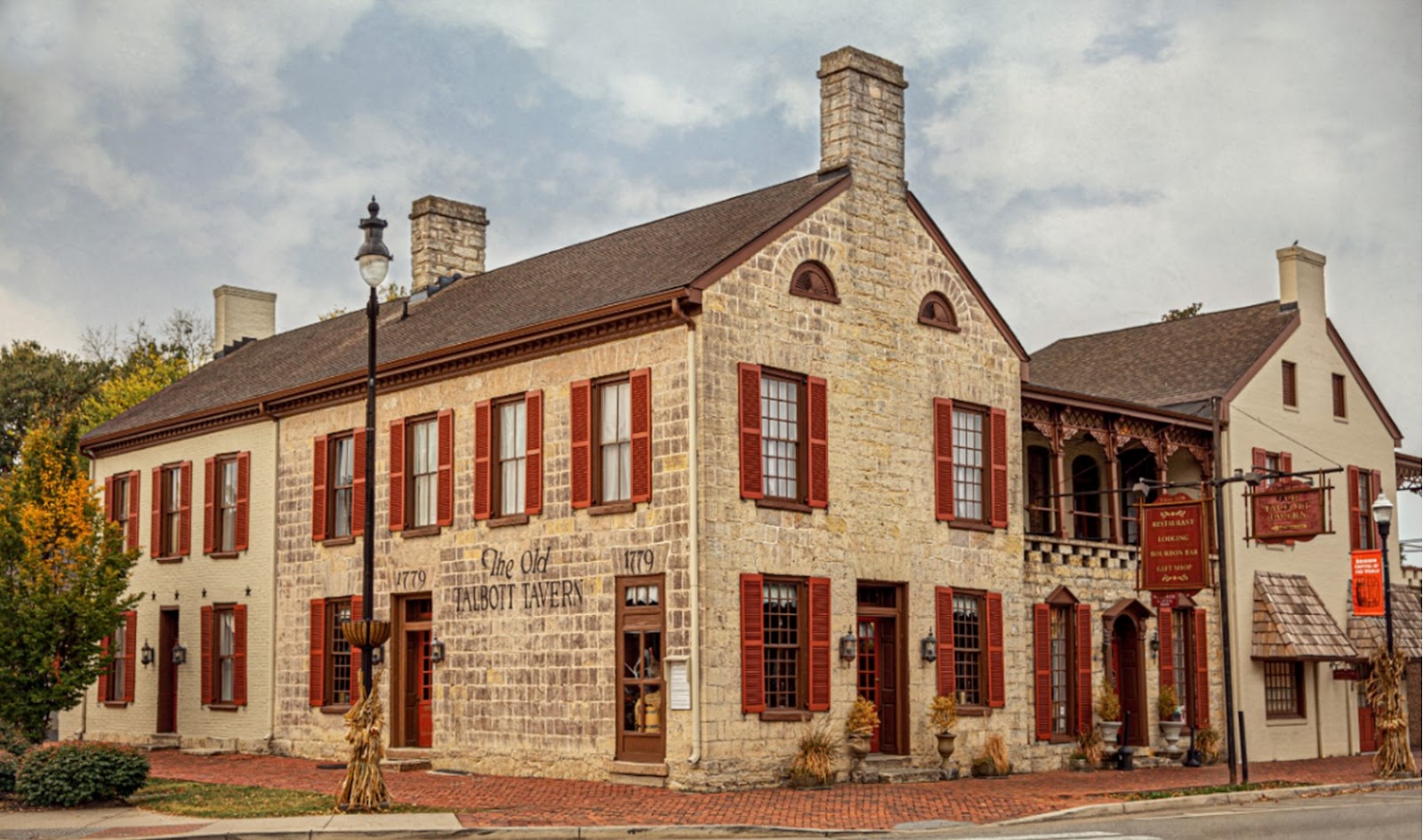
The street is the third zone and in a small Kentucky town it gives what a city cannot: room to stand back. The inn can be photographed whole, which is worth one frame, and the detail frames are worth more — stone, brick, joinery and painted signage all read only under raking light, so a short walk to find which elevation the sun is skimming is worth more than any accessory.
The timed frame is the crossing: twenty-five to forty minutes after sunset, when the sky still holds colour at about the brightness of the building’s own lighting and its lit windows read from outside, so one exposure holds couple, building and sky. Since the interior does not change through the day, taking ten minutes for it costs nothing indoors — and for an old inn with warm lit windows against a deep sky, it is the strongest exterior frame available.
- Find the deep reveals first; they are shaded and directional at any hour
- Test bounce into the plaster between beams, not into the timber
- Light a stair from one side and low; overhead shadows every eye socket
- Work from doorways and shoot through rooms rather than into them
- Look at the four edges before exposing; a small room hides nothing
Outside, and the Kentucky year
Outside, this is rolling Kentucky country — pasture, dense deciduous woodland, and limestone underneath. Pale limestone is the regional material and it behaves as a reflector rather than a background: a couple standing in shade three or four metres out from a sunlit limestone wall, facing it, is lit by a source the size of that wall, soft and warm and free.
That needs a custom white balance set on a face in position, because limestone bounce is markedly warmer than daylight and a daylight setting renders it orange.
The shade rule applies as everywhere and it is absolute in this climate: full shade under a dense crown is excellent, while dappled light through a thin one puts bright patches and deep shadow on the same face at a ratio nothing holds. At about thirty-eight degrees north, with a June midday sun around seventy-five degrees above the horizon and humid haze that does nothing to soften it, the difference is severe rather than merely awkward.
The seasons are a humid transition between continental and subtropical. Summer is hot and genuinely humid, and the humidity rather than the heat is the photographic fact: moist air scatters light, which softens shadows and slightly flattens the rolling distance — a gift for faces and a mild nuisance for a long view.
The fogging problem is severe and an old stone building makes it interesting. Thick stone walls keep an interior markedly cooler than the outside air in summer even without air conditioning, which means a body carried from inside to out in July fogs on every surface at once and does not clear quickly in that humidity. A bag opened twenty minutes before going out is the whole fix, and at a venue whose one unmovable frame is a timed crossing, a fogged lens means missing it.
Severe afternoon thunderstorms are a real possibility from late spring onward, which at a building with full interiors costs a decision rather than a picture. Wet stone photographs better than dry too — it darkens and saturates — and wet pavement reflecting warm lit windows is a better frame than the dry version, so a shower is an opportunity delayed rather than a day lost.
Autumn is the best season overall: colour in this rolling wooded country usually peaks from late October into early November, the humidity drops, and the air clears so the surrounding country holds detail. Morning fog is frequent, and fog is diffusion at landscape scale — it separates treelines into grey layers and gives a frame no clear morning does.
Winter is mild by northern standards, with frost rather than deep freeze, and it is quietly the best season for a building like this. The December midday sun at about twenty-eight degrees above the horizon comes into deep window reveals at a low angle rather than from overhead, which means those reveals are directional and usable through the whole short day instead of for a couple of hours — and in a building whose main problem is small windows, that is a real gain.
Darkness also arrives in the middle of the afternoon, which means the crossing frame with the building’s warm lit windows happens at a civilised hour rather than late in the evening. For an old inn that is the strongest argument for a winter date.
More frames from The Old Talbott Tavern
The Old Talbott Tavern wedding photography: common questions
Why are thick walls an advantage?
Because the windows sit in deep reveals, which shade the glass from direct sun and restrict the light to a narrow directional band — a soft source built into the architecture.
Does bounce flash work in an old inn?
Usually yes, and better than in a grand venue. A ceiling under three metres is a very large softbox — though bounce into the plaster between beams rather than the timber.
How should a narrow stair be lit?
One source held low and to one side, gelled warm, with the exposure set so the timber still reads as timber. Overhead light shadows every eye socket.
Where should the camera stand in small rooms?
In the doorway. It gains two or three metres at no cost and lets you shoot through rooms, which gives depth and reads as a building rather than a wall.
Is limestone a background or a light?
A light. Pale limestone is warm and reflective, so a sunlit wall is a source the size of the wall — with a custom white balance set on a face in position.
Why is winter the best season here?
A December sun comes into deep reveals at a low angle all day, and darkness arrives mid-afternoon, so the warm-lit-window crossing frame happens at a civilised hour.
More Bardstown, KY venue guides
We are writing a photographer’s guide to every venue we would happily shoot in Bardstown, KY. Here are three more, plus the full index:
- The Bardstown Bourbon Company: One Frame, and How It Is Made
- The Heaven Hill Distillery, Bardstown: What It Suits, and What It Does Not
- My Old Kentucky Home, Bardstown: The One Decision That Governs Everything
Planning a wedding at The Old Talbott Tavern?
Old constraints, modern advantages. Tell us your date and we will walk it in order.