 The Iowa Events Center: Four Ways Out of the Blank-Hall Problem
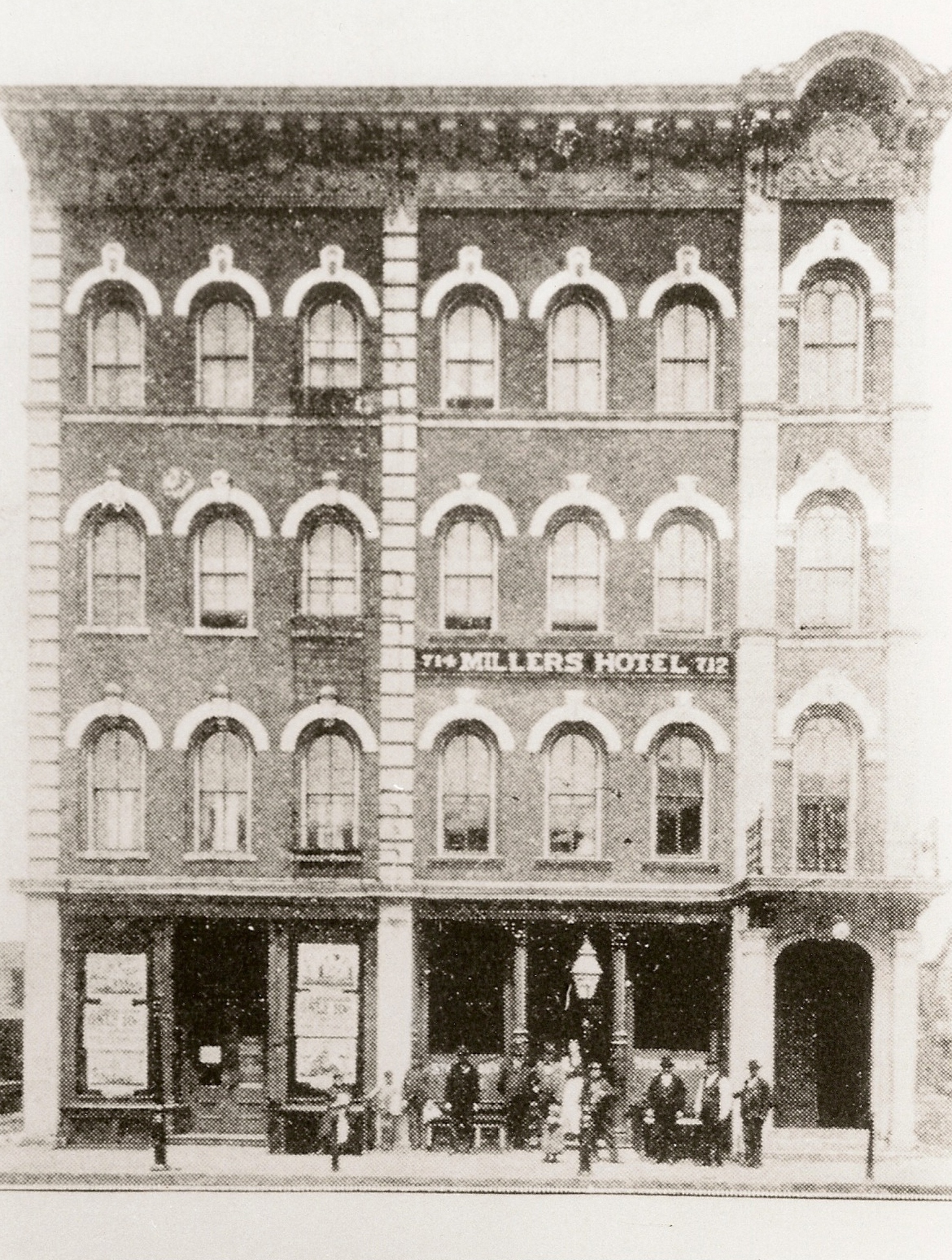
The German American Heritage Center, Davenport: Field Notes on a Brick Building
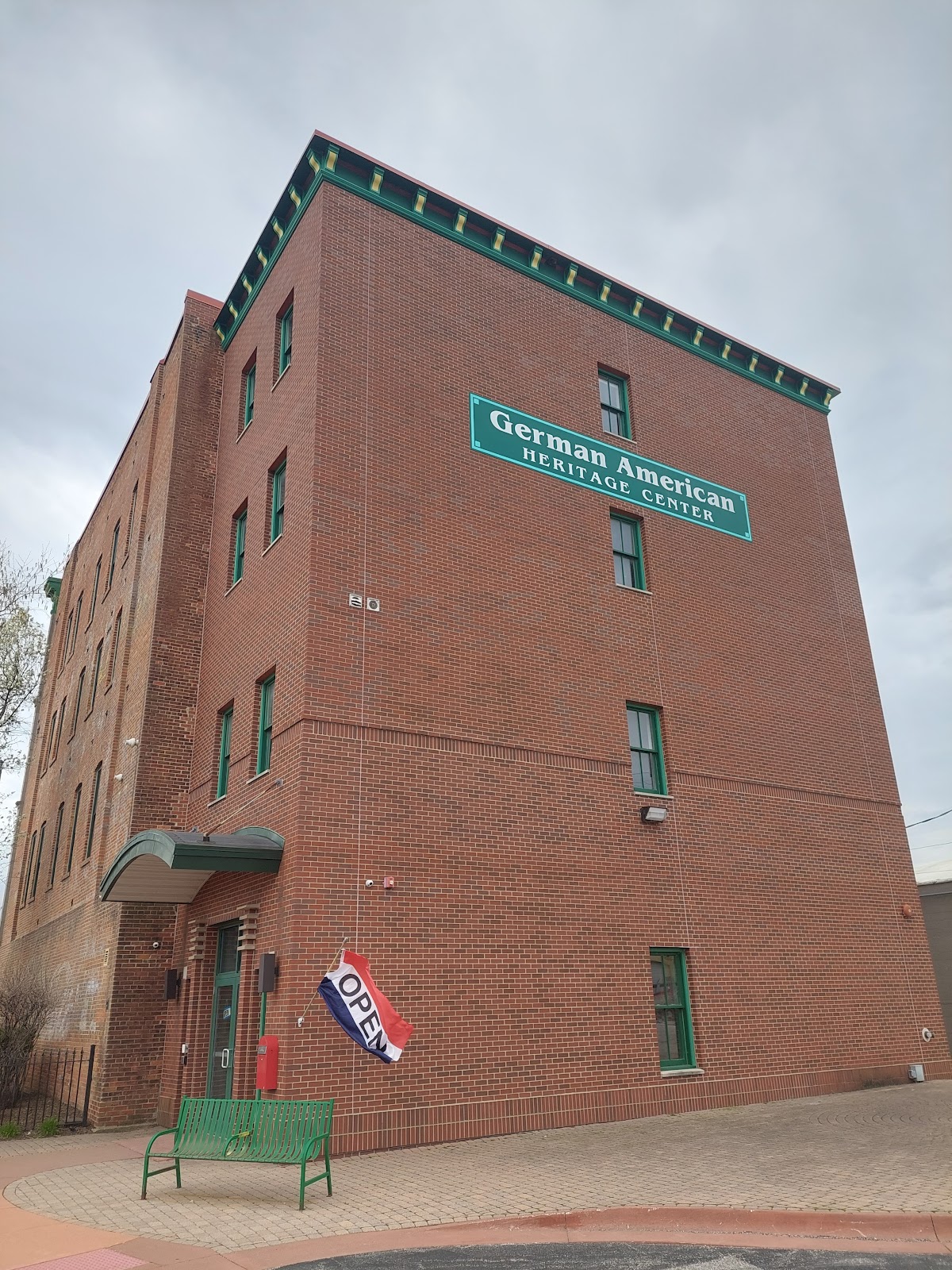
Brick is a warm mid-toned reflector. That one fact decides where every frame in this building stands.
A nineteenth-century commercial brick building repurposed as a museum gives three conditions, and the first of them is the material.
Brick is unlike the other building stones. It is mid-toned rather than dark or pale, which means it reflects a useful amount of light rather than absorbing it like fieldstone or bouncing floods of it like limestone. And it is strongly warm — a sunlit brick wall throws orange-red light onto anything standing near it, which is a genuinely useful soft source and a colour cast that global white balance cannot remove.
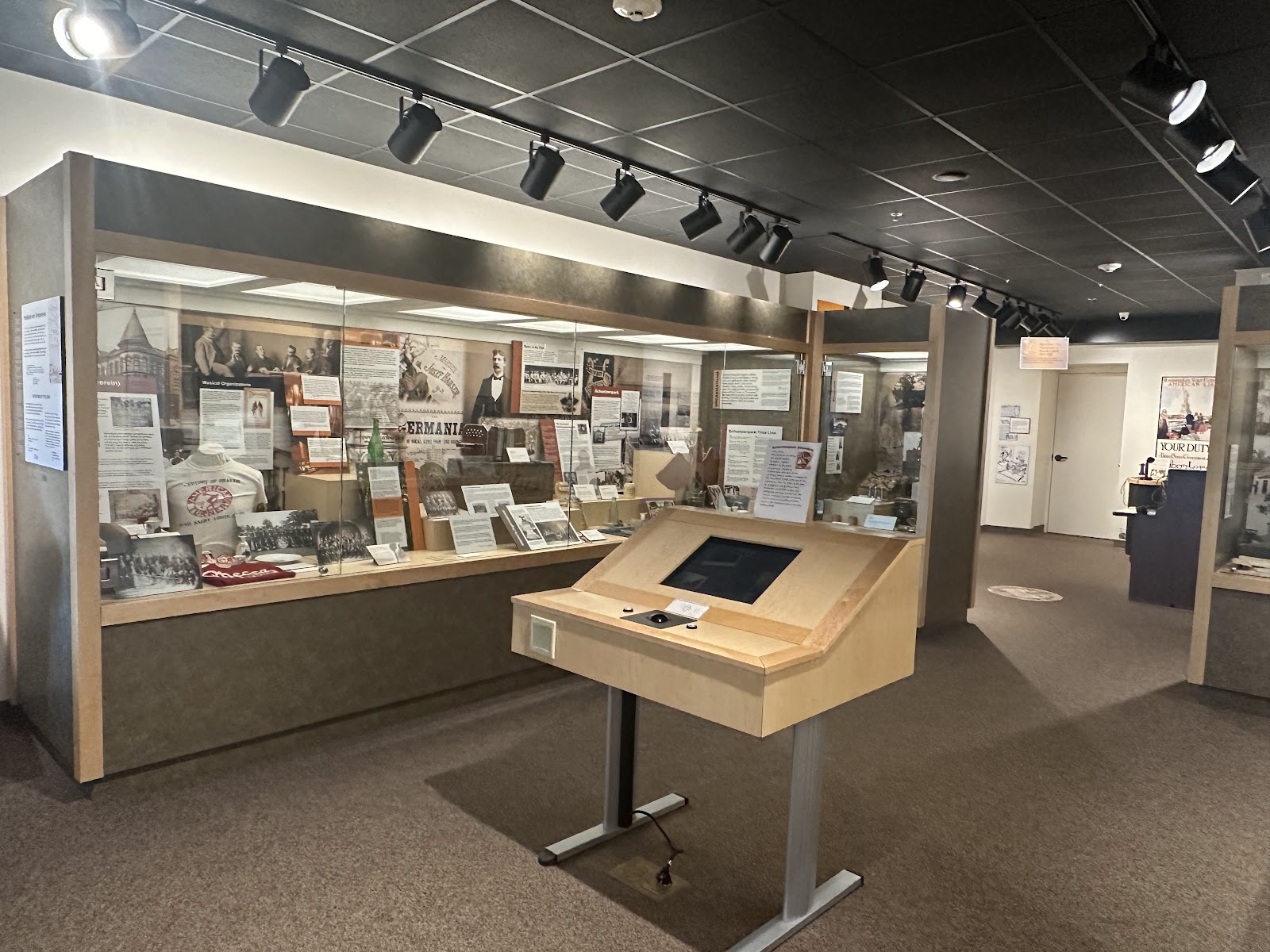
The second condition is the plan. A commercial building of this period has floor plates rather than rooms: relatively deep spaces with windows at the ends and the middle some distance from any glass. That produces steep light gradients — bright at the window, dark three metres in — and it means the good positions are specific rather than general.
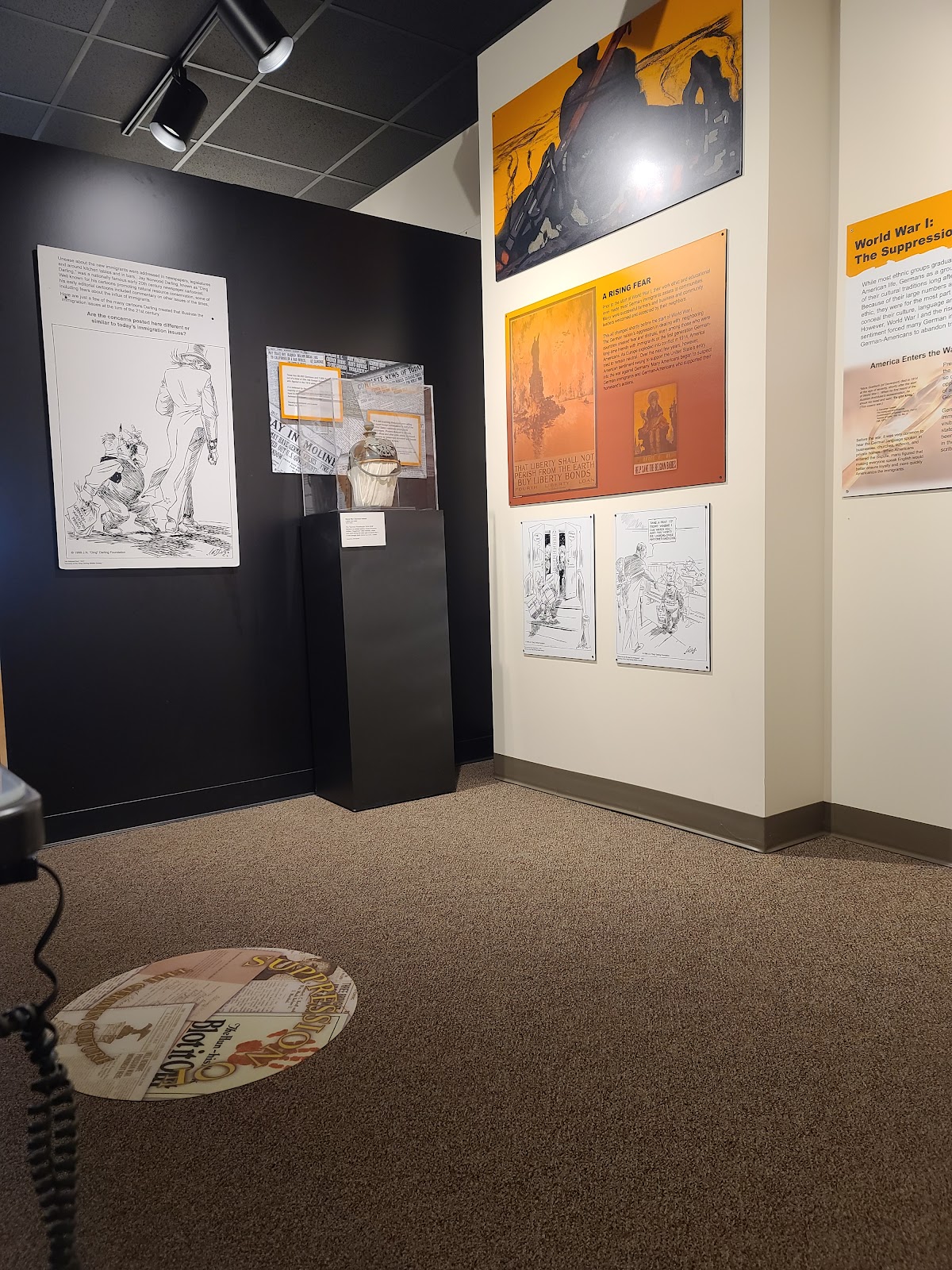
The third is the museum layer. The building now holds a collection, which means gallery lighting, display glass and rules about flash, stands and what may be moved.
These are field notes on all three. We have not photographed a wedding at the German American Heritage Center; repurposed brick buildings with collections behave consistently. Which spaces are included, the rules on flash and proximity to objects, and whether any windows are unobstructed are questions for their team.
The German American Heritage Center at a glance
| Where | Davenport, Iowa, near the Mississippi |
| The material | Brick: mid-toned, warm, and a genuinely useful reflector |
| The plan | Deep floor plates — bright at the windows, dark in the middle |
| The layer | Museum lighting, display glass and rules about flash and stands |
| Ask first | Spaces included, flash and proximity rules, which windows are clear |
What you meet, and what each one needs
Warm brick bounce is the first condition and it is worth using deliberately rather than merely receiving. A sunlit brick elevation returns a useful amount of light, which means a couple standing in shade three or four metres out from a lit brick wall, facing it, is lit by a source the size of that wall — soft because it is large, directional because it comes from one side, and warm because brick is warm.
That is a genuinely good portrait light and it costs nothing. The distance matters: closer than two metres and the fall-off across two faces becomes uneven; further than five and the open sky above takes over as the dominant source. Three to four metres is the working range.
The colour has to be handled rather than corrected. Brick bounce is markedly warmer than daylight, so a daylight setting renders it orange — and because the cast arrives from one side rather than everywhere, a global correction neutralises the lit side and throws everything else cold. A custom white balance set on a face in the position being used is the fix; where a source is added it should be gelled warm to sit near the brick’s own colour, with white balance set to that gel.
Interior brick behaves the same way in daylight, which matters in a repurposed building where the walls have been stripped back. An interior brick wall near a window is a warm secondary source, not just a background.
Texture is the compensation and it needs raking light. Brick reads as brick when light runs along it, lifting every course and every irregularity in the pointing; the same light facing it flattens the wall into a field of one colour. The elevations worth photographing are the ones the sun is skimming, and a short walk to find them is worth more than any accessory.
The deep floor plate is the second condition and it decides where to stand. A commercial building of this period has windows at the ends or along one side and depth behind them, which produces a steep gradient — bright within two metres of the glass, a stop or two down at four, and effectively dark at six.
That is not a problem so much as a map. The working positions are two to three metres from a window, which is where the light is directional and even across two faces; and the middle of the floor is where the added light has to do all the work.
The tall period window is the asset and it has an advantage over modern glazing: because it extends close to the floor, the light wraps upward as well as sideways and fills under the chin. Two requirements: every overhead and lamp fitting switched off, so the room has one colour of light rather than two landing on the same face; and the shaded side, because a window carrying direct sun becomes a hard source with a hard edge.
At Davenport’s latitude, about forty-one and a half degrees north, the midday sun reaches roughly seventy-two degrees above the horizon in June and only about twenty-five in December. So a north-facing window is shaded all year and is the most reliable, while a south-facing one is a high source in summer and a low directional one through most of a winter afternoon.
The museum layer, and the rules
The collection changes the building in three ways and all of them need establishing at booking rather than on the day.
The lighting is the first. Gallery fittings are low-output and aimed at objects, because light damages paper, textile and dyes cumulatively and irreversibly — which means the ambient is well below a normal interior and the light arrives in bright pools with darkness between them. Measure it with one frame on arrival, because eyes adapt and meters do not, and walk the space noting where the pools fall, because that survey determines every position worth using.
Used deliberately those pools are the best thing the galleries offer: a subject standing in a directed pool with an unlit space behind them is separated completely with no equipment at all, which is the steepest fall-off any venue type gives. Used accidentally they put faces half in a beam and half out, which has the same answer as dappled sunlight: move.
The windows are the second, and this is the question worth asking before anything else. In a museum some windows will be blinded, filmed or curtained for conservation and some will not — and one unobstructed tall window is worth more than the rest of the building’s lighting put together. A conservation blind is frequently an asset rather than an obstruction, because a diffused window is a larger, softer source with no hard edge, which is precisely what a portrait wants.
The rules are the third and they shape the day more than any technique. Expect restrictions on flash near objects, on where stands may be placed, on whether anything may be moved, on food and drink, and on numbers in a space — all protecting things that cannot be replaced. The working assumption that follows is: no stands, a source in a hand or on a bracket, one or two people per room rather than a group, and the large formals in whatever unfurnished space exists, or outdoors.
Display glass behaves like a mirror pointed wherever the camera is: a case will show the photographer, the camera and any light at full brightness, unremovable afterwards. Fifteen seconds from the camera position prevents it — look at every glazed surface in the frame and place the source where none of them shows it. A polariser helps at an angle and does nothing at all straight on.
Mixed colour is the standing difficulty, because a repurposed building relit in stages has original fittings, later fluorescents, recent LEDs of varying quality, case lighting chosen for the objects, and any daylight. Pick the temperature that should be correct, set white balance to it, and let one gelled source own the faces.
And the bounce should be tested per space rather than assumed: a commercial building of this period frequently has decent ceiling heights on the ground floor and lower ones above, so a flash that returns nothing downstairs may work well upstairs. One test frame each, thirty seconds, and it changes what has to be carried.
- Three to four metres out from a sunlit brick wall, facing it
- Custom white balance on a face — brick bounce is much warmer than daylight
- Two to three metres from a window; at six metres there is nothing left
- Ask which windows are unobstructed; a conservation blind is usually an asset
- Assume no stands and nothing moved; settle the rules at booking
Outside, and the Iowa year
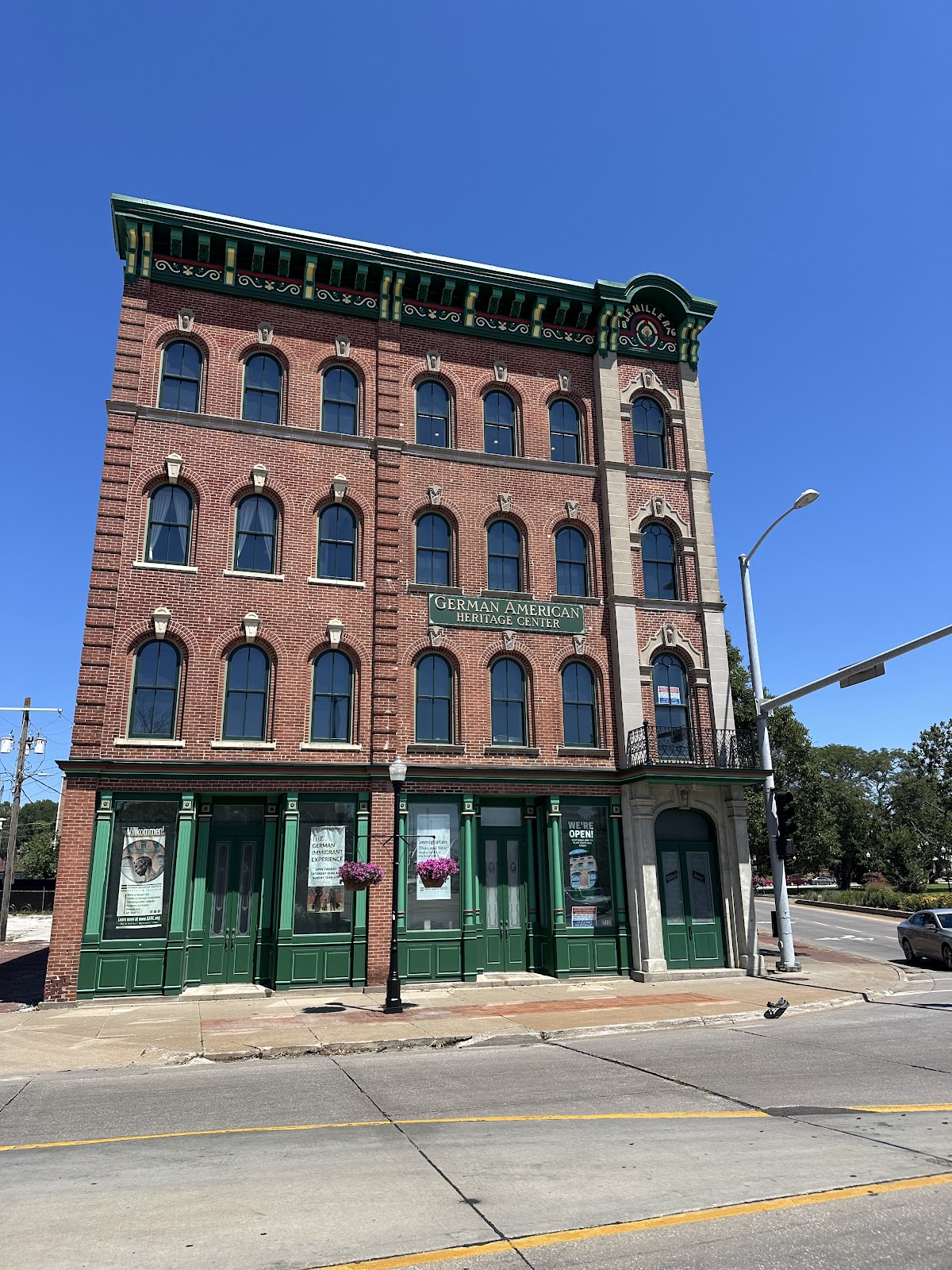
Outside, a mid-sized city gives what a large one does not: streets wide enough to stand back in, which means the building can be photographed whole. That is worth one frame, and the detail frames are worth more — brick, stone dressings, ironwork and period signage all read only under raking light.
Davenport sits on the Mississippi with an orientation worth knowing: through the Quad Cities the river runs roughly east to west, which means the city looks south across it. Since south is where the sun is all day, the river is backlit from mid-morning until late afternoon — silver water, rim light on anyone at the edge, and a bright band behind any subject.
That makes the river a two-window asset rather than an all-day one. The first hour of the day, when the sun is still in the east and running along the river rather than across it, gives a frontlit textured surface. And the last hour of daylight, with the sun low in the west, runs the light down the river’s whole visible length so the water carries colour along the full stretch rather than in a patch.
The crossing follows: twenty-five to forty minutes after sunset, when the sky still holds colour at about the brightness of the city’s lighting, and one exposure holds couple, buildings, bridges and sky with all of it doubled in the water. Since the interior does not change through the day, taking those ten minutes costs nothing indoors.
The riverfront here is open parkland rather than a walled embankment, which is unusual among large Mississippi cities and means the water’s edge is genuinely accessible — and also that the ground is designed to flood. High water in spring is a normal event, so a riverside position that exists in September may be underwater in April. Worth asking for a spring date.
The seasons are four emphatic ones with one of the larger annual temperature ranges in the country. Summer is hot and genuinely humid, the humidity rather than the heat being the photographic fact: moist air softens shadows and slightly flattens the long river view.
The fogging problem is severe and a museum makes it worse, because galleries are climate-controlled for the collection — a body carried straight out into July air fogs on every surface at once and does not clear quickly, so a bag opened twenty minutes early is the whole fix.
Autumn is the best light of the year: humidity down, air clear, the cover along both banks turning, and low sun at a civilised hour, usually mid-to-late October. River fog is frequent on autumn and spring mornings and it is diffusion at landscape scale, separating the far bank and the bridges into grey layers.
Winter is cold and frequently overcast, which for a building whose problem is limited daylight is quietly good: overcast is the best soft source there is, and a grey January day through a tall unobstructed window is the light these rooms were designed for. The December midday sun at only about twenty-five degrees above the horizon comes into tall windows at an angle rather than from overhead, so the interior light is directional and usable through the whole short day instead of for two hours at each end.
Snow turns the ground into an enormous reflector, which brightens every clear window in the building — and snow against warm brick is a strong colour contrast, because the two sit at opposite ends of both the tonal and the colour range.
More frames from The German American Heritage Center
The German American Heritage Center wedding photography: common questions
How does brick differ from other stone?
It is mid-toned and strongly warm, so it reflects a useful amount of light rather than absorbing it — a genuinely good soft source, and a warm cast that cannot be corrected globally.
How do you use a brick wall as a light?
Stand the couple in shade three to four metres out from a sunlit elevation, facing it, with a custom white balance set on a face in that position.
Why do the good positions sit near the windows?
Because a deep commercial floor plate gives a steep gradient — bright within two metres of the glass, a stop or two down at four, and effectively dark at six.
What should be asked first about the windows?
Which are unobstructed. One clear tall window is worth more than the rest of the lighting, and a conservation blind is usually an asset rather than a problem.
What rules should be expected?
Restrictions on flash, stands, moving anything and numbers per room. They protect finishes and objects that cannot be replaced, and they belong in the booking conversation.
Is winter useful here?
Yes. A December sun at only twenty-five degrees comes into tall windows at an angle all day, so the interiors are usable through the whole short day rather than two hours at each end.
More Davenport, IA venue guides
We are writing a photographer’s guide to every venue we would happily shoot in Davenport, IA. Here are three more, plus the full index:
- The RiverCenter, Davenport: The Problem, and Four Ways Out
- The Davenport Hotel, Iowa: The Light Through a Day
- The Figge Art Museum, Davenport: A Building Meant to Be Seen Through
Planning a wedding at The German American Heritage Center?
Brick is a light source here. Tell us your date and we will use it.