 The Blue Ball Barn, Wilmington: A Walk Through a Converted Barn
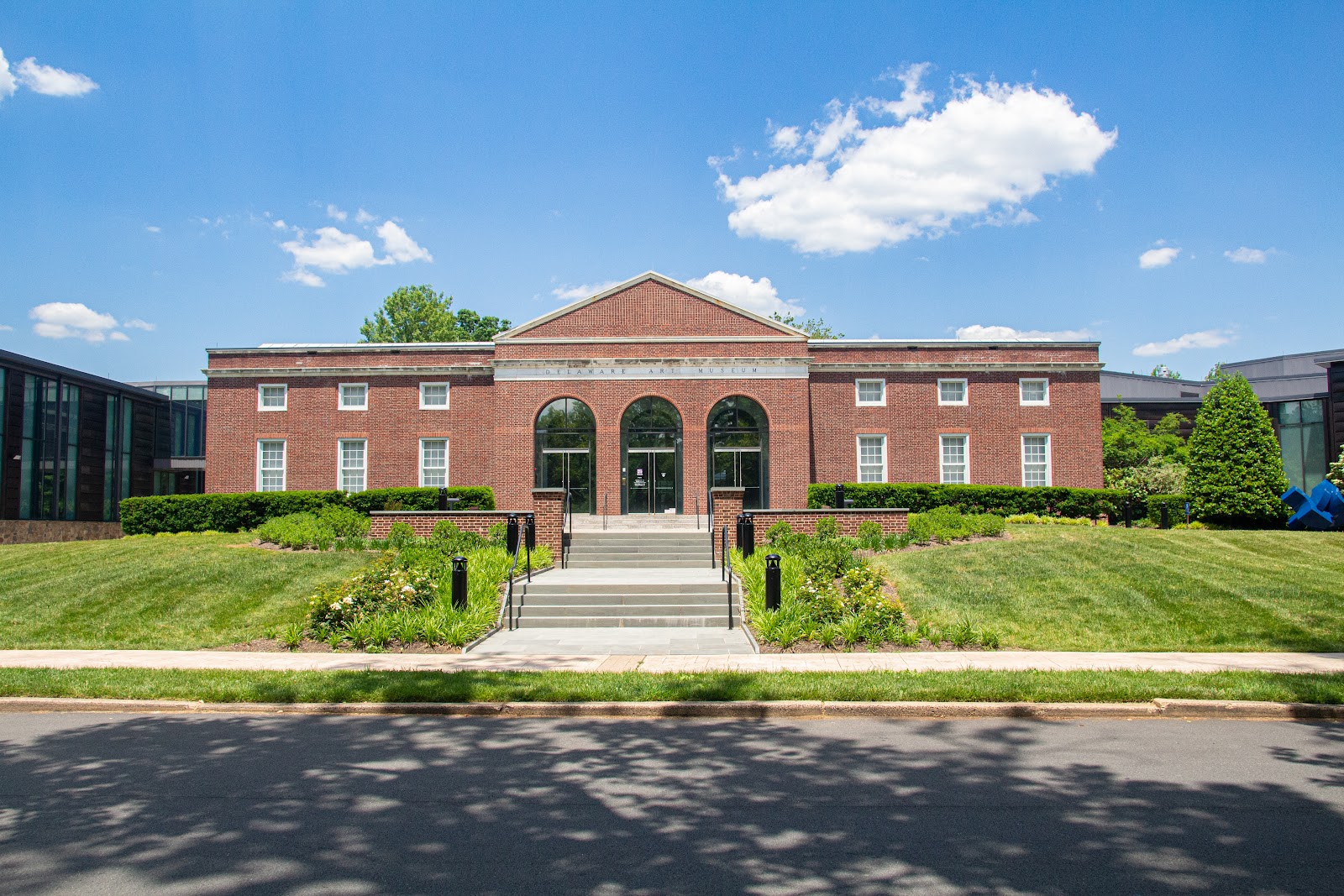
The Delaware Art Museum, Wilmington: One Frame, and How It Is Made
The best frame in an art museum is not in a gallery. It is in the doorway of one.
The best portrait position in a modern art museum is one most photographers walk straight past, and it exists because of a structural fact about how these buildings are lit.
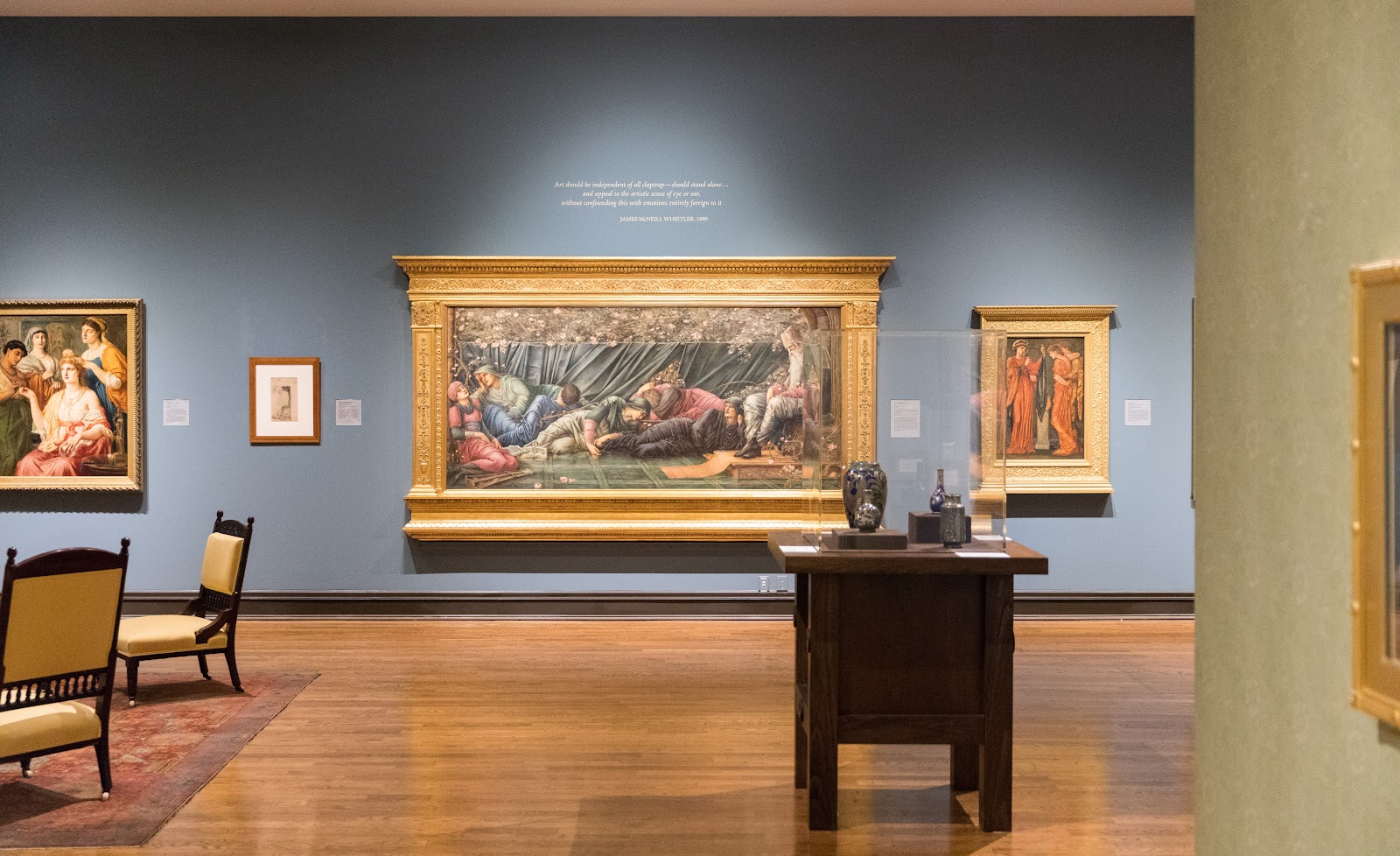
Galleries are dark by necessity. Light damages work cumulatively and irreversibly, so fittings are low-output and aimed at walls rather than at floors. Public spaces — the atrium, the entrance, the café — are the opposite: generously glazed, designed to feel open, and usually the architectural showpiece. Between the two there can be four stops or more, and they are frequently separated by one door.
The frame is made at that door. A couple standing two or three metres inside a gallery, facing out into the glazed space, is lit by a soft daylight source of enormous size, with total darkness behind them. It needs no equipment at all, it takes thirty seconds to find, and it is better light than anything a photographer would carry.
Six decisions make it properly rather than accidentally. We have not photographed a wedding at the Delaware Art Museum; art museums behave consistently. Which spaces are included, the rules on flash and proximity to work, and whether pieces may appear in published photographs are questions for their team.
The Delaware Art Museum at a glance
| Where | Wilmington, Delaware |
| The frame | A couple at a gallery threshold, lit by the atrium, darkness behind |
| Why it works | A four-stop split between the two spaces, one door apart |
| The equipment | None |
| Ask first | Spaces included, flash and proximity rules, publication of works |
Decisions one to three: the threshold, the distance, the background
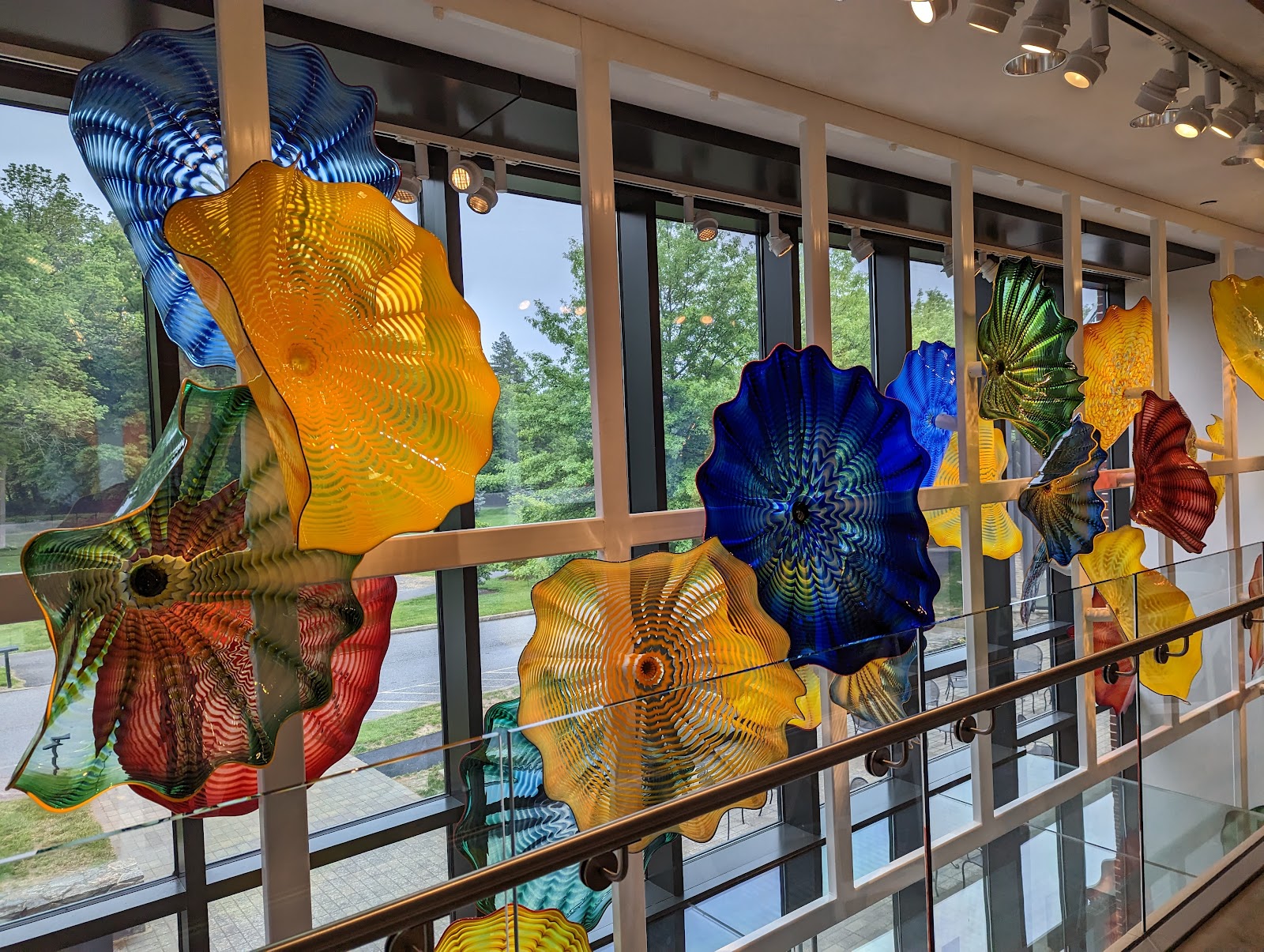
The first decision is which threshold, and the criterion is the size of the bright space rather than the darkness of the gallery. What makes this frame work is that the source is enormous — a glazed atrium several storeys high is a soft light the size of a wall, which wraps a face rather than raking it — so the best threshold is the one facing the largest expanse of glazing.
Walking the building looking for that takes five minutes and it usually produces two or three candidates. The best of them has the glazing on one side rather than straight ahead, because a source directly in front of a subject is frontal and flat while one at forty degrees gives modelling.
The second decision is how far inside to stand, and it is a trade with a definite answer that varies by building. Too far in and the light is too dim to be useful; too close to the opening and the background stops being dark, because the atrium light spills onto the gallery wall behind.
Two to three metres inside is usually right, and the way to find it precisely is one test frame at two, three and four metres. What you are watching is not the face — which will be fine at all three — but the wall behind it, which should be at least two stops below the face. That is the whole objective of the frame.
The third decision is what the background actually is, because a dark gallery is not automatically an empty one. A frame made into a gallery contains whatever is on the wall behind, and a painting at the same scale as a face competes with it — the eye cannot easily separate two detailed objects at the same distance.
The answers are the usual three. Distance and a wide aperture, so the work behind reduces to tone. A position where the background is a plain wall or an open doorway rather than a hung one. Or committing to the work as a subject, placing the couple so both read — which is a different picture and a legitimate one.
There is also a rights dimension, and it is worth one question rather than nervousness. Artists hold rights in their work, and a photograph that reproduces a piece prominently and is then published engages those rights in a way that an incidental background does not. Museums negotiate this routinely with lenders and artists and will have a clear answer, which is usually simply which works may appear.
And glazing on framed work behaves like a mirror pointed wherever the camera is. For this frame that matters less than usual, because there is no added light to be reflected — but the atrium behind the camera will show in any glazed piece in the background, so it is worth looking before committing to a position.
Decisions four to six: the exposure, the colour, the alternatives
The fourth decision is the exposure and it should be set on the face rather than on the scene. A meter looking at this frame sees mostly darkness and will try to lift it, overexposing the face by two stops or more and turning the background from black to grey — which destroys the only thing the frame has.
So: meter on the face, or on a hand in the same light, and let the background fall where it falls. Working in manual is the practical answer, because the composition contains a very large dark area and automatic exposure will chase it.
The fifth decision is the colour, and there is a specific trap here. The subject is lit by daylight through the atrium glazing; the gallery behind is lit by gallery fittings, which are almost always warm tungsten-register or a warm LED. Those are two different colour temperatures in one frame, and they are separated cleanly by distance rather than mixed on a face — which makes this the easy version of a mixed-light problem.
Set white balance for the daylight on the face and the gallery behind reads warm, which looks intentional and pleasant. Set it for the gallery and the face turns blue. So: daylight, always, for this frame.
Architectural glazing is frequently coated for solar control — and in a museum it may additionally be specified to cut ultraviolet for the sake of the collection — which shifts the daylight coming through it, usually green or blue. One test frame or a custom white balance set on a face in the position handles it, rather than a discovery in editing.
The sixth decision is what to do when the frame is not available, and it is worth having the alternatives in mind because a building’s geography may not offer a usable threshold.
The first alternative is the gallery pools. Directional museum fittings create bright patches with darkness between them, and a subject standing in one with an unlit gallery behind is separated completely — the steepest fall-off any venue type offers. Two minutes of walking to note where the pools fall is all the preparation it needs, and the caution is that a subject half in a pool and half out is the same problem as dappled sunlight, with the same answer: move.
The second is the atrium itself, which is a group-sized soft source. About three metres back from the glazing a row of people is evenly lit, where at one metre it has a two-stop spread across it — so the atrium is where the large formals belong, and that three-metre figure is what makes it possible with no equipment.
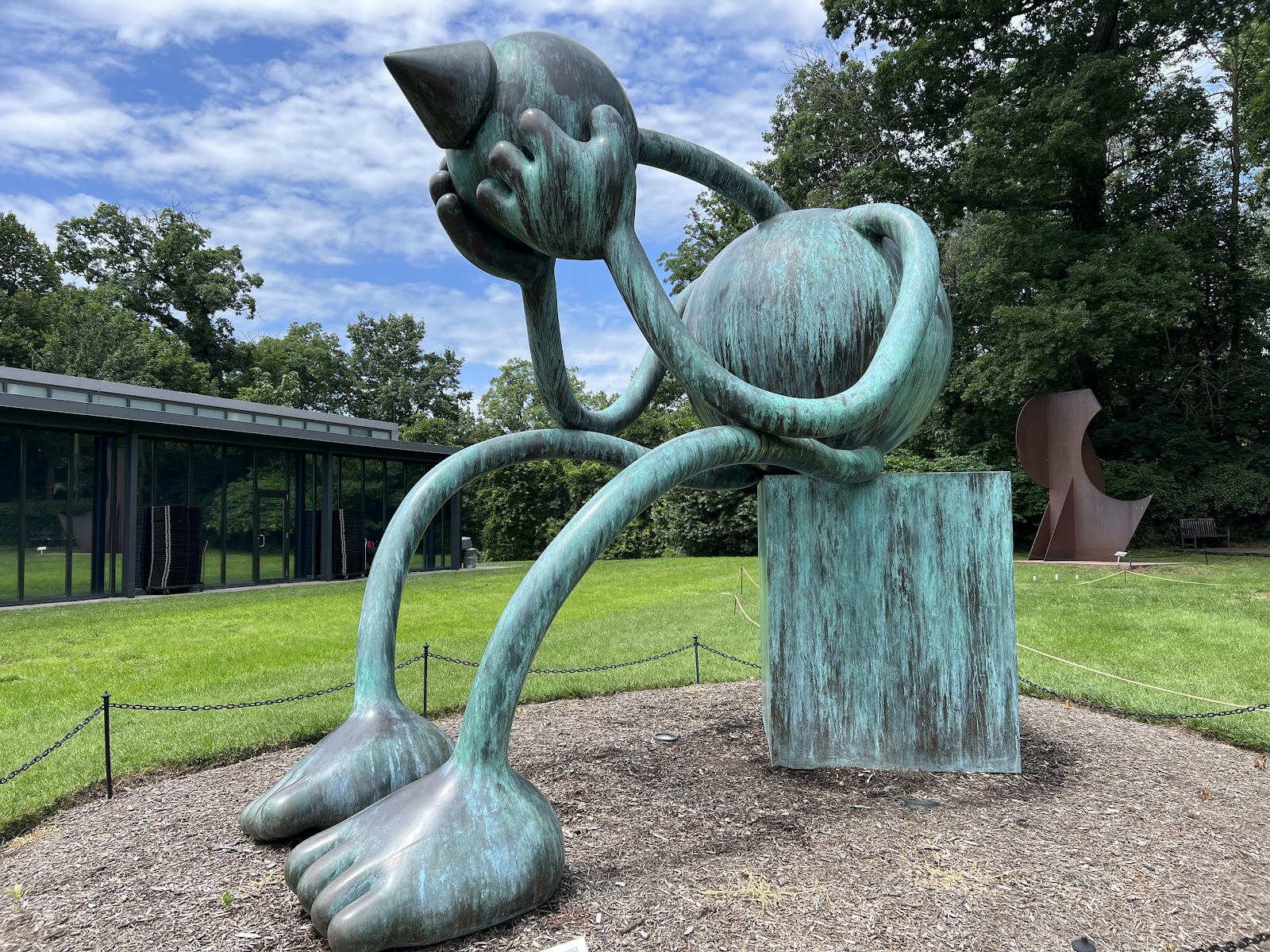
And the third is the grounds, which at an art museum in this region usually means mature planting and lawn. Full shade under a dense canopy is excellent; dappled light through a thin one is unusable, and at about forty degrees north the contrast is severe rather than awkward.
- Find the threshold facing the largest glazing, with it to one side
- One test frame at two, three and four metres inside; watch the wall, not the face
- Check what is hung behind — a painting competes with a face at the same scale
- Meter on the face and work in manual; the frame is mostly darkness
- Set white balance for daylight; the warm gallery behind then looks intentional
The grounds, and the Brandywine year
An art museum in this region generally sits in grounds with mature planting and lawn, which is the most useful outdoor asset a venue here can have, because mature trees give full shade across a large area.
The shade rule is absolute: full shade under a dense canopy is excellent, while dappled light through a thin one puts bright patches and deep shadow on the same face at a ratio nothing holds. Ten minutes on arrival identifying which areas genuinely qualify is the most valuable ten minutes outdoors.
Dense planting throws green onto skin from whichever side it is thickest, localised so global white balance cannot remove it — a custom white balance set on a face in the position being used is the fix, and a metre further from the foliage roughly halves it.
Local building stone is worth a note because it behaves unlike stone elsewhere. The fieldstone of this region is coarse and dark, which means it absorbs rather than reflects: a dark stone wall is an excellent background, giving two or three stops of free separation, and useless as fill. That reverses the usual instinct to position someone relative to a lit wall, and it means the texture only reads when light rakes along the stone rather than facing it.
The valley’s seasons are four emphatic ones. Spring, from mid-April into May, gives thin translucent new foliage, flowering trees and a canopy that has not closed — so more light reaches the ground and the dappling is at its mildest. It is the best outdoor window of the year and it is short.
Summer gives the densest canopy, the deepest shade and the strongest dappling, and it is hot and genuinely humid — moist air softens shadows and slightly flattens distance, which is a gift for faces. Severe afternoon thunderstorms are a real possibility, which at a museum with a full interior costs a decision rather than a picture.
The fogging problem is the equipment issue in this climate, and a museum makes it worse because galleries are climate-controlled for the collection: a body carried straight out into July air fogs on every surface at once and does not clear quickly, so a bag opened twenty minutes early is the whole fix.
Autumn is what the Brandywine valley is known for, with colour usually peaking from late October into the first week of November — and in a landscape of rolling wooded country it reads in bulk rather than in patches. Morning fog is frequent in autumn here, and fog is diffusion at landscape scale: it separates treelines into grey layers and gives a frame no clear morning does.
Winter strips the canopy, which opens sightlines and lets far more light reach any window — and the December midday sun at this latitude reaches only about twenty-seven degrees above the horizon, which means it comes into glazing at a low angle all day rather than from overhead. For the frame described above that is a genuine gain: a lower sun means more light penetrating the atrium and reaching the threshold, so the winter version is brighter than the summer one.
Snow is occasional rather than reliable, and when it comes it turns the ground into a large reflector, which brightens the atrium further and gives the best natural outdoor fill available.
More frames from The Delaware Art Museum
The Delaware Art Museum wedding photography: common questions
What is the frame?
A couple two or three metres inside a gallery, facing out into a glazed atrium — a very large soft source in front and total darkness behind, with no equipment.
How do you find the right distance?
One test frame at two, three and four metres inside, watching the wall behind rather than the face. The background should be at least two stops below the face.
What white balance should be used?
Daylight. The face is lit through the glazing and the gallery behind is warm — daylight makes the face correct and the warm gallery look intentional.
Why meter on the face?
Because the frame is mostly darkness, and a meter will try to lift it — overexposing the face by two stops and turning the background grey, which destroys the point.
What if there is no usable threshold?
Use the gallery lighting pools, which give the steepest free separation there is; or the atrium at three metres back, which is where the large formals belong.
Is the frame better in summer or winter?
Winter. A lower sun penetrates the atrium further and reaches the threshold more strongly, and snow on the ground brightens it again.
More Delaware venue guides
We are writing a photographer’s guide to every venue we would happily shoot in Delaware. Here are three more, plus the full index:
- The Hagley Museum, Wilmington: Field Notes on a Mill Valley
- Lighthouse Cove, Dewey Beach: A Walk Through a Bayside Site
- The North Beach Clubhouse, Dewey Beach: The Problem, and Four Ways Out
Planning a wedding at The Delaware Art Museum?
The best frame is in a doorway. Tell us your date and we will find it.