 The Blue Ball Barn, Wilmington: A Walk Through a Converted Barn
The Crooked Hammock, Rehoboth Beach: What It Suits, and What It Does Not
A venue built for a good afternoon outdoors is built for people, not for pictures. That cuts both ways.
A brewery with an outdoor yard is an honest sort of venue. It was designed so that people could sit outside comfortably with a drink, which is a different brief from looking good in photographs, and the difference shows up in specific and predictable ways.
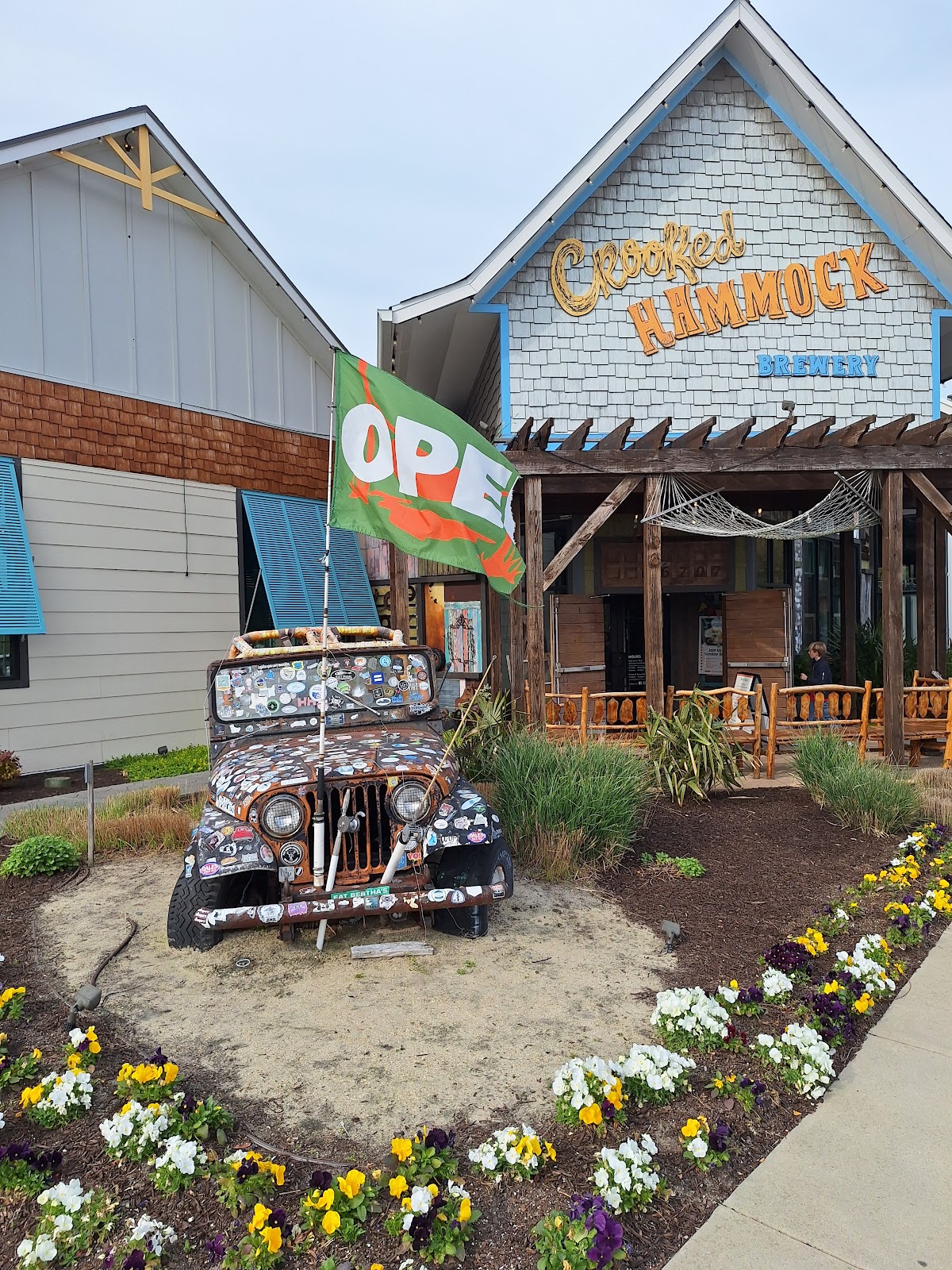
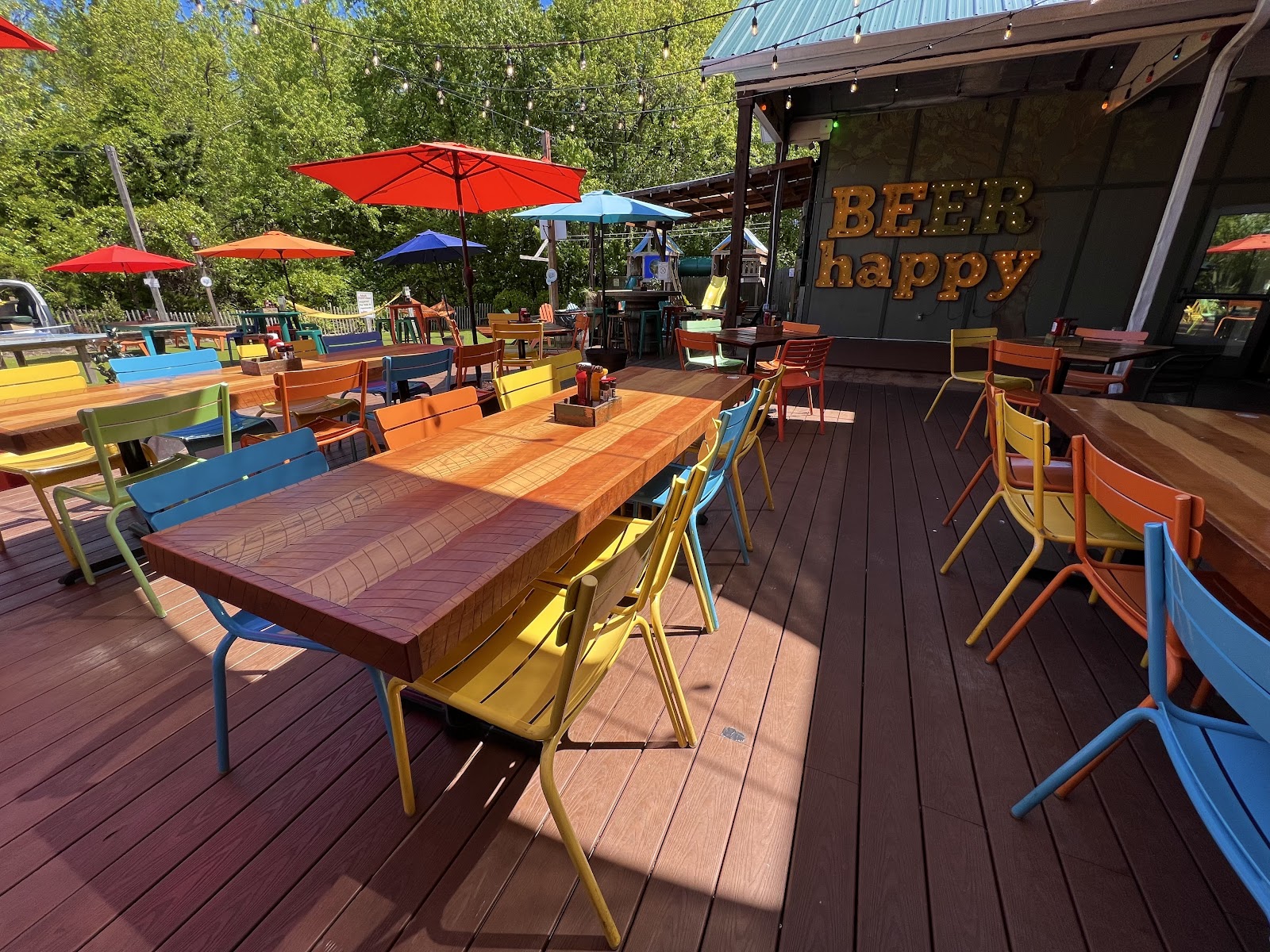
What it gives is character and ease. Working brewery equipment, timber, painted signage, string lighting, picnic tables and a relaxed atmosphere produce a gallery of people enjoying themselves rather than people being arranged — which is what most couples actually want even when they describe their priorities in terms of venues.
What it asks is more thought than a hotel. The yard is open to the sky with limited shade, the string lighting that makes it charming after dark is a technical problem rather than a solution, the interior is dark and functional, and a coastal Delaware site needs a genuine rain plan rather than an optimistic one.
We have not photographed a wedding at the Crooked Hammock; brewery and yard venues behave consistently. Which areas are included, what the covered alternative is, and whether the lighting is adjustable are questions for their team.
The Crooked Hammock at a glance
| Where | Rehoboth Beach, Delaware |
| Suits | Character, reportage, people-led pictures, real material texture |
| Resists | Midday sun in an open yard, string lighting, a dark interior |
| Non-negotiable | A named covered alternative, agreed at booking |
| Ask first | Areas included, covered space, lighting control, fixings |
What it suits
Reportage first, and it is the strongest thing this kind of venue does. A relaxed outdoor yard produces people who are doing something rather than waiting to be photographed — talking, moving, queuing, playing, sitting on a bench — and those frames are the ones couples return to. A venue that puts people at ease does half a photographer’s work.
Material texture is the second asset. Brewery equipment is stainless and copper with strong specular highlights; the buildings are timber and corrugated metal; the signage is painted; the yard is gravel or boards. All of that reads only under raking light, so a source or a low sun running along a surface lifts every joint and rivet while the same light facing it flattens everything to one tone. The two or three positions where the existing light already grazes a surface are worth finding on arrival.
Stainless deserves a specific note, because it behaves like a mirror rather than a surface. A brewery tank will show the photographer, the camera and any light at full brightness, and a curved tank shows them from a wide range of angles — so the fifteen-second check from the camera position is not optional here. Used deliberately, though, a polished tank reflecting a couple is a genuinely good frame that nothing else gives.
Open sky is the third asset, oddly, because it means overcast works perfectly. An open yard under a grey sky is lit by the largest soft source there is — even, shadowless and flattering — and in a climate with plenty of cloud that is a frequent condition rather than a rare one. A photographer who treats a grey day here as a problem is missing the venue’s best light.
The structures are the fourth. Any roof with an open face — a covered bar, a pavilion, a shelter, an awning — removes exactly the overhead component that ruins faces while the floor bounces light back to fill, which makes a soft directional source at the scale of two people. Those positions are available at any hour and in any weather, and at a venue like this there are usually several.
String lighting is the fifth and it is the venue’s visual signature after dark. At a wide aperture, with real distance behind a subject, strings of bulbs become rows of warm points of light — which is the frame this kind of venue exists to give, and which nothing else produces. The conditions are a long lens, the widest aperture available and real separation, because a bulb immediately beside a head pulls the eye off the face every time.
And the coast is the sixth: a beach and a boardwalk a short drive or walk away, which gives an entirely different register for a twenty-minute excursion — and the sand is a strong upward reflector, which makes beach light easier than it looks.
What it does not suit
Midday sun in an open yard is the first refusal. At this latitude, about thirty-nine degrees north, the June midday sun reaches roughly seventy-four degrees above the horizon, which is high enough to put eye sockets in shadow and a hard line under every chin — and a yard designed for people to sit in has parasols and umbrellas rather than deep shade.
Parasols are worse than they look, because a light-coloured one overhead is a top-light source and a coloured one throws its colour onto everyone beneath it, localised and uncorrectable globally. The workable positions are the shadow side of a building, any roofed structure with an open face, and dense planting if there is any — and the rule is absolute: full shade only, since dappled light through a parasol edge or a thin tree puts bright patches and deep shadow on the same face at a ratio nothing holds.
String lighting is the second difficulty and it is worth being precise about why, because it looks like a solution and is not. Those bulbs are beautiful in a frame and they are almost useless as illumination: they are small, dim, warm and high, which means they provide very little light, from the worst possible direction, at a colour temperature nothing else matches. A face lit by string lighting is underexposed, top-lit and orange.
So the rule is the same as for neon or signage: let the lights be the background and light the faces with one source of your own, gelled warm to match them with white balance set to the gel. That makes the faces correct while the strings stay the warm points of light they should be — and an ungelled flash is the commonest failure here, producing cool faces against warm bulbs.
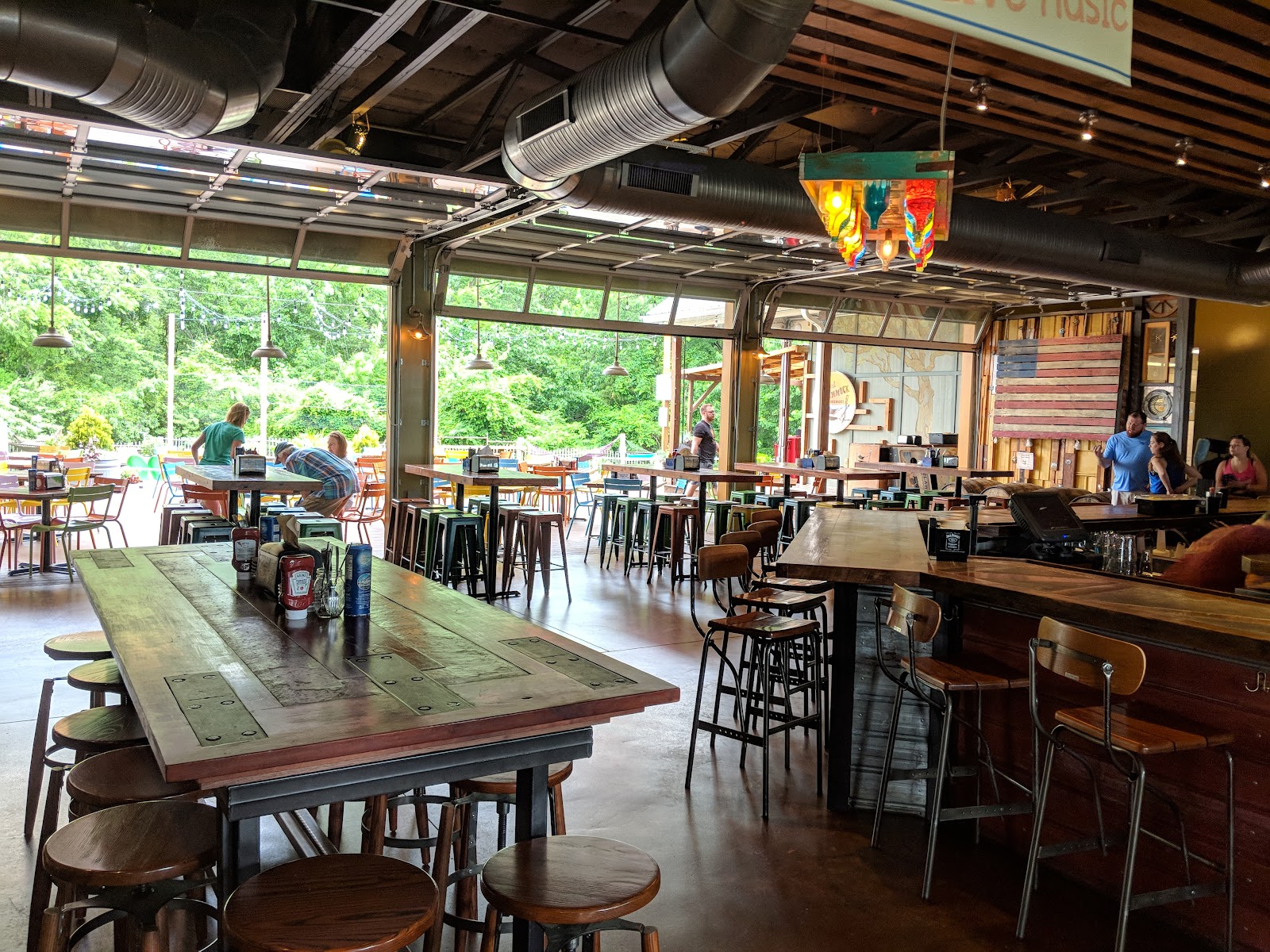
The interior is the third and it is functional rather than flattering. A working brewery space has high ceilings, exposed structure, limited windows and industrial fittings — which means bounce returns little, the ambient is low and cool, and the fittings may render skin poorly because cheaper industrial LED and fluorescent lamps put their energy unevenly across the spectrum. One gelled source owning the faces is the answer, with white balance set to it.
The compensation is steep fall-off: a subject three metres in front of anything else in a dark industrial space sits against natural darkness with no equipment, which is free separation.
Weather is the fourth and on this coast it is not optional. Severe summer thunderstorms and autumn nor’easters are both real, and a venue whose main space is an open yard has a single point of failure without a named covered alternative with a known capacity, agreed at booking rather than discussed on the morning.
The compensations are real: wet boards and gravel reflect string lighting better than dry, an overcast sky is the yard’s best light, and a shower followed by clearing gives the best conditions of any day because the air is washed clean. A shower is an opportunity delayed rather than a day lost.
And wind is the constant near the coast, building through the afternoon: no lightstands, a veil that will not behave, and anything not weighted will move — which at a venue with string lighting and umbrellas is worth mentioning to whoever is setting up.
- Grey days are this venue’s best light, not its worst
- Full shade only — a parasol edge dapples as badly as a thin tree
- String lights are background, never key; gel your own source to match them
- Check the brewery stainless from the camera position before lighting
- Name the covered alternative at booking, with a capacity
The coast, and the Delaware year
Being near the coast changes the light and the equipment care. Moisture evaporated over the water sits in the air, which softens low sun like a diffusion panel — so the late afternoon here is longer and gentler than inland, and the good evening window is a soft ninety minutes rather than a sharp forty.
Salt is the cost. Airborne salt settles on a front element and on exposed metal, attracts moisture and etches coatings over time — cumulative rather than immediate, and prevented by a damp cloth on the front element and the body at the end of the day. If any part of the day goes to the beach, sand is the worse hazard in the short term, because a grain in a zoom barrel or on a sensor is a repair rather than a clean.
Sea fog is the coast’s distinctive seasonal condition and it runs on a lag worth knowing. Ocean water warms and cools much more slowly than land, which means the sea is coldest in spring — so warm spring air over cold water condenses, and late spring is the foggiest season here rather than autumn. Fog is diffusion at landscape scale and it makes a frame no clear day gives.
The same lag makes September the best month on this coast: the water is at its warmest, the air is clear, the summer crowds have gone and sunset falls at a civilised hour. For an outdoor venue September into early October is the ideal window, because the yard is comfortable and the evenings are still long enough for the string lighting frames to happen before anyone is tired.
Summer is hot and humid with the resort crowds at their peak. In an open yard the heat is the real constraint rather than the light, which argues for the shaded structures and a short portrait block. The humidity also makes the fogging problem severe — a body carried from an air-conditioned interior into July air fogs on every surface at once and does not clear quickly, so a bag opened twenty minutes early is the whole fix.
Autumn brings nor’easters, which are genuine coastal storms with sustained wind rather than mere rain — the covered alternative used rather than debated. And overcast autumn days are quietly the yard’s best condition: even, soft, flattering light with the string bulbs still reading warm against it.
Winter is cold, windy and quiet. The December midday sun here reaches only about twenty-eight degrees above the horizon, which means the whole short day is raking light — exactly what stainless, timber and painted signage need — and the string lighting frames become available in the middle of the afternoon rather than late in the evening, because dark arrives early. For a venue whose signature frame is warm bulbs against a deep sky, a winter date is genuinely advantageous and not a compromise.
The cost is comfort in an open yard, which is a real consideration and argues for whatever covered and heated space the venue has.
More frames from The Crooked Hammock
The Crooked Hammock wedding photography: common questions
What does this venue do best?
Reportage. A relaxed outdoor yard puts people at ease, so they are doing something rather than waiting to be photographed — which is half a photographer’s work.
Is a grey day bad here?
It is the venue’s best light. An open yard under overcast is lit by the largest soft source there is, which is even, shadowless and flattering.
Can string lighting light the couple?
No. Those bulbs are small, dim, warm and high — so a face lit by them is underexposed, top-lit and orange. They belong in the background.
How should the faces be lit after dark then?
One source gelled warm to match the bulbs, with white balance set to the gel. An ungelled flash gives cool faces against warm lights, which is the commonest failure.
Are parasols useful shade?
Not really. A pale one is a top-light source, a coloured one throws its colour onto skin, and the edges dapple. Use a roofed structure or a building’s shadow side.
When is the venue at its best?
September into early October for comfort and long evenings, and winter for the string-light frames, which arrive in mid-afternoon rather than late at night.
More Delaware venue guides
We are writing a photographer’s guide to every venue we would happily shoot in Delaware. Here are three more, plus the full index:
- The Delaware Art Museum, Wilmington: One Frame, and How It Is Made
- The Hagley Museum, Wilmington: Field Notes on a Mill Valley
- Lighthouse Cove, Dewey Beach: A Walk Through a Bayside Site
Planning a wedding at The Crooked Hammock?
Grey days and warm bulbs. Tell us your date and we will plan for both.