 The Henry Clay: Lighting a 1920s Lodge Building
The Bardstown Bourbon Company: One Frame, and How It Is Made
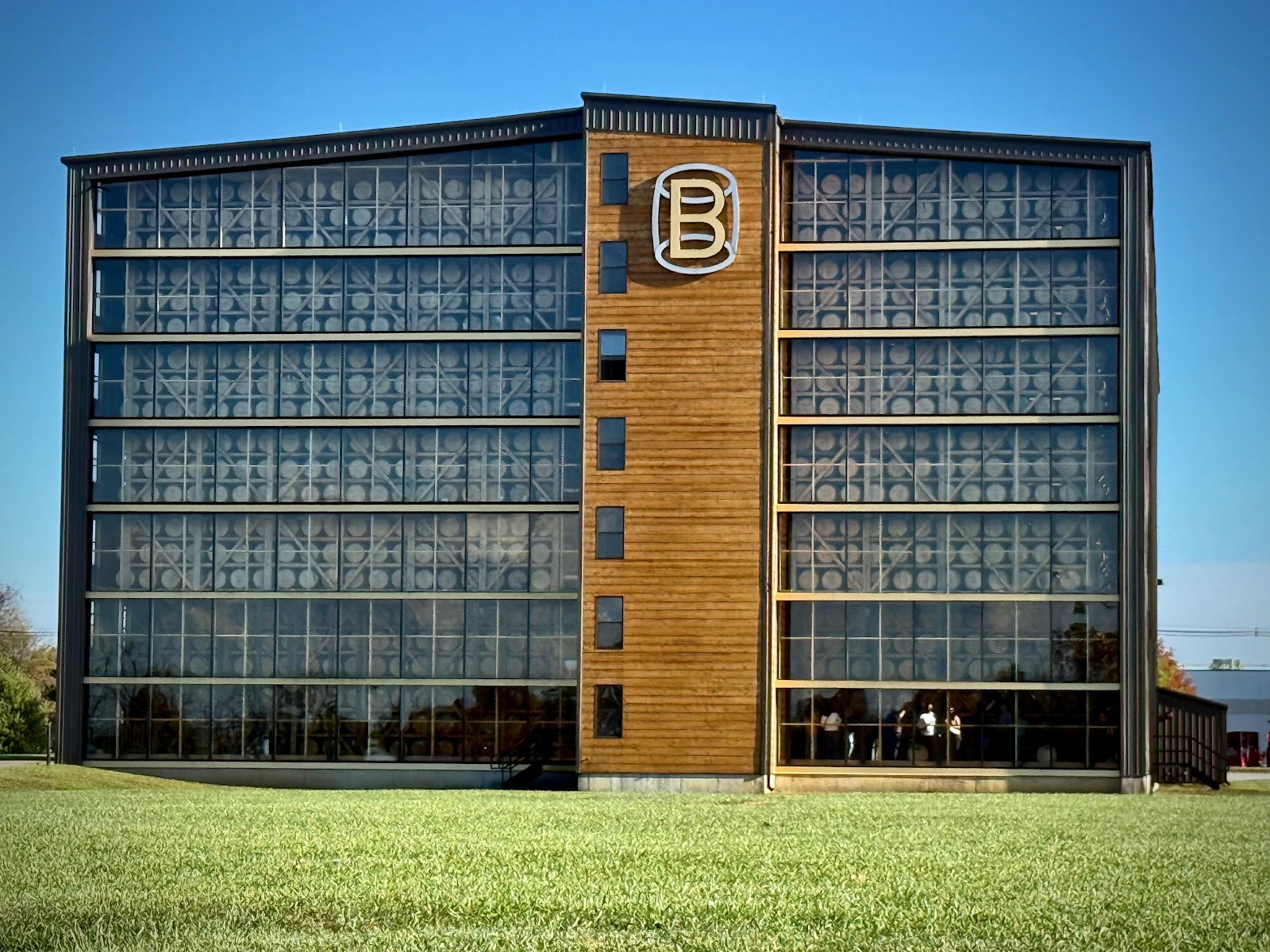
A barrel warehouse has slatted walls for airflow. What comes through them is the most distinctive interior light in the country.
There is one interior light in American architecture that exists for a purely functional reason and happens to be extraordinary, and it is found in a bourbon warehouse.
Barrels age by breathing, which means a warehouse has to breathe too — so the walls are louvred or slatted, with openings running the length of the building, to let air move through the ricks. That is a ventilation decision, not an architectural one. And what it produces, when the sun is on that elevation, is a wall of parallel light bars crossing a very dark interior.
The frame is a couple standing in those bars. The light is hard-edged and directional, the bars fall across them and across the barrel ricks behind, and everything not in a bar is genuinely black. Nothing else in the country looks like it.
It is also the hardest interior exposure a wedding photographer is likely to attempt, and it requires six decisions taken in order. We have not photographed a wedding at the Bardstown Bourbon Company; barrel warehouses behave consistently, because they are all built to do the same thing. Which buildings are included, whether a rickhouse is accessible, and what the rules are about open flame, equipment and proximity to barrels are questions for their team — and those rules are safety rules rather than preferences.
The Bardstown Bourbon Company at a glance
| Where | Bardstown, Kentucky |
| The frame | A couple in parallel bars of light from a slatted warehouse wall |
| Why it exists | Barrels need airflow, so the walls are louvred — a functional accident |
| The difficulty | The widest contrast range in any interior a photographer will meet |
| Ask first | Rickhouse access, safety and equipment rules, open-flame restrictions |
Decisions one to three: the elevation, the hour, the exposure
The first decision is which elevation, and it is the only one that cannot be improvised. The bars exist only where the sun is striking a slatted wall directly — so the frame is available on the east side in the morning and the west side in the afternoon, and not at all on a north wall or under cloud.
That makes this a sunny-day frame, which is worth saying plainly. Under overcast the same wall gives soft even light with no bars at all, which is a perfectly good and completely different picture. A couple hoping for the bars needs a sunny afternoon and a west-facing rick, or a sunny morning and an east-facing one.
The second decision is the hour, and it controls the angle of the bars rather than their presence. A high sun sends the bars steeply downward, which foreshortens them into short stripes on the floor; a low sun sends them nearly horizontally across the space, which stretches them the full depth of the building and lays them across a standing figure rather than across their feet.
Low is what the frame wants. At Bardstown’s latitude, about thirty-eight degrees north, the midday sun reaches roughly seventy-five degrees above the horizon in June and about twenty-eight in December — which means the horizontal-bar version is available for a couple of hours at each end of a summer day and for most of a winter one. Winter is genuinely the better season for this frame.
The third decision is the exposure and it is where the frame is usually lost. The range between a lit bar and the darkness beside it is the widest a photographer will meet in any interior: the bar is direct sunlight and the shadow is an unlit warehouse, which can be eight or nine stops apart. Nothing holds that, and nothing should try.
So the exposure is set for the lit bar and the shadows are allowed to go to black. That is a decision rather than a failure — the blackness is the picture, and lifting it produces a grey mush with visible noise and no drama at all.
Which has one consequence for the subject: they must be in a bar, fully, or the frame does not work. A face half in a bar and half out is not a dramatic effect but an error, because the ratio across it is beyond any sensor. The practical method is to place the couple so that the bar falls across their eyes and upper face, since that is where the light is needed, and to accept that the rest of them is in shadow.
Working in manual is not optional here. Automatic exposure will chase a frame that is ninety per cent black and overexpose the bars into white nothing, and it will do it differently in consecutive frames.
Decisions four to six: the colour, the ricks, the air
The fourth decision is the colour and there is a specific trap in a rickhouse that does not exist elsewhere.
Barrel warehouses are lined and filled with oak, and the timber in a working rickhouse is darkened over decades by the ethanol vapour that the barrels release — the evaporation loss the industry calls the angel’s share. That darkening is a black or near-black bloom on the timber, which means the surfaces in a rickhouse reflect very little and what they do reflect is warm.
So the light in a bar is direct sunlight — neutral to warm depending on the hour — and everything else is warm dark timber returning almost nothing. There is no fill and there is no bounce: a flash aimed at a rickhouse ceiling returns essentially nothing, which one test frame confirms in five seconds.
That means any added light must be direct into a modifier, and it should be gelled warm to sit near the sunlight in the bars rather than cooler than it. And it should be used sparingly or not at all, because a fill light that opens the shadows destroys the only thing the frame has. If a source is used, it belongs behind or beside the couple to separate them rather than in front to fill them.
The fifth decision is the ricks, and they are the frame’s second subject. Barrel ricks are repeating timber structures receding into depth, with barrels stacked in tiers — which gives a background of enormous regularity and real perspective. The bars of light crossing them is what makes the picture read as a warehouse rather than as a striped wall.
So the camera position should include depth: looking down a rick aisle rather than across it, so that the bars and the barrels both recede. That is the composition, and it takes one look rather than an experiment.
The sixth decision is about the air, and it is the one that turns a good frame into a memorable one. A rickhouse in use has dust and vapour in it, and light bars are only visible as beams when there is something in the air to scatter them. In a still, dusty warehouse the bars read as solid shafts; in a clean, still one they read only where they land.
That cannot be manufactured responsibly, and it should not be attempted — a rickhouse is a building full of flammable spirit vapour, and anything that introduces smoke, flame or heat is not a photographic option. It is worth saying plainly: no smoke machines, no sparklers, no open flame, no exceptions. The rules a distillery gives about equipment and ignition sources are safety rules and they are not negotiable.
What is available is patience and position. Movement in the space — people walking, a door opening — lifts dust, and a moment or two afterwards the beams read. And a low camera angle looking towards the light along a beam shows more of it than a high one looking across.
And if the beams are not there, the frame still works as bars falling on surfaces rather than as shafts in air. That is the more common version and it is still unlike anything else.
- East wall in the morning, west in the afternoon; no bars under cloud
- Low sun stretches the bars horizontally — winter is the better season
- Expose for the lit bar and let the shadows go black; work in manual
- The couple must be fully in a bar, with it across their eyes
- No smoke, flame or sparklers in a rickhouse. The rules are safety rules
The rest of the site, and the Kentucky year
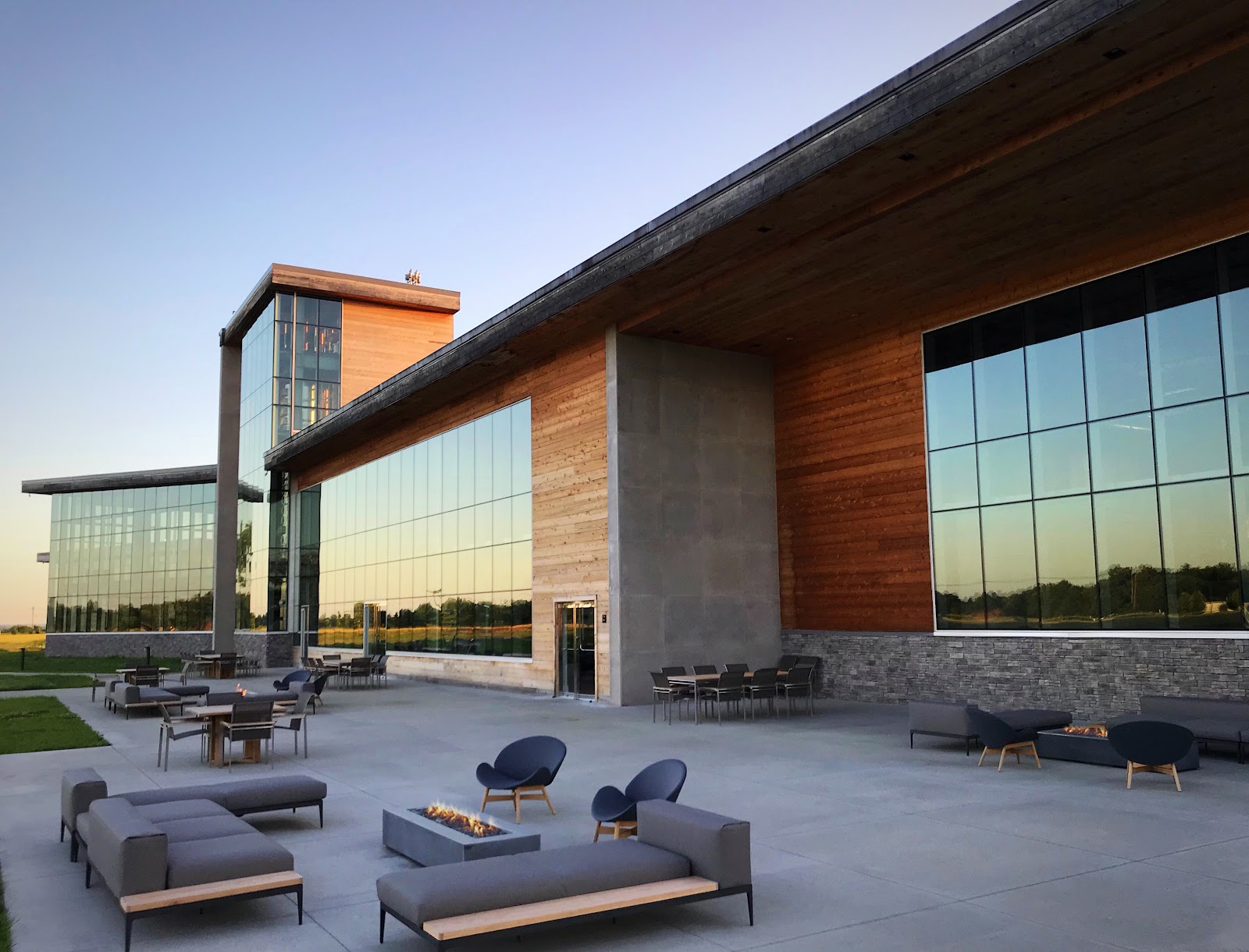
Away from the rickhouse a working distillery has the conditions of any industrial site. Stainless and copper vessels are strongly specular, which means they behave like mirrors and will show a badly placed light at full brightness — so the fifteen-second check from the camera position applies, and used deliberately a polished still reflecting a couple is a frame nothing else gives.
Production spaces are frequently lit by high-bay fittings, which historically meant discharge lamps that render skin poorly because their energy sits in a few narrow spectral bands, and increasingly mean LED. Either way the answer is to let one gelled source own the faces and treat the building’s lighting as background illumination.
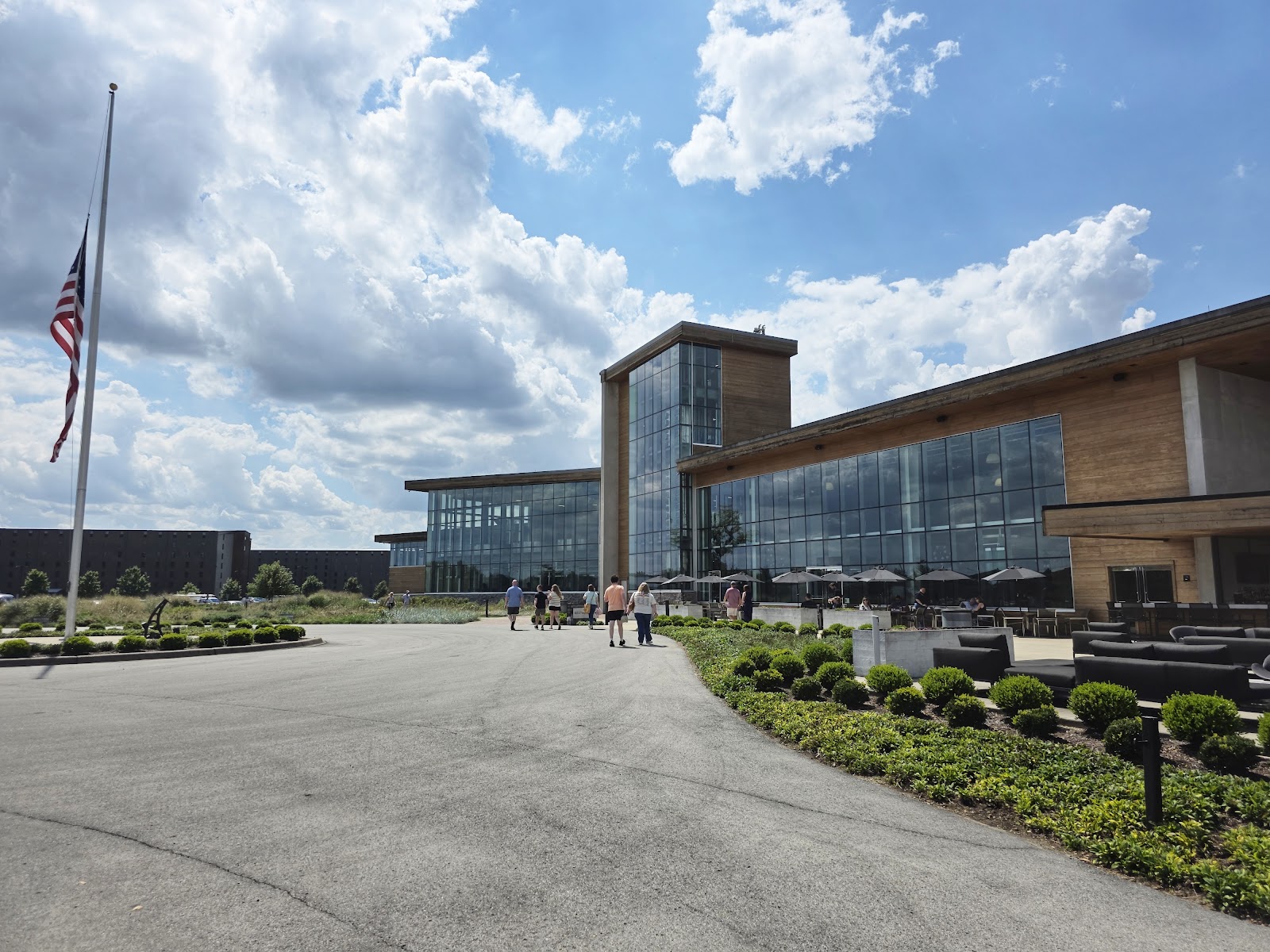
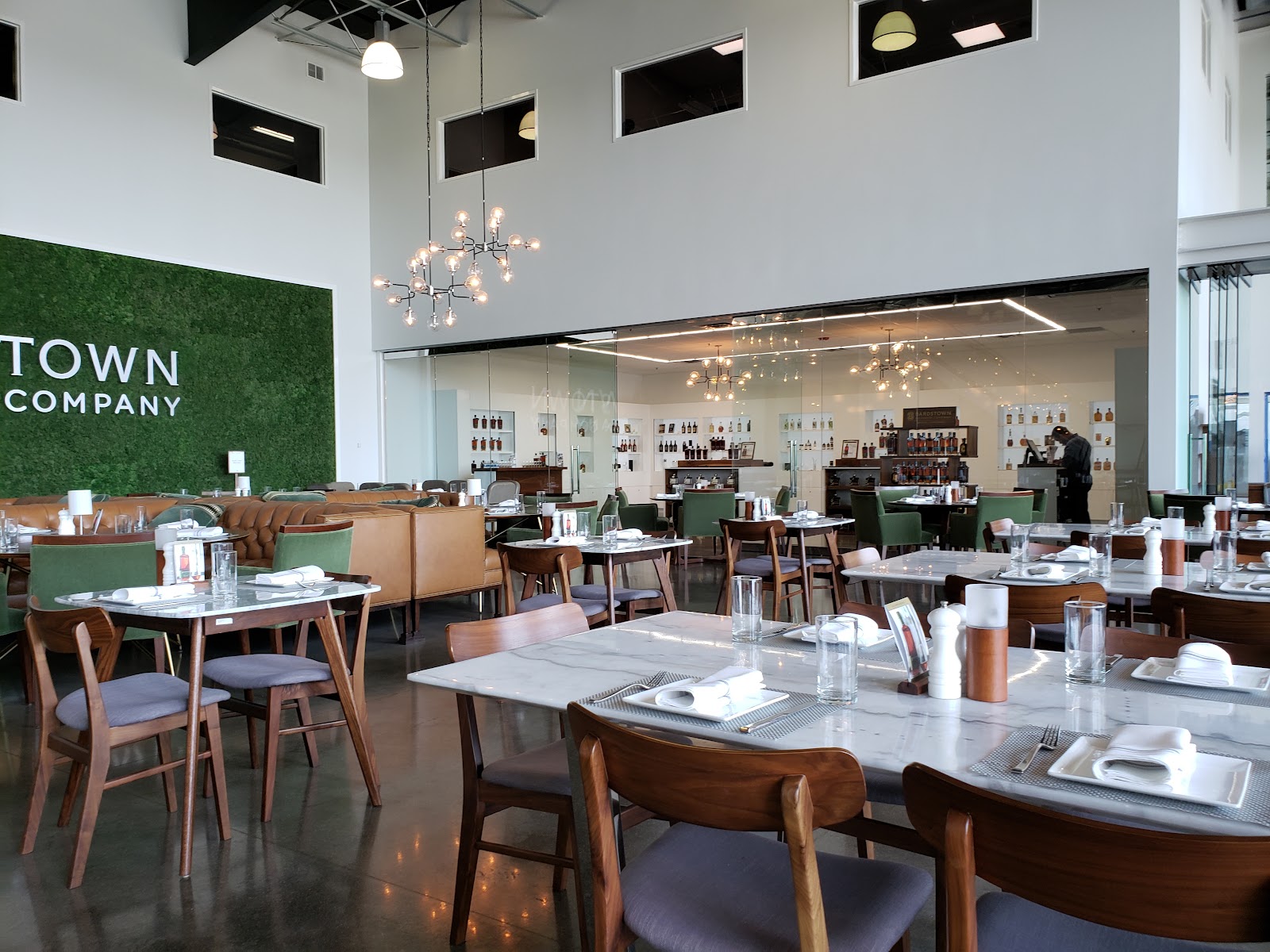
Any visitor or hospitality building will be the opposite: modern, glazed and evenly lit, where the problem is separation rather than darkness. That is fixed geometrically — distance between subject and background, the darker end of the room, depth behind, and a source brighter on the face than the room is on the wall.
Outside, this is rolling Kentucky country: pasture, dense deciduous woodland, and limestone underneath, which is the reason distilling happens here at all — the region’s limestone aquifer gives water free of iron, which spoils fermentation. The same limestone appears as outcrop and as building stone, pale and warm, which means a sunlit limestone wall is a reflector rather than a background.
The shade rule applies as everywhere and it is absolute in this climate: full shade under a dense crown is excellent, while dappled light through a thin one puts bright patches and deep shadow on the same face at a ratio nothing holds. Ten minutes on arrival identifying which shade genuinely qualifies is the most valuable ten minutes outdoors.
Mown pasture and open ground take raking light well, and low sun across grass gives texture that midday flattens entirely.
The seasons are a humid transition between continental and subtropical. Summer is hot and genuinely humid, with the humidity rather than the heat being the photographic fact: moist air scatters light, softening shadows and slightly flattening distance. Severe afternoon thunderstorms are a real possibility, which at a site with substantial buildings costs a decision rather than a picture.
The fogging problem is severe and a rickhouse makes it interesting rather than worse: a warehouse is not climate-controlled, so its interior tracks the outside temperature reasonably closely — which means the fogging risk at a distillery is greatest moving between an air-conditioned visitor building and the warm outdoors, not between the rickhouse and the yard. A bag opened twenty minutes early is the fix.
Autumn is the best season overall. Colour in this rolling wooded country usually peaks from late October into early November, the humidity drops, and the air clears. It is also when the low-sun bar frames start becoming available for more of the day.
Winter is mild by northern standards, with frost rather than deep freeze, and it is the best season for the frame this piece is about: a December sun at about twenty-eight degrees above the horizon sends the bars nearly horizontally across a rickhouse for most of the short day, rather than for an hour at each end. A bare canopy also lets more sun reach the warehouse walls than a leafed one does.
More frames from The Bardstown Bourbon Company
The Bardstown Bourbon Company wedding photography: common questions
Why does a barrel warehouse have slatted walls?
Because barrels age by breathing and the building has to let air move through the ricks. The light bars are a functional accident.
When is the frame available?
On a sunny morning against an east wall, or a sunny afternoon against a west one. Under cloud the same wall gives soft even light and no bars at all.
What is the best season for it?
Winter. A low sun sends the bars nearly horizontally across the space for most of the short day, instead of for an hour at each end of a summer one.
How should it be exposed?
For the lit bar, with the shadows allowed to go black. The range can be eight or nine stops and nothing holds it — and the blackness is the picture.
Can smoke be used to show the beams?
No. A rickhouse is full of flammable spirit vapour, so no smoke machines, sparklers or open flame — the distillery’s rules on ignition sources are safety rules.
Does flash help inside a rickhouse?
Very little. Ethanol-darkened oak returns almost nothing to a bounce, and a fill light that opens the shadows destroys the only thing the frame has.
More Bardstown, KY venue guides
We are writing a photographer’s guide to every venue we would happily shoot in Bardstown, KY. Here are three more, plus the full index:
- The Heaven Hill Distillery, Bardstown: What It Suits, and What It Does Not
- My Old Kentucky Home, Bardstown: The One Decision That Governs Everything
- The Old Talbott Tavern, Bardstown: A Walk Through a Stone Inn
Planning a wedding at The Bardstown Bourbon Company?
The most distinctive interior light in the country. Tell us your date.