 The Ozark Mountain Lodge, Eureka Springs: The Problem, and Four Ways Out
The Alexander Mansion, Hot Springs: Field Notes on a Valley House
The ridges here run the wrong way, and that changes everything about where the shade is.
Hot Springs sits in the Ouachita Mountains, and the Ouachitas do something almost no other range in North America does: they run east to west rather than north to south.
That sounds like a geography note and it is a lighting fact. In a normal range, with ridges running north–south, the slopes face east and west — so one side is lit in the morning, the other in the afternoon, and both change through the day. Here, with ridges running east–west, the slopes face north and south. A north-facing slope is in shade all day, every day, all year. A south-facing slope has sun on it all day.
For a photographer that is unusually useful, because it means the shade does not move. Find a north-facing slope, a north-facing wall or a north-facing garden once and it works at any hour of any day — which is the opposite of the situation in most hilly country, where a shaded position has a two-hour life.
These are field notes on that and on the house itself. We have not photographed a wedding at the Alexander Mansion; historic houses and Ouachita valley light behave consistently. Which rooms are included, what the rules are on flash and furniture, and whether the grounds are available are questions for their team.
The Alexander Mansion at a glance
| Where | Hot Springs, Arkansas, in the Ouachita valley |
| The geography | Ridges run east–west, so slopes face north and south |
| The consequence | A north-facing position is shaded all day, every day, all year |
| The interior | Furnished and absorbent — a stop or two down, with tall windows |
| Ask first | Rooms included, flash and furniture rules, grounds access |
What the ridges do, and how to use it
The permanent shade is the first and best consequence. A north-facing slope, wall or garden in this valley is never in direct sun, which makes it a permanently soft, permanently directional source — the same property a north-facing window has, at landscape scale.
That is worth locating on arrival and it changes how a day can be scheduled, because a position that works at any hour removes the usual pressure to compress the portraits into a narrow window. In most venues a photographer is negotiating with the sun; here, on the north side, there is nothing to negotiate.
The light in permanent shade comes from the sky rather than the sun, which means it is soft, arrives downward at an angle, and lacks direction unless something restores it. The fix is geometry: standing near a wall, a treeline or a rock face blocks the light from one side and shapes the face, while the middle of an open north-facing lawn is the flattest light on the property.
The sun on the valley axis is the second consequence and it is the more unusual one. Because the valley runs east to west, the sun travels along its length rather than across it — which means the valley floor gets sun for much of the day in summer, and low sun at either end of the day runs straight down the valley rather than being blocked by a ridge.
That is a genuine gift: a valley aligned with the sun’s path gives long, unobstructed, low-angle light at sunrise and sunset, where a north–south valley would have lost it behind a ridge an hour earlier. The last hour before sunset here is longer and cleaner than in most mountain country.
The dense hardwood forest is the third consequence and it matters for the shade rule. This is oak, hickory and pine country, with heavy summer canopy, and the rule is absolute: full shade under a dense canopy is excellent, while dappled light through a thin one puts bright patches and deep shadow on the same face at a ratio nothing holds. Full shade only, and at this latitude — about thirty-four and a half degrees north, with a June midday sun around seventy-nine degrees above the horizon — the difference is severe.
The canopy also throws green onto skin from whichever side it is densest, localised enough that global white balance cannot remove it. A custom white balance set on a face in the position being used is the fix, or one gelled source owning the faces, and a metre further from the foliage roughly halves it.
And the fourth consequence is fog. A humid valley with water in it and ridges on both sides produces morning fog frequently, particularly in autumn — which is a genuine photographic asset rather than a nuisance. Fog is diffusion at landscape scale: it separates successive treelines into grey layers, softens everything, and makes a frame that no clear morning gives. It burns off, so it is an early opportunity rather than a scheduled one.
The house, and what it needs
Inside, a house of this kind has the conditions of its period and they follow a pattern.
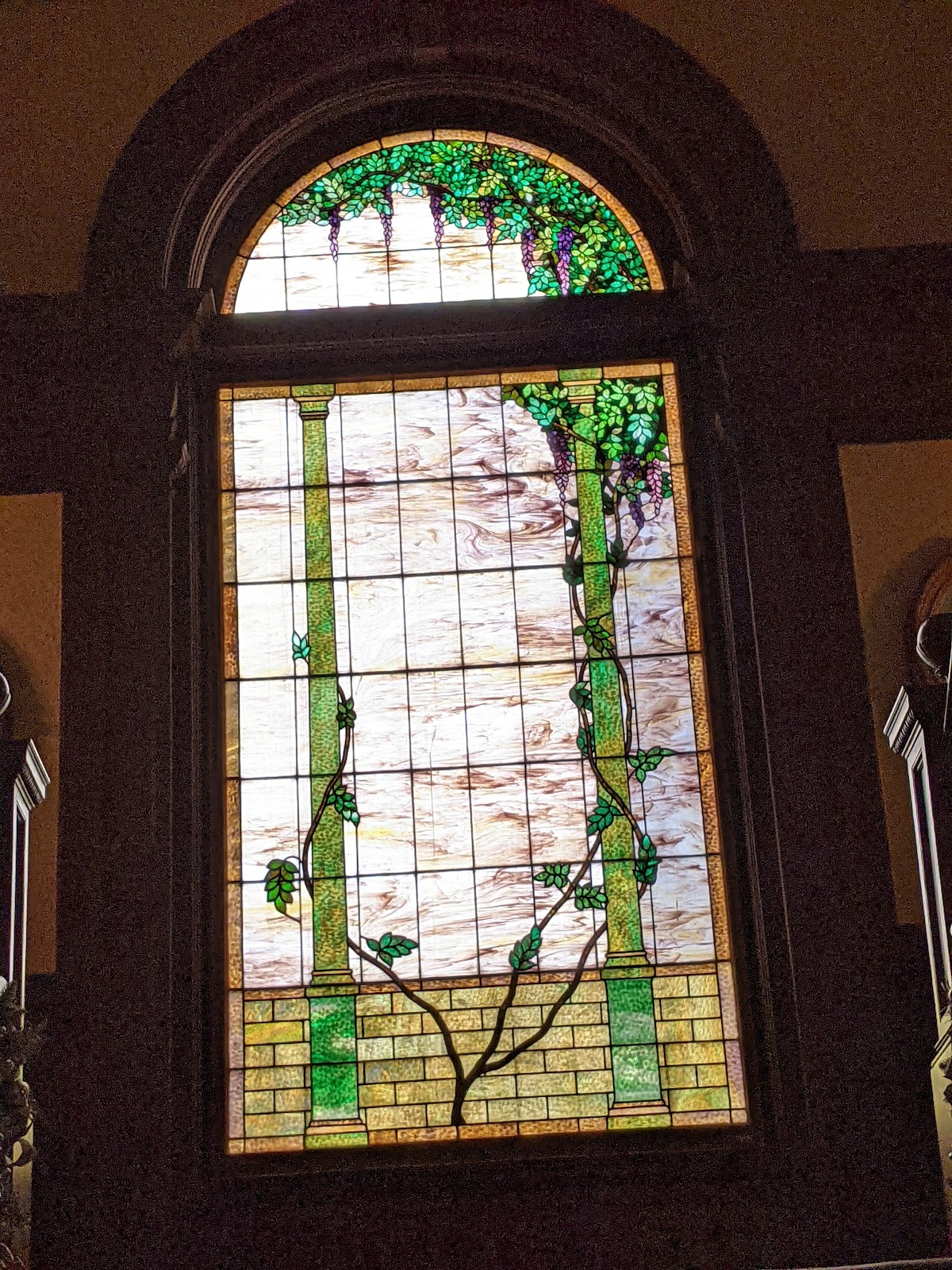
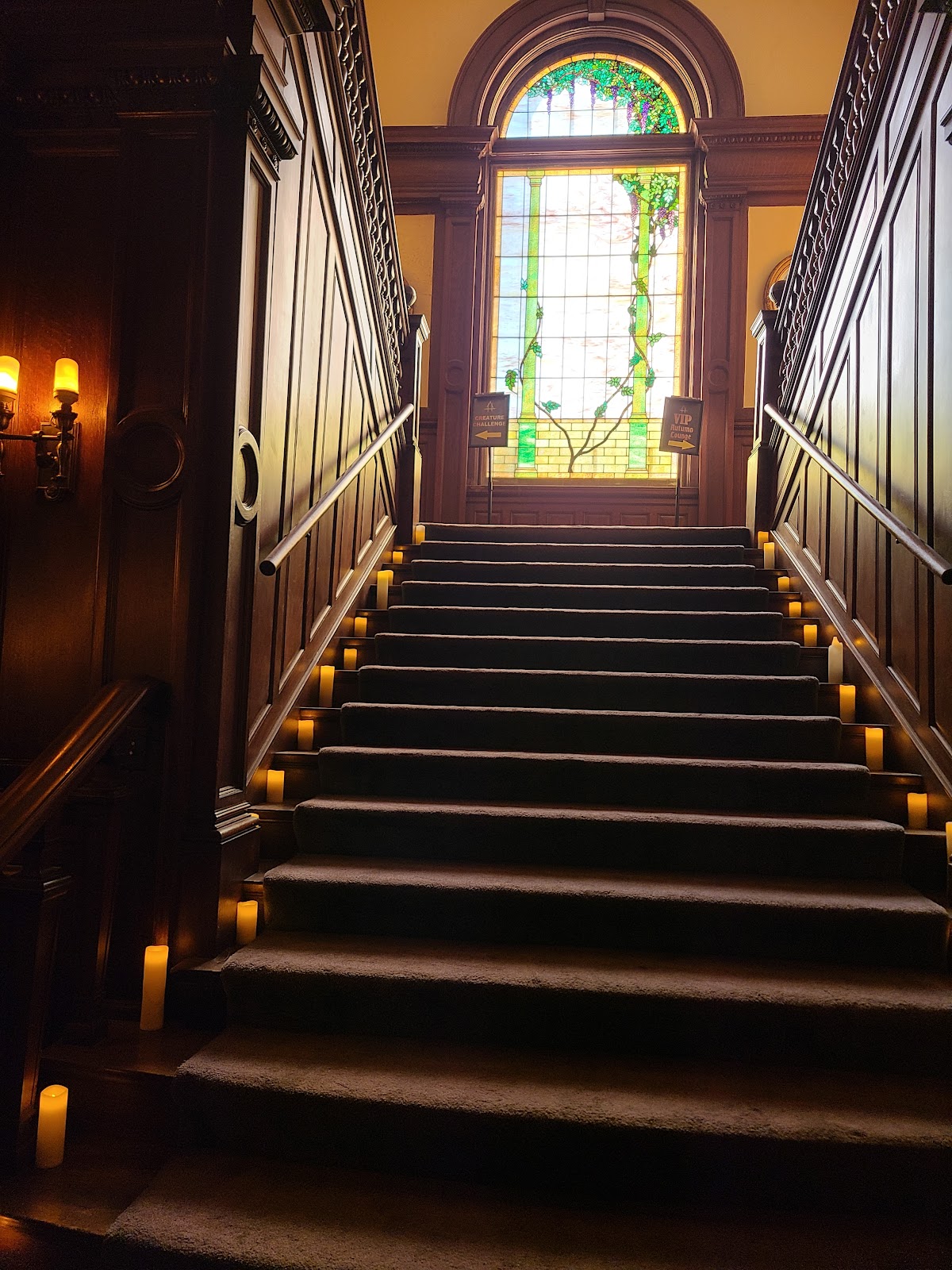
Tall windows are the asset and they have a specific advantage over modern ones: because a nineteenth or early twentieth century sash extends close to the floor, the light wraps upward as well as sideways and fills under the chin, which a small high casement cannot do.
The working distance is two to three metres. At half a metre the fall-off across two faces is severe enough that the far one goes dark; at two or three it is directional and even across both; and past four it has fallen away to almost nothing, because a furnished interior absorbs rather than bounces.
Two requirements. Every overhead and lamp fitting switched off, so the room has one colour of light rather than two landing on the same face — which in a house with warm fittings and cool daylight is the difference between a clean frame and an uncorrectable one. And the shaded side, which in this valley means the north side, and which unlike most places does not change through the day.
Absorbent surfaces are the second condition. Timber, deep paint, heavy drapery and patterned carpet put a room a stop or two below a pale one with identical fittings and return very little to a bounced flash. Measure it rather than estimating, because eyes adapt and meters do not, and test bounce with one frame per room, since ground-floor reception rooms with tall ceilings return little while upstairs rooms are lower and frequently work.
Warm bounce is the colour problem and it cannot be fixed afterwards: timber, brass and warm textiles reflect strongly warm onto the shadow side of a face from several directions at once, localised and bounced, so global white balance cannot separate it from the subject. One warm-gelled source with white balance set to the gel is the method; a global correction turns skin grey and the timber the colour of ash.
The source should be close and modest, because in a furnished room there is nowhere to put a light back and no need — a modifier at a metre and a half is a large soft source relative to a face, and distance is what makes a source soft rather than the size of the modifier.
Steep fall-off is the compensation and it is free separation: three metres of distance in a dark furnished room puts natural darkness behind a subject. And the doorway is the best camera position in a house of small rooms, gaining two or three metres at no cost and letting a photographer shoot through rooms rather than into them, which gives depth and reads as a house rather than as a wall.
One practical note: a historic interior generally restricts flash near finishes, stands on floors, and moving furniture, because textiles and painted surfaces fade or damage irreversibly. The working assumption is no stands, nothing moved, a source in a hand, and the large formals outdoors — which at a venue with permanent north-facing shade is not a limitation at all.
- Find the north-facing position; it is shaded at every hour of every day
- Stand near a wall or treeline in open shade to restore direction
- Full shade only under the hardwood canopy; dappled light cannot be saved
- Two to three metres from a tall window; past four there is nothing left
- Assume no stands and nothing moved; do the formals outdoors
The springs, and the Arkansas year
The thermal springs are the town’s defining feature and they give one photographic element available almost nowhere else: in cold weather, hot water meeting cold air produces visible steam. That is a real and unusual subject — soft, moving, backlit beautifully, and entirely specific to this place — and it only happens when the air is cold enough, which means it is a winter frame rather than a summer one.
It is worth knowing about in advance for exactly that reason. A couple marrying here in January can have a frame that a couple marrying in July cannot, which reverses the usual assumption about which season is better.
The early twentieth-century bathhouse architecture is the other local asset, and in a town centre with reasonably wide streets there is generally room to stand back — so unlike a city venue, these buildings can be photographed whole. Their stone and stucco surfaces read only under raking light, so a short walk to find the lit elevation is worth more than any accessory.
The climate is humid subtropical and the humidity rather than the heat is the photographic fact. Moist summer air scatters light, which softens shadows and flattens distance slightly — a gift for faces and a nuisance for long views along the valley or across the ridges, which can dissolve into haze in July in a way they do not in November.
The fogging problem is severe in this climate and it runs the opposite way from a cold one: a body brought from an air-conditioned interior into July air fogs on every surface at once, inside and out, and in high humidity it does not clear quickly. Opening a bag twenty minutes before going out rather than at the door is the whole fix.
Spring is the region’s best season for planting and it is short: dogwood and redbud through late March and April, azaleas alongside them, mild temperatures and the clearest air of the growing year. Before the canopy closes, more light reaches the ground than at any other time, which makes the woodland positions brighter and the dappling problem milder.
Autumn is the other good window and for this landscape it is the stronger one. The oak and hickory colour usually peaks from late October into the first week of November, and in a valley with ridges on both sides that colour is visible in bulk rather than in patches — a whole hillside rather than a few trees. Combined with the clearest air of the year and low sun running down the valley axis, it is the best light the town gets.
Winter is mild with frost occasional rather than constant, and it is underrated here for three reasons: the steam from the springs, the bare canopy opening sightlines and letting light reach the ground, and a December midday sun at about thirty-two degrees above the horizon, which is a genuinely useful raking angle all day rather than a compromise.
Summer is hot, humid and afternoon-thundery, which at a house with an interior alternative costs a decision rather than a picture — and the permanent north-facing shade is the answer to the heat as much as to the light.

More frames from The Alexander Mansion
The Alexander Mansion wedding photography: common questions
What is unusual about the geography here?
The Ouachita Mountains run east to west rather than north to south, so the slopes face north and south — which means a north-facing position is shaded all day, every day, all year.
Why does that help?
Because the shade does not move. A position found once works at any hour, which removes the usual pressure to compress the portraits into a narrow window.
What does the valley alignment give?
Low sun running straight down the valley at either end of the day, rather than being blocked by a ridge — so the last hour before sunset is longer and cleaner than in most mountain country.
How should the furnished interior be lit?
One warm-gelled source at about a metre and a half with white balance set to the gel, a stop above the ambient. A global correction turns skin grey.
What is the frame only winter gives?
Steam. Hot spring water meeting cold air produces visible vapour, which is soft, moving and entirely specific to this place — and it needs cold air to happen.
When is the landscape at its best?
Late October into early November. The oak and hickory colour covers whole hillsides, the air is at its clearest, and low sun runs down the valley axis.
More Arkansas venue guides
We are writing a photographer’s guide to every venue we would happily shoot in Arkansas. Here are three more, plus the full index:
- The Garden at The Grand, Hot Springs: The One Decision That Governs Everything
- Garvan Woodland Gardens, Hot Springs: A Walk Through the Site
- The 1886 Crescent Hotel, Eureka Springs: Field Notes on a Hillside Hotel
Planning a wedding at The Alexander Mansion?
Shade that never moves. Tell us your date and we will find the north side.