 The Iowa Events Center: Four Ways Out of the Blank-Hall Problem
The Lost Island Waterpark, Waterloo: What It Suits, and What It Does Not
Water, colour and open space are all assets. All three are also seasonal, and that is the whole planning problem.
A themed outdoor attraction is an unusual wedding venue and it is worth being straightforward about both halves of what it offers.
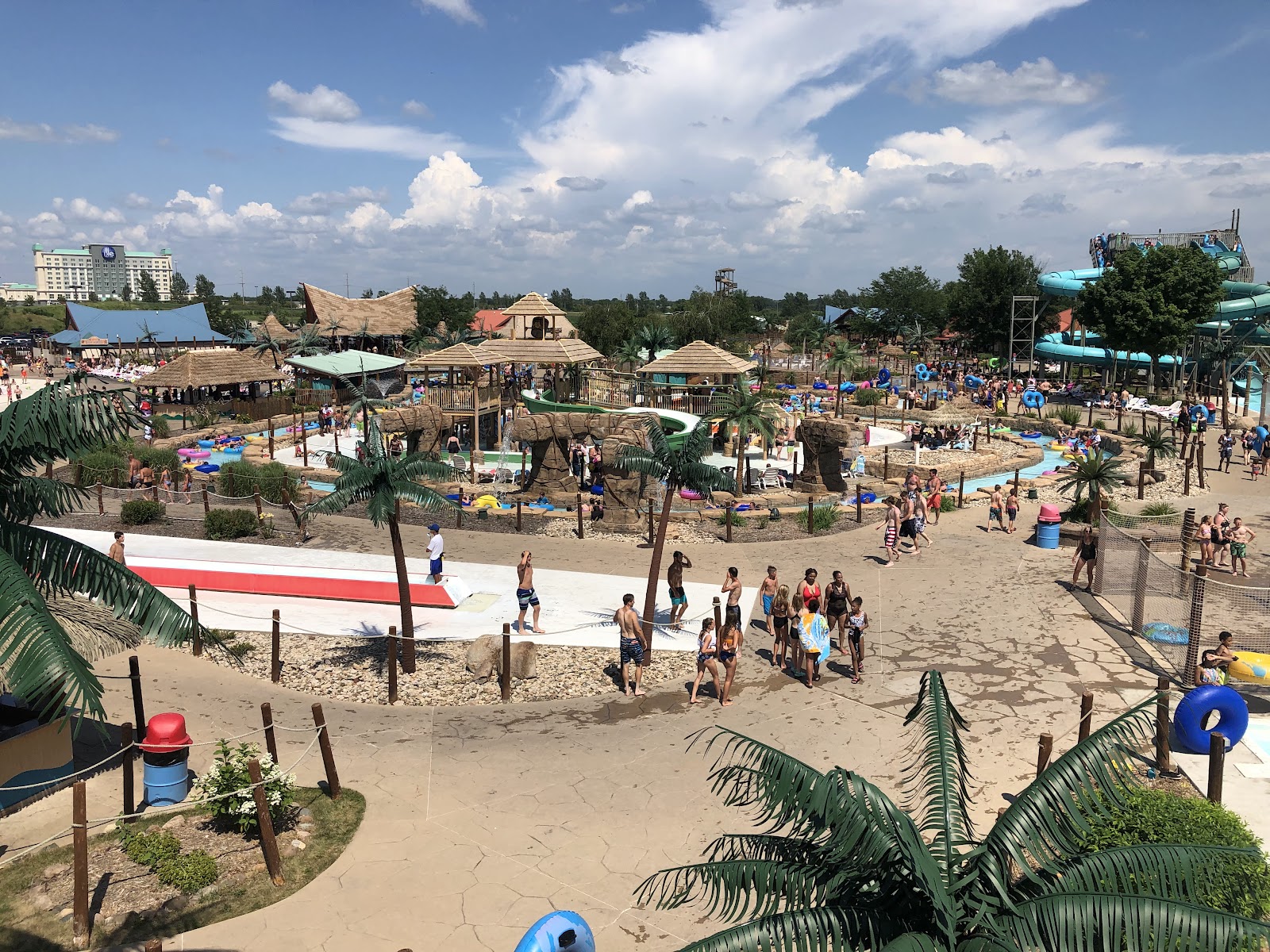
What it gives is water in quantity, strong colour, sculptural structures and genuine open space — a combination that produces frames unlike anything a hotel or a barn can, and that is unmistakably a particular place.
What it asks is more than most venues. It is outdoors in a climate with four emphatic seasons and a real thunderstorm season, which means a rain plan is a requirement rather than a courtesy. Its strongest features are built for daylight in summer. And a place designed to be busy has a scale and a palette calibrated for crowds rather than for two people in formal clothes.
We have not photographed a wedding at the Lost Island Waterpark; outdoor attractions with water features behave predictably. Which areas are included, whether the venue operates seasonally, what the indoor alternative is and what the rules are around water are questions for their team.
The Lost Island Waterpark at a glance
| Where | Waterloo, Iowa |
| Suits | Water, strong colour, sculptural structures, genuine space |
| Resists | Weather, seasonality, and a scale built for crowds |
| Non-negotiable | A named indoor alternative, agreed in advance |
| Ask first | Areas included, season of operation, rain plan, water rules |
What it suits
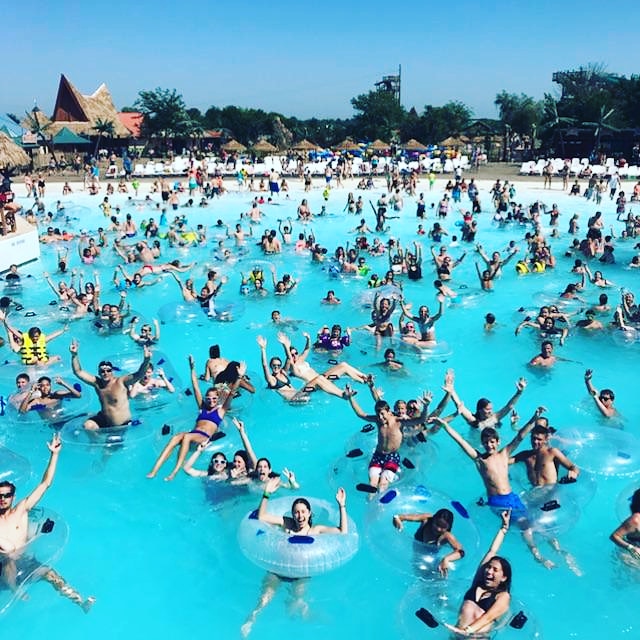
Water is the first and best asset, and it does three separate things. It reflects, which doubles anything lit and gives a second version of every structure for free. It moves, which makes shutter speed a creative decision rather than an incidental setting. And it bounces light upward, filling exactly the shadows that a high sun carves under eyes and chins.
That third property is the one most people overlook and it is the most useful. Standing in shade with water in front of you is materially better light than standing in shade with paving in front of you, and at a venue built around water there are many such positions.
The reflection follows one rule: camera height decides everything. A low camera looking across the surface sees a mirror that reflects sky and whatever stands beyond it; a high camera looking down sees through to the bottom. Half a metre of camera height changes the frame completely, and the low position is usually the good one.
Movement is the other choice. A long exposure smooths moving water into a soft field and strengthens reflections; a short one holds every drop and every ripple. Both are correct, and in bright Iowa daylight the long version needs a neutral density filter — which, along with a polariser for cutting the specular glare that clips and fools metering, are the two filters genuinely worth carrying here.
Strong colour is the second asset and it needs a decision per frame rather than a policy. A brightly painted structure behind a couple is a strong background and it will compete: commit deliberately, placing the couple so both they and the colour read, or subordinate it with a long lens at a wide aperture so it becomes a field of colour. Half-in is the failure and with saturated paintwork it happens easily.
Saturated colour also bounces onto skin from whichever side it sits, localised enough that global white balance cannot separate it — so a custom white balance set on a face in the actual position, or one gelled source owning the faces, is the fix. And a metre further from a coloured surface roughly halves what it throws.
Sculptural structures are the third asset and they suit the couple-as-figures frame, where two people are small against something large. The requirement is that the figures be readable — separated by tone, placed where the eye lands, ideally lit — rather than merely present.
And the open space is the fourth, which in a region of very little relief means a low open horizon and a great deal of sky. That makes the sky the main variable rather than a backdrop, and a dramatic Midwestern sky over an open site is one of the best frames available anywhere.
What it does not suit
Weather is the first refusal and it is not negotiable. An outdoor venue in Iowa faces severe afternoon thunderstorms as a real possibility from late spring through summer, and at a site built around water there is limited shelter by design. A named indoor alternative — a specific room, agreed in advance, with a known capacity — is a requirement rather than a courtesy, and the conversation belongs at booking rather than on the morning.
The compensations are real though. Wet paving reflects anything lit and photographs better than dry; an approaching storm over an open Midwestern horizon is the most dramatic sky the region produces; and a brief shower followed by clearing gives the best light of any day, because the air is washed clean and the sun comes back at a low angle.
Seasonality is the second and it is worth establishing precisely. An outdoor water attraction in this climate operates for part of the year, which means the features that make the site distinctive may be drained, covered or closed outside the season — and a couple booking a September wedding needs to know whether the water is running in September. That is a question with a definite answer and it should be asked.
Midday sun is the third. At Waterloo’s latitude — about forty-two and a half degrees north — the June midday sun reaches roughly seventy-one degrees above the horizon, which is high enough to put eye sockets in shadow and a hard line under every chin, and on an open site with water reflecting glare there is limited shade to retreat to.
The workable midday positions are the shadow side of any structure, where pale paving and water bounce light back up into real directional shade, and any roofed area with an open face — a shelter, a pavilion, a canopy — which makes a directional soft source at exactly the right size for two people and works in rain as well. Those are worth locating on arrival.
The humid version of the fogging problem is a genuine issue at a water venue, and it is worse here than at a dry one: the air immediately above a large water surface is more humid than the surrounding air, so a body brought from an air-conditioned building fogs on every surface at once and does not clear quickly. Opening a bag twenty minutes before going out is the whole fix.
The fourth difficulty is scale and palette. A place designed for crowds has structures sized and coloured to be legible from a distance by a lot of people at once, which is a different objective from flattering two people in formal clothes. The practical consequence is that tighter framing and longer lenses work better here than wide inclusive frames, because a wide frame includes a great deal of infrastructure — fencing, signage, plant, walkways — that a crowd ignores and a photograph does not.
And the physical cautions deserve plain treatment: wet paving is slippery, a long dress on it is a hazard, and a camera near a water edge is at real risk. Compose so nobody needs to stand on an edge, and keep bags off wet ground.
- Agree a specific indoor alternative at booking, not on the day
- Ask whether the water features are running on the date chosen
- Camera low across water for the mirror; carry a polariser and an ND
- Commit to saturated colour or dissolve it — half-in fails
- Tighter framing beats wide; a wide frame includes the infrastructure
The year, and the two windows
The seasons decide most of what is possible here, and the differences are larger than at any indoor venue.
Summer is the season the site was built for and it is hot and genuinely humid. The humidity is the photographic fact rather than the heat: moist air scatters light, which softens shadows and slightly flattens distance — good for faces, less good for long views across open ground. It also means the thunderstorm risk is at its highest, and it means the fogging problem is at its worst.
The two good windows are the same as anywhere and they matter more on an open site. The last hour before sunset, when low sun comes across faces rather than down onto them and rakes every structure and the water surface. And the twenty-five to forty minutes after sunset, when the sky still holds colour while any installed lighting comes up and the water holds a reflection of both — one exposure carrying couple, sky, structure and its double.
At this latitude the after-sunset window is generously long in summer, because the sun sets at a shallow angle and twilight lasts, and it is shorter and sharper in the cold clear air of winter. In June it falls late in the evening, which needs agreeing in advance as a short deliberate excursion.
Autumn is the best light of the year — humidity drops, the air clears, the surrounding cover turns, and low sun arrives at a civilised hour, usually mid-to-late October. Whether the site’s water features are running by then is the question that decides whether autumn is usable, and it is worth asking rather than assuming.
The surrounding farmland changes with the season too, and it matters on an open site with long sightlines: dense tall green through September, then open stubble with warm colour and raking texture after the October harvest. Those are two entirely different backgrounds from one standing position.
Winter closes an outdoor water venue for photographic purposes in most respects, though not entirely: snow on sculptural structures is a genuinely striking frame, snow is the best natural fill available outdoors — lifting exactly the shadows a low sun carves while fooling a meter by about two stops — and the short December day puts the golden window in the middle of the afternoon rather than late in the evening. A winter date at a venue like this is an unusual choice and it is not a bad one, provided everyone knows the water will be still.
Spring is the transitional risk: variable, wet, and with the thunderstorm season beginning. Late May and early June are the sweet spot at this latitude — long days, the site fully operational, and the worst of the summer humidity not yet arrived.
The one non-negotiable across every season is the alternative. An outdoor venue without a named indoor room is a venue with a single point of failure, and naming it costs nothing at booking and everything on the day.
More frames from The Lost Island Waterpark
The Lost Island Waterpark wedding photography: common questions
What does a water venue do best?
Three things: water reflects and doubles anything lit, it makes shutter speed a creative choice, and it bounces light upward to fill the shadows a high sun carves.
What decides whether water reflects?
Camera height. Low across the surface gives a mirror; high looking down sees the bottom. Half a metre changes the frame completely.
What has to be agreed in advance?
A specific indoor alternative with a known capacity. An outdoor Iowa venue faces real thunderstorm risk and limited shelter by design.
Is seasonality an issue?
Yes, and it has a definite answer worth asking for: whether the water features will be running on the date chosen.
Why do tighter frames work better?
Because a place designed for crowds has infrastructure — fencing, signage, walkways — that a crowd ignores and a wide photograph does not.
What are the two good windows?
The last hour before sunset, and the twenty-five to forty minutes after it when the water holds a reflection of both sky and installed lighting.
More Iowa venue guides
We are writing a photographer’s guide to every venue we would happily shoot in Iowa. Here are three more, plus the full index:
- The Byrnes Park, Raymond: The Light Through the Day
- The Englert Theatre, Iowa City: A Walk Through the Building
- The Fox Ridge Winery, Raymond: The Problem, and Four Ways Out of It
Planning a wedding at The Lost Island Waterpark?
Name the rain plan, then use everything else. Tell us your date.